


Search results
Search for "proliferation" in Full Text gives 176 result(s) in Beilstein Journal of Nanotechnology.
Pulmonary surfactant augments cytotoxicity of silica nanoparticles: Studies on an in vitro air–blood barrier model
Beilstein J. Nanotechnol. 2015, 6, 517–528, doi:10.3762/bjnano.6.54
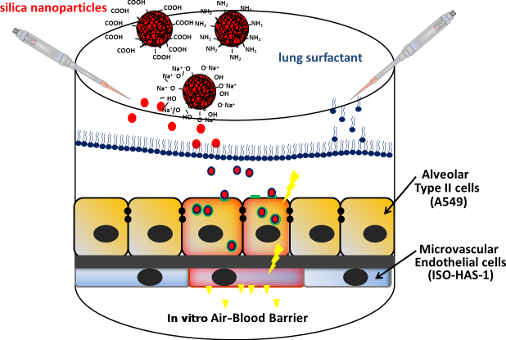
- ® in the well was 0.04 mg/mL. Cytotoxicity, determination of cell viability: The viability of the cells was determined as described in our previous studies [9][10][11] using the CellTiter 96® AQueous One Solution Cell Proliferation Assay (MTS, Promega, G3582). After nanoparticle incubation, medium was


Hematopoietic and mesenchymal stem cells: polymeric nanoparticle uptake and lineage differentiation
Beilstein J. Nanotechnol. 2015, 6, 383–395, doi:10.3762/bjnano.6.38
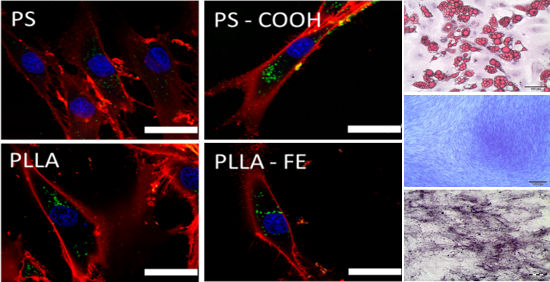
- nanoparticles. This was very much expected as the proliferation of hHSCs during the growth factor induced differentiation will decrease the amount of nanoparticles per cell division by a factor of 1/2. For the PLLA particles, the remaining amount was significantly higher than the negative control even after 11
- . The hHSCs showed a great loss in particle payload during all three lineage differentiations. This is likely due to the high proliferation rates during the differentiation process. In other studies, this dilution due to proliferation activity of the cells has clearly been shown [28][29]. In the
- the high expression of glycophorin A, which indicates that the erythrocyte differentiation is enhanced with PLLA–Fe particles. This can be explained by the fact that iron in this case is an essential compound for erythrocyte differentiation and, therefore, enhances proliferation in this direction


Comparative evaluation of the impact on endothelial cells induced by different nanoparticle structures and functionalization
Beilstein J. Nanotechnol. 2015, 6, 300–312, doi:10.3762/bjnano.6.28
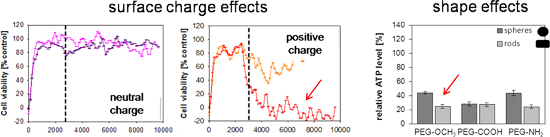
- used a colorimetric (MTS: 3-(4,5-dimethylthiazol-2-yl)-5-(3-carboxymethoxyphenyl)-2-(4-sulfophenyl)-2H-tetrazolium, inner salt; Aqueous One Solution Cell Proliferation Assay, Promega, Germany) and a luminescence (ATPLite assay, PerkinElmer, Germany) based cytotoxicity assay. In this context, cells were




The effect of surface charge on nonspecific uptake and cytotoxicity of CdSe/ZnS core/shell quantum dots
Beilstein J. Nanotechnol. 2015, 6, 281–292, doi:10.3762/bjnano.6.26
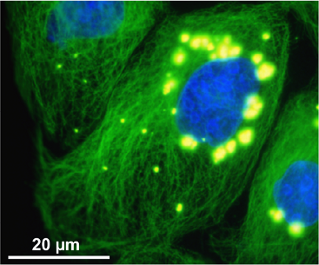
- proliferation, which was confirmed by fluorescence microscopy (Supporting Information File 1, Figure S1). We observed a small fraction of abnormally large cells (twice as large as the normal size), and cells with two nuclei after exposure to the 50 nM solutions of QDs (Supporting Information File 1, Figure S1



Oxygen-plasma-modified biomimetic nanofibrous scaffolds for enhanced compatibility of cardiovascular implants
Beilstein J. Nanotechnol. 2015, 6, 254–262, doi:10.3762/bjnano.6.24
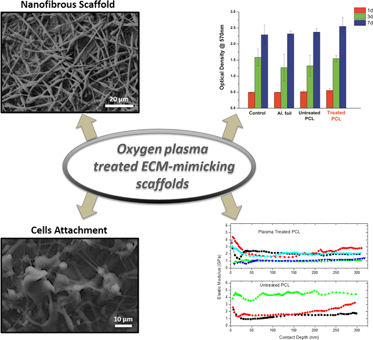
- surface hydrophilicity by forming oxygen-containing groups at the surface and thus to improve cell adhesion and proliferation. The conditions of the plasma modification were properly adjusted in order to induce the desirable chemical surface changes while maintaining surface integrity and morphology. The
- , which is more apparent in the case of the treated samples indicates the growth and proliferation of the cells in their new microenvironment. Cell adhesion and proliferation According to Figure 4c, fibroblasts seemed to be securely attached and spread on the surface, regardless of the surface treatments
- . Interestingly, cells seemed to be attached and spread more on the plasma-treated scaffold surfaces compared to the untreated surfaces, during the first day. A notable enhancement of the spreading is observed in the following days, with higher cell confluency and proliferation in the treated scaffolds compared


Mechanical properties of MDCK II cells exposed to gold nanorods
Beilstein J. Nanotechnol. 2015, 6, 223–231, doi:10.3762/bjnano.6.21

- applications is the design of biocompatible NPs that do not impair with cell viability, proliferation, and adhesion. Therefore assessing the cytotoxicity of nanoparticles is pivotal for nanoparticle research in general [11]. In vitro nanocytotoxicity studies are therefore necessary to minimize possible risks
- migration, proliferation and tissue formation [19][20]. Mechanical behavior of living cells can be monitored spatially resolved in a concentration and time dependent manner using scanning probe techniques. It is possible to investigate local cellular elastic properties under physiological conditions using


X-ray photoelectron spectroscopy of graphitic carbon nanomaterials doped with heteroatoms
Beilstein J. Nanotechnol. 2015, 6, 177–192, doi:10.3762/bjnano.6.17
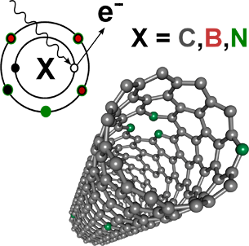
- have received major attention, starting with the discovery of fullerenes in the late 1980s [1][2], followed by the proliferation of carbon nanotube research from the early 1990s [3][4][5], and coming finally to the latest stage when graphene rose into prominence in the mid-2000s [6][7][8]. Due to the


Increasing throughput of AFM-based single cell adhesion measurements through multisubstrate surfaces
Beilstein J. Nanotechnol. 2015, 6, 157–166, doi:10.3762/bjnano.6.15
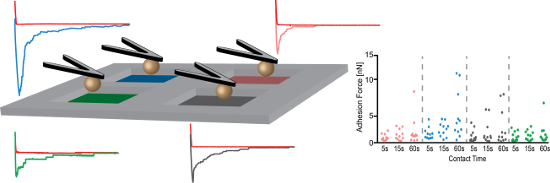
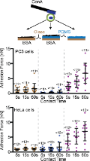
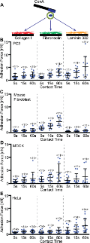
- force spectroscopy; Introduction The regulated adhesion of mammalian cells with the extracellular matrix (ECM) and surrounding cells is crucial in biological processes such as cell migration, differentiation, proliferation, and apoptosis. Since impaired cell adhesion causes a wide range of diseases


Synthesis of boron nitride nanotubes and their applications
Beilstein J. Nanotechnol. 2015, 6, 84–102, doi:10.3762/bjnano.6.9
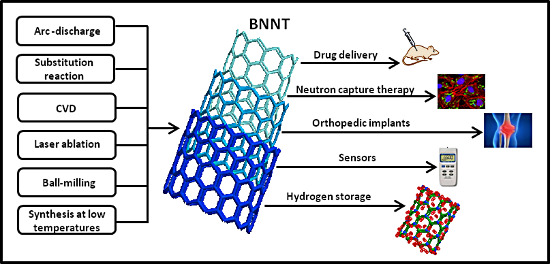
- dispersion in aqueous media for biological applications [12]. The effect of the PEI-coated BNNTs with respect to viability, metabolism and cell proliferation of human neuroblastoma cell line (SH-SY5Y) was investigated. The PEI-coated BNNTs exposed cells analyzed at different time intervals. The viability
- , metabolic activity and proliferation of the cells were analyzed with MTT and trypan blue assays. The results showed that the PEI-coated BNNTs did not affect the viability of neuroblastoma cells up to 5 µg/mL [12]. Lahiri et al. studied the behavior of osteoblast cells in a scaffold constructed from the BNNT
- -embedded polylactide-polycaprolactone (PLC–BNNT) in orthopedic implants [75]. Using real-time PCR methods, they studied the RunX2 gene expression profile, which is a transcription factor responsible for enhancing the cell proliferation. The results of the experiments showed that the PLC–BNNTs increased the




Mammalian cell growth on gold nanoparticle-decorated substrates is influenced by the nanoparticle coating
Beilstein J. Nanotechnol. 2014, 5, 2479–2488, doi:10.3762/bjnano.5.257
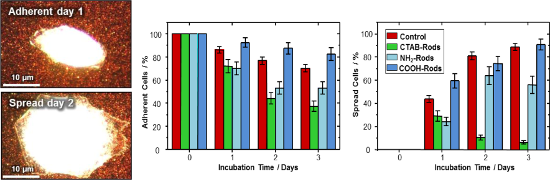
- their spreading. Herein, we assess the adhesion as an indicator for viability since the cells detach during apoptosis. Furthermore, an adherent cell, which has increased its spreading area, is considered to show an active proliferation. Figure 2B shows a typical example of an adherent cell at day one
- , which has detached at day two, leaving behind the cell debris. From the percentage of adherent cells, we rate their proliferation behavior shown by an active increase in spreading area. Figure 2C shows a representative image of a cell that is alive at day one and which has considerably expanded its
- reduction in adherence by 30% as compared to the untreated control results from the cell growth on the NH2–PEG nanorod-decorated substrate, whereas immobilization of COOH–PEG nanorods does not have an influence. Proliferation The increase in the spreading area of an adherent cell is interpreted as a sign of


Proinflammatory and cytotoxic response to nanoparticles in precision-cut lung slices
Beilstein J. Nanotechnol. 2014, 5, 2440–2449, doi:10.3762/bjnano.5.253
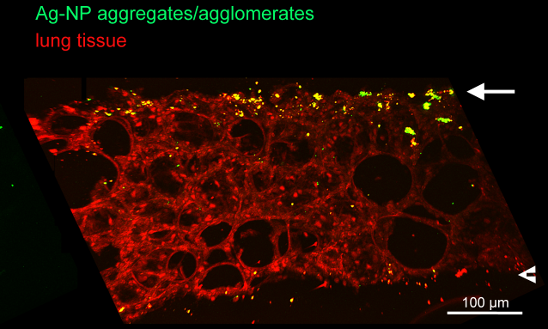
- persisted up to 72 h (Figure 2). Since an increased WST-1 conversion could also indicate cell proliferation, we examined if there was enhanced cell proliferation by performing a proliferation assay (Click-iT® EdU Alexa Fluor® 488 Imaging Kit) in which the incorporation of 5-ethynyl-2′-deoxyuridine, a
- nucleoside analogue to thymidine, into replicated DNA can be visualized by confocal laser scanning microscopy. As shown in Figure 3, cell proliferation was not significantly altered as shown by this assay. Responses of PCLS after exposure to (nano)particles Cytotoxic response After 4 h of incubation with 20
- through WST-1 assay. The results of the WST-1 assay suggest that the viability of PCLS was improved 24 h after preparation. As WST-1 conversion is also an indicator for proliferation, we performed an additional proliferation assay that did not show significant differences in proliferation over time. The


Functionalized polystyrene nanoparticles as a platform for studying bio–nano interactions
Beilstein J. Nanotechnol. 2014, 5, 2403–2412, doi:10.3762/bjnano.5.250
- used superparamagnetic iron oxide nanoparticles. Keywords: amino groups; apoptosis; carboxyl groups; cell proliferation; leukemia cell lines; macrophages; mTOR; polystyrene nanoparticles; Review Applications of polystyrene Polystyrene, one of the most extensively used types of plastic [1], is an
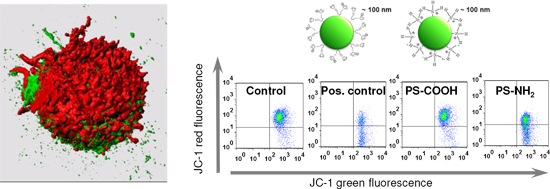
- -localized with lysosomes independent of the cell type (Figure 3, and [41][42][43]). Further analysis demonstrated that PS-COOH did not affect the THP-1 cell proliferation, whereas PS-NH2 particles virtually immediately terminated the cell division [41]. It is also notable, that the cell size decreased after
- THP-1 after longer incubation time (Figure 4 and [41]). Similarly, other authors did observe no cytotoxicity of PS-COOH in ovarian cancer and endothelial cells [48][49]. PS-NH2 particles not only inhibited the proliferation of THP-1 cells but after three days of induced exposure of phosphatidyl serine


Effect of silver nanoparticles on human mesenchymal stem cell differentiation
Beilstein J. Nanotechnol. 2014, 5, 2058–2069, doi:10.3762/bjnano.5.214
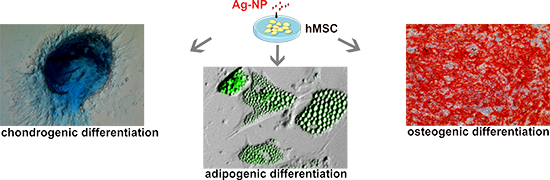
- . analyzed the expression of alkaline phosphatase in MSCs in the presence of Ag-NP (up to 1 μg·mL−1) after prolonged cell sulture (35 d). In contrast to the significant inhibition in cell proliferation observed at the highest concentration of Ag-NP, the authors found no influence on the activity of alkaline
- Technologies) while using 75 cm2 flasks (Falcon, Becton Dickinson GmbH, Heidelberg, Germany). Cells were maintained at 37 °C in a humidified 5% CO2 atmosphere. hMSCs were sub-cultivated every 7–14 d depending on cell proliferation. Adherent cells were washed with phosphate buffered saline solution (PBS, Life


PVP-coated, negatively charged silver nanoparticles: A multi-center study of their physicochemical characteristics, cell culture and in vivo experiments
Beilstein J. Nanotechnol. 2014, 5, 1944–1965, doi:10.3762/bjnano.5.205

- extracellular silver nanoparticles, the intracellular occurrence of silver agglomerates of silver-pulsed cells had decreased in a process which was clearly not related to cell proliferation under these conditions (Figure 10). Interestingly, the decrease in the number of particles was almost completely inhibited


Carbon-based smart nanomaterials in biomedicine and neuroengineering
Beilstein J. Nanotechnol. 2014, 5, 1849–1863, doi:10.3762/bjnano.5.196
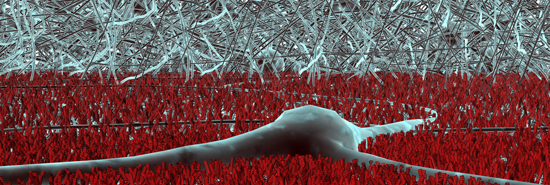
- primary focus of a study conducted by Heo and colleagues [95], who developed a graphene/PET film to test the effects of a non-contact field stimulation on cell-to-cell coupling. This film was found to be biocompatible and improved cell proliferation and viability compared to those observed in the control
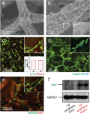
- proliferation by up-regulating Ki-67 protein expression (Figure 6). To test whether such a scaffold could be used as a neural stimulation electrode, its electrochemical properties were investigated by cyclic voltammetry, the results showing that electrical stimulation via a capacitive charge injection was
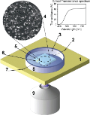
- chamber (8), directly onto hydrogen-terminated diamond (5). Reproduced from [128] with permission. Copyright 2009 Elsevier. Three-dimensional graphene foam scaffolds allow neural stem cells to adhere and improve their proliferation by up-regulating Ki-67 protein expression. Reproduced from [146] with


In vitro interaction of colloidal nanoparticles with mammalian cells: What have we learned thus far?
Beilstein J. Nanotechnol. 2014, 5, 1477–1490, doi:10.3762/bjnano.5.161
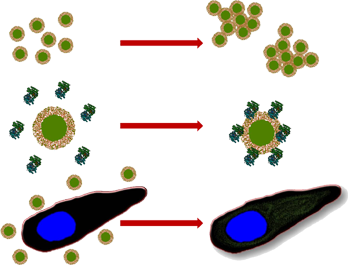
- vitro labeling, tracking or sensing, there are multiple studies that have shown that over the time course required to perform such studies, the impact on cellular viability/proliferation at appropriate NP concentrations is minimal and is often comparable to or even less impactful than the use of


Protein-coated pH-responsive gold nanoparticles: Microwave-assisted synthesis and surface charge-dependent anticancer activity
Beilstein J. Nanotechnol. 2014, 5, 1452–1462, doi:10.3762/bjnano.5.158
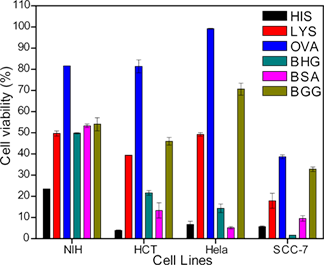
- was measured by using a microplate reader (FL600, Microplate Fluorescence Reader, Bio-Tek Company) at a wavelength of 570 nm. The concentration of the sample causing 50% inhibition of proliferation of the cells (IC50) was determined by plotting the percentage of cell viability versus the sample


Influence of the PDMS substrate stiffness on the adhesion of Acanthamoeba castellanii
Beilstein J. Nanotechnol. 2014, 5, 1393–1398, doi:10.3762/bjnano.5.152
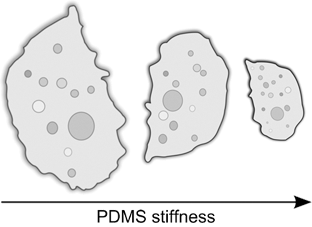
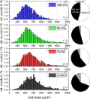
- parameters such as cell proliferation, as the doubling time of acanthamoeba in axenic culture is on the timescale of days [38]. As acanthamoeba can also be grown in suspension [19], their proliferation might not be strongly influenced by the presence of any substrate. In a recent study, we had investigated



Mimicking exposures to acute and lifetime concentrations of inhaled silver nanoparticles by two different in vitro approaches
Beilstein J. Nanotechnol. 2014, 5, 1357–1370, doi:10.3762/bjnano.5.149
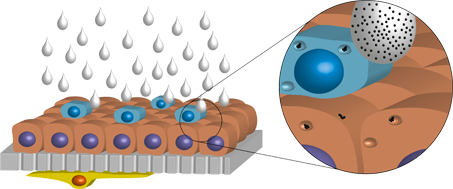
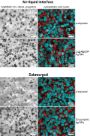
- proliferation and migration (chemotaxis) both decreased, and the release of cytokines was affected. Increased IL-8 and decreased IL-6 and vascular endothelial growth factor (VEGF) levels were detected at high Ag NP concentrations [65]. These studies however, were obtained with human mesenchymal stem cells



PEGylated versus non-PEGylated magnetic nanoparticles as camptothecin delivery system
Beilstein J. Nanotechnol. 2014, 5, 1312–1319, doi:10.3762/bjnano.5.144
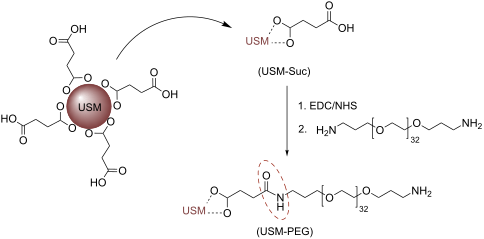
- ; cancer therapy; iron oxide superparamagnetic nanoparticles; polyethylene glycol; Introduction Camptothecin (CPT) is a quinoline based alkaloid, which exhibits a potent cytotoxic activity against a broad spectrum of tumours [1][2][3]. While most antineoplastic agents inhibit cancer cell proliferation by


Model systems for studying cell adhesion and biomimetic actin networks
Beilstein J. Nanotechnol. 2014, 5, 1193–1202, doi:10.3762/bjnano.5.131
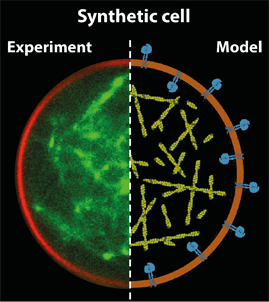
- 10.3762/bjnano.5.131 Abstract Many cellular processes, such as migration, proliferation, wound healing and tumor progression are based on cell adhesion. Amongst different cell adhesion molecules, the integrin receptors play a very significant role. Over the past decades the function and signalling of


Antimicrobial nanospheres thin coatings prepared by advanced pulsed laser technique
Beilstein J. Nanotechnol. 2014, 5, 872–880, doi:10.3762/bjnano.5.99
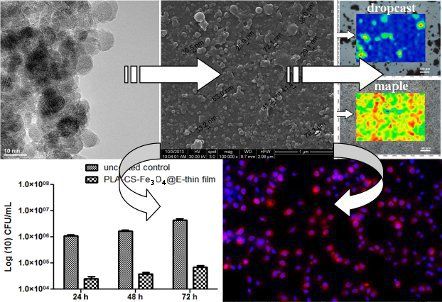
- (Sigma Aldrich, St. Louis, MO, USA). For cell proliferation and viability CellTiter96 Non-Radioactive Cell Proliferation Assay, (Promega, Madison, USA) was used. Endothelial cells were seeded in a 96-well plate at a density of 5 × 10³ cells/well in DMEM medium, supplemented with 10% FBS, and incubated
- with nanospheres coated with eugenol for 72 h. The controls were represented by endothelial cells grown under the same culture conditions, but on bare substrates. Following the guidelines of the manufacturer the cell proliferation assay was performed in triplicates at different time intervals. Briefly
- viable and exhibit a normal grow and proliferation capacity in the presence of modified nano-coated bioactive surfaces. Furthermore, the cell monolayers developed on the thin coating surfaces have a normal morphology and architecture after five days of incubation (Figure 6). Despite its good




Cytotoxic and proinflammatory effects of PVP-coated silver nanoparticles after intratracheal instillation in rats
Beilstein J. Nanotechnol. 2013, 4, 933–940, doi:10.3762/bjnano.4.105
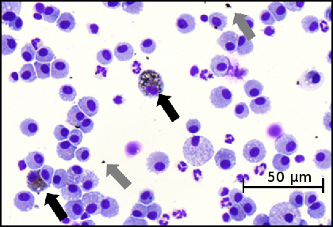
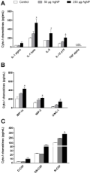
- pathways resulted in the transcription of genes involved in proliferation and inflammatory responses. Likewise, an up-regulation of IL-6, IL-8, M-CSF and MIP-1β following AgNP exposure was demonstrated [34]. Since comparable proinflammatory responses were found in the present study, we suggest that the




Nanoglasses: a new kind of noncrystalline materials
Beilstein J. Nanotechnol. 2013, 4, 517–533, doi:10.3762/bjnano.4.61
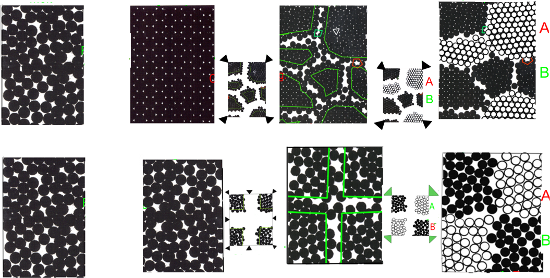
- microstructure of nanoglasses on the bioactivity, hierarchically structured layers of Ti34Zr14Cu22Pd30 metallic nanoglass were created by magnetron sputtering. The cell proliferation on the surfaces of these materials was studied by seeding ten thousand osteoblasts on the free surface of the Ti34Zr14Cu22Pd30
- higher than that on the surface of the corresponding melt-spun ribbon. Moreover, it was about five-fold and about ten-times higher than the cell densities on surfaces of the MGR and MGS ribbons, respectively. This high level of cell proliferation does not seem to be caused primarily by the surface
- significance of nanometer-sized patterning of the surface of nanoglasses agrees with the results of recent studies [62][63][64] indicating that the spatial patterning of biochemical cues controls several cellular processes such as spreading, adhesion, migration and proliferation. In fact, these studies






Magnetic-Fe/Fe3O4-nanoparticle-bound SN38 as carboxylesterase-cleavable prodrug for the delivery to tumors within monocytes/macrophages
Beilstein J. Nanotechnol. 2012, 3, 444–455, doi:10.3762/bjnano.3.51
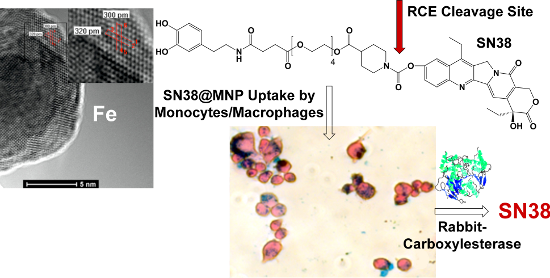
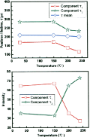
- . Different concentrations of nanoparticles were taken up by double-stable Mo/Ma cells over 24 h; the nanoparticle-concentration ranged from 0 to 320 μg/mL MNP-SN38 in fresh medium. After 24 h, the inhibition of cell proliferation was measured by using the MTT assay (Figure 4). We found only 20% of inhibition
- of cell proliferation at 160 μg/mL. Our aim is the loading of high payloads onto each delivery cell without causing a high level of necrosis or apoptosis of the delivery cells. Even a loading of 320 μg/mL of nanoparticles in the medium inhibits only 50% of the cell proliferation. We are also
- of nanoparticles contained 0.427 mg of iron, indicating that this amount of iron would be high enough for alternating magnetic field hyperthermia in combination with chemotherapy [54]. The MTT assay indicated that 8 pg of iron can be easily loaded in each cell (20% inhibition of cell proliferation





