Search results
Search for "shear" in Full Text gives 188 result(s) in Beilstein Journal of Nanotechnology.
Mechanical properties of sol–gel derived SiO2 nanotubes
Beilstein J. Nanotechnol. 2014, 5, 1808–1814, doi:10.3762/bjnano.5.191
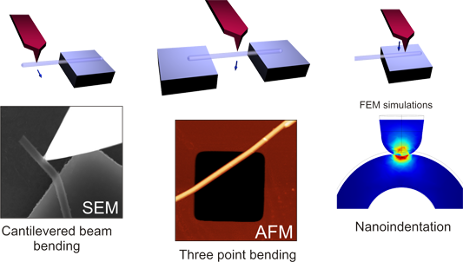
- in-plane bending of half-suspended NT. In all experiments the tip oscillated parallel to the surface of the sample (shear mode) and normal to the NTs. The amplitude signal of the QTF (proportional to the applied force) and the sequence of SEM images of the gradually bent NT were recorded


Non-covalent and reversible functionalization of carbon nanotubes
Beilstein J. Nanotechnol. 2014, 5, 1675–1690, doi:10.3762/bjnano.5.178
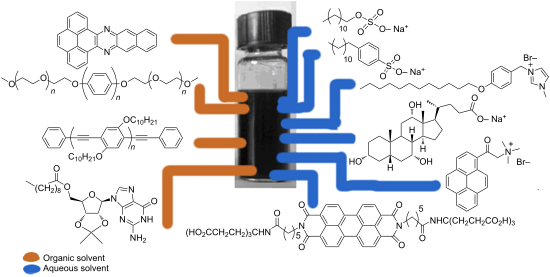
- provided by magnetic stirring, reflux, shear mixing, or, most commonly, ultrasonication either mild sonication in a bath or high-power sonication using a tip [16]. Once exfoliated, the simplest stable CNTs dispersions have been achieved by using solvent molecules able to efficiently interact with CNTs such



Precise quantification of silica and ceria nanoparticle uptake revealed by 3D fluorescence microscopy
Beilstein J. Nanotechnol. 2014, 5, 1616–1624, doi:10.3762/bjnano.5.173
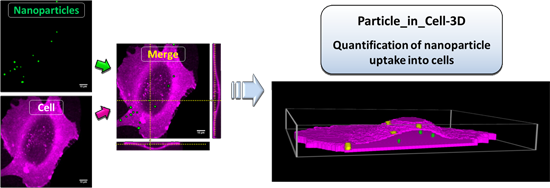
- nanoparticles. The flow is generated by a novel microfluidic reactor that can be combined with live-cell imaging and is able to cover the entire physiological range of shear rates [31]. Comparison to other methods Customary techniques performed for achieving the dosage of particles taken up by cells include


On the structure of grain/interphase boundaries and interfaces
Beilstein J. Nanotechnol. 2014, 5, 1603–1615, doi:10.3762/bjnano.5.172
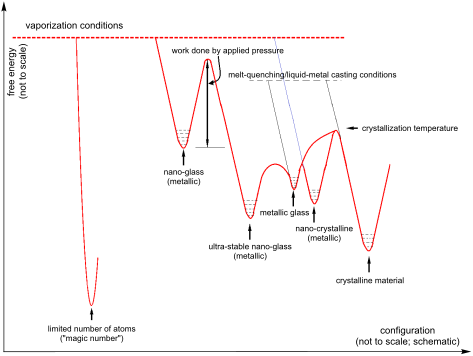
- about two and a half atomic diameters (average grain boundary width [58]) in the perpendicular direction. (A deformation of oblate spheroids of such dimensions along the interface between glassy regions in case of metallic glasses would lead to the formation of shear transformation zones, described by
- Argon [59] and others.) As mentioned above, the basic units of boundary/interface sliding are defined around free volume sites, which are present at discrete places characteristic of the interatomic forces and the boundary misorientation. The sequential shear of such oblate spheroids, when it reaches
- summarized in [53][54][55][56][57][60][61][62]. The shear modulus and the free volume present in the basic sliding unit, γ0, (composition, impurity/solute/dopant content dependent) can be determined by using ab initio calculations, in particular the tight binding model, which is computationally less


Silica nanoparticles are less toxic to human lung cells when deposited at the air–liquid interface compared to conventional submerged exposure
Beilstein J. Nanotechnol. 2014, 5, 1590–1602, doi:10.3762/bjnano.5.171
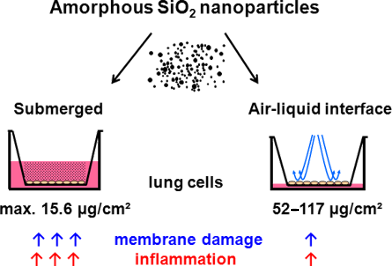
- , the importance of shear forces to exacerbate NP-induced toxicity has been described previously [8][33]. Another explanation could also be the secretion of surfactant by A549 cells under ALI conditions [34] which may have a protective effect due to binding of surfactant proteins to the particles [35


Surface topography and contact mechanics of dry and wet human skin
Beilstein J. Nanotechnol. 2014, 5, 1341–1348, doi:10.3762/bjnano.5.147
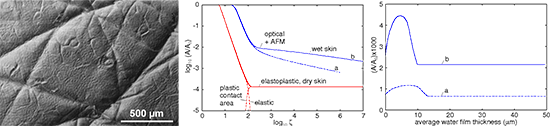
- skin. The measured friction coefficient between a glass ball and dry and wet skin can be explained assuming that a frictional shear stress σf ≈ 13 MPa and σf ≈ 5 MPa, respectively, act in the area of real contact during sliding. These frictional shear stresses are typical for sliding on surfaces of
- type shown in Figure 6 it is given by , where and [14][15][16] where where G0 = E0/2(1+ν0) and G1 = E1/2(1+ν1) are the shear moduli for solid 0 and solid 1, respectively. In all the calculations presented below we have assumed a squeezing pressure FN/A0 = p0 = 6.83 kPa, which is the average nominal
- /A0 = σN/σY = 1.37 × 10⁻⁴. Plastic deformation starts at q ≥ 105 m−1 corresponding to a wavelength of λ ≤ 2π/q ≈ 60 μm. The values of the friction coefficients, μ ≈ 0.25 for dry skin and μ ≈ 1.4 for wet skin, could be explained by frictional shear stresses of about 13 MPa for the dry surface and of


Physical principles of fluid-mediated insect attachment - Shouldn’t insects slip?
Beilstein J. Nanotechnol. 2014, 5, 1160–1166, doi:10.3762/bjnano.5.127
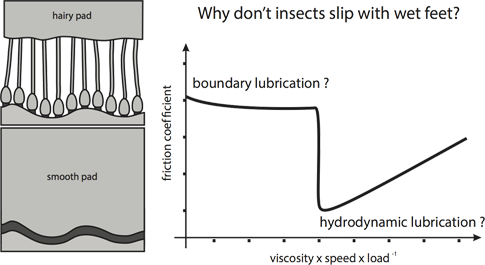
- mm2 [16], the maximal possible shear stress before sliding occurs (with cos α1 − cos α2 ≤ 2) would be only approx. 0.38 kPa. This value (and the corresponding value for smaller contact areas) is several orders of magnitude smaller than the shear stresses measured in smooth adhesive pads of the stick
- generated by a continuous fluid film of 90 nm height would be one order of magnitude smaller than the shear stresses observed in adhesive organs [30]. Thus it is not yet clear how insects with a fluid-mediated adhesive pad generate the observed friction forces preventing them from sliding down smooth
- results suggest that thixotropic (shear-thinning) non-Newtonian properties of the secretion could explain the presence of high static friction forces [46][60]. A second, yet to be tested, hypothesis to explain the observed high friction forces is the formation of local “dry” rubber like direct contacts


A nanometric cushion for enhancing scratch and wear resistance of hard films
Beilstein J. Nanotechnol. 2014, 5, 1005–1015, doi:10.3762/bjnano.5.114
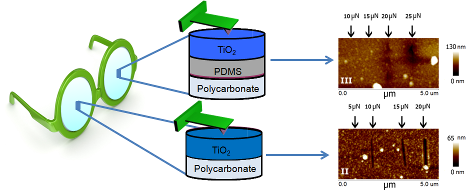
- images of the tip used for the experiments. The simulation was executed by MSC.MARC FE code, and used a bilinear shear, Coulomb model for the friction. Contact conditions are defined only between the indenter tip and the TiO2 layer. During the simulation, the indenter is first pressed against the layer



Direct observation of microcavitation in underwater adhesion of mushroom-shaped adhesive microstructure
Beilstein J. Nanotechnol. 2014, 5, 903–909, doi:10.3762/bjnano.5.103
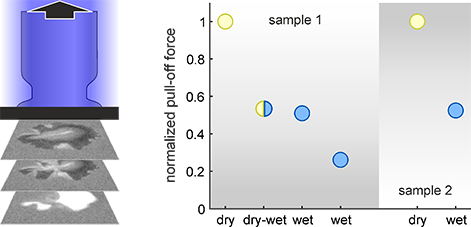
- -shaped contact geometry (see review [4]), which have been studied intensively under various loads (e.g., preload [5][6], shear [7][8], overload [9], and tilt [10][11]) and environmental conditions (e.g., dry in air [5][6][7][8][9][10][11][12], oil lubricated [13], on rough substrates [13][14][15], in


Fibrillar adhesion with no clusterisation: Functional significance of material gradient along adhesive setae of insects
Beilstein J. Nanotechnol. 2014, 5, 837–845, doi:10.3762/bjnano.5.95
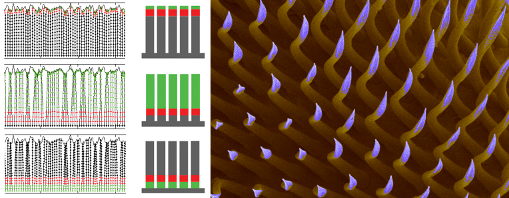
- multiple contacts that contribute to an enhancement of overall length of the total peeling line [7]. We have recently shown that thin tape-like contact tips of hairs (setae) in combination with applied shear force lead to the formation of maximal real contact area without slippage within the contact [8


Scale effects of nanomechanical properties and deformation behavior of Au nanoparticle and thin film using depth sensing nanoindentation
Beilstein J. Nanotechnol. 2014, 5, 822–836, doi:10.3762/bjnano.5.94
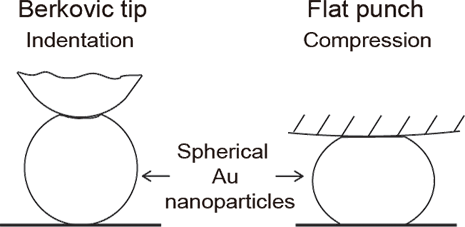
- dependent on the indenter shape, the shear modulus and H0. The ISE contributes to increased hardness in bulk solid surfaces, thin films and nano-objects. Hall–Petch effect The generation of dislocations leads to the Hall–Petch effect through the dislocation pile up mechanism or the dislocation density






The optimal shape of elastomer mushroom-like fibers for high and robust adhesion
Beilstein J. Nanotechnol. 2014, 5, 630–638, doi:10.3762/bjnano.5.74
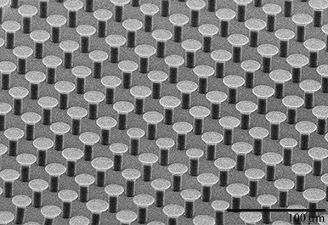
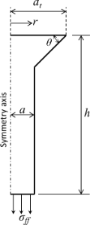
- these results are important for designing dry fibrillar adhesives, they are only concerned with the performance when the loading is axial. The effect of shear loading should also be considered along with the results of this study in designing fibrillar adhesives. Scanning electron microscope image of



Hairy suckers: the surface microstructure and its possible functional significance in the Octopus vulgaris sucker
Beilstein J. Nanotechnol. 2014, 5, 561–565, doi:10.3762/bjnano.5.66
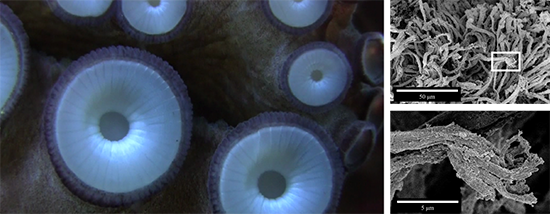
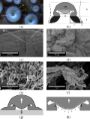
- adhesion conditions, a system consisting of hairs, mucus, and water (just like octopus suckers) could improve attachment due to following mechanisms: (i) exploiting the presence of mucus and filaments to increase the viscosity coefficient at the interface and to resist to the shear forces; and (ii
Calibration of quartz tuning fork spring constants for non-contact atomic force microscopy: direct mechanical measurements and simulations
Beilstein J. Nanotechnol. 2014, 5, 507–516, doi:10.3762/bjnano.5.59
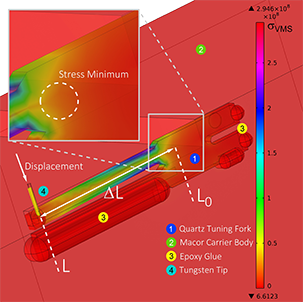
- beam length values, a deviation can be noticed. The contribution caused by the torsion can be calculated analytically by the following relation [21]: in which T is the torsional momentum, Φt is the angle of twist in radians, L the length at which the force is applied, G the shear momentum and IT the




Manipulation of nanoparticles of different shapes inside a scanning electron microscope
Beilstein J. Nanotechnol. 2014, 5, 133–140, doi:10.3762/bjnano.5.13
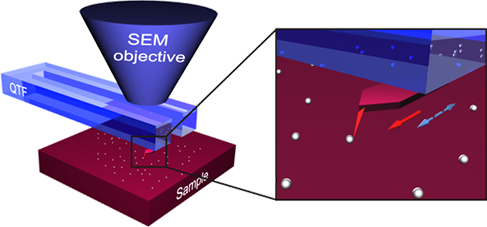
- voltage were 20–50 mV and the corresponding tip oscillation amplitude was in order of 100 nm. The tip oscillated parallel to the sample surface, i.e., in the shear mode [20]. The QTF force sensors were calibrated on a reference contact mode AFM cantilever (NT-MDT, CSG11), which was previously calibrated
- S5, Supporting Information File 1) the NP often moved aside affected by the tip oscillation (Figure 5). Moreover, the force necessary to displace a NP can be overestimated due to an unaccounted amount of energy dissipated in a shear interaction between the tip and the NP. For the parallel tip
- calculated the friction force values, Ffriction, by using a simple relation: where τ is the interfacial shear stress/strength and A is the contact area [26]. The shear strength is defined as an ultimate shear stress τ before the object is displaced, and can be estimated by using the relation τtheo = G*/Z


Static analysis of rectangular nanoplates using trigonometric shear deformation theory based on nonlocal elasticity theory
Beilstein J. Nanotechnol. 2013, 4, 968–973, doi:10.3762/bjnano.4.109
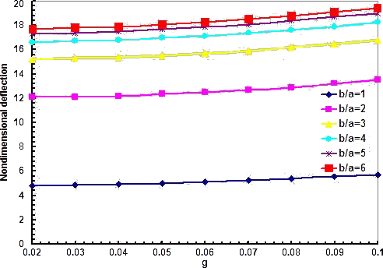
- Mohammad Rahim Nami Maziar Janghorban School of Mechanical Engineering, Shiraz University, Shiraz, Iran 10.3762/bjnano.4.109 Abstract In this article, a new higher order shear deformation theory based on trigonometric shear deformation theory is developed. In order to consider the size effects
- , the nonlocal elasticity theory is used. An analytical method is adopted to solve the governing equations for static analysis of simply supported nanoplates. In the present theory, the transverse shear stresses satisfy the traction free boundary conditions of the rectangular plates and these stresses
- isotropic, orthotropic and anisotropic nanoplates. Keywords: nonlocal elasticity theory; rectangular nanoplate; static analysis; trigonometric shear deformation theory; Introduction In recent years, some new higher-order shear deformation theories have been adopted for studying macro structures such as


Dynamic nanoindentation by instrumented nanoindentation and force microscopy: a comparative review
Beilstein J. Nanotechnol. 2013, 4, 815–833, doi:10.3762/bjnano.4.93
- -dependent shear modulus can vary with the ultimate force applied because of a deviation from linear viscoelastic behavior [30]. Because of their small size and the fine control over force and displacement, the point probes are particularly amenable to dynamic loading, in which a small modulation of several
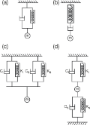
- indenter. It has been noted that these relations hold strictly only for shear between two parallel plates and the application to nanoindentation experiments should be used with caution [75]. By using the dynamic model shown in Figure 4c, an analytical solution for the resulting displacement amplitude, h0




Size-dependent characteristics of electrostatically actuated fluid-conveying carbon nanotubes based on modified couple stress theory
Beilstein J. Nanotechnol. 2013, 4, 771–780, doi:10.3762/bjnano.4.88
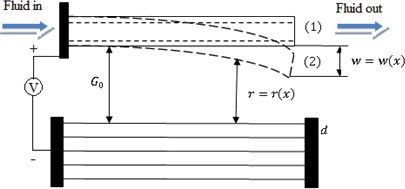
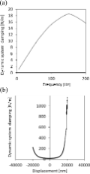
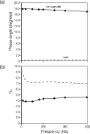
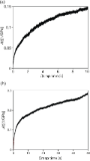
- Timoshenko beam model, which considers the rotational inertia and shear deformation, to investigate the effects of internal fluid flow on the transverse vibration [26]. They reported the natural frequencies of the system for different aspect ratios. Despite some studies concerning the effects of fluid flow


Deformation-induced grain growth and twinning in nanocrystalline palladium thin films
Beilstein J. Nanotechnol. 2013, 4, 554–566, doi:10.3762/bjnano.4.64
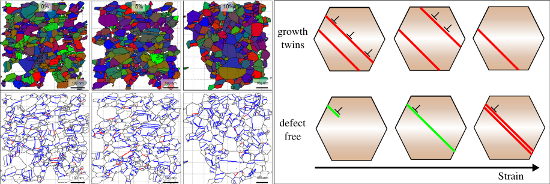
- twinning/detwinning processes, stress-driven grain boundary migration and the formation of shear bands [4][5][6][7]. When studying the mechanical properties of nc metals and the associated deformation mechanisms, it is important to consider the preparation technique for the corresponding bulk nc metal
- Schmid-factor (the highest resolved shear stress). Here, randomly oriented twin boundaries can act as barriers to dislocation motion. In nano-twinned Pd, however, partial dislocations nucleate preferentially at twin boundaries. The twin boundaries then act as nucleation site and do not hinder successive
- for the remaining strain that does not come from dislocation/twin activity. Lohmiller et al. has already reported other mechanisms, such as GB shear and slip, as well as GB migration resulting in grain growth [28][45]. Conclusion NcPd thin films with a grain size of about 35 nm (plane view) were


Nanoglasses: a new kind of noncrystalline materials
Beilstein J. Nanotechnol. 2013, 4, 517–533, doi:10.3762/bjnano.4.61
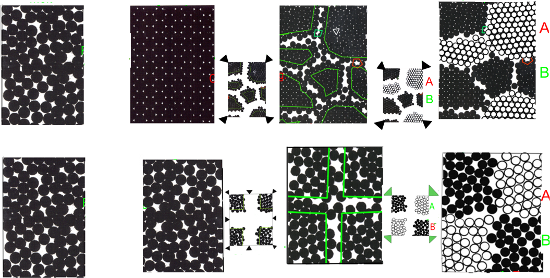
- enhanced free volume in shear bands [9][10], the average free volume content of a glass was found to increase [10][11] with increasing plastic deformation. However, despite the similarity between the microstructural features of a nanoglass produced by consolidating nanometer-sized glassy spheres and a
- nanoglass produced by introducing a high density of shear bands, the results of recent studies by molecular dynamics (MD) [12][13] and Mössbauer spectroscopy of a ball-milled melt-quenched Fe90Sc10 glassy ribbon and a Fe90Sc10 nanoglass suggest that the atomic structure of both kinds of nanoglass differ
- the nanoglass. In structurally homogenous ribbons, only one (or a few) shear bands are known to be nucleated under sufficiently high applied stresses. Plastic flow is limited to these shear bands and frequently results in fracture after an overall plastic deformation of less than 1%. However, in the




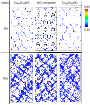


Molecular dynamics simulations of mechanical failure in polymorphic arrangements of amyloid fibrils containing structural defects
Beilstein J. Nanotechnol. 2013, 4, 429–440, doi:10.3762/bjnano.4.50
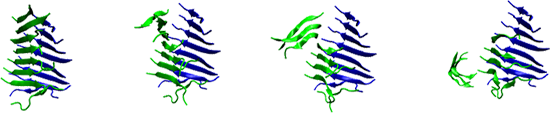
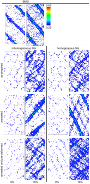
- 5. All three fibril polymorphs demonstrate an anisotropic response to mechanical probing. Similar mean peak forces are required to break the fibrils when the hydrogen-bond networks are probed (“shear” and “stretch”). There are however, very distinct responses in the SMD simulations that probe the
- demonstrates how the details imposed by polymorphic arrangements of the peptides in the fibril can determine the mechanical characteristics when a force is applied in a particular direction. Hydrogen-bond-network response: In the two pulling geometries (“shear” and “stretch”) that primarily interrogate the
- hydrogen-bond networks, similar mean peak forces were recorded for all three polymorphs. The stretch and shear simulations probe the interpeptide hydrogen networks in directions parallel and perpendicular to the fibril axis respectively. Figure 4 shows that pulling parallel to the hydrogen bond network


Optimal geometry for a quartz multipurpose SPM sensor
Beilstein J. Nanotechnol. 2013, 4, 370–376, doi:10.3762/bjnano.4.43
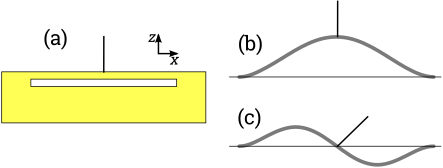
- through an angle θ is given by where J and G are the torsion constant and shear modulus of the beam. In the case of a cantilever beam with a tip of length Ltip (measured from the central axis of the beam), the lateral displacement of the tip apex, Alat, is Ltipθ. Replacing the torque with the lateral tip


Plasticity of Cu nanoparticles: Dislocation-dendrite-induced strain hardening and a limit for displacive plasticity
Beilstein J. Nanotechnol. 2013, 4, 173–179, doi:10.3762/bjnano.4.17
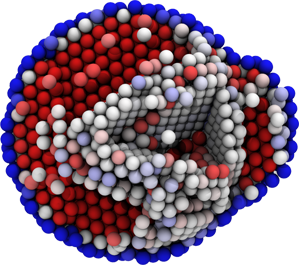
- high tensile strain rates by amorphisation [2] attributed to the kinetic energy of atoms exceeding the enthalpy of fusion [3]. Also, a near-surface nanodisturbance path, where, instead of conventional displacive plasticity, nanoscopic areas of plastic shear accommodate the stress, was reported for Ag
- File 2). We start our analysis by presenting the details of the displacive case. The maximum shear component (the maximum eigenvalue of the atomic stress tensor) in the initial system and at the onset of plasticity for different orientations for a 15.6 Å orifice is illustrated in Figure 2a–Figure 2c
- . For all the orientations, larger than average values of maximum shear are roughly localised on inverted spherical caps joining the edge of the circular orifice. The most extreme values of the atomic shear (parallel 2.4 MPa, orthogonal 2.3 MPa, and tilted 2.3 MPa) are almost the same and are located at


Functionalization of vertically aligned carbon nanotubes
Beilstein J. Nanotechnol. 2013, 4, 129–152, doi:10.3762/bjnano.4.14
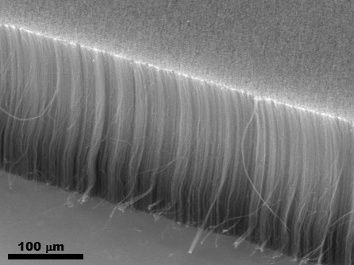
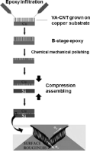
- remarkable self-cleaning abilities and the same properties, i.e., high shear and peeling forces (Figure 5) [64][65][66]. A further step in patterning VA-CNTs is the engineering of 3D-architectures. The formation of 3D-aligned carbon nanotube patterns is obtained by growing VA-MWCNTs with different lengths








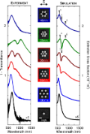
Plasmonic oligomers in cylindrical vector light beams
Beilstein J. Nanotechnol. 2013, 4, 57–65, doi:10.3762/bjnano.4.6
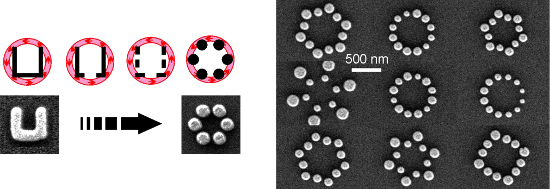
- microscopes, in combination with a home-built shear force AFM system and the use of sharp gold or glass-fiber tips, we operate a versatile scanning near-field optical microscope (SNOM) system. To measure the near field generated from the plasmonic oligomers, one single oligomer is placed inside the radially
- spatial arrangements imaginable. Schematic of two optical microscopic configurations using a parabolic mirror for focusing (a, adapted from [27]) and an objective lens for focusing (b). Shear-force SNOM configurations can be obtained by integrating a glass fiber (c) or a gold tip (d) to the confocal