


Search results
Search for "solvent" in Full Text gives 672 result(s) in Beilstein Journal of Nanotechnology. Showing first 200.
Piezoelectric nanogenerator for bio-mechanical strain measurement
Beilstein J. Nanotechnol. 2022, 13, 192–200, doi:10.3762/bjnano.13.14
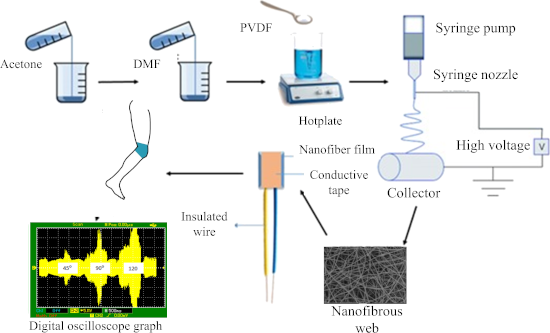
- than the nanofibers obtained from 14 wt % solution (Figure 2B) due to incomplete solvent evaporation. The optimum polymer solution concentration is essential to obtain defect-free smooth fibers [14][37]. The nanofibers obtained from 16 wt % solution were smooth and presented a bead-free morphology
- high concentration of polymer solution. During evaporation of the solvent, polymer chains are more likely to form crystalline structures because they are closer together than in the solutions with lower concentration Also, when the polymer amount increases in the solution it increases generation
- capacity [37]. Digital oscilloscope analysis The nanofibrous mesh made from the 16 wt % solution was selected for developing the sensor (Figure 4F). These nanofibers have a smooth and defect-free morphology with highly crystalline regions, which indicate the complete evaporation of the solvent and the


A comprehensive review on electrospun nanohybrid membranes for wastewater treatment
Beilstein J. Nanotechnol. 2022, 13, 137–159, doi:10.3762/bjnano.13.10
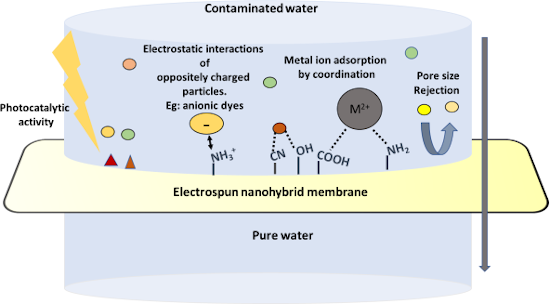
- linear pathway and then will experience bending instabilities with the elongation of the jet due to the electrostatic repulsion forces. This high frequency bending of the polymer jet and the simultaneous evaporation of the solvent produces the ultrathin solid nanofibers collected on the collector [19
- between the nozzle and the collector is essential to provide the time for the solvent to be evaporated and most notably, for the stretching of the fibers due to columbic forces. If the distance is too short, the polymer jet will not have enough time to stretch, which will produce thicker and wet fibers
- with beads due to the insufficient evaporation of the solvent. If the distance is too high, the weakening of the electrostatic forces hinders the stretching of the polymer yielding thicker fiber diameters [24][25]. Megelski et al. reported bead production in electrospun PS fibers when the nozzle to




A photonic crystal material for the online detection of nonpolar hydrocarbon vapors
Beilstein J. Nanotechnol. 2022, 13, 127–136, doi:10.3762/bjnano.13.9
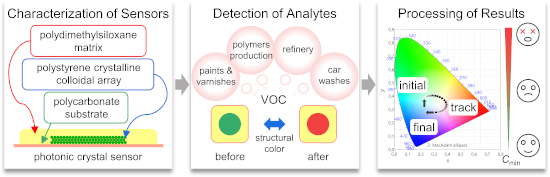
- sensors with a visual recording of analysis results. Kinetics of interaction between the sensor and solvent vapors Of interest is the use of a 3D PhC-based sensor for online measurements of the concentration of nonpolar solvents and their vapors. Exposure to saturated solvent vapors allows the analyte to
- chlorobenzene [41]. Therefore, the main factor can be considered the affinity of solvents to PDMS, namely the polarity and rate of diffusion of the solvent through the matrix. In addition, the polydimethylsiloxane matrix protects the polystyrene CCA from the effects of high concentrations of hydrocarbons, thus
- application of polydimethylsiloxane. In some experiments, it was possible to detect toluene vapors with a concentration of ca. 0.3 mg/m3 using a sensor with a sensitive layer thickness about 20 μm. Effects of organic solvent mixtures on the sensor Of particular interest is the detection of analytes in complex


Theranostic potential of self-luminescent branched polyethyleneimine-coated superparamagnetic iron oxide nanoparticles
Beilstein J. Nanotechnol. 2022, 13, 82–95, doi:10.3762/bjnano.13.6
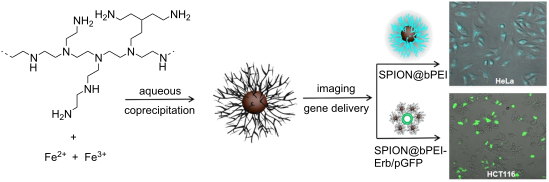
- the backbone, acidification of amines, hydrogen bonding, exciplex formation, amine oxidation, and solvent-induced aggregation were reported as factors that amplify the weak luminescence of PEI and amine-containing dendrimers [15][16][17][18][20][24]. The luminescence of these materials is especially




Sputtering onto liquids: a critical review
Beilstein J. Nanotechnol. 2022, 13, 10–53, doi:10.3762/bjnano.13.2
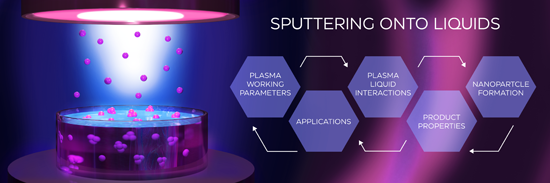
- metallic or ceramic targets over a host liquid substrate that sustains low pressures (typically in the range between 10−4 to 10−3 and 1–10 Pa). Because (i) the target material has a high purity and (ii) the host liquid plays the role of solvent and protective agent for growing NPs, the approach got a
- the main feature of the SoL approach: It is the combination of a plasma-based technique and colloidal synthesis. Therefore, researchers from both communities are involved and physicists quite often do not pay enough attention to the solvent properties, while chemists may have little or no knowledge of
- solvent contamination [16]. However, the production rate is relatively low, and the cost of production is very high, mainly due to the massive waste produced during the synthesis [22]. A further drawback is the large consumption of energy to maintain the required pressure and temperature conditions used






Electrical, electrochemical and structural studies of a chlorine-derived ionic liquid-based polymer gel electrolyte
Beilstein J. Nanotechnol. 2021, 12, 1252–1261, doi:10.3762/bjnano.12.92
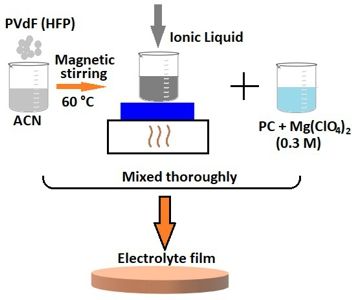
- . Experimental Materials The ionic liquid [BDiMIM][Cl], host polymer PVdF-HFP with an average molecular weight of 400000 (MW), and salt magnesium per chlorate Mg(ClO4)2 were all obtained from Sigma Aldrich, Germany. The plasticizer propylene carbonate was purchased from Loba Chemie, and the solvent acetonitrile
- concentrations of the salt Mg(ClO4)2 were dissolved in the plasticizer PC. Different weight percentages of PVdF-HFP and ionic liquid were separately dissolved in a common solvent (i.e., ACN). The optimized solution of the liquid electrolyte was then mixed with the polymer/ionic liquid solution in different



A review on slip boundary conditions at the nanoscale: recent development and applications
Beilstein J. Nanotechnol. 2021, 12, 1237–1251, doi:10.3762/bjnano.12.91
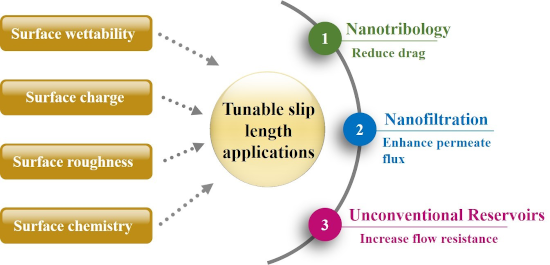
- density on the distribution of the electrostatic potential within the EDL, many previous studies have investigated how the surface charge density can affect the solvent hydrodynamic slippage on solid surfaces. It was demonstrated by many researches that when the surface charge density increases, the slip


Morphology-driven gas sensing by fabricated fractals: A review
Beilstein J. Nanotechnol. 2021, 12, 1187–1208, doi:10.3762/bjnano.12.88
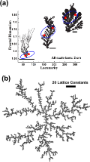
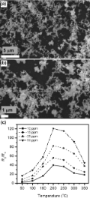
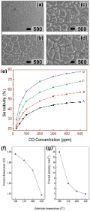
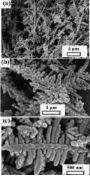
- starts drying, evaporation of the solvent causes voids and helps in generating clusters of the solute on the substrate. For smaller pockets of the fluid, which can be regarded as droplets, variation in surface tension or temperature at different interfaces predominantly causes either a surface tension










Revealing the formation mechanism and band gap tuning of Sb2S3 nanoparticles
Beilstein J. Nanotechnol. 2021, 12, 1021–1033, doi:10.3762/bjnano.12.76
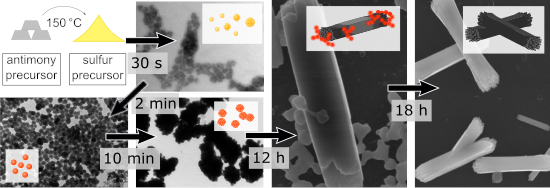
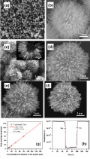
- with ethylene glycol or polyethylene glycol as solvent [29][30]. The authors reasoned the cleavage at the particle tips by weak van der Waals forces between (Sb4S6)n chains, of which the particles consisted, or by strongly bound ligands interfering with the crystal growth, respectively. However, as


Progress and innovation of nanostructured sulfur cathodes and metal-free anodes for room-temperature Na–S batteries
Beilstein J. Nanotechnol. 2021, 12, 995–1020, doi:10.3762/bjnano.12.75
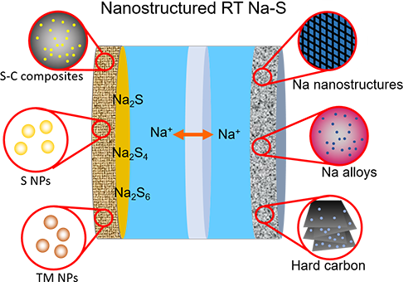
- cycles at 167 mA·g−1 current density. While CS2 is the most efficient solvent for sulfur, it is also an extremely reactive and hazardous solvent. Therefore, more benign solution methods for the synthesis of S NPs and sols are sought. In fact, such methods have been known for more than a hundred years now
- and can be distinguished in aqueous and organic solvent routes [57]. The so-called Weimarn sols are produced by dissolution of sulfur powder in ethanol or acetone-based solutions and the subsequent precipitation of sub-micrometer-size particles in water [57]. The so-called Raffo sols are obtained by a
- research. Qu et al. [60] precipitated 15 nm sized S NPs on V2O5 by acid hydrolysis of Na2S2O3. After encapsulation with graphene sheets the cathode had a discharge capacity of 215 mAh·g−1 at 2C after 2000 cycles. In another chemical method, S NPs were precipitated on rGO from a deep eutectic solvent




Molecular assemblies on surfaces: towards physical and electronic decoupling of organic molecules
Beilstein J. Nanotechnol. 2021, 12, 950–956, doi:10.3762/bjnano.12.71

- ligands attached to the metal center of the porphyrin were observed regardless of the type of surface (highly oriented pyrolytic graphite (HOPG) and Au surfaces were used), solvent (1-phenyloctane and n-tetradecane) and tip material (Pt/Ir, Au, and W), which indicates that the ligands have to be decoupled
Self-assembly of Eucalyptus gunnii wax tubules and pure ß-diketone on HOPG and glass
Beilstein J. Nanotechnol. 2021, 12, 939–949, doi:10.3762/bjnano.12.70
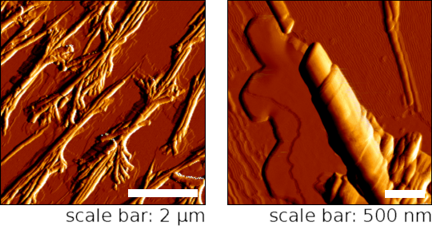
- specimens with recrystallized structures of wax and ß-diketone were prepared for SEM (Gemini Supra 40VP, Zeiss, Oberkochen, Germany) three days after the evaporation of the solvent. They were fixed on aluminum stubs (Plano, Wetzlar, Germany) with double-sided adhesive tape (Double-sided Tape Universal, Tesa
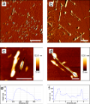
- solvent and were done in tapping mode with tapping-mode cantilevers (Tap300-G, Budget Sensors, Sofia, Bulgaria). The scan rates ranged from 0.7 to 2.3 Hz and the scan sizes from 3 × 3 to 10 × 10 µm. The maximum possible set point was used (approx. 60–70% of drive amplitude). Obtained topography and
- on the top of them were detected. AFM investigation of wax and ß-diketone recrystallization Recrystallization of wax and pure ß-diketone was investigated by AFM. The measurements started 6 to 14 min after the evaporation of the solvent and continued for 1 to 23 h. Recrystallization on HOPG The first




The role of deep eutectic solvents and carrageenan in synthesizing biocompatible anisotropic metal nanoparticles
Beilstein J. Nanotechnol. 2021, 12, 924–938, doi:10.3762/bjnano.12.69
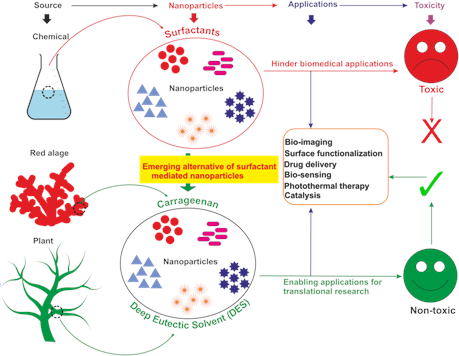
- during preparation, and require no further purification, which gives them properties of a green solvent [25]. However, DESs share remarkable features with RTILs such as low vapor pressure, high tolerance to humidity, and high thermostability. The term “deep eutectic solvent” was first coined by Abbott in
- the year 2003 [26]. The first work on using DESs as a solvent in synthesizing anisotropic gold nanoparticles was reported in 2008 [27]. The synthesis involved no surfactant or seed in the reaction mixture. Later on, several studies were carried out to synthesize nanomaterials using DESs that embrace
- the principles of green chemistry. Despite extensive studies for more than a decade, DESs as solvents for nanomaterial synthesis yet awaits exploration regarding biological applications. In an interesting recently published work, a natural deep eutectic solvent (NADES) has been used to extract metal


Modification of a SERS-active Ag surface to promote adsorption of charged analytes: effect of Cu2+ ions
Beilstein J. Nanotechnol. 2021, 12, 902–912, doi:10.3762/bjnano.12.67
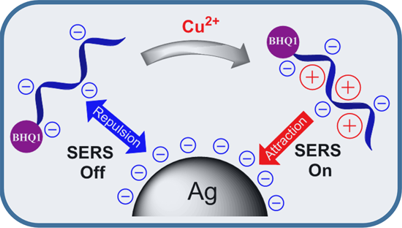
- were analyzed from SEM and TEM images. To achieve a better resolution during SEM, we utilized a conductive silicon support and excluded the metal coating of the sample; Ag NPs were placed on the silicon surface by adsorptive immobilization to avoid aggregation during solvent evaporation. Figure 1 shows


Comprehensive review on ultrasound-responsive theranostic nanomaterials: mechanisms, structures and medical applications
Beilstein J. Nanotechnol. 2021, 12, 808–862, doi:10.3762/bjnano.12.64
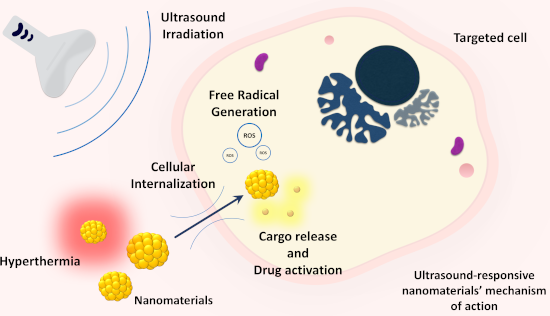
- temperature, pH, enzyme, redox potential, ionic strength, or solvent composition of the media. Other stimuli are external, such as heat, light, electric field, magnetic field, or ultrasound (US) [5][6][7]. Designing such single, dual, or multi-stimulus-responsive smart delivery vehicles provides an


Fate and transformation of silver nanoparticles in different biological conditions
Beilstein J. Nanotechnol. 2021, 12, 665–679, doi:10.3762/bjnano.12.53
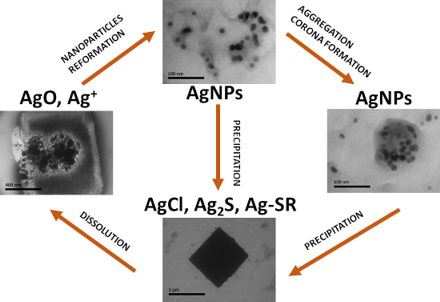
- three. The proton at position six overlapped with the solvent signal and thus is not shown. The peaks were assigned according to AIST Spectral Database for Organic Compounds [55]. Then, a 5 mM solution of AgNO3 was added and the mixture was left to react for 2 h. During that time, the solution became
- , PaloAlto, CA, USA) operating at 399.6 MHz. The chemical shifts were expressed in parts per million (ppm), referenced to the residual water signal. All spectra were recorded at 25 °C. The signal of the solvent was suppressed by using the PRESAT pulse sequence, available in the VnmrJ (4.2A) software. TEM




High-yield synthesis of silver nanowires for transparent conducting PET films
Beilstein J. Nanotechnol. 2021, 12, 624–632, doi:10.3762/bjnano.12.51
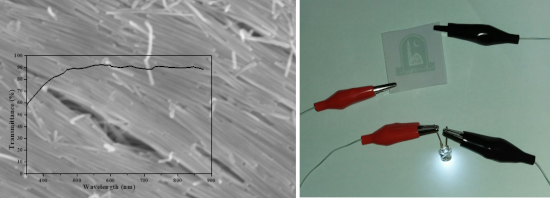
- ethanol, were purchased from Sigma-Aldrich. All of them were of analytical grade and were used as purchased without any purification. Ethylene glycol (EG) was used as a solvent in the reactions. Preparation of silver nanowires For synthesizing silver nanowires (AgNWs) with high aspect ratio and controlled
- diameter, ethylene glycol (EG) was used as a solvent and also acted as a reducer. Silver nitrate (AgNO3) was used as source of silver. The stabilizer used in the reaction was PVP, which also acted as a capping agent. In addition to stabilizing and capping, PVP also prevented the agglomeration of silver
- ratio of 1:4 caused uniform and impurity-free growth of AgNWs. Usually, special attempts are taken to purify the nanowires [39], but in our case no additional steps were required to purify the as-synthesized AgNWs. The solvent plays a vital role in assembling the AgNWs [54]. It is found that the


Nanoporous and nonporous conjugated donor–acceptor polymer semiconductors for photocatalytic hydrogen production
Beilstein J. Nanotechnol. 2021, 12, 607–623, doi:10.3762/bjnano.12.50
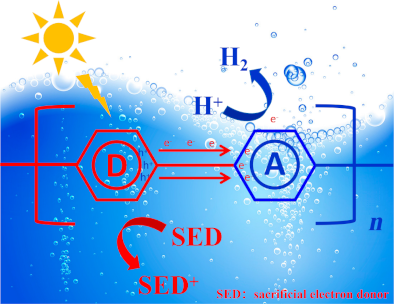
- side chains. Different from long alkyl chains, the polymers incorporating the oligo(ethylene glycol) side chains (P48) (Figure 5) showed considerably improved charge separation and transport and could be dispersed in water without any co-solvent. Similar to the N atoms in BT units, oxygen atoms can




Influence of electrospray deposition on C60 molecular assemblies
Beilstein J. Nanotechnol. 2021, 12, 552–558, doi:10.3762/bjnano.12.45

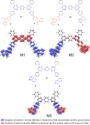
- conditions are more difficult to be maintained. Additionally, because the presence of solvent on the surface cannot be fully eliminated, one has to take care of its possible influence. Here, we compare the high-vacuum electrospray deposition method to thermal evaporation for the preparation of C60 on
- 1a. Then, by applying a voltage difference, typically 1.2 kV, between the solution and the capillary, droplets of solvent and diluted molecules are created and accelerated towards the capillary, through the differential pumping vacuum system, finally reaching the sample in ultrahigh vacuum. The main
- requirement for the suitability of molecules for ESD is their solubility in a compatible solvent. A drawback is, therefore, the presence of the solvent itself. Various implementations of electrospray deposition setups were developed to allow for the selection of the molecular species via mass spectrometer


On the stability of microwave-fabricated SERS substrates – chemical and morphological considerations
Beilstein J. Nanotechnol. 2021, 12, 541–551, doi:10.3762/bjnano.12.44
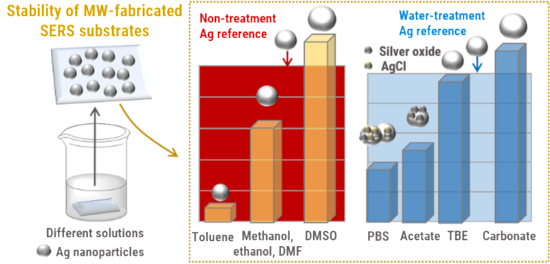
- investigation to determine the nanoparticle layers and their Raman activity. For this purpose, the substrates were split in half. Monolayer preparation The 4-ATP monolayers were self-assembled onto cleaned and dried solvent and buffer-treated SERS substrates (see previous section) by immersing the prepared


Surface-enhanced Raman scattering of water in aqueous dispersions of silver nanoparticles
Beilstein J. Nanotechnol. 2021, 12, 497–506, doi:10.3762/bjnano.12.40
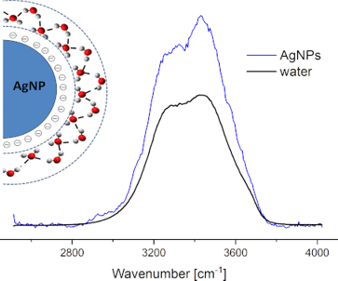
- average molecule numbers in a scattering volume for the SERS experiment conditions and for Raman scattering, respectively. The studied system herein is not a typical SERS system regarding the SERS substrate and the analysed substance (target molecule) in a low concentration. In our system, the solvent is
- values (average of total energy values of the interactions with all neighbouring elements) were taken into account without a detailed differentiation of the particular elements [47][48][49][50]. Each lattice site represented a solvent, here a water molecule or a Ag atom. Two states of water were
- probability of a successful solvent displacement (reflecting the water diffusion) was defined by the Boltzmann distribution: where T is the temperature (set as 300 K), R is the universal gas constant, and E could take two values: Ew (=Σ3k=1 εww + εaw) close to the wall or Eb (=Σ4k=1 εww) far from the wall


A review on nanostructured silver as a basic ingredient in medicine: physicochemical parameters and characterization
Beilstein J. Nanotechnol. 2021, 12, 440–461, doi:10.3762/bjnano.12.36
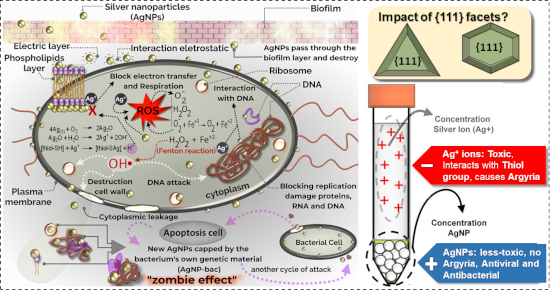
- polyol synthesis method involves the reduction of a metal salt in the presence of a boiling solvent at elevated temperatures (>160 °C). In order to protect the nucleated particles and avoid agglomeration, the most commonly used adjuvant is PVP [139]. One of the advantages of this method is that ethylene
- glycol, besides serving as a solvent, is also a reducing agent. Furthermore, as the reaction is dependent on the temperature it allows for an easy control of the nucleation and growth of AgNPs, as shown in Figure 10 [141]. Upon starting the reaction in an EG solution heated at 160 °C, the monocrystalline


Solution combustion synthesis of a nanometer-scale Co3O4 anode material for Li-ion batteries
Beilstein J. Nanotechnol. 2021, 12, 424–431, doi:10.3762/bjnano.12.34
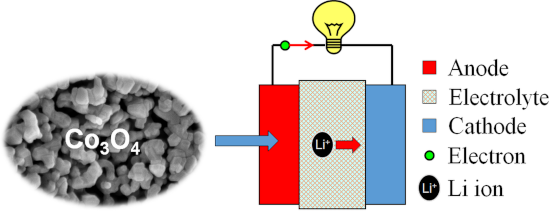
- ]. During the typical SCS process, the initial phase is carried out at low temperatures and is associated with the evaporation of water or solvent. This allows for the formation of a gel, which acts as the precursor in the main part of the self-propagation reaction. This step is carried out at elevated


Colloidal particle aggregation: mechanism of assembly studied via constructal theory modeling
Beilstein J. Nanotechnol. 2021, 12, 413–423, doi:10.3762/bjnano.12.33
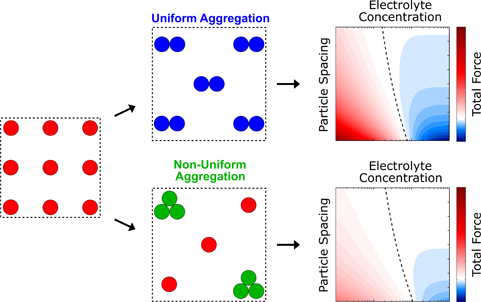
- with respect to van der Waals and double layer interactions. Preliminary results show that the particle aggregation behavior depends on the initial lattice configuration and solvent properties. Ultimately, our model provides the first constructal framework for predicting the self-assembly of particles
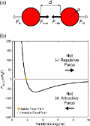
- or repulsive force, respectively (Figure 1b). Therefore, when FDLVO = 0, the particles experience zero net force. These fixed point locations are observed in Figure 1b where FDLVO intersects the equilibrium line. The location of the stable fixed point, which varies based on the particle and solvent
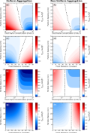
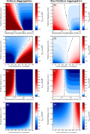
- The constructal model outlined above provides a useful framework for predicting, tuning, and optimizing colloidal particle assembly. As a proof of concept, we start with a representative particle/solvent combination, where a0 = 25 nm, ζp = −25 mV, I = 0.011 M, and εc = 80 (water), with an initial


The impact of molecular tumor profiling on the design strategies for targeting myeloid leukemia and EGFR/CD44-positive solid tumors
Beilstein J. Nanotechnol. 2021, 12, 375–401, doi:10.3762/bjnano.12.31
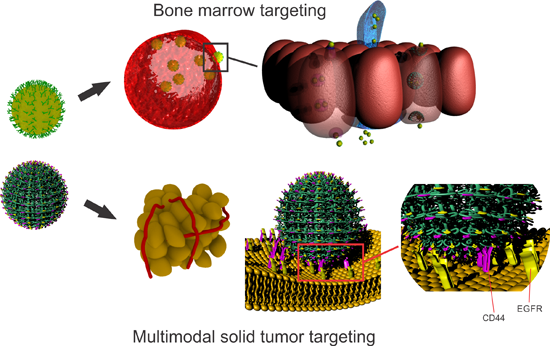
- ponatinib and SAR302503 are hydrophobic drugs and were co-encapsulated inside the hydrophobic core of PEG–PLA micelles by solvent displacement nanoprecipitation. The results demonstrated that the targeted NDDS enabled a high availability of the drugs inside the BM, which is a prerequisite for overcoming the





