Search results
Search for "step" in Full Text gives 1538 result(s) in Beilstein Journal of Nanotechnology. Showing first 200.
AI-assisted models to predict chemotherapy drugs modified with C60 fullerene derivatives
Beilstein J. Nanotechnol. 2024, 15, 1170–1188, doi:10.3762/bjnano.15.95
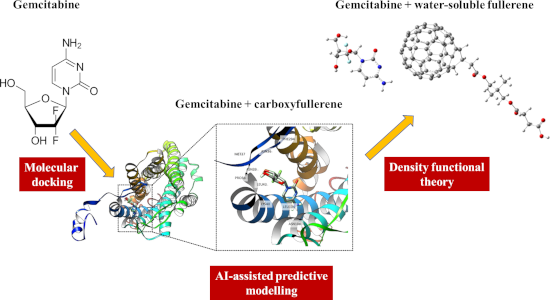
- structure, as in the study of Muthiah and coworkers [45], was validated using PROCHECK [46] to check the quality of the protein structure. The PDB produced with the previous step was subsequently optimized by an energy minimization through Amber force fields using the USCF Chimera 1.14 toolkit [47]. The


Quantum-to-classical modeling of monolayer Ge2Se2 and its application in photovoltaic devices
Beilstein J. Nanotechnol. 2024, 15, 1153–1169, doi:10.3762/bjnano.15.94
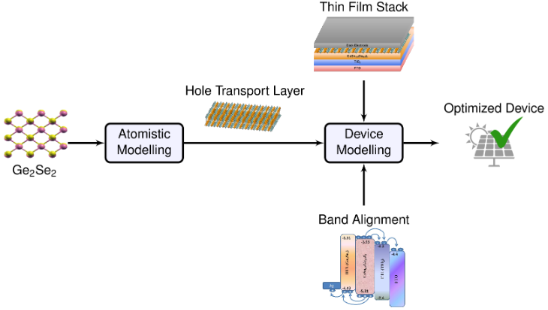
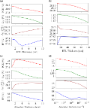
- EC stands for conduction band and EV stands for valence band. FN and FP stand for quasi-Fermi levels of electrons and holes, respectively, at T = 300 K. Computational pathway to estimate the materials’ behavior and application in a PSC. First step – DFT geometry optimization, optimization of
- computational parameters, and electronic band structure and deformation potential extraction. Second step – test of the structural stability via density functional perturbation theory (DFPT): We compute the phonon spectra to verify the structure’s dynamical stability. Third step – DFT-based electronic property
- estimation: We utilize the HSE functional to predict the band structure. Fourth step – DFT post-processing: (a) Extraction of the device-related parameters such as DOS, charge mobility, effective masses, thermal velocities, electron affinity, and work functions from fundamental physics equations together




Local work function on graphene nanoribbons
Beilstein J. Nanotechnol. 2024, 15, 1125–1131, doi:10.3762/bjnano.15.91
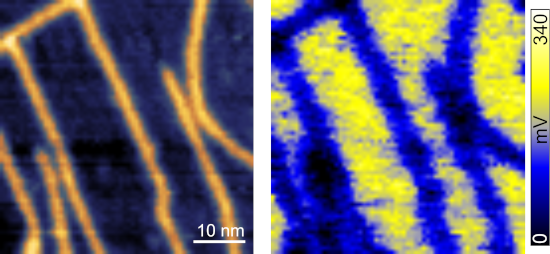
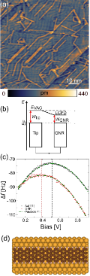
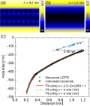
- and Discussion A topographic image of GNRs on the Au surface is shown in Figure 1a. While most GNRs are attached to gold step edges or to other ribbons, we additionally observe isolated individual ribbons. When the tip and the GNR are brought close together, electrostatic forces between tip and sample

![[Graphic 1]](/bjnano/content/inline/2190-4286-15-91-i4.svg?max-width=637&scale=1.18182)
Direct electron beam writing of silver using a β-diketonate precursor: first insights
Beilstein J. Nanotechnol. 2024, 15, 1117–1124, doi:10.3762/bjnano.15.90

- , Feuerwerkerstrasse 39, CH 3602 Thun, Switzerland 10.3762/bjnano.15.90 Abstract Direct electron beam writing is a powerful tool for fabricating complex nanostructures in a single step. The electron beam locally cleaves the molecules of an adsorbed gaseous precursor to form a deposit, similar to 3D printing but
- without the need for a resist or development step. Here, we employ for the first time a silver β-diketonate precursor for focused electron beam-induced deposition (FEBID). The used compound (hfac)AgPMe3 operates at an evaporation temperature of 70–80 °C and is compatible with commercially available gas
- . Keywords: focused electron beam-induced deposition; precursor; silver nanostructures; Introduction Direct writing with an electron beam allows for single-step and maskfree 3D printing of sophisticated nanostructures at the nanoscale [1][2][3][4]. The process relies on the electron beam-induced


Signal generation in dynamic interferometric displacement detection
Beilstein J. Nanotechnol. 2024, 15, 1070–1076, doi:10.3762/bjnano.15.87
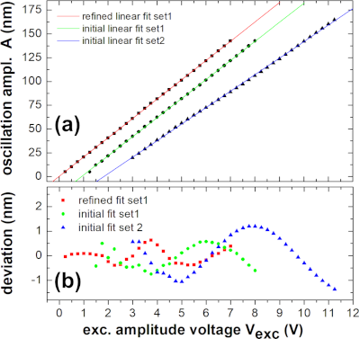
- amplitude limit (red arrow in Figure 4). A parameter that can reliably be deduced from the fit is fs as this is the characteristic fundamental frequency of the signal. In the second step of data evaluation, we perform a fit of the same fit function to the same experimental data, however, with a reduced
- number of fit parameters. In this fit, and fs are taken over as fixed values from the first fit, while the other parameters are treated as free fit parameters. This two-step procedure allows us to determine all signal parameters with high accuracy. As the interferometric method is perfectly suited for
- = 20.38 nm/V. However, from Figure 4 it is clear that the precision of this value is limited as the λ/8 point is not well defined. Figure 5 illustrates the enhancement in accuracy that can be achieved by applying the two-step fit procedure for data analysis. In this plot of A(Vexc), measurements taken at


Interface properties of nanostructured carbon-coated biological implants: an overview
Beilstein J. Nanotechnol. 2024, 15, 1041–1053, doi:10.3762/bjnano.15.85
- pro-inflammatory to anti-inflammatory phenotypes. The final step in the immune system response involves the formation of foreign-body giant cells on the implant surface. Increased cytokine levels trigger the release of pro-fibrogenic factors and recruiting fibroblasts. Fibroblasts induce the
- bacteria according to the mechanism shown in Figure 4. The biofilm formation consists of four stages, namely, (i) adhesion, (ii) aggregation, (iii) maturation, and (iv) dispersion. Adhesion is the first step and is ruled by the polarity of the surface as reported by Gittens and co-workers [105]. The



Bolometric IR photoresponse based on a 3D micro-nano integrated CNT architecture
Beilstein J. Nanotechnol. 2024, 15, 1030–1040, doi:10.3762/bjnano.15.84
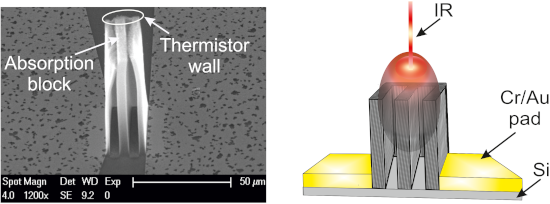
- thermistor region, can be fabricated in a single chemical vapor deposition process step. The thermistor resistance is mainly determined by the high junction resistances of the adjacent aligned CNTs. This configuration also provides low lateral thermal conductivity and a high temperature coefficient of
- exploration of the potential for large-scale production of CNT-based non-cryogenic IR microbolometers and thermal detectors, promising cost-effective solutions ready for widespread adoption across multiple industries. It represents a significant step forward in addressing the growing demand for advanced
- . Optimized contacts between the Cr/Au pads and the M-shaped CNT block can be obtained, for example, with additional CNT blocks grown on the Cr/Au pads, as shown in [7]. DC measurements The first step involved the measurement of the bolometer resistance Rbolometer as a function of temperature T induced by a


Entry of nanoparticles into cells and tissues: status and challenges
Beilstein J. Nanotechnol. 2024, 15, 1017–1029, doi:10.3762/bjnano.15.83
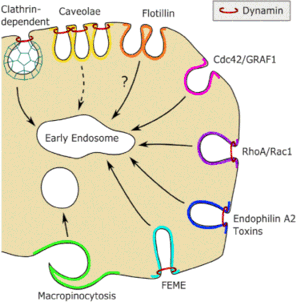
- step in FEME is blocked by a number of inhibitors that target other mechanisms [11]. Importantly, dynamin is required for the formation of vesicles by numerous mechanisms [7][8], but was recently reported to stabilize some caveolae [12]. Furthermore, when interfering with one uptake mechanism, the cell


Can neutral clusters: a two-step G0W0 and DFT benchmark
Beilstein J. Nanotechnol. 2024, 15, 1010–1016, doi:10.3762/bjnano.15.82
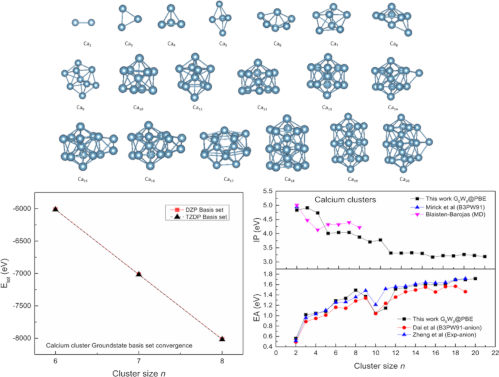
- /bjnano.15.82 Abstract Electronic and structural properties of calcium clusters with a varying size range of 2–20 atoms are studied using a two-step scheme within the GW and density functional theory (DFT) with generalized gradient approximation (GGA). The GGA overestimates the binding energies, optimized
- cluster for the size range of 2–20 in comparison with reported data which is calculated from Equation 1: Here, Etot is the total energy of the cluster after the relaxation step, n is the cluster size, and Eatom represents the free atom energy. The experimental studies of calcium dimers showed that the


Atomistic insights into the morphological dynamics of gold and platinum nanoparticles: MD simulations in vacuum and aqueous media
Beilstein J. Nanotechnol. 2024, 15, 995–1009, doi:10.3762/bjnano.15.81
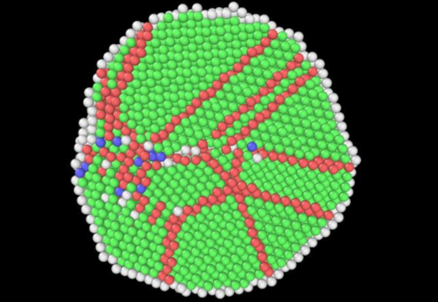
- (FCC) unit cell 8 × 8 × 8 times. The supercell is then simulated for 1 ns in the canonical (NVT) ensemble at 300 K. The Langevin thermostat is employed with a coupling time of 0.1 ps. A time step of 1 fs using the velocity-Verlet integration scheme is used. The system is subsequently heated to 1400 K
- placed in vacuum, and the systems are cooled down to 100 K following the single-step procedure of Martin et al. [49]. In each step, the temperature is decreased instantaneously by 100 K, and the systems are relaxed by performing a MD simulation of 20 ns in the NVT ensemble. In total, this procedure is
- employed 13 (20) times for all Au (Pt) NPs until the temperature reaches 100 K. Configurations are sampled every 10 ps from the last 1 ns of each cooling step. A schematic of the computational steps to generate the NP configurations is shown in Figure 1. Although the employed procedure results in extremely


Recent progress on field-effect transistor-based biosensors: device perspective
Beilstein J. Nanotechnol. 2024, 15, 977–994, doi:10.3762/bjnano.15.80
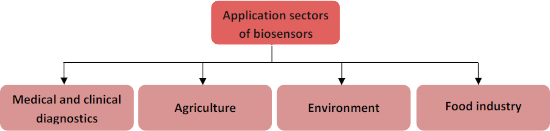
- biomolecule species. Wenga et al. [90] designed a step-gate polysilicon FET-based biosensor for the detection of DNA. An emerging step-gate polycrystalline silicon NW FET-based biosensor was fabricated to enable highly sensitive electrical biosensing for DNA hybridization detection with a low-cost and simple
- a maximum temperature of 600 °C, featuring N-type devices with different parallel polysilicon channels using the side-wall spacer technique. It has been reported that the developed step-gate PSi-NW FET-based biosensor offers a high surface-to-volume ratio and low-cost devices, allowing better and
- process [101][102]. Therefore, it reduces the changes in the underlap length and eliminates the need for a gate alignment step required in a gate-last process [103]. This type of biosensor is also compatible with the conventional process of CMOS technology and exhibits individual addressing in a biosensor


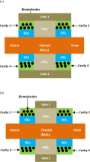


Identification of structural features of surface modifiers in engineered nanostructured metal oxides regarding cell uptake through ML-based classification
Beilstein J. Nanotechnol. 2024, 15, 909–924, doi:10.3762/bjnano.15.75
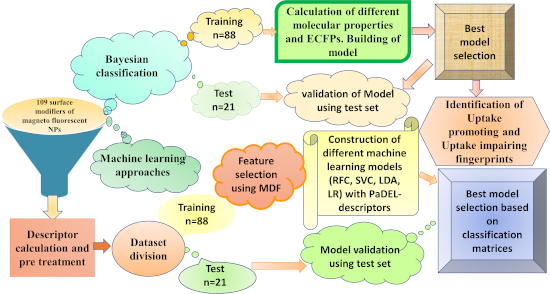
- vital step in the interpretation of a ML model [45]. In our current study, the most discriminating features selection method (MDF_Identifier-v1.0 accessible at https://sites.google.com/jadavpuruniversity.in/dtc-lab-software/home) was used to find out the minimum number of required features that are


Water-assisted purification during electron beam-induced deposition of platinum and gold
Beilstein J. Nanotechnol. 2024, 15, 884–896, doi:10.3762/bjnano.15.73
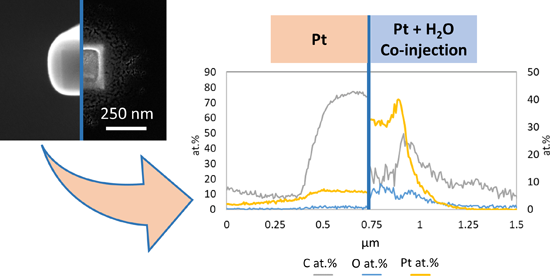
- pure gold structures in a single process step using the co-injection of the precursor Au(tfac)Me2 and water. This inspired the present work, in which we aim for the direct deposition of high-purity Au and Pt nanostructures achieved through the co-injection of water and the precursors Au(acac)Me2 and
- MeCpPtMe3 respectively. Purification of FEBID materials with a reactant gas agent Purification of FEBID products by the use of a reactant gas has been performed either through a one-step procedure, with the co-injection of the FEBID precursor and the reactant gas (purification during deposition), or through
- a two-step procedure, with an initial deposition from the deposition precursor and a successive purification in the presence of a reactant gas (post-deposition purification). Several reactant gases have been tried, either in pure form, such as water [22][23][24][25], oxygen [18][26][27], hydrogen





A review on the structural characterization of nanomaterials for nano-QSAR models
Beilstein J. Nanotechnol. 2024, 15, 854–866, doi:10.3762/bjnano.15.71
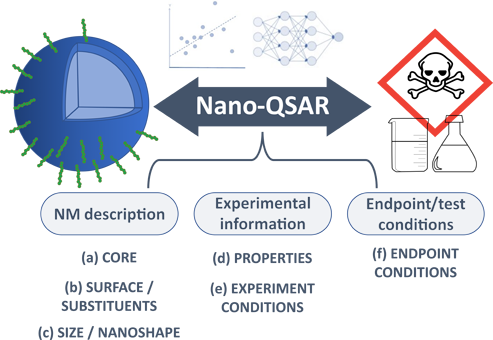
- measured in a test medium or in different media, such as water at a specific pH or purity level [15][64][77]. A further step, proposed as an example of combining preexisting structure–activity predictive models in networks, is the prediction of the zeta potential in the relevant medium using a model that
- following group (f), we have reserved this to experimental conditions of the processes performed prior to the test of the predicted property. These conditions lead to a specific nanoform, even if there is no characterization step to identify its properties, that is used for the test and, potentially, for


Investigation on drag reduction on rotating blade surfaces with microtextures
Beilstein J. Nanotechnol. 2024, 15, 833–853, doi:10.3762/bjnano.15.70
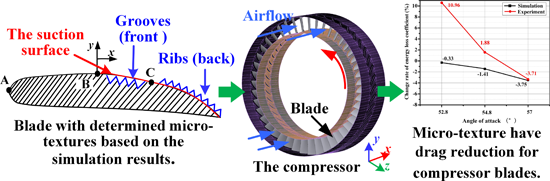
- the flow field on the smooth blade surface could be obtained quickly and accurately. A flow diagram consisting of four steps is shown in Figure 3. Step 1 The compressor model has rotational symmetry, and each blade is uniformly installed on the compressor. Therefore, the compressor model was evenly
- calculation error caused by the simplified model. Through the above simplification, the calculation cost can be greatly reduced while ensuring calculation accuracy. Step 2 The microtexture placement position is determined according to the flow field of the smooth blade. Flow separation occurs during high
- simulation calculation, the theoretical calculated value of the angle of attack was compared with the simulation results. Step 3 First, the drag reduction performance of four microtextures was compared by numerical simulations to determine the geometric type with the optimal drag reduction. Then, different


Intermixing of MoS2 and WS2 photocatalysts toward methylene blue photodegradation
Beilstein J. Nanotechnol. 2024, 15, 817–829, doi:10.3762/bjnano.15.68
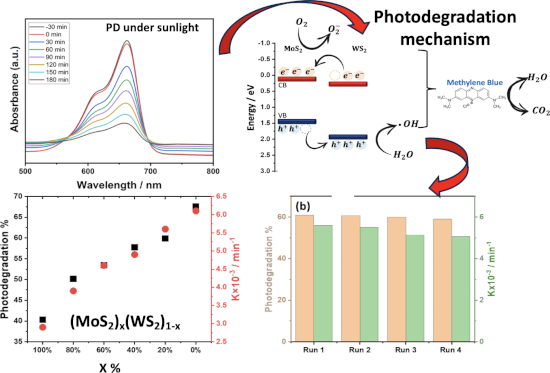
- . Experimental Both MoS2 and WS2 samples were synthesized using a one-step CVD process under atmospheric pressure. The CVD system consists of a quartz tube connected to an argon source. The furnace was gradually heated to specific processing temperatures of MoS2 and WS2, which were subsequently deposited onto


Synthesis of silver–palladium Janus nanoparticles using co-sputtering of independent sources: experimental and theorical study
Beilstein J. Nanotechnol. 2024, 15, 808–816, doi:10.3762/bjnano.15.67
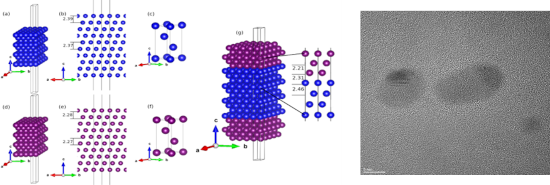
- K, using the DL_POLY 4 code [14]. The time step was set to 0.001 ps, for a total simulation time of 0.5 ns. The atomic interactions were modelled using the Sutton–Chen potential, with the parameters obtained by Çağin et al. [15], and the mixing rules of Rafii-Tabar and Sutton were used to define the




Electron-induced ligand loss from iron tetracarbonyl methyl acrylate
Beilstein J. Nanotechnol. 2024, 15, 797–807, doi:10.3762/bjnano.15.66
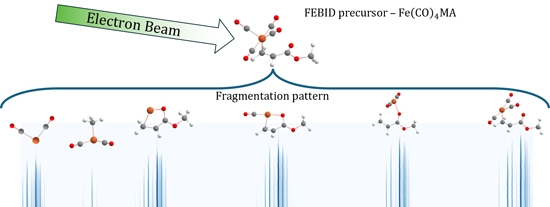
- the gas phase has been probed with respect to its dissociative ionization [10] and dissociative electron attachment [11][12]; there is even information available on its electronic excitation, which is the first step towards neutral dissociation [11]. The gas-phase studies have been complemented by



Electrospun polysuccinimide scaffolds containing different salts as potential wound dressing material
Beilstein J. Nanotechnol. 2024, 15, 781–796, doi:10.3762/bjnano.15.65
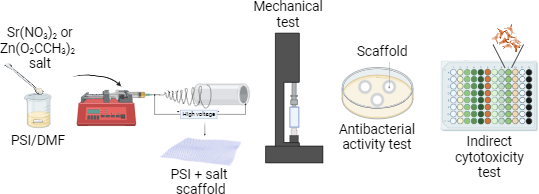
- pellet was filtered and washed using a vacuum filter to remove the phosphoric acid catalyst and the unreacted ʟ-aspartic acid monomeric molecules. Then, the pellet was mixed in distilled water for 10 min. This step was repeated until the pH of the filtrate changed from acidic to neutral. Finally, the PSI
- ). Results and Discussion To create a proper wound dressing material containing inorganic salt for potential antibacterial purposes, the first step was the synthesis of the polymer, the characterization of the solution, and the final scaffold with different techniques. Characterization of solutions and



Green synthesis of biomass-derived carbon quantum dots for photocatalytic degradation of methylene blue
Beilstein J. Nanotechnol. 2024, 15, 755–766, doi:10.3762/bjnano.15.63
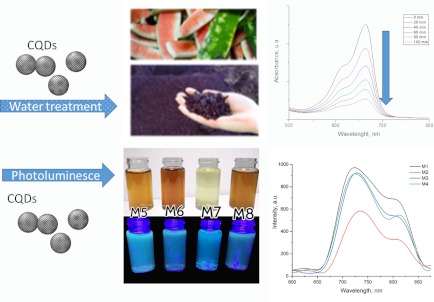
- to provide a greener and more efficient solution for wastewater treatment in the textile industry, reducing environmental impact and conserving clean water resources. This research represents a significant step towards addressing water pollution caused by the textile industry, and highlights the


Level set simulation of focused ion beam sputtering of a multilayer substrate
Beilstein J. Nanotechnol. 2024, 15, 733–742, doi:10.3762/bjnano.15.61
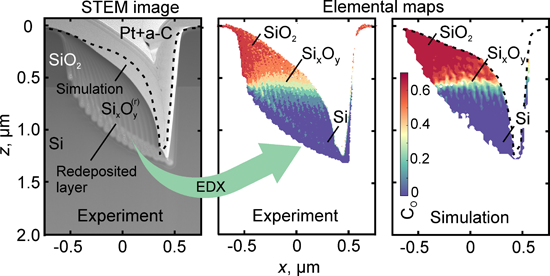
- determined based on at each time step Δt using the marching cubes algorithm and an irregular mesh of triangular elements [33]. In order to solve Equation 1, the ion fluxes and the displacement rate were calculated on the surface S(x, y, t) and transferred via nearest-neighbor interpolation to the primary
- the function depends on the relation between the fluxes of the sputtered and redeposited atoms. If the condition is satisfied in the vicinity of the point for the sputtered surface element ΔS, the total number of redeposited atoms in the cell corresponding to per time step Δt varies by , while the
- negligible for incidence angles smaller than 70°. The values of functions and were tabulated on the basis of SDTrimSP Monte Carlo simulations. The range of incidence angles θ from 70° to 88° was divided into intervals with the step size of 2°, while the hemisphere above the substrate surface was presented

![[Graphic 55]](/bjnano/content/inline/2190-4286-15-61-i68.svg?max-width=637&scale=1.18182)


Simultaneous electrochemical determination of uric acid and hypoxanthine at a TiO2/graphene quantum dot-modified electrode
Beilstein J. Nanotechnol. 2024, 15, 719–732, doi:10.3762/bjnano.15.60
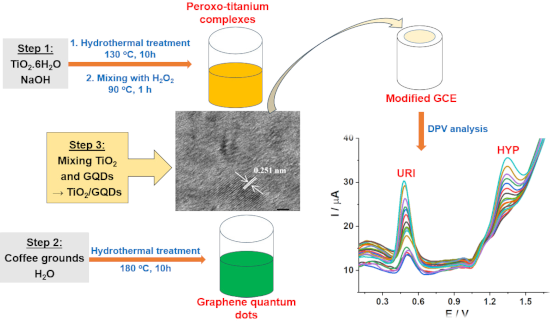
- oxidation of URI generates a bis-imine [35], and the oxidation of HYP forms 6,8-dioxypurine at the N7=C8 double bond [36]. Relevant operational parameters In the present work, the operational parameters accumulation potential (Eacc), accumulation time (tacc), pulse amplitude (ΔE), and potential step (Ustep
- ± 0.25 μA (n = 7), respectively; while the values for HYP are 1.341 ± 0.004 V and 7.204 ± 0.055 μA (n = 7), respectively. This shows that the TiO2/GQDs material interacts well with URI and HYP during the accumulation step. An Eacc value of +0.1 V with low relative standard deviation (RSD) values for IP
- signal. The influence of Ustep was studied in the range from 0.004 to 0.010 V corresponding to a potential scan rate from 13.3 mV·s−1 to 33.3 mV·s−1 with tstep = 0.3 s. It is clear that Ustep slightly changes the oxidation potential of both HYP and URI. Theoretically, increasing the potential step might


Elastic modulus of β-Ga2O3 nanowires measured by resonance and three-point bending techniques
Beilstein J. Nanotechnol. 2024, 15, 704–712, doi:10.3762/bjnano.15.58
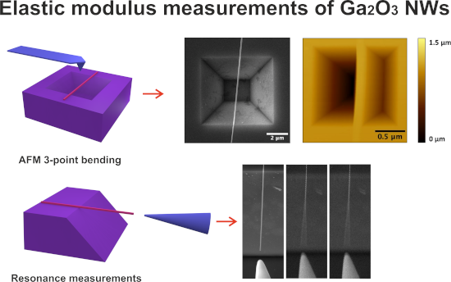
- suitable for use on bendable and stretchable substrates in line with the current trends in electronic technologies focusing on flexible electronic device development [11][12]. Consequently, understanding the mechanical properties of β-Ga2O3 NWs becomes an important step. For instance, precise determination


Gold nanomakura: nanoarchitectonics and their photothermal response in association with carrageenan hydrogels
Beilstein J. Nanotechnol. 2024, 15, 678–693, doi:10.3762/bjnano.15.56

- prepared as shown in step 1 and were used subsequently in step 2 for the preparation of AuNMs. Figure 1b shows the absorption spectra of Au seed capped with different surfactants. Absorption spectra of CTAB-AuNM, MTAB-AuNM, and DTAB-AuNM in the range of visible to NIR are shown in Figure 1c. The absorption
- Synthesis of makura-shaped gold nanoparticles Step 1: Synthesis of surfactant-capped gold seeds. Individual surfactant-capped seeds were prepared for the synthesis of different surfactant-capped gold nanomakura. Initially, surfactant-capped gold seeds were synthesized using the available surfactants (CTAB
- (0.01 M) was added, which turned the solution brownish in colour. The appearance of a brownish colour confirmed the reduction of Au3+ to Au0. Step 2: Growth-mediated synthesis of gold nanomakura. In brief, a protocol that combines seed-mediated growth with controlled particle etching was used. The






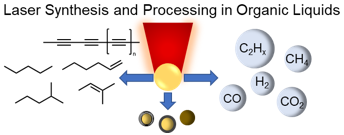
Laser synthesis of nanoparticles in organic solvents – products, reactions, and perspectives
Beilstein J. Nanotechnol. 2024, 15, 638–663, doi:10.3762/bjnano.15.54
- with the [AuCl4]− reduction rate through a two-step autocatalytic nanoparticle growth mechanism [71]. The autocatalytic growth step is driven by H2O2 and can be slowed down by adding hydroxyl radical scavengers resulting in smaller nanoparticles (Figure 4) [48]. Hence, the water decomposition leads to
- reduction step [120]. LML of iron oxide in ethyl acetate and ethanol was reported to yield ethyl aldehyde and butane. The aldehyde was proposed to form via dehydrogenation of ethanol, while butane forms via dimerization of formed C2H5 radicals [125]. Van’t Zand et al. investigated the pyrolysis of
- /cavitation bubble phase in which the carbon-based solvent is decomposed, followed by an accumulation of the decomposition products on the metal surface and a final carbonization step to form carbon shells on the nanoparticle surface [101][148]. The latter were reported to undergo graphitization to onion-like