


Search results
Search for "structure" in Full Text gives 2228 result(s) in Beilstein Journal of Nanotechnology. Showing first 200.
Ar+ implantation-induced tailoring of RF-sputtered ZnO films: structural, morphological, and optical properties
Beilstein J. Nanotechnol. 2025, 16, 872–886, doi:10.3762/bjnano.16.66
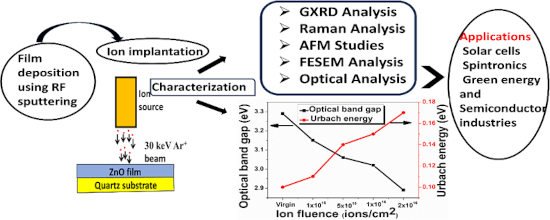
- , which is a well-established and non-destructive method to determine crystal structure, lattice defects, and dynamics. Since ZnO is a polar semiconductor, the phonon–electron interaction produces longitudinal optical (LO) phonon modes, whose long-range behavior considerably affects the efficacy of
- crystalline structure is studied using a Bruker AXS D8 Advance X-ray diffractometer operating in grazing incidence geometry using Cu Kα radiation (λ = 1.5406 Å). The scans are obtained at an incidence angle of 0.5°. The Raman spectra of ZnO films before and after implantation are recorded at room temperature
- films at various ion fluences are depicted in Figure 2. The coexistence of two diffraction peaks (Figure 2) depicts the polycrystalline nature of films. The diffraction peaks centered at 2θ values of 34.23° and 62.59° corresponding to (002) and (103) planes, respectively, confirm the wurtzite structure






Insights into the electronic and atomic structures of cerium oxide-based ultrathin films and nanostructures using high-brilliance light sources
Beilstein J. Nanotechnol. 2025, 16, 860–871, doi:10.3762/bjnano.16.65

- transport properties in the presence of specific gases, due to the redox reactions that take place on the surface [12][13]. An atomic level understanding of the structure–function relationship in this oxide is essential for guiding the design of efficient materials to optimize the performance of the
- , complementary information on the electronic properties and on the local atomic structure can be obtained from the analysis of XAS data. X-ray absorption near-edge spectroscopy (XANES), analyzing the signal within the first few tens of electronvolts above the absorption edge, provides information mainly on the
- density of empty states of the investigated sample. In contrast, the extended energy range X-ray absorption fine structure (EXAFS), up to a few hundred electronvolts above the absorption edge, is sensitive to the local atomic structure around the absorbers. A polarization-dependent Ce L3-edge EXAFS study


Synchrotron X-ray photoelectron spectroscopy study of sodium adsorption on vertically arranged MoS2 layers coated with pyrolytic carbon
Beilstein J. Nanotechnol. 2025, 16, 847–859, doi:10.3762/bjnano.16.64
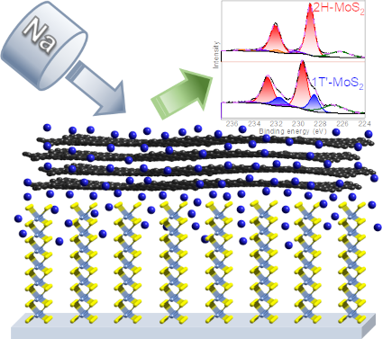
- interaction with MoS2 leads to the transformation of the original hexagonal structure into a distorted tetragonal one. Under the experimental conditions, sodium is unable to diffuse through the carbon film consisting of horizontally oriented graphene domains and is almost completely removed by annealing the
- film, and annealing of the sodiated sample restores its structure. The obtained results demonstrate the important role of the graphitic coating in the development of viable MoS2-based electrodes for energy storage systems. Keywords: graphitic coating; molybdenum disulfide film; Na adsorption
- capacity and cycle life of SIBs. Molybdenum disulfide (MoS2) has a layered structure and a high theoretical capacity of 669 mAh·g−1, so it is considered as a promising anode material for SIBs [1][2]. The large sodium ion can diffuse with a low energy barrier between the S−Mo−S layers due to the interlayer


Facile one-step radio frequency magnetron sputtering of Ni/NiO on stainless steel for an efficient electrode for hydrogen evolution reaction
Beilstein J. Nanotechnol. 2025, 16, 837–846, doi:10.3762/bjnano.16.63
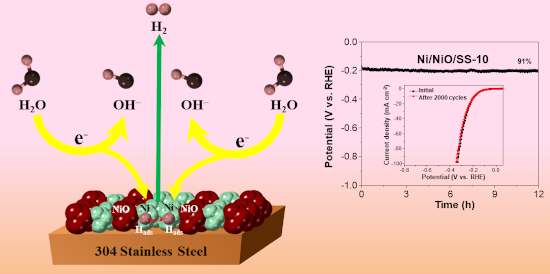
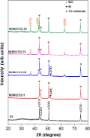
- potential regarding industrial application. Results and Discussion Crystal structure and phase of the as-synthesized electrodes were verified by X-ray diffraction (XRD) measurements with 2θ ranging from 20° to 80°. Figure 1 displays the XRD patterns of SS, Ni/NiO/SS-5, Ni/NiO/SS-10, Ni/NiO/SS-15, and Ni/NiO
- /SS-10 electrode for alkaline water electrolysis. To explain the high HER efficiency of the Ni/NiO/SS-10 electrode, we analyzed SEM and EDX after the stability test (Supporting Information File 1, Figure S5). It is noted that there is no significant change in the morphological structure and elemental
- . Materials characterization The crystal structure of materials was confirmed by XRD using Cu Kα radiation with a wavelength of 0.154 nm on a X-ray diffractometer (D8 Advance, Bruker). The morphology of the obtained products was analyzed utilizing SEM on an S-4800 Hitachi. Chemical components and element


Synthesis and magnetic transitions of rare-earth-free Fe–Mn–Ni–Si-based compositionally complex alloys at bulk and nanoscale
Beilstein J. Nanotechnol. 2025, 16, 823–836, doi:10.3762/bjnano.16.62
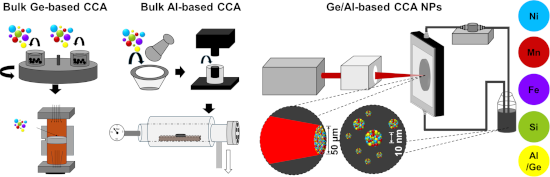
- metal and X can be Si, Ge or Al) have gained attention because of their magneto-structural phase transition at low temperatures. As ternary alloys, these materials undergo a magnetic and structural transition from a low-temperature orthorhombic TiNiSi-type structure to a high-temperature hexagonal Ni2In
- -type structure [22]. For instance, a ternary MnNiSi alloy transitions from the hexagonal Ni2In structure to the orthorhombic TiNiSi structure at 1200 K [23], which is far from ideal for magnetocaloric, electronic, and spintronic-based applications. When these alloys are doped with elements such as Fe
- ground, polished, and analyzed by SEM (JEOL JSM-7600 F, Japan). The chemical composition was determined using energy-dispersive X-ray spectroscopy (EDX) with an Oxford Inca spectrometer. The crystal structure of bulk CCAs was characterized by X-ray diffraction (XRD) using a DRON-4–07 diffractometer with


Supramolecular hydration structure of graphene-based hydrogels: density functional theory, green chemistry and interface application
Beilstein J. Nanotechnol. 2025, 16, 806–822, doi:10.3762/bjnano.16.61
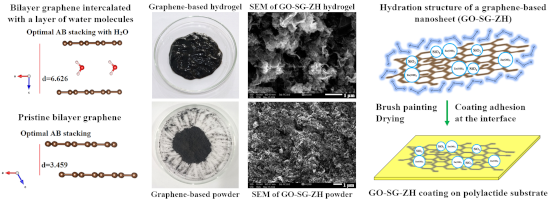
- play an essential role in the structure and function of biomolecules (deoxyribonucleic acid, protein, and phospholipid membrane). Hydration layers are also important to the structure and property of artificial graphene-based materials. Our recent works prove that graphene-based hydrogels are
- hydrogel structure in comparison with dry powder structure. The synthesis of graphene-based hydrogels is a green chemistry approach to attain extraordinary properties of graphene-based nanostructures. Analytical characterizations exhibited moisture contents, water evaporation rates, three-dimensional
- advance nanoscale properties and nanotechnology applications. Keywords: antibacterial coating; bioinspired hydration; density functional theory; graphene-based hydrogel; supramolecular structure; Introduction Biological cells are assemblies of biomolecules that are hydrated with water molecules. The


Morphology and properties of pyrite nanoparticles obtained by pulsed laser ablation in liquid and thin films for photodetection
Beilstein J. Nanotechnol. 2025, 16, 785–805, doi:10.3762/bjnano.16.60
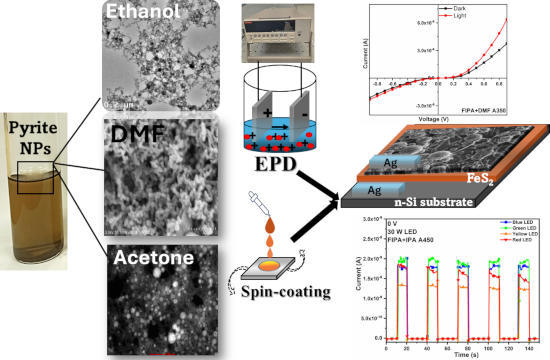
- -system marcasite crystal structure. Due to its low structural symmetry, marcasite FeS2 has a bandgap of only 0.34 eV and, as a result, it is not appropriate for use, particularly with solar energy absorption materials. Hence, the pyrite structure serves as a foundation for almost all studies of systems
- crystalline structure of the films was characterized by X-ray diffraction (XRD). The UV–vis–NIR photodetection properties of p-n junction-based thin films composed of FeS2 nanoparticles are reported. Additionally, the results of various light-sensing parameters evaluated in these photodetectors are also
- [35], the p-type nature of FeS2 was identified. Based on this, an n-type Si (n-Si) substrate was chosen to achieve the photodiode structure. Well cleaned n-type silicon substrates were used as the anode and the cathode in the EPD setup. With a 4.5 mm gap between them, the electrodes were positioned






Changes of structural, magnetic and spectroscopic properties of microencapsulated iron sucrose nanoparticles in saline
Beilstein J. Nanotechnol. 2025, 16, 762–784, doi:10.3762/bjnano.16.59
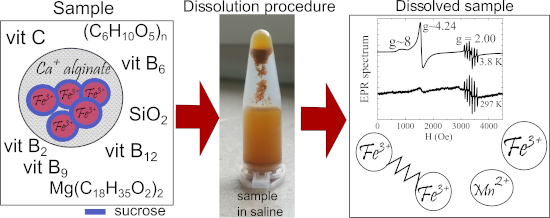
- belong to the hematinic category, are a broad class of medical products in which varied iron agents are used, very often in the form of core–shell nanoparticles, where iron ions (in the structure of iron oxide mineral) are concentrated in the core, and the shell is generally composed of carbohydrates
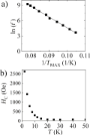
- in [6][7][8][13][15]). Generally, it can be assumed that the iron sucrose core is composed of iron oxyhydroxide (FeO(OH)), and it is very likely that the structure is amorphous rather than crystalline [15]. Regarding the magnetic properties of FeO(OH), it exhibits an antiferromagnetic arrangement
- with different Néel temperatures (400 K, 250–300 Κ, and 77 K for α, β, and γ polymorphs, respectively), while in the case of ferrihydrite, which is in fact an unstable form of FeO(OH) and exists only as a nanomaterial, a canted antiferromagnetic structure is expected [16]. There are many other iron





Thickness dependent oxidation in CrCl3: a scanning X-ray photoemission and Kelvin probe microscopies study
Beilstein J. Nanotechnol. 2025, 16, 749–761, doi:10.3762/bjnano.16.58
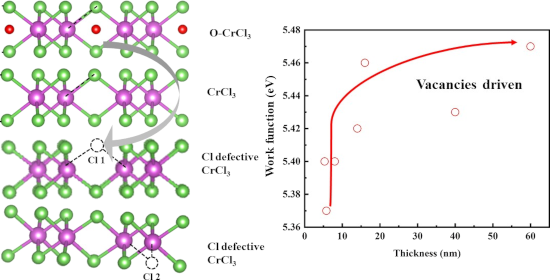
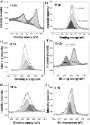
- importance, limited experimental research has been conducted on the electronic structure of CrX3 [5][6]. According to previously published photoelectron spectroscopy results, CrX3 belongs to metal compounds in which the 3d states are very close to the Fermi level, significantly above the 3p/4p/5p states of
- the halides. This has been supported by self-consistent band structure calculations by Antoci and Mihich [7], which introduced spin degeneracy, demonstrating that CrCl3 and CrBr3 behave as metallic system because of the prominent role of the 3d states near Fermi level. In our previous publications [8
- showed that oxygen adsorption on cleaved surfaces facilitates the formation of a stable structure with charge transfer signatures, as identified by high-resolution photoemission spectroscopy [8]. It remains unclear whether similar effects occur in exfoliated thin flakes. Like in other materials, the





Synthesis of a multicomponent cellulose-based adsorbent for tetracycline removal from aquaculture water
Beilstein J. Nanotechnol. 2025, 16, 728–739, doi:10.3762/bjnano.16.56
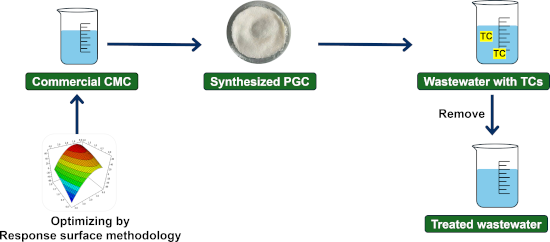
- significant morphological changes compared to pristine CMC (Figure 2a–c). Specifically, the PGC surface exhibits numerous, uniformly distributed spherical nanoparticles (≈200 nm in diameter), attributed to ZnO nanoparticles. The initial tubular structure of CMC is converted into a film-like structure owing to
- structure. However, at higher initial concentrations, a larger concentration gradient drives TC diffusion into the PGC surface, resulting in a rapid increase in adsorption capacity. Notably, most of the adsorption occurs within the first 12 h, during which 89–95% of TC is adsorbed. In the first 8 h, the
- the TC structure undergo protonation before ionic bonding with Ca2+ in the PGC matrix. Among the four ionizable functional groups in TC, the primary site remains predominantly protonated (86%) at pH 6.8 [26][28][29]. However, Ca2+ coordination at this site is expected to shift the ionization


Efficiency of single-pulse laser fragmentation of organic nutraceutical dispersions in a circular jet flow-through reactor
Beilstein J. Nanotechnol. 2025, 16, 711–727, doi:10.3762/bjnano.16.55
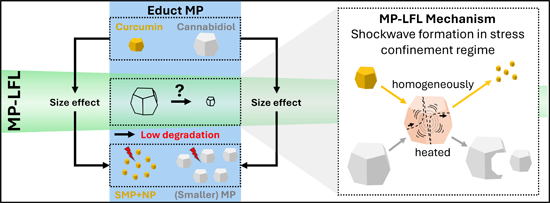
- available nutraceuticals (curcumin and CBD) are polycrystalline, nearly water-insoluble natural products with a similar molecular structure (Figure 1) and approximately the same molecular weight of 314 g·mol−1 for CBD and 368 g·mol−1 for curcumin, already their visual appearance strongly deviates. CBD is


Nanostructured materials characterized by scanning photoelectron spectromicroscopy
Beilstein J. Nanotechnol. 2025, 16, 700–710, doi:10.3762/bjnano.16.54
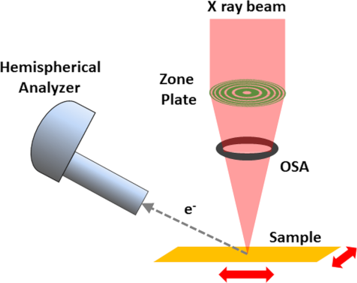
- societal challenges [1]. When composed of different elements, molecules, or compounds, these materials often show a regular and/or diffused heterogeneous structure based on elementary building blocks (e.g., crystallites or atomic/molecular groups) forming the entire solid or, in other cases, just their
- surfaces. The characterization of the building blocks is of paramount importance to deeply understand their functionalities and mutual interactions when they are part of a nanostructured body. The building blocks may differ in their atomic structure, crystallographic orientation, chemical composition, and
- charge distribution, to list the most important features. If the building blocks are crystallites, any change in the structure or chemical composition may lead to the formation of incoherent or coherent interfaces among them which may influence the final properties of the material. Often the volumes of


High-temperature epitaxial growth of tantalum nitride thin films on MgO: structural evolution and potential for SQUID applications
Beilstein J. Nanotechnol. 2025, 16, 690–699, doi:10.3762/bjnano.16.53
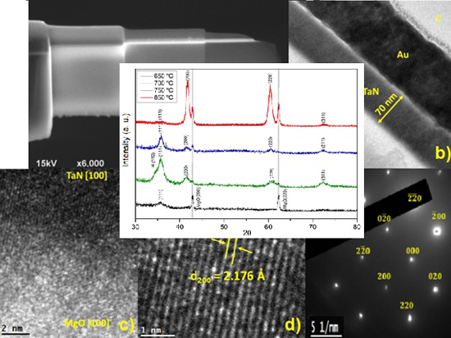
- diffusion barrier with potential application for microelectronics were fabricated [10][11]. In contrast, the stoichiometric mononitride TaN phase with face-centered cubic (FCC) structure exhibits superconductivity with a Tc of 8.15 K [12]; when the thin films were grown epitaxially on an FCC substrate, Tc
- collected using an Al Kα monochromatic source and a hemispherical analyzer from SPECS. The films were grown on (100)-oriented single crystal substrates of magnesium oxide (MgO) (99.9%, purchased from Sigma Aldrich). To obtain a FCC structure, we varied the deposition temperature while using 90 mTorr of N2
- . Prior research has consistently shown that TaN films with a FCC crystal structure exhibit enhanced superconducting properties compared to those with other crystal structures. The XRD spectra were obtained with a Panalitycal X’Pert Pro MRD, and the “Inorganic Crystal Structure Database” powder


The impact of tris(pentafluorophenyl)borane hole transport layer doping on interfacial charge extraction and recombination
Beilstein J. Nanotechnol. 2025, 16, 678–689, doi:10.3762/bjnano.16.52
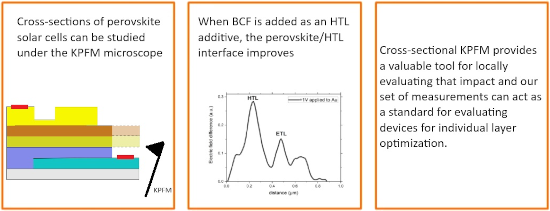
- the core of their success lies the perovskite absorber material, which exhibits impressive bulk properties, such as long carrier lifetimes and low recombination rates [5][6][7][8]. However, the granular nature of perovskites and the layered structure of their solar cells, introduce complications such
- interfacial structure is not damaged and the cells remain operational. Additionally, in order to more accurately interpret interfacial measurements, a precise characterization of the positions of the different solar cell layers is required. We identified the thickness and uniformity of the layers by comparing
- during the amplitude modulation topography scan. Supporting Information File 1, Figure S4 and Table S1, show the layered structure and layer thickness for each of the ion polished devices from the four batches. An important note that is highlighted by these measurements is that the optimal HTL thickness


Colloidal few layered graphene–tannic acid preserves the biocompatibility of periodontal ligament cells
Beilstein J. Nanotechnol. 2025, 16, 664–677, doi:10.3762/bjnano.16.51
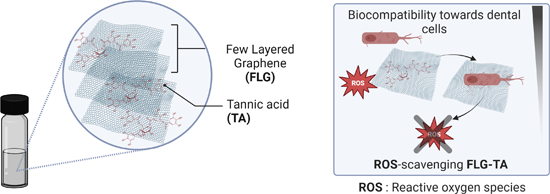
- determined by the presence of impurities in the graphene structure [9]. Among other GBMs, few-layer graphene (FLG), synthesized through liquid-phase exfoliation (LPE), has emerged as a particularly advantageous option [10][11]. LPE is highly regarded for its simplicity, scalability, and effectiveness in
- employed to determine structure and surface functionalities. Second, by employing TA, we aim to develop graphene layers rich in polyphenols to serve as a bioactive interface for cellular interactions. Given that TA possesses potential antioxidant properties, we assessed the in vitro free radical scavenging
- biocompatibility with PDL cells. Importantly, our strategy indicates that the modified attributes of FLG–TA enhance its suitability for dental biomaterials, thereby paving the way for safer and more effective dental applications. Results and Discussion Synthesis of FLG–TA results in a few-layered structure with




Aprepitant-loaded solid lipid nanoparticles: a novel approach to enhance oral bioavailability
Beilstein J. Nanotechnol. 2025, 16, 652–663, doi:10.3762/bjnano.16.50
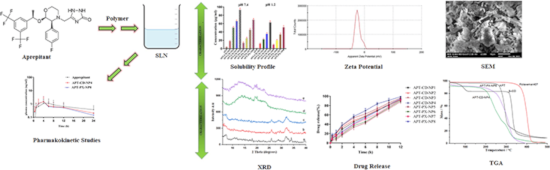
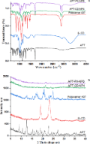
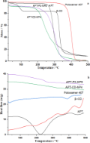
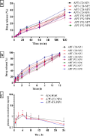
- SLN formulations in distilled water exhibited a homogeneous white color. The encapsulation efficacy of the SLNs formulations was in the range of 25.33% ± 0.89% to 80.55% ± 0.15%. A higher content of β-CD in the formulation enhanced the encapsulated amount of APT. The hydrophobic structure of β-CD



Nanoscale capacitance spectroscopy based on multifrequency electrostatic force microscopy
Beilstein J. Nanotechnol. 2025, 16, 637–651, doi:10.3762/bjnano.16.49

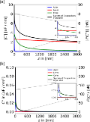
- increase of sample permittivity [95][96]. We measured a CPD difference between Si and F14H20 of −0.72 ± 0.08 V (see Figure S15, Supporting Information File 1), which is close to the literature value of −0.8 V [97]. Interestingly, the image of the C′ signal (Figure 7c,e) showed a more blurry structure




Polyurethane/silk fibroin-based electrospun membranes for wound healing and skin substitute applications
Beilstein J. Nanotechnol. 2025, 16, 591–612, doi:10.3762/bjnano.16.46

- response, is extensively investigated by addressing its molecular structure, composition, and medical uses. PU is a candidate for potential biomedical applications because of its strength, flexibility, biocompatibility, cell-adhesive properties, and high resistance to biodegradation. PU combined with silk
- versatile and provides the best control over fiber morphology and structure [10]. Electrospinning is a straightforward and adaptable technique that can be used to directly spin polymeric solutions into nanofibers that are at least 100 times thinner than fibers created using more conventional techniques [11
- ]. Nanofibers are considered promising materials because of their size and structure, making them suitable for drug delivery, tissue engineering, tissue scaffolding, and other biomedical applications [12]. They exhibit distinct chemical and physical properties that distinguish them from macroscale structures



Feasibility analysis of carbon nanofiber synthesis and morphology control using a LPG premixed flame
Beilstein J. Nanotechnol. 2025, 16, 581–590, doi:10.3762/bjnano.16.45
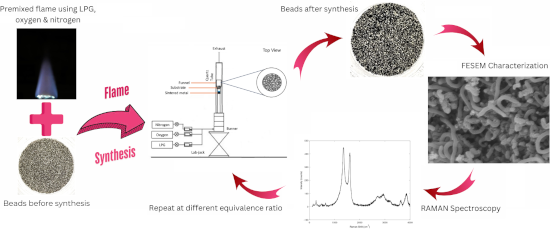
- , with the primary distinction between CNTs and CNFs being the arrangement of graphene layers. CNFs have a cylindrical or conical structure, with their diameter varying from a few to several hundred nanometers [4]. In CNFs, carbon atoms form covalent bonds, resulting in a three-dimensional hexagonal
- growth [17]. A study by Zhuang et al. used electrospinning to synthesize CNFs. Polyacrylonitrile was used a carbon precursor and phosphomolybdic acid was added to improve the structure and the conductivity of CNFs. A voltage of 15 kV was applied to a stainless steel needle containing the solution and an
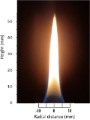
- around 72 to 103 nm. The smallest was around 20 nm, while the largest was around 200 nm (Figure 6d and Figure 7d). As found in the study of Pan et al. [26], average diameters of CNFs are below 100 nm, and it is evident that the nanomaterial found in this sample is CNFs because of the entangled structure



Nanomaterials in targeting amyloid-β oligomers: current advances and future directions for Alzheimer's disease diagnosis and therapy
Beilstein J. Nanotechnol. 2025, 16, 561–580, doi:10.3762/bjnano.16.44
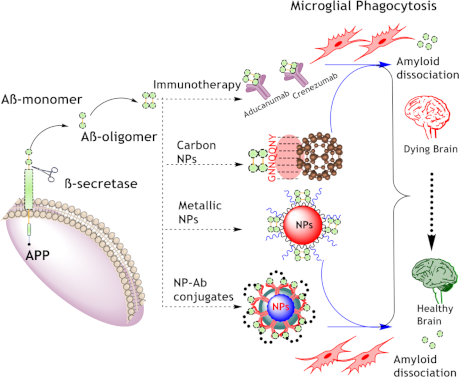
- hydrophobic modification, enhances the targeting of β-sheet-rich oligomers and helps to prevent further aggregation. The unique features of NPs make them promising candidates for inhibiting amyloid production in NDs. Shape and structure of nanoparticles play a crucial role in how they interact with amyloid
- localized concentration effects. Additionally, they examined the impact of nanoparticle shape and found that gold nanocubes led to larger Aβ aggregates compared to AuNRs, likely because of their greater surface area and more uniform structure. In contrast, spherical AuNPs disrupted β-sheet stacking


Retrieval of B1 phase from high-pressure B2 phase for CdO nanoparticles by electronic excitations in CdxZn1−xO composite thin films
Beilstein J. Nanotechnol. 2025, 16, 551–560, doi:10.3762/bjnano.16.43

- irradiated thin films was performed with X-ray diffraction and Raman spectroscopy. Additionally, X-ray absorption near-edge structure (XANES) spectroscopy was conducted at the Zn L3,2 and O K edges for all the thin films. X-ray photoelectron spectroscopy (XPS) on Si 2p and O 1s core levels provided direct
- system (Physical Electronics) with an Al Kα (1486.7 eV) beam and a 124 mm hemispherical electron analyzer. X-ray absorption near-edge structure experiments were performed at PIRX beamline [15] in the SOLARIS synchrotron facility in Poland [16], focusing on Zn L2,3 and O K edges in total electron yield
- . Consequently, the wurtzite ZnO phase remains intact in both the CZ900_113Ag and CZ900_313Ag thin films. Notably, the absence of a distinct phase for CdO nanoparticles indicates that the radiation stability of the wurtzite ZnO structure significantly surpasses that of the B1/B2 CdO phase. In Figure 2, the Raman


Electron beam-based direct writing of nanostructures using a palladium β-ketoesterate complex
Beilstein J. Nanotechnol. 2025, 16, 530–539, doi:10.3762/bjnano.16.41
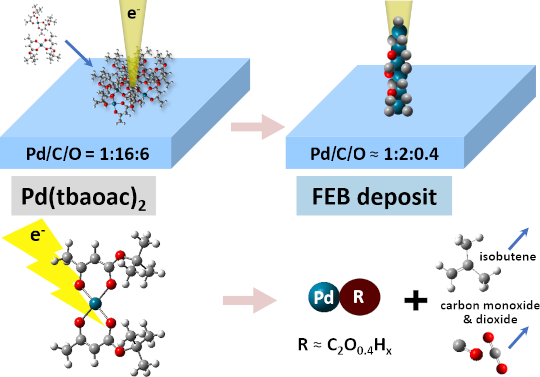
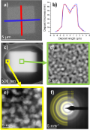
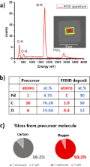
- nanostructures for advanced technologies. So far, a few Pd-containing precursors including allyls [37] and β-diketonates [37][38][39] as ligands have been used in FEBID, yielding deposits with less than 30 atom % Pd. In this work, we report the structure and composition of deposits from [Pd(tbaoac)2] and discuss
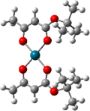
- )2] [40][41]. The potential of growing 3D nanostructures with this precursor was also explored. The insights gained from this research could be valuable in the development of precursors tailored for FEBID. Experimental The structure of [Pd(tbaoac)2] is shown in Figure 1. The precursor was synthesized
- these k-ratios, Stratagem then recalculates the composition for a thin film (multi)layered structure. The native-oxide Si(100) substrate was accounted for by including a 1 nm thick SiO2 layer of density 2.65 g·cm−3 between the Si substrate and the deposit for the thin film correction. This way, the


Zeolite materials with Ni and Co: synthesis and catalytic potential in the selective hydrogenation of citral
Beilstein J. Nanotechnol. 2025, 16, 520–529, doi:10.3762/bjnano.16.40
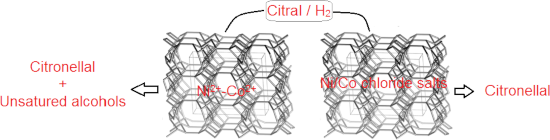
- system. To characterize the specific surface area and pore structure of the materials, they were analyzed using Micro-Active software for TriStar II Plus instruments. Approximately 200 mg of each sample was degassed at 30 °C for 30 min and then at 250 °C for 4 h before surface area measurements via
- -Iznaga acknowledges support from Programa de Estancias de Investigación (PREI)-2023 de la DGAPA, UNAM, México. The zeolite structure images in the Graphical Abstract were adapted from https://europe.iza-structure.org/IZA-SC/framework_main_image.php?ID=101 (© 2017 Structure Commission of the International


Water in nanoporous hexagonal boron nitride nanosheets: a first-principles study
Beilstein J. Nanotechnol. 2025, 16, 510–519, doi:10.3762/bjnano.16.39
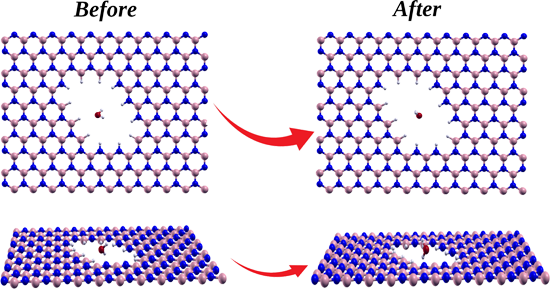
- boron nitride (h-BN) [19]. Among these materials, h-BN stands out because of its properties, which are similar to those of graphene. It is composed of alternating boron and nitrogen atoms arranged in a honeycomb-like crystalline structure, characterized by high thermal stability, low dielectric constant




N2+-implantation-induced tailoring of structural, morphological, optical, and electrical characteristics of sputtered molybdenum thin films
Beilstein J. Nanotechnol. 2025, 16, 495–509, doi:10.3762/bjnano.16.38
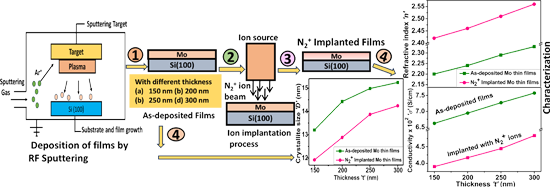
- -centered cubic Mo phase, as per JCPDS no. 01-088-2331 [29]. In Figure 2A, there is a notable reduction in peak intensity of the Mo film after N2+ implantation relative to the as-deposited Mo film. This reveals a significant alteration in structure due to the implantation process. Similarly, in Figure 2B–D
- , the peak intensity of implanted Mo films decreases in comparison to the as-deposited Mo films of the same nominal thickness. This reduced intensity of diffraction peaks is attributed to amorphization and degradation of the structure by N2+ implantation. However, the peak intensity of the as-deposited
- the material structure. In contrast, films of 250 and 300 nm maintain a degree of crystallinity derived from the unexposed bulk layer under the ion-implanted layer [30]. The full width at half maximum (FWHM) of diffraction peaks was evaluated from the prominent peak at 2θ = 37.80° associated with the





