Search results
Search for "sulfur" in Full Text gives 208 result(s) in Beilstein Journal of Nanotechnology. Showing first 200.
Surfactant-controlled composition and crystal structure of manganese(II) sulfide nanocrystals prepared by solvothermal synthesis
Beilstein J. Nanotechnol. 2015, 6, 2319–2329, doi:10.3762/bjnano.6.238

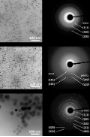
- observation that a larger than stoichiometric amount of sulfur is required [Puglisi, A.; Mondini, S.; Cenedese, S.; Ferretti, A. M.; Santo, N.; Ponti A. Chem. Mater. 2010, 22, 2804–2813], we carried out a wide set of reactions using Mn(II) carboxylates and Mn2(CO)10 as precursors with varying amounts of
- sulfur and carboxylic acid. MnS NCs were obtained provided that the S/Mn ratio was larger than the L/Mn ratio, otherwise MnO NCs were produced. Since MnS can crystallize in three distinct phases (rock salt α-MnS, zincblende β-MnS, and wurtzite γ-MnS), we also investigated whether the surfactant affected
- the surfactants adsorbed on the NCs. Keywords: manganese oxide; manganese sulfide; nanocrystal; polymorphism control; solvothermal synthesis; sulfur; surfactant; Introduction Manganese(II) sulfide (MnS) is a wide bandgap (Eg ≈ 3 eV) [1], p-type, antiferromagnetic semiconductor that crystallizes in


Plasma fluorination of vertically aligned carbon nanotubes: functionalization and thermal stability
Beilstein J. Nanotechnol. 2015, 6, 2263–2271, doi:10.3762/bjnano.6.232
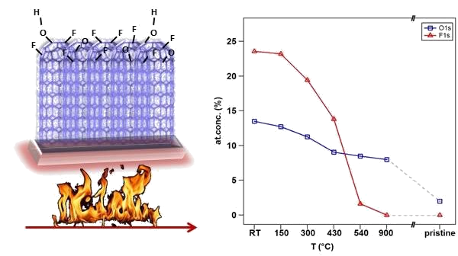
- polymerization, the introduction of unwanted atoms on the functionalized system, or the high toxicity level of the gas used. Carbon tetrafluoride (CF4), sulfur hexafluoride (SF6), pure fluorine (F2) or diluted fluorine in an inert atmosphere (Xe/F2, Ar/F2) are the precursor gases most commonly used. In the case


Controlled switching of single-molecule junctions by mechanical motion of a phenyl ring
Beilstein J. Nanotechnol. 2015, 6, 2088–2095, doi:10.3762/bjnano.6.213
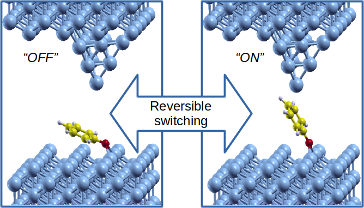
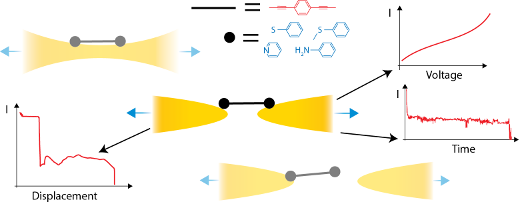
- ascribed to the sulfur atom (Figure 3a). The local structure is similar with that of PhO with the phenyl ring oriented along [001] and the sulfur atom bonded to the short-bridge site [13]. The controlled switching of the molecular junction is feasible with PhS as well as PhO, and the conductance values for
- retraction were recorded. The height of the plateau, corresponding to the conductance for each molecule, is robust between repeated measurements and is larger by a factor of ≈2 for PhS. This demonstrates that the conductance is modified by chemical substitution of the anchoring atom from oxygen to sulfur. To


Optimized design of a nanostructured SPCE-based multipurpose biosensing platform formed by ferrocene-tethered electrochemically-deposited cauliflower-shaped gold nanoparticles
Beilstein J. Nanotechnol. 2015, 6, 1840–1852, doi:10.3762/bjnano.6.187
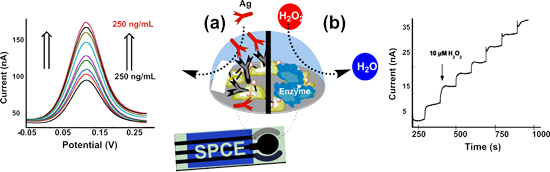
- ferrocene methanol using DCC as a condensing agent according to previously published reports [15][27]. Immunosensor preparation It is well known that gold has a high affinity toward sulfur-terminated compounds [28]. Several experiments showed that gold nanostructured electrodes should be incubated for at
- 4-fold increase of the surface resistivity because of the total passivation of the gold surface by a sulfur layer. Further modification with the antibody and BSA increases the surface impedance due to the electron transfer from the redox probe present in the solution. Thus, the ferrocene covered by
- surface through two gold–sulfur bonds, greatly limits ferrocene leakage into solution and keeps the sensors active. Higher surface coverage allows higher loading in ferrocene and thus widens the dynamic ranges. Selectivity and specificity of the immune response Selectivity and specificity are among the


Conductance through single biphenyl molecules: symmetric and asymmetric coupling to electrodes
Beilstein J. Nanotechnol. 2015, 6, 1690–1697, doi:10.3762/bjnano.6.171
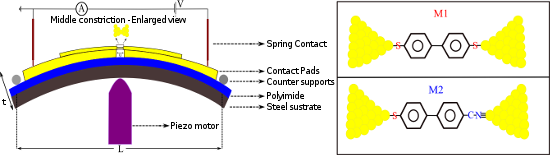
- Figure 4 shows the enlarged range of conductance above 0.02G0. Both molecules show a pronounced maximum of conductance close to 0.01G0 (marked by arrows in Figure 4). The existence of multiple peaks may be explained by selective adsorption of sulfur atoms at steps sites or at flat gold surfaces, which


Electrical properties and mechanical stability of anchoring groups for single-molecule electronics
Beilstein J. Nanotechnol. 2015, 6, 1558–1567, doi:10.3762/bjnano.6.159
- is known to deprotect the acetyl-protected thiol groups and promote the formation sulfur-gold bonds [36][37]. Transport measurements. The study of molecular transport has been conducted in air and at room temperature, using the MCBJ gold nano-electrodes to connect individual molecules. In the first
- the two-dimensional histograms one can see that the junctions formed with the four OPE3 molecules show different conductance values, depending on the anchoring group, and a length between 0.8 nm and 1.0 nm. The length of the four molecules, from sulfur to sulfur or from nitrogen to nitrogen, computed


DNA–melamine hybrid molecules: from self-assembly to nanostructures
Beilstein J. Nanotechnol. 2015, 6, 1432–1438, doi:10.3762/bjnano.6.148
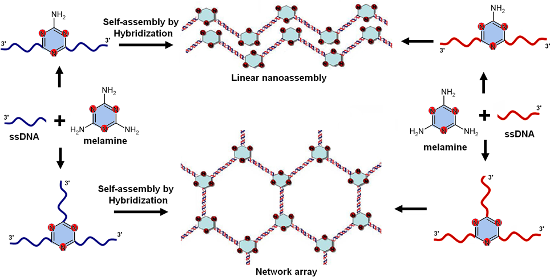
- molecules with DNA, in particular, heterocyclic compounds that can offer attractive options to home nitrogen, sulfur or other interesting heteroatoms. Heterocyclic compounds could potentially be used to tune the molecular and electrical properties of a self-assembled system on the nanoscale. Moreover, being



The Kirkendall effect and nanoscience: hollow nanospheres and nanotubes
Beilstein J. Nanotechnol. 2015, 6, 1348–1361, doi:10.3762/bjnano.6.139
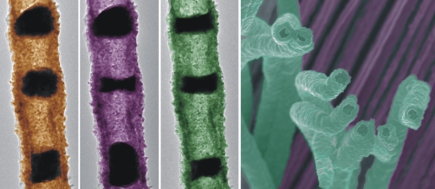
- observation: symmetrical conversion mechanism The formation of hollow Kirkendall nanospheres was first reported by Yin et al. in 2004 [7]. They observed the formation of hollow nanospheres while exploring the sulfidation of cobalt nanoparticles by injecting a solution of sulfur in 1,2-dichlorobenzene into hot
- interface within the ZnO which, in this case, plays the role of the fast diffusing material. The strategy demonstrated by Li and Penner in 2005 was adopted by many groups for the synthesis of nanotubes by thermal annealing of metal nanowires under a controlled atmosphere such as sulfur, selenium or oxygen

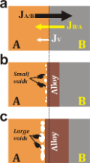


Can molecular projected density of states (PDOS) be systematically used in electronic conductance analysis?
Beilstein J. Nanotechnol. 2015, 6, 1247–1259, doi:10.3762/bjnano.6.128
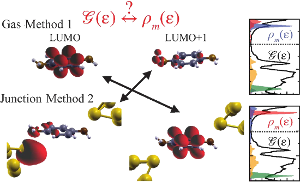
- concluded that the BDT–gold junction can be stable in several different atomic structures/geometries [16][47][48][49][50][51]. To account for different hybridizations and bonding motifs, three geometries are studied here: the sulfur atom of the benzene-dithiol molecule can adsorb onto an extra gold adatom
- without losing the bound hydrogen atom (BDT-n); the benzene-dithiol molecule can lose the hydrogen atom, thus becoming benzene-dithiolate, and bind its sulfur atom to an extra gold adatom in a pyramidal structure (BDT-p); or the benzene-dithiolate can bind to three equidistant gold atoms in the hollow
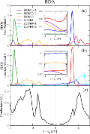
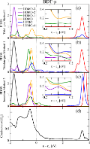
- on the sulfur atom. The LUMO from Method 2 corresponds to the LUMO from Method 1 for the dithiol molecule, but it does not correspond to any MO from Method 1 for the dithiolate molecule. On the other hand, the HOMO from Method 2 is similar to the HOMO from Method 1 for the dithiolate molecule, but it




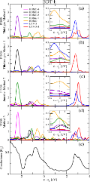

Superluminescence from an optically pumped molecular tunneling junction by injection of plasmon induced hot electrons
Beilstein J. Nanotechnol. 2015, 6, 1100–1106, doi:10.3762/bjnano.6.111
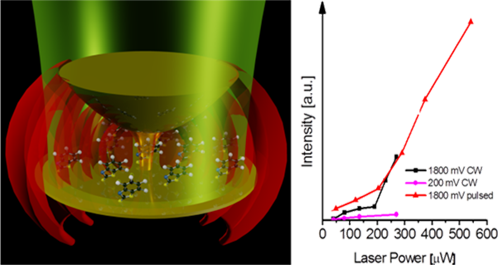
- are described in detail in Supporting Information File 1 (Figures S1–S4). For the specimen, we have chosen a Au film covered with a monolayer of 5-chloro-2-mercaptobenzothiazole (Cl-MBT) molecules since (i) they chemically bind to the metal substrate (Figure 1c) via the sulfur atoms with the molecular


From lithium to sodium: cell chemistry of room temperature sodium–air and sodium–sulfur batteries
Beilstein J. Nanotechnol. 2015, 6, 1016–1055, doi:10.3762/bjnano.6.105
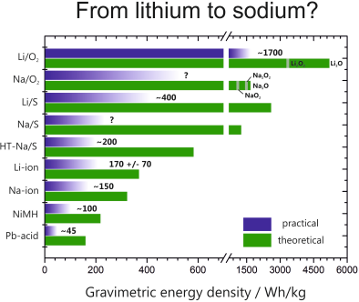
- , Germany 10.3762/bjnano.6.105 Abstract Research devoted to room temperature lithium–sulfur (Li/S8) and lithium–oxygen (Li/O2) batteries has significantly increased over the past ten years. The race to develop such cell systems is mainly motivated by the very high theoretical energy density and the
- abundance of sulfur and oxygen. The cell chemistry, however, is complex, and progress toward practical device development remains hampered by some fundamental key issues, which are currently being tackled by numerous approaches. Quite surprisingly, not much is known about the analogous sodium-based battery
- . This review provides a summary of the state-of-the-art knowledge on lithium–sulfur and lithium–oxygen batteries and a direct comparison with the analogous sodium systems. The general properties, major benefits and challenges, recent strategies for performance improvements and general guidelines for


A simple approach to the synthesis of Cu1.8S dendrites with thiamine hydrochloride as a sulfur source and structure-directing agent
Beilstein J. Nanotechnol. 2015, 6, 881–885, doi:10.3762/bjnano.6.90
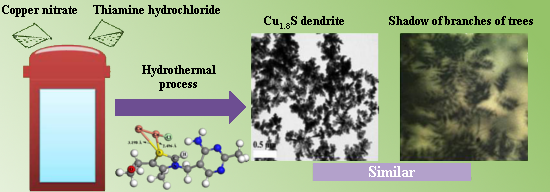
- nitrate and thiamine hydrochloride were selected as the starting materials in the water phase under hydrothermal conditions. No addition of a surfactant or a complex reagent was required for the synthesis of the Cu1.8S dendrite structures. Thiamine hydrochloride was employed as a sulfur source and
- attention due to its versatile applications in solar cell, electrochemistry, catalysis, and as a gas sensor [1][2][3][4][5]. Many strategies have been developed to prepare Cu1.8S. A solvent-mediated methodology was employed to synthesize highly crystalline Cu1.8S by element copper and sulfur at room
- shapes from sulfur powder [6]. Lim et al. found that copper sulfide dendritic structures could be obtained at high ethylenediamine and low tributylphosphite concentrations by using a copper(I) thiobenzoate (CuTB) precursor [7]. In general, sulfur, Na2S2O3, mercaptan and thiourea are used as sulfur


Applications of three-dimensional carbon nanotube networks
Beilstein J. Nanotechnol. 2015, 6, 792–798, doi:10.3762/bjnano.6.82

- Roma, Italy 10.3762/bjnano.6.82 Abstract In this paper, we show that it is possible to synthesize carbon-based three-dimensional networks by adding sulfur, as growth enhancer, during the synthesis process. The obtained material is self-supporting and consists of curved and interconnected carbon
- , with pore sizes from several nanometers to a few micrometers (Figure 2a). The high number of interconnections indicated by the arrows in Figure 2b is caused by the presence of topological defects in the carbon sp2 lattice that originate during the growth process. In particular, the addition of sulfur
- finding is confirmed by EDX spectrum collected on the network of Figure 7a, that shows contributions from: the CNT-nanostructures (C and Fe), some of the constituents the oil used in the experiment (Zn, Mo) and small traces of Ca from water, Figure 7c. No sulfur signal was detected in the network


Tm-doped TiO2 and Tm2Ti2O7 pyrochlore nanoparticles: enhancing the photocatalytic activity of rutile with a pyrochlore phase
Beilstein J. Nanotechnol. 2015, 6, 605–616, doi:10.3762/bjnano.6.62
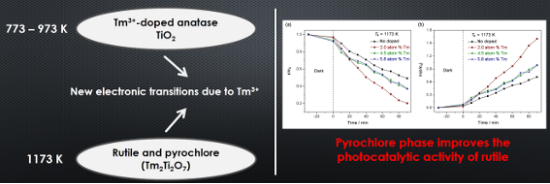
- chemistry properties. For example, the TiO2 doping and the annealing temperatures have been widely studied to control its crystalline structure, optical and electronic properties, etc. Marschall and Wang reported doping with non-metals such as boron, carbon, nitrogen, fluorine, iodine, phosphorus, or sulfur


Structural, optical, opto-thermal and thermal properties of ZnS–PVA nanofluids synthesized through a radiolytic approach
Beilstein J. Nanotechnol. 2015, 6, 529–536, doi:10.3762/bjnano.6.55
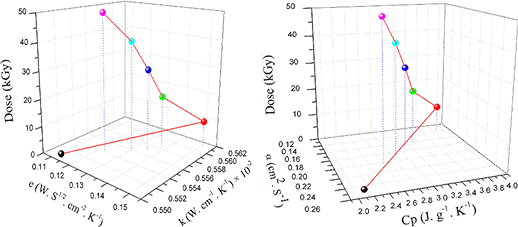
- nanofluids consisting of ZnS nanoparticles homogeneously distributed in a PVA solution. The ZnS nanoparticles were formed by the electrostatic force between zinc and sulfur ions induced by gamma irradiation at a dose range from 10 to 50 kGy. Several experimental characterizations were conducted to
- radiation with the aqueous solution generates aqueous electrons (e−free) that reduce S2O32− to S2−. Zinc ions (Zn2+) are already present in the solution and through the combination of sulfur and zinc ions ZnS nuclei are formed, which agglomerate into ZnS NPs. The mechanism of this reaction is as follows
- irradiated with doses of 10, 30 and 50 kGy, respectively. An increase of particle size with increasing dose in this study indicated that when more metal ions present in the sample the increased number of sulfur ions induced by gamma radiation agglomerated more ZnS units to enlarge the particle size at higher



The effect of surface charge on nonspecific uptake and cytotoxicity of CdSe/ZnS core/shell quantum dots
Beilstein J. Nanotechnol. 2015, 6, 281–292, doi:10.3762/bjnano.6.26
- with ZnS A 0.1 M Zn stock solution was prepared by dissolving 632.3 mg of zinc stearate in 2 mL of oleic acid and 7.5 mL of oleylamine, while a 0.1 M S stock solution was obtained by mixing 32 mg of elemental sulfur in 10 mL of 1-octadecene. Both solutions were prepared at 200 °C under argon flow. In a




Overview about the localization of nanoparticles in tissue and cellular context by different imaging techniques
Beilstein J. Nanotechnol. 2015, 6, 263–280, doi:10.3762/bjnano.6.25
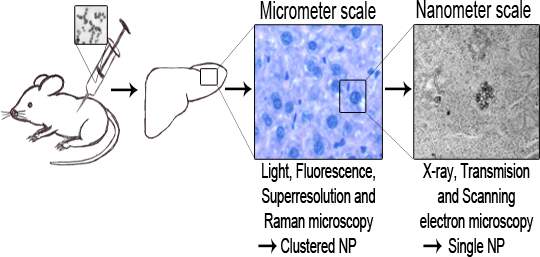
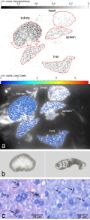
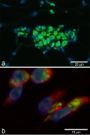
- ” sulfur atoms in the outer shell of the NP, without changing its size, molecular weight or other biologically relevant physical or chemical properties [58]. Following intravenous application of dPG35S amine into mice, HE-stained FFPE tissue sections from various organs were covered with an




Release behaviour and toxicity evaluation of levodopa from carboxylated single-walled carbon nanotubes
Beilstein J. Nanotechnol. 2015, 6, 243–253, doi:10.3762/bjnano.6.23
- , Waltham, MA) using a KBr disc. For carbon, hydrogen, nitrogen and sulfur (CHNS) analysis, a CHNS-932 from LECO Instrument (St Joseph, MI) was used. Raman spectra were collected using a UHTS 300 Raman spectrometer (WITec, Germany) with an excitation wavelength at 532 nm. CNT samples were deposited on glass






Synthesis and characterization of fluorescence-labelled silica core-shell and noble metal-decorated ceria nanoparticles
Beilstein J. Nanotechnol. 2014, 5, 2413–2423, doi:10.3762/bjnano.5.251
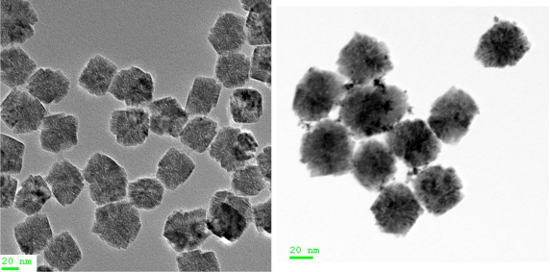
- reaction with its NHS ester in ethanol for one day. The dye is connected to the sulfur by a thioester link which is stable in aprotic solvents but undergoes slow hydrolysis in water or transesterification in ethanol. Nevertheless the NP labelled with two colours show the reasonably separated fluorescence


Advanced atomic force microscopy techniques II
Beilstein J. Nanotechnol. 2014, 5, 2326–2327, doi:10.3762/bjnano.5.241

- scientific community within the last years. Similar to the first volume [5], the development of advanced techniques and their application is the focus of this Thematic Series. Contributions related to energy conversion and storage systems have been addressed, e.g., the analysis of cathodes of lithium–sulfur
Two-dimensional and tubular structures of misfit compounds: Structural and electronic properties
Beilstein J. Nanotechnol. 2014, 5, 2171–2178, doi:10.3762/bjnano.5.226

- as a true intercalated system. Figure 5 in [35] shows this XAS spectra of the K absorption edge of sulfur for the systems TiS2, PbS, PbTiS3 (=MLC (PbS)1.18TiS2), and Fe1/3TiS2. The shapes of the PbTiS3 and Fe1/3TiS2 spectra are quite similar. From this, charge transfer was concluded, which should
- . The explanation might be that the charge transfer does not take place from metal to metal (Sn2+ → Sn4+), because Sn is not a transition metal, in contrast to the TMX2 systems discussed above. Thus, the sulfur atoms of the SnS2 layer could act as donors and Sn2+ atoms in the SnS layer as acceptors
- . Generally, Sn2+ can act as an acceptor if a stronger reducer is present. By comparing the standard potentials of the S2−/S and Sn/Sn2+ systems, it appears that this explanation is possible and is supported by the fact that in the SnS2–SnS bilayer, only the SnS2-sulfur atoms facing the SnS layer become


PVP-coated, negatively charged silver nanoparticles: A multi-center study of their physicochemical characteristics, cell culture and in vivo experiments
Beilstein J. Nanotechnol. 2014, 5, 1944–1965, doi:10.3762/bjnano.5.205

- as reducing sugar, and cysteine as a model compound for sulfur-containing proteins. H2O2 was used as strongly oxidizing compound. Furthermore, we analyzed the behavior of silver nanoparticles after their immersion in cell culture media (DMEM, RPMI and LB medium) [20]. Figure 3A shows that the
- , the dissolution rate is strongly increased. On the other hand, the dissolution is significantly slower in the presence of dissolved NaCl, a fact that may be due to the formation of insoluble silver chloride. An even stronger inhibiting effect is exerted by the sulfur-containing amino acid cysteine. We
- model is discussed in detail in [20]. It mainly involves an oxidative dissolution of silver nanoparticles, typically by dissolved oxygen, and a passivation of the surface by chloride and sulfur-containing biomolecules. So far, there are no quantitative data on the dissolution of silver nanoparticles in


Towards bottom-up nanopatterning of Prussian blue analogues
Beilstein J. Nanotechnol. 2014, 5, 1933–1943, doi:10.3762/bjnano.5.204
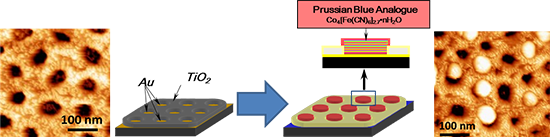
- of the perforations, the presence of sulfur atoms at the surface of the sample was monitored by X-ray photoelectron spectroscopy (XPS) throughout the functionalization step. XPS was carried out right after removing the sample from the MHA solution and after rinsing with EtOH (Figure 7). Before


Nanocrystalline ceria coatings on solid oxide fuel cell anodes: the role of organic surfactant pretreatments on coating microstructures and sulfur tolerance
Beilstein J. Nanotechnol. 2014, 5, 1712–1724, doi:10.3762/bjnano.5.181

- alkyl bromide to a sulfonate functionality. The ceria coatings deposited after the thiol pretreatment, and on anodes with no pretreatment, were continuous and uniform, with thicknesses of 60–170 nm and 100–140 nm, respectively, and those cells exhibited better lifetime performance and sulfur tolerance
- (IV) oxide; microstructure; organic self-assembled monolayers; solid oxide fuel cells; sulfur tolerance; Introduction Fuel cells convert chemical energy directly to electrical energy. Compared to conventional power sources, fuel cells offer higher efficiencies, lower emissions, modular installation
- , releasing electrons into an external circuit to do electrical work before they pass to the cathode for consumption in the oxygen reduction reaction. It is well known that the performance of SOFC anodes, typically composites of nickel metal with a zirconia or ceria ionic conductor, is degraded by sulfur


The influence of molecular mobility on the properties of networks of gold nanoparticles and organic ligands
Beilstein J. Nanotechnol. 2014, 5, 1664–1674, doi:10.3762/bjnano.5.177
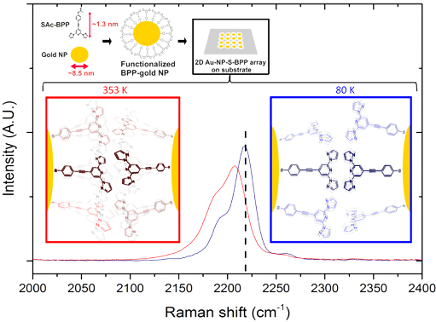
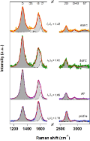
- or silver and is a further indication of binding through sulfur or thioacetate [35][36]. The second most intense feature in the SERS spectrum is a mode at 1076 cm−1, which is assigned to the aromatic C–S stretch shifted from 1095 cm−1 in the powder sample. Both the shift and enhancement of this mode