


Search results
Search for "surface modification" in Full Text gives 193 result(s) in Beilstein Journal of Nanotechnology.
Thermal treatment of magnetite nanoparticles
Beilstein J. Nanotechnol. 2015, 6, 1385–1396, doi:10.3762/bjnano.6.143
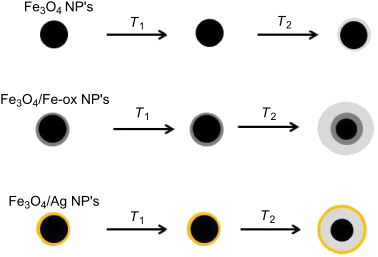
- , surface modification by the deposition of a chemically dissimilar layer (e.g., Ag) can be of particular importance, especially in the case of bio-related applications [9]. Another critical problem faced by researchers is that it is very difficult to obtain nanoparticles with exactly the same well-defined






Influence of gold, silver and gold–silver alloy nanoparticles on germ cell function and embryo development
Beilstein J. Nanotechnol. 2015, 6, 651–664, doi:10.3762/bjnano.6.66
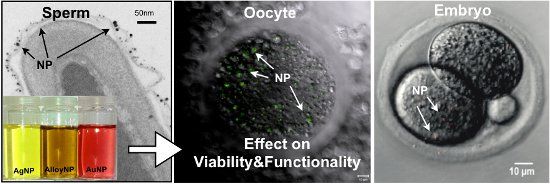
- elucidate how composition, size and surface modification of nanoparticles influence viablility and functionality of reproduction relevant cells derived from various animal models. While in vitro cultured embryos displayed no toxic effects after the microinjection of gold and silver nanoparticles, sperm





Self-assembled anchor layers/polysaccharide coatings on titanium surfaces: a study of functionalization and stability
Beilstein J. Nanotechnol. 2015, 6, 617–631, doi:10.3762/bjnano.6.63
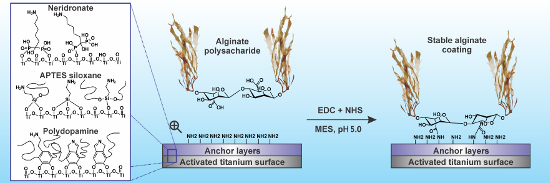
- ; neridronate; poly(dopamine); spectroscopic ellipsometry; surface characterization; surface modification; titanium; XPS; Introduction Titanium and titanium alloys are widely used in medicine and dentistry to replace and support hard tissues [1]. The absence of toxic alloying metals [1], extraordinary specific
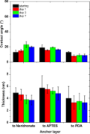
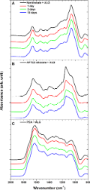
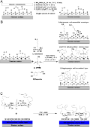
- siloxane network led to a higher deterioration tendency of the ALG/APTES double layer. The presented surface modification strategy of titanium can be an effective path for the formation of ALG-based hydrogel coatings enriched with bioactive compounds for bone tissue engineering applications. Experimental


Synergic combination of the sol–gel method with dip coating for plasmonic devices
Beilstein J. Nanotechnol. 2015, 6, 500–507, doi:10.3762/bjnano.6.52
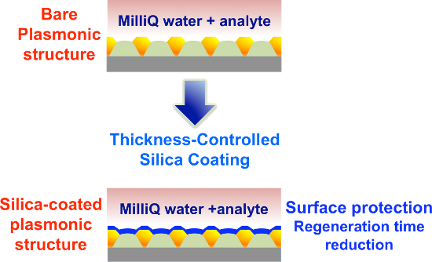
- analyte, plasmonic-based devices require modifications of the metal surface that exceed some limitations of a bare metal surface [7][8]. The type of surface modification depends strongly on the application of the materials and can be achieved by various approaches [7][8][11][12]. Surface modification


Conformal SiO2 coating of sub-100 nm diameter channels of polycarbonate etched ion-track channels by atomic layer deposition
Beilstein J. Nanotechnol. 2015, 6, 472–479, doi:10.3762/bjnano.6.48
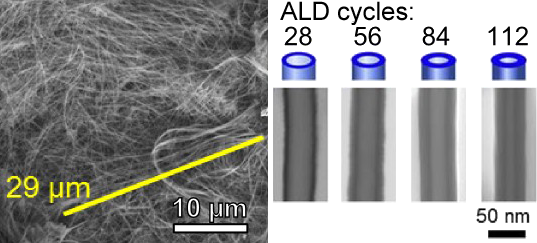
- properties such as diameter and conformation variations due to dangling bonds, swelling, or surface charge variations from pH changes of the solution, are to a large extent unknown but can influence ion transport and the control of surface modification steps in a crucial manner. A homogeneous conformal
- cycles, the process provides excellent control of size adjustment of nanopores. ALD is also flexible with respect to other surface modification and suitable for applications such as selective transport of ionic species or bio species through nanochannels and the development of novel nanopore sensors
- based on SiO2-surface modification. Schematics of the fabrication of SiO2 coated membranes: (a) irradiation of PC foil with GeV heavy ions, (b) chemical etching of ion tracks to form cylindrical nanochannels, (c) ALD conformal coating of porous membrane. Diffuse reflectance FTIR spectra of uncoated


Oxygen-plasma-modified biomimetic nanofibrous scaffolds for enhanced compatibility of cardiovascular implants
Beilstein J. Nanotechnol. 2015, 6, 254–262, doi:10.3762/bjnano.6.24
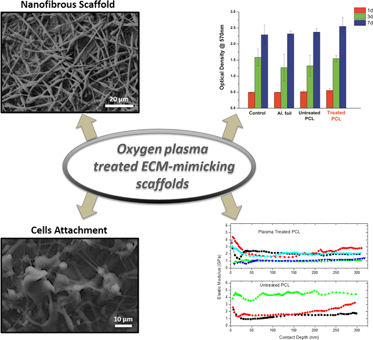
- and its effect on cell attachment and growth was evaluated. The conditions of the surface modification were properly adjusted in order to define those conditions of the treatment that result in surfaces favorable for cell growth, while maintaining morphological integrity and mechanical behavior
- physical and mechanical stability, while the surface should provide high affinity with cells. In order to combine both prerequisites in one biomaterial, a common approach is to use synthetic biomaterials with adequate bulk properties and improve the surface functionalities by applying surface modification
- components can be observed, which correspond to the aliphatic carbon bonds (–C–C– or –C–H), carbon single bonded to oxygen (–C–OH or –C–O–), and carbonyl functional groups (O–C=O) located at approximately 285.0, 286.5, and 288.9 eV, respectively. O2-plasma treatment is a commonly used surface modification


Caveolin-1 and CDC42 mediated endocytosis of silica-coated iron oxide nanoparticles in HeLa cells
Beilstein J. Nanotechnol. 2015, 6, 167–176, doi:10.3762/bjnano.6.16
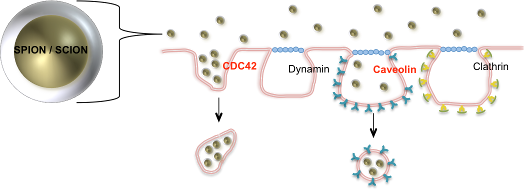
- high standard deviation, this effect is not statistically significant (γ = 95%, p = 0.2773). Summary Knockdown of Caveolin-1 decreased the ability of HeLa cells to internalize nanoparticles. Depending on the surface modification of SPIONs or SCIONs and the experimental design, the endocytosis of
- of control and transfected HeLa cells in pg/cell after 24 h incubation with PEGylated SPIONs; target proteins: CDC42, PIP5Kα (iron concentration 50 µg/mL, error bars: SEM, n = 3). Surface modification of SPIONs and their physical properties at room temperature in aqueous dispersion (pH 7, DLS


Synthesis of boron nitride nanotubes and their applications
Beilstein J. Nanotechnol. 2015, 6, 84–102, doi:10.3762/bjnano.6.9
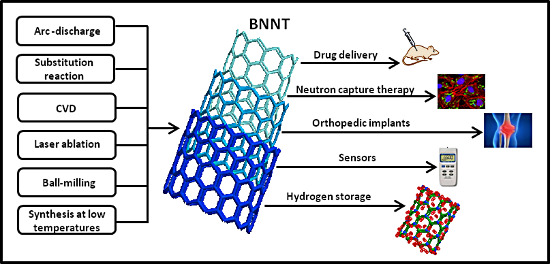
- neutron capture therapy. In this review, BNNT synthesis methods and the surface modification strategies are first discussed, and then their toxicity and application studies are summarized. Finally, a perspective for the future use of these novel materials is discussed. Keywords: boron nitride nanotubes
- assessment attempts are provided in Table 2. As seen, a number of reports claim that the BNNTs are nontoxic. Since the BNNTs are highly hydrophobic, it is difficult to perform toxicity assays for these materials. Therefore, a surface modification approach is generally performed to increase their




Inorganic Janus particles for biomedical applications
Beilstein J. Nanotechnol. 2014, 5, 2346–2362, doi:10.3762/bjnano.5.244
- selective excitation of the focal volume [93][94]. Nevertheless, it remains challenging to extend the technique to time-dependent measurements for clinically relevant volumes, reaching beyond small animals used as testing systems at the moment [95][96][97][98]. Surface modification of Janus particles The
- an aqueous environment. This is a key point regarding the use of nanoparticles for biomedical applications for sensing biomolecules, cells, and diagnosis of diseases, and intracellular delivery [99][100][101]. There are different surface modification strategies, such as ligand exchange to bind
- ]. The stability of the silica coated particles against aggregation and biocompatibility is enhanced by surface modification using a PEG-silane conjugate. Therefore, the particles remain stable at all stages of the preparation as confirmed by DLS measurements of hydrophobic Au nanoparticles, Au@Fe3O4






Nanoencapsulation of ultra-small superparamagnetic particles of iron oxide into human serum albumin nanoparticles
Beilstein J. Nanotechnol. 2014, 5, 2259–2266, doi:10.3762/bjnano.5.235
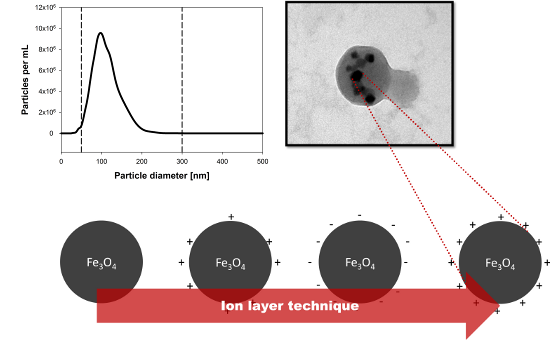
- particles of iron oxide (USPIO) are used as contrast agents in magnetic resonance imaging, their encapsulation into the protein matrix enables the synthesis of diagnostic and theranostic agents by surface modification and co-encapsulation of active pharmaceutical ingredients. The present investigation deals
- with the surface modification and nanoencapsulation of USPIO into an albumin matrix by using ethanolic desolvation. Particles of narrow size distribution and with a defined particle structure have been achieved. Keywords: diagnostics; HSA; nanoencapsulation; nanoparticles; USPIO; Introduction Over
- = 6 nm). Additionally, the specific (mass dependant) magnetization of the particles was determined at a temperature of 300 K (Figure 2). Surface modification of magnetite nanoparticles Iron oxide nanoparticles were chemically modified by using a combination of citrate and tetramethylammonium hydroxide


Biopolymer colloids for controlling and templating inorganic synthesis
Beilstein J. Nanotechnol. 2014, 5, 2129–2138, doi:10.3762/bjnano.5.222
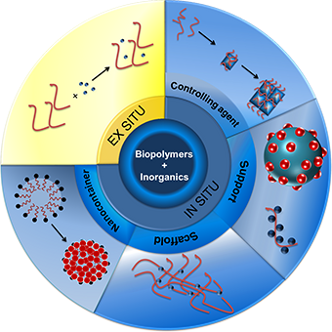
- , ranging from the monomer (Glu) to the eicosamer (Glu20). COD: calcium oxalate dihydrate; COT: calcium oxalate trihydrate. Reprinted with permission from [38]. Copyright 2010 American Chemical Society. DNA-templated preparation of porous CdS shells on the surface of silica beads: (a) surface modification


Sequence-dependent electrical response of ssDNA-decorated carbon nanotube, field-effect transistors to dopamine
Beilstein J. Nanotechnol. 2014, 5, 2113–2121, doi:10.3762/bjnano.5.220
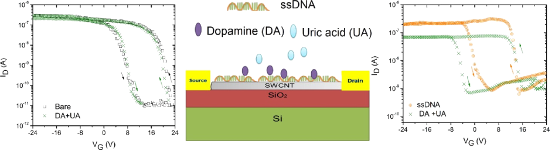
- FETs lack responsivity and selectivity for its detection due to the presence of interfering compounds such as uric acid (UA). Surface modification of CNTs using single-stranded deoxyribonucleic acid (ssDNA) renders the surface responsive to DA and screens the interferent. Due to the presence of
- ]. The use of an electronic detection technique with a chemically modified CNT surface that recognizes DA and selectively screens the interferent is a potential solution to overcome these hurdles. Surface modification improves the interaction strength between the nanotube and DA, thereby enhancing the
- ssDNA-decorated FETs, even in the presence of UA. This highlights the enhancement in device response by ssDNA surface modification, and the improvement in selectivity of DA recognition in the presence of UA. To interpret the influence of ssDNA surface modification on the response of SWCNT FETs to DA, UA


Rapid degradation of zinc oxide nanoparticles by phosphate ions
Beilstein J. Nanotechnol. 2014, 5, 2007–2015, doi:10.3762/bjnano.5.209
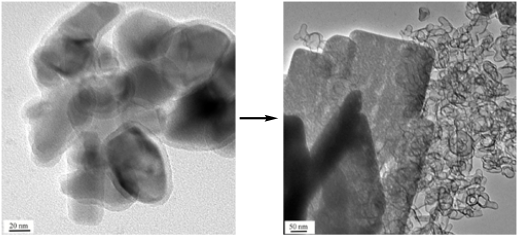
- the smooth surface and formation of agglomerates of amorphous zinc phosphate can already be seen. The zinc phosphate layer itself is not thick enough to be detected directly by TEM. Surface modification by labelling with the perylene fluorescence dye prevents the formation of a comparatively tight


The surface properties of nanoparticles determine the agglomeration state and the size of the particles under physiological conditions
Beilstein J. Nanotechnol. 2014, 5, 1774–1786, doi:10.3762/bjnano.5.188
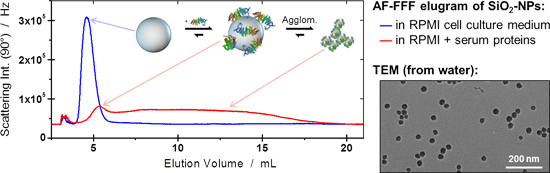
- applied. The investigated particle systems were (i) negatively charged silica particles and (ii) poly(organosiloxane) particles offering variable surface modification opportunities (positively charged, polymer coated). It is shown that the surface properties primarily determine the agglomeration state of
- [51]. As reported there, NexSil20 is a commercially available, colloidal silica without surface modification. Keeping in mind its application to nanotoxicology studies, this system was chosen due to the fact that colloidal silica is used for most real life applications of silica nanoparticles. Poly


In vitro and in vivo interactions of selected nanoparticles with rodent serum proteins and their consequences in biokinetics
Beilstein J. Nanotechnol. 2014, 5, 1699–1711, doi:10.3762/bjnano.5.180
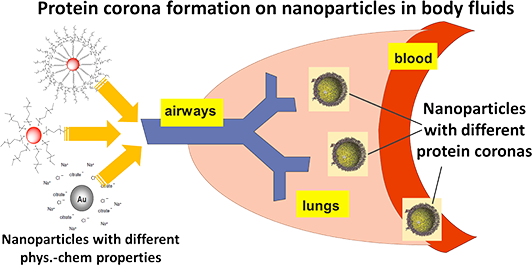
- dynamical change during AuNP translocation in fluids and across membranes within the organism. Keywords: biokinetics; gold nanoparticles; protein corona; protein–nanoparticle conjugate; serum protein binding; surface modification; Introduction Like any foreign material that enters into the organism
- published in the following series of reports: biokinetics of 198AuNP of different small ionic ligand surface modification: after intratracheal instillation or intravenous injection of 1.4 nm and 18 nm 198AuNP; Semmler-Behnke et al. [10]; after intravenous injection of 1.4, 2.8, 5, 18, 80 and 200 nm 198AuNP
- ; Hirn et al., [11]; after intra-esophageal instillation of 1.4, 2.8, 5, 18, 80 and 200 nm 198AuNP; Schleh et al. [12]; after intratracheal instillation of 1.4, 2.8, 5, 18, 80 and 200 nm 198AuNP Kreyling et al. [13], biokinetics of 198AuNP with PEG versus small ionic ligand surface modification are


A sonochemical approach to the direct surface functionalization of superparamagnetic iron oxide nanoparticles with (3-aminopropyl)triethoxysilane
Beilstein J. Nanotechnol. 2014, 5, 1472–1476, doi:10.3762/bjnano.5.160
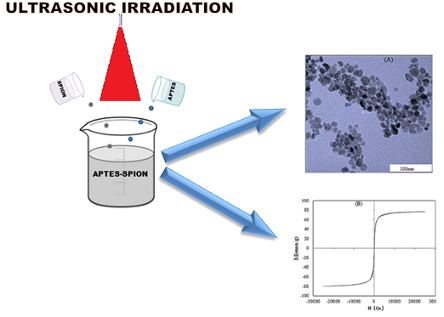
- cause them to agglomerate in ionic solution [1]. In addition, SPION exhibit a lack of affinity for biomolecules. One of the methods used to minimize these effects is through surface modification or functionalization of the SPION. Organic compounds, such as (3-aminopropyl)triethoxysilane (APTES), are


The cell-type specific uptake of polymer-coated or micelle-embedded QDs and SPIOs does not provoke an acute pro-inflammatory response in the liver
Beilstein J. Nanotechnol. 2014, 5, 1432–1440, doi:10.3762/bjnano.5.155
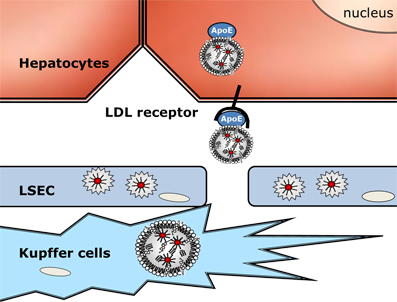
- haemolysis or nanoparticle uptake [13][14]. In most studies so far, complex surface modification was carried out to achieve water-solubility of hydrophobic QDs or SPIOs [15][16]. Another way to make nanocrystals hydrophilic is the embedding of QDs or SPIOs into the core of lipid micelles [17][18][19]. After


PEGylated versus non-PEGylated magnetic nanoparticles as camptothecin delivery system
Beilstein J. Nanotechnol. 2014, 5, 1312–1319, doi:10.3762/bjnano.5.144
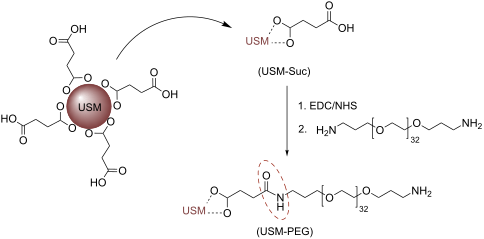
- surface modification of the nanoparticles by polyethylene glycol enables loading a large amount of camptothecin. While the unloaded nanoparticles do not induce apoptosis in the H460 lung cancer cell line, the camptothecin-loaded nanoparticle formulations exhibit remarkable pro-apoptotic activity. These
- retain the biological activity of CPT and exhibit remarkable cytotoxic activity towards H460 lung cancer cell line cultures. Remarkably, it was found that iron oxide superparamagnetic nanoparticles synthesized by co-precipitation method can be loaded with CPT. By the proposed nanoparticle surface
- modification procedure with PEG the amount of CPT that can be loaded was greatly enhanced (in effect doubled) with respect to bare USM nanoparticles. No significant difference in the cytotoxic activity was observed among the CPT loaded on either the PEGylated or bare USM magnetic nanoparticles. Nevertheless, a


Purification of ethanol for highly sensitive self-assembly experiments
Beilstein J. Nanotechnol. 2014, 5, 1254–1260, doi:10.3762/bjnano.5.139
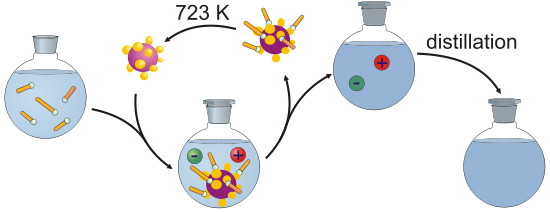
- fully regenerated via a simple pyrolysis protocol. Keywords: ethanol; gold nanoparticles; purification; self-assembled monolayers; solvent; Introduction Thirty years after their introduction [1][2][3], self-assembled monolayers (SAMs) of organothiolates have matured to an established tool for surface
- modification [4], e.g., as etch resist for microfabrication [5][6], as support for molecular systems like metal-organic frameworks or biomolecules [7], or for the tuning of electronic properties of metal surfaces [8][9][10][11][12], to mention just a few. One reason for the popularity of SAMs is their ease of

Dry friction of microstructured polymer surfaces inspired by snake skin
Beilstein J. Nanotechnol. 2014, 5, 1091–1103, doi:10.3762/bjnano.5.122

- lead to a stronger abrasive wear on the tribo-pair. Nevertheless by such kind of surface modification, they were able to reduce the frictional coefficient. A comparison of these finding with the results of our study is only possible in a limited way, because they used for their investigation a


A nanometric cushion for enhancing scratch and wear resistance of hard films
Beilstein J. Nanotechnol. 2014, 5, 1005–1015, doi:10.3762/bjnano.5.114
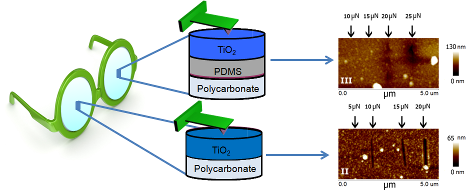
- the tire industry [17], to medical catheters [18][19][20]. Surface modification to control friction is the subject of several patents [21][22][23][24]. Many techniques have been applied to study scratch resistance and friction [25][26][27][28]. Atomic force microscopy (AFM) allows for extending such



Optimizing the synthesis of CdS/ZnS core/shell semiconductor nanocrystals for bioimaging applications
Beilstein J. Nanotechnol. 2014, 5, 919–926, doi:10.3762/bjnano.5.105
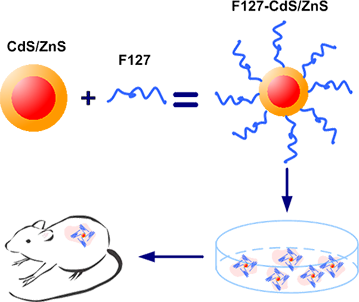
- aqueous solutions. It is critical to disperse QDs in water before their application by surface modification with biofunctional molecules for the purpose of bioimaging. However, for many biological applications, it is necessary to transfer the QDs into water through a capping ligand exchange [16][17][18
- ][19]. There are many reports about the surface modification of QDs in the literature, for example, by functionalizing QDs with small molecules, e.g., sulfanylpropanoic acid, coating QDs with a silica shell, and encapsulating QDs within micelle polymer nanoparticles. Amongst the most-studied


Enhanced photocatalytic activity of Ag–ZnO hybrid plasmonic nanostructures prepared by a facile wet chemical method
Beilstein J. Nanotechnol. 2014, 5, 639–650, doi:10.3762/bjnano.5.75
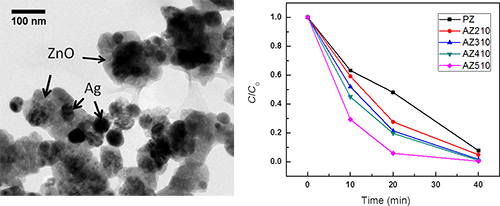
- made to improve the photocatalytic efficiency of ZnO by decreasing the rate of recombination of electrons and holes by surface modification with noble metal nanoparticles [19][20][21][22][23][24]. Surface modification of ZnO nanostructures with noble metal nanoparticles improves the photocatalytic


DNA origami deposition on native and passivated molybdenum disulfide substrates
Beilstein J. Nanotechnol. 2014, 5, 501–506, doi:10.3762/bjnano.5.58
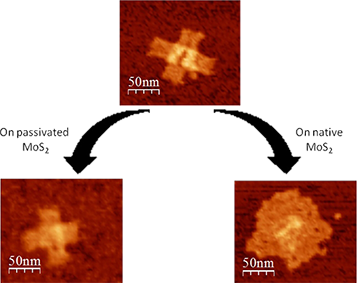
- significantly longer times. These findings will be beneficial for the fabrication of future DNA origami/MoS2 hybrid electronic structures. Keywords: atomic force microscopy (AFM); DNA origami; molybdenum disulfide (MoS2); pyrene; 1-pyrenemethylamine; surface modification; Introduction Since it was first
- the MoS2 substrate are of sufficient strength, further dispersion/equilibration in two dimensions would not be anticipated. This is consistent with the observation that the structures do not evolve significantly between 10 and 30 s of incubation. Surface modification using 1-pyrenemethylamine and
- constructs. While the surface roughness increased significantly to 5.3 Å after surface modification (Figure 3a), we found that DNA nanostructures remained intact in the presence of the 1-pyrenemethylamine adhesion layer (Figure 3b–d), in contrast to the DNA nanostructures deposited on the bare MoS2 surface


The softening of human bladder cancer cells happens at an early stage of the malignancy process
Beilstein J. Nanotechnol. 2014, 5, 447–457, doi:10.3762/bjnano.5.52
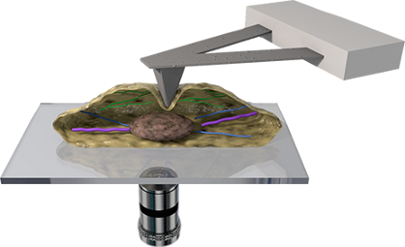
- grown previously on a glass coverslip covered with poly-L-lysine. In the present studies no glass surface modification was introduced. Thus, substrate chemical properties do not change the relationship between non-malignant HCV29 and cancerous T24 cells. The comparison performed in the previous studies





