


Search results
Search for "surface properties" in Full Text gives 226 result(s) in Beilstein Journal of Nanotechnology. Showing first 200.
Study of the surface properties of ZnO nanocolumns used for thin-film solar cells
Beilstein J. Nanotechnol. 2017, 8, 446–451, doi:10.3762/bjnano.8.48
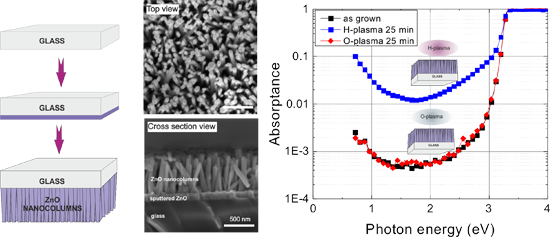
- surface properties of ZnO NCs and the binding state of present elements were investigated before and after different plasma treatments, typically used in plasma-enhanced CVD solar cell deposition processes, by X-ray photoelectron spectroscopy (XPS). Photothermal deflection spectroscopy (PDS) was used to



Biological and biomimetic materials and surfaces
Beilstein J. Nanotechnol. 2017, 8, 403–407, doi:10.3762/bjnano.8.42

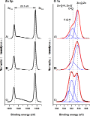
- %) environmental humidity leads to a decrease of attachment forces generated by beetles [18]. The paper by England et al. systematically investigated beetle attachment ability on eight different surfaces having different structural and physico-chemical properties. The results show that chemical surface properties
Functionalized TiO2 nanoparticles by single-step hydrothermal synthesis: the role of the silane coupling agents
Beilstein J. Nanotechnol. 2017, 8, 304–312, doi:10.3762/bjnano.8.33
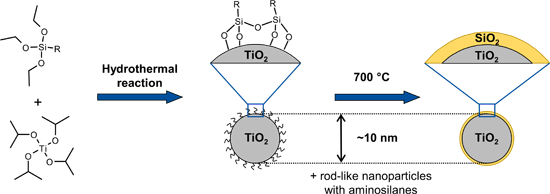
- route was demonstrated, and by selecting the type of silane coupling agent the surface properties of the TiO2 nanoparticles could be tailored. This synthesis route has been further developed into a two-step synthesis to TiO2–SiO2 core–shell nanoparticles. Combustion of the silane coupling agents up to
- , surface coverage, and hydrophobicity. Tuning the surface properties of the nanoparticles for different applications by selecting the silane coupling agent is discussed. We further report the effect of heat treatment of the nanoparticles for the formation of core–shell TiO2–SiO2 nanoparticles. Experimental
- offer versatility for tuning the surface properties of the TiO2 nanoparticles that are required for selected applications. Further modifications of the synthesis route are also possible for tuning the properties towards various types of applications. For example, applying the nanoparticles as filler in



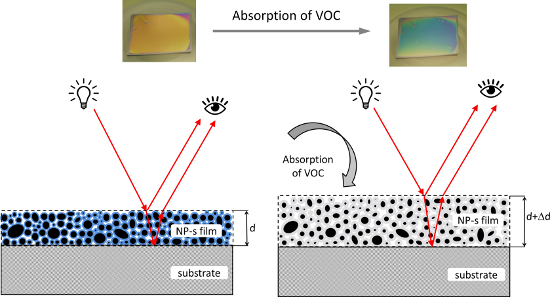
Colorimetric gas detection by the varying thickness of a thin film of ultrasmall PTSA-coated TiO2 nanoparticles on a Si substrate
Beilstein J. Nanotechnol. 2017, 8, 229–236, doi:10.3762/bjnano.8.25
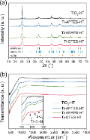
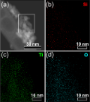
- 2p photoemission line in the overview spectrum (168.2 eV, Figure 3c) is consistent with the sulfonic acid group [30]. This demonstrates that the nanoparticles are covered with PTSA molecules, yielding specific surface properties such as polarity and affinity towards the specific compounds. The vapor


Effective intercalation of zein into Na-montmorillonite: role of the protein components and use of the developed biointerfaces
Beilstein J. Nanotechnol. 2016, 7, 1772–1782, doi:10.3762/bjnano.7.170
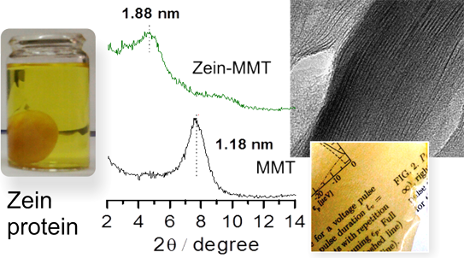
- in which the structural stability of the protein, the ionic strength, the pH value as well as the surface properties can influence the affinity of the biomolecule toward the inorganic interface. In addition to the particular characteristics of each protein, the structural size and proportion of




Fingerprints of a size-dependent crossover in the dimensionality of electronic conduction in Au-seeded Ge nanowires
Beilstein J. Nanotechnol. 2016, 7, 1574–1578, doi:10.3762/bjnano.7.151
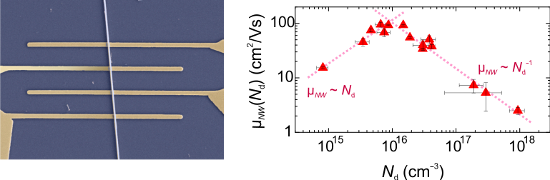
- components for high-performance applications [1][2][3]. Besides representing prospective field-effect devices [4][5], they have attracted interest as building blocks for nanoscaled electrooptical components [6] and, due to their specific surface properties [4] can be envisaged as high-potential chemical and


![[Graphic 7]](/bjnano/content/inline/2190-4286-7-151-i9.png?max-width=637&scale=1.18182) and 1D screening length λ(1D) as function of carr...
and 1D screening length λ(1D) as function of carr...
Surface roughness rather than surface chemistry essentially affects insect adhesion
Beilstein J. Nanotechnol. 2016, 7, 1471–1479, doi:10.3762/bjnano.7.139
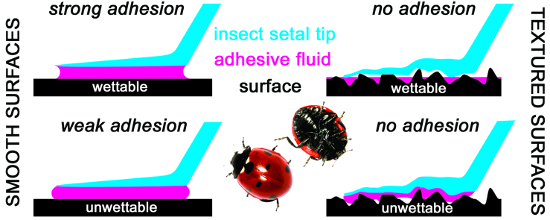
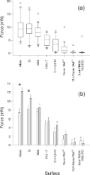
- of surface, each with different chemical and topographical properties. The results of traction force tests clearly demonstrated that chemical surface properties, such as static/dynamic de-wettability of water and oil caused by specific chemical compositions, had no significant effect on the
- surfaces. Surface properties of the samples. Sample surface compositions as estimated by XPS. Acknowledgements The authors thank Charlotte Bellmann and Ingo Grawe (both Kiel University) for their assistance with the force measurements and Emre Kizilkan (Kiel University) for the introduction into the



Three-gradient regular solution model for simple liquids wetting complex surface topologies
Beilstein J. Nanotechnol. 2016, 7, 1377–1396, doi:10.3762/bjnano.7.129



![[Graphic 10]](/bjnano/content/inline/2190-4286-7-129-i31.png?max-width=637&scale=1.18182) and standard deviation as a function of the cavity diameter d (in...
and standard deviation as a function of the cavity diameter d (in...

![[Graphic 20]](/bjnano/content/inline/2190-4286-7-129-i41.png?max-width=637&scale=1.18182) and the corresponding fluctuations (measured along the x-direction) indica...
and the corresponding fluctuations (measured along the x-direction) indica...

![[Graphic 28]](/bjnano/content/inline/2190-4286-7-129-i49.png?max-width=637&scale=1.18182) and the corresponding standard deviation as measure of variation in the ...
and the corresponding standard deviation as measure of variation in the ...

![[Graphic 39]](/bjnano/content/inline/2190-4286-7-129-i60.png?max-width=637&scale=1.18182) and standard deviation as function of cut-off fraction c for fixed ...
and standard deviation as function of cut-off fraction c for fixed ...
Gold nanoparticles covalently assembled onto vesicle structures as possible biosensing platform
Beilstein J. Nanotechnol. 2016, 7, 655–663, doi:10.3762/bjnano.7.58
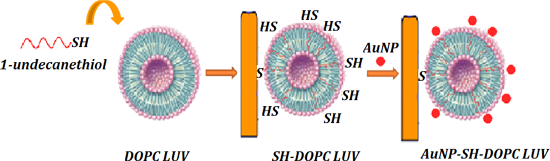
- electrode (AuE). For that, a simple and well-defined redox system was used consisting of K4[Fe(CN)6] [26], which first was employed to characterize the surface properties of the AuE modified with the SH–DOPC LUVs without AuNPs. To perform this electrochemical characterization, firstly a clean AuE surface


Characterization of spherical domains at the polystyrene thin film–water interface
Beilstein J. Nanotechnol. 2016, 7, 581–590, doi:10.3762/bjnano.7.51
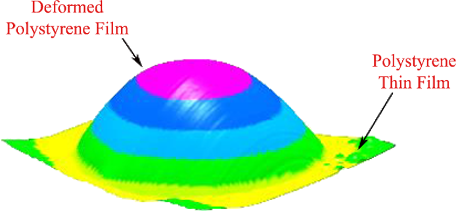
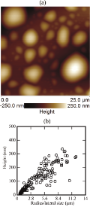
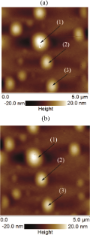
- properties of glass [4][5], and for the modification of surface properties [6][7][8] (e.g., hydrophobicity, oleophobicity). The study of the thermal [4], optical [5], mechanical [9][10], and interfacial [6][7][8] properties of thin films is a broader area of interest. Various physical and chemical processes




Nanoscale effects in the characterization of viscoelastic materials with atomic force microscopy: coupling of a quasi-three-dimensional standard linear solid model with in-plane surface interactions
Beilstein J. Nanotechnol. 2016, 7, 554–571, doi:10.3762/bjnano.7.49
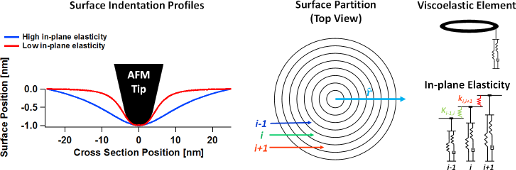
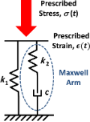
- subject to errors due to changes in material properties. In the case under consideration, the relaxed surface is located at the same position with respect to the cantilever for all simulations labeled with the same cantilever height. However, changes in the surface properties can lead to changes in the


Rigid multipodal platforms for metal surfaces
Beilstein J. Nanotechnol. 2016, 7, 374–405, doi:10.3762/bjnano.7.34

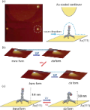
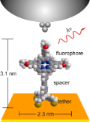
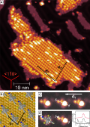
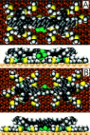
- (Figure 3) and used them for the fabrication of SAMs on gold [88][105]. In this study they particularly focused to reveal the surface properties of various sulfanylmethyl- and methylsulfanylmethyl-terminated tripodal platforms in order to get fairly densely packed, contamination free and homogeneous










Surface coating affects behavior of metallic nanoparticles in a biological environment
Beilstein J. Nanotechnol. 2016, 7, 246–262, doi:10.3762/bjnano.7.23
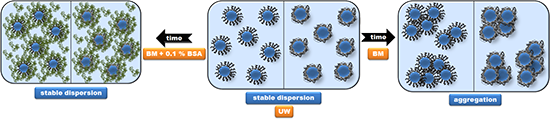
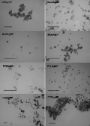
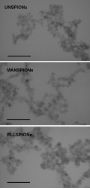
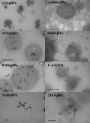
- collected and thoroughly analyzed data presented in this study will provide further insight into the behavior of AgNPs and SPIONs in complex biological media and the influence of surface properties on their colloidal stability. Furthermore, the obtained results contribute to the understanding of principal




Large area scanning probe microscope in ultra-high vacuum demonstrated for electrostatic force measurements on high-voltage devices
Beilstein J. Nanotechnol. 2015, 6, 2485–2497, doi:10.3762/bjnano.6.258
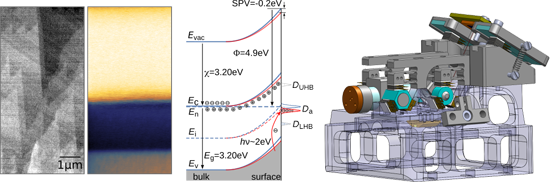
- conditions to predict bulk information from measured surface properties. Here we have a complex SiC structure influenced by some surface defects and states within the band gap, which induce a laterally homogeneous downward band bending for p-type and opposite for n-type material. Therefore, Equation 2 can be


Nanoinformatics for environmental health and biomedicine
Beilstein J. Nanotechnol. 2015, 6, 2449–2451, doi:10.3762/bjnano.6.253
- components calculated from nanoparticle size and surface properties using Kriging estimations [14]. Another contribution reports on the development of models to predict the cytotoxicity of PAMAM dendrimers using molecular descriptors [15]. Nanomaterials that have potential to cause disease (e.g., TiO2
Nanostructured surfaces by supramolecular self-assembly of linear oligosilsesquioxanes with biocompatible side groups
Beilstein J. Nanotechnol. 2015, 6, 2377–2387, doi:10.3762/bjnano.6.244
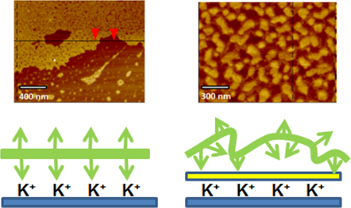
- structure of the applied oligomers and primers. Keywords: atomic force microscopy; hydrophilicity; oligosilsesquioxanes; self-assembly; surface; Introduction The modification of surface properties can be used as a versatile tool in materials engineering for biological and medical purposes [1][2][3][4
- surface exceptionally hydrophilic [37][38]. Muscovite mica, chosen as a substrate for the present study, is a layered aluminosilicate [KAl2(Si3AlO10)(OH)2] that exhibits interesting surface properties and chemical specificity. Potassium ions electrostatically bind the alternating aluminosilicate sheets in
- small molecules [49]. They should be simultaneously capable of the formation of surface salts and hydrogen bonds with functional groups in side chains of LPSQ-COOH/X. Consequently, thioglycolic acid (TG), citric acid (CA) and N-acetylcysteine (NAC) were selected and used as primers to modify the surface




Temperature-dependent breakdown of hydrogen peroxide-treated ZnO and TiO2 nanoparticle agglomerates
Beilstein J. Nanotechnol. 2015, 6, 1897–1903, doi:10.3762/bjnano.6.193
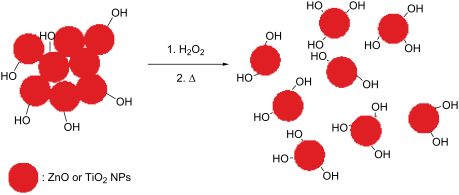
- degree of the agglomeration is mostly governed by the synthesis method, which defines their surface properties. During the synthesis processes or in subsequent process steps, the agglomeration of primary particles occurs as a result of the weak bonding between NPs. These primary aggregates then form
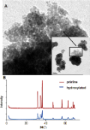
- demonstrated that the treatment of ZnO NPs with hydrogen peroxide (H2O2) affected the surface properties and as a result the cytotoxicity of the ZnO NPs was found to decrease [20]. H2O2 is a powerful oxidizer and it is therefore routinely used in many cleaners and bleaches. Living systems can produce hydrogen
- ]. These studies indicate that hydrogen peroxide treatment not only influences the surface properties of NPs but also changes the band gap of ZnO and TiO2 NPs and shifts the emission wavelength to blue wavelengths. Another study showed that the hydrogen peroxide treatment of TiO2 NPs increases the




NanoE-Tox: New and in-depth database concerning ecotoxicity of nanomaterials
Beilstein J. Nanotechnol. 2015, 6, 1788–1804, doi:10.3762/bjnano.6.183
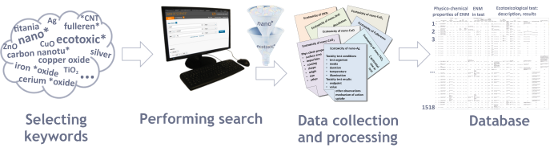
- functionalised with different coatings, polyvinylpyrrolidone (PVP) and citrate being the most widely used. A parameter closely related to NP surface properties is surface charge. It has been shown that positively charged ENMs tend to attach to the cellular surface that is negatively charged and these


Synthesis, characterization and in vitro biocompatibility study of Au/TMC/Fe3O4 nanocomposites as a promising, nontoxic system for biomedical applications
Beilstein J. Nanotechnol. 2015, 6, 1677–1689, doi:10.3762/bjnano.6.170
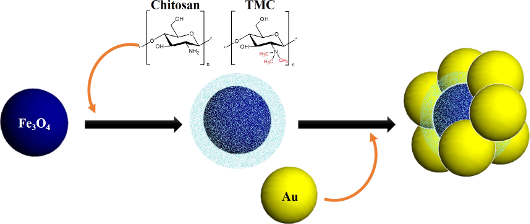
- . The nanoparticle diameters as evaluated by XRD and DLS analysis are summarized in Table 1. The study of the surface properties of nanoparticles, especially their surface charge in different physicochemical and physiological conditions, is important to understanding their interactions with other




Influence of surface chemical properties on the toxicity of engineered zinc oxide nanoparticles to embryonic zebrafish
Beilstein J. Nanotechnol. 2015, 6, 1568–1579, doi:10.3762/bjnano.6.160
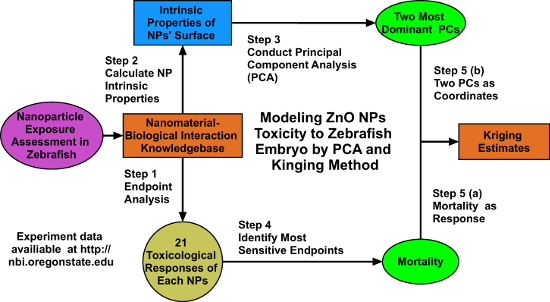
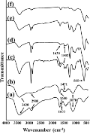
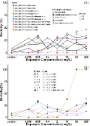
- used to calculate the surface properties. Zebrafish mortality at 120 hpf following exposure to: (A) ZnO NPs with and (B) without surface modification. Individual variance for each of the principal components (PCs). Black dots represent the accumulated variance explained by each PC, while the solid line




Influence of gold, silver and gold–silver alloy nanoparticles on germ cell function and embryo development
Beilstein J. Nanotechnol. 2015, 6, 651–664, doi:10.3762/bjnano.6.66
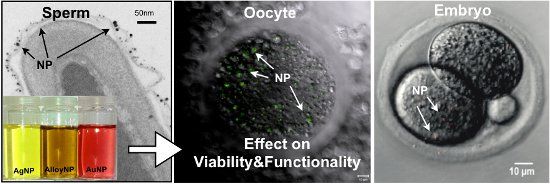
- nanoparticles were observed to be toxic to spermatozoa in a concentration dependent manner, in case the nanoparticles possess surface properties that allow direct contact with the sperm plasma membrane. Protein coronas seem to inhibit such contact. Gold nanoparticles also elicited a toxic response on embryos if





Self-assembled anchor layers/polysaccharide coatings on titanium surfaces: a study of functionalization and stability
Beilstein J. Nanotechnol. 2015, 6, 617–631, doi:10.3762/bjnano.6.63
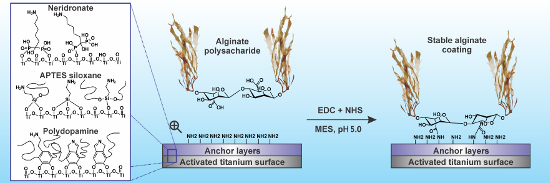
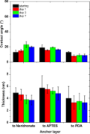
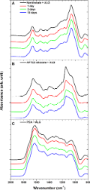
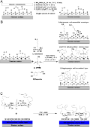
- –6.2 [5][6][7]. Different surface modifications have been proposed to take the advantage of the titanium surface properties and to promote beneficial interactions at tissue–titanium implant interfaces. Established techniques use modifications of the titanium surface morphology and variations in the


Tm-doped TiO2 and Tm2Ti2O7 pyrochlore nanoparticles: enhancing the photocatalytic activity of rutile with a pyrochlore phase
Beilstein J. Nanotechnol. 2015, 6, 605–616, doi:10.3762/bjnano.6.62
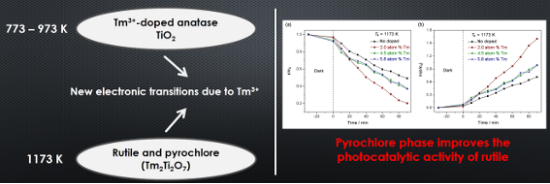
- scattering, this technique is sensitive to the atomic composition, valence and conduction band electronic properties, surface properties and chemical bonding. The latter allows for the characterization of the structural properties of the lattice traversed by the electron beam and, thus, determination of the


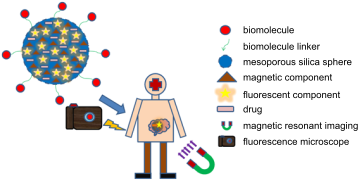
Silica micro/nanospheres for theranostics: from bimodal MRI and fluorescent imaging probes to cancer therapy
Beilstein J. Nanotechnol. 2015, 6, 546–558, doi:10.3762/bjnano.6.57


Pulmonary surfactant augments cytotoxicity of silica nanoparticles: Studies on an in vitro air–blood barrier model
Beilstein J. Nanotechnol. 2015, 6, 517–528, doi:10.3762/bjnano.6.54
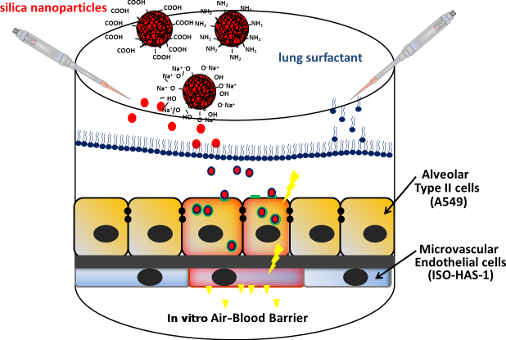
- . Furthermore, different surface functionalisations (plain-unmodified, amino, carboxylate) of the aSNPs were compared in order to study the impact of chemical surface properties on aSNP cytotoxicity in combination with lung surfactant. The alveolar epithelial cell line A549 was used in mono- and in coculture
- depend on the chemical surface properties of the aSNPs. Reactive silanol groups seem to play a crucial role for an augmented toxicity of aSNPs. The A549 cells in the coculture seem to be more robust towards aSNPs, which might be a result of a higher differentiation and polarization state due the longer
- protective alveolar surfactant lining layer (10–20 nm in thickness), that covers the entire alveolar surface [2]. It has already been shown that regardless of the NP surface properties they will be submerged in the aqueous phase of the alveolar lining layer after crossing the pulmonary surfactant layer [3][4





