Search results
Search for "tension" in Full Text gives 205 result(s) in Beilstein Journal of Nanotechnology. Showing first 200.
Synthesis and applications of carbon nanomaterials for energy generation and storage
Beilstein J. Nanotechnol. 2016, 7, 149–196, doi:10.3762/bjnano.7.17















Single-molecule mechanics of protein-labelled DNA handles
Beilstein J. Nanotechnol. 2016, 7, 138–148, doi:10.3762/bjnano.7.16
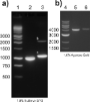
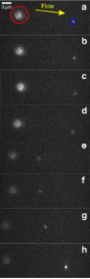
- featured the characteristic double-handle contour length of 680 nm at a tension of approx. 10 pN. Fluorescence measurements of Qdot–streptavidin conjugates that were attached to freely accessible DIG -λ-dsDNA-Bio strands. a) The blue circle highlights the fluorescent emission of a quantum dot at 525 nm



Large area scanning probe microscope in ultra-high vacuum demonstrated for electrostatic force measurements on high-voltage devices
Beilstein J. Nanotechnol. 2015, 6, 2485–2497, doi:10.3762/bjnano.6.258
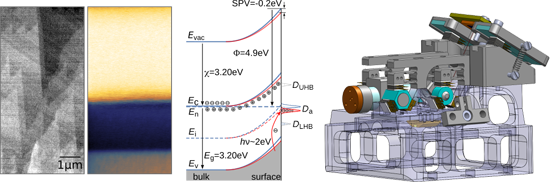
- (panel a) and the photographic (panel b) image of the complete AFM system. The beam deflection and scanner units are mounted together on top of the coarse positioner and represent the heart of the microscope. The system is attached to a CF200 flange and is suspended on four tension springs. Strong
- piezo actuators. The stages are compressed by three flexures. The piezo step motor in the aperture of the scanner allows to approach the sample to the probe with nanoscale accuracy. The atomic force microscope is assembled on a CF200 flange with four tension springs. Copper fins and magnets serve as an


Nanostructured superhydrophobic films synthesized by electrodeposition of fluorinated polyindoles
Beilstein J. Nanotechnol. 2015, 6, 2078–2087, doi:10.3762/bjnano.6.212
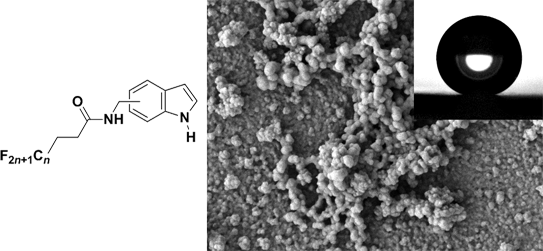
- Interference (PSI) working mode, the objective 50× and the field of view (FOV) 0.5×. The scanning electron microscopy images were obtained by using a 6700F microscope of JEOL. The contact angles were determined by using a DSA30 goniometer of Krüss. Liquids of different surface tension were chosen to


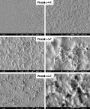


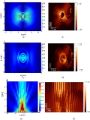
Near-field visualization of plasmonic lenses: an overall analysis of characterization errors
Beilstein J. Nanotechnol. 2015, 6, 2069–2077, doi:10.3762/bjnano.6.211
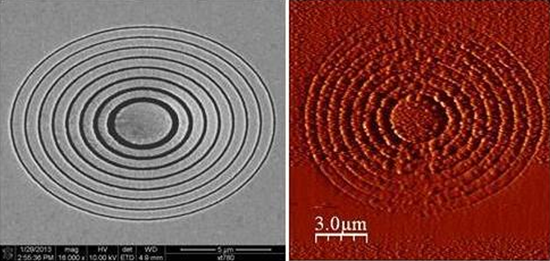
- the FIB point-by-point writing. Internal stress FIB bombardment with ion energies below 30 keV produces surface diffusion and tension down to about 30 nm underneath the surface of the etched structures. One by-product of ion beam sputtering is erosion. The arrival of ions on the sample surface is a


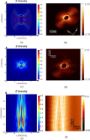
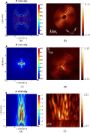


Lower nanometer-scale size limit for the deformation of a metallic glass by shear transformations revealed by quantitative AFM indentation
Beilstein J. Nanotechnol. 2015, 6, 1721–1732, doi:10.3762/bjnano.6.176
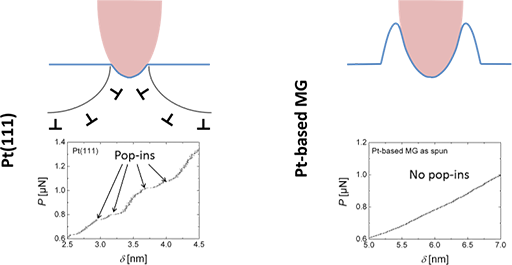
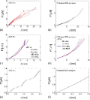
- shear steps at the sample surface and discrete load drops in the stress–strain curves that are attributed to the operation of single shear bands. Below a critical sample diameter though, the surface of samples tested in compression or tension are devoid of shear steps or shear bands and the plastic



Thermal treatment of magnetite nanoparticles
Beilstein J. Nanotechnol. 2015, 6, 1385–1396, doi:10.3762/bjnano.6.143
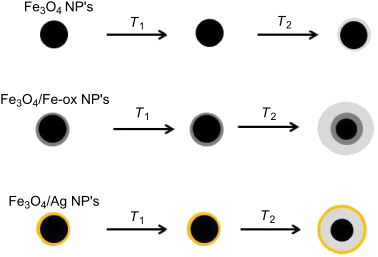
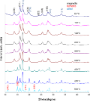
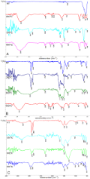
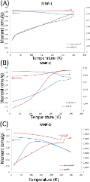
- , structural defects, tension, composition variation, crystal imperfections, etc.) significantly contribute to the broadening of the line width of the XRD patterns [33]. Therefore, the average particle size calculated this way is only a rough estimation. The temperature dependence of the line width also shows




The Kirkendall effect and nanoscience: hollow nanospheres and nanotubes
Beilstein J. Nanotechnol. 2015, 6, 1348–1361, doi:10.3762/bjnano.6.139
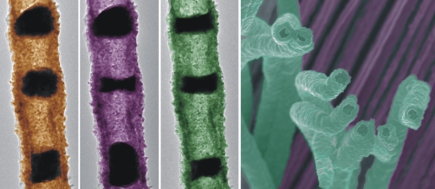
- to the interplay between the surface tension of the metal bismuth present in a liquid phase and the curved inner surface of the oxide shell. It is also believed that the wetting behavior of bismuth on the inner surface of the oxide shell can be influenced by other parameters such as the vapor



Automatic morphological characterization of nanobubbles with a novel image segmentation method and its application in the study of nanobubble coalescence
Beilstein J. Nanotechnol. 2015, 6, 952–963, doi:10.3762/bjnano.6.98
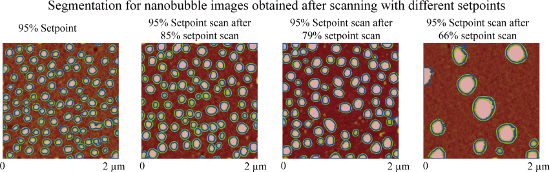
- elsewhere [35][43][44]. In their study, they claimed that the contact angle is a function of radius of curvature. This is mainly due to the existence of line tension along the three phase contact line. Here one should note that the tip radius, contact angle, as well as width shown in Figure 9 are the


Structure and mechanism of the formation of core–shell nanoparticles obtained through a one-step gas-phase synthesis by electron beam evaporation
Beilstein J. Nanotechnol. 2015, 6, 874–880, doi:10.3762/bjnano.6.89
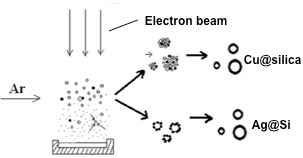
- particles are investigated in order to elucidate their mechanisms of formation and factors affecting the synthesis. It is proposed that the formation of Cu@silica particles is mainly driven by surface tension differences between Cu and Si while the formation of Ag@Si particles is mainly driven by
- system. In many cases, the surface tension of a liquid has a temperature dependence of the form which is valid for a certain temperature range above the melting temperature (Tm) of the material where σ(Tm) is the surface tension at the melting point of the material and dσ/dT is the rate of change of the
- surface tension with temperature [14]. The empirical dependence of the surface tension of copper with temperature is [15]. The surface tension of silicon varies as [16]. Below the melting point, when the materials are solid, the surface energy is the solid equivalent of the surface tension. The surface


Applications of three-dimensional carbon nanotube networks
Beilstein J. Nanotechnol. 2015, 6, 792–798, doi:10.3762/bjnano.6.82
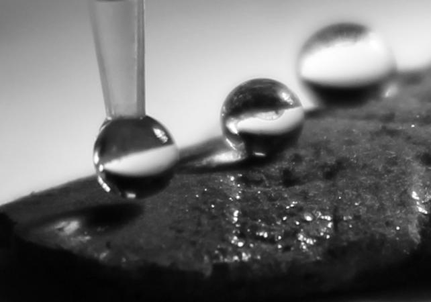
- in contact with water from the equation [19]: where γLV denotes the surface tension of the liquid–vapor (LV) interface for water γLV = 72.5 mN/m, and Θ is the measured contact angle (Θ = 175°). The estimated adhesion force of the water droplet (20 µL) reported in Figure 4b, is about 50 µN. Measuring
- contacting the water droplet, θ* is the apparent contact angle, and θ is the Young’s contact angle of the surface, with cosθ defined as: where γSV, γSL, and γLV denote the surface tension of the solid–vapor (SV), the solid–liquid (SL), and the liquid–vapor (LV) interface, respectively. If we insert in


Influence of grain size and composition, topology and excess free volume on the deformation behavior of Cu–Zr nanoglasses
Beilstein J. Nanotechnol. 2015, 6, 537–545, doi:10.3762/bjnano.6.56
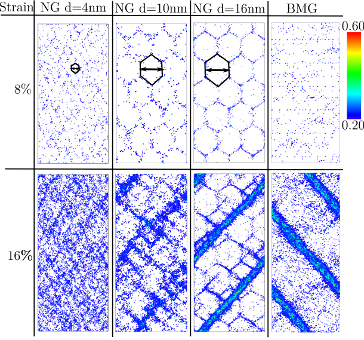
- these NGs and compared to the case of homogeneous BMGs by deforming in uniaxial tension parallel to the z-direction with a constant strain rate of 4 · 107 s−1 at T = 50 K. 3D periodic boundary conditions were applied to exclude surface effects. The pressure in x and y direction was kept at 0 kbar
- grain sizes of
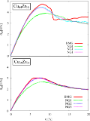
= 4, 10 and 16 nm (see Table 1). All NGs and a BMG (≈1.3 · 106 atoms) were deformed in tension following the procedure described above. The stress–strain curves of all three NGs and the BMG under tensile deformation are plotted in Figure 1. Up to a strain of about 2%, all four curves
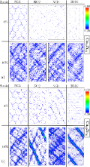
- were quenched to 50 K and deformed in uniaxial tension. In case of annealed Cu-rich NG (NG2) the plastic deformation no longer takes place in a network of multiple shear bands, and one dominant shear band is formed (see Figure 5 lower panel). Nevertheless, as it was already shown in [12] the plastic



Nanoparticle shapes by using Wulff constructions and first-principles calculations
Beilstein J. Nanotechnol. 2015, 6, 361–368, doi:10.3762/bjnano.6.35
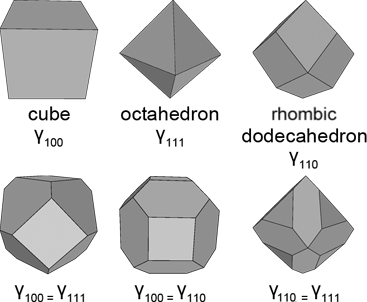
- . The quantity γhkl is the energy required to create a surface of unit area normal to the [hkl] vector, and is the analogous of the surface tension for liquids. This process is repeated for all sets of Miller indexes, (hkl). The space that lies inside all these planes defines the equilibrium shape for
- theorem is a generalization that considers lateral strain [14]. When the material under study is at equilibrium with another gas- or liquid-phase material, the interface tension, , is used in the Wulff construction instead of the surface tension, γhkl. The two are connected by a simple formula that
- , they have a much higher surface tension than low-index faces; (if a high-index surface and a low-index surface have equal surface tensions, the low-index will have a greater area as the high-index face will be steeper and will be hidden in the Wulff construction); does not take into account edge- and



Exploiting the hierarchical morphology of single-walled and multi-walled carbon nanotube films for highly hydrophobic coatings
Beilstein J. Nanotechnol. 2015, 6, 353–360, doi:10.3762/bjnano.6.34
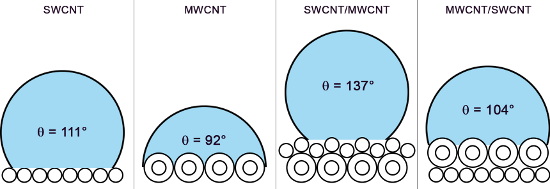
- since ethanol has a lower liquid–vapor surface tension (γLV = 22 mJ·m−2) than water (γLV = 72 mJ·m−2), the higher the ethanol concentration in water, the lower the surface tension of the solution. Furthermore, the contact angle is generally proportional to the liquid surface tension by the Young’s
- relation where γSV and γSL are the solid–vapor and solid–liquid surface tensions, respectively. Therefore, also the contact angles of the carbon nanotube films decrease with the decrease in surface tension of the liquid droplet. This phenomenon is connected to the lipophilicity of the apolar surface of the
- respect to the MWCNT surface. Wetting states are studied changing the liquid surface tension by adding different ethanol concentrations in water. Wenzel regime (green solid line) fit reports a roughness factor r = 1.08 ± 0.01, while lipophilic (blue solid line) and hydrophobic (red solid line) Cassie


Mechanical properties of MDCK II cells exposed to gold nanorods
Beilstein J. Nanotechnol. 2015, 6, 223–231, doi:10.3762/bjnano.6.21
- CTAB coated rods suggesting an increase in acoustic load corresponding to a larger stiffness (storage modulus). Keywords: atomic force microscopy; CTAB; gold nanorods; membrane tension; MDCK II cells; QCM; Introduction The interest in gold nanoparticles (NP) for biomedical applications in the field
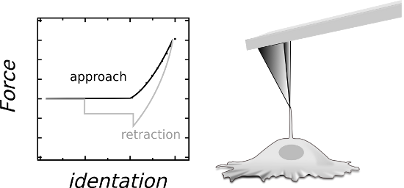
- of Hertzian mechanics to describe the elasticity of cells we also used a recently introduced tension model treating the cells as a liquid droplet (red continuous lines in Figure 3) [27][28]. According to the tension model we consider the cell as an isotropic elastic shell that produces a restoring
- force in response to indentation with a conical indenter originating from two sources, linear elasticity due to area dilatation and pre-stress (constant tension). Pre-stress is mainly generated by contractile actomyosin, strong adhesion at the cell-borders and interaction of the plasma membrane with the


The capillary adhesion technique: a versatile method for determining the liquid adhesion force and sample stiffness
Beilstein J. Nanotechnol. 2015, 6, 11–18, doi:10.3762/bjnano.6.2
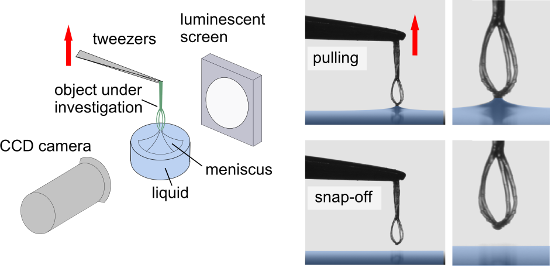
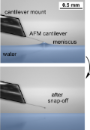
- is required, which consists of the surface energy of the meniscus plus the interface energy of the tip–water contact area minus the surface energy of the original flat air–water interface before formation of the capillary contact. Here, σ = 0.07275 N/m [25] is the surface tension of the liquid (here
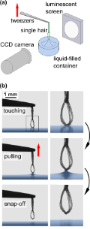
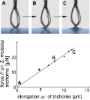
- , water), and σ* is the interface tension of the contact area. Although the value of σ* is unknown, it is not required for further calculations (see below). The force pulling at the trichome tip is equal to its water adhesion force and is given by: Based on the images before and after the meniscus snap
- hair with Teflon-coated ends (poly(1,1,2,2-tetrafluoroethylene) (PTFE), Teflon AF, Dupont, water contact angle approx. 120°). 15 hairs of each type were examined. They were fixed horizontally with the tweezers on a stepper motor, which served as a bending spring in contrast to the tension spring setup


Intake of silica nanoparticles by giant lipid vesicles: influence of particle size and thermodynamic membrane state
Beilstein J. Nanotechnol. 2014, 5, 2468–2478, doi:10.3762/bjnano.5.256
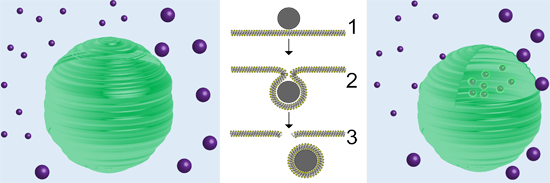
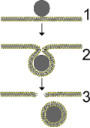
- . Mechanical aspects of such a colloid–membrane interaction are treated by several theoretical models. A simple, purely mechanical picture of such an interaction involves at least three mechanical parameters: the adhesion energy per unit area gad, the bending stiffness of the membrane κ and its surface tension
- mJ/m2 (see below). This results in rcrit = 14 nm. Hence, the bending stiffness of the membrane should be considered for particles in the nano-regime. As soon as the membrane under observation exhibits a finite surface tension, its area compressibility modulus gten has to be considered as well, since
- membrane area is consumed during the wrapping process. Dietrich et al. introduced a model for vesicle–particle interaction in the large particle limit in which the wrapping process is mainly limited by the membrane tension [20]. This model is confirmed by experiments with latex beads in the micrometer


Aquatic versus terrestrial attachment: Water makes a difference
Beilstein J. Nanotechnol. 2014, 5, 2424–2439, doi:10.3762/bjnano.5.252
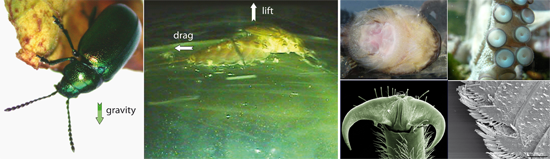
- attachment mechanism of sessile aquatic animals and the aquatic realm presents many challenges to this mode of attachment. Viscous forces and the lack of surface tension under submerged conditions also affect frictional interactions in the aquatic environment. Moreover, the limitation of suction to the
- separates two hydrophilic surfaces in air. Pulling the surfaces apart will create a larger air–water boundary surface area. The surface tension of the liquid will resist to this increase and this is manifest as an adhesive force. According to [3] Laplace's law ought to be applied: The pressure difference
- (Δp) can be calculated from surface tension (γ), the overall radius of the liquid (ro) and the radius of the curved edge (re) (Figure 4). In contrast, under fully immersed conditions the surface tension should be zero, so that generally no capillary forces will occur under these conditions. This is an


Nanoparticle interactions with live cells: Quantitative fluorescence microscopy of nanoparticle size effects
Beilstein J. Nanotechnol. 2014, 5, 2388–2397, doi:10.3762/bjnano.5.248
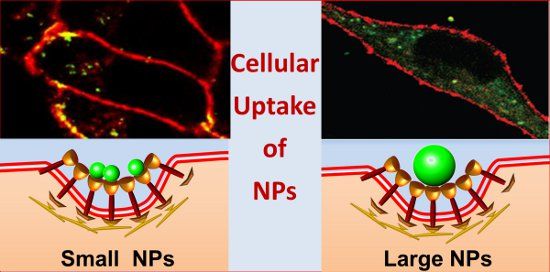
- ligand densities and the receptor-ligand binding energy. It competes with the energy cost required to bend the membrane, which depends on the membrane tension and the NP curvature and, therefore, on the NP size. If the overall energy balance is equivalent to a localized decrease in the Gibbs free energy


Inorganic Janus particles for biomedical applications
Beilstein J. Nanotechnol. 2014, 5, 2346–2362, doi:10.3762/bjnano.5.244
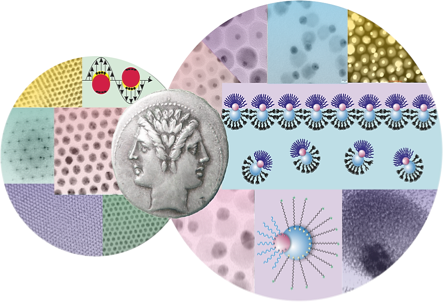
- interfacial tension of the oil/water interfacial significantly compared to similar uniform particles, thus confirming previous theoretical predictions (Figure 4). Furthermore, the interfacial activity is enhanced by increasing the amphiphilic character using long alkyl chain thiols. The theme of (self
- permission from [29]. Copyright 2008 The Royal Society of Chemistry. (a) Schematic representation of bimetallic Janus particles at the hexane–water interface (gold: gold part with surfactant; gray: iron oxide part). (b) Interfacial tension vs time as measured by pendant drop tensiometry (NP: homogeneous






Liquid-phase exfoliated graphene: functionalization, characterization, and applications
Beilstein J. Nanotechnol. 2014, 5, 2328–2338, doi:10.3762/bjnano.5.242
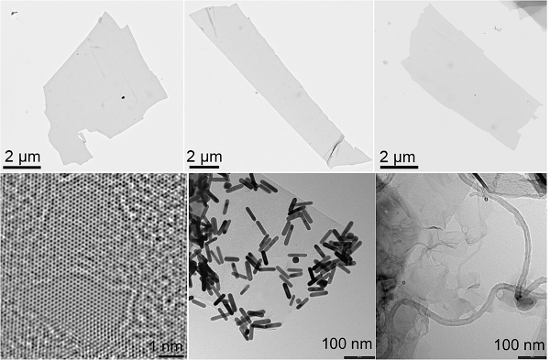
- graphene sheets. For example, graphene can be produced by supercritical solvent exfoliation of graphite. In this procedure, solvents reach or exceed their critical point, presenting outstanding wetting properties, low interfacial tension, low viscosity, and high diffusion coefficients. Under these
- surface. The strong molecular interactions between graphene layers and DMF or NMP molecules, in addition to the fact that both solvents have a high boiling point and high surface tension, make their complete evaporation or removal very difficult. The presence of these residual molecules modifies the




Characterization of 10,12-pentacosadiynoic acid Langmuir–Blodgett monolayers and their use in metal–insulator–metal tunnel devices
Beilstein J. Nanotechnol. 2014, 5, 2240–2247, doi:10.3762/bjnano.5.233
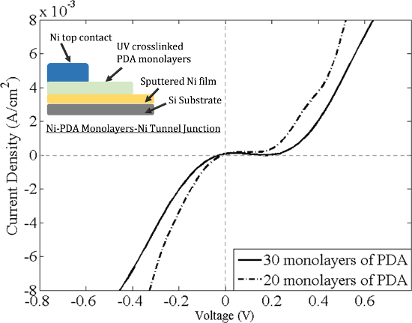
- (PDA) and their use in metal–insulator–metal (MIM) devices were studied. The Langmuir monolayer behavior of the PDA film was studied at the air/water interface using surface tension–area isotherms of polymeric and monomeric PDA. Langmuir–Blodgett (LB, vertical deposition) and Langmuir–Schaefer (LS
- were characterized for suitability for small signal rectification in MIM tunnel diodes. The Langmuir monolayer behavior of PDA was studied at the air–water interface to find the ideal surface tension for a close-packed film at the water surface. This was followed by deposition of the film on silicon
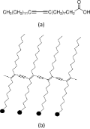
- (>99.8%, Sigma-Aldrich). Figure 1 shows the molecular structure and UV-polymerized structure of the PDA molecule. The pH value of the water subphase was found to be 6.8. Surface tension–area isotherms were obtained using the KSV NIMA Langmuir–Blodgett Trough system for samples with varying volume and


Influence of stabilising agents and pH on the size of SnO2 nanoparticles
Beilstein J. Nanotechnol. 2014, 5, 2192–2201, doi:10.3762/bjnano.5.228
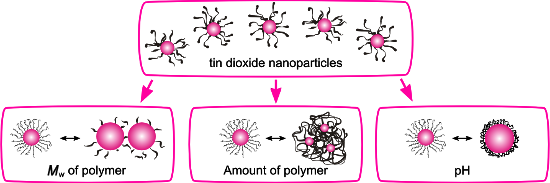
- with Sn4+ ions, and then the precipitated nanoparticles are surrounded by a polymer, resulting in a polymer matrix which is formed on its surface (Figure 5). To facilitate this process, the corresponding change in the surface tension by the addition of a surfactant in the solution is required. To
- showed that during the preparation of the tin dioxide nanoparticles (which result from the precipitation reaction), it is necessary to use both a polymer as well as a surfactant. This reduces the surface tension, making it easier to change the structure of the stabilising polymer chain. In addition, not


Nanometer-resolved mechanical properties around GaN crystal surface steps
Beilstein J. Nanotechnol. 2014, 5, 2164–2170, doi:10.3762/bjnano.5.225
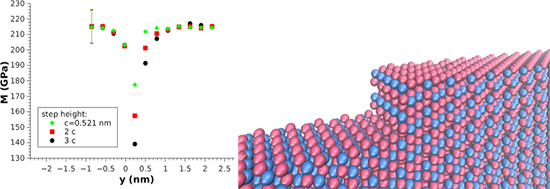
- the behavior below the step, i.e., for y < 0. The stress induced by the step does not only decrease along −y, but also along −z due to the fact that from this point of view, the stresses arising from the step are homogeneous along the x-axis only. This can be also expressed by a line tension Fi along
- the step edge, which defines the non-zero elements of the edge elastic tensor diijj(ε)εjj := Fi(ε) − Fi(ε = 0). As a consequence of the line tension, the stressfield is spread cylindrically from its origin along −z and −y. Therefore, the following relation for the elastic constants is obtained: From


![[Graphic 3]](/bjnano/content/inline/2190-4286-5-225-i13.png?max-width=637&scale=1.18182) along the y-axis of the upper Ga atom...
along the y-axis of the upper Ga atom...


Properties of plasmonic arrays produced by pulsed-laser nanostructuring of thin Au films
Beilstein J. Nanotechnol. 2014, 5, 2102–2112, doi:10.3762/bjnano.5.219
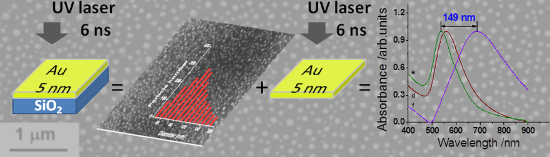
- confirmed by investigation of the surface tension-driven flow leading to the Rayleigh–Taylor (R–T) instability. The R–T process has been concluded from coincidence between the droplet dimension (0.5 μm) obtained from the experiment and the model simulations, and with values of the Weber number as reported
- coalescence both result in the formation of the NP structure. The final geometry and NP distribution depends on the surface tension forces at equilibrium characterized by a minimal ratio of the NP surface-area-to-volume [31]. The short-range order observed for structures in Figure 1a–c confirms the NP self
- postulated how the NP shapes depend on the equilibrium of the surface tension forces [34]. The partially spherical/spheroidal shapes correspond to the case of partial wetting of the substrate by the molten metal and are characterized by a contact angle value of less than 90°. This angle approaches 180° in