


Search results
Search for "thermal stability" in Full Text gives 237 result(s) in Beilstein Journal of Nanotechnology. Showing first 200.
Carbon nanotube-wrapped Fe2O3 anode with improved performance for lithium-ion batteries
Beilstein J. Nanotechnol. 2017, 8, 649–656, doi:10.3762/bjnano.8.69
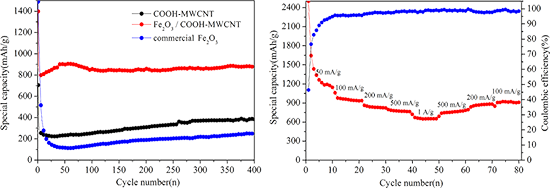
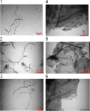
- the Fe2O3 nanoparticles. Smaller secondary particles are clearly observed. The measured (110) lattice spacing is 0.25 nm, which is in agreement with [35]. The thermal stability of the as-prepared Fe2O3/COOH-MWCNT composites was measured using a thermogravimetric analyzer. Thermogravimetric analysis


Dispersion of single-wall carbon nanotubes with supramolecular Congo red – properties of the complexes and mechanism of the interaction
Beilstein J. Nanotechnol. 2017, 8, 636–648, doi:10.3762/bjnano.8.68
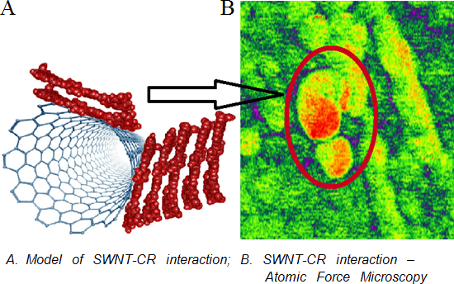
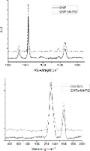
- structure is observed. It probably corresponds to CR molecules being attached indirectly to the nanotube, through face-to-face interaction with CR adhering to the nanotube surface (Figure 6B). Thermal stability of SWNT–CR complexes SWNT–CR complexes (1 mg SWNTs + 1 mL of 2 mg/mL CR, sonicated and filtered


Gas sensing properties of MWCNT layers electrochemically decorated with Au and Pd nanoparticles
Beilstein J. Nanotechnol. 2017, 8, 592–603, doi:10.3762/bjnano.8.64
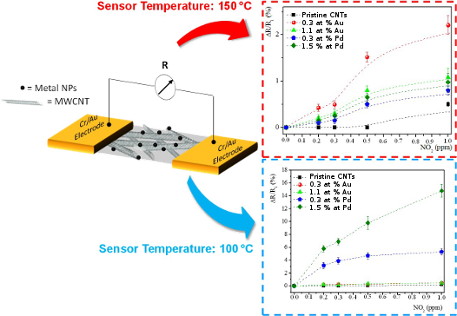
- gas detection. Indeed, gas sensor systems have unique properties such as, easy and low-cost production, low operating temperature, electronic and thermal stability, good sensitivity but poor selectivity in gas detection [4]. In this context, the development of nanostructured materials has contributed


Diffusion and surface alloying of gradient nanostructured metals
Beilstein J. Nanotechnol. 2017, 8, 547–560, doi:10.3762/bjnano.8.59
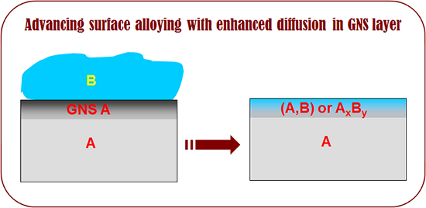
- . The following process at T2 enhanced the growth (or phase transformation) kinetics of alloyed layers because the thermal stability in the surface layers was improved by the introduced alloying elements and/or compounds during the previous process. The effects of both processes at T1 and at T2 on the
- [98][99]. They showed unique performance, for example, ultrahigh hardness accompanied by superior thermal stability. Studying the diffusion kinetics and relative behavior in GNS layers with such novel microstructures is expected to help understand their unique features and provide insights on




Nanostructured carbon materials decorated with organophosphorus moieties: synthesis and application
Beilstein J. Nanotechnol. 2017, 8, 485–493, doi:10.3762/bjnano.8.52
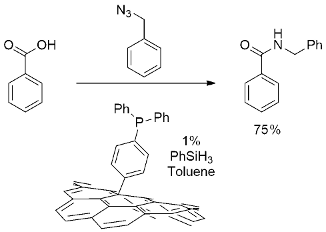
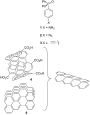
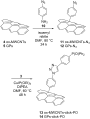
- allotropic species of carbon, fullerene, carbon nanotubes and graphene being the most studied and used. Since their discovery [1][2][3], they have become very attractive for researchers, due to their peculiar physical and chemical proprieties such as chemical and thermal stability, electronic conductivity





Fiber optic sensors based on hybrid phenyl-silica xerogel films to detect n-hexane: determination of the isosteric enthalpy of adsorption
Beilstein J. Nanotechnol. 2017, 8, 475–484, doi:10.3762/bjnano.8.51
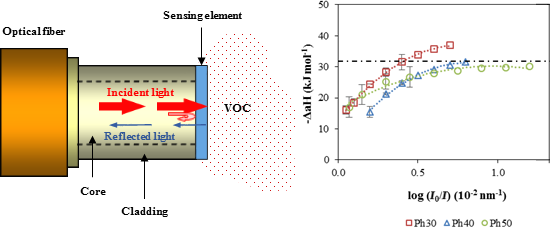
- more mechanisms, such as electrostatic, hydrophobic or hydrogen bonding. Films made of hybrid silica materials synthesized by the sol–gel process are well suited for the preparation of sensing elements. These films have chemical and thermal stability, transparency over a wide wavelength range






Advances in the fabrication of graphene transistors on flexible substrates
Beilstein J. Nanotechnol. 2017, 8, 467–474, doi:10.3762/bjnano.8.50
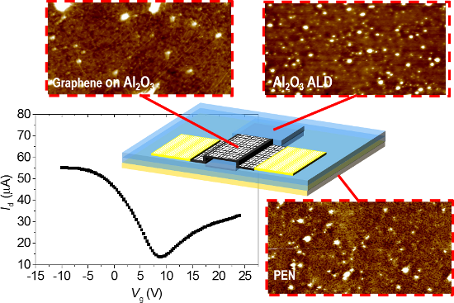
- asperities, dielectric inhomogeneity). We started with a thermally flattened PEN Teonex film purchased from Dupont Teiji Films. PEN is an analogous material to poly(ethylene terephthalate) (PET), with superior physical and thermal stability (up to 155 °C), which are advantageous properties for flexible



Methods for preparing polymer-decorated single exchange-biased magnetic nanoparticles for application in flexible polymer-based films
Beilstein J. Nanotechnol. 2017, 8, 408–417, doi:10.3762/bjnano.8.43
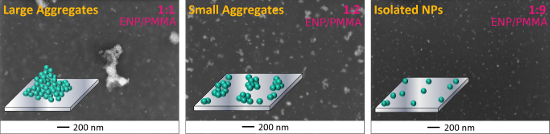
- size to exhibit the desired properties (e.g., exchange-bias for thermal stability of the magnetization) but also judiciously functionalized to ensure their stability in air and their compatibility with a polymer matrix, in order to avoid aggregation which may seriously affect their physical properties


Tailoring bifunctional hybrid organic–inorganic nanoadsorbents by the choice of functional layer composition probed by adsorption of Cu2+ ions
Beilstein J. Nanotechnol. 2017, 8, 334–347, doi:10.3762/bjnano.8.36
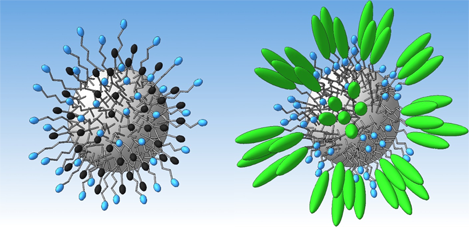
- (CH2)3NH2/≡SiCH3, ≡Si(CH2)3NH2/≡Si(CH2)2(CF2)5CF3) surface layers were produced by a one-step approach using a modified Stöber method in three-component alkoxysilane systems, resulting in greatly increased contents of functional components. The content of functional groups and thermal stability of the


Nanocrystalline ZrO2 and Pt-doped ZrO2 catalysts for low-temperature CO oxidation
Beilstein J. Nanotechnol. 2017, 8, 264–271, doi:10.3762/bjnano.8.29
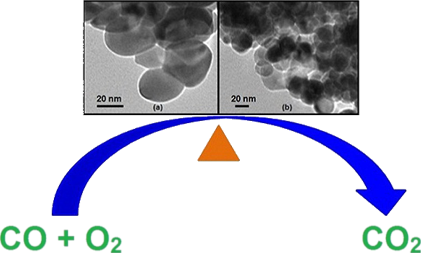
- used as catalyst/support because of its high activity and thermal stability. The advantages also include its inertness under acidic reaction environments [17]. Also, it is reported as a better catalyst and support than many other materials, such as Al2O3, TiO2 and SiO2 [18]. It has been used by
- 240 °C. These results show a significantly higher catalytic activity for Pt(1%)-ZrO2 compared to ZrO2. It is because of synergic effect between Pt and Zr components, which results in an increase of the oxygen vacancies and the oxygen mobility and also improves the thermal stability. From the XRD
- vertically fixed quartz reactor, which was maintained at temperature of 90 °C. The stability test results show a constant CO conversion during the test, which indicates the excellent stability of Pt(1%)-ZrO2. The obtained results are due to improvement in thermal stability of the catalyst by the introduction


Sensitive detection of hydrocarbon gases using electrochemically Pd-modified ZnO chemiresistors
Beilstein J. Nanotechnol. 2017, 8, 82–90, doi:10.3762/bjnano.8.9
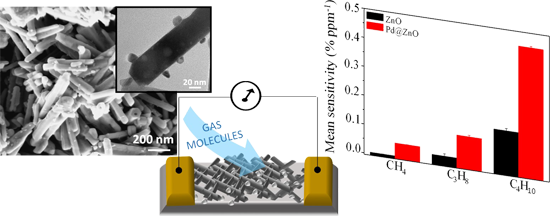
- comparably good gas-sensing performance [21][22]. However, due to their high affinity toward HCs and low thermal stability, they are sometimes unstable and exhibit poor sensitivity [23][24]. In this context, metal oxides (MOx) have been proposed as promising active sensing layers because of their


Grazing-incidence optical magnetic recording with super-resolution
Beilstein J. Nanotechnol. 2017, 8, 28–37, doi:10.3762/bjnano.8.4
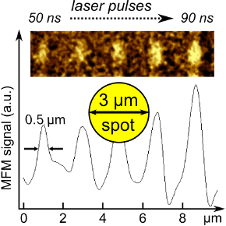
- recording media to generate a strong near field for highly-localized inductive heating of the recording layer during the writing process [6][7]. However, as pointed out in a series of recent studies on the thermal stability of these NFTs [8][9][10][11], they are inherently sensitive to thermal degradation
- layer: depending on their size, the grains have different thermal stability and therefore switch the magnetization direction at different temperatures. The SQUID measurement can only give a coercivity value averaged over all grains, neglecting local variations. Zero-field-cooled (ZFC) thermo


Annealing-induced recovery of indents in thin Au(Fe) bilayer films
Beilstein J. Nanotechnol. 2016, 7, 2088–2099, doi:10.3762/bjnano.7.199
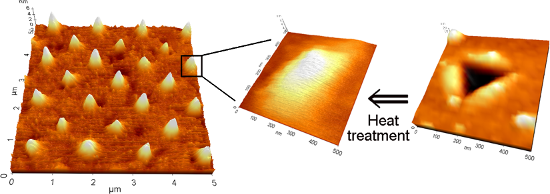
- introduced by nanoindentation with subsequent annealing, and (ii) to understand the effect of nanoindentation-induced localized plastic deformation on the thermal stability and solid-state dewetting of thin films. In what follows, we will give a short overview of what is known about the recovery of indents
- of structural defects in the film and improves its thermal stability. The Au layer exhibited a strong [111] out-of-plane texture and two twinning-related in-plane orientations related by a 60° rotation around the surface normal. The Fe underlayer exhibited a strong [110] out-of-plane texture with
- Au(Fe) thin films. The goals of the present work were to determine the thermal stability of Au(Fe) films containing indentation-induced surface defects, and to establish the mechanisms of indent recovery. The latter goal should be considered in a wider framework of thermo-mechanical processing of





Effect of nanostructured carbon coatings on the electrochemical performance of Li1.4Ni0.5Mn0.5O2+x-based cathode materials
Beilstein J. Nanotechnol. 2016, 7, 1960–1970, doi:10.3762/bjnano.7.187
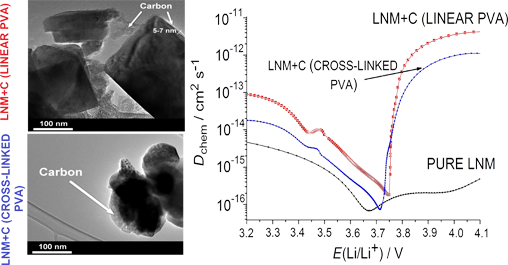
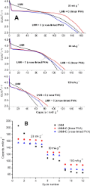
- intense pyrolysis of the linear PVA at 240–310 °C (Figure 2A) and the continuous decomposition process of the cross-linked PVA at 240–600 °C (Figure 2B). The latter shows a significantly higher thermal stability of the cross-linked polymer. The analysis of differential scanning calorimetry (DSC) curves



A new approach to grain boundary engineering for nanocrystalline materials
Beilstein J. Nanotechnol. 2016, 7, 1829–1849, doi:10.3762/bjnano.7.176
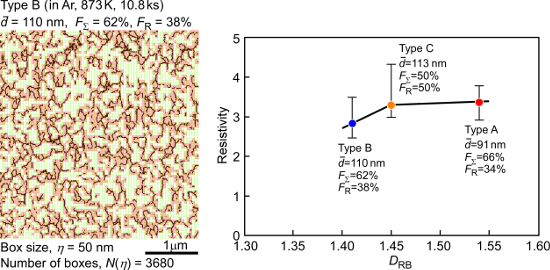
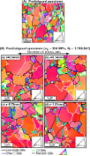
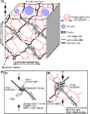
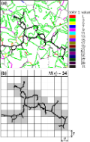
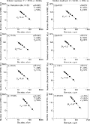
- grain boundaries and triple junctions. This is often associated with the nonequilibrium deformation of microstructures introduced by severe plastic deformation (SPD) with less thermal stability, excess structural defects and chemical composition by segregation to grain boundaries and interfaces [12][15







Prediction of the mechanical properties of zeolite pellets for aerospace molecular decontamination applications
Beilstein J. Nanotechnol. 2016, 7, 1761–1771, doi:10.3762/bjnano.7.169
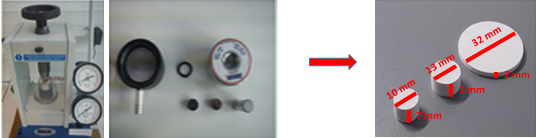
- combination of AlO4 and SiO4 tetrahedra. Zeolites are often used in adsorption and catalytic applications due to their high thermal stability and interesting adsorption properties [9][10][11][12][13][14][15]. Today, 231 different zeolite structures have been discovered, but only some of them are currently


Analysis of self-heating of thermally assisted spin-transfer torque magnetic random access memory
Beilstein J. Nanotechnol. 2016, 7, 1676–1683, doi:10.3762/bjnano.7.160
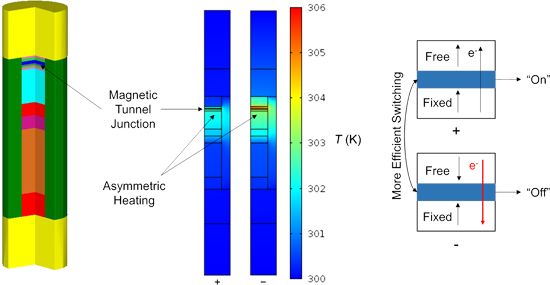
- material stack the CoFeB layers are the ferromagnetic domains of the MTJ, MgO is the thin insulating layer, and Ta/CoPd/Ru is the synthetic antiferromagnetic layer. The material stack modeled is from a device reported by Worledge et al. [8]. The thermal stability factor of the free ferromagnetic layer of
- the device, derived from Equation 5 using materials properties from [8][9], is 38.7 kBT: where Δperp is the perpendicular thermal stability factor, Ms is the saturation magnetization, is the perpendicular effective anisotropy field, V is the volume of the free layer, kB is the Boltzmann constant, and





Viability and proliferation of endothelial cells upon exposure to GaN nanoparticles
Beilstein J. Nanotechnol. 2016, 7, 1330–1337, doi:10.3762/bjnano.7.124
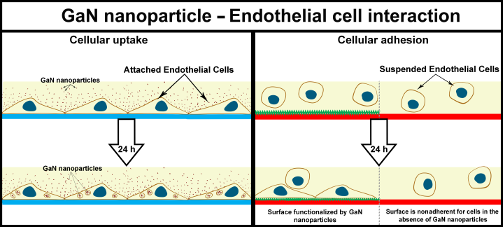
- semiconductor material, widely used in optoelectronics, in particular in industrial production of UV solid-state lasers and light-emitting diodes. This material has many remarkable characteristics, including piezoelectric properties, high thermal stability, radiation hardness, and excellent chemical inertness



Reasons and remedies for the agglomeration of multilayered graphene and carbon nanotubes in polymers
Beilstein J. Nanotechnol. 2016, 7, 1174–1196, doi:10.3762/bjnano.7.109
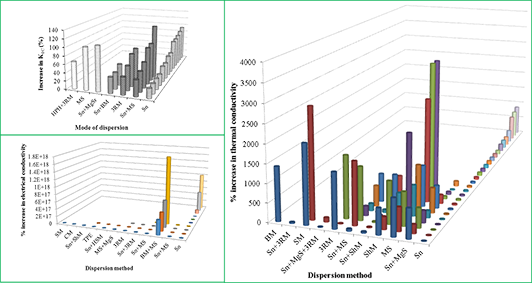
- marked improvement of dispersion in the polymer matrix [41]. The silane-treated CNTs showed greater improvements in flexural modulus and strength, fracture resistance, and thermal stability than untreated CNTs [41]. There are improved interfacial interactions between the silane-functionalized CNTs and
- titania. The addition of nanoparticles in nanocomposites can also improve their thermal stability (Tg), which is an important requirement for structural applications [57]. Properties of composites Out of 2009 research articles about graphene published in 2014, 830 articles were related to the synthesis of


Phenalenyl-based mononuclear dysprosium complexes
Beilstein J. Nanotechnol. 2016, 7, 995–1009, doi:10.3762/bjnano.7.92
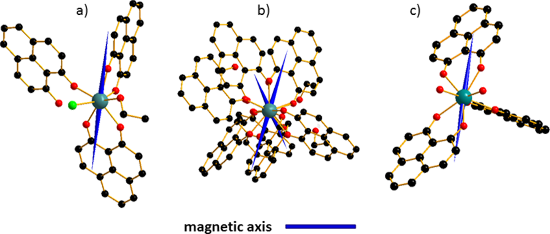
- synthesize sublimable phenalenyl-based dysprosium complexes have been made by implementing a synthetic strategy under anhydrous conditions. The sublimed species were characterized and their thermal stability was confirmed. This opens up the possibility to deposit phenalenyl-based lanthanides complexes by
- ’ was characterized confirming its thermal stability. Results and Discussion Synthesis Van Deun et al. [23][24] synthesized 1:3 metal-to-ligand complexes using ammonia as a base and 1:4 metal-to-ligand complexes using the stronger base NaOH. In addition, phenalenyl-based europium and gadolinium
- to the complexes 1–3. In addition, complex 4 was successfully sublimated at about 300 °C in high vacuum (10−6 mbar). To confirm the thermal stability, the compound was also characterized after the sublimation process. X-ray crystal structures Single crystals of the complexes 1–3 were grown through


Orientation of FePt nanoparticles on top of a-SiO2/Si(001), MgO(001) and sapphire(0001): effect of thermal treatments and influence of substrate and particle size
Beilstein J. Nanotechnol. 2016, 7, 591–604, doi:10.3762/bjnano.7.52
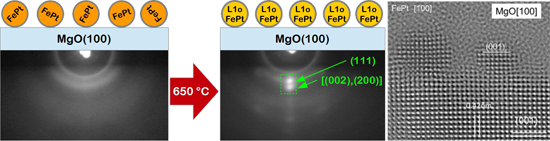
- material results from its thermal stability, its corrosion resistance and the possibility to tune its electronic properties [6][7]. Both of the appealing properties, the catalytic as well as the magnetic, hinge on the chemically ordered L10 phase of FePt close to equiatomic composition [6][8]. Though this


First-principles study of the structure of water layers on flat and stepped Pb electrodes
Beilstein J. Nanotechnol. 2016, 7, 533–543, doi:10.3762/bjnano.7.47
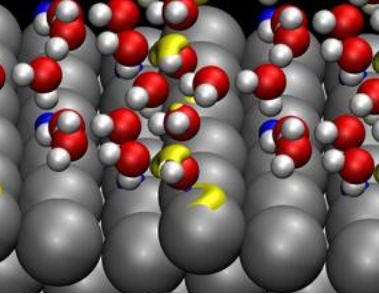
- structure at a coverage of 1 due to the larger lattice constant of Pb. At stepped Pb surfaces, the water layers are pinned at the step edge and form a complex network consisting of rectangles, pentagons and hexagons. The thermal stability of the water layers has been studied by using ab initio molecular
- significant charge rearrangement upon the formation of the water layer. This confirms the general picture of water adsorption at stepped surfaces [15]: Water tends to form a flat layer that rests on the step atoms, but above the terraces it almost corresponds to a free-standing layer. The thermal stability of
- terrace atoms, as confirmed by an analysis of the charge density difference upon water adsorption. The thermal stability of the water layers has been addressed by performing ab initio molecular dynamics simulations at a temperature of 140 K. The minimum-energy structure of the water layers on Pb(111) and


Rigid multipodal platforms for metal surfaces
Beilstein J. Nanotechnol. 2016, 7, 374–405, doi:10.3762/bjnano.7.34

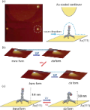
- with gold and that a covalent Au–S bond is formed [23][64]. This bond has a dissociation energy of around 2.1 eV (ca. 50 kcal·mol−1), which is large enough to ensure the thermal stability of thiol monolayers up to 80 °C [65]. Furthermore, it is stronger than the Au–Au bond with a dissociation energy of
- thermal stability of these SAMs than those derived from monodentate and bidentate adsorbates as revealed by preliminary studies at elevated temperatures using ellipsometry [102]. Later systematic studies of both thiol-functionalized flat gold surfaces and colloidal gold nanoparticles approved that the
- thermal stability of SAMs correlates with the degree of chelatation (i.e., tridentate > bidentate > monodentate) [103]. Trialkylarylsilane analogues have been also utilized for tripodal shape adsorbates. Cai and co-workers introduced the silicon trithiolate 6 [104], and formed SAMs on gold (Figure 3). As










Hydration of magnesia cubes: a helium ion microscopy study
Beilstein J. Nanotechnol. 2016, 7, 302–309, doi:10.3762/bjnano.7.28
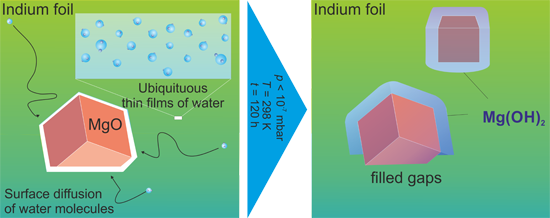
- . 0.25 pA, respectively. The MgO cube powders were vacuum annealed at T = 1173 K for a minimum duration of one hour in order to eliminate surface adsorbates including residual hydroxyls of high thermal stability [25]. After breaking the vacuum, we immobilized the particles in air by pressing the powder


Plasticity-mediated collapse and recrystallization in hollow copper nanowires: a molecular dynamics simulation
Beilstein J. Nanotechnol. 2016, 7, 228–235, doi:10.3762/bjnano.7.21
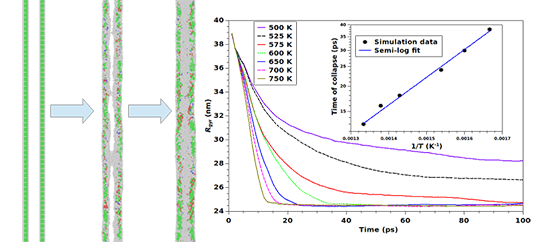
- , S. N. Bose National Centre for Basic Sciences, Salt Lake, Kolkata 700 098, India Thematic Unit of Excellence on Computational Materials Science, S. N. Bose National Centre for Basic Sciences, Salt Lake, Kolkata 700 098, India 10.3762/bjnano.7.21 Abstract We study the thermal stability of hollow
- , which would involve much longer time scales as compared to the plasticity-based mechanism. Keywords: dislocations; molecular dynamics; nanowire; thermal stability; Introduction Nanomaterials, as compared to bulk, are associated with large surfaces and interfaces with respect to their volume. The
- sensors [7]. Hollow nanomaterials may be created deliberately [8][9][10]. They can also be synthesized in an uncontrolled growth process such as flame combustion [11]. Thermal stability of hollow nanostructures has been widely discussed in literature [9]. The general understanding is that a nanostructure





