


Search results
Search for "ultrasonic" in Full Text gives 265 result(s) in Beilstein Journal of Nanotechnology. Showing first 200.
Preparation and characterization of polycarbonate/multiwalled carbon nanotube nanocomposites
Beilstein J. Nanotechnol. 2017, 8, 2026–2031, doi:10.3762/bjnano.8.203
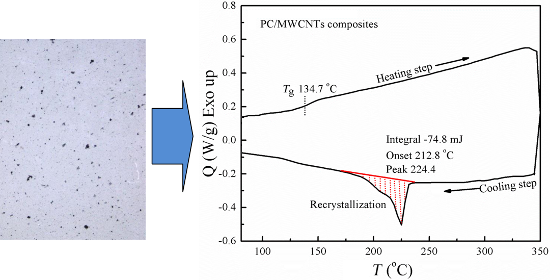
- , Latvia 10.3762/bjnano.8.203 Abstract A polymer nanocomposite was produced by ultrasonic-assisted dispersion of multiwalled carbon nanotubes (MWCNTs) in a polycarbonate matrix using p-xylene and dichloromethane as the solvents. The filler loading was varied from 1 to 3 wt % in order to examine the effect
- moisture absorption was estimated at around 1–3% per day. After drying, the MWCNTs were dispersed in a solvent mixture of p-xylene and dichloromethane in 1:8 vol/vol at a concentration of 3 g/L and mixed using an ultrasonic bath (Fisher Scientific, FS60, Italy) operating at 40% amplitude for a total time


Fabrication of carbon nanospheres by the pyrolysis of polyacrylonitrile–poly(methyl methacrylate) core–shell composite nanoparticles
Beilstein J. Nanotechnol. 2017, 8, 1897–1908, doi:10.3762/bjnano.8.190

- at a concentration of 1.0 g/L. Then, the dispersions were left to stand overnight. The carbonized product of the PAN nanoparticles remained settled at the bottom of the bottle during the ultrasonic treatment (Supporting Information File 1, Figure S6a), indicating the strong adhesion between the
- carbon nanoparticles. The carbonized product of the PAN-PMMA1 nanoparticles could be completely dispersed in acetone by ultrasonic treatment. However, after storing overnight, most of the carbonized product settled at the bottom of the bottle, and the color of the dispersion faded obviously (Supporting



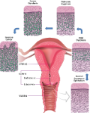
Optical techniques for cervical neoplasia detection
Beilstein J. Nanotechnol. 2017, 8, 1844–1862, doi:10.3762/bjnano.8.186




Synthesis and catalytic application of magnetic Co–Cu nanowires
Beilstein J. Nanotechnol. 2017, 8, 1769–1773, doi:10.3762/bjnano.8.178
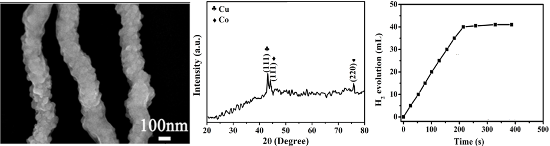
- times by deionized water and ethanol. For the catalytic hydrolysis of AB, 10 mL of deionized water and 0.005 g of Co–Cu nanowires were added to a Florence flask and heated at 50 °C in a water bath. Furthermore, 0.023 g of AB was dissolved in the Florence flask with ultrasonic stirring. Ultimately, the


Methionine-mediated synthesis of magnetic nanoparticles and functionalization with gold quantum dots for theranostic applications
Beilstein J. Nanotechnol. 2017, 8, 1734–1741, doi:10.3762/bjnano.8.174
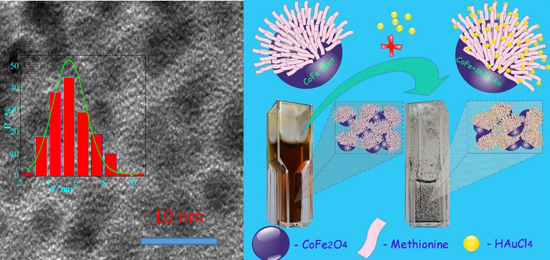
- , although some of them seemed to be spherical with a diameter of ca. 2.0 nm. More precise results were obtained by the determination of the size of gold species that were removed from the NP surface by the ultrasonic agitation of 10 mg CoFe2O4@Met/Au NPs probe in 10 mmol·L−1 methionine solution. As a result
- chemical reduction of HAuCl4. Briefly, 3.5 mL of NP solution was diluted to 5 mL under ultrasonic agitation for 10 min and 2.0 mL of HAuCl4 (10 mmol·L−1) was introduced into the reaction medium under ultrasound agitation. The solution was alkalized to the required pH value by addition of 2.0 mol·L−1 NaOH


Effect of the fluorination technique on the surface-fluorination patterning of double-walled carbon nanotubes
Beilstein J. Nanotechnol. 2017, 8, 1688–1698, doi:10.3762/bjnano.8.169
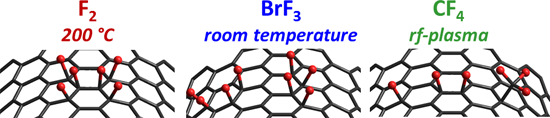
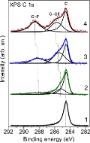
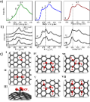
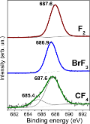
- scattering using a Triplemate spectrometer (excitation wavelength 488 nm). The samples for TEM examination were prepared by ultrasonic dispersion of powder suspended in ethanol on lacey carbon film grids. The nature of the surface groups was characterized by Fourier transform IR (FTIR) spectroscopy using a



A nanocomplex of C60 fullerene with cisplatin: design, characterization and toxicity
Beilstein J. Nanotechnol. 2017, 8, 1494–1501, doi:10.3762/bjnano.8.149
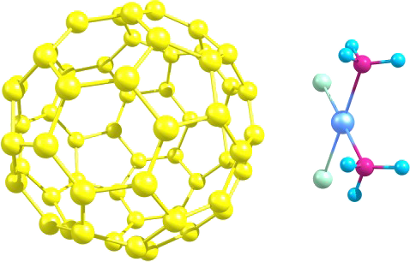
- ultrasonic treatment in dispersant for 20 min, followed by magnetic stirring over 12 h at room temperature. Computer simulation The spatial structure of the C60 fullerene was built according to [http://www-jmg.ch.cam.ac.uk/data/molecules/misc/c60.html]. The spatial structure of Cis was built with the aid of



Calcium fluoride based multifunctional nanoparticles for multimodal imaging
Beilstein J. Nanotechnol. 2017, 8, 1484–1493, doi:10.3762/bjnano.8.148
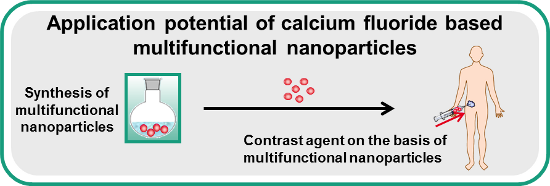
- examination, contrast-rich methods such as computed tomography (CT), magnetic resonance imaging (MRI), positron emission tomography (PET) and ultrasonic techniques are being used increasingly for imaging soft tissue, e.g., cartilage imaging in progressive osteoarthritis. Advantages of different imaging


Metal oxide nanostructures: preparation, characterization and functional applications as chemical sensors
Beilstein J. Nanotechnol. 2017, 8, 1205–1217, doi:10.3762/bjnano.8.122
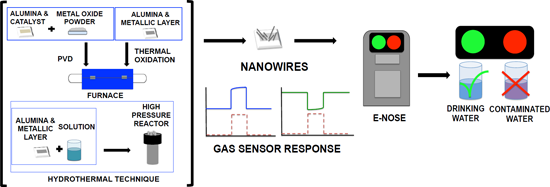
- using an ultrasonic cleaner for 15 min to remove dust and impurities from the substrates. Substrates were dried with pure compressed air. The following techniques were used to grow different metal oxide nanostructures. Evaporation–condensation technique: NiO, SnO2, ZnO The growth of nickel oxide (NiO


Surface-enhanced Raman spectroscopy of cell lysates mixed with silver nanoparticles for tumor classification
Beilstein J. Nanotechnol. 2017, 8, 1183–1190, doi:10.3762/bjnano.8.120
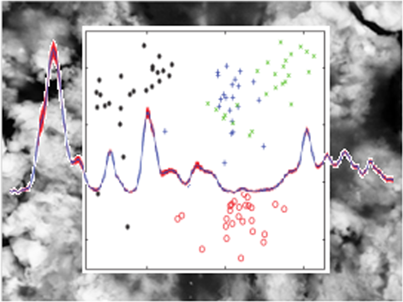
- each of the four cell lines were prepared. The optical density of different cell lines were measured using Eppendorf Biophotometer plus. The optical density of 0.25 was correlated to an averaged cell number of 107 cells/mL. Cell sonication Cells were sonicated using an ultrasonic probe system


Preparation of thick silica coatings on carbon fibers with fine-structured silica nanotubes induced by a self-assembly process
Beilstein J. Nanotechnol. 2017, 8, 1145–1155, doi:10.3762/bjnano.8.116
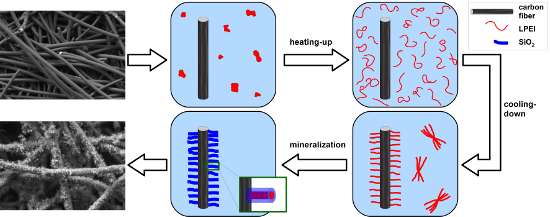
- concomitant with an influence on the morphology of the fine-structure and the overall silica shell thickness. The nanostructured silica shell of LPEI mediated silicified carbon fibers is relatively robust. The fine-structure can withstand for example prolonged sonication in an ultrasonic bath and a


Optical response of heterogeneous polymer layers containing silver nanostructures
Beilstein J. Nanotechnol. 2017, 8, 1065–1072, doi:10.3762/bjnano.8.108
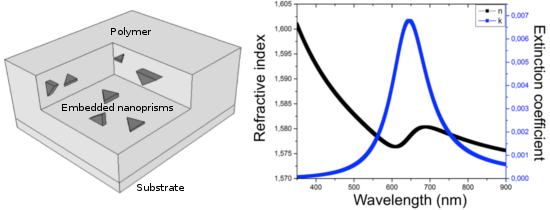
- optical index difference between the substrate and the thin film layer, thus a silicon wafer was chosen. The substrates were cleaned in an ultrasonic bath in acetone and ethanol, dried by nitrogen flow and an oxygen plasma. The latter step also increased the wettability of the substrate. The deposition of


Structural properties and thermal stability of cobalt- and chromium-doped α-MnO2 nanorods
Beilstein J. Nanotechnol. 2017, 8, 1032–1042, doi:10.3762/bjnano.8.104
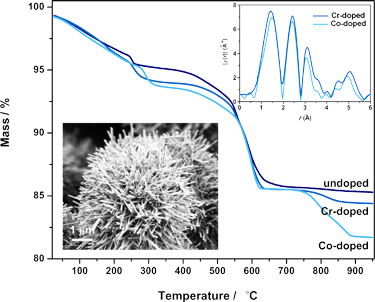
- into an agate mortar and dispersing it with a pestle in few drops of distilled water. A droplet of the prepared dispersion was then placed on a SEM stub covered with a carbon tape. The specimens for TEM investigations were prepared by dispersing a sample in MeOH with the help of an ultrasonic bath and


Study of the correlation between sensing performance and surface morphology of inkjet-printed aqueous graphene-based chemiresistors for NO2 detection
Beilstein J. Nanotechnol. 2017, 8, 1023–1031, doi:10.3762/bjnano.8.103
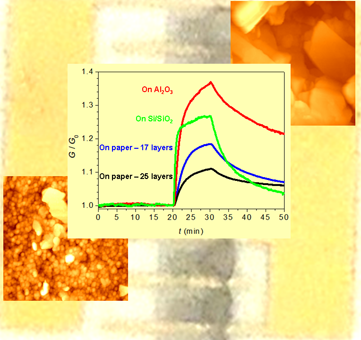
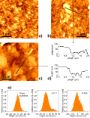
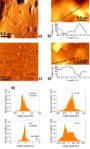
- sonicating in an ultrasonic bath (output power ca. 30 W) for about 48 h. In order to avoid undesired overheating of the water bath during the prolonged sonication, the temperature of the bath has been fixed at 50 °C. The water level has been kept constant by installing a syphon system. Afterwards, the


High photocatalytic activity of Fe2O3/TiO2 nanocomposites prepared by photodeposition for degradation of 2,4-dichlorophenoxyacetic acid
Beilstein J. Nanotechnol. 2017, 8, 915–926, doi:10.3762/bjnano.8.93
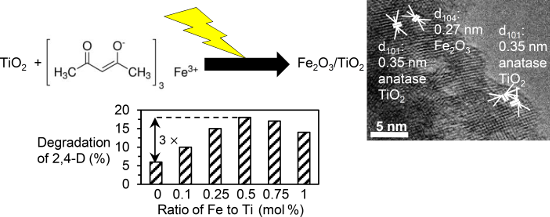
- %) were firstly dissolved in mixed solvents of water and ethanol (20 mL) by ultrasonication for few minutes. Then, the commercial Hombikat UV100 TiO2 (1 g) was dispersed in the Fe(III) acetylacetonate solution by ultrasonic mixing for 10 min. The mixture was then stirred and irradiated under a 200 W Hg−Xe
- used and prepared as follows. The photocatalyst sample (10 mg) was dispersed in water (6 mL) and the mixture was homogeneously mixed in an ultrasonic bath for 15 min. The mixture (20 µL) was then dropped onto the working electrode of the SPE, followed by immersion of the SPE in 6 mL of electrolyte


α-((4-Cyanobenzoyl)oxy)-ω-methyl poly(ethylene glycol): a new stabilizer for silver nanoparticles
Beilstein J. Nanotechnol. 2017, 8, 627–635, doi:10.3762/bjnano.8.67
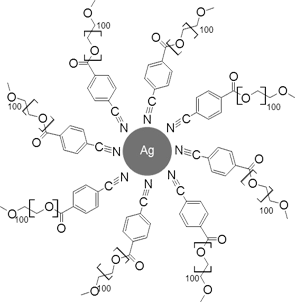
- diluted and dispersed in an ultrasonic bath for 15 min. Afterwards a drop of the diluted and ultrasound-treated sample was deposited on a carbon film coated 200 mesh copper TEM grid (Electron Microscopy Sciences) and allowed to dry. A 200 kV JEOL 2100 transmission electron microscope equipped with an


Copper atomic-scale transistors
Beilstein J. Nanotechnol. 2017, 8, 530–538, doi:10.3762/bjnano.8.57
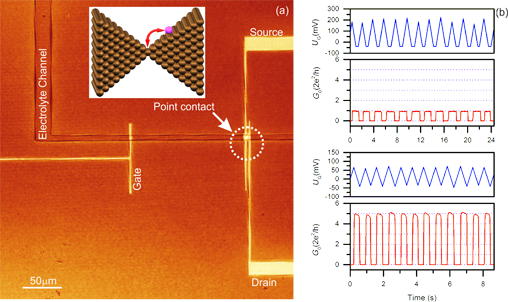
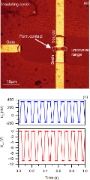
- ultrasonic bath. The wafer with the microelectrodes was spin-coated again with SU-8 to a thickness of 2 µm. The pattern with insulating windows was transferred to the spin-coated SU-8 film using the mask aligner. The wafer with the SU-8 film was developed in a developer (MicropositTM EC Solvent) and then


Formation and shape-control of hierarchical cobalt nanostructures using quaternary ammonium salts in aqueous media
Beilstein J. Nanotechnol. 2017, 8, 494–505, doi:10.3762/bjnano.8.53
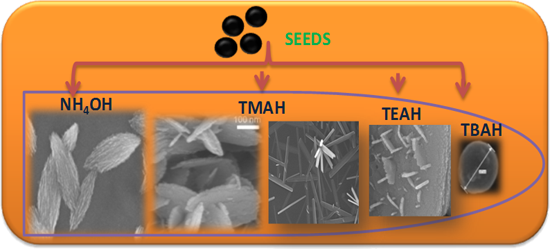
- ; (n) length, diameter and aspect ratio distribution of nanoparticles as a function of time from 0 to 120 min. Cobalt nanoplates formed under ultrasonication. Micrographs captured after 45 min emphasize the importance of ultrasonic treatment to reduce the aggregation and interlocking tendency in


Advances in the fabrication of graphene transistors on flexible substrates
Beilstein J. Nanotechnol. 2017, 8, 467–474, doi:10.3762/bjnano.8.50
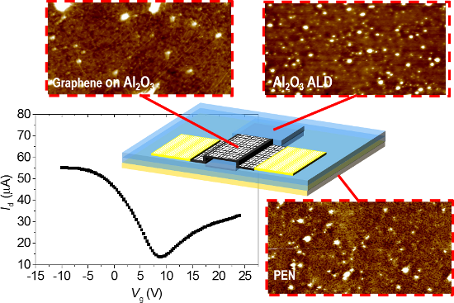
- was also confirmed (43 ± 1 nm) by the local step height measure reported in Figure 1b for a patterned Al2O3. The dielectric patterning was obtained by depositing the oxide on a silicon wafer masked by a negative profile resist and then removing the resist by an ultrasonic hot chemical bath. This



The longstanding challenge of the nanocrystallization of 1,3,5-trinitroperhydro-1,3,5-triazine (RDX)
Beilstein J. Nanotechnol. 2017, 8, 452–466, doi:10.3762/bjnano.8.49
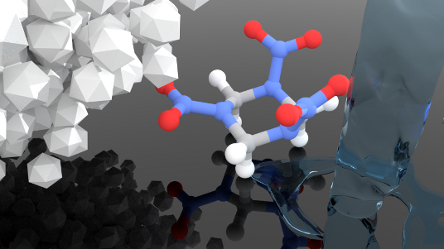
- , etc. Ultrasonic spray pyrolysis Since the nineties, spray crystallization and synthesis has been performed using several atomizers, and among them piezoelectric transducers [75][76]. As a spray technique, the goal is to produce one particle per droplet, but here the crystallization is controlled by
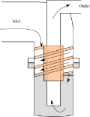
- the drying step, an oven just after the atomization. Spitzer et al. [77][78] and Kim et al. [79] both developed an apparatus to produce dried sub-micrometer RDX from an ultrasonic transducer. After the droplet generation, the solvent is evaporated by thermal gradient applied on the flux pulled by a
- Heijden et al. [83] showed that spray drying is able to crystallize finer RDX particles (”from 400 nm and larger”) than their technique of precipitation into antisolvent (1 to 10 μm). Qiu et al. studied the crystallization of energetic compounds using spray drying with ultrasonic [84] or pneumatic [85


Study of the surface properties of ZnO nanocolumns used for thin-film solar cells
Beilstein J. Nanotechnol. 2017, 8, 446–451, doi:10.3762/bjnano.8.48
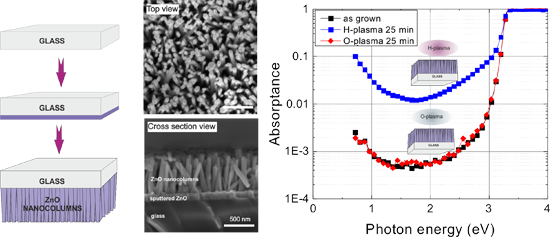
- at a target voltage of 400 V, ratio between gas species of Ar/O = 2/0.5 for 10 min. The dimensions of all substrates were 10 × 10 mm2. Before seed layer deposition, the substrates were cleaned in an ultrasonic bath with acetone for 10 min, then rinsed with deionized water and dried under nitrogen



Multimodal cantilevers with novel piezoelectric layer topology for sensitivity enhancement
Beilstein J. Nanotechnol. 2017, 8, 358–371, doi:10.3762/bjnano.8.38
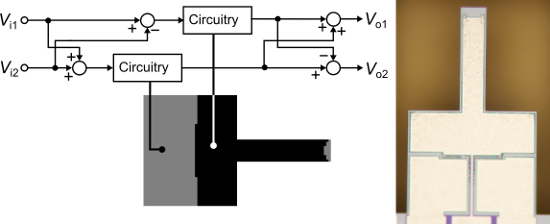
- impossible in liquids [23][24] and can alter the cantilever response rendering the identification and subsequent analysis of higher modes exceedingly difficult. For this reason, numerous integrated actuation methods such as magnetic [25], photothermal [26], resistive thermal [27], ultrasonic [28] or via a


Functionalized TiO2 nanoparticles by single-step hydrothermal synthesis: the role of the silane coupling agents
Beilstein J. Nanotechnol. 2017, 8, 304–312, doi:10.3762/bjnano.8.33
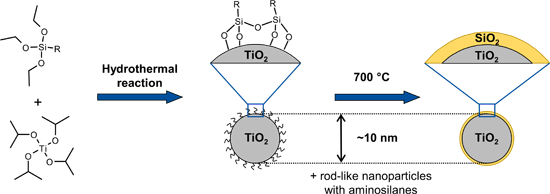
- demonstrating hydrophobic nanoparticles. Wang et al. functionalized commercial TiO2 nanoparticles in aqueous solution via ultrasonic treatment at room temperature with 3-(trimethoxysilyl)propyl methacrylate [17]. The resulting particles exhibited hydrophobic behavior. Another study reported room-temperature



Template-controlled piezoactivity of ZnO thin films grown via a bioinspired approach
Beilstein J. Nanotechnol. 2017, 8, 296–303, doi:10.3762/bjnano.8.32
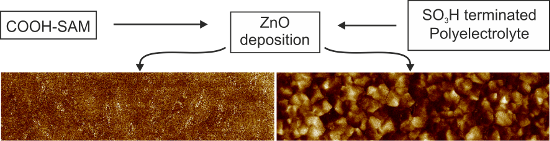
- acetone/ethanol 1:1 for 10 min in an ultrasonic bath. Afterwards, they were treated for 10 min in an O2-plasma with 30 W, followed by another cleaning in Milli-Q water in ultrasound (10 min). In-between the different steps, the wafers were dried with N2. Carboxylate-SAMs were prepared according to


Performance of colloidal CdS sensitized solar cells with ZnO nanorods/nanoparticles
Beilstein J. Nanotechnol. 2017, 8, 210–221, doi:10.3762/bjnano.8.23
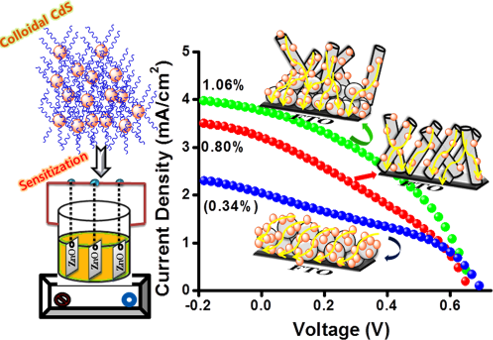
- synthesized using a BSA-mediated process under sonication. Aqueous solutions of 0.1 M Cd(NO3)2·4H2O and 1.25 × 10⁻⁶ M (BSA) were sonicated (ultrasonic probe, Rivotek, 30 kHz, 250 W) for 45 min followed by immediate dropwise addition of 0.1 M Na2S until the pH of the resultant solution reached ≈4. The





