Search results
Search for "zinc" in Full Text gives 265 result(s) in Beilstein Journal of Nanotechnology. Showing first 200.
Facile synthesis of ZnFe2O4 photocatalysts for decolourization of organic dyes under solar irradiation
Beilstein J. Nanotechnol. 2018, 9, 436–446, doi:10.3762/bjnano.9.42
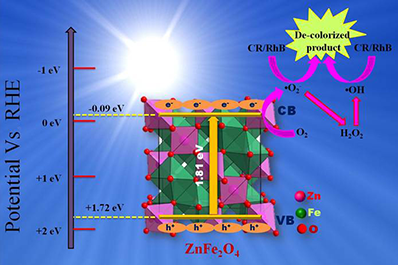
- magnetic in nature [10][11][12][13]. Among different metal ferrite materials, zinc ferrite (ZnFe2O4) plays a significant role because of its low band gap (1.88 eV), high thermal conductivity, good chemical stability, higher specific strength, magneto-resistive and magneto optical properties and low
- fabrication cost [14]. ZnFe2O4 is an n-type semiconductor having a direct band gap with suitable band edge positions for various photocatalytic processes. It is a solid solution of ferric oxide and zinc oxide, which greatly enhances the charge carrier separation. To date, various methods such as refluxing


Sugarcane juice derived carbon dot–graphitic carbon nitride composites for bisphenol A degradation under sunlight irradiation
Beilstein J. Nanotechnol. 2018, 9, 353–363, doi:10.3762/bjnano.9.35
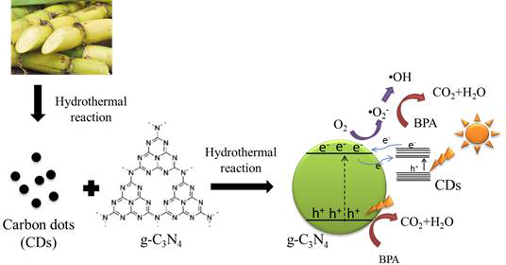
- -driven photocatalysis. Prasannan and Imae reported a simple and facile one-pot synthesis of fluorescent CDs from orange waste peels using the hydrothermal carbonization method. As prepared CDs were combined with zinc oxide (ZnO) to degrade naphthol blue–black azo dye under UV irradiation, and the


Design of polar self-assembling lactic acid derivatives possessing submicrometre helical pitch
Beilstein J. Nanotechnol. 2018, 9, 333–341, doi:10.3762/bjnano.9.33
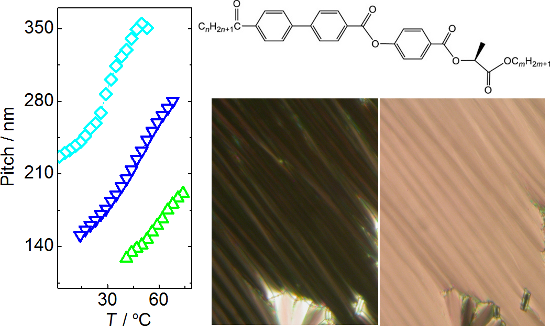
- temperatures and the enthalpy changes of the melting points of water, indium and zinc. Spontaneous polarisation The values of the spontaneous polarisation Ps were determined from the polarisation current peak by driving the sample with a triangular electric field at a frequency of 30 Hz and an electric field


Gas-sensing behaviour of ZnO/diamond nanostructures
Beilstein J. Nanotechnol. 2018, 9, 22–29, doi:10.3762/bjnano.9.4
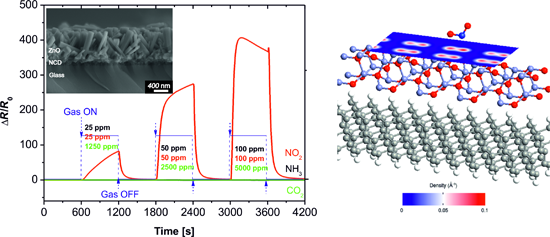
- : density functional theory (DFT); gas sensor; interdigital electrodes; nanocrystalline diamond; sensitivity; zinc oxide (ZnO); Introduction Currently, a number of studies have been focused on developing gas sensors based on nanomaterials and/or nanostructures. Metal oxides are the most common sensing
- hydrothermal synthesis process. The synthesis was conducted in an equimolar aqueous solution containing zinc nitrate hexahydrate (Zn(NO3)2·6H2O) and hexamethylenetetramine (C6H12N4). During the synthesis a temperature of 90 °C was maintained for 3 h. The experimental procedure has been described in detail in
- , the NO2 molecule is rotated to have one oxygen atom face the zinc atom of the surface (T-shape). In the L-shape the one oxygen atom of the gas molecule is also facing the zinc atom of the surface, but with the nitrogen atom parallelly oriented to the surface. The simulated structures consist of a


Fabrication of CeO2–MOx (M = Cu, Co, Ni) composite yolk–shell nanospheres with enhanced catalytic properties for CO oxidation
Beilstein J. Nanotechnol. 2017, 8, 2425–2437, doi:10.3762/bjnano.8.241
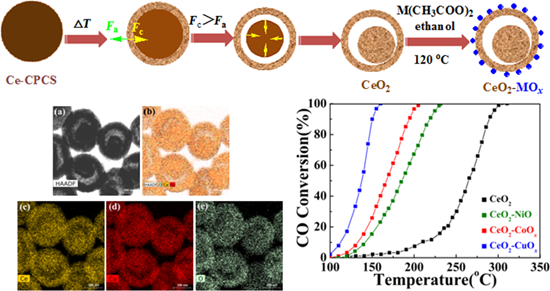
- synthesized by thermal decomposition of the as-prepared Ce–Zn precursor and exhibited excellent activity for removing CO [17]. CeO2–ZnO composite hollow microspheres were fabricated via annealing of a precursor of amorphous zinc–cerium citrate hollow microspheres and presented excellent catalytic activity in





Hydrothermal synthesis of ZnO quantum dot/KNb3O8 nanosheet photocatalysts for reducing carbon dioxide to methanol
Beilstein J. Nanotechnol. 2017, 8, 2264–2270, doi:10.3762/bjnano.8.226
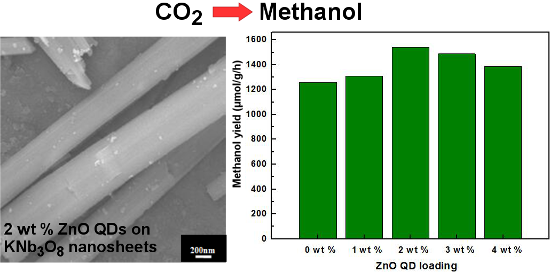
- by reducing CO2 in isopropanol to methanol under UV-light irradiation. Experimental Catalyst synthesis Niobium oxide (Nb2O5, 99.99 wt %) was purchased from Aladdin Industrial Corporation. Potassium hydroxide (KOH, 96 wt %), isopropanol (C3H8O, 99.9 wt %), hydrochloric acid (HCl, 36.5 wt %), zinc




Fabrication of carbon nanospheres by the pyrolysis of polyacrylonitrile–poly(methyl methacrylate) core–shell composite nanoparticles
Beilstein J. Nanotechnol. 2017, 8, 1897–1908, doi:10.3762/bjnano.8.190

- SiO2 (178.49 mg/g) [54], manganese-impregnated zinc sulphide nanoparticles deposited on activated carbon (191.57 mg/g) [55] and γ-Fe2O3 loaded active carbon (195.55 mg/g) [56]. We believe the efficient removal of MB is mainly attributed to the small pore size and the high specific surface area of CP6



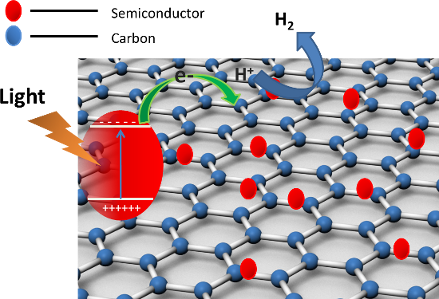
Two-dimensional carbon-based nanocomposites for photocatalytic energy generation and environmental remediation applications
Beilstein J. Nanotechnol. 2017, 8, 1571–1600, doi:10.3762/bjnano.8.159


Low uptake of silica nanoparticles in Caco-2 intestinal epithelial barriers
Beilstein J. Nanotechnol. 2017, 8, 1396–1406, doi:10.3762/bjnano.8.141
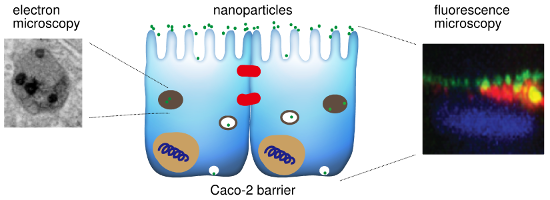
- been achieved [19][20][21]. Caco-2 cells have been used in the literature to investigate the potential toxic effects of a range of nanoparticles, including microporous silicon [22], silica [23][24][25][26][27][28] and zinc oxide [25]. Though such studies have mainly been performed on undifferentiated



Evaluation of quantum dot conjugated antibodies for immunofluorescent labelling of cellular targets
Beilstein J. Nanotechnol. 2017, 8, 1238–1249, doi:10.3762/bjnano.8.125
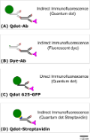
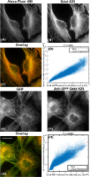
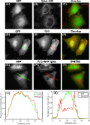
- of cadmium selenium (CdSe) and an inorganic zinc sulfide (ZnS) shell and have been applied as fluorescent probes for the labelling of biological structures [1][2]. To make Qdots water soluble, and thus suitable for biological applications, their surface is modified either by coating with hydrophilic




Metal oxide nanostructures: preparation, characterization and functional applications as chemical sensors
Beilstein J. Nanotechnol. 2017, 8, 1205–1217, doi:10.3762/bjnano.8.122
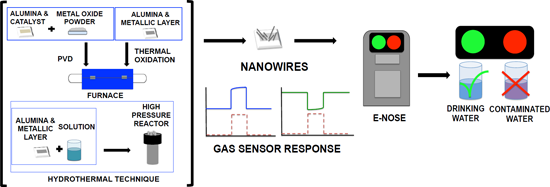
- conventional thin film counterparts, to see if the discerning ability of the electronic nose is affected by the integration of nanostructured active materials. In particular, we decided to integrate tin dioxide and zinc oxide devices, since these are the most widely used and studied materials for chemical
- oxides of nickel, tungsten, niobium, zinc and tin. The structures were directly deposited on functional substrates using various techniques and procedures. We have demonstrated that a direct integration with all the three presented deposition techniques is possible, which is an essential feature to
- ), tin dioxide (SnO2) and zinc oxide (ZnO) nanowires was performed by evaporation–condensation on alumina substrates [50]. It consists of a controlled evaporation of metal oxide powder followed by a condensation of vapor on a catalyzing substrate. The main parameters to optimize during evaporation


AgCl-doped CdSe quantum dots with near-IR photoluminescence
Beilstein J. Nanotechnol. 2017, 8, 1156–1166, doi:10.3762/bjnano.8.117
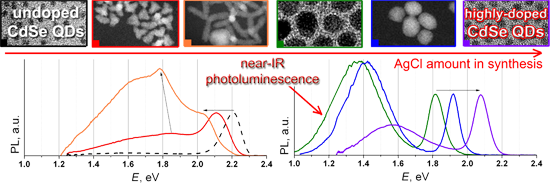
- ), (220) and (311) of the cubic zinc blende (ZB) structure (F−43m, space group 216, a = 0.6077 nm (PC-PDF 19-191)). The NPs exhibit a nearly spherical shape with an average crystalline size estimated to be around 3 nm. The XRD peaks are broad due to the small size of the NPs. The addition of a small
- radiation, rotating anode, Bragg–Brentano scheme, graphite monochromator) diffractometer. XRD patterns and TEM images of different samples with varying AgCl amount: (a) AgCl_0, (b) AgCl_1, (c) AgCl_4, (d) AgCl_10, (e) AgCl_12 and (f) AgCl_40. (ZB: zinc blende, WZ: wurtzite.) HRTEM images of TP (sample


ZnO nanoparticles sensitized by CuInZnxS2+x quantum dots as highly efficient solar light driven photocatalysts
Beilstein J. Nanotechnol. 2017, 8, 1080–1093, doi:10.3762/bjnano.8.110
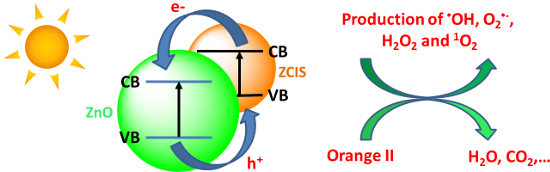
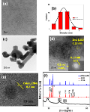
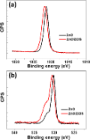
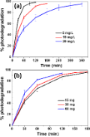
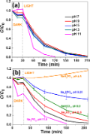
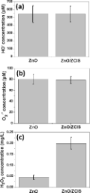
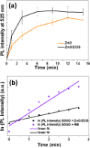
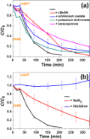
- solution. A mechanism for the degradation pathways mediated by the ZnO/ZCIS catalyst is proposed. Interestingly, hydrogen peroxide, H2O2, and singlet molecular oxygen, 1O2, were found to play a key role in the oxidation of Orange II. Experimental Materials Indium acetate (In(OAc)3, 99.99%, Sigma), zinc
- acetate (Zn(OAc)2, 99.99%, Sigma), copper iodide (CuI, 99.999%, Sigma), dodecanethiol (DDT, >98%, Sigma), oleylamine (OA, 70%, Sigma), 1-octadecene (ODE, 90%, Sigma), zinc oxide (ZnO, 99%, Alfa Aesar), disodium terephthalate (DST, 99+%, Alfa), nitrotetrazolium blue chloride (NBT, >98%, Sigma), leuco





Needs and challenges for assessing the environmental impacts of engineered nanomaterials (ENMs)
Beilstein J. Nanotechnol. 2017, 8, 989–1014, doi:10.3762/bjnano.8.101


Synthesis of graphene–transition metal oxide hybrid nanoparticles and their application in various fields
Beilstein J. Nanotechnol. 2017, 8, 688–714, doi:10.3762/bjnano.8.74
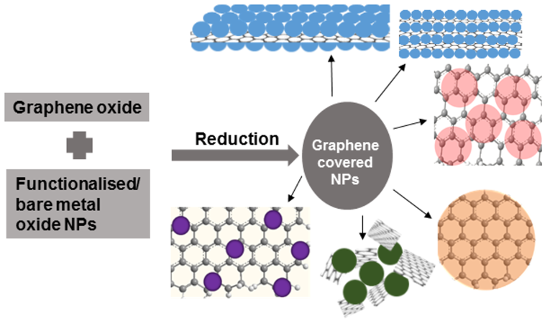
- scalable and relatively cost effective [14][15][16]. In particular, among all the TMO NPs, titanium dioxide [17], manganese oxide [18], iron oxide [19] and zinc oxide [20] have attracted the most attention due to their particular interesting and advantageous properties. By changing the reaction conditions
- precise, in the following, we categorise the graphene–TMO semiconductor NP hybrids on the basis of their counterpart material oxide (from titanium to zinc) following the periodic table. Titanium dioxide (TiO2)–graphene hybrids Nanocrystalline TiO2 is an interesting material because of its unique optical
- medium. The Co3O4–graphene hybrid possesses catalytic performance for heterogeneous activation of peroxymonosulfate for the decomposition of phenol [183]. Moreover, the performance of the zinc–air battery (ZAB), fabricated by using this hybrid as the cathode, is found to be closely matched with the






Graphene functionalised by laser-ablated V2O5 for a highly sensitive NH3 sensor
Beilstein J. Nanotechnol. 2017, 8, 571–578, doi:10.3762/bjnano.8.61
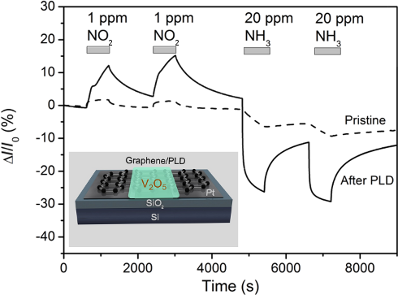
- last 3d elements, scandium and zinc, the rest of the metals possess several oxidation states. The presence of several stable oxidation states serves as a basis of catalytic activity in redox reactions and is most noticeable for vanadium, chromium, and manganese. In particular, vanadium has the highest


The longstanding challenge of the nanocrystallization of 1,3,5-trinitroperhydro-1,3,5-triazine (RDX)
Beilstein J. Nanotechnol. 2017, 8, 452–466, doi:10.3762/bjnano.8.49

- crystallized from the precursor zinc acetate dihydrate dissolved in ethanol with addition of water. From early experiments, primary nanoparticles of 20 nm were found to be agglomerated in sub-size structures, whereas the slightly larger nanoparticles were found much less agglomerated using the classical wet


Study of the surface properties of ZnO nanocolumns used for thin-film solar cells
Beilstein J. Nanotechnol. 2017, 8, 446–451, doi:10.3762/bjnano.8.48
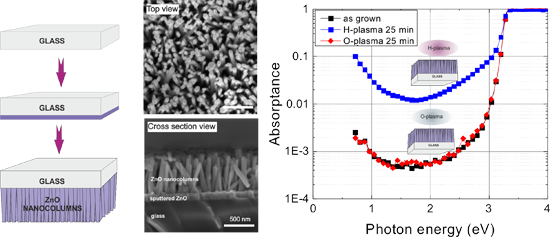
- -Si) solar cells, used for mass production, is composed of a transparent conductive oxide with roughness at the nanoscale on the front (TCO), e.g., tin oxide (SnO2) or zinc oxide (ZnO), followed by p–i–n Si layers (amorphous and/or nanocrystalline) in the cell and a back reflector [1][2]. In such a
- developed solar cells based on a three dimensional (3-D) design, in which periodically ordered zinc oxide nanocolumns (ZnO NCs) are used as a front electrode, have been of great interest, because they would exceed in the ultimate light trapping and provide excellent charge separation [5][6][7]. Due to the
- flow. The hydrothermal growth of ZnO nanocolumns was performed from an equimolar aqueous solution of 25 mmol zinc nitrate hexahydrate (Zn(NO3)2·6H2O) and hexamethylenetetramine ((CH2)6N4) in an aqueous bath at 90 °C for 3 h [15][23]. During the nanocolumns growth, the substrate was mounted upside-down



Template-controlled piezoactivity of ZnO thin films grown via a bioinspired approach
Beilstein J. Nanotechnol. 2017, 8, 296–303, doi:10.3762/bjnano.8.32
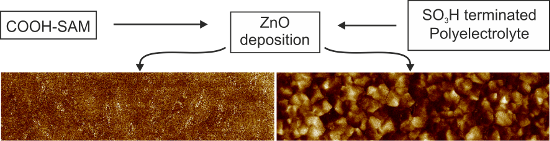
- . Keywords: piezoresponse force microscopy; template-controlled deposition; ZnO; Introduction Zinc oxide is a wide band gap semiconductor. Thin films of it can be applied in, e.g., LEDs [1][2][3] or transistors [4][5][6]. Furthermore, due to its piezoelectricity, it can be incorporated in actuators [7] or
- tetraethylammonium hydroxide (TEAOH, Sigma-Aldrich, 1.5 m in methanol) were prepared. The PVP and zinc acetate solutions were mixed and the TEAOH was added drop-wise with a peristaltic pump under gentle stirring. The final composition was [Zn2+] = 11.34 mm, [PVP] = 8.57 mm and [TEAOH] = 25 mm. The coated wafers were


Performance of natural-dye-sensitized solar cells by ZnO nanorod and nanowall enhanced photoelectrodes
Beilstein J. Nanotechnol. 2017, 8, 287–295, doi:10.3762/bjnano.8.31
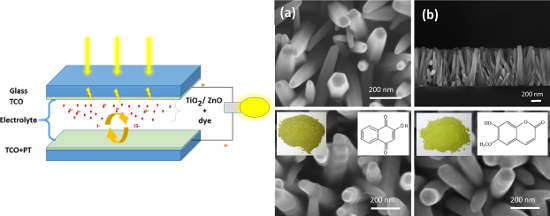
- cells (DSSCs). Fourier transform infrared (FTIR) spectra of the extract revealed the presence of anchoring groups and coloring constituents. Two different structures were prepared by chemical bath deposition (CBD) using zinc oxide (ZnO) layers to obtain ZnO nanowall (NW) or nanorod (NR) layers employed
- semiconductor in DSSCs [2][3][4][5]. Besides, the TiO2 offers high electronic mobility for photogenerated electron collection, a suitable band gap, which adapts to the injection of the electrons of most studied dyes, and high surface area to enhance the dye loading by anchoring the dye [6][7]. Zinc oxide (ZnO
- physical properties of the photoanode. Experimental Both ZnO NRs and NWs were grown on FTO substrates (1.5 × 1.5 cm2) by CBD [8][22]. Before the ZnO NR preparation, a seed layer of ZnO crystallites was deposited by spin coating (1000 rpm, 60 s) using a solution of 5 mM zinc acetate dihydrate in ethanol


Ordering of Zn-centered porphyrin and phthalocyanine on TiO2(011): STM studies
Beilstein J. Nanotechnol. 2017, 8, 99–107, doi:10.3762/bjnano.8.11
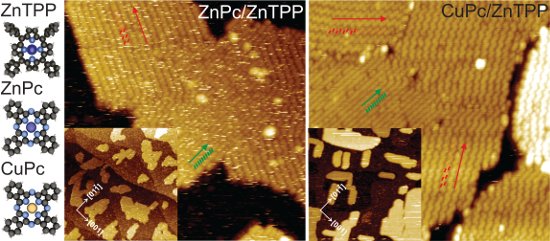
- used in the study (from left to right): Zn(II)meso-tetraphenylporphyrin (ZnTPP), Zn(II)phthalocyanine (ZnPc), and Cu(II)phthalocyanine (CuPc). Color coding: dark gray (carbon), light gray (hydrogen), blue (nitrogen), large violet (zinc), large yellow (copper). Acknowledgements This work was supported


Sensitive detection of hydrocarbon gases using electrochemically Pd-modified ZnO chemiresistors
Beilstein J. Nanotechnol. 2017, 8, 82–90, doi:10.3762/bjnano.8.9
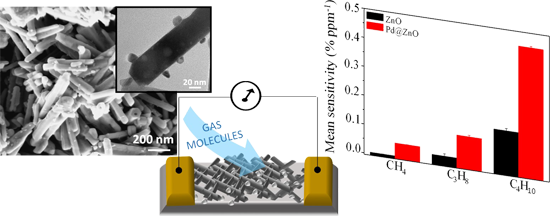
- chemical composition of pristine and Pd-functionalized ZnO NRs, annealed at 550 °C. The value for O–Zn refers to the atomic percentage of oxygen bound to zinc. Comparison of the response time (tResponse) and recovery time (tRecovery) between pristine and Pd-modified ZnO NRs at various C4H10 concentrations


Nanostructured SnO2–ZnO composite gas sensors for selective detection of carbon monoxide
Beilstein J. Nanotechnol. 2016, 7, 2045–2056, doi:10.3762/bjnano.7.195
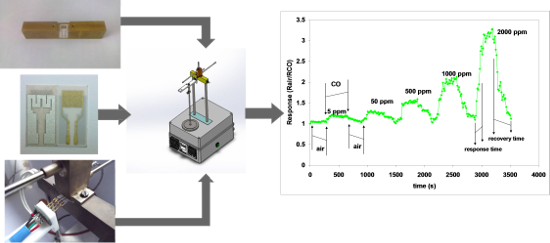
- using the low cost, ecologically friendly sol–gel/dip coating method. The precursors, zinc acetate dihydrate (Merck) as a Zn2+ source and tin(II) 2-ethylhexanoate (Sigma-Aldrich), were dissolved in ethanol. Triethanolamine (Baker Analyzed) was used as a chelating agent/catalyst. The obtained solutions
- this paper where tin–zinc ceramic composites were investigated [35]. In this study the conductivity changes leading to different sensor response were motivated by the presence of different phases having different electric behaviors (ZnO, SnO2, and Zn2SnO4 phases were identified in the composite sensing




Organoclay hybrid materials as precursors of porous ZnO/silica-clay heterostructures for photocatalytic applications
Beilstein J. Nanotechnol. 2016, 7, 1971–1982, doi:10.3762/bjnano.7.188
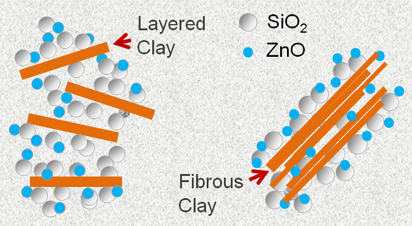
- photocatalytic degradation of organic pollutants [3][4][5][6]. It should be remembered that nanoparticulated zinc oxide is a wide-band gap II–VI semiconductor with a band-gap energy of around 3.4 eV, which is of great interest for photocatalytic applications [7]. ZnO nanoparticles (NP) have been assembled to
- in the preparation of the CTA-clay derivatives. Ultra-pure deionized water (18.2 MΩ·cm) was produced in an Elga Maxima Ultra-Pure Water system). Methanol and 2-propanol (Fluka, p.a.) were used as solvents or reactants. Zinc(II) acetate dihydrate (CH3COO)2Zn·2H2O and KOH were purchased from Merck





Ferromagnetic behaviour of ZnO: the role of grain boundaries
Beilstein J. Nanotechnol. 2016, 7, 1936–1947, doi:10.3762/bjnano.7.185
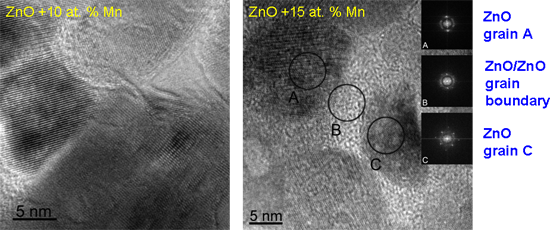
- multilayer grain boundary segregation. Keywords: ferromagnetism; grain boundaries; zinc(II) oxide (ZnO); Review Introduction In 2000 the seminal work of Tomasz Dietl et al. appeared [1]. In this work it was predicted theoretically that many semiconductor oxides can become ferromagnetic (FM) if one dopes
- them with “magnetic” atoms such as iron, manganese and cobalt. Other theoreticians published in that time similar works [2]. It has been predicted that the Curie temperature of such diluted doped magnetic semiconductor oxides can be quite high, even above room temperature. Especially promising was zinc
- influence the magnetic behaviour of such a material. Especially attractive is that zinc oxide is cheap. It is widely used for various applications from sunblock creams to varistors for power electronics [3][4]. The various technologies of deposition of pure and doped ZnO films, sintering of ZnO ceramics and