Search results
Search for "X-ray photoelectron spectroscopy (XPS)" in Full Text gives 269 result(s) in Beilstein Journal of Nanotechnology. Showing first 200.
(Metallo)porphyrins for potential materials science applications
Beilstein J. Nanotechnol. 2017, 8, 1786–1800, doi:10.3762/bjnano.8.180
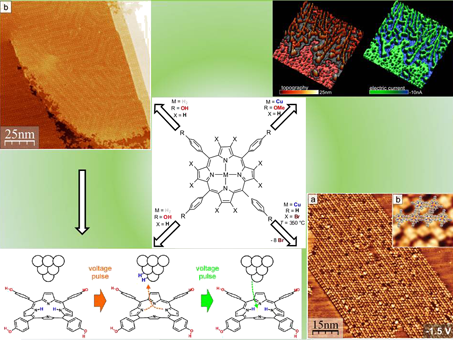
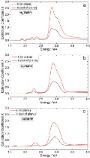
- temperature. X-ray photoelectron spectroscopy (XPS) measurements indicated that after initial deposition not all CuTPP(Br)8 molecules remained intact (Figure 11, left column). Likely, some molecules partially debrominate during OMBD in the crucible or when arriving with high thermal energy on the Au(111







Methionine-mediated synthesis of magnetic nanoparticles and functionalization with gold quantum dots for theranostic applications
Beilstein J. Nanotechnol. 2017, 8, 1734–1741, doi:10.3762/bjnano.8.174
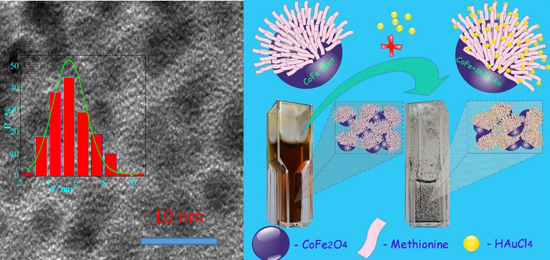
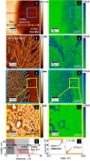
- spectroscopy, inductively coupled plasma mass spectroscopy (ICP-MS), and X-ray photoelectron spectroscopy (XPS) of as-formed CoFe2O4 NPs before and after decoration with gold QDs were applied. Keywords: functionalization; gold; magnetic nanoparticles; quantum dots; theranostics; Introduction In current
- cobalt ferrite NPs was also investigated using X-ray photoelectron spectroscopy (XPS). The surface chemical composition of the CoFe2O4@Met–Au NPs is presented in Table 1, whereas the typical core-level spectrum of the deposited gold is presented in Figure 5. As shown, the main Au 4f7/2 photoelectron peak


Effect of the fluorination technique on the surface-fluorination patterning of double-walled carbon nanotubes
Beilstein J. Nanotechnol. 2017, 8, 1688–1698, doi:10.3762/bjnano.8.169
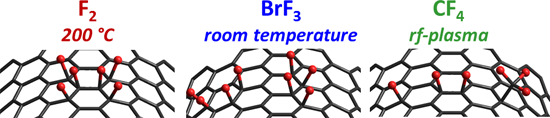
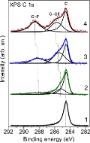
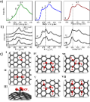
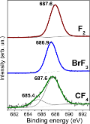
- structure (NEXAFS) spectra, which showed substantial differences for the samples prepared using elemental F2 at elevated temperature, BrF3 at room temperature, and CF4 rf plasma. Infrared (IR) spectroscopy and X-ray photoelectron spectroscopy (XPS) are invoked to support the proposed fluorine distributions



Near-infrared-responsive, superparamagnetic Au@Co nanochains
Beilstein J. Nanotechnol. 2017, 8, 1680–1687, doi:10.3762/bjnano.8.168
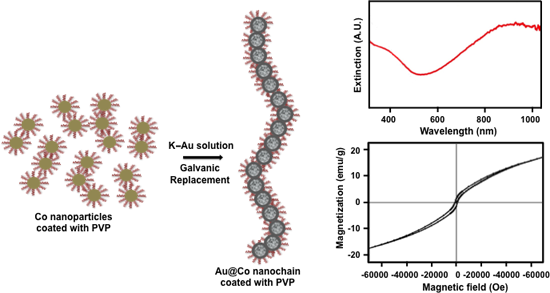
- electron diffraction (SAED) shown in the inset is also consistent with a single-phase fcc structure [36]. The chemical composition of the bimetallic nanochains was evaluated by energy dispersive X-ray spectroscopy (EDX) and X-ray photoelectron spectroscopy (XPS). Figure 4 shows the EDX spectrum with peaks


Group-13 and group-15 doping of germanane
Beilstein J. Nanotechnol. 2017, 8, 1642–1648, doi:10.3762/bjnano.8.164
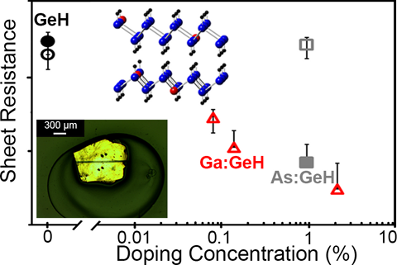
- are retained on the germanane lattice after topotactic deintercalation. Using X-ray fluorescence (XRF) and X-ray photoelectron spectroscopy (XPS) we show that up to 1.1% and 2.3% of As and Ga, respectively, can be substituted onto the germanane lattice. In contrast to pristine GeH, these materials



Surface functionalization of 3D-printed plastics via initiated chemical vapor deposition
Beilstein J. Nanotechnol. 2017, 8, 1629–1636, doi:10.3762/bjnano.8.162
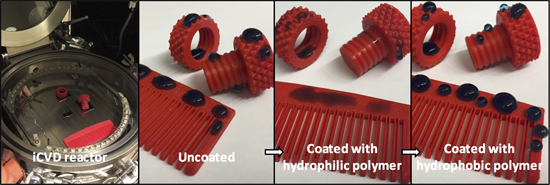
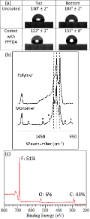
- diacrylate)) (P(HEMA-co-EGDA)) [30] onto 3D objects of a variety of shapes and sizes to study the capabilities and limitations of the iCVD process. X-ray photoelectron spectroscopy (XPS) and contact angle goniometry were used to study the surface properties before and after coating. Results and Discussion A
- vinyl bonds were completely reacted. Additionally, the presence of PPFDA at the top of the lattice was verified using X-ray photoelectron spectroscopy (XPS) to analyze the chemical composition of the surface (Figure 2c). The survey spectrum of the top of the PPFDA-coated lattice had atomic percentages




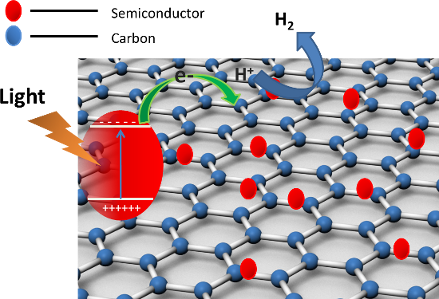
Two-dimensional carbon-based nanocomposites for photocatalytic energy generation and environmental remediation applications
Beilstein J. Nanotechnol. 2017, 8, 1571–1600, doi:10.3762/bjnano.8.159


Deposition of exchange-coupled dinickel complexes on gold substrates utilizing ambidentate mercapto-carboxylato ligands
Beilstein J. Nanotechnol. 2017, 8, 1375–1387, doi:10.3762/bjnano.8.139
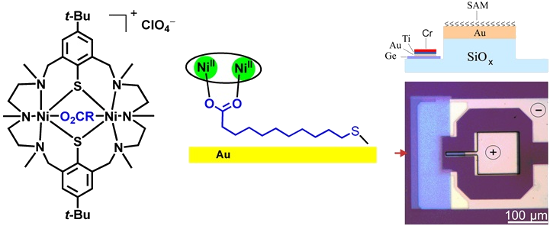
- photoelectron spectroscopy (XPS) and scanning tunneling microscopy (STM) measurements [41]. The present study is an extension of this work and focuses on the synthesis, characterization and deposition of dinuclear [Ni2L(L’)](ClO4) complexes 6–8 bearing the ambidentate coligands H2L4–H2L6 (Figure 1, Scheme 2
- “auration” of 2 and 3 with AuI sources leads to the trinuclear NiII2AuI species 4 and 5. Moreover, complexes 2 and 3 interact also with Au surfaces via Au–S and Au–P bonds without complex disintegration as established by contact angle, spectroscopic ellipsometry, atomic force microscopy (AFM), X-ray


Oxidative chemical vapor deposition of polyaniline thin films
Beilstein J. Nanotechnol. 2017, 8, 1266–1276, doi:10.3762/bjnano.8.128
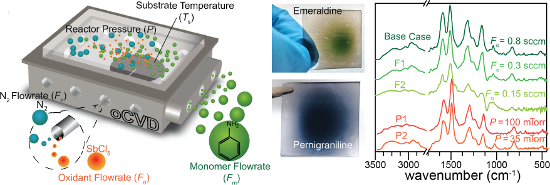
- pentachloride as oxidant. Microscopy and spectroscopy indicate that oCVD processing conditions influence the PANI film chemistry, oxidation, and doping level. Fourier transform infrared spectroscopy (FTIR), scanning electron microscopy (SEM), and X-ray photoelectron spectroscopy (XPS) indicate that a substrate
- components that might lead to unfavorable electrochemical properties. Thin film characterization As-deposited and washed PANI films were analyzed by Fourier transform infrared spectroscopy (FTIR), X-ray photoelectron spectroscopy (XPS), and scanning electron microscopy (SEM). FTIR spectra were acquired using




Fully scalable one-pot method for the production of phosphonic graphene derivatives
Beilstein J. Nanotechnol. 2017, 8, 1094–1103, doi:10.3762/bjnano.8.111
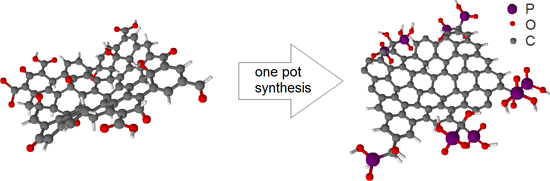
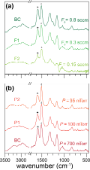
- conjugated bonds in the graphene plane were restored, and functional groups are present mainly at the edges. X-ray photoelectron spectroscopy (XPS) further confirmed the presence of phosphorous in the GO-P sample. The XPS spectra of GO and GO-P are presented in Figure 6. The initial GO (Figure 6A) showed


ZnO nanoparticles sensitized by CuInZnxS2+x quantum dots as highly efficient solar light driven photocatalysts
Beilstein J. Nanotechnol. 2017, 8, 1080–1093, doi:10.3762/bjnano.8.110
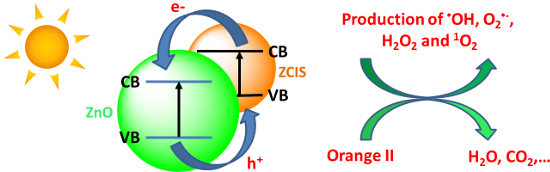
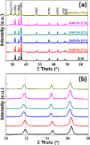
- Sollers slits) and an X'Celerator as a detector. The powder samples were placed on a silicon zero-background sample holder and the XRD patterns were recorded at room temperature using Cu Kα radiation (λ = 0.15418 nm). X-ray photoelectron spectroscopy (XPS) analyses were performed on a Gammadata Scienta




Triptycene-terminated thiolate and selenolate monolayers on Au(111)
Beilstein J. Nanotechnol. 2017, 8, 892–905, doi:10.3762/bjnano.8.91

- out of ethanolic solution onto Au(111) surfaces. The resulting films were investigated using a complementary set of spectroscopic methods, namely ultra-high vacuum (UHV) infrared reflection–absorption spectroscopy (IRRAS), X-ray photoelectron spectroscopy (XPS), near-edge X-ray absorption fine
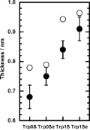
- accessible XPS instrumentation, it was not possible to obtain S 2p and Se 3p photoelectron spectra. The purpose of the XP spectra was the evaluation of the Au 4f and the C 2s resonances to obtain layer thicknesses [34]. X-ray photoelectron spectroscopy (XPS) measurements were performed at room temperature




Graphene functionalised by laser-ablated V2O5 for a highly sensitive NH3 sensor
Beilstein J. Nanotechnol. 2017, 8, 571–578, doi:10.3762/bjnano.8.61
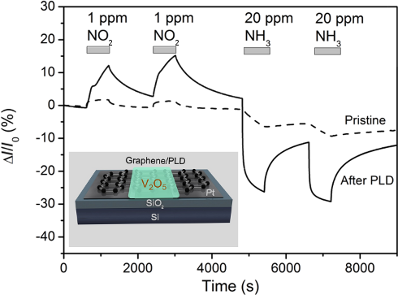
- . The oxidation state of vanadium was determined by means of X-ray photoelectron spectroscopy (XPS). Figure 3 depicts the O 1s and V 2p regions in the XPS spectrum measured from the surface of the sample after the PLD process. Because the source was not monochromatic, the V 2p1/2 region is not usable


Impact of air exposure and annealing on the chemical and electronic properties of the surface of SnO2 nanolayers deposited by rheotaxial growth and vacuum oxidation
Beilstein J. Nanotechnol. 2017, 8, 514–521, doi:10.3762/bjnano.8.55
- -oxide electronics; X-ray photoelectron spectroscopy (XPS); Introduction For many years, tin dioxide (SnO2) has been widely used as the active material for resistive-type gas sensors for oxidizing and reducing gases [1], thin transparent electrodes and barrier layers in solar cells [2]. This is related
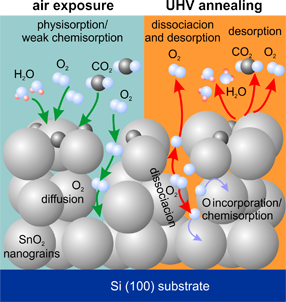
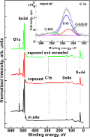
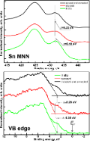
- results in SnO2 nanolayers of controlled nonstoichiometry/stoichiometry depending on the intended application. This paper presents the X-ray photoelectron spectroscopy (XPS) results on the variation of surface chemistry and electronic properties of RGVO SnO2 nanolayers after exposure to air and subsequent
- photoelectron spectroscopy (XPS). The layers were tested i) pristine, ii) after air exposure and iii) after UHV annealing to validate perspective recovery procedures of the sensing layers. XPS results showed that the pristine RGVO SnO2 nanolayers are of high purity with a ratio [O]/[Sn] = 1.62 and almost no



Formation and shape-control of hierarchical cobalt nanostructures using quaternary ammonium salts in aqueous media
Beilstein J. Nanotechnol. 2017, 8, 494–505, doi:10.3762/bjnano.8.53
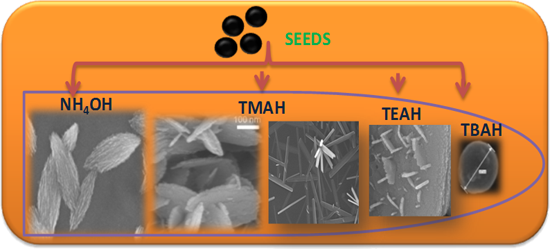
- diffractometer using Cu Kα1 radiation. The magnetic properties of the samples dried in a vacuum desiccator were determined by vibrating sample magnetometry (Quantum Design, USA). The samples were also analyzed using X-ray photoelectron spectroscopy (XPS, VG Micro Tech ESCA-3000) using non-monochromatic, Al Kα


Study of the surface properties of ZnO nanocolumns used for thin-film solar cells
Beilstein J. Nanotechnol. 2017, 8, 446–451, doi:10.3762/bjnano.8.48
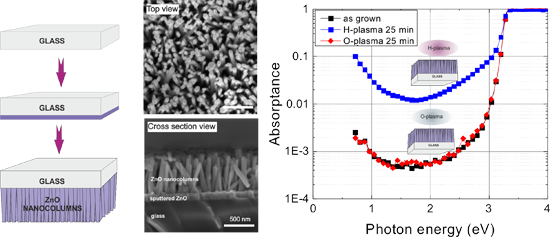
- surface properties of ZnO NCs and the binding state of present elements were investigated before and after different plasma treatments, typically used in plasma-enhanced CVD solar cell deposition processes, by X-ray photoelectron spectroscopy (XPS). Photothermal deflection spectroscopy (PDS) was used to
- capacitively coupled radio frequency plasma reactor KIII [24] at 20 W, 1 mbar for 1, 5, 10 and 25 min at room temperature [25][26][27]. X-ray photoelectron spectroscopy (XPS) XPS measurements were performed using a K-Alpha+ XPS spectrometer (ThermoFisher Scientific, UK) operating at a base pressure of 1.0 × 10



Methods for preparing polymer-decorated single exchange-biased magnetic nanoparticles for application in flexible polymer-based films
Beilstein J. Nanotechnol. 2017, 8, 408–417, doi:10.3762/bjnano.8.43
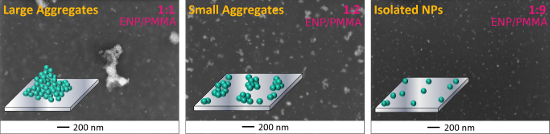
- catalytic Cu-PMDETA complex, with polymerization times of 1 to 3 h. The polymer coating was characterized by X-ray photoelectron spectroscopy (XPS) and thermogravimetric analysis (TGA) [15]. For all samples the grafted chain density was 1.4 chain nm−2, i.e., significantly higher than the results previously
- analyses (TGA) were performed in air on a Labsys-Evo device with a heating rate of 10 °C min−1. X-ray photoelectron spectroscopy (XPS) measurements were performed on as-prepared and functionalized ENPs using a Thermo VG ESCALAB 250 instrument equipped with a micro-focused, monochromatic Al Kα X-ray source


Colorimetric gas detection by the varying thickness of a thin film of ultrasmall PTSA-coated TiO2 nanoparticles on a Si substrate
Beilstein J. Nanotechnol. 2017, 8, 229–236, doi:10.3762/bjnano.8.25
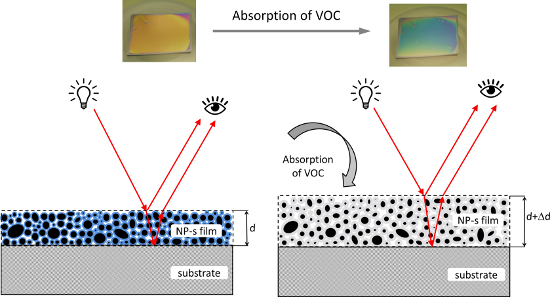
- /mixture of TiO2 and voids) was used for modelling and fitting both thickness and refractive index using the standard three-angle data sets. X-ray photoelectron spectroscopy (XPS) was used for investigating the chemical state and elemental composition of the NP-based films after different treatments. XPS


Phosphorus-doped silicon nanorod anodes for high power lithium-ion batteries
Beilstein J. Nanotechnol. 2017, 8, 222–228, doi:10.3762/bjnano.8.24
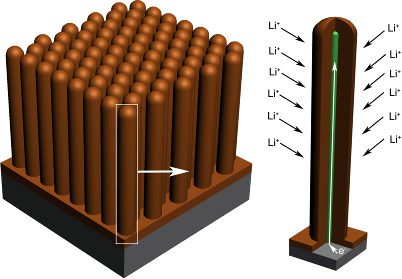
- phosphorus in the Si layer was further proved by X-ray photoelectron spectroscopy (XPS) analysis as shown in Supporting Information File 1, Figure S1. The two peaks at 130.47 eV and 129.74 eV as shown in Supporting Information File 1, Figure S1 could be ascribed to P 2p1/2 and P 2p3/2, respectively


Nitrogen-doped twisted graphene grown on copper by atmospheric pressure CVD from a decane precursor
Beilstein J. Nanotechnol. 2017, 8, 145–158, doi:10.3762/bjnano.8.15
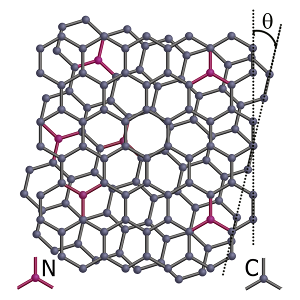
- for X-ray photoelectron spectroscopy (XPS) measurements. The base pressure in the analytical chamber was lower than 2 × 10⁻⁷ Pa. The 20 eV and 40 eV pass energy values of a hemispherical electron energy analyzer were used for the survey and high resolution spectra acquisition, respectively. The energy


Fundamental properties of high-quality carbon nanofoam: from low to high density
Beilstein J. Nanotechnol. 2016, 7, 2065–2073, doi:10.3762/bjnano.7.197
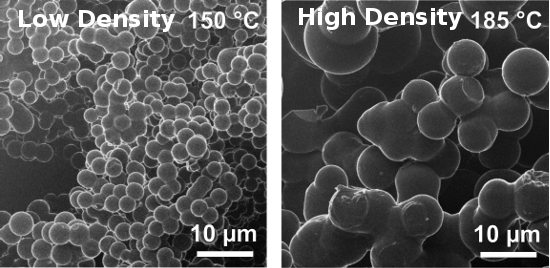
- Bielefeld, Germany 10.3762/bjnano.7.197 Abstract Highly uniform samples of carbon nanofoam from hydrothermal sucrose carbonization were studied by helium ion microscopy (HIM), X-ray photoelectron spectroscopy (XPS), and Raman spectroscopy. Foams with different densities were produced by changing the
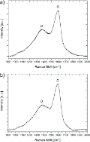
- with a 10x microscope objective. A thermoelectrically-cooled CCD detector was applied to detect the scattered photon intensity. For the measurement, the foam was mounted on conductive carbon tape. X-ray photoelectron spectroscopy (XPS) X-ray photoelectron spectroscopy was performed in a UHV system


Effect of Anderson localization on light emission from gold nanoparticle aggregates
Beilstein J. Nanotechnol. 2016, 7, 2013–2022, doi:10.3762/bjnano.7.192
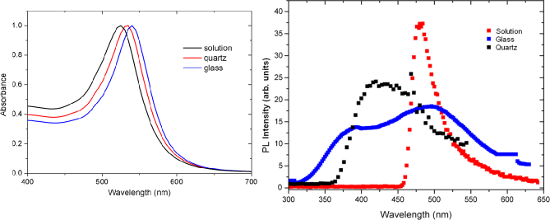
- decay, allowing for the detection of the different lifetimes. The shift in the binding energy of Au for the core level 4f7/2 and 4f5/2 from the bulk value of the AuNP aggregates was measured by X-ray photoelectron spectroscopy (XPS) performed using an electron spectrometer (Lab2, Specs, Berlin, Germany


Surface roughness rather than surface chemistry essentially affects insect adhesion
Beilstein J. Nanotechnol. 2016, 7, 1471–1479, doi:10.3762/bjnano.7.139
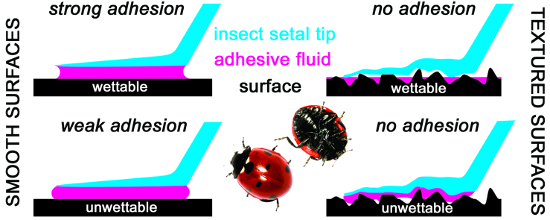
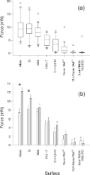
- ±2°. Surface chemical properties of the surfaces of the samples were studied by applying X-ray photoelectron spectroscopy (XPS). Spectra were obtained using a Physical Electronics Quantum 2000 spectrometer with 200 μm spot size and monochromatic Al Kα radiation (1486.68 eV). The X-ray source was



Microwave synthesis of high-quality and uniform 4 nm ZnFe2O4 nanocrystals for application in energy storage and nanomagnetics
Beilstein J. Nanotechnol. 2016, 7, 1350–1360, doi:10.3762/bjnano.7.126
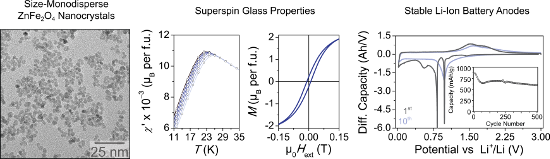
- photoelectron spectroscopy (XPS) and Mössbauer spectroscopy. Figure 3a–c presents detailed XPS spectra of the Fe 2p, O 1s and C 1s core level regions. The Fe 2p spectrum shows a single doublet with strong satellite peaks around 8 eV higher in binding energy than the main peaks. This result is characteristic of
- chemical methods are known to often have a partially inverted structure [30][31][32]. Therefore, the cation site occupancy in the ZFO nanoparticles employed in this work was expected to differ from that of bulk material. The distribution of Fe among the tetrahedral and octahedral sites was studied by X-ray


High performance Ce-doped ZnO nanorods for sunlight-driven photocatalysis
Beilstein J. Nanotechnol. 2016, 7, 1338–1349, doi:10.3762/bjnano.7.125
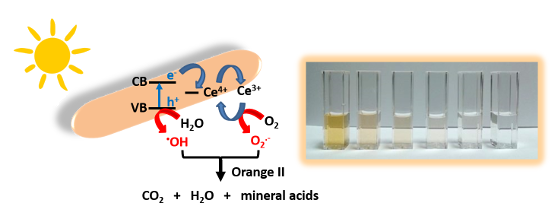
- formation of CeO2 was further confirmed by Raman spectroscopy and X-ray photoelectron spectroscopy (XPS) analysis. Figure 2 shows the Raman spectra of undoped and Ce-doped ZnO rods excited by the 532 nm line of a YAG laser. The peaks located at 332, 379, and 437 cm−1 can be assigned to 2E2, A1(To), and E2