


Search results
Search for "absorption spectra" in Full Text gives 292 result(s) in Beilstein Journal of Nanotechnology. Showing first 200.
ZnO nanoparticles sensitized by CuInZnxS2+x quantum dots as highly efficient solar light driven photocatalysts
Beilstein J. Nanotechnol. 2017, 8, 1080–1093, doi:10.3762/bjnano.8.110
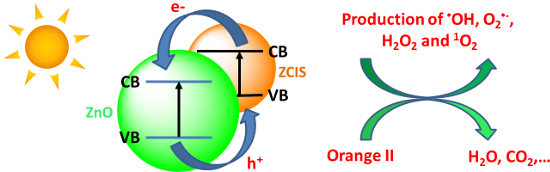
- the ZnO/ZCIS nanoparticles was determined using a Malvern Zetasizer Nano ZS instrument. All the optical measurements were conducted at room temperature (20 ± 1 °C) under ambient conditions. The absorption spectra of liquid samples were recorded on a Thermo Scientific Evolution 220 UV–visible




Assembly of metallic nanoparticle arrays on glass via nanoimprinting and thin-film dewetting
Beilstein J. Nanotechnol. 2017, 8, 1049–1055, doi:10.3762/bjnano.8.106
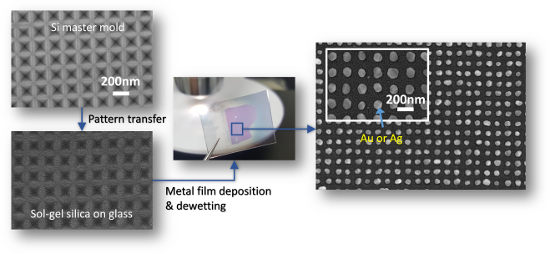
- substrates, the method presented here can extend the applications of metal nanoparticles for several optical purposes. (a) Silicon master mold with inverted pyramidal pits and (b) PDMS stamp with the transferred pattern. The inset in (b) is a high-magnification image. Evolution of the FTIR absorption spectra


Vapor-phase-synthesized fluoroacrylate polymer thin films: thermal stability and structural properties
Beilstein J. Nanotechnol. 2017, 8, 933–942, doi:10.3762/bjnano.8.95
- Bruker IFS 66v/s spectrometer in transmission mode, with all the data being converted to absorption spectra by the OPUS software. The data are automatically baseline corrected by a custom routine written in R, utilizing the algorithms provided in the baseline package [18]. Specular X-ray diffraction (XRD


High photocatalytic activity of Fe2O3/TiO2 nanocomposites prepared by photodeposition for degradation of 2,4-dichlorophenoxyacetic acid
Beilstein J. Nanotechnol. 2017, 8, 915–926, doi:10.3762/bjnano.8.93
- patterns of the TiO2 and the Fe2O3/TiO2 samples prepared by both impregnation and photodeposition methods using a Cu Kα radiation source (λ = 0.15406 nm) at 40 kV and 40 mA. A Shimadzu UV-2600 DR UV−vis spectrophotometer was used to record the absorption spectra of samples, in which barium sulfate (BaSO4


Dispersion of single-wall carbon nanotubes with supramolecular Congo red – properties of the complexes and mechanism of the interaction
Beilstein J. Nanotechnol. 2017, 8, 636–648, doi:10.3762/bjnano.8.68
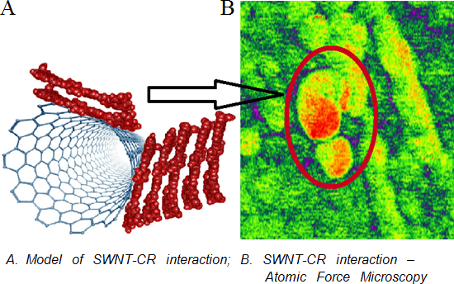
- the experimental analysis of functionalization of nanotubes with Congo red, aimed to explain the role of dye supramolecularity and the mechanism of nanotube–CR interaction. Results and Discussion Properties of SWNT–CR complexes – the role of CR supramolecularity Comparison of the absorption spectra of
- total amount of CR added to the sample. UV–vis absorption spectra were recorded on a Cary 300Bio Varian spectrophotometer. Absorption coefficient for CR: ε489 = 50.46 M−1·cm−1. In order to avoid errors caused by clogging of the membrane (in case of samples containing higher amounts of CR) the filtering
- ), deformation (the indentation of the surface under the tip), dispersion (dissipation, loss of energy of microcantilever of scanning probe when passing through different areas on the sample surface). Absorption spectra of free Congo red (A) and SWNT-bound Congo red (D) (0.05 M Tris/HCl buffer, pH 7.4); Congo


Fabrication of black-gold coatings by glancing angle deposition with sputtering
Beilstein J. Nanotechnol. 2017, 8, 434–439, doi:10.3762/bjnano.8.46
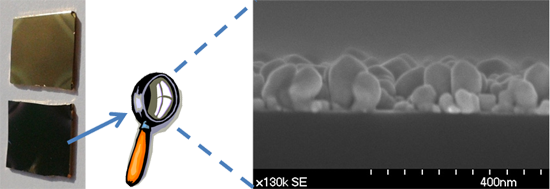
- nanostructured Au sample prepared with σ = 85° (right). (b) Transmittance, reflectance and absorption spectra of those samples. Acknowledgements The authors thank MINECO (Projects MAT2014-59772-C2-1, MAT2015-69035-REDC) for financial support.


Comparison of four methods for the biofunctionalization of gold nanorods by the introduction of sulfhydryl groups to antibodies
Beilstein J. Nanotechnol. 2017, 8, 372–380, doi:10.3762/bjnano.8.39
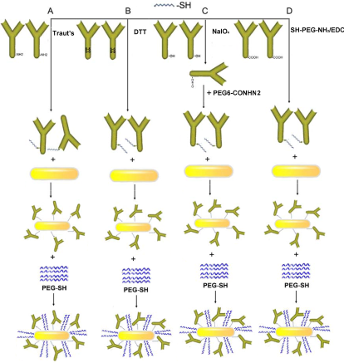
- change in longitudinal plasmon wavelength when the refractive index alteration was elicited by target binding to the GNRs surface [10][14]. Figure 2 shows the absorption spectra of GNRs after conjugating with various thiolated anti-IgG. This conjugation resulted in a red shift in the longitudinal peak of
- thiolated-anti-IgG were stored in 0.01 M PBS buffer at 4 °C for months. Figure S3 (Supporting Information File 1) shows the absorption spectra of 728 nm GNR conjugated with anti-IgG for 3 months by the four modified methods. The lack of peak broadening and the minimal spectrum change indicate that the
- shows the absorption spectra of the GNR biochip in the response of the local refractive index elicited by specific antigen–antibody interaction. Figure 6 exhibits the LSPR red shift in response to the human IgG concentration. Consistent with the results in our previous work [17], a constant increase in


Nanoscale isoindigo-carriers: self-assembly and tunable properties
Beilstein J. Nanotechnol. 2017, 8, 313–324, doi:10.3762/bjnano.8.34
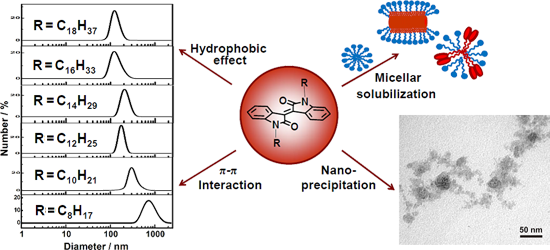
- available classical anionic (SDS), cationic (CTAB) and nonionic (Tween 80) surfactants. Because isatin and isoindigo derivatives are new dyes, their extinction coefficients were determined for the first time. UV–vis absorption spectra of 2a–h and 3 in chloroform are presented in Figures S11–S18 (Supporting
- Information File 1). The absorption spectra of 1g in different solvents (CHCl3, EtOH and DMF, Figures S19–S21, Supporting Information File 1) were also recorded. The maximum absorption wavelength of 1g (λmax = 300 nm) does not vary significantly with the type of solvent. The extinction coefficients of the




Photocatalysis applications of some hybrid polymeric composites incorporating TiO2 nanoparticles and their combinations with SiO2/Fe2O3
Beilstein J. Nanotechnol. 2017, 8, 272–286, doi:10.3762/bjnano.8.30
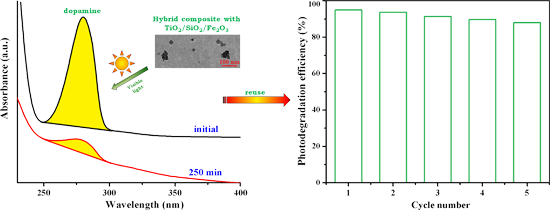
- of about 200 μm), with hybridized TiO2 NPs were further examined through UV–vis analysis and the absorption spectra are given in Figure 5. It should be pointed out that the samples S1 (with TiO2 NPs) and S2 (with TiO2/SiO2 NPs) films have no absorption in the visible region. These films absorb only
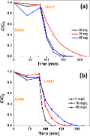
- photodecomposition process of an aqueous solution of phenol (1.06 × 10⁻³ M) in the presence of hybrid materials with TiO2 nanoparticles, pure or combined with SiO2 and/or Fe2O3, was investigated by monitoring the characteristic absorption band of phenol at λ = 270 nm. Figure 6a,b shows the UV–vis absorption spectra
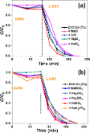
- performed. As expected, S1 exhibited a very low photodegradation activity (Figure 7a), only 10% of phenol being reduced after 250 min of visible-light irradiation. The UV–vis absorption spectra measured in the presence of S4 hybrid (Figure 7b) show that phenol is decomposed with increasing irradiation time


Photo-ignition process of multiwall carbon nanotubes and ferrocene by continuous wave Xe lamp illumination
Beilstein J. Nanotechnol. 2017, 8, 134–144, doi:10.3762/bjnano.8.14
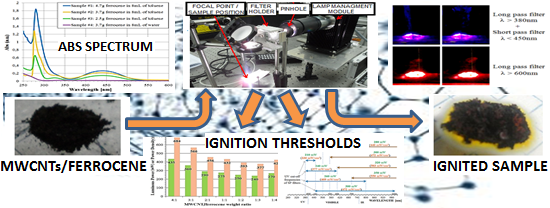
- -induced ignition process, the absorption spectra of MWCNT/ferrocene mixtures and ferrocene only were obtained. The experimental results show that the luminous power (related to the entire spectrum of the Xe lamp) needed to trigger the ignition of MWCNT/ferrocene mixtures decreases with increasing metal
- itself in its excited form and is thus capable of promoting electron transfer to MWCNTs. In this way, the resulting radical species, FeCp2+∙ and MWCNT−, easily react with oxygen giving rise to the ignition of MWCNT/ferrocene samples. Keywords: absorption spectra; CW Xe light source; metal nanoparticle
- previously mentioned works. The experimental photo-ignition tests were carried out using varying weight ratios of mixtures, incident luminous power, and wavelength range of incident Xe light. In addition, in order to better understand the photo-induced ignition process, absorption spectra measurements of





Streptavidin-coated gold nanoparticles: critical role of oligonucleotides on stability and fractal aggregation
Beilstein J. Nanotechnol. 2017, 8, 1–11, doi:10.3762/bjnano.8.1
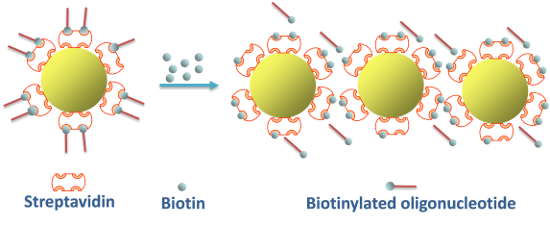
- displayed by absorption spectra after the absorption of SA can be used to predict the mass of protein absorbed per unit area [31]. The prediction is based on the assumption that AuNP-SA can be depicted as a sphere with a homogeneous spherical shell. On this basis, the spectral shift (Δλ) is given by




Effect of Anderson localization on light emission from gold nanoparticle aggregates
Beilstein J. Nanotechnol. 2016, 7, 2013–2022, doi:10.3762/bjnano.7.192
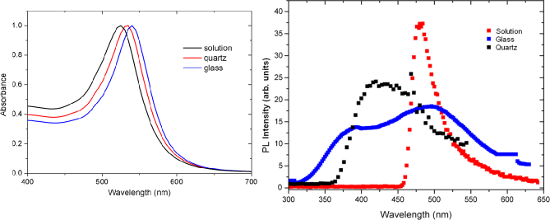
- the aggregated density and pattern as explained by the theory. Figure 4a–c shows the UV–vis absorption spectra of AuNPs in solution, deposited on quartz and deposited on glass substrate, respectively. The absorption band of AuNPs on quartz is quite broad, with a FWHM of ≈150 nm, while for the AuNPs on
- a glass substrate, the band is less broad (FWHM ≈100 nm), due to lower aggregation, as evidenced in the SEM images of Figure 2. The second peak for the glass substrate is due to the splitting in the plasmonic resonance due to the hybridization effect [19]. The absorption spectra of AuNPs in solution
- on a glass substrate (blue data points) and, on a quartz substrate (black data points). The profile of PL emission from the pristine AuNPs in aqueous solution is also shown for comparison (red data points). Absorption spectra of AuNPs, either in solution (black line) or drop cast on glass (red line


A dioxaborine cyanine dye as a photoluminescence probe for sensing carbon nanotubes
Beilstein J. Nanotechnol. 2016, 7, 1991–1999, doi:10.3762/bjnano.7.190
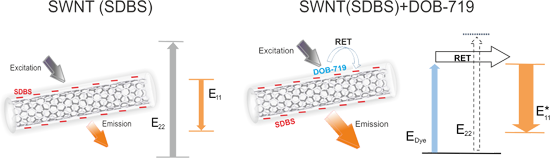
- high potential to be used as an effective PL probe for the detection of carbon nanotubes considering that there is clear dependence of the RET response on the SWNT concentration (see Supporting Information File 1, Figure S1). Figure 3 shows the absorption spectra for the mixture of DOB-719 with the
- the mixture of DOB-719 with the SWNT (Figure 5c,d) registered in the range of λEX = 400–750 nm and λEM = 600–800 nm. The PL peak with λEX = 685 nm and λEM = 720 nm (Figure 5) correlates with the monomeric peak in the absorption spectra at 687 nm (Figure 3a and Supporting Information File 1, Figure S2
- initial SWNT dispersion with SDBS to maintain the dye admixture with the SWNTs at the premicellar concentration (0.065 mg/mL). The origin and level of purity for all materials used in this manuscript are described in Supporting Information File 1. Experimental setup The absorption spectra in the visible


Facile fabrication of luminescent organic dots by thermolysis of citric acid in urea melt, and their use for cell staining and polyelectrolyte microcapsule labelling
Beilstein J. Nanotechnol. 2016, 7, 1905–1917, doi:10.3762/bjnano.7.182
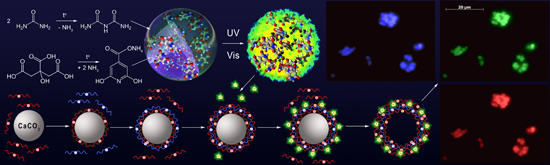
- O-dots consists of different oscillators joined together by stronger bonds, (for example, by σ-bonds between carbon atoms). Due to the presence of multiple independent oscillators, the absorption spectra of type-II O-dots do not consist of individual bands, (in contrast to type-I O-dots). Another
- acid/urea in the precursor mixtures from 1:1 to 1:2, 1:3, 1:4 and 1:5, the absorption spectra of products were changed (Figure 1) and the luminescence emission maxima were shifted to higher wavelengths (Figure 2, left). The dependence of luminescence intensity from the citric acid/urea molar ratio was
- experiments conducted was five. Statistical differences within and between groups were verified using one-way analysis of variance (ANOVA). Absorption spectra of citric acid heated in the urea melt (1:1, 1:2, 1:3, 1:4 and 1:5 molar ratios) at 160 °C for 120 min (with subsequent dissolution of the reaction




Surface-enhanced infrared absorption studies towards a new optical biosensor
Beilstein J. Nanotechnol. 2016, 7, 1736–1742, doi:10.3762/bjnano.7.166
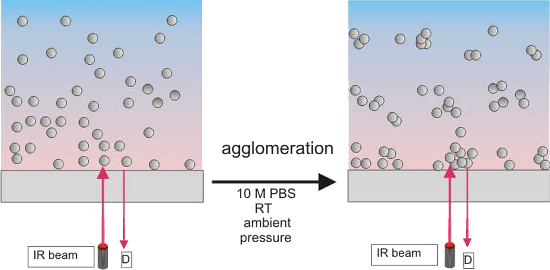
- -established in the visual regime, measures the optical thickness change of a sensitive layer caused, e.g., by binding an analyte. When operated in the mid-infrared range the sensor provides additional information via weak absorption spectra (fingerprints). The originally poor spectra are magnified by surface
- evanescent field of a guided wave (as is the above-mentioned MZI sensor), will show only a moderate absorption spectra, as the sensing volume is limited by the penetration depth of the evanescent field. This fact is both an advantage and a disadvantage. Biosensors often operate in aqueous solution, which
- . The deposition of the water molecules leads to an increase of water absorption features due to adsorption of water molecules to the nanoparticle layer on top of the ATR waveguide. In the current work, water absorption spectra have been studied under the influence of silver nanoparticles present in an


Role of RGO support and irradiation source on the photocatalytic activity of CdS–ZnO semiconductor nanostructures
Beilstein J. Nanotechnol. 2016, 7, 1684–1697, doi:10.3762/bjnano.7.161
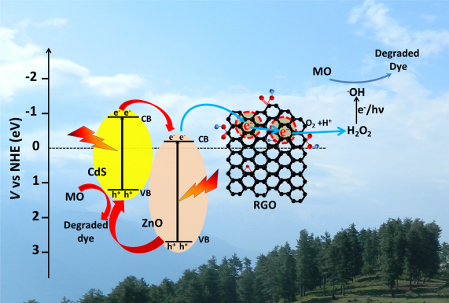
- by recording the absorbance using a UV–vis spectrophotometer. Characterizations The UV–visible absorption spectra of the samples were recorded using Shimadzu UV-2450 spectrophotometer in the wavelength range from 200 to 800 nm. Fourier transform infrared (FTIR) spectra were collected using Agilent
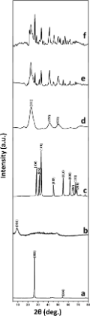
- spectrum of the binary nanocomposite (CdS–ZnO) shows the absorption both in the UV and the visible region confirming the presence of both CdS and ZnO in the composite. Finally the absorption spectra of ternary nanocomposite (CdS–ZnO–RGO) shows an absorption near 250 nm, which indicates the red shift of the
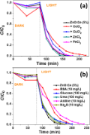
- spectra of (a) GO, (b) ZnO, (c) CdS, (d) CdS–ZnO and (e) CdS–ZnO–RGO nanocomposite. UV–vis absorption spectra of GO, ZnO NR, CdS NP, CdS–ZnO and CdS–ZnO–RGO nanocomposite. Time-dependent UV–vis spectra of photocatalytic degradation of MO: (a) visible light irradiation from a solar simulator using CdS–ZnO




Hydrophilic silver nanoparticles with tunable optical properties: application for the detection of heavy metals in water
Beilstein J. Nanotechnol. 2016, 7, 1654–1661, doi:10.3762/bjnano.7.157
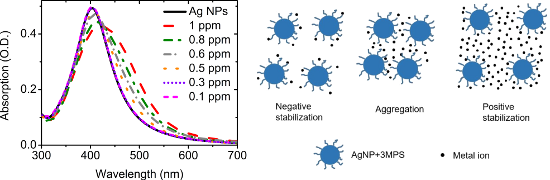
- sensitivity of the sensor as much as possible. Figure 2 shows the absorption spectra of the AgNP-3MPS solution. It shows a sharp peak at 404 nm. Its FWHM is 92 nm instead of 170 nm as obtained by the first synthetic method (synthesis a). It should be noted that the FWHM of the AgNP solution without capping
- AgNPs contained in a fixed volume of water, a fixed volume of water was added containing the ions with the specific final concentration. After the mixing, we waited for five minutes before measuring the absorption spectra in order to allow for the complete interaction with the NPs. The sensitivity of
- the concentration of metal ions. In Figure 8 we report the normalized intensity, the peak wavelength and the FWHM of the absorption spectra obtained with different nickel ion concentrations (from 0–1 ppm). The reduction of intensity with the increase of the ion concentration can be ascribed to the


High performance Ce-doped ZnO nanorods for sunlight-driven photocatalysis
Beilstein J. Nanotechnol. 2016, 7, 1338–1349, doi:10.3762/bjnano.7.125
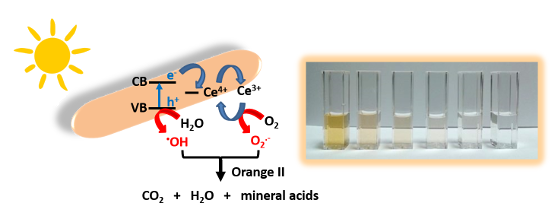
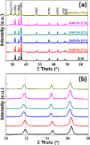
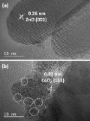
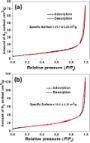
- analysed using the BET (Brunauer–Emmett–Teller) method. All the optical measurements were performed at room temperature (20 ± 1°C) under ambient conditions. Absorption spectra of liquid samples were recorded on a Thermo Scientific Evolution 220 UV–visible spectrophotometer. DRS were recorded on a Shimadzu







Tunable longitudinal modes in extended silver nanoparticle assemblies
Beilstein J. Nanotechnol. 2016, 7, 1219–1228, doi:10.3762/bjnano.7.113
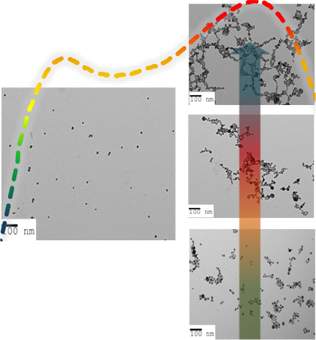
- interactions in assembly size and morphology. Spectral and morphological evolutions of the AgNPs assemblies are followed via UV–visible spectroscopy and transmission electron microscopy (TEM). Spectroscopic measurements are compared to calculations of the absorption spectra of randomly assembled silver chains
- . Linear aggregates are obtained by restricting the attachment point of a new particle to within a narrow solid angle defined by the growing chain. When the allowed solid angle is large, dense, isotropic aggregates are obtained. Figure 2B shows the absorption spectra for chains with length ranging from 1
- change of the polarizability due to the modified dielectric environment of the particles. In order to study the influence of this, we calculated the absorption spectra for aggregates of particles with a polarizability scaled from the value given by the quasi-static expression (see Experimental section


Manufacturing and investigation of physical properties of polyacrylonitrile nanofibre composites with SiO2, TiO2 and Bi2O3 nanoparticles
Beilstein J. Nanotechnol. 2016, 7, 1141–1155, doi:10.3762/bjnano.7.106
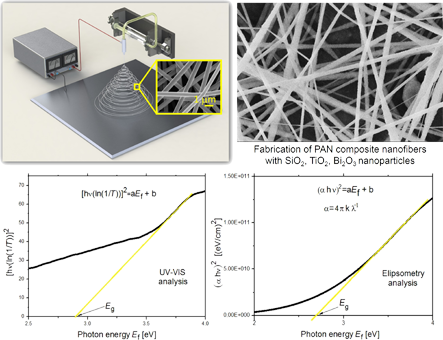
- concentration by weight of the used reinforcing phase, which was as follows: 0%, 4%, 8% and 12% for each type of nanoparticles. The width of the band gap was determined on the basis of the absorption spectra of radiation (UV–vis) and ellipsometry methods. Spectroscopic ellipsometry has been used in order to



Photocurrent generation in carbon nanotube/cubic-phase HfO2 nanoparticle hybrid nanocomposites
Beilstein J. Nanotechnol. 2016, 7, 1075–1085, doi:10.3762/bjnano.7.101
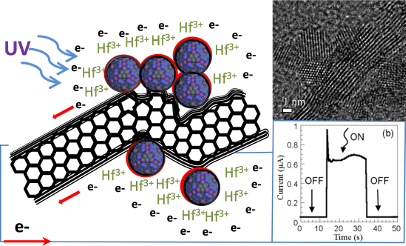
- MWCNTs do not emit light but instead expose their discrete electronic structure in the absorption spectra. The hybrid material manifests characteristic absorption features with a gradual merger of the MWCNT π-plasmon resonance band with the intrinsic defect band and fundamental edge of HfO2. The
- , the electrons can be optically excited via a series of valence-to-conduction band transitions, resulting in characteristic vHS peaks in absorption spectra. However, since holes are instantly filled with readily available electrons, no excitons are formed, and consequently, no photoluminescence (PL


The influence of phthalocyanine aggregation in complexes with CdSe/ZnS quantum dots on the photophysical properties of the complexes
Beilstein J. Nanotechnol. 2016, 7, 1018–1027, doi:10.3762/bjnano.7.94
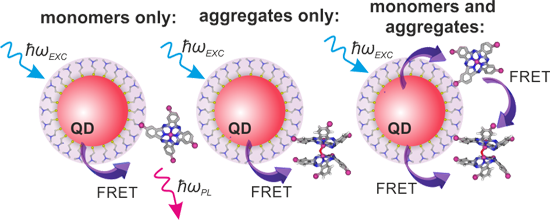
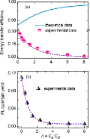
- the concentration of donors bonded in complexes with acceptors. and are the concentrations of donors bound to acceptor monomers and aggregates, respectively. and are the concentrations of acceptor in monomeric and aggregated forms in complexes, respectively. Typically, the absorption spectra of
- obtained with a value of the extinction ratio = 1.20. This is in good accordance with the extinction ratio = 1.15 ± 0.05 obtained from the absorption spectra. The relevant calculations of the extinction of PcSz molecules in aggregates are presented in the Supporting Information File 4. The most favorable
- –vis absorption and PL detection UV–visible absorption spectra were recorded using a UV3600 (Shimadzu) spectrophotometer. Steady-state photoluminescence spectra were measured using a Cary Eclipse (Varian) spectrofluorometer. Time-resolved PL spectroscopy was performed using a time-correlated single



Phenalenyl-based mononuclear dysprosium complexes
Beilstein J. Nanotechnol. 2016, 7, 995–1009, doi:10.3762/bjnano.7.92
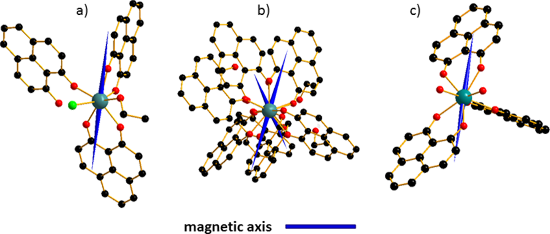
- at room temperature the absorption spectra of the diluted DMSO solutions of complexes 1–4 and of the sublimed product 4’. For comparison, UV–vis spectra were recorded for the free HPLN ligand in parallel. The spectra of the three dysprosium compounds present a similar pattern, as illustrated in
- bands can result from slight differences in the structures of the complexes. As a consequence of the few milligrams of material obtained by the sublimation process, we were unable to compare the extinction coefficients of the complexes. As observed previously in the absorption spectra, the ligand
- without additional matrix compound other than the sample itself. The absorption spectra were acquired at room temperature for diluted (2.0 × 10⁻⁶ M) DMSO (spectrophotometric grade) solutions on a Cary 500 Scan UV–vis–NIR spectrophotometer using a 1 cm quartz cell. Emission spectra were recorded at room


Optical absorption signature of a self-assembled dye monolayer on graphene
Beilstein J. Nanotechnol. 2016, 7, 862–868, doi:10.3762/bjnano.7.78
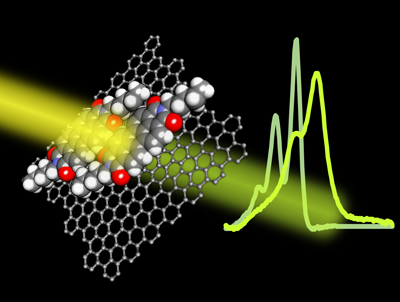
- combining two successive images with downward and upward slow-scan directions. Optical absorption spectra at normal incidence were obtained with a Perkin-Elmer Lambda 650 spectrometer. Optical microspectroscopy was adapted on an Olympus IX71 microscope equipped with an Ocean Optics spectrometer QE-Pro



Hierarchical coassembly of DNA–triptycene hybrid molecular building blocks and zinc protoporphyrin IX
Beilstein J. Nanotechnol. 2016, 7, 697–707, doi:10.3762/bjnano.7.62
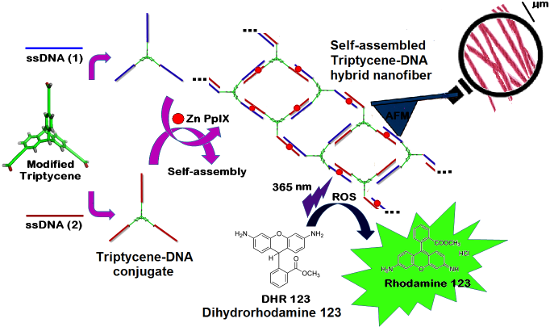
- fluorescence (λem = 530 nm) and absorption spectra (λabs = 500 nm). We found that at a given concentration of DHR 123 and a fixed irradiation time, the composite DNA nanofibers that were constructed from assemblies of DNA–TPA triconjugates in the presence of Zn PpIX produced the maximum ROS as compared to a
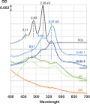
- absorption spectra and steady-state fluorescent spectra of rhodamine 123 quantifying the photocatalytic activity of nanofibers (S1 DNA–TPA/S2 DNA–TPA triconjugate Zn PpIX coassembly) and their control. Schematic representation of creation of nanostructures from DNA–TPA hybrid self-assembly. The number and





