


Search results
Search for "anisotropic" in Full Text gives 246 result(s) in Beilstein Journal of Nanotechnology. Showing first 200.
Determination of Young’s modulus of Sb2S3 nanowires by in situ resonance and bending methods
Beilstein J. Nanotechnol. 2016, 7, 278–283, doi:10.3762/bjnano.7.25
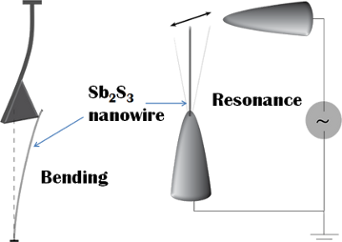
- sulfide; in situ; mechanical properties; nanowires; Young’s modulus; Introduction Antimony sulfide or stibnite is a highly anisotropic semiconductor material with potential applications in thermoelectric and optoelectronic [1][2] devices due to its high achievable thermoelectric power and


Single-molecule magnet behavior in 2,2’-bipyrimidine-bridged dilanthanide complexes
Beilstein J. Nanotechnol. 2016, 7, 126–137, doi:10.3762/bjnano.7.15
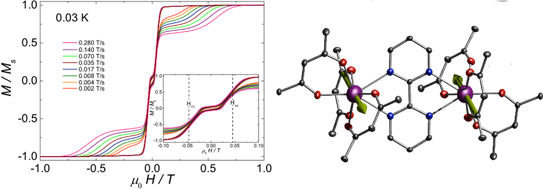
- with the presence of hysteresis loops. Keywords: bipyrimidine; diketone; hysteresis; lanthanide; magnetism; Introduction The application of magnetic molecular compounds within molecular electronic devices is combined in the progressive field of spintronics. An anisotropic spin is confined by the
- magnetically anisotropic lanthanide ions can possibly act as basic units of quantum computing, i.e., as qubits. Universal qugates may be engineered by designing one molecule with two interacting lanthanide ions [17]. We are particularly interested in generating dinuclear lanthanide complexes with a bridging
- small decrease at the lowest temperature occurs (leading to a value of 15.1 cm3 K mol−1) (Figure 2). This small downturn could correspond to antiferromagnetic exchange or dipolar interactions between the Gd(III)···Gd(III) ions (see below). Similarly, the anisotropic χMT(T) behavior of the anisotropic


Chemical bath deposition of textured and compact zinc oxide thin films on vinyl-terminated polystyrene brushes
Beilstein J. Nanotechnol. 2016, 7, 102–110, doi:10.3762/bjnano.7.12
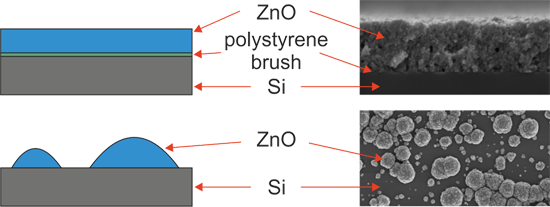
- complete ZnO film is formed. The methyl ester can coordinate the polar ZnO crystallites. This in turn can support an oriented attachment of the nanoparticles to the surface and an anisotropic orientation of the entire film, which was observed by XRD (Figure 4) [42][43]. Conclusion ZnO thin films were grown
- anisotropic fashion, forming a compact ZnO film. Experimental Preparation of the PS brush Silicon wafers with a surface orientation of [100] and a native oxide layer with 2–3 nm thickness (Wacker Burghausen, Germany) were used as substrates. Before cleaning them with a CO2 snow jet [44] in order to remove


Surface-enhanced Raman scattering by colloidal CdSe nanocrystal submonolayers fabricated by the Langmuir–Blodgett technique
Beilstein J. Nanotechnol. 2015, 6, 2388–2395, doi:10.3762/bjnano.6.245
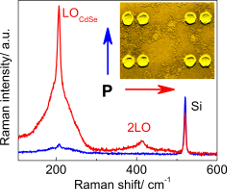
- nanocluster arrays, a dimer array represents an anisotropic plasmonic structure which is characterized by two coupled resonance plasmon modes when excited perpendicular to the structure surface [46]. The longitudinal LSPR mode (which is polarized along the long dimer particle axis) red-shifts with decreasing


Green and energy-efficient methods for the production of metallic nanoparticles
Beilstein J. Nanotechnol. 2015, 6, 2354–2376, doi:10.3762/bjnano.6.243
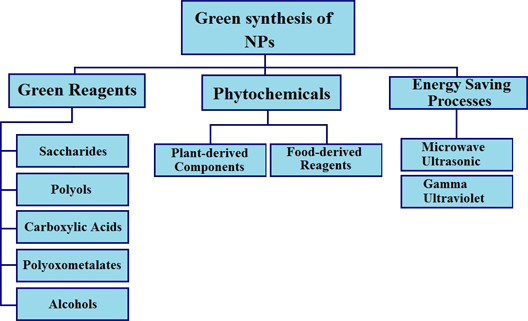
- , shape and crystalline structure of Au NPs in a polymeric matrix are strongly influenced by the reaction temperature. At T = 100 °C and T = 20–50 °C, Au NPs had sizes of 18 and 27 nm, respectively, while at lower temperatures (4–10 °C), they observed anisotropic nanosheets of different shapes within the
- . They reacted AgNO3 and graphene oxide (GO) with TA simultaneously and observed that GO sheets were impregnated with many Ag NPs with diameters up to 20 nm [73]. Kasthuri et al. synthesized anisotropic Au and quasi-spherical Ag NPs using apiin to reduce AgNO3 and HAuCl4 at room temperature within 60 s


Correction: A single-source precursor route to anisotropic halogen-doped zinc oxide particles as a promising candidate for new transparent conducting oxide materials
Beilstein J. Nanotechnol. 2015, 6, 2330–2331, doi:10.3762/bjnano.6.239


Core-level spectra and molecular deformation in adsorption: V-shaped pentacene on Al(001)
Beilstein J. Nanotechnol. 2015, 6, 2242–2251, doi:10.3762/bjnano.6.230
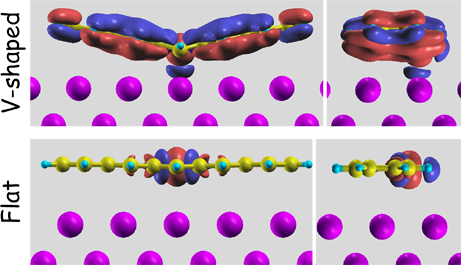
- lengths along the two directions are more similar, as we reported in Table 1. Still the molecule being inherently anisotropic determines the residual azimuthal dichroism reduced to approx. 1 eV. Reporting the initial state contributions in this energy range, the x-direction spectrum has largest




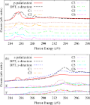
A single-source precursor route to anisotropic halogen-doped zinc oxide particles as a promising candidate for new transparent conducting oxide materials
Beilstein J. Nanotechnol. 2015, 6, 2161–2172, doi:10.3762/bjnano.6.222
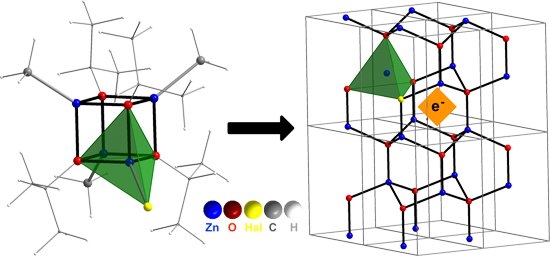
- have an anisotropic, elongated shape. In contrast, the particles of the pure ZnO material are not elongated (see Figure S5, Supporting Information File 1). High-resolution (HR) TEM measurements show the high crystallinity of the single Cl@ZnO nanocrystals (see also Figure S4, Supporting Information
- was seen that the presence of Cl leads to a widening of the ZnO lattice in a,b-direction, and as a consequence anisotropic nanoparticles with preferential growth in c-direction were obtained. The latter result represents an interesting perspective to understand and to control anisotropic particle



Distribution of Pd clusters on ultrathin, epitaxial TiOx films on Pt3Ti(111)
Beilstein J. Nanotechnol. 2015, 6, 2007–2014, doi:10.3762/bjnano.6.204
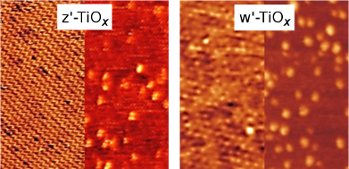
- Scanning tunnelling microscopy (STM) was used to investigate the nucleation and growth of palladium clusters on two different, ultrathin, epitaxial, titania films grown on a Pt3Ti(111) surface. The first oxide phase, z'-TiOx, is anisotropic and consists of parallel stripes separated by trenches. Defects
- z'-TiOx phase on Pt(111) [15]. The observed arrangement of the clusters is a consequence of the diffusion behaviour of the deposited metal atoms on this structurally anisotropic oxide surface. On the one hand the palladium–oxygen interaction is not very strong, permitting metal atom mobility at room
- temperature [19]. On the other hand, the trenches (1D depressions) guide the Pd atom diffusion preferentially along the grooves. Such anisotropic diffusion behaviour has been observed in the inverse system, namely the oxidation of Pd(110) leading to the growth of pronounced, elongated, oxide islands [20


Lower nanometer-scale size limit for the deformation of a metallic glass by shear transformations revealed by quantitative AFM indentation
Beilstein J. Nanotechnol. 2015, 6, 1721–1732, doi:10.3762/bjnano.6.176
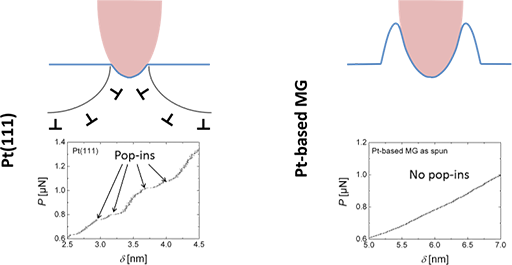
- Pt57.5Cu14.7Ni5.3P22.5 metallic glass. We attribute the distortion of the triangle to an anisotropic elastic relaxation of Pt(111). Figure 5 shows the load dependence of the pile-up volume Vpile up and the projected area Ap for Pt(111) and Pt57.5Cu14.7Ni5.3P22.5 metallic glass as extracted from nc-AFM images of indents



Possibilities and limitations of advanced transmission electron microscopy for carbon-based nanomaterials
Beilstein J. Nanotechnol. 2015, 6, 1541–1557, doi:10.3762/bjnano.6.158
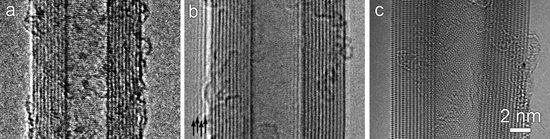
- al. commented that extended holes (rather than a knock-on vacancy) grow over a wide range from 20 to 100 keV, or even below 20 keV. A mechanism of beam-induced etching with residual water or oxygen in the system is therefore suggested [40]. The strong anisotropic tubular structure of CNTs leads to an


Peptide-equipped tobacco mosaic virus templates for selective and controllable biomineral deposition
Beilstein J. Nanotechnol. 2015, 6, 1399–1412, doi:10.3762/bjnano.6.145
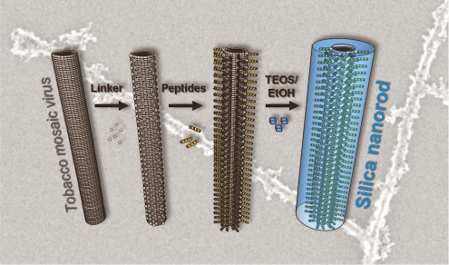
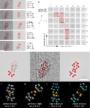
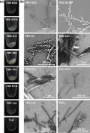
- because chemical synthesis or technical approaches applied at mild conditions commonly generate spherical structures [14]. Mineral nanofibers of predetermined size are of major importance for the preparation of functional films and extended 3D materials. Hence, anisotropic scaffolds such as high molecular




Nanomechanical humidity detection through porous alumina cantilevers
Beilstein J. Nanotechnol. 2015, 6, 1332–1337, doi:10.3762/bjnano.6.137
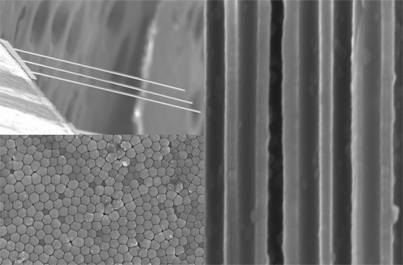
- foil with a conventional photolithography process (Figure 1). Using the lithography approach for AAO pattern formation mostly becomes possible due to selective and anisotropic etching of anodic alumina films on aluminium in basic solutions. On the other hand anodic oxidation itself enables easy control
- cantilever arrays in microsensors with ultra-low detection limits. The study has to be considered as an initial experiment to focus on the profound understanding of micromechanical behavior of anisotropic porous materials having a high specific surface area, such as anodic alumina films. Experimental



Polymer blend lithography for metal films: large-area patterning with over 1 billion holes/inch2
Beilstein J. Nanotechnol. 2015, 6, 1205–1211, doi:10.3762/bjnano.6.123
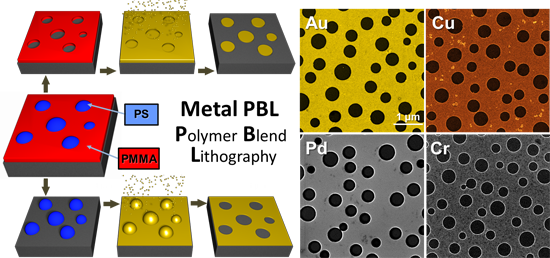
- hierarchical micro–nano structures for applications such as cell-adhesion studies [36][37]. Metals like Cr, Au or Cu are good etching resists. Therefore the metal masks could be used to amplify the topographic contrast by anisotropic etching into the substrate with techniques such as reactive ion etching [38
- be used for various applications, e.g., in cell adhesion studies, for the immobilization of biomaterials, for plasmonics such as optical filters or as resist layers for anisotropic reactive ion etching. The wavelength-selective optical transmission of our perforated films due to the localized surface


Magnetic properties of self-organized Co dimer nanolines on Si/Ag(110)
Beilstein J. Nanotechnol. 2015, 6, 777–784, doi:10.3762/bjnano.6.80
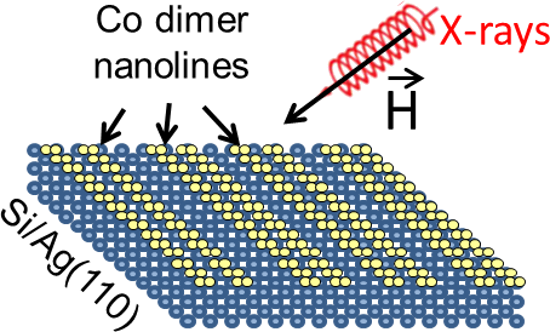
- /bjnano.6.80 Abstract We demonstrate the kinetically controlled growth of one-dimensional Co nanomagnets with a high lateral order on a nanopatterned Ag(110) surface. First, self-organized Si nanoribbons are formed upon submonolayer condensation of Si on the anisotropic Ag(110) surface. Depending on the
- as compared to the bulk material. Concerning 1D nanostructures, additional effects, especially with regards to magnetic anisotropy, are expected, related to their anisotropic shape [1][19][20]. Since metallic substrates are known to strongly influence the magnetic properties of the supported
- on the formation of the Si NRs, which are stable below 550 K and are subsequently used to guide the growth of the Co nanolines. In their pioneering work, Leandri et al. reported that upon submonolayer Si deposition at RT on the anisotropic Ag(110) surface, isolated Si NRs spontaneously form [23]. As


Mapping of elasticity and damping in an α + β titanium alloy through atomic force acoustic microscopy
Beilstein J. Nanotechnol. 2015, 6, 767–776, doi:10.3762/bjnano.6.79
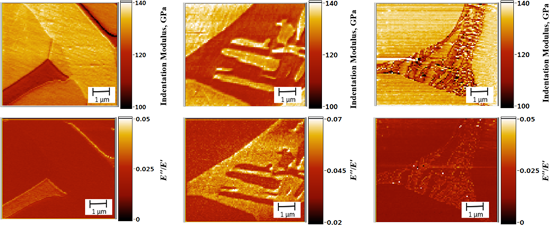
- be obtained by using the bulk E and ν values of the SHT at 1323 K. Kumar et al. [13] reported that the isotropic indentation modulus obtained with the bulk measurements does not vary much with the anisotropic modulus measured on different crystallographic planes. By using a similar approach, the


Electromagnetic enhancement of ordered silver nanorod arrays evaluated by discrete dipole approximation
Beilstein J. Nanotechnol. 2015, 6, 686–696, doi:10.3762/bjnano.6.69
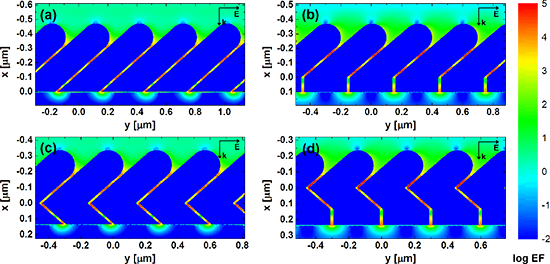
- mechanism in OAD AgNR arrays is still limited. In addition to EM mechanism, surface effect and anisotropic absorbance of molecules were proposed to interpret the SERS enhancement from the AgNR array substrate [18]. Limited systematic studies on OAD AgNR array structures and different measurement conditions
- were investigated except in the sections of structure dependence and excitation-wavelength dependence. Results and Discussion Extinction for isolated nanorods and nanorod arrays Typically, metal nanoparticle with anisotropic structure shows multiple plasmon resonances associated with different modes


In situ observation of biotite (001) surface dissolution at pH 1 and 9.5 by advanced optical microscopy
Beilstein J. Nanotechnol. 2015, 6, 665–673, doi:10.3762/bjnano.6.67
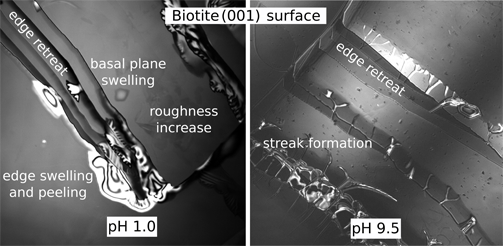
- locations. These observations are in accordance with the results of recent studies that argue about the validity of an average dissolution rate value for complex minerals [32][33]. The novel concept of a rate spectrum was introduced for the complex anisotropic dissolution of mineral surfaces; this implies


Overview of nanoscale NEXAFS performed with soft X-ray microscopes
Beilstein J. Nanotechnol. 2015, 6, 595–604, doi:10.3762/bjnano.6.61
- thin film devices (SrTiO3) could be demonstrated [64]. The change of resistance in a RRAM device could be assigned to a redox-process. The switching filament could be allocated to extended growth defects which are already present in the virgin films. Synthesis of anisotropic core-shell Fe3O4@Au


Conformal SiO2 coating of sub-100 nm diameter channels of polycarbonate etched ion-track channels by atomic layer deposition
Beilstein J. Nanotechnol. 2015, 6, 472–479, doi:10.3762/bjnano.6.48
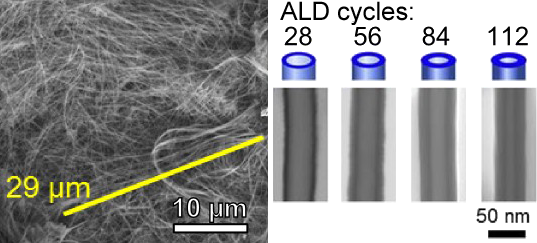
- respect to the X-ray beam (e.g., γ = 20°), the SAXS patterns become highly anisotropic consisting of a narrow streak parallel to the axis of rotation. This pronounced dependence on the angle originates from the large length-to-diameter ratio of the channels. The scattered intensity, I(q), in the streak is


Electrical response of liquid crystal cells doped with multi-walled carbon nanotubes
Beilstein J. Nanotechnol. 2015, 6, 396–403, doi:10.3762/bjnano.6.39
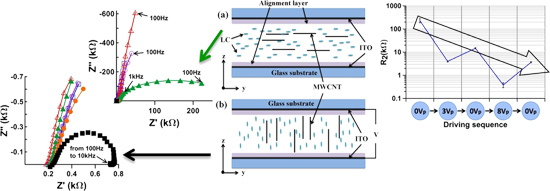
- characteristic impedance has been studied at different frequencies and excitation voltages. The results demonstrate alterations in the anisotropic conductivity of the samples with the applied electric field, which can be followed by monitoring the impedance evolution with the excitation voltage. Results are
- semiconductive, while in multi-walled CNTs (MWCNT) it is always metallic [10]. The almost one-dimensional structure leads to a long-range ballistic electron transport in metallic CNTs [10][11]. LCs are self-organized anisotropic fluids, whose long-range orientation (called director) can be induced by surface
- LC cells under different conditions seems to be missing. This could be achieved by studying the impedance evolution of the doped cells with voltage and frequency. Indeed, the electrical response may be fairly complex since dielectric and anisotropic conductive elements are present in the system. The


Synthesis, characterization, monolayer assembly and 2D lanthanide coordination of a linear terphenyl-di(propiolonitrile) linker on Ag(111)
Beilstein J. Nanotechnol. 2015, 6, 327–335, doi:10.3762/bjnano.6.31
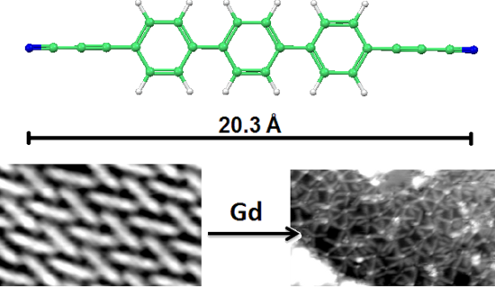
- single crystal X-ray structure analysis at 180 K. Compound 2 crystallizes in a monoclinic system with space group P21/n, while 3 crystallizes in the triclinic system with space group P-1. The anisotropic displacement ellipsoids and atom labelling (ORTEP plots) of compounds 2 and 3 are shown in Figure 2a
- . The structures were solved by direct methods (SHELX-97) [56]. Refinement was performed with anisotropic temperature factors for all non-hydrogen atoms. Crystal data and the results of the refinement are collected in Supporting Information File 1, Tables S1–4. Molecular diagrams were prepared using


Inorganic Janus particles for biomedical applications
Beilstein J. Nanotechnol. 2014, 5, 2346–2362, doi:10.3762/bjnano.5.244
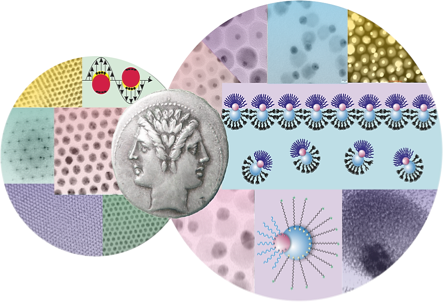
- are the formation of anisotropic, namely elongated structures, whereby the variation of the aspect ratio allows control of the electron–hole overlap. This leads to an exceptional size-dependent quantum Stark effect due to the increased spatial volume enabling effective charge carrier separation [20
- -restricted for small differences in lattice constants. For large differences, however, the growth is confined to distinct crystal planes by minimizing the lattice mismatch, which in turn leads to the formation of anisotropic structures [54][62]. At the same time, despite lattice match, it is possible to
- corona increases the complexity even more. Figure 18 shows a comparison of the composition of the protein corona for isotropic Fe3O4@SiO2 and MnO@SiO2 as well as anisotropic Au@MnO@SiO2 Janus particles. As was observed for pure SiO2 nanoparticles [114], a significant enrichment of lipoproteins and






Two-dimensional and tubular structures of misfit compounds: Structural and electronic properties
Beilstein J. Nanotechnol. 2014, 5, 2171–2178, doi:10.3762/bjnano.5.226
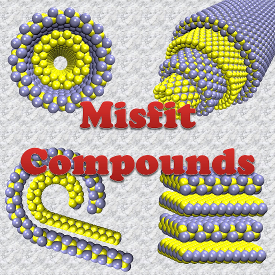
- performed by Auriel et al. [42] showed a highly anisotropic metallic behaviour of misfit layer compounds; some of them even showed a transition to superconductivity at temperatures less than 6 K. A small intrinsic charge transfer could explain such physical properties. However, it is quite improbable that


Nanometer-resolved mechanical properties around GaN crystal surface steps
Beilstein J. Nanotechnol. 2014, 5, 2164–2170, doi:10.3762/bjnano.5.225
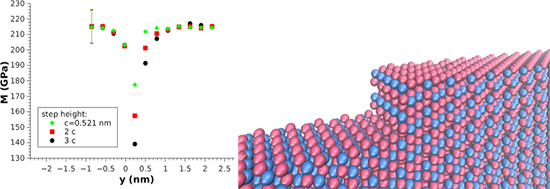
- presented by Vlassak and Nix [20], who connected the indentation modulus to the Barnett–Lothe tensors for anisotropic materials [21]. For the one-atom indentation, (Figure 3), M behaves similarly to stress fluctuations with better convergence below the step and a similar decrease in the elastic constants on


![[Graphic 3]](/bjnano/content/inline/2190-4286-5-225-i13.png?max-width=637&scale=1.18182) along the y-axis of the upper Ga atom...
along the y-axis of the upper Ga atom...





