


Search results
Search for "calibration" in Full Text gives 358 result(s) in Beilstein Journal of Nanotechnology. Showing first 200.
Synthesis of rare-earth metal and rare-earth metal-fluoride nanoparticles in ionic liquids and propylene carbonate
Beilstein J. Nanotechnol. 2018, 9, 1881–1894, doi:10.3762/bjnano.9.180
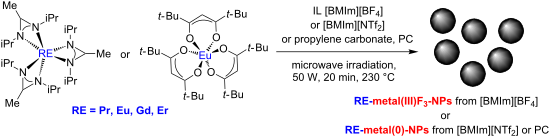
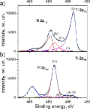
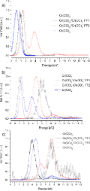
- and a sample angle of 33°. Spectra were recorded using polychromatic Al Kα excitation (11 kV, 20 mA) and an emission angle of 0°. Calibration of the XPS was carried out by recording spectra with Al Kα X-rays from clean samples of copper, silver and gold at 50 eV and 10 eV pass energy and comparison


Closed polymer containers based on phenylboronic esters of resorcinarenes
Beilstein J. Nanotechnol. 2018, 9, 1594–1601, doi:10.3762/bjnano.9.151
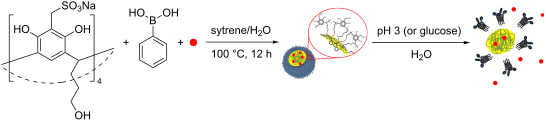
- -convolution effect has been minimized by processing the obtained AFM data with the use of WSxM 5.0, Zod 2.0 and MatLAB software [52][53]. The calibration has been performed by using an imaging special calibration grid (STR3-1800P, VLSI Standards Inc.) in the temperature range of 20–60 °C. A Zetasizer Nano


Colorimetric detection of Cu2+ based on the formation of peptide–copper complexes on silver nanoparticle surfaces
Beilstein J. Nanotechnol. 2018, 9, 1414–1422, doi:10.3762/bjnano.9.134
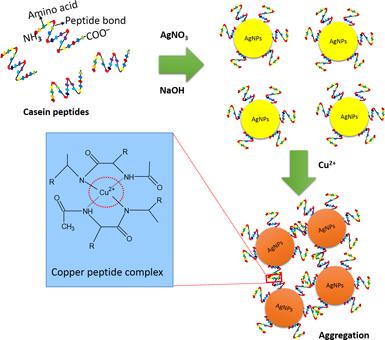
- calibration curve, correlation coefficients (R2), and limit of detection (LOD) were studied using coordination peptides number approach. In all three instances, a linear correlation existed between the absorbance at 520 nm and the Cu2+ concentration over the ranges of 0.08–0.4, 0.08–0.72, and 0.08–1.44 µM Cu2


Electrostatically actuated encased cantilevers
Beilstein J. Nanotechnol. 2018, 9, 1381–1389, doi:10.3762/bjnano.9.130
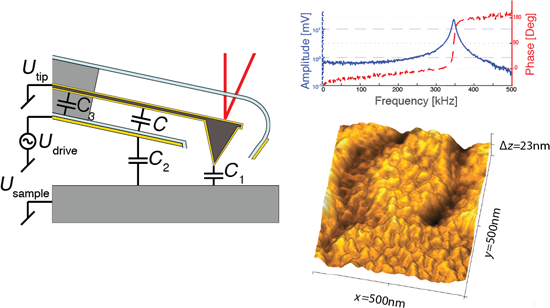
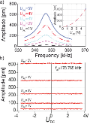
- capacitor model to describe the electrostatic actuation. The predicted deflection and amplitudes match experimental results within a few percent. Consequently, target amplitudes can be set by the drive voltage without requiring calibration of optical lever sensitivity. Furthermore, the excitation bandwidth
- , or vacuum environments. Keywords: amplitude calibration; atomic force microscopy; electrostatic excitation; encased cantilevers; liquid AFM; Introduction Dynamic atomic force microscopy requires excitation of the cantilever oscillation. Most commonly, this is achieved using a dither piezo built
- . Table 1 below compares all model-based results with the experimentally found values. Discussion Calibration and validity of model We find that our simple parallel-capacitor model overestimates static actuation by only a few percent. Considering the drastic simplifications of the electrode and tip




Enzymatically promoted release of organic molecules linked to magnetic nanoparticles
Beilstein J. Nanotechnol. 2018, 9, 986–999, doi:10.3762/bjnano.9.92
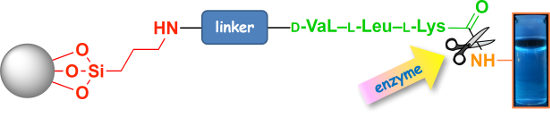
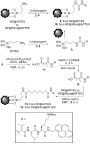
- generated a calibration curve to quantify the released pyrenylmethylamine through HPLC with a variable wavelength detector (HPLC-VWD) (see Supporting Information File 1). First, the Boc protecting group was removed with trifluoroacetic acid/CH2Cl2. Then the two types of nanoparticles (NP@APTES with
- sampling could lead to errors due to the heterogeneity of the mixture. Thus, after 72 h at 37 °C, the mixtures were washed several times with MeOH and the washings were diluted to a precise volume. By comparison with a calibration curve, the sample injected into the HPLC-VWD allowed the liberated μmols of
- by a factor of 20 (thus to 500 μL). The quantitative determination of 1-pyrenylmethylamine was carried out through a calibration curve (see Supporting Information File 1), and resulted in 26 μg/mL = 13.0 μg (56.1 nmol). The percent of pyrenylmethylamine released is thus 7.1%. HPLC conditions. Column




Automated image segmentation-assisted flattening of atomic force microscopy images
Beilstein J. Nanotechnol. 2018, 9, 975–985, doi:10.3762/bjnano.9.91
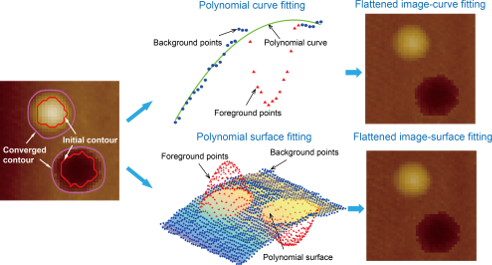
- features for image flattening. Additionally, a standard calibration grating (10 µm-pitch grid, Bruker) with a nominal depth of 180 nm was also applied to demonstrate the role of image flattening on morphological characterization of AFM images. All AFM images used in this study were obtained on a commercial
- . Therefore, image flattening needs to be implemented before analysis. Here we take an AFM image of a standard calibration grating as an example to validate the importance of image flattening in morphological characterization. The raw AFM image of the grating is shown in Figure 9a. The image exhibits a
- direction. The optimized flattening result can be obtained when the drift direction and the fitting direction are perpendicular to each other. Morphological characterization of a standard AFM calibration grating with and without flattening. (a) The raw AFM image of the standard calibration grating. (b


Comparative study of sculptured metallic thin films deposited by oblique angle deposition at different temperatures
Beilstein J. Nanotechnol. 2018, 9, 954–962, doi:10.3762/bjnano.9.89
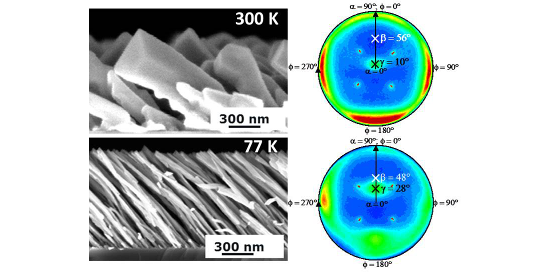
- (LN2) through the Cu-block sample holder. The substrate temperature was controlled by two independent K-type thermocouples that were mounted directly on the surface of the LN2-sample holder. Another thermocouple of the same type was directly put into liquid nitrogen to ensure a precise calibration



Facile chemical routes to mesoporous silver substrates for SERS analysis
Beilstein J. Nanotechnol. 2018, 9, 880–889, doi:10.3762/bjnano.9.82
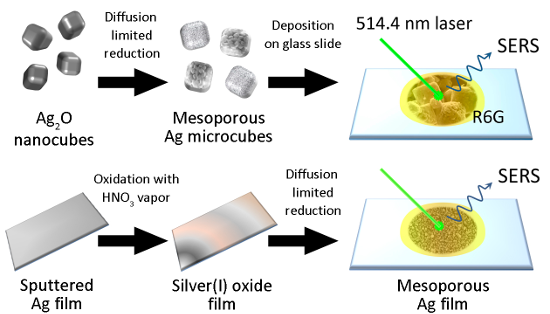
- up to 2.5 μm) with a 50× objective lens. The diffraction grating was 2400 lines/mm, and the CCD camera had 1024 × 256 pixels. A standard (100) single crystalline silicon substrate was used for calibration. The analyte droplets (about 1–2 μL) were placed on the substrate and measured within ten


Comparative study of antibacterial properties of polystyrene films with TiOx and Cu nanoparticles fabricated using cluster beam technique
Beilstein J. Nanotechnol. 2018, 9, 861–869, doi:10.3762/bjnano.9.80
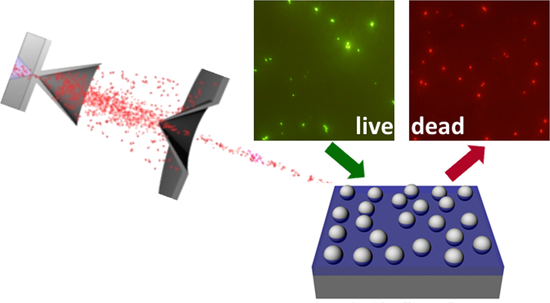
- not directly discriminate between live and dead cells but a decreasing or a stagnating number of cells mean an increasing amount of dead cells in the medium, because the number of cells should increase exponentially under conventional growth conditions. Thus, this calibration procedure allows to




Heavy-metal detectors based on modified ferrite nanoparticles
Beilstein J. Nanotechnol. 2018, 9, 762–770, doi:10.3762/bjnano.9.69
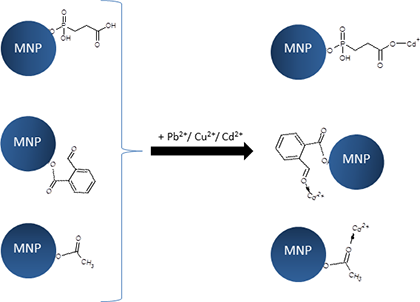
- background correction technique with reference was used. The quantitative determination of Pb, Cd, and Cu was carried out by the external calibration graph technique. Synthesis of ferrite nanoparticles doped with Ca2+, Co2+, Mn2+, or Ni2+ To obtain doped ferrite nanoparticles, a modified co-precipitation


Synthesis and characterization of two new TiO2-containing benzothiazole-based imine composites for organic device applications
Beilstein J. Nanotechnol. 2018, 9, 721–739, doi:10.3762/bjnano.9.67
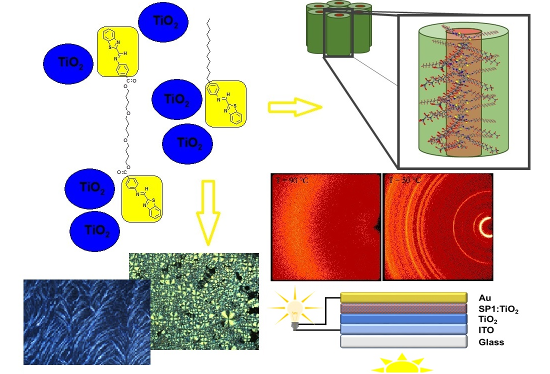
- heating stage. A Perkin Elmer DSC8000 calorimeter was used for calorimetric measurements. The temperature calibration procedure was done based on the onset of the melting point of water and indium. The sample was hermetically sealed in an aluminum pan of 30 μL. The temperature-dependent Fourier transform






Optimisation of purification techniques for the preparation of large-volume aqueous solar nanoparticle inks for organic photovoltaics
Beilstein J. Nanotechnol. 2018, 9, 649–659, doi:10.3762/bjnano.9.60
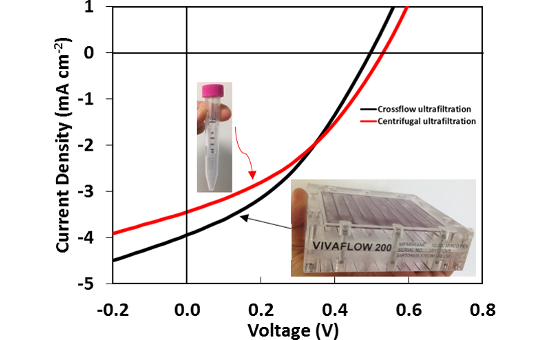
- saturation at high SDS content as the calibration samples (Supporting Information File 1, Figure S1B) clearly show detection of SDS at much higher absorbance (lower SDS content) than where the ASNP ink saturate. Thus it is clear the samples reach a fixed SDS content of 0.3–0.35 mg mL−1 beyond which no
- the centrifugal and crossflow ultrafiltration, the filtrates with low dilution factors have lower constant surface tensions, which then increase sharply with increasing dilution factors before plateauing at high dilution factor. Using the calibration curve for absorption vs SDS concentration
- samples consisting of 1 mL of filtrate mixed with 2 mL of a 22.5 µM MB stock solution. The UV–vis spectra of the reference (1 mL of water and 2 mL MB stock solution) and calibration standards (SDS solutions with concentrations 0.01, 0.05, 0.1, 0.5, 1,.., 3.5 mg mL−1) are shown in Supporting Information


Sensing behavior of flower-shaped MoS2 nanoflakes: case study with methanol and xylene
Beilstein J. Nanotechnol. 2018, 9, 608–615, doi:10.3762/bjnano.9.57
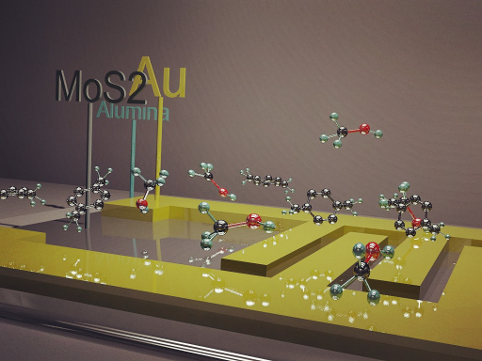
- higher than for xylene, as the calibration curve indicated a linear response to increasing concentration. In addition, the simulation results showed that xylene interacts with defect sites while methanol can interact with both the pristine and the defect sites, leading to higher sensitivity, which
- temperature, (b) for 400 ppm at different working temperatures. (a) Calibration curves of flower-shaped MoS2 nanoflakes towards xylene and methanol at 200 °C; (b) the sensitivity of the samples towards 400 ppm of CO, CH4, H2, xylene, and methanol at different working temperatures. The optimized structure of


Lyapunov estimation for high-speed demodulation in multifrequency atomic force microscopy
Beilstein J. Nanotechnol. 2018, 9, 490–498, doi:10.3762/bjnano.9.47
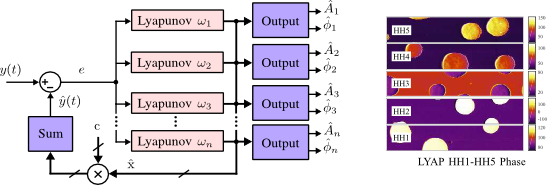
- have fundamental resonance frequencies of 168.8 kHz and 46.1 kHz, respectively. The samples used are a z-calibration grating (NT-MDT TGZ3) with periodic height features of approx. 500 nm and a blend of polystyrene (PS) and polyolefin elastomer (LDPE) available from Bruker (PS-LDPE-12M). Due to the
- different elastic moduli of the PS and LPDE regions, the sample is widely used for qualitative imaging the material contrast. Imaging a TGZ3 calibration grating Higher-harmonic amplitude images with the first, second, third, sixth and seventh harmonics were obtained by the MF-LYAP and multiple parallel LIAs
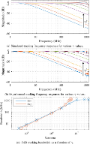
- /LPDE calibration grating Higher-harmonic phase images were obtained for the first five harmonics of a Bruker DMASP cantilever. The frequency response of the cantilever in free air and the power spectrum of its deflection signal during contact are shown in Figure 10. Here, the fundamental resonance





Electron interaction with copper(II) carboxylate compounds
Beilstein J. Nanotechnol. 2018, 9, 384–398, doi:10.3762/bjnano.9.38
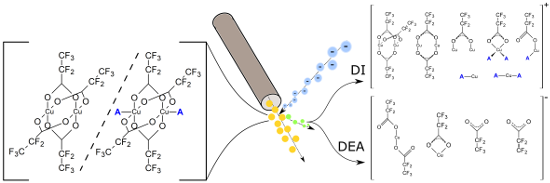
- ) energy, ε is electron energy and a, d are independent fitting parameters. Calibration of the electron energy has been carried out by measurement of the ionization potential of Ar atoms and calibration to its known value 15.76 eV [56] and with reference to the maximum of the electron attachment resonance
- cylindrical electrostatic analyzer. In the present measurements, electrons pass through an analyzer at the fixed predefined energy, while the potential of the analyzer is varied with respect to the target chamber. An energy calibration was carried out by measuring known argon and xenon ionization potentials


The nanofluidic confinement apparatus: studying confinement-dependent nanoparticle behavior and diffusion
Beilstein J. Nanotechnol. 2018, 9, 301–310, doi:10.3762/bjnano.9.30
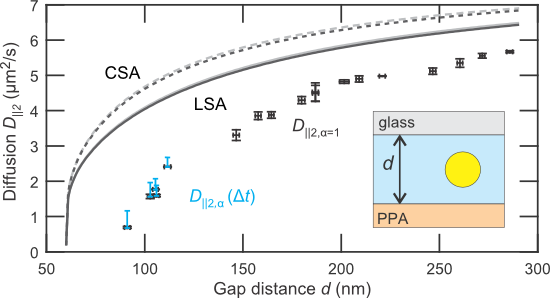
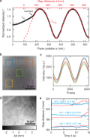
- obtained without the need of additional height calibration using immobilized particles [23]. The red line illustrates the modeled contrast of a particle positioned in the middle of the gap. The contrast modeled as a function of gap distance d and particle height h is shown as grayscale background in Figure



Response under low-energy electron irradiation of a thin film of a potential copper precursor for focused electron beam induced deposition (FEBID)
Beilstein J. Nanotechnol. 2018, 9, 57–65, doi:10.3762/bjnano.9.8
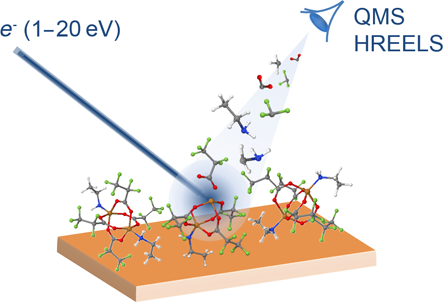
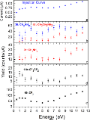
- fragmentation channel likely to occur during focused electron beam irradiation, especially if its desorption is high in the range of 0–5 eV . The ESD spectra of selected fragments are presented in Figure 3. Figure 3a is used for the energy calibration (see Experimental section). Figure 3b shows the detection of



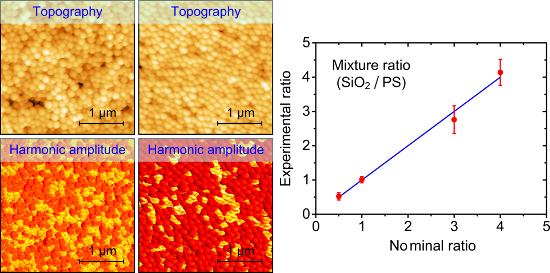
Material discrimination and mixture ratio estimation in nanocomposites via harmonic atomic force microscopy
Beilstein J. Nanotechnol. 2017, 8, 2771–2780, doi:10.3762/bjnano.8.276
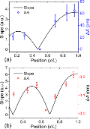
- thermal calibration method [39]. For amplitude calibration the inverse optical lever sensitivity in units of nm/V was determined via a noncontact method proposed by M. J. Higgins et al. [36]. The noise level of the AFM optical detector was less than 60 μV, which corresponds to an amplitude noise of




Interactions of low-energy electrons with the FEBID precursor chromium hexacarbonyl (Cr(CO)6)
Beilstein J. Nanotechnol. 2017, 8, 2583–2590, doi:10.3762/bjnano.8.258
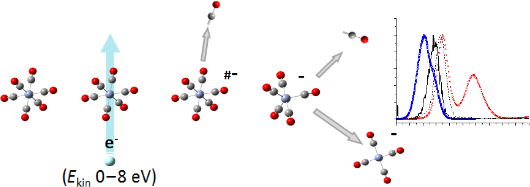
- electric field was kept constant at electron energies of ca. 70 eV. For the study of dissociative electron attachment, the calibration of the incident electron energy scale was done by measuring the SF6− and F− resonances of SF6. The electron energy resolution was approximately 1 eV (FWHM) [27



Nanoprofilometry study of focal conic domain structures in a liquid crystalline free surface
Beilstein J. Nanotechnol. 2017, 8, 2544–2551, doi:10.3762/bjnano.8.254
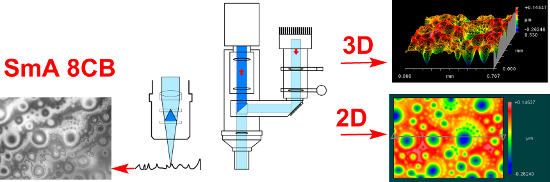
- of our study with other contributions on FCDs shows good quantitative correlation of the dimensions of the domains. This is an important result for nanoprofilometer calibration because it delivers calculated images. The FCD properties qualitatively correlate with theoretical predictions of [8




Direct writing of gold nanostructures with an electron beam: On the way to pure nanostructures by combining optimized deposition with oxygen-plasma treatment
Beilstein J. Nanotechnol. 2017, 8, 2530–2543, doi:10.3762/bjnano.8.253
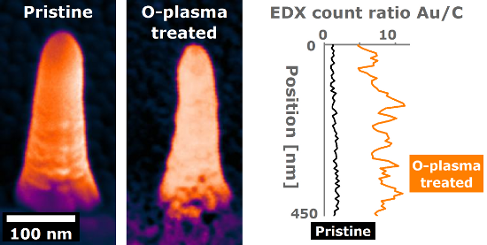
- in Figure 1e had been deposited for 8.5 h while the working pressure during the introduction of precursor gas was maintained at 1.2 × 10⁻⁵ mbar. In a calibration experiment with nitrogen gas a chamber pressure of 1.2 × 10⁻⁵ mbar corresponded to a flux of 0.11 sccm. During such a long experiment the

Synthesis of metal-fluoride nanoparticles supported on thermally reduced graphite oxide
Beilstein J. Nanotechnol. 2017, 8, 2474–2483, doi:10.3762/bjnano.8.247
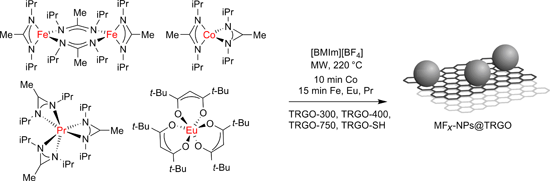
- recorded using polychromatic Al Kα excitation (14 kV, 20 mA) at an emission angle of 0°. Calibration was carried out by recording spectra with Al Kα X-rays from clean samples of copper, silver and gold at 20 eV and 10 eV pass energies and comparison with reference values. Powder X-ray diffractograms, PXRDs


Strategy to discover full-length amyloid-beta peptide ligands using high-efficiency microarray technology
Beilstein J. Nanotechnol. 2017, 8, 2446–2453, doi:10.3762/bjnano.8.243
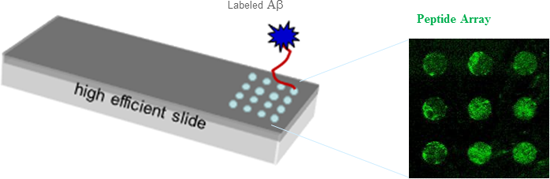
- are detailed in Supporting Information File 1. Briefly, solutions of known concentrations ranging from 0.01 to 1 μM of Cy3-Aβ40 were dispensed on the functionalized HSE (Figure S3, Supporting Information File 1). The calibration curve of the fluorescence intensity as a function of the amyloid
- concentration is reported in Figure S4 (Supporting Information File 1). A value of ca. 103 amyloid molecules captured per square micrometer was achieved. In order to find potential improvements of method, and to determine the limits of detection (LOD), a scanarray acquisition of the calibration slide was


Optical contrast and refractive index of natural van der Waals heterostructure nanosheets of franckeite
Beilstein J. Nanotechnol. 2017, 8, 2357–2362, doi:10.3762/bjnano.8.235
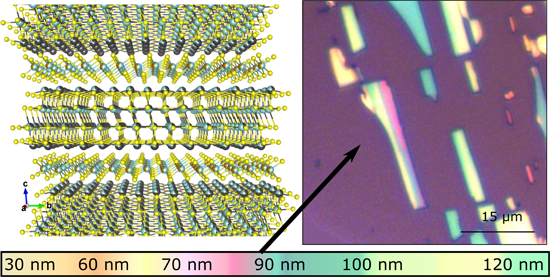
- material is isolated one of the most urgent things is to establish a correlation between the thicknesses of the exfoliated flakes and their optical contrast (in order to be used as a calibration guide to identify ultrathin flakes optically) and to determine the optimal substrates to identify ultrathin


Evaluating the toxicity of TiO2-based nanoparticles to Chinese hamster ovary cells and Escherichia coli: a complementary experimental and computational approach
Beilstein J. Nanotechnol. 2017, 8, 2171–2180, doi:10.3762/bjnano.8.216
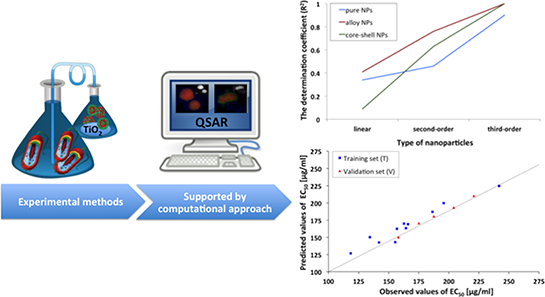
- determination coefficient (R2) for training set, bagging validation coefficient (R2bagging) for bagging set, external validation coefficient (Q2EXT), and root-mean-square errors of calibration for the training set (RMSEC), and root-mean-square errors of validation (RMSEP) for the test set (see Equation 4-7) [55





