Search results
Search for "catalysts" in Full Text gives 315 result(s) in Beilstein Journal of Nanotechnology. Showing first 200.
Fabrication of CeO2–MOx (M = Cu, Co, Ni) composite yolk–shell nanospheres with enhanced catalytic properties for CO oxidation
Beilstein J. Nanotechnol. 2017, 8, 2425–2437, doi:10.3762/bjnano.8.241
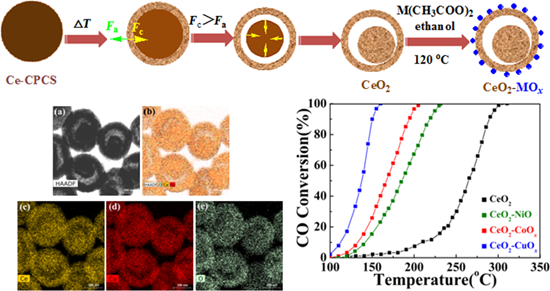
- conversion as reached at a relatively low temperature of 145 °C over the CeO2–CuOx-2 sample. Furthermore, the CeO2–CuOx catalyst is more active than the CeO2–CoOx and CeO2–NiO catalysts, indicating that the catalytic activity is correlates with the metal oxide. Additionally, this versatile synthesis approach
- (CeO2) has attracted a great deal of research attention due to its high oxygen storage capacity (OSC) and good redox properties [1][2][3]. Because of these unique characteristics, CeO2 has been widely used as environmental catalysts for the removal of harmful pollutants from exhaust gases, such as
- noble metal-based catalysts in some catalytic reactions [11][12]. So far, a remarkable process has been developed for the synthesis of CeO2-based composite oxides, including CeO2–CuOx [13], CeO2–ZnCo2O4 [14], CeO2–CoOx [15], CeO2–MnOx [16], CeO2–ZnO [17], CeO2–Fe2O3 [18], and CeO2–ZrO2 systems [19






Comparing postdeposition reactions of electrons and radicals with Pt nanostructures created by focused electron beam induced deposition
Beilstein J. Nanotechnol. 2017, 8, 2410–2424, doi:10.3762/bjnano.8.240
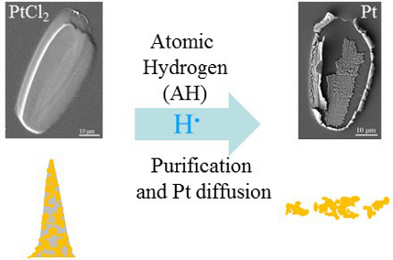
- surface area Pt catalysts and may reverse the effects of sintering. In marked contrast to the effect observed with AH, densification of the structure was observed during the postdeposition purification of PtCx deposits created from MeCpPtMe3 using atomic oxygen (AO), although the limited penetration depth
- of highly porous Pt structures, and in some instances, to a loss of structural integrity, neither of which are desirable for FEBID structures. These porous structures could, however, have interesting applications, for example, as high surface area catalysts. This phenomenon of AH-mediated dispersion
- applications, but potentially useful in reversing the effects of sintering in catalysis and in creating high surface area catalysts. The purification of PtCx deposits created from MeCpPtMe3 using AO was found to exhibit many of the same characteristics of postdeposition purification using electron beam




Hydrothermal synthesis of ZnO quantum dot/KNb3O8 nanosheet photocatalysts for reducing carbon dioxide to methanol
Beilstein J. Nanotechnol. 2017, 8, 2264–2270, doi:10.3762/bjnano.8.226
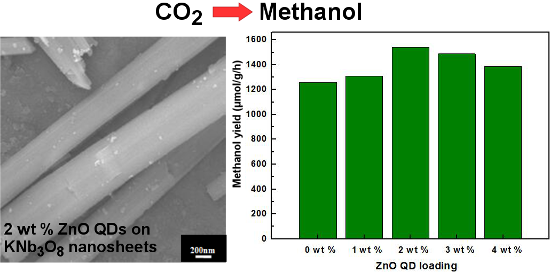
- ) 2.0 M; (d) 3.0 M; (e) 4.0 M. X-ray diffraction patterns of catalysts loaded with different amounts of ZnO quantum dots: (a) pure KNb3O8; (b) 1 wt % ZnO–KNb3O8; (c) 2 wt % ZnO–KNb3O8; (d) 3 wt % ZnO–KNb3O8; (e) 4 wt % ZnO–KNb3O8. SEM images (some with higher resolution) of different ZnO loadings on




Dissociative electron attachment to coordination complexes of chromium: chromium(0) hexacarbonyl and benzene-chromium(0) tricarbonyl
Beilstein J. Nanotechnol. 2017, 8, 2257–2263, doi:10.3762/bjnano.8.225
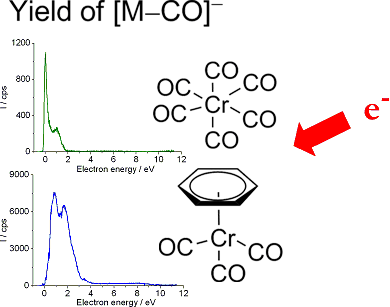
- ; dissociative electron attachment; gas phase reactions; mass spectrometry; Introduction Organometallic compounds are a large class of compounds with numerous applications such as homogeneous catalysts for the synthesis of fine chemicals or even enantiomerically pure products used in the pharmaceutical industry
Synthesis and characterization of noble metal–titania core–shell nanostructures with tunable shell thickness
Beilstein J. Nanotechnol. 2017, 8, 2083–2093, doi:10.3762/bjnano.8.208
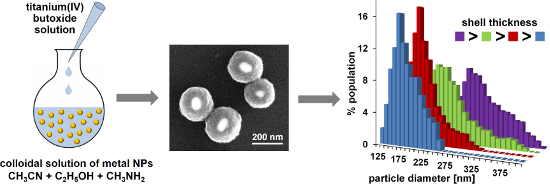
- , methylamine, was then added to a suspension of NPs. The role of the amine catalysts is to transfer a proton from the water molecule to the oxygen atoms in titanium alkoxide molecules. As a result, good leaving groups of alcohols are formed, which are then easily replaced by hydroxide anions. In the next step
- introduced to the reaction mixture in a controlled way from two sources, NPs suspensions (≈199 µL) and amine catalysts solutions (≈24 µL of water), before addition of the shell precursor. The total volume of added water to the reaction mixture was kept constant, which allowed the control of thicknesses of


Freestanding graphene/MnO2 cathodes for Li-ion batteries
Beilstein J. Nanotechnol. 2017, 8, 1932–1938, doi:10.3762/bjnano.8.193
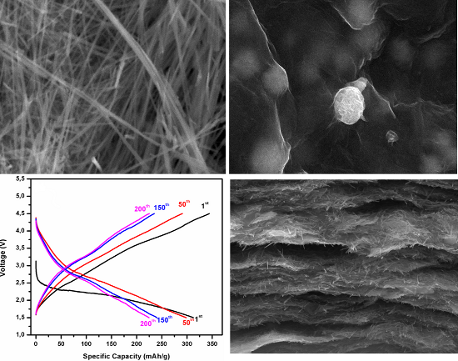
- low cost [7]. It has gained a great deal of attention because of its wide application in areaa such as catalysts for Li–air batteries [8], molecular sieves [9] and electrodes in rechargeable batteries [10][11][12]. However, its drastic volume change, aggregation problems, and poor electronic


Synthesis and catalytic application of magnetic Co–Cu nanowires
Beilstein J. Nanotechnol. 2017, 8, 1769–1773, doi:10.3762/bjnano.8.178
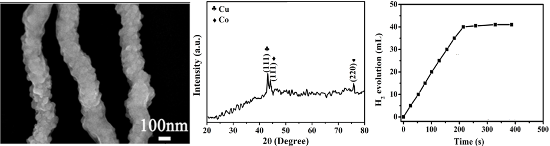
- run. Table 1 compares the catalytic activity in terms of TOF values of different catalysts used for the hydrolysis of AB. It is clear that Co–Cu nanowires possess enhanced performance as compared to the other catalysts listed in Table 1, and they were much less expensive than these precious metal
- material based catalysts. Therefore, Co–Cu nanowires show a great promise in the prospect of catalytic systems. Conclusion In summary, magnetic bimetallic Co–Cu nanowires were successfully synthesized by a rapid, inexpensive, template-free method under an external magnetic field for the first time. The SEM
- plots of catalytic hydrolysis of AB and (c) hydrogen generation from AB catalyzed by bimetallic Co–Cu nanowires from the 1st to 4th cycles. Catalytic activity of different catalysts used for the hydrolysis of AB. Acknowledgements This work was funded by the National Natural Science Foundation of China


Fluorination of vertically aligned carbon nanotubes: from CF4 plasma chemistry to surface functionalization
Beilstein J. Nanotechnol. 2017, 8, 1723–1733, doi:10.3762/bjnano.8.173
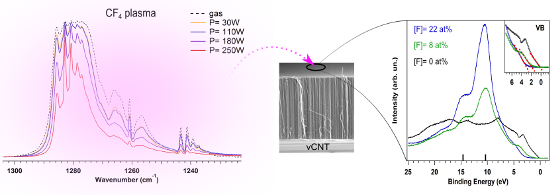
- vapor deposition (CCVD) at atmospheric pressure. The catalysts are prepared by magnetron sputtering: a 30 nm Al2O3 buffer layer is deposited on Si wafers with native SiO2 and a 6 nm Fe layer is then deposited to form nanoparticles which catalyse the vCNT growth. Then, the substrate is placed inside the




Two-dimensional carbon-based nanocomposites for photocatalytic energy generation and environmental remediation applications
Beilstein J. Nanotechnol. 2017, 8, 1571–1600, doi:10.3762/bjnano.8.159
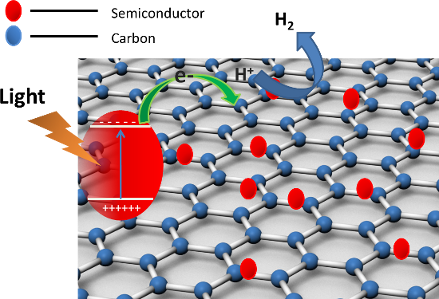
- charge transfer and better catalytic dispersion to enhance the photocatalytic activity. The 2D carbon-based nanomaterials combine several of the above-mentioned advantages of both 2D and carbon-based materials, and have shown great prospects as catalysts for various applications. As this is currently an
- the g-C3N4–BiVO4 nanocomposite and the comparative rate of rate of O2 evolution for various prepared catalysts along with control samples. It is well known that perovskite-type oxides (ABO3) constitute one of the promising classes of materials with diverse properties [148]. The main advantage of using


Low-temperature CO oxidation over Cu/Pt co-doped ZrO2 nanoparticles synthesized by solution combustion
Beilstein J. Nanotechnol. 2017, 8, 1546–1552, doi:10.3762/bjnano.8.156

- .8.156 Abstract Zirconia (ZrO2) nanoparticles co-doped with Cu and Pt were applied as catalysts for carbon monoxide (CO) oxidation. These materials were prepared through solution combustion in order to obtain highly active and stable catalytic nanomaterials. This method allows Pt2+ and Cu2+ ions to
- , cigarettes, proton-exchange membrane fuel cells, air purifiers, methanol production and water-gas shift reaction [1][2][3][4]. The catalytic oxidation of CO was revolutionized by Haruta et al. [5]. They worked on supported nanogold catalysts and found them to be highly active for CO oxidation. Till date
- , different types of catalysts including monometallic (e.g., Pt, Pd, Rh, Au, Ni, Co and Sn), bimetallic (e.g., Pd–Au, Pd–Rh, Pt–Co, Cu–Rh, Au–Cu and Au–Ag) along with various types of supports (e.g., CeO2, SiO2, Al2O3, Co3O4, Fe2O3, activated carbon (AC), carbon nanotubes (CNTs) and ZrO2) have been reported




Synthesis of [Fe(Leq)(Lax)]n coordination polymer nanoparticles using blockcopolymer micelles
Beilstein J. Nanotechnol. 2017, 8, 1318–1327, doi:10.3762/bjnano.8.133
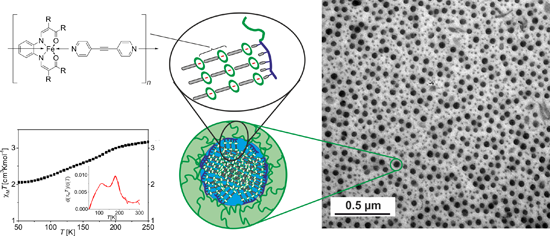
- networks are of great interest in current research because of their various applications as sensors, data-storage devices, catalysts or contrast agents [1][2][3][4][5]. For these applications the formation of stable, uniform and monodisperse particles with defined properties is necessary. Synthetic



Preparation of thick silica coatings on carbon fibers with fine-structured silica nanotubes induced by a self-assembly process
Beilstein J. Nanotechnol. 2017, 8, 1145–1155, doi:10.3762/bjnano.8.116
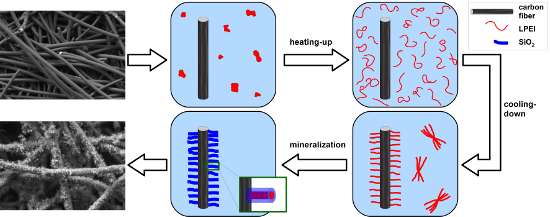
- resistance, could be advantageous compared with the traditional powder or pellet form of silica based catalysts. For example, Joule heating of the contiguous carbon fiber felts offers additional benefits regarding desorption for their in situ regeneration in volatile organic compounds treatment processes [2
- fibers was conducted with 30 vol % tetramethyl orthosilicate (TMOS) in a mixture of water and ethanol (one-to-one by volume) within 40 min. The presence of the polyamine catalysts facilitates the silica deposition, and furthermore, the localization of the silica on the carbon fiber surface. The presence


Growth, structure and stability of sputter-deposited MoS2 thin films
Beilstein J. Nanotechnol. 2017, 8, 1115–1126, doi:10.3762/bjnano.8.113
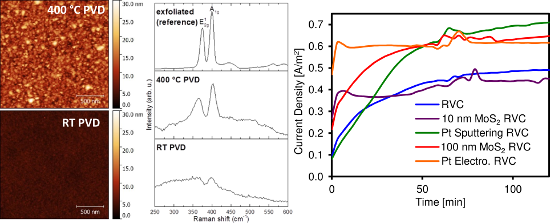
- , Austria Institute of Life Technologies, HES-SO Valais-Wallis, Route du Rawyl 64, CP, 1950 Sion 2, Switzerland 10.3762/bjnano.8.113 Abstract Molybdenum disulphide (MoS2) thin films have received increasing interest as device-active layers in low-dimensional electronics and also as novel catalysts in
- amorphous MoS2 films, deposited via simple electro-polymerization procedures, the precatalysts could be MoS3 or MoS2; the active form of the catalysts was identified as amorphous MoS2 [19]. Narrow molybdenum disulfide nanosheets with the edge-terminated structure and a significantly expanded interlayer were
- synthesized through reduction and microwave heating [18]. The expanded interlayer distance with modified electronic structure is also responsible for the observed catalytic improvement, which suggests a potential way to design newly advanced molybdenum disulfide catalysts through modulating the interlayer


Fully scalable one-pot method for the production of phosphonic graphene derivatives
Beilstein J. Nanotechnol. 2017, 8, 1094–1103, doi:10.3762/bjnano.8.111
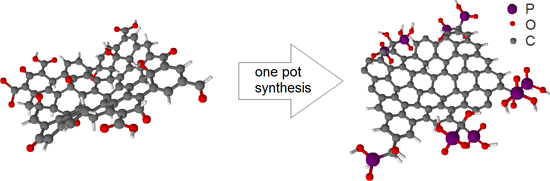
- , selective adsorbents and catalysts, is well known [7][8][9]. One of the most commonly used reactions is the conversion of carboxylic acids into the respective bisphosphonic acids using a mixture of PCl3 and H3PO3 [9]. In this paper, we present a reaction adapted from classical organic chemistry as a


ZnO nanoparticles sensitized by CuInZnxS2+x quantum dots as highly efficient solar light driven photocatalysts
Beilstein J. Nanotechnol. 2017, 8, 1080–1093, doi:10.3762/bjnano.8.110
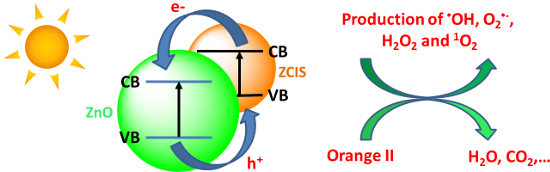
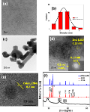
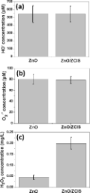
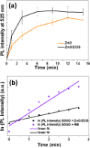
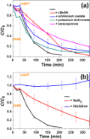
- to any light irradiation, the reaction mixture was stirred in the dark for 30 min to reach adsorption/desorption equilibrium. Blank experiments in the absence of irradiation but in the presence of the ZnO/ZCIS catalysts demonstrated that no significant change in the Orange II concentration was
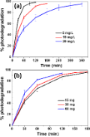
- the increased number of catalytically active sites (k values are 0.017, 0.018 and 0.022 min−1 for catalysts amounts of 15, 30 and 60 mg in 50 mL of the dye) (Supporting Information File 1, Figure S7). After 120 min of irradiation, the percentage of photodegradation leveled off due to the weak amount





Assembly of metallic nanoparticle arrays on glass via nanoimprinting and thin-film dewetting
Beilstein J. Nanotechnol. 2017, 8, 1049–1055, doi:10.3762/bjnano.8.106
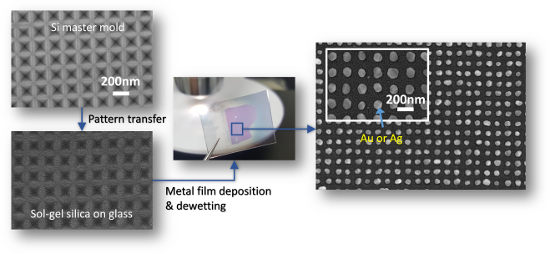
- surface [1][2]. Because it is a relatively simple process [3], this technique opens up numerous applications, such as high-density magnetic recording media [2][4], photovoltaic devices [5][6][7][8][9][10], photocatalysts [11] and catalysts for the fabrication of carbon nanotubes and nanowires. However


Structural properties and thermal stability of cobalt- and chromium-doped α-MnO2 nanorods
Beilstein J. Nanotechnol. 2017, 8, 1032–1042, doi:10.3762/bjnano.8.104
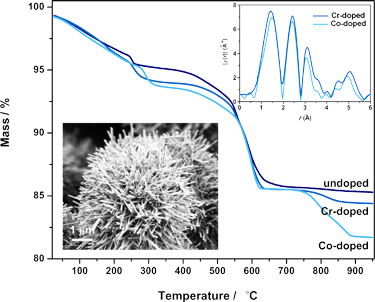
- oxidation states of manganese [1], while the partial exchange of K+ with protons yielded excellent acid catalysts for selective oxidation reactions [13]. The incorporation of metal cations with different valencies (Cu2+, Co2+, Ni2+, Ag+, V5+, W6+, Mo6+) into the channels or in the cryptomelane structure


CVD transfer-free graphene for sensing applications
Beilstein J. Nanotechnol. 2017, 8, 1015–1022, doi:10.3762/bjnano.8.102
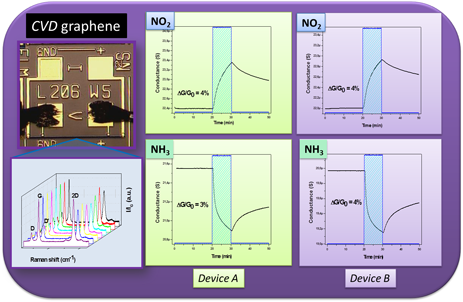
- made as thin as 50 nm without any segregation at the graphene CVD temperature (≈1000 °C), because of the higher melting point of Mo (2623 °C) compared to that of other conventional catalysts such as Cu (1085 °C) or Ni (1455 °C). Moreover, this allows a pre-patterning the film for the selective growth


High photocatalytic activity of Fe2O3/TiO2 nanocomposites prepared by photodeposition for degradation of 2,4-dichlorophenoxyacetic acid
Beilstein J. Nanotechnol. 2017, 8, 915–926, doi:10.3762/bjnano.8.93
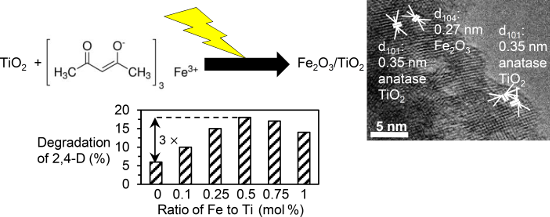
- preparation of Fe2O3/TiO2 as it offers a simple process. However, there are contradicting reports on the performance of Fe2O3/TiO2 catalysts prepared by the impregnation method. While some groups reported good photocatalytic activity [5][6], others showed contrasting results [16][17][18], which have resulted
- /TiO2 catalysts without heat treatment at ambient conditions. Using iron(III) nitrate nonahydrate as the precursor, active and stable Fe2O3/TiO2 was successfully prepared via photodeposition [15]. However, the actual amount of iron precursor in the prepared Fe2O3/TiO2 was much lower than that added. In


Investigation of growth dynamics of carbon nanotubes
Beilstein J. Nanotechnol. 2017, 8, 826–856, doi:10.3762/bjnano.8.85
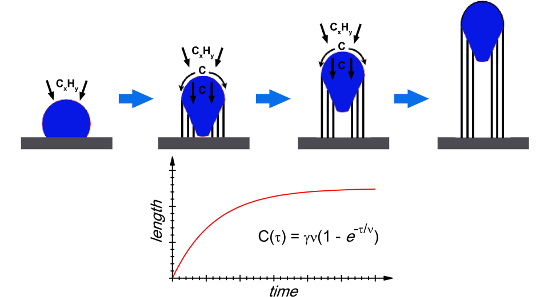
- growth of carbon filaments on liquid catalysts [24][25][26]. Later on, the VLS model was applied to describe the growth of MWCNTs [27] and SWCNTs [28][29] on liquid-metal particles. The atomic-level description of the VLS growth process of SWCNTs was performed by molecular dynamics simulations [29][30
- surface diffusion model for the growth of carbon fibers on metallic catalysts on the basis of the fact that the calculated activation energies of the growth were much lower than those of the bulk carbon diffusion in the metal. They suggested that the surface carbon diffusion on the catalytic particle was
- carbon atoms was the growth rate-limiting process. The surface diffusion mechanism of the growth of carbon nanofibers and nanotubes on metallic catalysts was also revealed by theoretical methods [41][42][44]. In [44], Raty with co-authors reported ab initio molecular dynamics simulations of the formation


First examples of organosilica-based ionogels: synthesis and electrochemical behavior
Beilstein J. Nanotechnol. 2017, 8, 736–751, doi:10.3762/bjnano.8.77
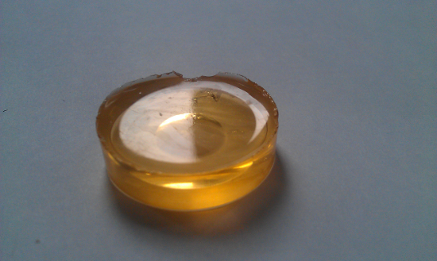
- can reversibly be protonated and should thus also contribute to the ionic conductivity of the PIGs. A further synthetic advantage is that the organosilanes used here also catalyze silane and silica condensation. There is thus no need for additional catalysts that must to be removed after synthesis









Synthesis of graphene–transition metal oxide hybrid nanoparticles and their application in various fields
Beilstein J. Nanotechnol. 2017, 8, 688–714, doi:10.3762/bjnano.8.74
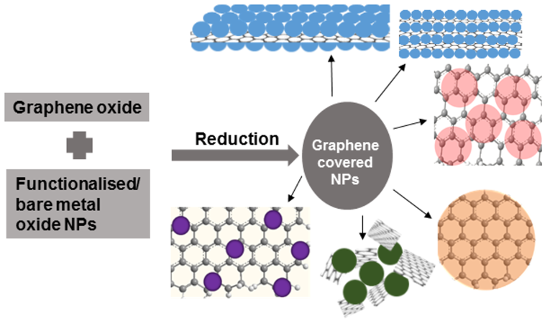
- superior electrical performance because the porous nature of the hybrid accommodates the volume change [146]. Wu et al. have use 3D N-doped graphene aerogel (GA) supported Fe3O4 NPs (Fe3O4/N-GA) as efficient cathode catalysts for ORR [147]. This Fe3O4/N-GA material shows excellent electrocatalytic activity
- [188]. Guo et al. prepared Co/CoO–graphene by self-assembly of Co NPs on the surface of graphene. This hybrid has similar activity as and better stability than commercial Pt NP catalyst supported on carbon (C–Pt) NPs and may serve as an alternative to C–Pt catalysts for the ORR in alkaline solution
- materials having a much wider range of applications in the field of energy conversion and storage, such as catalysts and in optoelectronics. Comprehensive work has been done to prepare graphene-wrapped ZnO NPs for better performance in optoelectronics applications. Single-layer graphene-wrapped ZnO NPs






Investigation of the photocatalytic efficiency of tantalum alkoxy carboxylate-derived Ta2O5 nanoparticles in rhodamine B removal
Beilstein J. Nanotechnol. 2017, 8, 604–613, doi:10.3762/bjnano.8.65
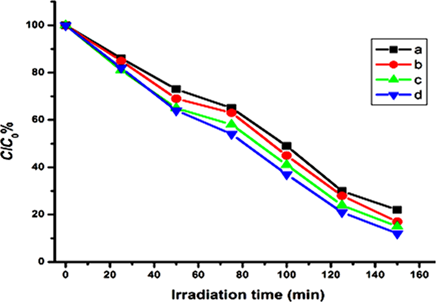
- reasons for the difference of catalytic performances of nanoparticles. The nanoparticles were recycled from the reactions (after centrifugation, washing and drying) and reused, however, the efficiency of the reused catalysts was decreased by more than 50%. The mechanism of photocatalytic degradation of


Graphene functionalised by laser-ablated V2O5 for a highly sensitive NH3 sensor
Beilstein J. Nanotechnol. 2017, 8, 571–578, doi:10.3762/bjnano.8.61
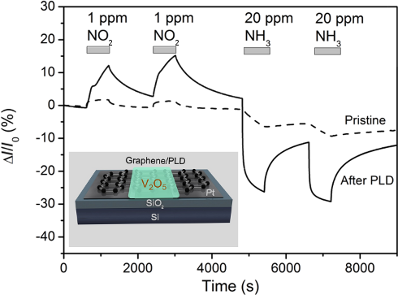
- precious metal [4] or metal oxide nanoparticles [5]. Also, introduction of suitable defects was shown to have a positive effect on gas adsorption and sensor properties of graphene [6]. Transition metal oxides constitute an important class of catalysts and photosensitizers. Apart from the very first and


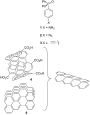
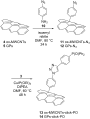
Nanostructured carbon materials decorated with organophosphorus moieties: synthesis and application
Beilstein J. Nanotechnol. 2017, 8, 485–493, doi:10.3762/bjnano.8.52
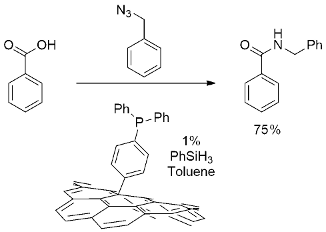
- ] and, recently, also triphenylphosphine oxide (TPPO) have found similar application [21][22][23][24]. Despite their utility, very few examples of heterogeneous catalysts are described. One example was reported by Tang, who developed a phosphine oxide derivative linked to a polystyrene resin [25]. For