Search results
Search for "encapsulation" in Full Text gives 188 result(s) in Beilstein Journal of Nanotechnology.
In vitro toxicity and bioimaging studies of gold nanorods formulations coated with biofunctional thiol-PEG molecules and Pluronic block copolymers
Beilstein J. Nanotechnol. 2014, 5, 546–553, doi:10.3762/bjnano.5.64
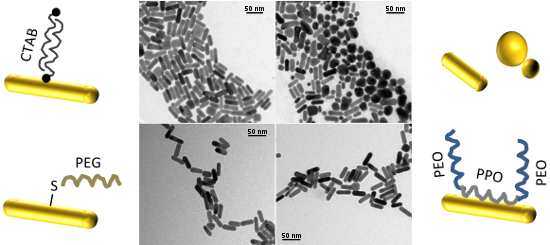
- at 10,000 rpm for 10 min and suspended in water. This washing step was repeated 3 times to remove excess CTAB. For AuNRs encapsulation, after three centrifugations, the supernatant were taken out and the AuNRs pellet was left in the centrifuge tube without suspending them in water. A transmission
- PEG-SH and PEO–PPO–PEO molecules resulted in decreased cell viabilities. This may be caused by the impact of forming a thicker coating layer on the AuNRs surface [33]. Many groups have reported on the encapsulation of AuNRs with other polymer coatings to improve the biocompatibility of the rod
- polymer-based encapsulation further facilitates the use of AuNRs as biocompatible in vivo probes. Conclusion In this work, we studied the cytotoxicity, colloidal stability and optical property of AuNRs before and after functionalizing them with PEG-SH and PEO–PPO–PEO molecules. The as-synthesized AuNR


Encapsulation of nanoparticles into single-crystal ZnO nanorods and microrods
Beilstein J. Nanotechnol. 2014, 5, 485–493, doi:10.3762/bjnano.5.56
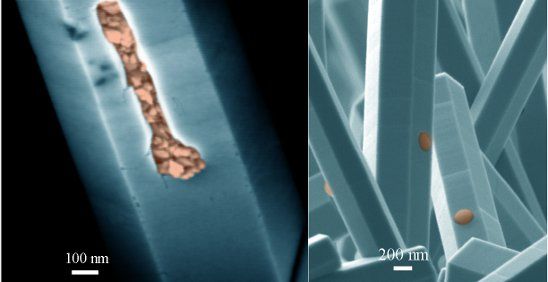
- functional nanoparticles of other materials could be an interesting platform for various applications. We studied the encapsulation of nanoparticles into single-crystal ZnO nanorods by exploiting the crystal growth of ZnO in aqueous solution. Two types of nanodiamonds with mean diameters of 10 nm and 40 nm
- , respectively, and polymer nanobeads with size of 200 nm have been used to study the encapsulation process. It was found that by regrowing these ZnO nanorods with nanoparticles attached to their surfaces, a full encapsulation of nanoparticles into nanorods can be achieved. We demonstrate that our low
- micro-photoluminescence measurement on a single ZnO nanorod containing luminescent nanodiamonds and the spectrum has a different shape from that of naked nanodiamonds, revealing the cavity effect of ZnO nanorod. Keywords: crystal growth; encapsulation; nanoparticles; photoluminescence; ZnO nanorods


Design criteria for stable Pt/C fuel cell catalysts
Beilstein J. Nanotechnol. 2014, 5, 44–67, doi:10.3762/bjnano.5.5
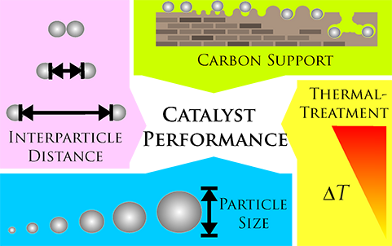
- 360 nm with an average shell thickness of approximately 50 nm. The mesoporous network is intended to provide a good separation and encapsulation of the particles without losing accessibility to the Pt particles. The access is also facilitated by the short diffusion pathways through the shell, which




Ellipsometry and XPS comparative studies of thermal and plasma enhanced atomic layer deposited Al2O3-films
Beilstein J. Nanotechnol. 2013, 4, 732–742, doi:10.3762/bjnano.4.83
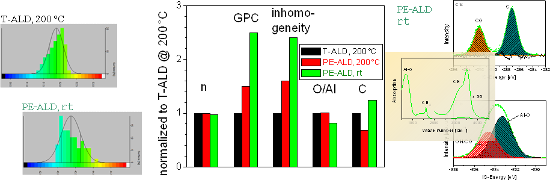
- been investigated for several applications like surface passivation or encapsulation in organic and inorganic photovoltaic devices [1][2], interfacial buffering for high-k dielectrics [3][4], organic memories [5], and nano-laminates [6] as well as work function modification [7], gas diffusion barrier


A facile synthesis of a carbon-encapsulated Fe3O4 nanocomposite and its performance as anode in lithium-ion batteries
Beilstein J. Nanotechnol. 2013, 4, 699–704, doi:10.3762/bjnano.4.79
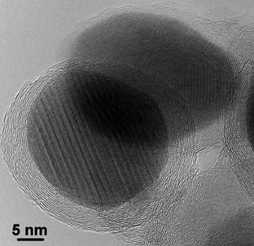
- strategies, such as carbon coatings [7], carbon core–shells [8], nanocomposites [9], nanostructures [10], or nano-encapsulation [11], have recently been explored to circumvent this problem. These strategies apply various synthetic methods [12] such as hydrothermal, coprecipitation, microemulsion, sol–gel


Functionalization of vertically aligned carbon nanotubes
Beilstein J. Nanotechnol. 2013, 4, 129–152, doi:10.3762/bjnano.4.14
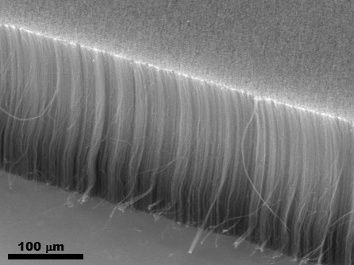
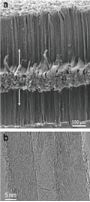
- constraint for the growth of CNTs is the poisoning of the catalyst due to encapsulation by amorphous carbon. In 2004, Hata et al. [26] reported the growth of VA-CNTs with millimeter length (Figure 3). By adding a small amount of an oxidizer during the CVD synthesis the poisoning of catalyst nanoparticles is








Magnetic-Fe/Fe3O4-nanoparticle-bound SN38 as carboxylesterase-cleavable prodrug for the delivery to tumors within monocytes/macrophages
Beilstein J. Nanotechnol. 2012, 3, 444–455, doi:10.3762/bjnano.3.51
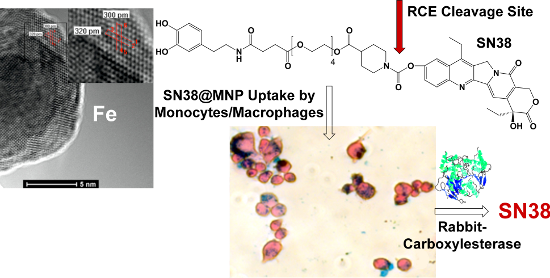
- tissue have been observed [22]. Liposome encapsulation of SN38 (LE-SN38) enhances the solubility of SN38 and provides protection from rapid drug degradation. Increased cytotoxicity against various tumor cell lines and better therapeutic efficacy in xenograft mouse models, as compared to CPT-11, have been


Ultraviolet photodetection of flexible ZnO nanowire sheets in polydimethylsiloxane polymer
Beilstein J. Nanotechnol. 2012, 3, 353–359, doi:10.3762/bjnano.3.41
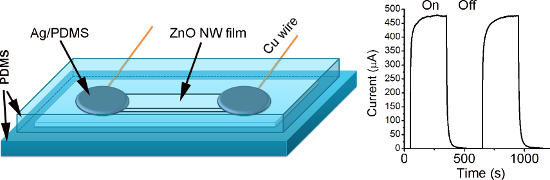
- reaction with ZnO to form amorphous Zn(CO)3, which roughens the surface of the nanowires [12]. Therefore, for practical application the device encapsulation is essential to ensure a clean oxygen atmosphere around the nanowires. In this work we investigate the performance of polymer-embedded ZnO nanowires


Octadecyltrichlorosilane (OTS)-coated ionic liquid drops: Micro-reactors for homogenous catalytic reactions at designated interfaces
Beilstein J. Nanotechnol. 2012, 3, 33–39, doi:10.3762/bjnano.3.4
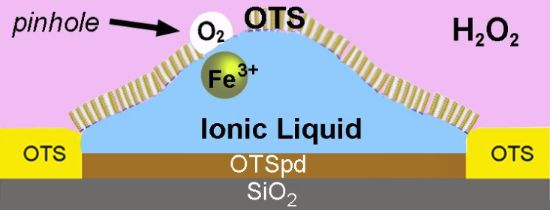
- homogenous catalytic reactions to occur at the designated interfaces. Keywords: AFM; catalyst encapsulation; chemical pattern; ionic liquid; OTS; Introduction Ionic liquids (ILs) have promising applications as environmentally friendly solvents [1][2]. Ionic liquids are low temperature melting salts with


Approaches to nanostructure control and functionalizations of polymer@silica hybrid nanograss generated by biomimetic silica mineralization on a self-assembled polyamine layer
Beilstein J. Nanotechnol. 2011, 2, 760–773, doi:10.3762/bjnano.2.84
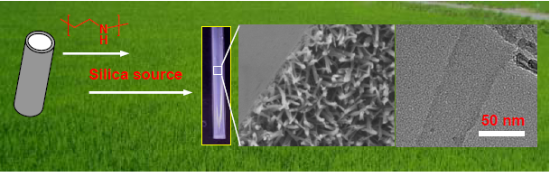
- the heating process is undesirable for many biomimetic silica-derived technologies, such as the encapsulation of enzymes, cells or other temperature-sensitive biomolecules or systems [37][38]. LPEI@silica nanograss with porphyrin function The ethyleneimine units of LPEI have a strong ability to


Ceria/silicon carbide core–shell materials prepared by miniemulsion technique
Beilstein J. Nanotechnol. 2011, 2, 638–644, doi:10.3762/bjnano.2.67
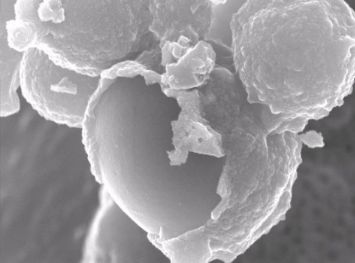
- droplets. Thus, the droplet sizes and the composition of the droplet components remain unchanged. This, in consequence, enables the preparation of copolymer particles of defined composition and the encapsulation of further, monomer soluble materials [4]. For the preparation of inorganic, ceramic materials


Manipulation of gold colloidal nanoparticles with atomic force microscopy in dynamic mode: influence of particle–substrate chemistry and morphology, and of operating conditions
Beilstein J. Nanotechnol. 2011, 2, 85–98, doi:10.3762/bjnano.2.10
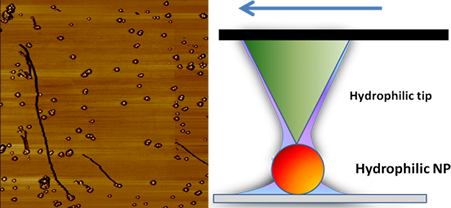
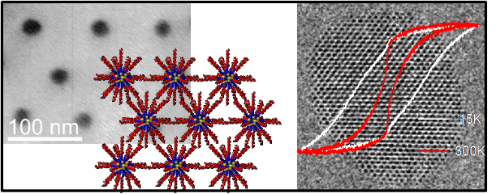
- described previously [27][28]. The Au NPs coated silicon wafer was prepared using a micelle encapsulation method [53][54]. Au nanoparticles were encapsulated by diblock copolymer poly(styrene)-block-poly(2-vinylpyridine). The solution was deposited onto silicon wafer and dried under a nitrogen flow. After


Preparation and characterization of supported magnetic nanoparticles prepared by reverse micelles
Beilstein J. Nanotechnol. 2010, 1, 24–47, doi:10.3762/bjnano.1.5