


Search results
Search for "hydrophobic" in Full Text gives 438 result(s) in Beilstein Journal of Nanotechnology. Showing first 200.
Serum type and concentration both affect the protein-corona composition of PLGA nanoparticles
Beilstein J. Nanotechnol. 2019, 10, 1002–1015, doi:10.3762/bjnano.10.101
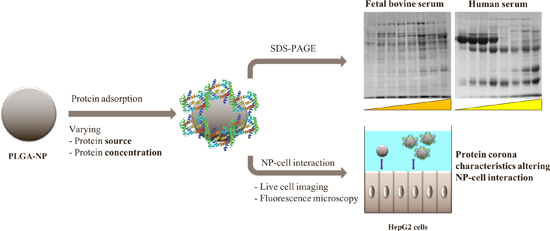
- attracted to NPs composed of hydrophobic core materials [30][31] resulting in a prolonged circulation time in blood [18]. Moreover, covalent attachment of apolipoprotein A–I and apolipoprotein E to the NP surface enables drug transport across the blood–brain barrier [32]. Here, both proteins were identified
- human liver cancer cell line HepG2 was used for in vitro incubation experiments. For an easy tracking of NPs in cell culture experiments, the fluorescent dye Lumogen® Red was incorporated into the hydrophobic particle matrix. Due to the lipophilic properties of the dye molecule an average of 8.14 µg



Direct growth of few-layer graphene on AlN-based resonators for high-sensitivity gravimetric biosensors
Beilstein J. Nanotechnol. 2019, 10, 975–984, doi:10.3762/bjnano.10.98
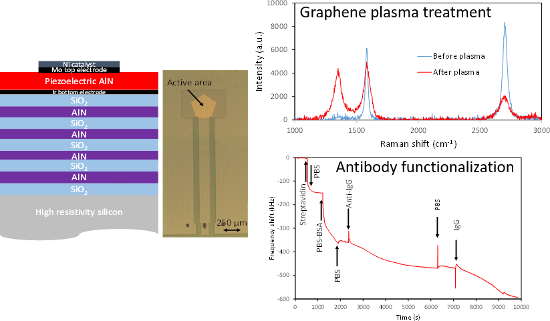
- functionalization protocol is based on the non-covalent bonding of streptavidin on hydrophobic graphene surfaces. The two protocols end with the effective bonding of biotinylated anti-IgG antibodies to the streptavidin, which leaves the surface of the devices ready for possible IgG detection. Keywords: biomolecule
- functionalization platforms. On one hand, graphene containing defects (COOH groups) can be covalently functionalized by using an EDC/NHS zero-cross linker, which allows for the binding of primary amines present in proteins and antibodies [11][12]. On the other hand, defect-free graphene is highly hydrophobic, and
- graphene with better quality. The hydrophobic character of the surface was confirmed by dropping water on it with a pipette, which revealed the lack of liquid adhesion to the surface. We also analysed the influence of the process parameters (pressure, Ar/C2H2 flow ratio and cooling rate) on the defect


The systemic effect of PEG-nGO-induced oxidative stress in vivo in a rodent model
Beilstein J. Nanotechnol. 2019, 10, 901–911, doi:10.3762/bjnano.10.91
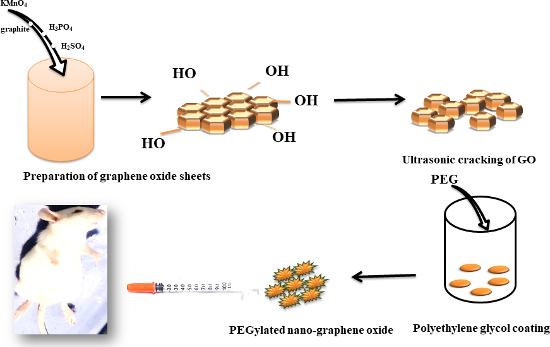
- advanced nanomaterials has led to the development of effective drug delivery systems [1][2]. Graphene, a single layer of carbon atoms with a hexagonal 2-dimensional crystal structure, its use in nanoscience and nanotechnology, is of great interest for scientists. The hydrophobic nature of graphene


Rapid, ultraviolet-induced, reversibly switchable wettability of superhydrophobic/superhydrophilic surfaces
Beilstein J. Nanotechnol. 2019, 10, 866–873, doi:10.3762/bjnano.10.87
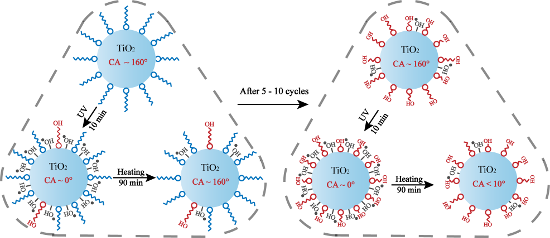
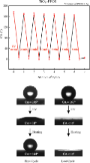
- . [22] modified TiO2 with 7-[4-(trifluoromethoxyphenylazo)phenoxy]pentanoic acid (CF3AZO) which could reversibly switch between hydrophobic (≈145°) and hydrophilic (≈24°) under UV illumination for about 13 h. Chagas et al. [23] fabricated surfaces that were reversibly wettable by dipping polypropylene
- )phenoxy)undecanoic acid (AzoC11) acid to fabricate a hybrid surface which could achieve a rapid change in wettability properties within 12 min, however the wettability range was only between hydrophobic (≈146°) and hydrophilic (≈21°). Qing et al. [30] fabricated superhydrophobic TiO2 nanoparticles with



Novel reversibly switchable wettability of superhydrophobic–superhydrophilic surfaces induced by charge injection and heating
Beilstein J. Nanotechnol. 2019, 10, 840–847, doi:10.3762/bjnano.10.84
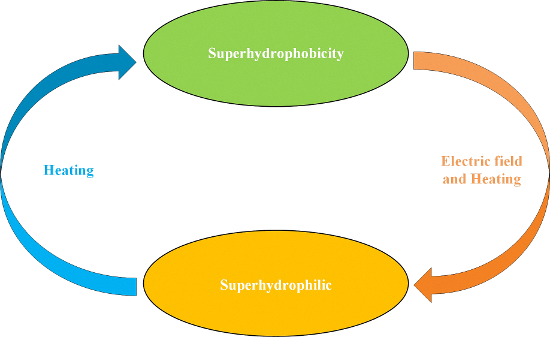
- reversible transition of graphene surface water droplets from hydrophobic to hydrophilic was studied at a shutdown voltage [24]. Nbelayim et al. [25] achieved the reversible transformation of graphene from hydrophobic to hydrophilic driven by a direct-current voltage. Cui et al. [26] tested droplets of
- Materials and instrumentation Alcohol (99.7%, AR) and hydrophobic silica (16–25 nm diameter) was provided by Evonik Degussa Co. Ltd. (Germany). The varnish (Voep-1) was from Shijiazhuang Paint Company. All reagents were used as received without further purification. A high-voltage power supply (Tianjin
- interfacial charges will change the wettability from hydrophobic to very hydrophilic [19][20][21][22][23][24][25][26][27]. We thought that the charges injected and accumulated on the solid surface by a direct-current electric field may also change the surface wettability. For example, the charges that were


Deposition of metal particles onto semiconductor nanorods using an ionic liquid
Beilstein J. Nanotechnol. 2019, 10, 718–724, doi:10.3762/bjnano.10.71
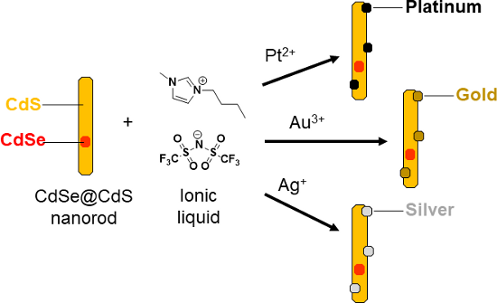
- diameter of 4 ± 1 nm as determined by TEM imaging, with a sample size of at least 100 particles in each case. The obtained nanorods are capped with tightly bound phosphonic acid ligands bearing long hydrophobic alkyl chains. Rather than exchanging these ligands to allow these nanorods to be dispersed in
- polar media, platinum nanoparticles were deposited onto these CdSe@CdS nanorods in hydrophobic media based on the photochemical process reported by Alivisatos and coworkers [30], with the liquid component consisting of either toluene/triethylamine or [bmim][Tf2N] (Scheme 1). We chose [bmim][Tf2N] as the


Self-assembly and wetting properties of gold nanorod–CTAB molecules on HOPG
Beilstein J. Nanotechnol. 2019, 10, 696–705, doi:10.3762/bjnano.10.69
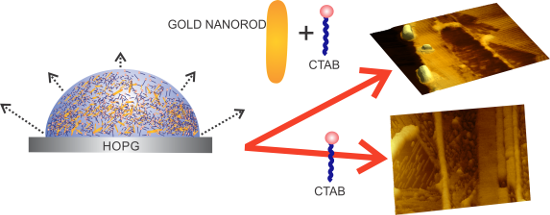
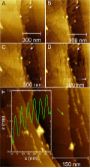
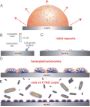
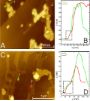
- that CTAB surfactant molecules can self-assemble on a highly ordered pyrolytic graphite (HOPG) surface in the form of hemi-cylindrical micelles [43][44][45]. The surface of HOPG is hydrophobic [46][47], while the CTAB molecules have a hydrophilic end group and a hydrophobic tail [48]. Therefore, to
- shield their hydrophobic tail from the water phase, these molecules form spherical and cylindrical micelles in aqueous suspension [49][50]. Xu et al. were the first to observe the adsorption of CTAB molecules on HOPG in head-to-head arranged layers [50]. It has recently been reported that CTAB-stabilized
- -assembled CTAB molecules. As a cationic surfactant, CTAB molecules consist of a hydrophilic head and a hydrophobic tail. In an attempt to shield the hydrophobic tail from the aqueous phase, CTAB molecules assemble on HOPG in the form of hemi-cylindrical micelles [57] and cover the entire region occupied by


Ultrathin hydrophobic films based on the metal organic framework UiO-66-COOH(Zr)
Beilstein J. Nanotechnol. 2019, 10, 654–665, doi:10.3762/bjnano.10.65
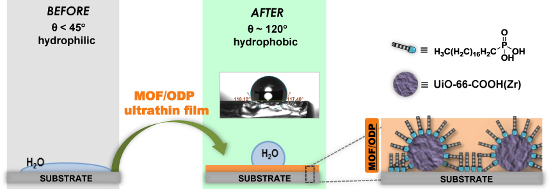
- position and cover MOF particles. Moreover, the presence of MOF particles significantly enhances the surface roughness and allows ultrathin, hydrophobic coverage to be obtained. Finally, it has been shown that the crystallinity and the porosity of the MOF remains almost unaltered in MOF/ODP films
- . Keywords: hydrophobic coating; Langmuir–Blodgett (LB) films; metal organic framework (MOF); surface modification; UiO-66-COOH(Zr); Introduction Metal organic frameworks (MOFs) are well-known, crystalline, porous materials formed by metal ions (or metallic clusters) and organic ligands coordinated in a pre
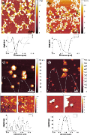
- ) and water contact angle (WCA) measurements. The results obtained demonstrate the hydrophobic character of the films obtained, since a single mixed ODP/MOF LB film can increase the water contact angle of highly hydrophilic substrates (glass and mica) up to 120° while maintaining a high transparency


Topochemical engineering of composite hybrid fibers using layered double hydroxides and abietic acid
Beilstein J. Nanotechnol. 2019, 10, 589–605, doi:10.3762/bjnano.10.60
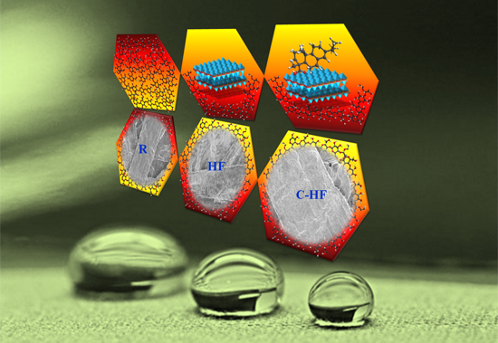
- Turku, Vatselankatu 2, FI-20014 Turku, Finland Department of Chemical Engineering, KU Leuven, Celestijnenlaan 200F b,us 2424, B-3001 Leuven, Belgium 10.3762/bjnano.10.60 Abstract Topochemical engineering of hybrid materials is an efficient way of synthesizing hydrophobic and highly tensile fiber
- between material entities play a crucial role in the resulting properties. Keywords: abietic acid; composite hybrid fibers; high tensile pulp; hydrophobic pulp; layered double hydroxides; Introduction Renewable chemicals or materials and their value addition are the current focus in the area of
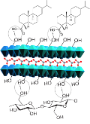
- hydrophobic [10][11][12] with high tensile strength [13]. Topochemical engineering is a method of designing the fractionation (disassembly) and fabrication (assembly) of highly engineered functional materials using a combination of molecular and supramolecular techniques. Topochemical engineering is inspired




Hydrophilicity and carbon chain length effects on the gas sensing properties of chemoresistive, self-assembled monolayer carbon nanotube sensors
Beilstein J. Nanotechnol. 2019, 10, 565–577, doi:10.3762/bjnano.10.58
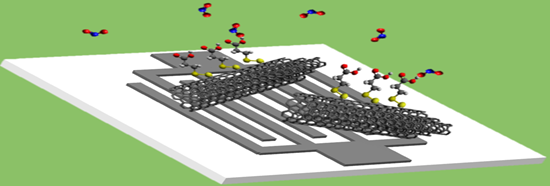
- chain and its hydrophilicity on the gas sensing properties of SAMs formed on carbon nanotubes are studied, and additionally, the gas sensing mechanisms are discussed. Four thiols differing in the length of the carbon chain and in the hydrophobic or hydrophilic nature of the head functional group are
- attributed to the interaction, via strong hydrogen bonding, of the polar molecules tested to the polar surface of hydrophilic thiols. The approach discussed here could be extended further by combining hydrophilic and hydrophobic thiol SAMs in Au-MWCNT sensor arrays as a helpful strategy for tuning sensor
- : 735 cm−1, 2580 cm−1 and 2900 cm−1, which correspond to C–S, S–H and C–H elongations, respectively. In addition, hydrophilic thiols (i.e., C3H6O2S and C16H32O2S) present a characteristic peak at 1680 cm−1 attributed to C=O elongation. In contrast, hydrophobic thiols (C3H8S and C16H34S) show a


Ceria/polymer nanocontainers for high-performance encapsulation of fluorophores
Beilstein J. Nanotechnol. 2019, 10, 522–530, doi:10.3762/bjnano.10.53
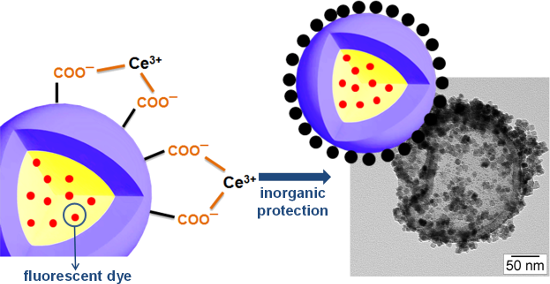
- nanocapsules [19][20], with a concentration of hydrophobic dye of the order of 10−4 M and a total solid content of 1–5 wt %. In bulk fluorescent samples, the oxygen/dye molar concentration ratio is typically about 10:1, while for nanoconfined materials is of about 200:1. This huge excess of oxygen affects the
- strategy to reduce the impact of reactive oxygen by applying an additional synthetic step, while keeping unchanged all parameters involved in the synthesis of the initial nanoconfined materials. Exemplarily, polystyrene nanocontainers with a liquid hydrophobic core of hexadecane synthesized by using


Mechanical and thermodynamic properties of Aβ42, Aβ40, and α-synuclein fibrils: a coarse-grained method to complement experimental studies
Beilstein J. Nanotechnol. 2019, 10, 500–513, doi:10.3762/bjnano.10.51
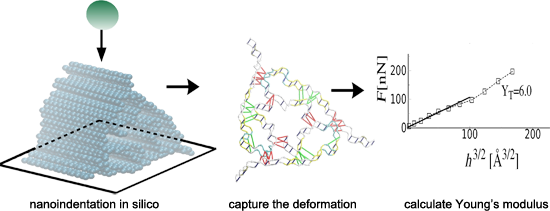
- of the individual amino-acid chains in these structures. Fibrils consisting of either 40-mer or 42-mer amyloid chains (it contains two additional hydrophobic amino acids) are particularly interesting. For example, Aβ40 typically assembles into two-fold or three-fold symmetries (see Figure 1), while
- representation for some biological fibrils as well as their native interactions. These native contacts represent hydrogen bonds (HB), and hydrophobic and ionic bridges. Moreover, we consider contacts between amino acids in individual chains with sequential distance |i − j| > 4. The parameters σij are given by
- YL, is almost one order of magnitude. In contrast, in the case of β-amyloid fibrils the anisotropy is considerably smaller. We find that this effect is due to the deformation of the hydrophobic core (segments 61–95). We have also confirmed that the large anisotropy in the case of α-syn neither


A comparison of tarsal morphology and traction force in the two burying beetles Nicrophorus nepalensis and Nicrophorus vespilloides (Coleoptera, Silphidae)
Beilstein J. Nanotechnol. 2019, 10, 47–61, doi:10.3762/bjnano.10.5
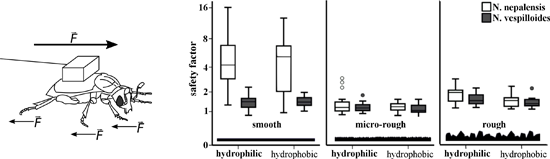
- attachment with respect to various surface properties was investigated by using a 2 × 3 experimental design. Traction force was measured for two different surface energies (hydrophilic vs hydrophobic) varying in roughness from smooth to micro-rough to rough. Nanotribometric tests on single legs were also
- respective surfaces [15][16][17]. Another property that influences insect adhesion is surface polarity, which can be affected by surface roughness, apparently reinforcing hydrophobic or hydrophilic surface characteristics. The testing of both of these surface properties in combination in our experiments has
- ., being either hydrophilic (treated with plasma) or hydrophobic (treated with antispread). The data were compared between and within the species. The within-species comparisons were conducted between the different surface properties such as roughness and wettability. Results Tarsus morphology At its



Ternary nanocomposites of reduced graphene oxide, polyaniline and hexaniobate: hierarchical architecture and high polaron formation
Beilstein J. Nanotechnol. 2018, 9, 2936–2946, doi:10.3762/bjnano.9.272
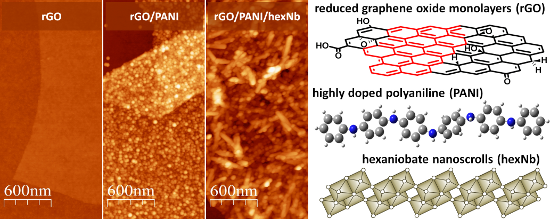
- (typically above 90 °C) results in the aggregation of the material due to restacking of the hydrophobic rGO layers [34][35]. This is a drawback in the preparation of rGO nanocomposites because phase segregation and/or composition heterogeneity will occur in the final materials. Although it is well known that


Time-resolved universal temperature measurements using NaYF4:Er3+,Yb3+ upconverting nanoparticles in an electrospray jet
Beilstein J. Nanotechnol. 2018, 9, 2916–2924, doi:10.3762/bjnano.9.270
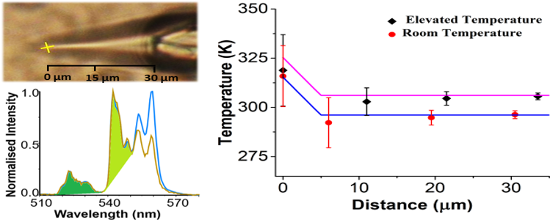
- hydrophobic in nature, due to a presence of oleic acid on its surface, which was removed by adding EDTA. The synthesized particles are of an average size of 300 nm. Experimental setup for temperature measurements in an electrospray jet An experimental setup for temperature measurement in an electrospray


Layered calcium phenylphosphonate: a hybrid material for a new generation of nanofillers
Beilstein J. Nanotechnol. 2018, 9, 2906–2915, doi:10.3762/bjnano.9.269
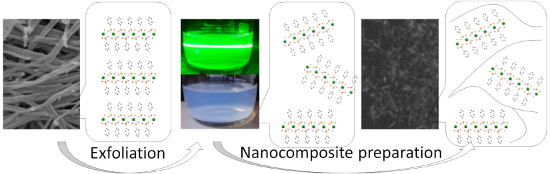
- /bjnano.9.269 Abstract The use of nanosheets of layered calcium phenylphosphonate as a filler in a polymeric matrix was investigated. Layered calcium phenylphosphonate (CaPhP), with chemical formula CaC6H5PO3∙2H2O, is a hybrid organic–inorganic material that exhibits a hydrophobic character due to the
- layer is formed by rather hydrophobic phenyl groups, which makes them a suitable material for incorporation into the hydrophobic polymer matrices. An epoxy resin was chosen as a polymer matrix because epoxy resins are widespread and useful in various industrial applications ranging from coatings, to
- better than in propan-2-ol; however, n-butanol is not so convenient for application in the composites due to its higher boiling point. Also, ethanol seems to be a promising solvent, however, ethanol is polar and thus less compatible with hydrophobic substances. Therefore, propan-2-ol was chosen, which is


Graphene-enhanced metal oxide gas sensors at room temperature: a review
Beilstein J. Nanotechnol. 2018, 9, 2832–2844, doi:10.3762/bjnano.9.264
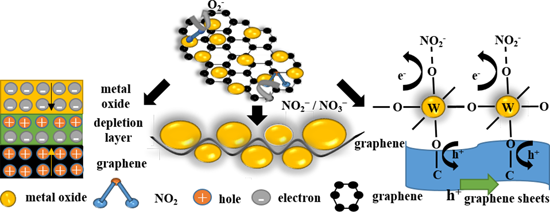
- real environment and study the mechanism of humidity influence. A hydrophobic coating can be applied to the surface of the sensor to reduce the effects of humidity. Regarding the synthesis, it is important to quantify and control the effect of hydrothermal or solvothermal parameters on the



Biomimetic surface structures in steel fabricated with femtosecond laser pulses: influence of laser rescanning on morphology and wettability
Beilstein J. Nanotechnol. 2018, 9, 2802–2812, doi:10.3762/bjnano.9.262
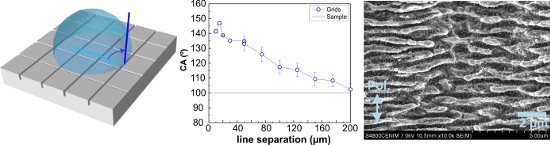
- characterization is performed via optical and scanning electron microscopy. Wetting measurements on the fabricated structures are presented, demonstrating that different wetting regimes can be achieved by a proper choice of the processing parameters, leading to the formation of hydrophilic, hydrophobic and
- from an initial superhydrophilic state to a (super-) hydrophobic state within approximately 10 days, due to the progressive attachment of carbon and its compounds to the surface [46]. After this time, the surface has stabilized chemically and also in terms of its wetting behavior. As explained in the
- ° and 150°, the surface is considered hydrophobic. In our experiments, more than half the fabricated surfaces present this wetting behavior, changing from 92 ± 2° (1 J/cm2, 1 scan) to 136 ± 6° (0.2 J/cm2, 1 scan). Surfaces that present CAs higher than 150° are considered superhydrophobic. In our case



Accurate control of the covalent functionalization of single-walled carbon nanotubes for the electro-enzymatically controlled oxidation of biomolecules
Beilstein J. Nanotechnol. 2018, 9, 2750–2762, doi:10.3762/bjnano.9.257
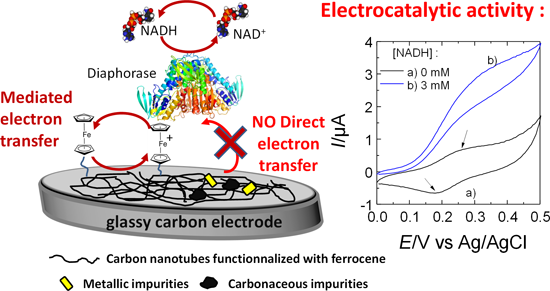
- samples were used in an aqueous medium. The alkyl linker being hydrophobic while PEG linkers are hydrophilic strongly suggests also modelling the interaction between the functionalized nanotubes and the water molecules. The corresponding results are reported in the next paragraph. Determining the role of






Nanocellulose: Recent advances and its prospects in environmental remediation
Beilstein J. Nanotechnol. 2018, 9, 2479–2498, doi:10.3762/bjnano.9.232
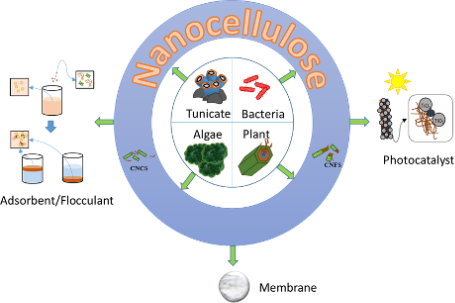
- introducing anionic, cationic, or hydrophobic functional groups to the nanocellulose surfaces through a charge neutralization mechanism. The –OH groups on the cellulose surface enables facile functionalization of nanocellulose to introduce the desired functionality and produce highly effective flocculants


Effect of electrospinning process variables on the size of polymer fibers and bead-on-string structures established with a 23 factorial design
Beilstein J. Nanotechnol. 2018, 9, 2466–2478, doi:10.3762/bjnano.9.231
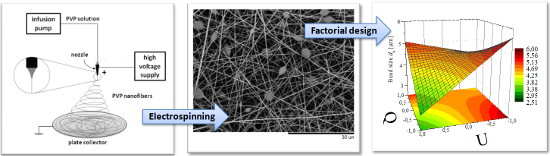
- among others as: coatings with hydrophobic properties [19], membranes for fog harvesting [20], drug delivery systems with encapsulated therapeutic substances [21]. Therefore, it is fully justified to dedicate a study to the analysis of conditions in which the beads can be optimally obtained. Although a


Block copolymers for designing nanostructured porous coatings
Beilstein J. Nanotechnol. 2018, 9, 2332–2344, doi:10.3762/bjnano.9.218
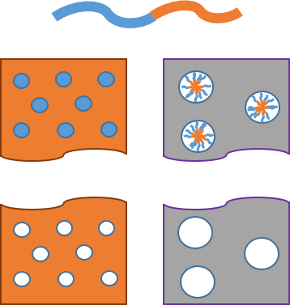
- and physical modifications of the PS nanostructures, since the complete removal of PMMA phase produces a hydrophobic PS surface whereas an irradiation at a pressure of 103 Pa caused the partial decomposition of the PS matrix with the modification of the material pore size and structure. By focusing on
- were obtained using PS-b-PEO block copolymers as SDAs [103]. In this study, by modulating the starting composition (in particular, the hydrophilic/hydrophobic solvent ratio), a transition from stacked spherical pores to worm-like structures to spherical dense particles was reached due to the
- the macropore. Reprinted with permission from [64], copyright 2014 Elsevier. Schematic representation of different micellar architectures. Hydrophilic polar heads are indicated in blue, and hydrophobic non-polar tails are drawn in red. Reprinted from [22] (“Selective porous gates made from colloidal


Nanoscale characterization of the temporary adhesive of the sea urchin Paracentrotus lividus
Beilstein J. Nanotechnol. 2018, 9, 2277–2286, doi:10.3762/bjnano.9.212
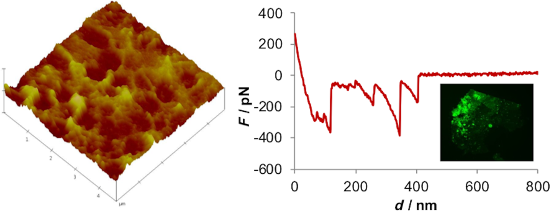
- terminated glass (positively charged surface) favouring the deposit of three times more adhesive than R–CH3 (hydrophobic surface) one [2]. In the sea star A. rubens the thickness of the adhesive is also influenced by the surface on which it is deposited, where more adhesive is deposited on glass and mica


Lead-free hybrid perovskites for photovoltaics
Beilstein J. Nanotechnol. 2018, 9, 2209–2235, doi:10.3762/bjnano.9.207
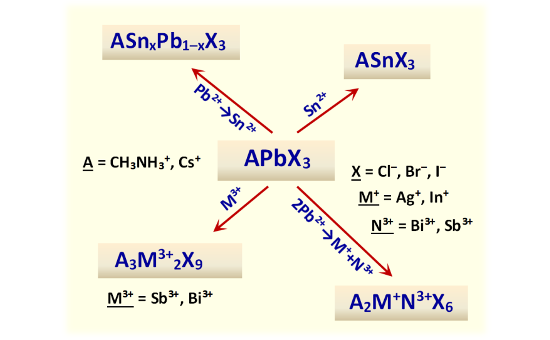
- hydrolytic degradation of MAGeI3 HP as a function of the crystal face were examined in detail in [145]. The stability of Ge-based HPs can be enhanced in mixed-halide HPs as well as by hydrophobic cations. In particular, by introducing cations that are more bulky than MA+, such as phenylethylamine (PEA


Nanoconjugates of a calixresorcinarene derivative with methoxy poly(ethylene glycol) fragments for drug encapsulation
Beilstein J. Nanotechnol. 2018, 9, 2057–2070, doi:10.3762/bjnano.9.195
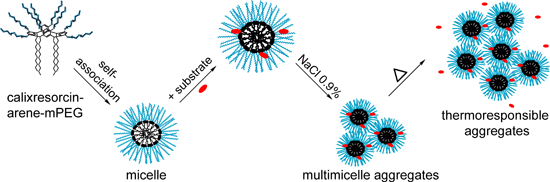
- toxicity that have sizes of ≤100 nm, increase biocompatibility, stability and circulation time of the drugs, and are sensitive to release stimuli. Nanocontainers on the base of amphiphilic compounds combine these properties and are able to increase the solubility of hydrophobic drugs due to their binding
- near the hydrophobic core, whereas the shell, which is composed of hydrophilic groups, ensures the stability of the system in solution. Examples for these amphiphilic compounds are surfactants [1], liposomes [2], polymers [3], and synthetic macrocycles [4]. Calixarenes and calixresorcinarenes are
- because of its high hydrophilicity and the lack of hydrophobic groups. The study of the hemolytic activity of 3 against human red blood cells (hRBC) demonstrates the low toxicity of its micelles in a concentration range above the cac value of 3 (Table 1). The self-association of 3 was further studied by





