


Search results
Search for "hysteresis" in Full Text gives 294 result(s) in Beilstein Journal of Nanotechnology. Showing first 200.
Cubic chemically ordered FeRh and FeCo nanomagnets prepared by mass-selected low-energy cluster-beam deposition: a comparative study
Beilstein J. Nanotechnol. 2016, 7, 1850–1860, doi:10.3762/bjnano.7.177
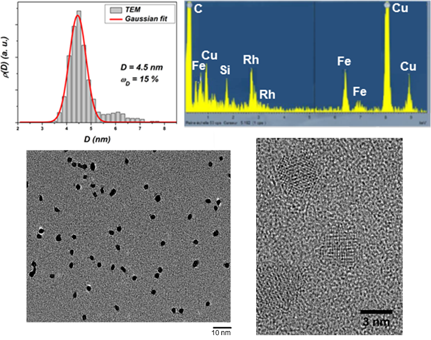
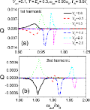
- with their best fits; (b) IRM experimental data at 2 K with the corresponding biaxial contribution simulation; (c) IRM/DcD and δm curves; (d) hysteresis loop at 2 K along with the corresponding simulation. XMCD signal of as-prepared mass-selected FeCo samples at Co L2,3 edge (a) with their


Antitumor magnetic hyperthermia induced by RGD-functionalized Fe3O4 nanoparticles, in an experimental model of colorectal liver metastases
Beilstein J. Nanotechnol. 2016, 7, 1532–1542, doi:10.3762/bjnano.7.147
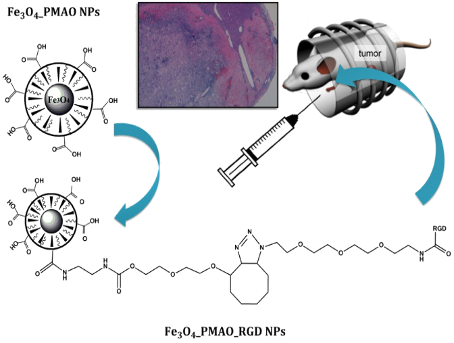
- the PMAO covered sample (60%) compared with the initial oleic-coated NPs (18%), is in good accord with an effective recovery when using the PMAO amphiphilic ligand (see Supporting Information File 1, Figure S3). Magnetic properties Magnetic hysteresis behavior was studied to estimate the magnetization
- of the Fe3O4@OA sample (Figure 2). The absence of a coercive field or remanence in the hysteresis loop recorded at 300 K is indicative of a superparamagnetic behavior of the sample. The saturation magnetization value obtained from the hysteresis loops at 300 K is 78.4 emu/g Fe3O4, which slightly
- collected on a FTIR-8400S Shimadzu spectrometer in the range of 4000–400 cm−1. The measurements of magnetization versus temperature at 10 Oe were carried out at 5 and 300 K using a Quantum Design MPMS-7 SQUID magnetometer. The hysteresis loops at room temperature were collected in a homemade VSM


Surface roughness rather than surface chemistry essentially affects insect adhesion
Beilstein J. Nanotechnol. 2016, 7, 1471–1479, doi:10.3762/bjnano.7.139
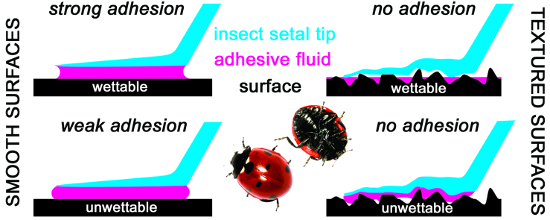
- different surface wettabilities, in combination with both smooth and rough surface textures. Specifically, we focused our attention on both the static CAs of water and oil (n-hexadecane), and their dynamic (advancing (θA) and receding (θR)) CAs, especially CA hysteresis (Δθ, the difference between the
- , with alkyl- and perfluoroalkyl-terminated functional groups. The third smooth surface was a hydrophobic/oleophilic alkylsilane-derived hybrid film, showing low CA hysteresis for water and n-hexadecane. In addition, we also studied three rough surfaces with different wettabilities. For these, we used a
- very easily and would roll off at very low tilt angles of the substrate because of their extremely large CAs and low CA hysteresis (Δθ = 2–5°). On the other hand, while the static/dynamic CAs of smooth C10-hybrid surfaces were considerably lower than those of the superhydrophobic surfaces, the CA



Three-gradient regular solution model for simple liquids wetting complex surface topologies
Beilstein J. Nanotechnol. 2016, 7, 1377–1396, doi:10.3762/bjnano.7.129

- the other dashed line). Hence in dynamical situations a hysteresis loop may be followed where the steps at the spinodal are indicated by the vertical dotted lines. The spinodal points have important roles in the advancing or receding contact line calculations (see below). Even though the van der Waals
- liquid addition steps and for each of these new profiles are calculated to obtain an advancing angle. The amount of the liquid is subsequently stepwise decreased to check for hysteresis and to obtain a receding angle. The structural properties of the drops are recorded during this cycle and the results
- of the drop volume the Δy increases further while the contact angles remain low. The traces of Figure 10A,B imply a hysteresis: The curves for adding and reducing volume only overlap when no de-pinning transition has occurred in between the addition or removal steps. The contact line of the advancing


![[Graphic 10]](/bjnano/content/inline/2190-4286-7-129-i31.png?max-width=637&scale=1.18182) and standard deviation as a function of the cavity diameter d (in...
and standard deviation as a function of the cavity diameter d (in...

![[Graphic 20]](/bjnano/content/inline/2190-4286-7-129-i41.png?max-width=637&scale=1.18182) and the corresponding fluctuations (measured along the x-direction) indica...
and the corresponding fluctuations (measured along the x-direction) indica...

![[Graphic 28]](/bjnano/content/inline/2190-4286-7-129-i49.png?max-width=637&scale=1.18182) and the corresponding standard deviation as measure of variation in the ...
and the corresponding standard deviation as measure of variation in the ...

![[Graphic 39]](/bjnano/content/inline/2190-4286-7-129-i60.png?max-width=637&scale=1.18182) and standard deviation as function of cut-off fraction c for fixed ...
and standard deviation as function of cut-off fraction c for fixed ...
Microwave synthesis of high-quality and uniform 4 nm ZnFe2O4 nanocrystals for application in energy storage and nanomagnetics
Beilstein J. Nanotechnol. 2016, 7, 1350–1360, doi:10.3762/bjnano.7.126
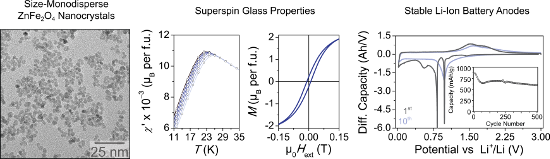
- with Li are accompanied by significant volume changes (mechanical strain), which may result in pulverization of the active material (formation of reactive surfaces) and poor cycling performance. In addition, there is usually a large hysteresis between charge and discharge, which adversely affects the


Improved lithium-ion battery anode capacity with a network of easily fabricated spindle-like carbon nanofibers
Beilstein J. Nanotechnol. 2016, 7, 1289–1295, doi:10.3762/bjnano.7.120
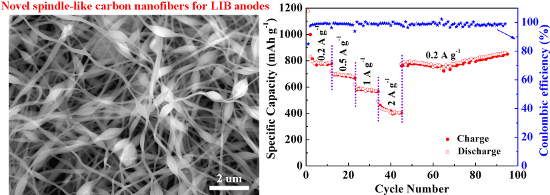
- conversion potential and small voltage hysteresis [8][12][13]. However, as a typical perovskite semiconductor, MnO usually suffers inherently poor conductivity and severe volume change during Li+ insertion/extraction, which can seriously lead to capacity fading and further limit its application [4][5][8


An ellipsometric approach towards the description of inhomogeneous polymer-based Langmuir layers
Beilstein J. Nanotechnol. 2016, 7, 1156–1165, doi:10.3762/bjnano.7.107
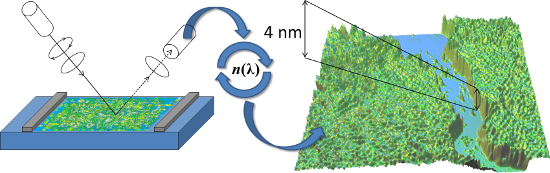
- weights corresponding to lactide and glycolide units, each multiplied with the respective percentage. Hysteresis (compression–expansion) experiments for PPDL-D4 were executed by the following procedure: compression to target pressure (10 mN·m−1), pressure held constant for 10 min and afterwards the


Multiwalled carbon nanotube hybrids as MRI contrast agents
Beilstein J. Nanotechnol. 2016, 7, 1086–1103, doi:10.3762/bjnano.7.102
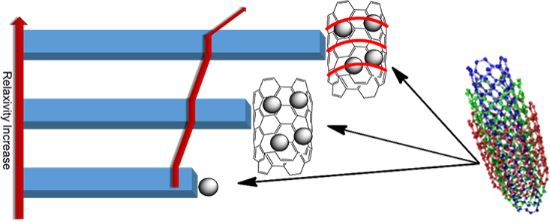
- . Magnetic hysteresis loops close to zero magnetization in a varied magnetic field is typical behavior proving the super- [34][43] or paramagnetic [22] character of the introduced nanoparticles. Initially, the separately produced SPIOs, such as SPIO@Lac-Gly, exhibit higher magnetization, but their anchoring



Customized MFM probes with high lateral resolution
Beilstein J. Nanotechnol. 2016, 7, 1068–1074, doi:10.3762/bjnano.7.100
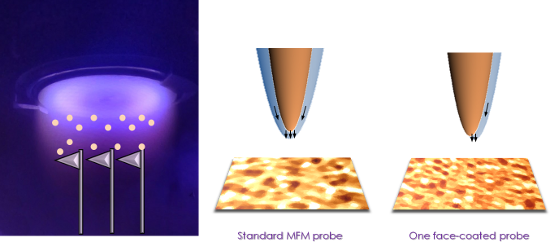
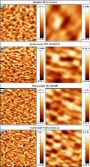
- influence of the dominating shape anisotropy (as deduced from the cross-tie domain walls [22] seen in Figure 1c), in agreement with the macroscopic hysteresis loops measured at room temperature by VSM (Figure 1d). A high remanent magnetization of 82% of the saturation value is found when an IP field is
- Discussion Magnetization reversal process of the custom-made probes A non-conventional MFM-based method previously reported [23] was used to measure local hysteresis loops of the MFM probes [24][25] (see section 2 of Supporting Information File 1 for more details). This approach allows for measuring the
- the external field and extract the intrinsic hysteresis loop of the MFM tip [25]. Typically, a large Barkhausen jump is observed with a well-defined switching field. By doing so, the measured average switching field for the 20 nm Co homemade tip is μ0∙
= (31 ± 4) mT, where a total of 30


Role of solvents in the electronic transport properties of single-molecule junctions
Beilstein J. Nanotechnol. 2016, 7, 1055–1067, doi:10.3762/bjnano.7.99
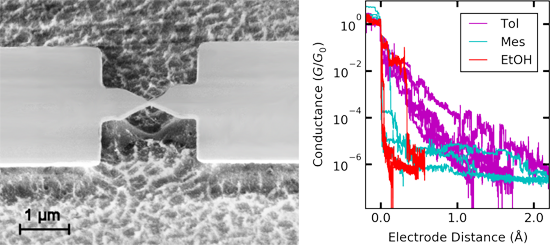
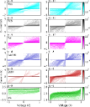
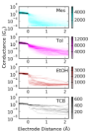
- the hysteresis discussed above. For Tol and TCB occasionally very long breaking traces are observed that indicate the formation of molecular junctions or even stacking of solvent molecules [16]. The observation of fast decrease of conductance corresponds to a high tunnel barrier Φ or a high |E0
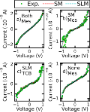
- of I–Vs showing pronounced hysteresis (open), the number of I–Vs that can be fitted with the SLM, the SM, both or none of the models as well as the number of S-shaped but asymmetric I–Vs (asym). The number of I–Vs with jumps or kinks or other irregularities that, therefore, did not fulfil the





Phenalenyl-based mononuclear dysprosium complexes
Beilstein J. Nanotechnol. 2016, 7, 995–1009, doi:10.3762/bjnano.7.92
- , respectively. However, due to the incomplete saturation of the magnetization, a residual slope is observed at high fields indicating the presence of magnetic anisotropy in the material [48][49]. Moreover, no hysteresis effect is observed in all three cases under these conditions. Dynamic magnetic properties As


Synthesis of cobalt nanowires in aqueous solution under an external magnetic field
Beilstein J. Nanotechnol. 2016, 7, 990–994, doi:10.3762/bjnano.7.91
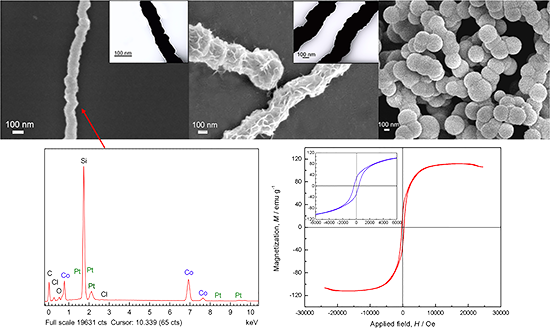
- diffraction mottling were shown in each SAED pattern, which demonstrated that the resultant nanowires possessed crystal structure and PVP had only little impact on that. Figure 4 displays the hysteresis loop measured at room temperature under an applied magnetic field of up to 25000 Oe for the PVP-protected
- cobalt nanowires obtained in aqueous solution under an external magnetic field of 40 mT. An expanded plot is shown in the insert for field strengths between −6000 Oe and 6000 Oe. The hysteresis loop suggested that the synthesized cobalt nanowires were ferromagnetic at room temperature, which differs from
- nanowires prepared with PVP (c) and without PVP (d). The hysteresis loop of the PVP-protected cobalt nanowires prepared under an external magnetic field measured at room temperature. The inset shows the respective expanded plots for fields between −6000 and 6000 Oe. Acknowledgements Financial supports by


Thickness dependence of the triplet spin-valve effect in superconductor–ferromagnet–ferromagnet heterostructures
Beilstein J. Nanotechnol. 2016, 7, 957–969, doi:10.3762/bjnano.7.88
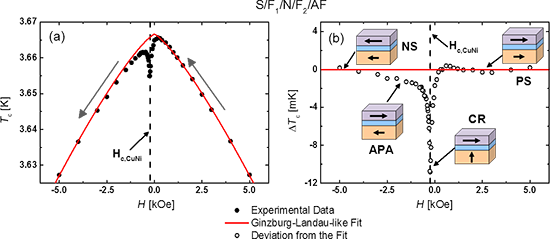
- increasingly hard to evaluate, the thinner the Cu41Ni59 layer is. We should remark, that the present reconstruction of the hysteresis loop is not unambiguous. Moreover, it shows small deviations from the data, especially for the positive sweep direction around H = 0. Possibly, these deviations can be reduced
- by the extended version of the model of Geiler and co-workers [62]. However, this requires the inclusion of three additional fit parameters per layer and sweep direction. This fact, in conjunction with the lack of clear structures in the hysteresis loop, yields mutual dependencies of the parameters
- and, thus, renders the extended model inapplicable. Moreover, even in the simple version of the model, the obtained parameters include an estimated error of about ±10% for ms and ±(10–20)% for the other parameters. Investigations of the hysteresis loops of (Cu41Ni59/Si) × 4 samples show that the


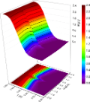

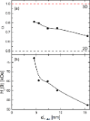


Magnetic switching of nanoscale antidot lattices
Beilstein J. Nanotechnol. 2016, 7, 733–750, doi:10.3762/bjnano.7.65
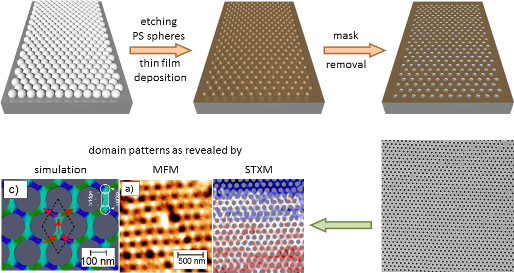
- uniaxial anisotropy with same axis but opposite value of the shape anisotropy. Using this procedure, the shape anisotropy is cancelled out and our simulations are closer to the experiments. During hysteresis, domain nucleation will turn out to be an important factor affecting the reversal process [27]. As
- switching of in-plane magnetized antidot films Integral magnetic properties In this section, we present the magnetic hysteresis loops of Fe, Co, and Py antidot films of varying antidot diameter d as determined by SQUID magnetometry. These integral results – averaged over the thousands of structural domains
- of the antidot lattice – serve as a starting point for the following discussion of microscopic switching mechanisms obtained from magnetic microscopy techniques and micromagnetic simulations. Figure 5a presents the normalized magnetic hysteresis loops of Fe antidot films with d = 45 nm, 140 nm, 160



Coupled molecular and cantilever dynamics model for frequency-modulated atomic force microscopy
Beilstein J. Nanotechnol. 2016, 7, 708–720, doi:10.3762/bjnano.7.63
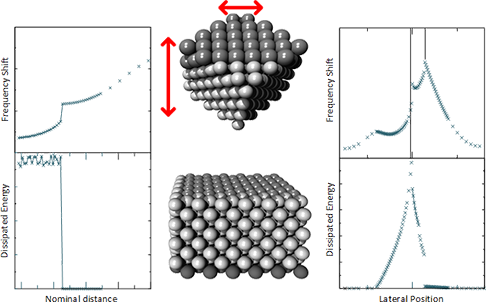
- separately or simultaneously depending on the tip position. These mechanisms are adhesion hysteresis on the one hand and lateral excitations of the cantilever on the other. We find that the short range Lennard-Jones part of the atomic interaction alone is sufficient for changing the predominant mechanism
- . When the long range ionic interaction is switched off, the two damping mechanisms occur with a completely different pattern, which is explained by the energy landscape for the apex atom of the tip. In this case the adhesion hysteresis is always associated with a distinct lateral displacement of the tip
- of the dissipation signal in frequency-modulated atomic force microscopy (FM-AFM) was unclear for a long time, and different effects had been discussed, before it was shown that the main contribution comes from adhesion hysteresis [1][2][3]. However, agreement between theoretical predictions and


Cantilever bending based on humidity-actuated mesoporous silica/silicon bilayers
Beilstein J. Nanotechnol. 2016, 7, 637–644, doi:10.3762/bjnano.7.56
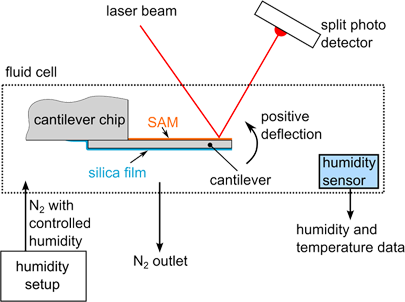
- adsorption and after desorption. Such an offset points to an only partially reversible process and perhaps also to slight drift problems. A clear hysteresis is evident between the adsorption and desorption curves above RH = 50%. This hysteresis in cantilever deflection agrees with the hysteresis seen in
- fluids leads to a non-monotonous deformation of mesoporous materials [12][13]. In particular the so-called strain-isotherm, i.e., the deformation of the porous material as a function of relative fluid pressure, exhibits a similar hysteresis as the sorption isotherm. The observed cantilever bending is


Correlative infrared nanospectroscopic and nanomechanical imaging of block copolymer microdomains
Beilstein J. Nanotechnol. 2016, 7, 605–612, doi:10.3762/bjnano.7.53
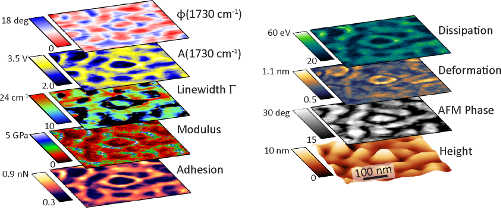
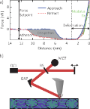
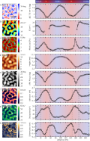
- measure a dissipation (Figure 3g) of 25 eV over PMMA, and 45 eV over PS. The dissipation channel measures the integrated hysteresis between approach and retract and thus directly measures the energy lost to the sample. For purely elastic behavior, the energy loss is dominated by adhesive forces associated
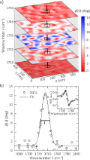


![[Graphic 9]](/bjnano/content/inline/2190-4286-7-53-i10.png?max-width=637&scale=1.18182) (1730 ...
(1730 ...
Nanoscale effects in the characterization of viscoelastic materials with atomic force microscopy: coupling of a quasi-three-dimensional standard linear solid model with in-plane surface interactions
Beilstein J. Nanotechnol. 2016, 7, 554–571, doi:10.3762/bjnano.7.49
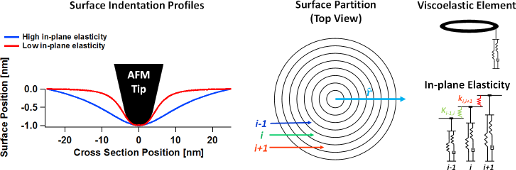
- also worth emphasizing the counterintuitive observation that in Figure 8a the force curves corresponding to a larger 2D surface elastic modulus (which Figure 8f indicates lead to shallower indentations) exhibit the largest amount of dissipation (they have hysteresis loops of larger area [14]). This is
- interesting to note that not only the steepness and the area of the dissipation hysteresis loop changes, but also the maximum attractive force (“well depth” of the curves) can vary. This is because different tip profiles lead to different proximity between the surface elements and the surface of the tip, thus


Contact-free experimental determination of the static flexural spring constant of cantilever sensors using a microfluidic force tool
Beilstein J. Nanotechnol. 2016, 7, 492–500, doi:10.3762/bjnano.7.43
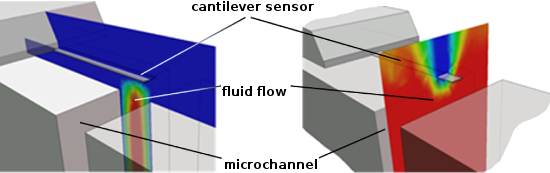
- speed, was first increased and then decreased in the experiment. A slight hysteresis can be observed in the deflection curve for fluid speeds below ≈15 m/s, corresponding to pressure values of <0.8 kPa. To properly normalize the curve to zero deflection, the photodiode signal value at very low speeds
- experienced by the cantilever is due to plan-view-dependent drag as opposed to viscous shear, and the former is not significantly influenced by the presence of the tip. The reason for the observed hysteresis in the speed-dependent deflection (Figure 5) is not entirely clear. Some cantilevers showed no
- hysteresis at all while others showed more pronounced hysteresis, in particular Tap525. A change in the alignment of the cantilever relative to the channel had no effect on the observed phenomenon. The hysteresis could be related to changes in the humidity surrounding the cantilever as the fluid flow of dry


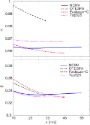


![[Graphic 28]](/bjnano/content/inline/2190-4286-7-43-i34.png?max-width=637&scale=1.18182) value for cantilever NCHV. The dashed line indicates the mean
value for cantilever NCHV. The dashed line indicates the mean ![[Graphic 29]](/bjnano/content/inline/2190-4286-7-43-i35.png?max-width=637&scale=1.18182) value for ...
value for ...
Charge and heat transport in soft nanosystems in the presence of time-dependent perturbations
Beilstein J. Nanotechnol. 2016, 7, 439–464, doi:10.3762/bjnano.7.39
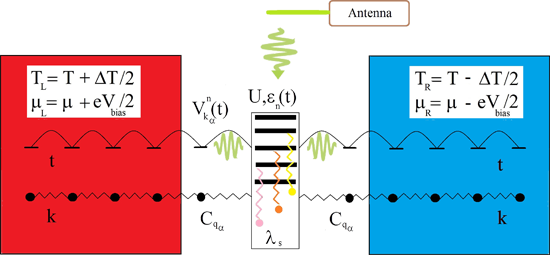
- consequence, intriguing nonlinear phenomena, such as hysteresis, switching, and negative differential conductance have been observed in molecular junctions. In conducting molecules, either the center of mass oscillations [9], or thermally induced acoustic phonons [10] can be the source of coupling between
- of gigahertz. Recently, it has been found that phenomena such as switching, hysteresis, as well as multistability can be observed in NEMS [13]. NEMS have been proposed as high sensitive position and mass sensors [14][15][16][17][18][19][20]. Recently, research at the nanoscale has focused not only on
- and NEMS. In this review, we analyze the adiabatic regime, realized when the internal vibrational modes have frequencies smaller than the hopping rate. Within this regime, one can observe phenomena such as switching, multistability and hysteresis in molecular junctions or NEMS, and study the physics






Rigid multipodal platforms for metal surfaces
Beilstein J. Nanotechnol. 2016, 7, 374–405, doi:10.3762/bjnano.7.34











Hemolysin coregulated protein 1 as a molecular gluing unit for the assembly of nanoparticle hybrid structures
Beilstein J. Nanotechnol. 2016, 7, 351–363, doi:10.3762/bjnano.7.32
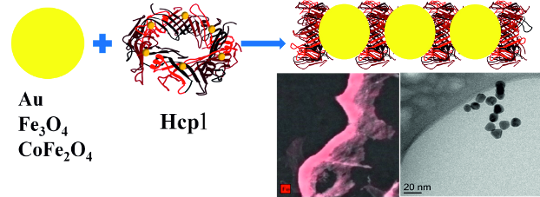
- to a higher squareness value of the hysteresis curve. Thus the Hcp1_cys3 unit is shown to be very versatile in the formation of new biohybrid materials with enhanced magnetic, catalytic and optical properties. Keywords: gold catalyst; hemolysin coregulated protein 1 (Hcp1); magnetic hybrid materials
- magnetization (MS) of 12.81 emu/g, which is similar to the blank NPs of 13.21 emu/g. The hybrid material demonstrates at 2 K a similar hysteresis curve to the Fe3O4 NP with MS of 13.69 emu/g and remanent magnetization (MR) of 2.64 emu/g, but with a higher squareness value (MR/MS ratio) of 0.2 (Figure 10B). The
- from the analyses of the FFTs of HRTEM images of individual particles. The FFT retrieved from the whole chain is shown in the inset and is overlaid with the diffraction pattern of magnetite. A) and B) Hysteresis curves at 300 K and 2 K, respectively. C) ZFC curves of the fibers and pure NPs, which show




High-bandwidth multimode self-sensing in bimodal atomic force microscopy
Beilstein J. Nanotechnol. 2016, 7, 284–295, doi:10.3762/bjnano.7.26
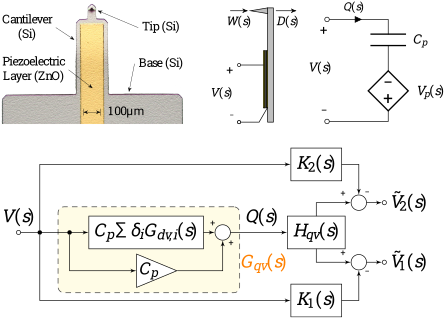
- amplitude branch as can be seen in Figure 9c and Figure 9g. It is worth noting that for this case, the fifth mode amplitudes obtained from the OBD sensor and from the charge sensor form a hysteresis loop and more significantly show inverse behavior for small separations (compare Figure 9d and Figure 9h). As


Influence of calcium on ceramide-1-phosphate monolayers
Beilstein J. Nanotechnol. 2016, 7, 236–245, doi:10.3762/bjnano.7.22
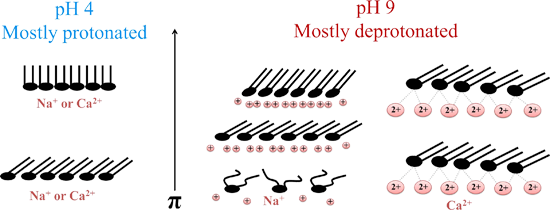
- monolayers in the condensed state are not perfectly reproducible concerning the areas per molecule (as already reported by Kooijman [8]). They exhibit hysteresis between compression and decompression, which proves the highly crystalline state of these systems and leads to limitations in a precise


Single-molecule magnet behavior in 2,2’-bipyrimidine-bridged dilanthanide complexes
Beilstein J. Nanotechnol. 2016, 7, 126–137, doi:10.3762/bjnano.7.15
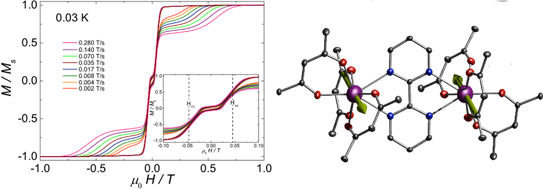
- with the presence of hysteresis loops. Keywords: bipyrimidine; diketone; hysteresis; lanthanide; magnetism; Introduction The application of magnetic molecular compounds within molecular electronic devices is combined in the progressive field of spintronics. An anisotropic spin is confined by the
- total spin, leading to slow magnetic relaxation and magnetic hysteresis at low temperatures. Combined with their long coherence times they could open the door to quantum computing [5][6]. After the first SMM was discovered in 1980 [7][8], for the next 15 years the SMM field was dominated by cluster
- was measured using AC, DC and micro-SQUID magnetometry techniques. The homo-dinuclear complexes of Dy(III) and Er(III) show single-molecule magnet behavior featuring hysteresis loops. The [Tb(tmhd)3]2bpm was sublimated on Au(111) surfaces and scanning tunneling microscopy results are presented in this





