Search results
Search for "light source" in Full Text gives 208 result(s) in Beilstein Journal of Nanotechnology. Showing first 200.
Nanostructure sensitization of transition metal oxides for visible-light photocatalysis
Beilstein J. Nanotechnol. 2014, 5, 696–710, doi:10.3762/bjnano.5.82
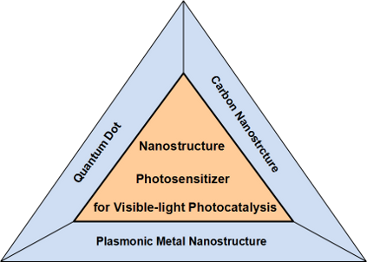
- , because the bandgap of CdS is much narrower, the same light source may be able to generate electron–hole pairs and excite the electrons from the VB to the CB of CdS. Because the CB of CdS is more negative than that of TiO2, the photogenerated electrons will transfer from the CB of CdS to the CB of the




Effects of the preparation method on the structure and the visible-light photocatalytic activity of Ag2CrO4
Beilstein J. Nanotechnol. 2014, 5, 658–666, doi:10.3762/bjnano.5.77
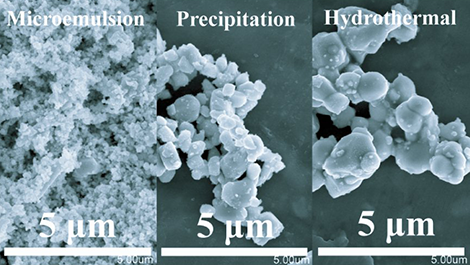
- used as a visible-light source to drive the photocatalytic reaction. The concentration of MB was determined by a UV–vis spectrophotometer (UV2550, Shimadzu, Japan). After irradiation for every 15 min, the reaction solution was taken out to measure the concentration change of MB. As for the MB aqueous


High activity of Ag-doped Cd0.1Zn0.9S photocatalyst prepared by the hydrothermal method for hydrogen production under visible-light irradiation
Beilstein J. Nanotechnol. 2014, 5, 587–595, doi:10.3762/bjnano.5.69
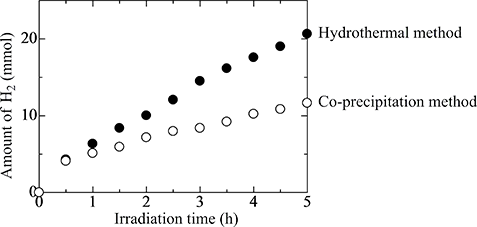
- reaction. A 500 W halogen lamp was used as the visible-light source. Hydrogen gas evolved was identified by an online system with thermal conductivity detector (TCD) gas chromatography (GC, Agilent 7890A) using Supelco 13X molecular sieves and argon carrier gas, which amount was measured by volumetric


Artificial sunlight and ultraviolet light induced photo-epoxidation of propylene over V-Ti/MCM-41 photocatalyst
Beilstein J. Nanotechnol. 2014, 5, 566–576, doi:10.3762/bjnano.5.67
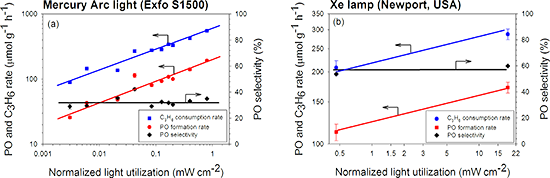
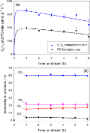
- , National Chiao Tung University, Hsin Chu 300, Taiwan 10.3762/bjnano.5.67 Abstract The light irradiation parameters, including the wavelength spectrum and intensity of light source, can significantly influence a photocatalytic reaction. This study examines the propylene photo-epoxidation over V-Ti/MCM-41
- lower cut-off wavelength of irradiation light (260 nm for UV, 200 nm for visible light and 310 nm for artificial light) to the cut-off absorbance of the catalyst (380 nm). The ratio of the integrated absorbance over the filtered range of the light source to the total absorption capacity is defined as
- with the calculated NLU, regardless of the filtered wavelength range. For the UV light source (Figure 9a), it suggests that the photon flux, i.e., the light intensity, is equally efficient for the photo-epoxidation of propylene when the wavelengths of photon were filtered to 365, 350–500, or 250–400 nm




Encapsulation of nanoparticles into single-crystal ZnO nanorods and microrods
Beilstein J. Nanotechnol. 2014, 5, 485–493, doi:10.3762/bjnano.5.56
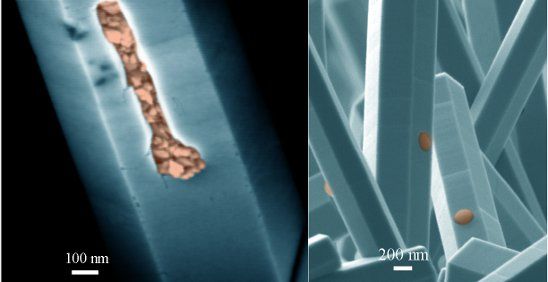
- –matter interaction within those crystals, the luminescence of the cavity material has been conventionally used as a light source. Under excitation, ZnO emits UV light at about 380 nm ascribed to its wide band gap (Eg ≈ 3.4 eV). With crystal defects such as oxygen vacancies, ZnO show visible


Noise performance of frequency modulation Kelvin force microscopy
Beilstein J. Nanotechnol. 2014, 5, 1–18, doi:10.3762/bjnano.5.1
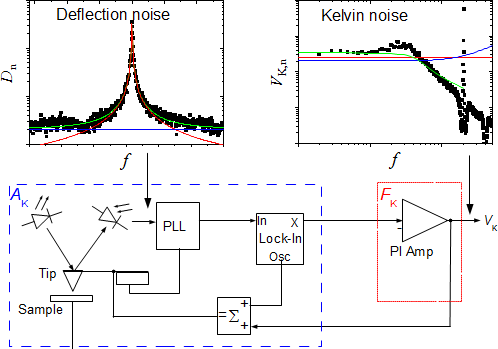
- the exchange of the light source in the optical beam deflection sensor has already decreased the detector noise by an order of magnitude with respect to the original value, and that otherwise for the same choice of bandwidth, the detector noise would be dominating and the Kelvin signal fluctuation
- mW. About 0.5 mW intensity is received by the photodiode, which was estimated from its known current–intensity characteristics. To compensate the increased intensity of the light source, the gain of the transimpedance amplifier was reduced accordingly to avoid output voltage saturation. The sample is





Challenges in realizing ultraflat materials surfaces
Beilstein J. Nanotechnol. 2013, 4, 875–885, doi:10.3762/bjnano.4.99
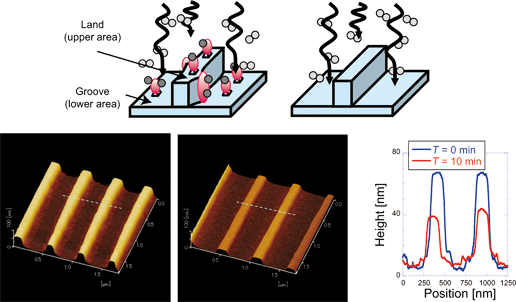
- use a light source of shorter wavelengths to excite the carriers in TiO2, so that the generated electrons and holes induce a photocatalytic effect and etch the substrate [12]. Those techniques resulted in ultraflat surfaces with Ra values as small as 2 Å. Although CeO2 is not required in this
- to fabricate structures of several tens of nanometres in size by introducing near fields with the use of a visible light source [18]. Such advances can lead to the realization of systems that do not require EUV light sources, which are currently of limited practical use in industry because the
- etching (i.e., nonadiabatic photoetching). We note that in the AFM images shown, the tilt in the scan was compensated by using the third-order least-squares method. The light source for the conventional photoetching was a 5.82 eV light (λ = 213 nm; 20 Hz; pulse width 5 ns), the energy of which was higher

Modulation of defect-mediated energy transfer from ZnO nanoparticles for the photocatalytic degradation of bilirubin
Beilstein J. Nanotechnol. 2013, 4, 714–725, doi:10.3762/bjnano.4.81
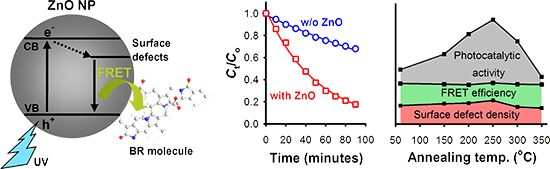
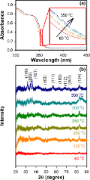
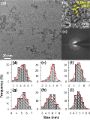
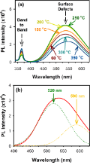
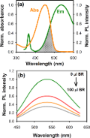
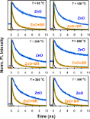
- deficiency of important enzymes in the body [4]. At present, phototherapy, the treatment of various diseases with light irradiation, is the most widely used treatment for neonatal jaundice. In it, the unconjugated (Z,Z)-BR isomers are converted to water-soluble (Z,E)-BR isomers by using a light source


Influence of particle size and fluorination ratio of CFx precursor compounds on the electrochemical performance of C–FeF2 nanocomposites for reversible lithium storage
Beilstein J. Nanotechnol. 2013, 4, 705–713, doi:10.3762/bjnano.4.80
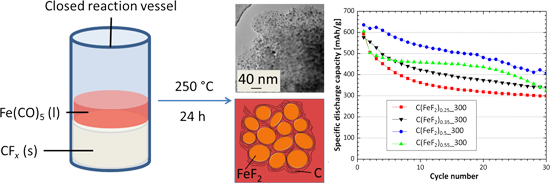
- ). As excitation light source a HeNe gas laser from JDS Uniphase was used at a wavelength of 632.8 nm. The beam was focused through a 100× objective onto the sample. The Raman-scattered light was separated from the laser excitation light by using a holographic notch filter, and spectrally analyzed by


Deformation-induced grain growth and twinning in nanocrystalline palladium thin films
Beilstein J. Nanotechnol. 2013, 4, 554–566, doi:10.3762/bjnano.4.64
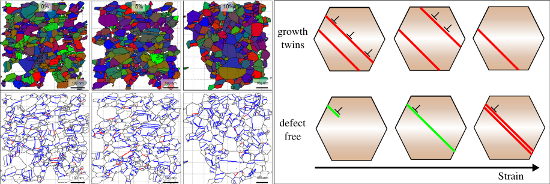
- used for in-situ SXRD deformation experiments at the Material Science Beamline of the Swiss Light Source [28][45]. These samples were also subjected to tensile deformation at room temperature at a similar strain rate. In these experiments the samples were loaded in two cycles, first to a maximum
- authors would also like to thank A. Bergamaschi, A. Cervellino, F. Gozzo and B. Schmitt for their excellent support at the MS beamline of the Swiss Light Source.


A nano-graphite cold cathode for an energy-efficient cathodoluminescent light source
Beilstein J. Nanotechnol. 2013, 4, 493–500, doi:10.3762/bjnano.4.58
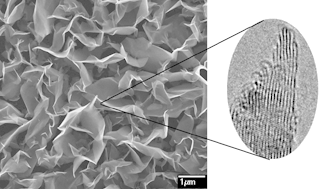
- and other characteristics. Keywords: cathodoluminescence; electron field emission; light source; nano-graphite; vacuum electronics; Introduction The fundamental importance of light in our lives cannot be overstated. The sun is the only natural source of light emission with appropriate intensity
- an excellent total power efficiency of the CL light source, which is about 10% (for green light) at current laboratory stage. Another advantage of this technology is the potential ability to provide light sources with any colors by simply mixing the phosphor materials. Experimental NGF materials were


Characterization of electroforming-free titanium dioxide memristors
Beilstein J. Nanotechnol. 2013, 4, 467–473, doi:10.3762/bjnano.4.55
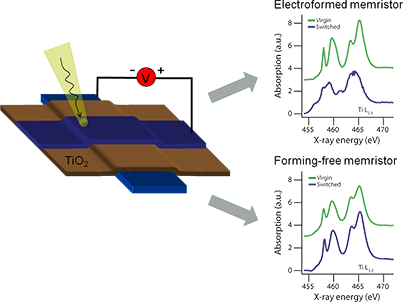
- -970, Brazil Universidade Federal de Minas Gerais, 31270-901, Belo Horizonte, MG, Brazil Advanced Light Source, Lawrence Berkeley National Laboratory, Berkeley, CA 94720, USA 10.3762/bjnano.4.55 Abstract Metal–insulator–metal (MIM) structures based on titanium dioxide have demonstrated reversible and
- performed using scanning transmission X-ray microscopy (STXM) at the Advanced Light Source in the Lawrence Berkeley National Laboratory. STXM allows spatially-resolved X-ray absorption spectroscopy (XAS) to be performed on a sample and is well-suited for chemical and structural characterization of the thin
- supported by the U.S. Government's Nano-Enabled Technology Initiative. Work at the Advanced Light Source at Lawrence Berkeley National Laboratory is supported by the Director, Office of Science, Office of Basic Energy Sciences, of the U.S. Department of Energy under Contract No. DE-AC02-05CH11231. We



Porous polymer coatings as substrates for the formation of high-fidelity micropatterns by quill-like pens
Beilstein J. Nanotechnol. 2013, 4, 377–384, doi:10.3762/bjnano.4.44
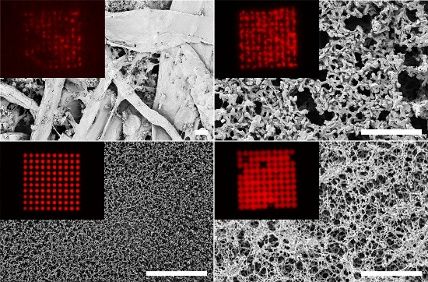
- . Polymerization was carried out on an OAI Model 30 deep-UV collimated light source (San Jose, CA) fitted with an USHIO 500 W Hg-xenon lamp (Japan). Irradiation intensity was calibrated by using an OAI 360 UV power meter with a 260 nm probe head. Monomers were purchased from Sigma-Aldrich (Germany). Further


Photoresponse from single upright-standing ZnO nanorods explored by photoconductive AFM
Beilstein J. Nanotechnol. 2013, 4, 208–217, doi:10.3762/bjnano.4.21
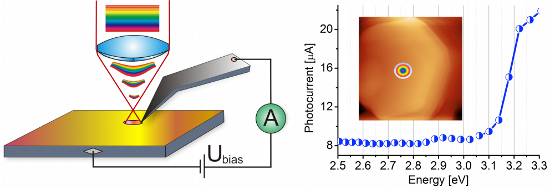
- carry out PC-AFM experiments, the setup was extended with an external illumination system, which consists of a 150 W Xenon lamp (white-light source) connected to an Omni-λ 150 monochromator (LOT-Oriel, wavelength continuously tunable from about 300 nm to over 1 μm), an optical fiber, and several
- collimating lenses. A calibration curve, which accounts for both the transmittance of the optical system and the emission spectrum of the light source, was recorded and used for the correction of the photocurrent spectra. The illumination from the AFM feedback laser diode, which has a wavelength of ≈850 nm
- 5a reveals that the sample becomes photosensitive at ≈400 nm (3.1 eV). To estimate a band-gap energy that could be compared with the values derived from the PL experiments, we normalized the data presented in Figure 5a taking into account the emission spectrum of our light source (i.e., we switched



Thermal noise limit for ultra-high vacuum noncontact atomic force microscopy
Beilstein J. Nanotechnol. 2013, 4, 32–44, doi:10.3762/bjnano.4.4
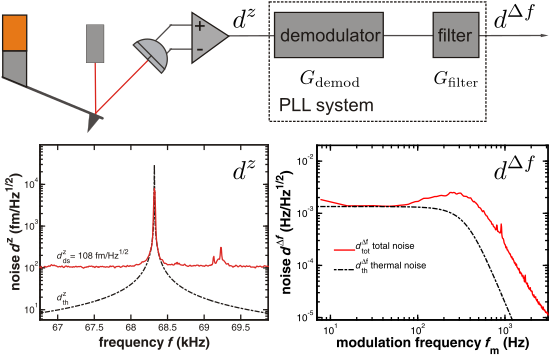
- temperature fluctuations and mechanical instability. It has been shown, however, that by operating the laser diode with radio-frequency modulation, the contribution of the light source to the total noise can be reduced to a negligible minimum [3]. The issue of noise is intimately related to the requirements
- (Nanosurf AG, Liestal, Switzerland) for frequency demodulation. The AFM/STM setup has been modified by replacing the light source (light-emitting diode exchanged with a laser diode) and using optimised preamplifiers. Preamplifiers have been optimised for low-noise operation at frequencies around 100 kHz and
- 300 kHz, respectively, and are exchanged depending on the eigenfrequency of the cantilever. Details on this modification and the frequency response of the preamplifiers can be found in [7]. The light source is a 48TE-SOT (Schäfter+Kirchhoff GmbH, Hamburg, Germany) and emits light at a wavelength of


![[Graphic 53]](/bjnano/content/inline/2190-4286-4-4-i64.png?max-width=637&scale=1.18182) =
= ![[Graphic 32]](/bjnano/content/inline/2190-4286-4-4-i43.png?max-width=637&scale=1.18182) f...
f...


![[Graphic 56]](/bjnano/content/inline/2190-4286-4-4-i67.png?max-width=637&scale=1.18182) using three diff...
using three diff...

Diamond nanophotonics
Beilstein J. Nanotechnol. 2012, 3, 895–908, doi:10.3762/bjnano.3.100
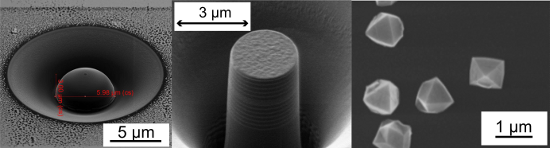
- measurement through a single-pillar resonator is shown in Figure 8e. The transmission spectrum is dominated by the fundamental mode HE11 of the pillar microcavity. Also a faint first HE01/HE2 and third HE12 excited mode is discernible (Figure 8e). Since the incoherent light source generates an approximately





Characterization and properties of micro- and nanowires of controlled size, composition, and geometry fabricated by electrodeposition and ion-track technology
Beilstein J. Nanotechnol. 2012, 3, 860–883, doi:10.3762/bjnano.3.97
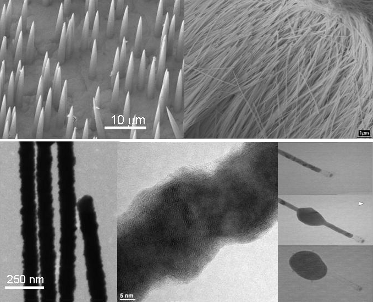


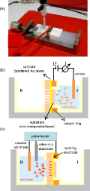
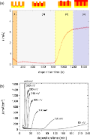
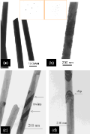






Tuning the properties of magnetic thin films by interaction with periodic nanostructures
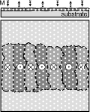
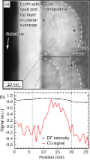
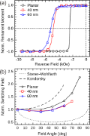
Beilstein J. Nanotechnol. 2012, 3, 831–842, doi:10.3762/bjnano.3.93
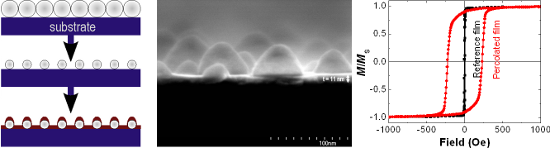
- , selected samples were investigated by STXM at the PolLux beamline at the Swiss Light Source, Paul-Scherrer-Institute in Villigen, Switzerland. The setup has been presented in detail elsewhere [30]. Percolated Fe films were prepared on commercial Si3N4 membranes (thickness 100 nm) in-line with the
- C7 within the collaborative research center SFB 569 funded by the Deutsche Forschungsgemeinschaft (DFG). We thank Jörg Raabe for beamtime assistance at the PolLux Beamline at the Swiss Light Source, Paul-Scherrer-Institute, Villigen, Switzerland. PolLux is funded by the BMBF (project no. 05KS7WE1


Revealing thermal effects in the electronic transport through irradiated atomic metal point contacts
Beilstein J. Nanotechnol. 2012, 3, 703–711, doi:10.3762/bjnano.3.80
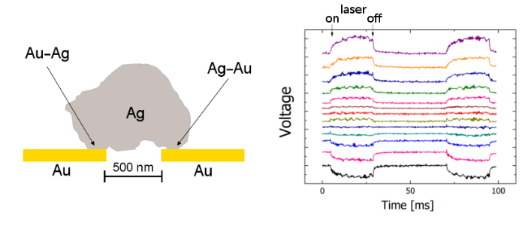
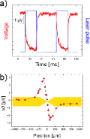
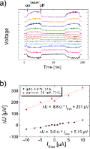
- electrolyte. An Ar/Kr laser with output power of 5 mW and 532 nm wavelength was used as the light source. Laser pulses of 0.1 s length and 0.2 s dark time were produced by a mechanical chopper wheel, and the laser was focused to a spot with diameter of 100 μm by an optical lens. Electron-beam lithography





Junction formation of Cu3BiS3 investigated by Kelvin probe force microscopy and surface photovoltage measurements
Beilstein J. Nanotechnol. 2012, 3, 277–284, doi:10.3762/bjnano.3.31
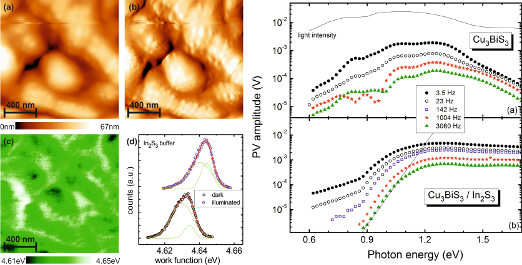
- measurements is much smaller than that found in [7], since the present measurements were performed with modulated light and with a different light source/intensity. On the other hand, the behavior of the phase angle can help to distinguish dominant processes of charge separation and recombination. The peaks in


Variations in the structure and reactivity of thioester functionalized self-assembled monolayers and their use for controlled surface modification
Beilstein J. Nanotechnol. 2012, 3, 213–220, doi:10.3762/bjnano.3.24
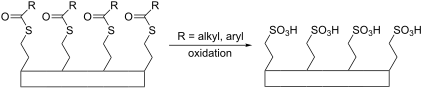
- were also carried out by using a UV-A (320–400 nm) light source and exposure times of up to 132 h. These experiments are summarized in Figure 5. It is clear that the acetyl group in 1a is not cleaved by the longer wavelength light, even after 132 h. SAMs based on compounds 2 and 3 show some


Impact of cell shape in hierarchically structured plant surfaces on the attachment of male Colorado potato beetles (Leptinotarsa decemlineata)
Beilstein J. Nanotechnol. 2012, 3, 57–64, doi:10.3762/bjnano.3.7
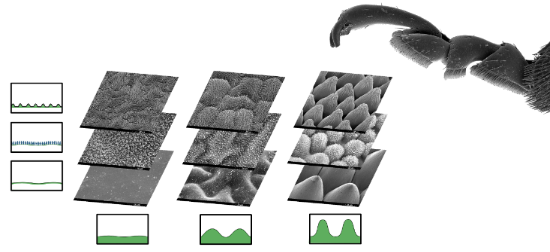
- light source (l). Adapted from [8]. Dimensions of structuring of plant surfaces tested (n = 10). Aspect ratio β = width/height of epidermal cell curvature. n/a = not applicable. Plant species selected. In square brackets: Accession number of the Botanical Garden of Freiburg. Acknowledgements We thank


Highly efficient ZnO/Au Schottky barrier dye-sensitized solar cells: Role of gold nanoparticles on the charge-transfer process
Beilstein J. Nanotechnol. 2011, 2, 681–690, doi:10.3762/bjnano.2.73
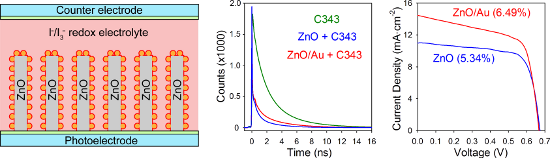
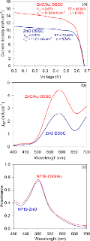
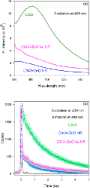
- DSSC J–V characteristics were performed under 1 sun, AM 1.5 G (air mass 1.5 global, 100 mW/cm2) illumination by using a 150 W small-beam solar simulator (Sciencetech, model SF150) as a light source and a Keithley 617 programmable electrometer as a voltage source. FESEM images showing (a) the top view



Femtosecond time-resolved photodissociation dynamics of methyl halide molecules on ultrathin gold films
Beilstein J. Nanotechnol. 2011, 2, 618–627, doi:10.3762/bjnano.2.65
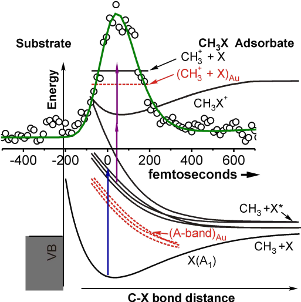
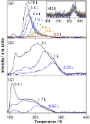
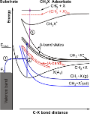
- , just a small amount of C–I bond cleavage of CH3I at monolayer coverage on Pt(111) was observed after a long period (120 min) of irradiation with a 100 W Hg arc lamp [29]. In the present experiment a much more intense light source, i.e., a fs-laser, was employed. Therefore, in our experiment the


Investigation on structural, thermal, optical and sensing properties of meta-stable hexagonal MoO3 nanocrystals of one dimensional structure
Beilstein J. Nanotechnol. 2011, 2, 585–592, doi:10.3762/bjnano.2.62
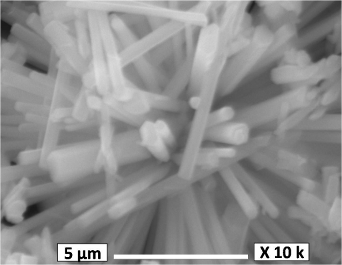
- % reflectance), on which a fine-ground powder was pressed. The spectrum was recorded at room temperature in the wavelength range 230–700 nm at a rate of 1 nm/s. Ethanol vapor sensing was performed with a fiber optics sensor arrangement with a white light source (Model SL1, StellarNet Inc., USA with wavelength