


Search results
Search for "optics" in Full Text gives 283 result(s) in Beilstein Journal of Nanotechnology. Showing first 200.
In-situ monitoring by Raman spectroscopy of the thermal doping of graphene and MoS2 in O2-controlled atmosphere
Beilstein J. Nanotechnol. 2017, 8, 418–424, doi:10.3762/bjnano.8.44
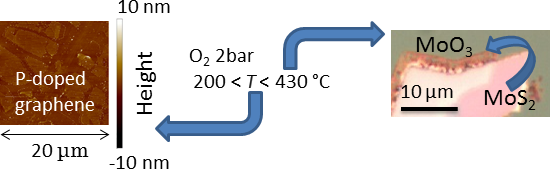
- availability of Gr paved the way for studies and applications in many fields of materials science and technology including optics, electronics, and photovoltaics [5][6]. In these contexts, different growth processes optimized to obtain large area-samples, comprising epitaxial growth on silicon carbide [7][8


Selective photodissociation of tailored molecular tags as a tool for quantum optics
Beilstein J. Nanotechnol. 2017, 8, 325–333, doi:10.3762/bjnano.8.35
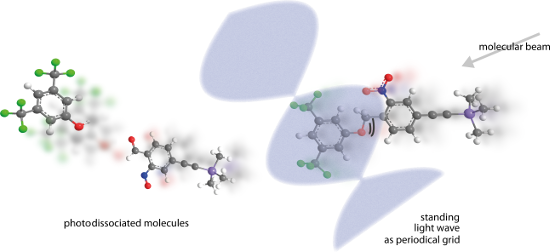
- synthetic chemistry and molecular quantum optics has enabled demonstrations of the quantum mechanical wave–particle duality for complex particles, with masses exceeding 10 kDa. Future experiments with even larger objects will require new optical preparation and manipulation methods that shall profit from
- the possibility to cleave a well-defined molecular tag from a larger parent molecule. Here we present the design and synthesis of two model compounds as well as evidence for the photoinduced beam depletion in high vacuum in one case. Keywords: molecular quantum optics; photodepletion
- objects. Both will be crucial for molecular quantum optics and future matter-wave experiments. An open future challenge will be to explore how well this method scales with the size of particles from individual monomer to trimers, chromophore-labelled biomolecules up to decorated viruses, as displayed as


Photo-ignition process of multiwall carbon nanotubes and ferrocene by continuous wave Xe lamp illumination
Beilstein J. Nanotechnol. 2017, 8, 134–144, doi:10.3762/bjnano.8.14
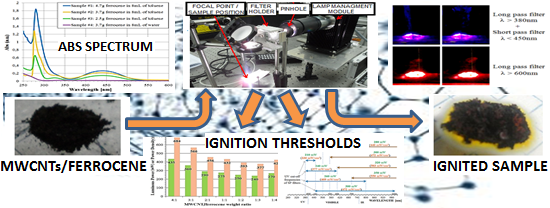
- and its derivatives mixed with other gaseous or liquid materials find more and more use in several areas [17] such as asymmetric catalysis, nonlinear optics [18], electro-chemistry [19] (due to the quasi-reversible oxidation of iron, e.g., Fe(II) oxide), and finally, in advanced fuel combustion




Sub-nanosecond light-pulse generation with waveguide-coupled carbon nanotube transducers
Beilstein J. Nanotechnol. 2017, 8, 38–44, doi:10.3762/bjnano.8.5
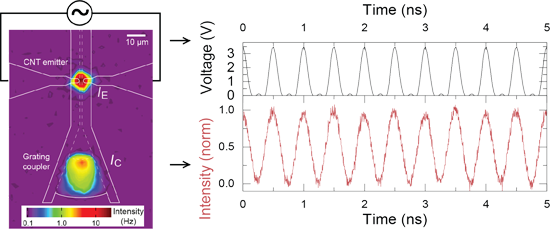
- , which generate optical pulse trains in the range from 200 kHz to 2 GHz with decay times below 80 ps. Our results illustrate the potential of CNTs for hybrid optoelectronic systems and nanoscale on-chip light sources. Keywords: carbon nanotubes; infrared; integrated optics devices; nanomaterials


Grazing-incidence optical magnetic recording with super-resolution
Beilstein J. Nanotechnol. 2017, 8, 28–37, doi:10.3762/bjnano.8.4
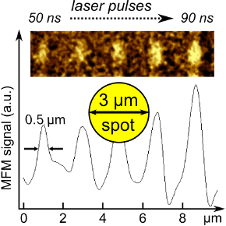
- pivotal prerequisite for this approach would be a large magnetic field gradient of the write pole as in PMR. With appropriate optics and the resulting improved laser focus, not only could the hot spot size be shrunk significantly, but also the power density at the recording disk could easily be increased


Effect of Anderson localization on light emission from gold nanoparticle aggregates
Beilstein J. Nanotechnol. 2016, 7, 2013–2022, doi:10.3762/bjnano.7.192
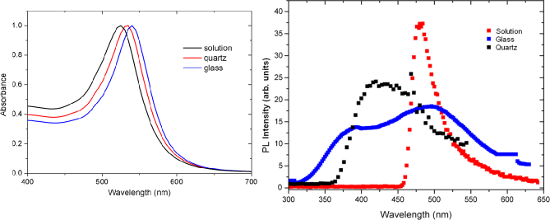
- phosphate, potassium titanyl phosphate or lithium niobate. This effect can be ascribed to the fractal-like shape or statistical self-similarity of the AuNP arrangement [14]. The concept of fractal-like design in optics was introduced for the first time by Stockman [14]. In a chain of particles, the self


Prediction of the mechanical properties of zeolite pellets for aerospace molecular decontamination applications
Beilstein J. Nanotechnol. 2016, 7, 1761–1771, doi:10.3762/bjnano.7.169
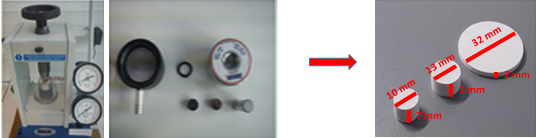
- optics could become covered by molecules, leading to a deterioration of these tools. Porous alumina, silica, zeolites and charcoal have been tested to solve the molecular contamination issue, and zeolites have been selected as the best candidates. At very low concentration, zeolites are able to trap


Dynamic of cold-atom tips in anharmonic potentials
Beilstein J. Nanotechnol. 2016, 7, 1543–1555, doi:10.3762/bjnano.7.148
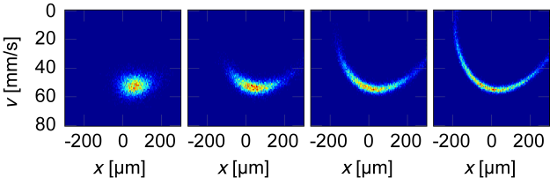
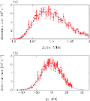
- microscopes [2][3], various methods have emerged for detecting topographic [4], electromagnetic [5][6], thermal [7] and even chemical properties [8][9] of matter. At the same time, the research field of quantum atom optics provided access to new “quantum matter” [10][11]. Since then, ultracold atoms have been
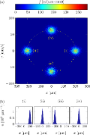
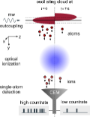
- approximated plane [51]. The outcoupled atoms leave the trap and become ionized via a three-photon ionization process. The resulting ion beam is captured and guided by an ion optics [55] and finally detected by a channel electron multiplier (CEM) [56][57], yielding single-atom resolution. While individual
- leave the trap and become ionized via a three-photon ionization process with lasers at 778 nm and 1064 nm. The resulting ion beam is captured and guided by ion optics [55] (not shown) and finally detected by a channel electron multiplier (CEM) [56][57]. Individual ions are detected with temporal




A composite structure based on reduced graphene oxide and metal oxide nanomaterials for chemical sensors
Beilstein J. Nanotechnol. 2016, 7, 1421–1427, doi:10.3762/bjnano.7.133
- Vardan Galstyan Elisabetta Comini Iskandar Kholmanov Andrea Ponzoni Veronica Sberveglieri Nicola Poli Guido Faglia Giorgio Sberveglieri Sensor Lab, CNR, National Institute of Optics (INO), Via Valotti 9, 25133 Brescia, Italy Sensor Lab, Department of Information Engineering, University of Brescia


Dealloying of gold–copper alloy nanowires: From hillocks to ring-shaped nanopores
Beilstein J. Nanotechnol. 2016, 7, 1361–1367, doi:10.3762/bjnano.7.127
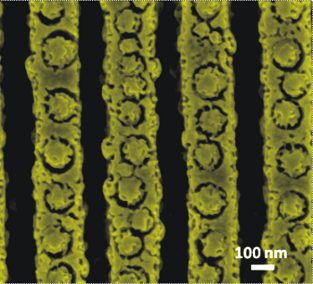
- fields including microelectronics, optics, biotechnology and protective coatings [2]. In the last few years, PVD started to be used for the growth of one-dimensional (1D) nanostructures such as nanowires [3], nanorods [4] and nanosprings [5]. Although such approaches are very practical, controlling the




Diameter-driven crossover in resistive behaviour of heavily doped self-seeded germanium nanowires
Beilstein J. Nanotechnol. 2016, 7, 1284–1288, doi:10.3762/bjnano.7.119
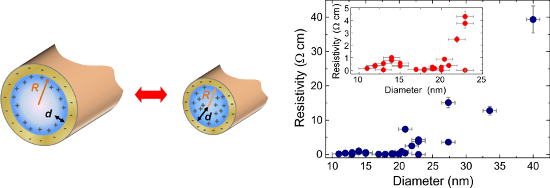
- spatial spreading of the free holes towards the nanowire centre upon diameter reduction. Keywords: diameter-dependence; germanium; nanowire; resistivity; self-seeded; Findings Semiconducting nanowires are in the focus of research due to their potential applications in electronics and optics [1][2][3][4

Photocurrent generation in carbon nanotube/cubic-phase HfO2 nanoparticle hybrid nanocomposites
Beilstein J. Nanotechnol. 2016, 7, 1075–1085, doi:10.3762/bjnano.7.101
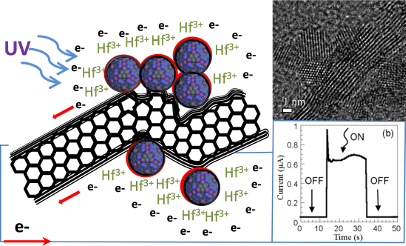
- a 325 nm wavelength CW He–Cd laser with an output power of 6 mW as an excitation source. The emission was collected by a microscope and directed to a fiber optic spectrometer (Ocean Optics, USB4000) with a spectral resolution of 2 nm. The electrical measurements were carried out using a source


A terahertz-vibration to terahertz-radiation converter based on gold nanoobjects: a feasibility study
Beilstein J. Nanotechnol. 2016, 7, 983–989, doi:10.3762/bjnano.7.90
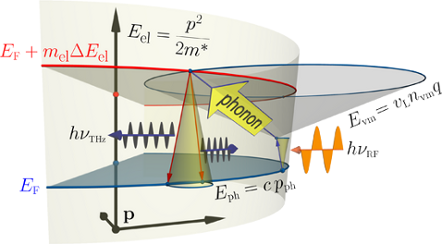
- ; nanobar; nanoring; terahertz emitter; Introduction The terahertz (THz) range of the electromagnetic waves, the range between microwaves and infrared (IR), is often discussed in reference to the “terahertz gap”, where “electronics meets optics”. The corresponding radiation, exhibiting properties common to



Large-scale fabrication of achiral plasmonic metamaterials with giant chiroptical response
Beilstein J. Nanotechnol. 2016, 7, 914–925, doi:10.3762/bjnano.7.83
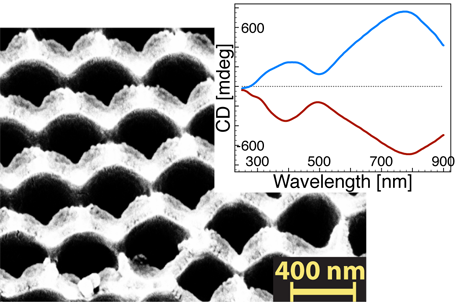
- implementations in various fields such as optics [1], improved photovoltaic devices [2], electronics [3], surface-enhanced infrared spectroscopy [4], Raman spectroscopy [5] and biosensors [6]. Planar chiral metamaterials (PCMs) have also attracted attention because of their negative refractive index [7][8] and

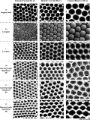


![[Graphic 2]](/bjnano/content/inline/2190-4286-7-83-i2.png?max-width=637&scale=1.18182) , of incident light with respect to the ECM structures.
, of incident light with respect to the ECM structures.



The role of morphology and coupling of gold nanoparticles in optical breakdown during picosecond pulse exposures
Beilstein J. Nanotechnol. 2016, 7, 869–880, doi:10.3762/bjnano.7.79
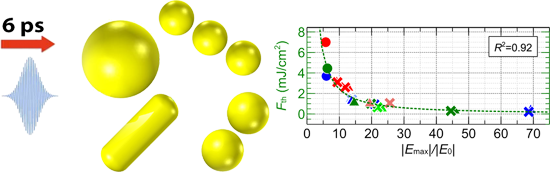
- ; Introduction Over the last decade the interaction of pulsed lasers with gold nanoparticles has been studied in many emerging fields, such as sensing and medical diagnostics and therapy [1][2]. This interest is sparked by the ability to overcome diffraction-limited optics and to control electromagnetic field





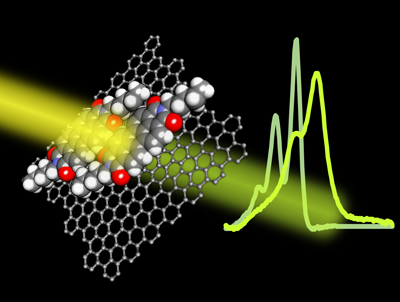
Optical absorption signature of a self-assembled dye monolayer on graphene
Beilstein J. Nanotechnol. 2016, 7, 862–868, doi:10.3762/bjnano.7.78
- combining two successive images with downward and upward slow-scan directions. Optical absorption spectra at normal incidence were obtained with a Perkin-Elmer Lambda 650 spectrometer. Optical microspectroscopy was adapted on an Olympus IX71 microscope equipped with an Ocean Optics spectrometer QE-Pro



Efficient electron-induced removal of oxalate ions and formation of copper nanoparticles from copper(II) oxalate precursor layers
Beilstein J. Nanotechnol. 2016, 7, 852–861, doi:10.3762/bjnano.7.77
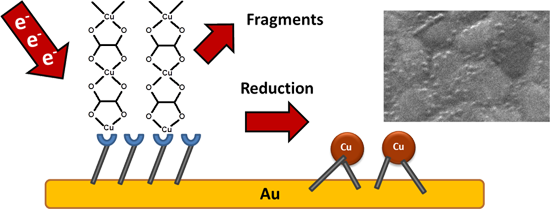
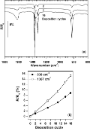
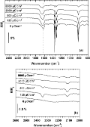
- between 4 and 16 to generate layers with different thickness and, consequently, metal content. Reflection absorption infrared spectroscopy Reflection absorption infrared (RAIR) spectra between 4000 and 500 cm−1 were recorded using an evacuated FTIR spectrometer (IFS 66v/S, Bruker Optics GmbH) by


Assembling semiconducting molecules by covalent attachment to a lamellar crystalline polymer substrate
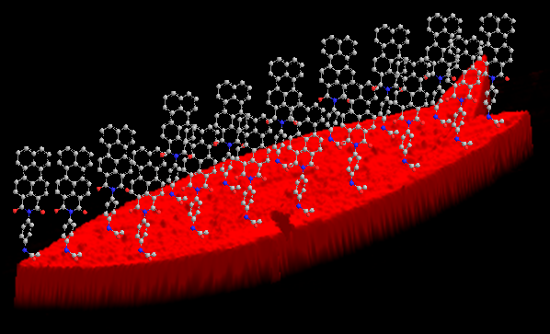
Beilstein J. Nanotechnol. 2016, 7, 784–798, doi:10.3762/bjnano.7.70


Fabrication and properties of luminescence polymer composites with erbium/ytterbium oxides and gold nanoparticles
Beilstein J. Nanotechnol. 2016, 7, 630–636, doi:10.3762/bjnano.7.55
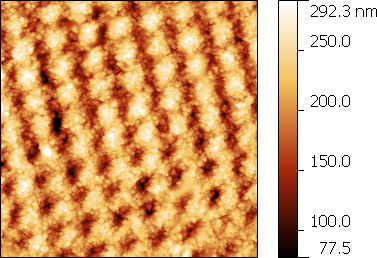
- interaction length of about 5 mm, which is sufficient for applications in integrated optics. It is an important task to create such functional materials with high concentrations of Er for waveguides of integrated optical systems that can realize amplification in a few millimeters long waveguide instead of


Molecular machines operating on the nanoscale: from classical to quantum
Beilstein J. Nanotechnol. 2016, 7, 328–350, doi:10.3762/bjnano.7.31
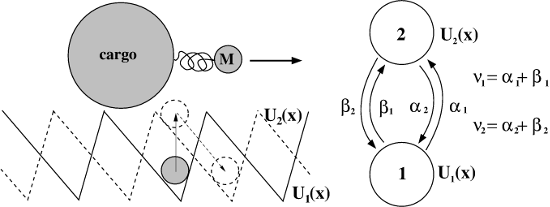
- particles and fields (a quantum field theory approach). Nevertheless, Lindblad theory and its allies, for example, the stochastic Schroedinger equation [16], are extremely useful in quantum optics where the dissipation strength is very small. The application to condensed matter with appreciably strong

![[Graphic 40]](/bjnano/content/inline/2190-4286-7-31-i86.png?max-width=637&scale=1.18182) with depth ε. Bias Δμ < 0 per one rotation tur...
with depth ε. Bias Δμ < 0 per one rotation tur...

![[Graphic 48]](/bjnano/content/inline/2190-4286-7-31-i94.png?max-width=637&scale=1.18182) , for the most asymmetric sawtooth mod...
, for the most asymmetric sawtooth mod...


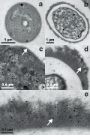
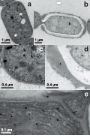
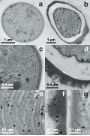
Time-dependent growth of crystalline Au0-nanoparticles in cyanobacteria as self-reproducing bioreactors: 2. Anabaena cylindrica
Beilstein J. Nanotechnol. 2016, 7, 312–327, doi:10.3762/bjnano.7.30
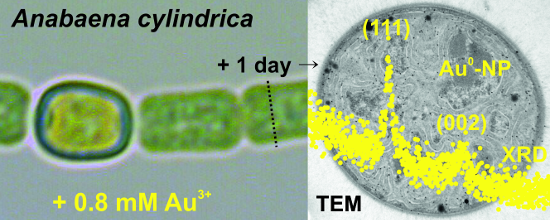
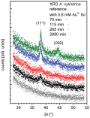
- Bayreuth, Lehrstuhl für Kristallographie, 95440 Bayreuth, Germany Universität Bayreuth, Zellbiologie / Elektronenmikroskopie, 95440 Bayreuth, Germany Hochschule Koblenz, RheinAhrCampus Remagen, Optics and Laser Engineering, 53424 Remagen, Germany 10.3762/bjnano.7.30 Abstract Microbial biosynthesis of
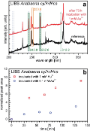
- the setup. The LIBS setup arrangement consisted of a pulsed laser source, focusing optics, and Czerny–Turner spectrometers. As laser source a low-power passively Q-switched Nd:YAG laser (CryLas, model DSS1064-3000) at a wavelength of 1064 nm, a pulse energy of 2.5 mJ, a pulse duration of 2 ns (FWHM
- (focal length 20 and 25 mm) into a glass fiber (core diameter 900 μm) guiding the light to a Czerny–Turner spectrometer (Ocean Optics, models MAYA 2000 Pro and USB2000). The MAYA 2000 Pro spectrometer covers a wavelength range from 190 to 420 nm with a spectral resolution of 0.1 nm, the USB2000



3D solid supported inter-polyelectrolyte complexes obtained by the alternate deposition of poly(diallyldimethylammonium chloride) and poly(sodium 4-styrenesulfonate)
Beilstein J. Nanotechnol. 2016, 7, 197–208, doi:10.3762/bjnano.7.18
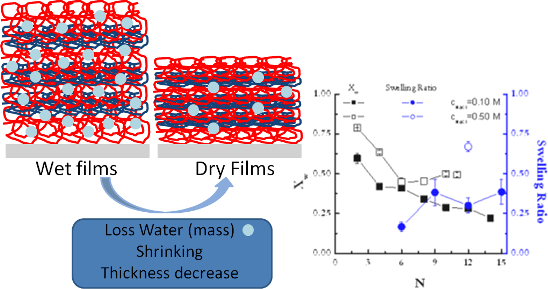
- application in several fields, including optics, electronics, coatings and biomaterials (drug delivery and tissue engineering). In order to create the aforementioned materials, the development of new bottom-up techniques, which allow one to control the properties and structure of the materials at the sub



Linear and nonlinear optical properties of hybrid metallic–dielectric plasmonic nanoantennas
Beilstein J. Nanotechnol. 2016, 7, 111–120, doi:10.3762/bjnano.7.13
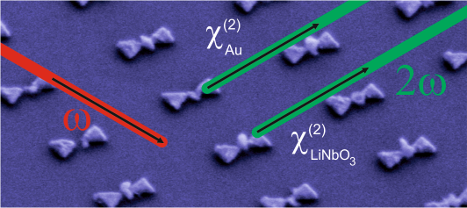
- nanoscale antenna systems. Our results significantly deepen the understanding of these interesting hybrid systems and offer important guidelines for the design of nanoscale, nonlinear light sources. Keywords: nano-optics; nonlinear optics; plasmonics; second harmonic generation; spectroscopy; Introduction
- electric field strength could lead to efficient nonlinear optics in these systems [21] as the radiated intensities scale nonlinearly with the fundamental driving light field. The first nonlinear optical phenomena in these systems were studied in the beginning of the 1980s. Strong second harmonic generation
- combination of field enhancement and nonlinear optics has already been proposed in the first publications on metamaterials and plasmonics [57], only a very limited number of papers report conclusive experiments that are well supported by data [58][59][60][61][62][63][64][65][66][67][68]. In most experiments


Chemical bath deposition of textured and compact zinc oxide thin films on vinyl-terminated polystyrene brushes
Beilstein J. Nanotechnol. 2016, 7, 102–110, doi:10.3762/bjnano.7.12
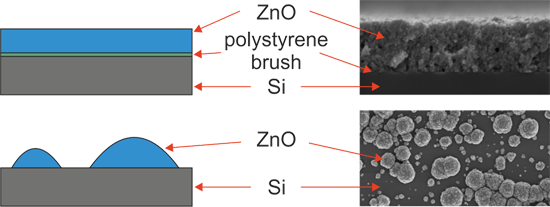
- diffraction measurements with an incidence angle of 2° were performed using an X’Pert MRD (PANalytical) using Cu Kα radiation parallelized with polycapillary optics and using a flat graphite monochromator in the diffracted beam in a diffraction angle, 2θ, range of 25 to 60°. Data evaluation was done using a


Chemiresistive/SERS dual sensor based on densely packed gold nanoparticles
Beilstein J. Nanotechnol. 2015, 6, 2498–2503, doi:10.3762/bjnano.6.259
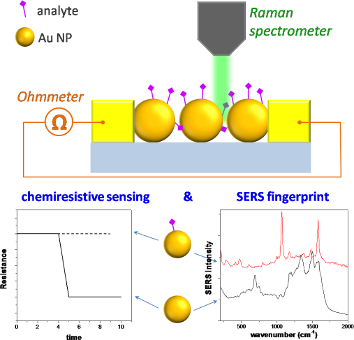
- sensor would be: an electrical readout, which is always preferred since it is the most simple and inexpensive method to implement in a final product/device; complementary, by optics (vibrational spectroscopy, SERS), specific information can be retrieved on the identity of the analyte. Such a DEOS would





