


Search results
Search for "orientation" in Full Text gives 646 result(s) in Beilstein Journal of Nanotechnology. Showing first 200.
A 3D-polyphenylalanine network inside porous alumina: Synthesis and characterization of an inorganic–organic composite membrane
Beilstein J. Nanotechnol. 2020, 11, 938–951, doi:10.3762/bjnano.11.78
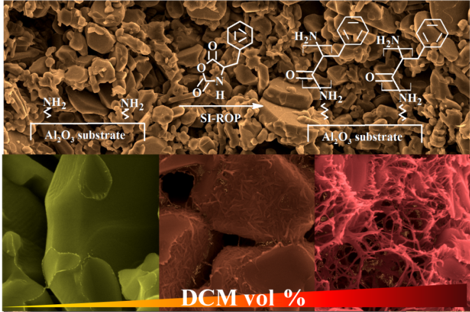
- outer and inner surface become observable. At the outer surface, the rod-shaped structures show an increase of thickness and the orientation of their main axis remain plane-parallel to the surface of the corundum particles. This is in contrast to the morphology of the polymer films at the inner surface
- -opening polymerization of PA-NCA (grafting to process). 96 mg (0.5 mmol) of PA-NCA was dissolved in 5 mL (total volume) of the corresponding solvent mixture composed of THF or DCM in a homemade flask, which allows orientation of the ALOX-membranes in an upright position during polymerization. Under inert
- , 4256 m, 4056 s, 4040 s cm−1. Synthesis of polyphenylalanine. 96 mg (0.5 mmol) of PA-NCA was dissolved in 5 mL of anhydrous THF or anhydrous DCM in a homemade flask, which allows orientation of the ALOX-membranes in an upright position during polymerization. 50 µL of a 100 mM solution of n-butylamine in




Three-dimensional solvation structure of ethanol on carbonate minerals
Beilstein J. Nanotechnol. 2020, 11, 891–898, doi:10.3762/bjnano.11.74
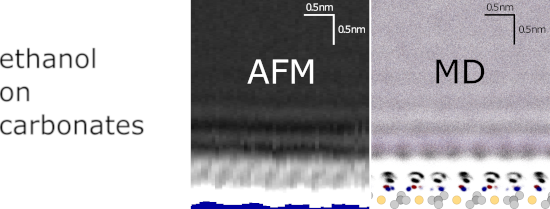
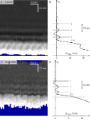
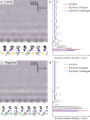
- obtained to date. Furthermore, no information on the interfacial orientation and binding configuration has been collected experimentally. Here, we report on high-resolution 3D AFM data that reveals both the lateral and the vertical solvation structure at the calcite–ethanol interface in a single data set

Simulations of the 2D self-assembly of tripod-shaped building blocks
Beilstein J. Nanotechnol. 2020, 11, 884–890, doi:10.3762/bjnano.11.73
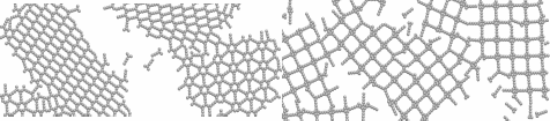
- diffraction pattern (or any other orientation-dependent function) from that. Unfortunately, in this particular case, the number of molecules, hence also the number of central segments, was too low to obtain satisfactory statistics. Let us now proceed to asymmetrical tripod building blocks. Figure 4 shows


Transition from freestanding SnO2 nanowires to laterally aligned nanowires with a simulation-based experimental design
Beilstein J. Nanotechnol. 2020, 11, 843–853, doi:10.3762/bjnano.11.69
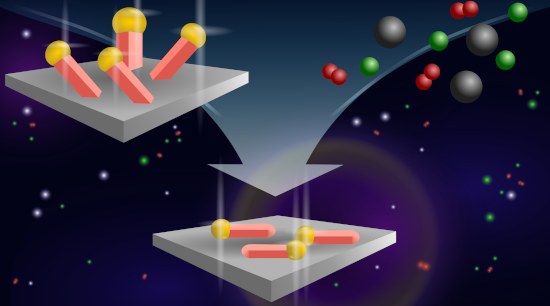
- smaller than for freestanding NWs. When the growth of laterally aligned NWs has been reported, it is commonly explained to be based on the lattice orientation of the NWs towards the crystal lattice of the substrate [15][16]. However, note that this argument is generally also used for the tilted growth of





Adsorption behavior of tin phthalocyanine onto the (110) face of rutile TiO2
Beilstein J. Nanotechnol. 2020, 11, 821–828, doi:10.3762/bjnano.11.67
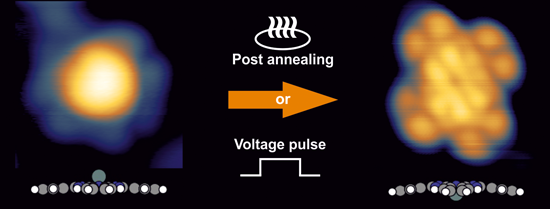
- orientation. To fill this gap in knowledge, here, we report room-temperature (RT) and low-temperature (LT) STM-based studies of the adsorption of nonplanar tin phthalocyanine (SnPc) molecules a rutile (110)-1 × 1 surface of TiO2. SnPc molecules appear on such a surface in two flat-lying geometries defined by
- structure in the center of the molecule is well reproduced in the simulated image including the relative intensities of different parts of the molecule. The change in orientation of SnPc molecules on the TiO2(110) surface from Sn-up to Sn-down described in the previous paragraph is induced by thermal energy
- optimal position. In the case of SnPc, the interaction is mainly concentrated in the central area of the molecule. The orientation of the molecule on the surface reflects the accommodation to the corrugated morphology of the substrate and is directed by weak physical forces. Consequently, the energy gain


Templating effect of single-layer graphene supported by an insulating substrate on the molecular orientation of lead phthalocyanine
Beilstein J. Nanotechnol. 2020, 11, 814–820, doi:10.3762/bjnano.11.66
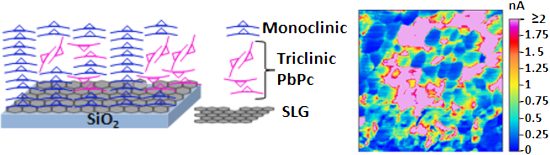
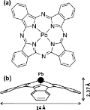
- Technology, Kattankulathur 603 203, Tamil Nadu, India 10.3762/bjnano.11.66 Abstract The influence of single-layer graphene on top of a SiO2/Si surface on the orientation of nonplanar lead phthalocyanine (PbPc) molecules is studied using two-dimensional grazing incidence X-ray diffraction. The studies
- specific device applications. Keywords: conducting atomic force microscopy (C-AFM); lead phthalocyanine (PbPc); molecular orientation; single-layer graphene; substrate effect; two-dimensional grazing incidence X-ray diffraction (2D-GIXRD); Introduction Organic semiconductors have been extensively used in
- oriented pyrolytic graphite (HOPG) or SiO2, it has been reported that CuPc attains different orientations resulting in substantial differences in donor–acceptor energy level alignment at the interface. Thus, ordering and orientation of these molecules significantly affect charge carrier injection and


Hexagonal boron nitride: a review of the emerging material platform for single-photon sources and the spin–photon interface
Beilstein J. Nanotechnol. 2020, 11, 740–769, doi:10.3762/bjnano.11.61
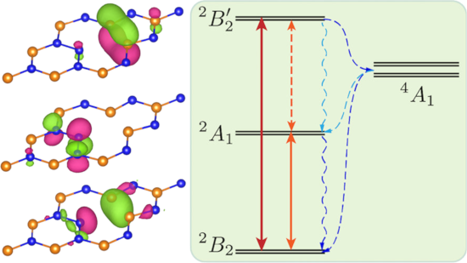
- miscellaneous transition rates for the optical and non-radiative transitions of the emitters. The SPEs show a very good photo-stability under ambient conditions and in monolayers. A correlation between the defect orientation and the h-BN hexagonal structure is observed by studying the excitation polarization




Quantitative determination of the interaction potential between two surfaces using frequency-modulated atomic force microscopy
Beilstein J. Nanotechnol. 2020, 11, 729–739, doi:10.3762/bjnano.11.60
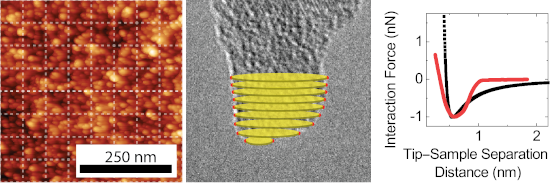
- appear different as a result of the angle variation when mounting the probe into the TEM holder. This variation is exacerbated by residual glue that is present on the cantilever chip following the experiments. These factors prevent reproducible orientation of the tip apex when acquiring TEM images before


Electromigration-induced directional steps towards the formation of single atomic Ag contacts
Beilstein J. Nanotechnol. 2020, 11, 680–687, doi:10.3762/bjnano.11.55
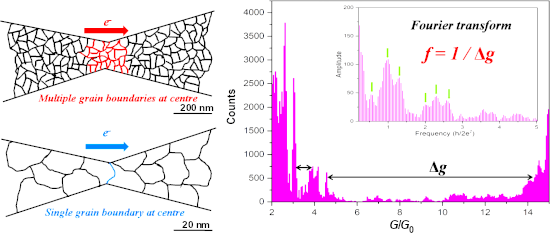
- linear relationship between A and g (Δg = πΔA). If we ignore for the moment the different orientation of grains – for a justification, see below – and assume that only a single contact is thinned at a time, we can use a previously developed argumentation [21][31] about the preferential direction of
- materials like Ag, grain boundaries occur mostly because of the different orientation of nanocrystals. Since the elastic strain energy strongly increases with angular misfit, small-angle grain boundaries are the most likely ones. Thus, most contact areas are not far from (stepped) high-symmetry crystal
- peak at 0.6. Strong peaks below 0.5 again correspond to instabilities between other metastable configurations. On the other hand, a noticeable difference between Figure 3 and Figure 5 is that the contribution from the [111] orientation is absent in Figure 5. There is no peak above noise level at 1.3


Exfoliation in a low boiling point solvent and electrochemical applications of MoO3
Beilstein J. Nanotechnol. 2020, 11, 662–670, doi:10.3762/bjnano.11.52
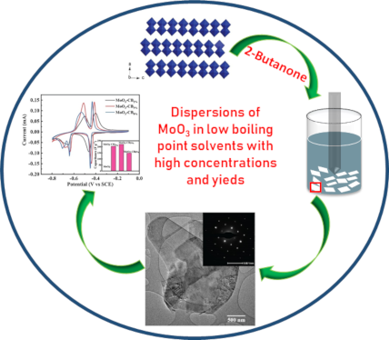
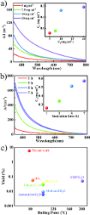
- favorable matching of the exfoliation and stabilization energies between the solvent and the MoO3 nanosheets. It has been theoretically reported that apart from the matching of HSP values, factors such as the structure of the solvent, its bulkiness and its re-orientation on the exfoliated nanosheets are

Observation of unexpected uniaxial magnetic anisotropy in La2/3Sr1/3MnO3 films by a BaTiO3 overlayer in an artificial multiferroic bilayer
Beilstein J. Nanotechnol. 2020, 11, 651–661, doi:10.3762/bjnano.11.51
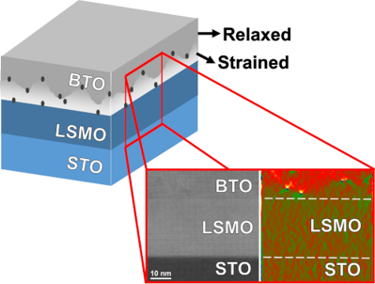
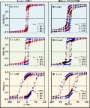
- two figures showing magnetization hysteresis loops performed in the BTO/LSMO/STO bilayer to prove that the magnetization easy axis has an in-plane orientation and the in-plane [εxx and fa] vertical strain profile that covers the entire thickness of the BTO layer. Supporting Information File 10



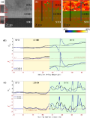
Formation of nanoripples on ZnO flat substrates and nanorods by gas cluster ion bombardment
Beilstein J. Nanotechnol. 2020, 11, 383–390, doi:10.3762/bjnano.11.29
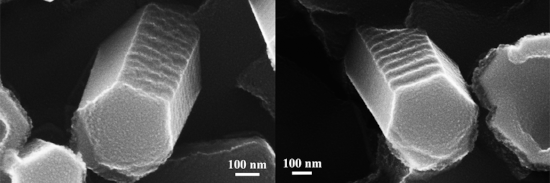
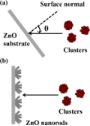
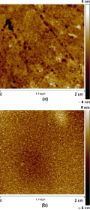
- , suggesting a small influence of the sort of material or the crystal orientation of the substrate on the ripple formation. Recently, Saleem et al. have proposed to use the nanoripple structures formed by GCIB for plasmonic and biomolecular sensing applications [16][17]. In all above-mentioned studies planar
- direction of the wave vector k of the ripples is not parallel to the nanorod axis. Hence, it can be concluded that in the case of low energy and fluence the ripple formation is controlled by the orientation of the ion incidence projection on the facet surface under irradiation, analogously to the flat
- substrates. As accelerating voltage and fluence increase (Figure 5c–f) a new effect can be observed. Now all ripples are perpendicular to the nanorod axes (the wave vector is parallel to the axes) independently of the orientation of ion incidence projection on the facet. Thus, the ripple formation is now



Interactions at the cell membrane and pathways of internalization of nano-sized materials for nanomedicine
Beilstein J. Nanotechnol. 2020, 11, 338–353, doi:10.3762/bjnano.11.25
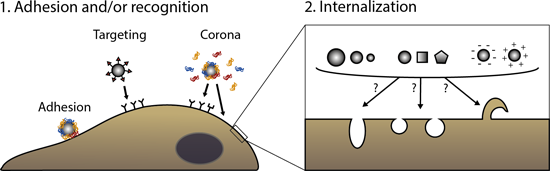
- the targeting ligand to its receptor [30]. Moreover, it is difficult to control the targeting ligand density and its orientation. Both factors are important for the recognition by cell receptors and can affect cellular uptake [31][32]. Several reviews have summarized these and other similar challenges
- interact with the cell membrane with different orientation. Thus, depending on the orientation when interacting with the cell membrane, the contact area between the nano-sized object and the cell surface differs. It is thought that in these cases different mechanisms are then triggered based on the
- orientation of the nanoparticles [134][150]. This might, at least in part, explain why multiple pathways seem to be involved in the uptake of non-spherical nanomaterials. Nanoparticle rigidity: Recently, there is a high interest in the effect of the rigidity of nanoparticles on the interactions at cellular


Using gold nanoparticles to detect single-nucleotide polymorphisms: toward liquid biopsy
Beilstein J. Nanotechnol. 2020, 11, 263–284, doi:10.3762/bjnano.11.20
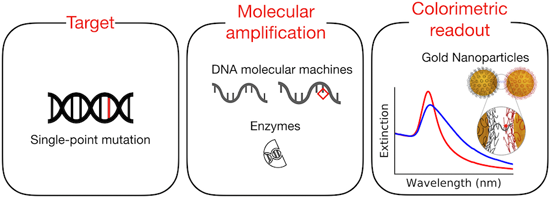
- nanoparticles, in which interparticle forces [139], mutual orientation and interparticle distances are well controlled by chemical stimuli. Finally, we foresee that the detection of genetic mutations by plasmonic nanoparticles will be strongly enhanced by a complementary detection of disease-related proteins



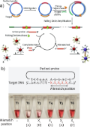

Molecular architectonics of DNA for functional nanoarchitectures
Beilstein J. Nanotechnol. 2020, 11, 124–140, doi:10.3762/bjnano.11.11
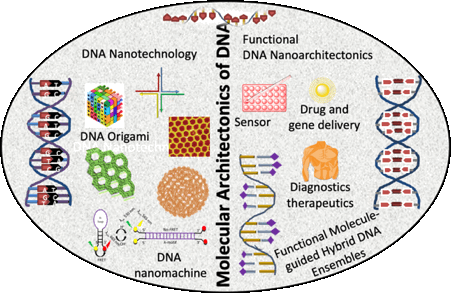
- double-helical DNA through ᴅ- and ʟ-threolinol linkers to analyze the molecular exciton theory of heterodimeric chromophores [95]. NMR studies revealed the antiparallel orientation of the two dyes across the duplex strand. Further studies indicated that the increment in dye number could dramatically


Recent progress in perovskite solar cells: the perovskite layer
Beilstein J. Nanotechnol. 2020, 11, 51–60, doi:10.3762/bjnano.11.5
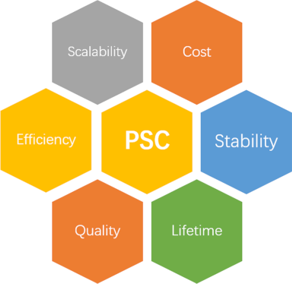
- adjusting the number of 2D inorganic layers. Chen et al. [59] studied the effect of the treatment with solvents of different polarities and boiling points on the crystallinity, crystal orientation, grain size and film quality of 2DRP perovskites. Dimethylacetamide (DMAC), which has a low polarity and a


Influence of the epitaxial composition on N-face GaN KOH etch kinetics determined by ICP-OES
Beilstein J. Nanotechnol. 2020, 11, 41–50, doi:10.3762/bjnano.11.4
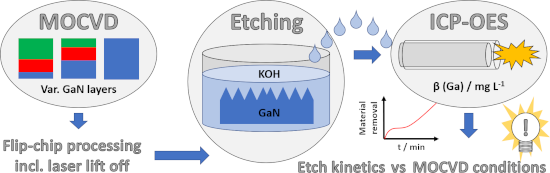
- ]. Nucleation layers have the second but very important effect of controlling crystal orientation, which is commonly Ga-polar (0001) [7]. Other than nucleation layers, there are several more strategies for defect reduction. These all require the insertion of additional layers or layer transitions into the


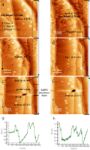
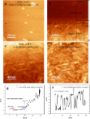
Antimony deposition onto Au(111) and insertion of Mg
Beilstein J. Nanotechnol. 2019, 10, 2541–2552, doi:10.3762/bjnano.10.245
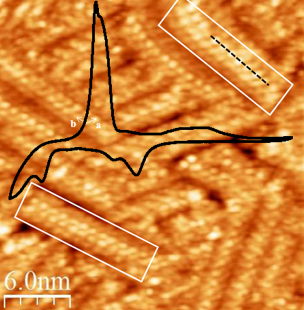
- Iqbal et al. [24]. The orientation of the substrate was kept almost the same (±10°) for each experiment. The corrected distances between the two adjacent maxima of visible atoms along vector and vector (see Figure 5b) were found to be about 1 nm for and (more precisely) 0.82 nm for , respectively





Abrupt elastic-to-plastic transition in pentagonal nanowires under bending
Beilstein J. Nanotechnol. 2019, 10, 2468–2476, doi:10.3762/bjnano.10.237
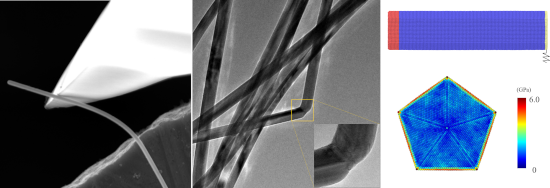
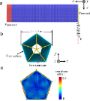
- Wu et al. [27] in three-point bending tests. According to the authors, the grain orientation and grain-boundary arrangement within the NWs are responsible for their exceptional strength and brittle-like fracture. The slip directions in the grains intersect with the twin boundaries, resulting in



Mobility of charge carriers in self-assembled monolayers
Beilstein J. Nanotechnol. 2019, 10, 2449–2458, doi:10.3762/bjnano.10.235
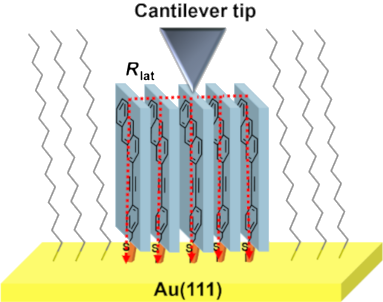
- °) to determine the molecular orientation. Infrared reflection-absorption spectroscopy (IRRAS) was performed on a Bruker VERTEX80 spectrometer (Bruker Optics GmbH) by investigating the PAT-SAM on Au/silicon wafers. As a background sample we used a SAM of deuterated octadecanethiol on an Au/silicon wafer
- moments (TDM) of the respective vibrations can be identified and used for an estimation of the orientation due to the surface selection rule in IRRAS. For comparison, the IRRA spectrum of the PAT-SAM, ATR spectrum and Gaussian IR spectrum for PAT were recorded and evaluated (Supporting Information File 1
- 850–1000 cm−1 in the IRRA spectra, which means the attenuation of the aromatic out-of-plane bands is apparent for PAT-SAMs. The manifested broad peak can be attributed to the presence of phenyl units with a slight tilt angle and anthracene units with a near vertical orientation. The IRRA spectra show


Self-assembly of a terbium(III) 1D coordination polymer on mica
Beilstein J. Nanotechnol. 2019, 10, 2440–2448, doi:10.3762/bjnano.10.234
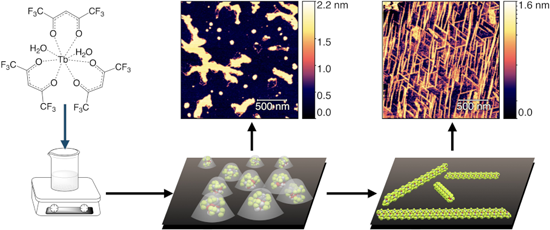
- of 12 Å of the molecular nanochains assembled on the mica substrate estimated from the AFM measurements (see Figure 3c). Two different hypotheses regarding the specific orientation of the molecular nanochains on the mica surface can be proposed. The first hypothesis relies on the presence of K+ ions
- ceric oxide [38] surfaces and is favored by the presence of moisture [35]. As far as surface deposits are concerned, the epitaxial orientation of tungsten oxide (WO3) nanowires upon deposition on air-cleaved mica [21] has been linked to the formation of K2CO3 acting as a precursor for the pure WO3
- performed with a Quantum Design MPMS SQUID magnetometer equipped with a reciprocating sample option (RSO) sample holder. [Tb(hfac)3·2H2O]n measurements were carried out on microcrystalline powder pressed into pellets to avoid in-field orientation of the crystallites. The diamagnetic contribution was




Deterministic placement of ultra-bright near-infrared color centers in arrays of silicon carbide micropillars
Beilstein J. Nanotechnol. 2019, 10, 2383–2395, doi:10.3762/bjnano.10.229
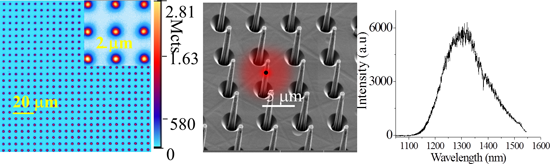
- in the pillar (for the longest pillar lifetime measured), τbulk/τpillar, is 0.77. Finite-element method simulation for a pillar of 4.3 µm height and a dipole orientation 8° off the c-axis. Two geometries of the pillars are considered, cylindrical (circles) and conical (triangles). (a) Radiation


Atomic force acoustic microscopy reveals the influence of substrate stiffness and topography on cell behavior
Beilstein J. Nanotechnol. 2019, 10, 2329–2337, doi:10.3762/bjnano.10.223
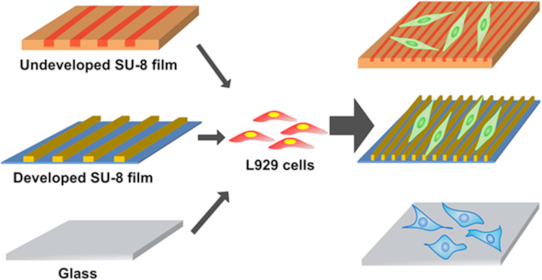
- . The NIH Image J software [30] was used to analyze the images and quantify the orientation angle and the cell areas. For each experiment an average of 150–200 cells were counted. Results and Discussion Characterization of substrate morphological and mechanical properties by AFAM Here, we used AFAM to
- undeveloped surfaces are slightly more aligned to the stiffer axis ((22.6 ± 1.521)% to (29.97 ± 4.57)%). In contrast, the L929 cells grown on the reference glass substrate appear disorganized and have no preferential orientation (Figure 3f–l). These results suggest that the stiffness of the stripe patterns
- roughness was determined as 0.6–5.6 nm for the undeveloped surfaces and 101–141 nm for the developed surface. Roughness values around 100 nm have been reported to significantly restrict the spreading and the orientation of cells [42]. This is in agreement with a recent study concluding that the surface


Design of a nanostructured mucoadhesive system containing curcumin for buccal application: from physicochemical to biological aspects
Beilstein J. Nanotechnol. 2019, 10, 2304–2328, doi:10.3762/bjnano.10.222
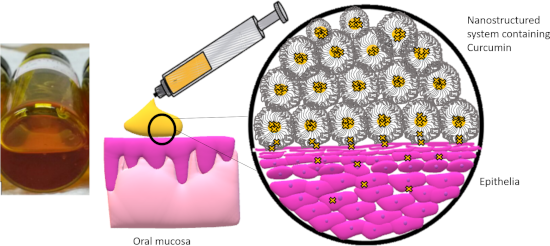
- between P407 and C974P. SEM micrographs of preparation containing CUR showed the presence of more irregular structures and channels without defined orientation. These data can be explained by the preparation method since the samples were frozen at −20 °C, where restructuring of the polymer can be observed


Liquid crystal tunable claddings for polymer integrated optical waveguides
Beilstein J. Nanotechnol. 2019, 10, 2163–2170, doi:10.3762/bjnano.10.209
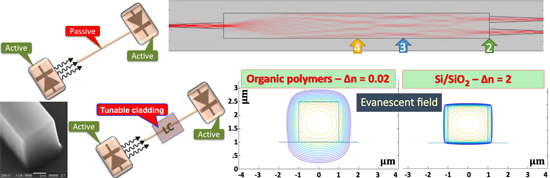
- conditioned with spin-coated polyimide (PIA-2304, Lixon Aligner) for homogeneous LC alignment, parallel to the plate, along the waveguide. Both the glass surface and the waveguide were gently rubbed with a velvet cloth to induce the desired orientation. If an external electric field is applied to the LC





