


Search results
Search for "phonon" in Full Text gives 201 result(s) in Beilstein Journal of Nanotechnology. Showing first 200.
Experimental techniques for the characterization of carbon nanoparticles – a brief overview
Beilstein J. Nanotechnol. 2014, 5, 1760–1766, doi:10.3762/bjnano.5.186
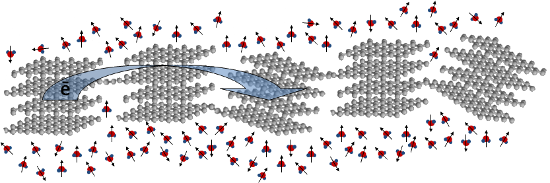
- on the phonon scattering phenomena and much valuable information can be obtained from the relative intensities of the spectral components. It was shown by Tuinstra and Koenig in 1970 [22][23] and recently by Ferrari et al. [14][24] and Cançado et al. [25] that the D to G peak intensity ratio in the


A study on the consequence of swift heavy ion irradiation of Zn–silica nanocomposite thin films: electronic sputtering
Beilstein J. Nanotechnol. 2014, 5, 1691–1698, doi:10.3762/bjnano.5.179
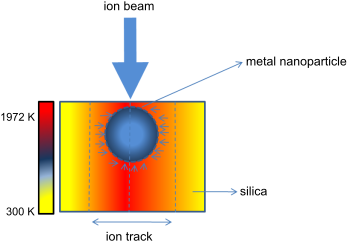
- target due to electronic excitations and ionizations. First, this energy is shared between the electrons of the target leading to the thermalization of the energy at a time scale of 10−15 to 10−14 s. Then the deposited energy is transferred from the electrons to the lattice through electron–phonon
- coupling. This coupling causes an increase in the lattice temperature of the target at a time scale of 10−13 to 10−12 s. The transient local temperature of the thermal spike depends on the volume, in which the energy is deposited and on the strength of the electron–phonon coupling. The electron phonon
- , the incoming ion transfers its energy to electrons of the target. Due to the high thermal conductivity, the deposited energy is quickly transferred to other electrons and the heat transferred to the metal lattice through electron–phonon coupling is not sufficient to cause the melting of the metal


Review of nanostructured devices for thermoelectric applications
Beilstein J. Nanotechnol. 2014, 5, 1268–1284, doi:10.3762/bjnano.5.141
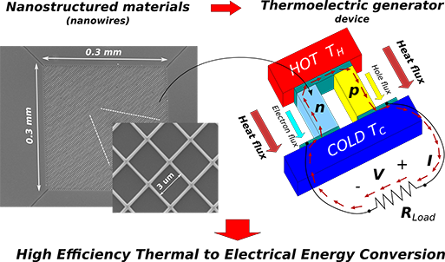
- measured in nanostructured bismuth antimony telluride alloys, because phonon scattering at nanocrystal boundaries gives a reduced thermal conductivity [26]. Hovewer, TEGs based on bismuth telluride compounds have a small operating temperature range, because the Z factor rapidly decreases well below 2 × 10
- distribution of filling ions as well as their “rattling” effect increases the phonon scattering on a large spectrum, so that the thermal conductivity is strongly reduced and Z is quite high. Several filling elements, such as La [32], Co [33], Ta [34], and others, have been experimented. Recently, filled [35
- ). The first term ke takes into account the heat brought by the charge carriers (electrons or holes) that diffuse from the hot part TH to the cold part TC. The second term kph takes into account the heat conduction through the material crystalline lattice, due to phonon propagation. ke (e for electrons


Effects of palladium on the optical and hydrogen sensing characteristics of Pd-doped ZnO nanoparticles
Beilstein J. Nanotechnol. 2014, 5, 1261–1267, doi:10.3762/bjnano.5.140
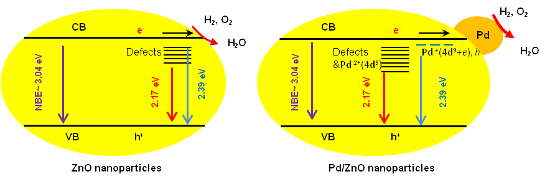
- the third peak at around 570 nm decreased. Interestingly, the obtained result is confirmed by the similarity of the luminescence bands of ZnO and ZnO:Cu [19][20][21]. The fine structure is assigned to the longitudinal optical phonon replica with an energy spacing of about 72 meV. This suggests that a


Fringe structures and tunable bandgap width of 2D boron nitride nanosheets
Beilstein J. Nanotechnol. 2014, 5, 1186–1192, doi:10.3762/bjnano.5.130
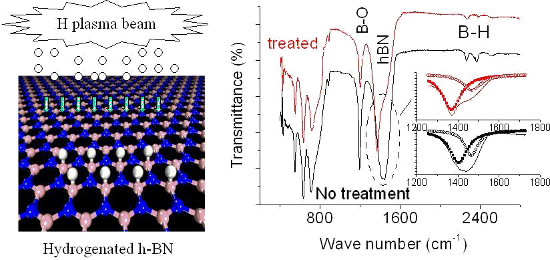
- the featureless low intensity background at lower wave number. The FTIR peak at ≈1469 cm−1 could be assigned as bands bound by impurities or defects, or a phonon replica of bands. The comparison between the normalized FTIR spectra measured with increased spectral resolution from 1200 cm−1 to 1800 cm−1


Thermal stability and reduction of iron oxide nanowires at moderate temperatures
Beilstein J. Nanotechnol. 2014, 5, 323–328, doi:10.3762/bjnano.5.36
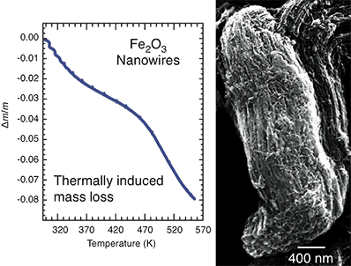
- , which were obtained by heating sample 2 in vacuum (≈10−4 mbar) up to 470 K (sample 3) and up to 560 K (sample 4). The IR transmittance spectra of those samples are reported in Figure 2. Sample 2 shows an IR phonon spectrum that strongly resembles that of hematite, α-Fe2O3 [27], with a smooth
- transmittance between 500 and 650 cm−1 and the broad phonon band centered around 950 cm−1. However, we can observe a minimum of the transmittance around 700 cm−1, which is a fingerprint of maghemite (γ-Fe2O3) [27]. Thus, the clean sample 2 presents features that are typical of a mixture of α- and γ-Fe2O3. The


Effect of contaminations and surface preparation on the work function of single layer MoS2
Beilstein J. Nanotechnol. 2014, 5, 291–297, doi:10.3762/bjnano.5.32
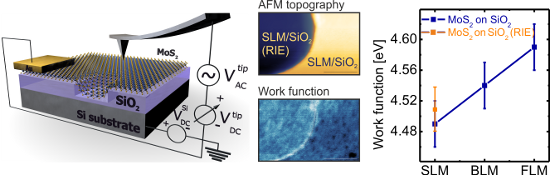
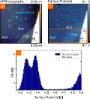
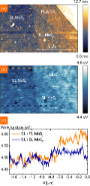
- dependency has been observed [46]. Electron doping of 1.8·1013 cm−2 leads to a linewidth broadening of 6 cm−1 and the phonon frequency decreases by 4 cm−1. As our data shows a shift in both Raman active modes we suggest that the RIE SiO2 surface causes a slight strain and maybe local doping by charge



Challenges in realizing ultraflat materials surfaces
Beilstein J. Nanotechnol. 2013, 4, 875–885, doi:10.3762/bjnano.4.99
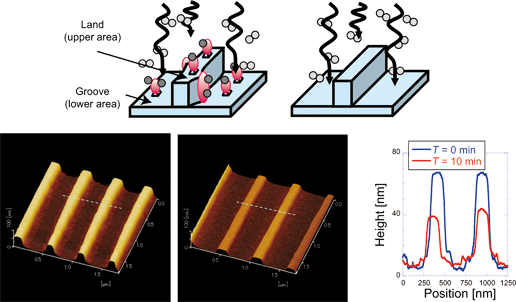
- progress toward the realization of ultraflat materials surfaces. First, we review the development of surface-flattening techniques. Second, we briefly review the dressed photon–phonon (DPP), a nanometric quasiparticle that describes the coupled state of a photon, an electron, and a multimode-coherent
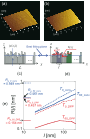
- phonon. Then, we review several recent developments based on DPP-photochemical etching and desorption processes, which have resulted in angstrom-scale flat surfaces. To confirm that the superior flatness of these surfaces that originated from the DPP process, we also review a simplified mathematical
- model that describes the scale-dependent effects of optical near-fields. Finally, we present the future outlook for these technologies. Keywords: dressed photon–phonon; phonon-assisted process; polishing; self-organized process; Review Introduction In order to improve device performance and to

Template based precursor route for the synthesis of CuInSe2 nanorod arrays for potential solar cell applications
Beilstein J. Nanotechnol. 2013, 4, 868–874, doi:10.3762/bjnano.4.98
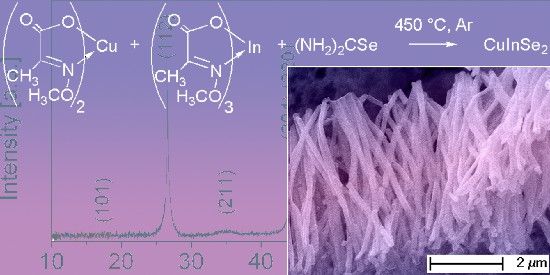
- structural properties can be thus obtained. The most intensive peak at 172 cm−1 results from the Γ1 chalcopyrite phonon mode (selenium anion vibration) [24]. This signal is commonly observed in CuInSe2 thin films and nanoparticles, and its intensity is associated with the crystalline quality [25][26][27]. A


A facile synthesis of a carbon-encapsulated Fe3O4 nanocomposite and its performance as anode in lithium-ion batteries
Beilstein J. Nanotechnol. 2013, 4, 699–704, doi:10.3762/bjnano.4.79
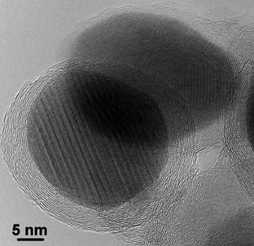
- characteristic of the D (disorder-induced phonon mode [17]) and G (graphitic lattice mode E2g [18]) bands of carbon, respectively. The intensity ratio IG/ID of 0.7 indicates that a significant quantity of disordered carbon is also present in the nanocomposite. In addition, the A1g vibration mode of the Fe3O4


Femtosecond-resolved ablation dynamics of Si in the near field of a small dielectric particle
Beilstein J. Nanotechnol. 2013, 4, 501–509, doi:10.3762/bjnano.4.59
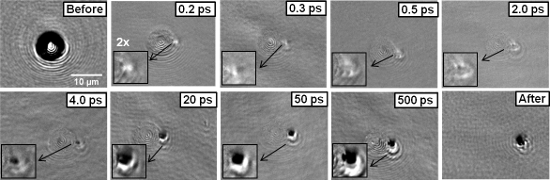
- characteristic e-phonon scattering time. Different carrier density dependent relaxation mechanisms have been proposed to explain extremely large collision frequencies (>2 × 10¹⁵ s−1) in c-Si for carrier densities above 1022 cm−3 (see [16] and references quoted therein). For what concerns the e-phonon scattering
- delays for which ablation is first observable reach values close to the e-phonon scattering time in crystalline Si [19]. Images of the surface obtained for long delays indicate that in spite of the large local fluences achieved, particle lift up, caused by the ablation of the underneath material is a


Structural and thermoelectric properties of TMGa3 (TM = Fe, Co) thin films
Beilstein J. Nanotechnol. 2013, 4, 461–466, doi:10.3762/bjnano.4.54
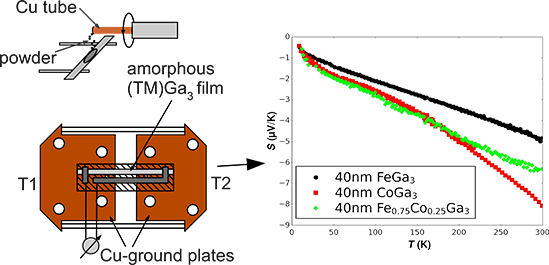
- conclusion on the amorphous state of the presently discussed films has immediate implications on their thermoelectric behavior. First of all, the scattering of electrons is dominated by the static disorder rather than by phonons. As a consequence, phonon drag effects, which usually are responsible for strong
- temperature behavior with no indication for phonon drag peaks in the lower temperature range. Also the magnitude of the S(300 K)-values ranging between 4 and 8 μV/K are typical of high-resistance metallic glasses [16]. This clearly confirms the idea of amorphous rather than nanocrystalline structures for the
- (300 K)-values of only some μV/K are likely. However, in crystalline samples a possibly present phonon drag may give rise to more pronounced nonlinearities in the temperature dependence of the Seebeck coefficient. Thus, at this point we conclude that the thermoelectric behavior of our films as


Kelvin probe force microscopy of nanocrystalline TiO2 photoelectrodes
Beilstein J. Nanotechnol. 2013, 4, 418–428, doi:10.3762/bjnano.4.49
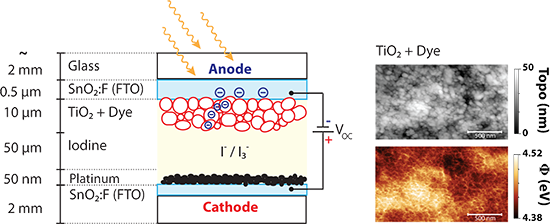
- energy of Eg = 3.2 eV was extracted using Equation 1, assuming a phonon energy Ep ≈ 0. Figure 5b depicts the SPV of bare TiO2 as a function of the light intensity for super-bandgap illumination with a wavelength of 380 nm. The negative SPV indicates an n-type behavior of the material. The SPV exhibits a


Photoelectrochemical and Raman characterization of In2O3 mesoporous films sensitized by CdS nanoparticles
Beilstein J. Nanotechnol. 2013, 4, 255–261, doi:10.3762/bjnano.4.27
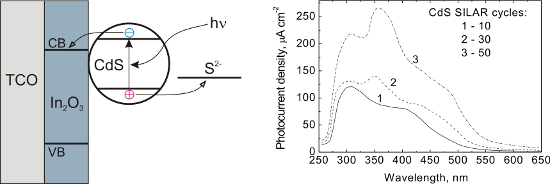
- were also characterized by Raman spectroscopy. Raman spectra of all samples in the spectral range studied (0–1000 cm−1) show the CdS LO phonon mode (≈300 cm−1) with its two overtones, which correspond to two- (≈600 cm−1) and three-phonon (≈900 cm−1) processes. Figure 5 presents the Raman spectrum of
- the In2O3(400)/CdS system prepared by using 40 SILAR cycles. One phonon peak for CdS has a complex structure. The peak fitting by superposition of Lorentz lines allowed for the determination of position, full width at half maximum (FWHM) and relative intensity of the different components. The peak at
- these peaks in the Raman spectra can testify to the fact that the samples studied contain not only In2O3 and CdS, but also some additional phases formed during the SILAR process. High values of the FWHM of the LO phonon peak can point to both a significant degree of CdS nanocrystal disorder and size


Functionalization of vertically aligned carbon nanotubes
Beilstein J. Nanotechnol. 2013, 4, 129–152, doi:10.3762/bjnano.4.14
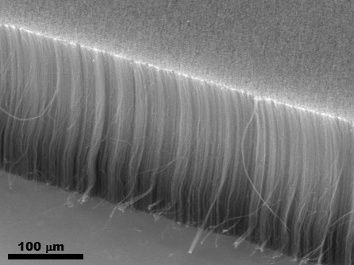
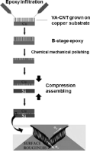
- curing was employed. This device has an ultrasmall coefficient of thermal expansion (CTE), good mechanical load transfer, and good phonon transport across the interface. The control of the CNT orientation within the polymer matrix (PM) and the control of the interaction between both components are of








Diamond nanophotonics
Beilstein J. Nanotechnol. 2012, 3, 895–908, doi:10.3762/bjnano.3.100
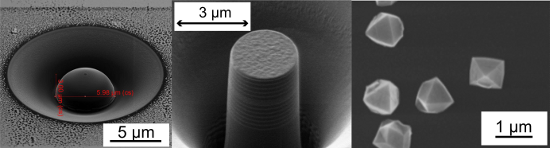
- (zero-phonon line, ZPL), and a broad emission band ranging from about 630 up to 750 nm is observed. In order to couple such broadband quantum emitters to a resonant optical light field a suitable broadband optical resonator is required. To realize a broadband resonator that has at the same time a high
- can be coupled out with high efficiency from the resonator. In order to enhance the emission at the zero-phonon line (ZPL) of nitrogen–vacancy centers, diamond nanocrystals containing single NV centers were embedded into high quality pillar resonators (Figure 8a). In a first step, a bottom Bragg
- centers in diamond are yet not well understood or even known. Above all, not every fluorescent defect center exhibits the desired characteristics for applications in quantum information processing [17], such as a small bandwidth, a low electron–phonon coupling, or a high oscillator strength. For this





Sub-10 nm colloidal lithography for circuit-integrated spin-photo-electronic devices
Beilstein J. Nanotechnol. 2012, 3, 884–892, doi:10.3762/bjnano.3.98
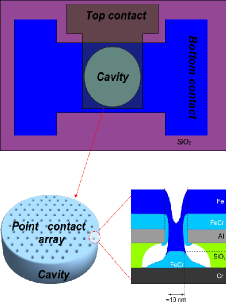
- nontrivial task for any patterning technique (see Introduction) and, to our knowledge, has not been demonstrated to date. For the spin-laser device of [15], for example, the bottom electrode must be thick to serve as an efficient electron and phonon bath under high-current injection. We take that into
- effects due to spin-flip relaxation are expected, only phonon relaxation (heat). The typical array resistance is measured to be 10–20 mΩ. The current–voltage characteristic is smooth and approximately parabolic, typical of the expected phonon background. Thus, these test data agreed with the expected
- -polarizations of the two materials at the interface a strong spin accumulation is expected. Figure 5b is a resistance versus bias-current characteristic for the device and shows a clear current-induced hysteretic switching, typical of magnetic point contacts [29][30], superposed on the phonon background. The


Characterization and properties of micro- and nanowires of controlled size, composition, and geometry fabricated by electrodeposition and ion-track technology
Beilstein J. Nanotechnol. 2012, 3, 860–883, doi:10.3762/bjnano.3.97
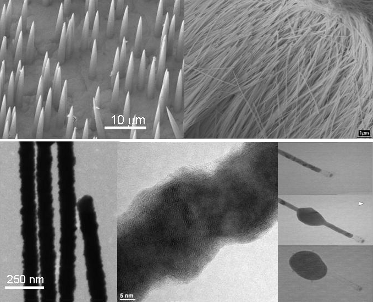
- growth [59]. Control over the crystallinity is especially important when the size of the investigated nanostructures is comparable to characteristic length scales such as electron and phonon mean free paths and Fermi wavelength. For nanomaterials, phenomena such as electrical and thermal resistivity or
- these thermoelectric nanomaterials should increase due to quantum size effects and the thermal conductivity should decrease due to enhanced phonon surface scattering [85][86][87][88]. The thermoelectric properties of these Bi-compound materials are anisotropic and are extremely sensitive not only to
- phonon scattering come into play. 2.5 Semiconductor nanowires Semiconductor nanowires are excellent candidates to be functional elements in applications as diverse as optics, sensorics, and electronics, and energy applications such as thermoelectrics and hydrogen generation by water splitting [2][3][4








Horizontal versus vertical charge and energy transfer in hybrid assemblies of semiconductor nanoparticles
Beilstein J. Nanotechnol. 2012, 3, 629–636, doi:10.3762/bjnano.3.72
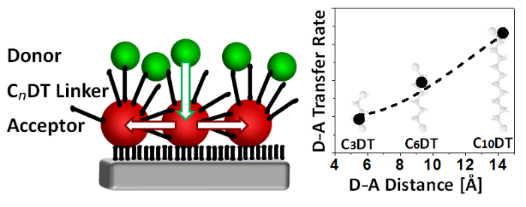
- transferred from the donors, follows the same linker dependency as observed for the acceptor layer alone. It is well documented that the PL-lifetime of semiconductor NPs increases with decreasing temperature owing to less efficient electron–phonon coupling and to the emission from "dark states" [27][32][33


Nano-FTIR chemical mapping of minerals in biological materials
Beilstein J. Nanotechnol. 2012, 3, 312–323, doi:10.3762/bjnano.3.35
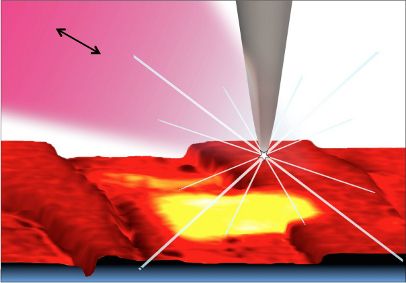
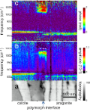
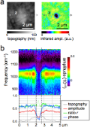
- observe a reproducible vibrational (phonon) resonance within all biocalcite microcrystals, and distinctly different spectra on bioaragonite. Surprisingly, we discover sparse, previously unknown, 20 nm thin nanoparticles with distinctly different spectra that are characteristic of crystalline phosphate
- covering layer is not thicker than a few times the tip radius [36]. Based on this effect, even a tomographic mapping capability of s-SNOM has been suggested [6][41]. Our present observation is the first report to distinguish different phonon resonances in both the covering layer and the buried material. We
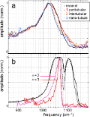
- yet been measured by s-SNOM as pure substances. For bulk crystals, it is well known from theory and experiments that the near-field resonance in the case of a strong oscillator is up-shifted from the transverse phonon frequency that marks the infrared absorption [6]. The up-shift nearly to the





Current-induced forces in mesoscopic systems: A scattering-matrix approach
Beilstein J. Nanotechnol. 2012, 3, 144–162, doi:10.3762/bjnano.3.15
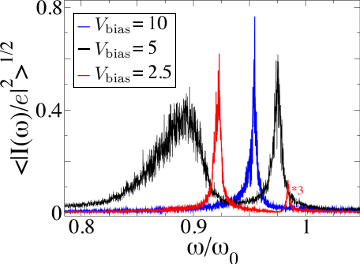
- decouple, and which give rise to different experimental phenomena. On one side, when the electronic time scales are slow compared with the mechanical vibrations, drastic consequences can be observed for the electronic transport, such as side bands due to phonon-assisted tunneling [23][24] or the Frank

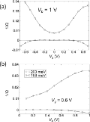
![[Graphic 55]](/bjnano/content/inline/2190-4286-3-15-i141.png?max-width=637&scale=1.18182) can be tuned by the bias voltage. We consider...
can be tuned by the bias voltage. We consider...


When “small” terms matter: Coupled interference features in the transport properties of cross-conjugated molecules
Beilstein J. Nanotechnol. 2011, 2, 862–871, doi:10.3762/bjnano.2.95
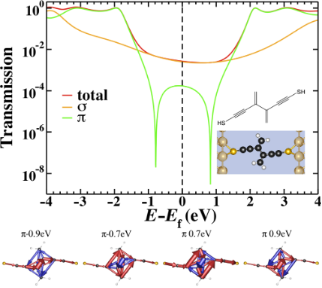
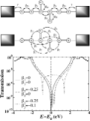
- features in the elastic transport may be obscured by inelastic (phonon-assisted) contributions [48]. Although the exact magnitude of the inelastic component in acyclic cross-conjugated molecules is not known, the contribution to the transport will simply be additive, as it is in the case of the σ-system




Current-induced dynamics in carbon atomic contacts
Beilstein J. Nanotechnol. 2011, 2, 814–823, doi:10.3762/bjnano.2.90
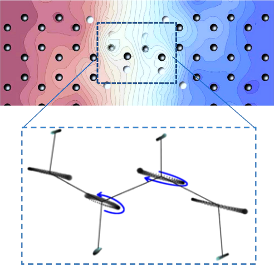
- , where is the electron creation (annihilation) operator at site k in this region [34]. Here we only consider the coupling to the electron bath, but the linear coupling to an external phonon bath can be taken into account along the same lines and adds a contribution to Πr. The derivation and result for a
- linearly coupled harmonic phonon bath is similar, and was given in [28]. Alternatively, the dynamics of some external phonons, not coupling to the electrons directly, may be treated explicitly in actual MD calculations, as we illustrate below (regions DL, DR in Figure 6a). The electron–phonon coupling
- steady-state electron transport without electron–phonon interaction [33], where AL/R are the density of state matrices for electronic states originating in the left/right electrodes, each with chemical potential μL/R [33], which differ for finite bias voltage, V, as μL − μR = eV, and nF(ω) = 1/(eω/kBT



Nonconservative current-induced forces: A physical interpretation
Beilstein J. Nanotechnol. 2011, 2, 727–733, doi:10.3762/bjnano.2.79
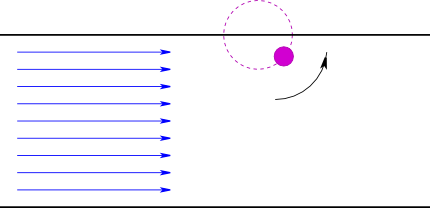
- emission of directional phonons. This connection with electron–phonon interactions quantifies explicitly the intuitive notion that nonconservative forces work by angular momentum transfer. Keywords: atomic-scale conductors; current-induced forces; failure mechanisms; nanomotors; Introduction Electron
- –nuclear interactions lie at the heart of the transport properties of nanoscale conductors. Even in the limit of elastic (phonon-free) conduction, the nature and positions of nuclei in a nanojunction determine the external potential, experienced by current-carrying electrons, and, together with electron
- phonons, characterised by the sign of their angular momentum. This second result will close the gap between the nonconservative effect and the more familiar fundamental physics of electron–phonon interactions. Results and Discussion The gas-flow picture Under steady-state conditions, in the absence of

Charge transfer through single molecule contacts: How reliable are rate descriptions?
Beilstein J. Nanotechnol. 2011, 2, 416–426, doi:10.3762/bjnano.2.47
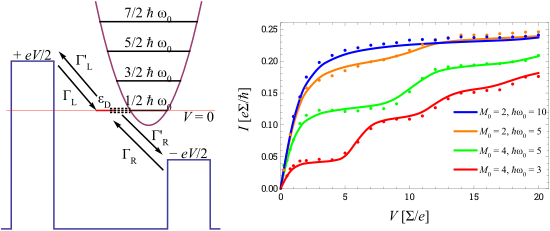
- molecular electronics in the last decade. However, a theoretical description of molecular contacts as the building blocks of future devices is challenging, as it has to combine the properties of Fermi liquids in the leads with charge and phonon degrees of freedom on the molecule. Outside of ab initio
- , intramolecular phonons are distributed according to a voltage driven steady state that can only roughly be captured by a thermal distribution with an effective elevated temperature (heating). An extension of a master equation for the charge–phonon complex, to effectively include the impact of off-diagonal
- elements of the reduced density matrix, provides very accurate solutions even for stronger electron–phonon coupling. Conclusion: Rate descriptions and master equations offer a versatile model to describe and understand charge transfer processes through molecular junctions. Such methods are computationally


![[Graphic 38]](/bjnano/content/inline/2190-4286-2-47-i61.png?max-width=637&scale=1.18182) ω0 and versus the electron–phonon coupling m0.
ω0 and versus the electron–phonon coupling m0.





