


Search results
Search for "polymerization" in Full Text gives 224 result(s) in Beilstein Journal of Nanotechnology. Showing first 200.
Silica micro/nanospheres for theranostics: from bimodal MRI and fluorescent imaging probes to cancer therapy
Beilstein J. Nanotechnol. 2015, 6, 546–558, doi:10.3762/bjnano.6.57
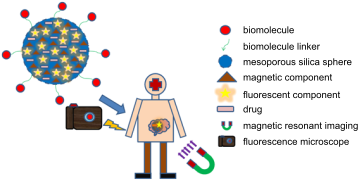
- was then activated by silane-carrying methacrylate and 3-(methacryloyloxy)propyltrimethoxysilane (MPTS). Finally, a lightly crosslinked poly(N-isopropylacrylamide) (PNIPAAm) shell was immobilized by a graft polymerization process. The characterization of these NPs was carried out through DLS, TEM, VSM
- -functionalized CdTe QDs were conjugated with the magnetic NPs inside the silica shell. Finally, the silica-coated NPs were wrapped with thermosensitive poly(N-isopropylacrylamide) by a template polymerization process. The average diameter of silica-coated magnetic NPs was found to be 100 ± 10 nm as studied by
- nanocomposite material composed of a magnetic silica core and a fluorescent shell by combining two different techniques, namely heterocoagulation and soap-free emulsion polymerization. The N-trimethoxysilylpropyl-N,N,N-trimethylammonium chloride (TSA)-modified Fe3O4 NPs were prepared by the Massart method and


Hematopoietic and mesenchymal stem cells: polymeric nanoparticle uptake and lineage differentiation
Beilstein J. Nanotechnol. 2015, 6, 383–395, doi:10.3762/bjnano.6.38
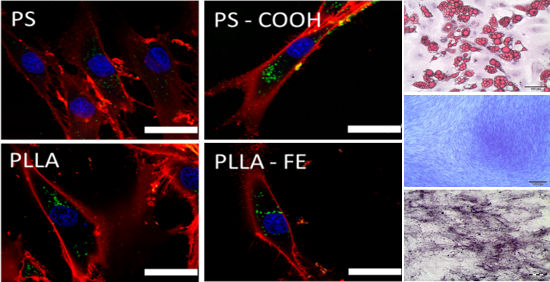
- particles were fluorescently labeled with the fluorescent dye N-(2,6-diisopropylphenyl)perylene-3,4-dicarboximide (PMI). The magnetite was encapsulated for magnetic resonance purposes. The polymeric nanoparticles used in this work were obtained by miniemulsion polymerization (non-functionalized and


Comparative evaluation of the impact on endothelial cells induced by different nanoparticle structures and functionalization
Beilstein J. Nanotechnol. 2015, 6, 300–312, doi:10.3762/bjnano.6.28
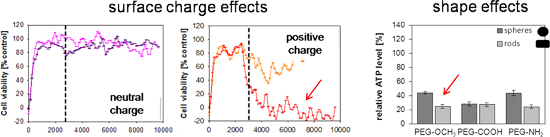
- endocytotic processes were assessed. SVEC4-10 cells were pre-incubated with 5 µg/mL cytochalasin D (inhibitor of actin polymerization, indicator of caveolae and macropinocytosis) [74], 100 nM wortmannin (inhibitor of PI3 kinase, indicator of macropinocytosis) [75], 5 µg/mL nocodazol (promotes microtubule




Tailoring the ligand shell for the control of cellular uptake and optical properties of nanocrystals
Beilstein J. Nanotechnol. 2015, 6, 232–242, doi:10.3762/bjnano.6.22
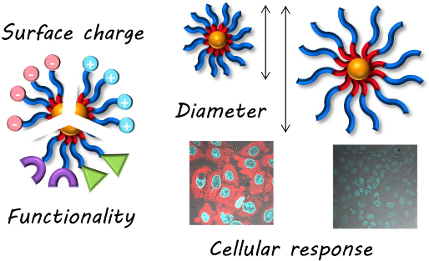
- against dilution can be achieved. By carefully choosing the monomers, reaction conditions and block length ratios it is possible to reproducibly synthesize very defined ligands, using anionic polymerization techniques [10]. One advantage of this reaction type is the absence of chain transfer and
- Ligand synthesis The synthesis of amphiphilic polyisoprene-block-poly(ethylene glycol) (PI-b-PEG) was realized via anionic polymerization, using standard high vacuum reaction techniques [10][20]. Isoprene was polymerized in dry THF by the quick addition of sec-butyllithium at −40 °C. After completion of
- solvate separated ion pair, which is capable of starting the polymerization of ethylene oxide at room temperature (Scheme 1). Using this reaction path a variety of PI homopolymers and PI-b-PEG diblock copolymers differing in size and block length ratio were synthesized (Table 1). The aggregation of the PI






Synthesis of boron nitride nanotubes and their applications
Beilstein J. Nanotechnol. 2015, 6, 84–102, doi:10.3762/bjnano.6.9
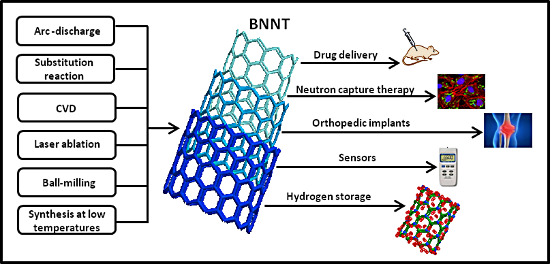
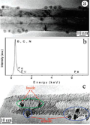
- and it might be worthwhile to further investigate it [71]. BNNT-grafted, poly(glycidyl methacrylate) and polystyrene brushes were prepared via atom transfer radical polymerization [72]. The resulting nanocomposite material was characterized using FTIR, TGA, SEM and TEM. The TEM images clearly show the




Poly(styrene)/oligo(fluorene)-intercalated fluoromica hybrids: synthesis, characterization and self-assembly
Beilstein J. Nanotechnol. 2014, 5, 2450–2458, doi:10.3762/bjnano.5.254
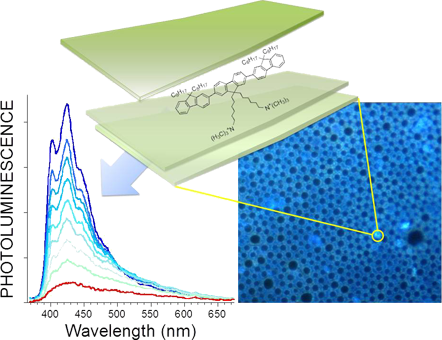
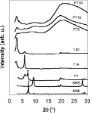
- powders by synchrotron radiation XRD. Successively, the hybrids are dispersed in poly(styrene) through in situ polymerization. Such a procedure allows us to synthesize the materials from solution, to achieve solid films, and to characterize them by optical and morphologic techniques. The polymeric films
- (styrene) (PS) matrix by in situ thermal polymerization. Such a procedure allowed us to process the materials as solid films and to characterize them by optical, structural, and morphologic analyses. In addition, we explored the possibility of organizing these materials in ordered honeycomb structures
- material in solution, we believed that an intriguing strategy would be to use a polymer as dispersing agent. Our previous results [8][9][10] caused us to regard the in situ polymerization as a potent tool to improve the intimate mixing between the polymer and the inorganic component. Thus, we synthesized




Functionalized polystyrene nanoparticles as a platform for studying bio–nano interactions
Beilstein J. Nanotechnol. 2014, 5, 2403–2412, doi:10.3762/bjnano.5.250
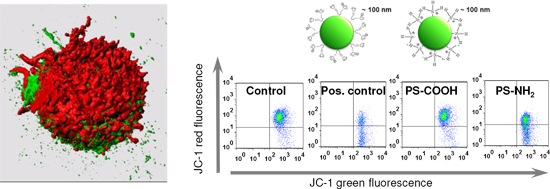
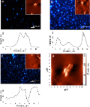
- aromatic polymer obtained by polymerization of styrene monomers (Figure 1). For the industrial mass production of polystyrene, styrene monomers are produced by the catalytic dehydrogenation of ethylbenzene which, in turn, is synthesized by the petrochemical industry [1]. Commonly used polystyrene is being
- this size occurs in a specific, receptor-mediated manner, which is characterized by the polymerization of clathrin units, membrane deformation, and intracellular signaling, which could all be integrated into a mathematical model describing these processes [28]. Of note, depending on the nature of the


Nanoparticle interactions with live cells: Quantitative fluorescence microscopy of nanoparticle size effects
Beilstein J. Nanotechnol. 2014, 5, 2388–2397, doi:10.3762/bjnano.5.248
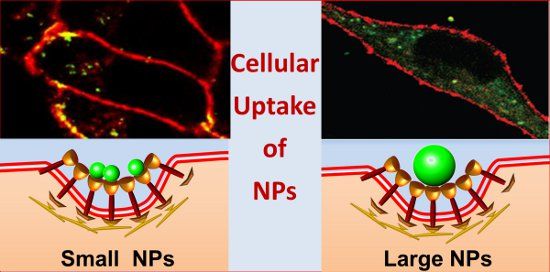
- -(2,6-diisopropylphenyl)-perylene-3,4-dicarbonacidimide (PMI, BASF, Ludwigshafen, Germany), were synthesized by a miniemulsion polymerization approach [30]. Cell culture HeLa cells were cultured in Dulbecco’s modified eagle medium (DMEM), supplemented with 10% fetal bovine serum (FBS), 60 µg/mL


Inorganic Janus particles for biomedical applications
Beilstein J. Nanotechnol. 2014, 5, 2346–2362, doi:10.3762/bjnano.5.244
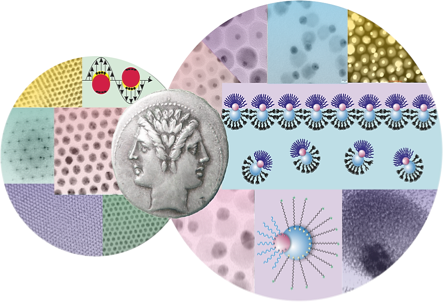
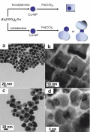
- amphiphilic particle. Kumacheva et al. reported a microfluidic method for fast continuous synthesis of Janus particles as well as three-phase particles with narrow size distribution by emulsification of monomer liquids and in situ photoinitiated polymerization of multiphase droplets (Figure 3e) [27]. Another
- complex core (IPEC), (c) classical Pickering emulsion technique, (d) different topologies of Janus particles: snowman-, acorn-, and dumbbell-like nanoparticles (top to bottom), (e) microfluidic photo-polymerization system, and (f) electrospinning technique with a bi-phasic nozzle. Reproduced with






Anticancer efficacy of a supramolecular complex of a 2-diethylaminoethyl–dextran–MMA graft copolymer and paclitaxel used as an artificial enzyme
Beilstein J. Nanotechnol. 2014, 5, 2293–2307, doi:10.3762/bjnano.5.238
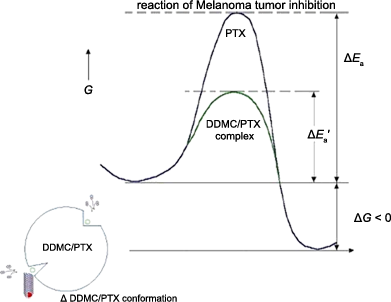
- the genetic engineering serves as an important domain [11]. The copolymer that was used for graft polymerization of MMA onto DEAE–dextran formed a polymer micelle with a hydrophilic–hydrophobic micro-separated domain. The high transformation efficiency of this polymer micelle suggests that it could be
- of melanoma cells. However, at high concentrations, survival is inversely proportional to the PTX concentration. Truly, at high concentrations, PTX will be efficacious, and the promotion of tubulin polymerization by PTX, which is dependent on the PTX concentration, for a negative survival probability
- (Cd) rate (Cd/dt) and tubulin polymerization (p) rate (dp/dt) will assume the following equation, as modified from the Cheng and Prusoff equation [38][39][40]: where, a is a constant value and C1 is a device constant (a > 0, C1 > 0). Michaelis–Menten kinetics The Michaelis–Menten equation assumes an


Characterization of 10,12-pentacosadiynoic acid Langmuir–Blodgett monolayers and their use in metal–insulator–metal tunnel devices
Beilstein J. Nanotechnol. 2014, 5, 2240–2247, doi:10.3762/bjnano.5.233
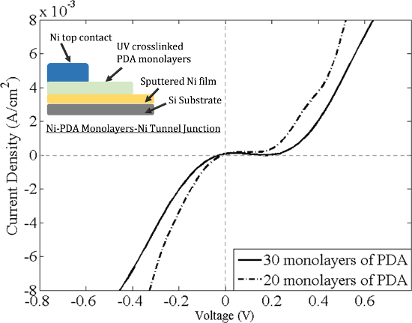
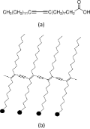
- the top contact sputtering. Recently, Langmuir monolayer films of 10,12-pentacosadiynoic acid (PDA) were studied as reported in the literature [8][10][11]. A set of experiments were performed regarding the photo-polymerization of PDA monomers using in situ UV light exposure in the LB trough as well as
- controlled using the KSV NIMA LB Trough controller. For polymerization purposes, the monolayers were exposed to 245 nm UV radiation for 15 min using a UV bench lamp [17]. Optical characterization: A Jasco FTIR 4600 was used to perform IR spectroscopy on the PDA film in transmission mode. IR transparent Si
- film compression was studied. Figure 2 shows the pressure–area isotherm of the PDA Langmuir monolayer with and without in situ polymerization in the trough at the air–water interface. The UV-exposed Langmuir monolayer shows a more compressed area for the same volume of PDA solution dispersed in water


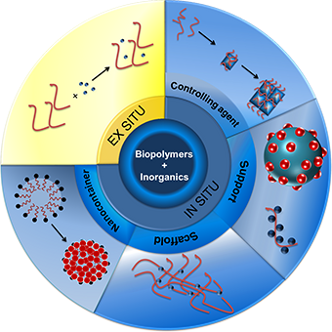
Biopolymer colloids for controlling and templating inorganic synthesis
Beilstein J. Nanotechnol. 2014, 5, 2129–2138, doi:10.3762/bjnano.5.222
- with (3-aminopropyl)trimethoxysilane (APTMS), (b) DNA deposition on the cationic particle surface, (c) CdS precipitation, and (d) dissolution of the SiO2 core to form hollow structures. Reprinted with permission from [52]. Copyright 2011 American Chemical Society. Siloxan polymerization on chitosan


Carbon nano-onions (multi-layer fullerenes): chemistry and applications
Beilstein J. Nanotechnol. 2014, 5, 1980–1998, doi:10.3762/bjnano.5.207
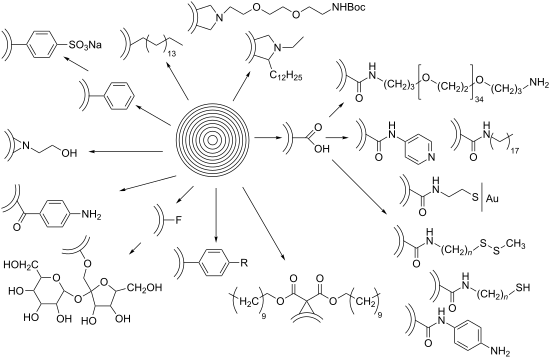
- . Interestingly, the CNO-OH showed distinct fluorescence emission with an emission maximum at 453 nm in aqueous solution, while CNO-Br did not fluoresce. Based on these two CNO derivatives, the authors reported different polymerization reactions, where the CNOs served as macroinitiators. Firstly, CNO-OHs were
- used for a ring opening polymerization with ε-caprolactone in the presence of stannous octoate. In a second approach, CNO-Brs were decorated with polystyrene in an atom transfer radical polymerization reaction. Both polymer-functionalized CNO materials showed a good solubility in common organic
- in the presence of ascorbic acid and uric acid in solution [44]. The concentration of dopamine could be determined in a range between 5 × 10⁻⁵ and 4 × 10⁻³ mol·L−1. They also reported the in situ polymerization of aniline on phenylene amine-terminated CNO derivatives [45]. This polyaniline (PANI


Towards bottom-up nanopatterning of Prussian blue analogues
Beilstein J. Nanotechnol. 2014, 5, 1933–1943, doi:10.3762/bjnano.5.204
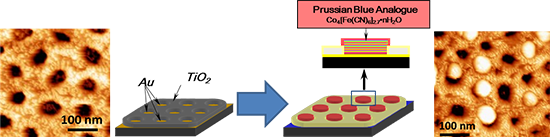
- between hexacyanometalates and hydrated cations of the transition metal series in aqueous solution. The resulting solid exhibits the well-known face centered cubic structure of Prussian blue [9]. The sol–gel process is a method for producing metal oxides from small molecules via inorganic polymerization


Influence of surface-modified maghemite nanoparticles on in vitro survival of human stem cells
Beilstein J. Nanotechnol. 2014, 5, 1732–1737, doi:10.3762/bjnano.5.183
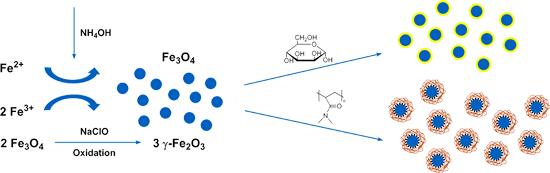
- by sodium hypochlorite and the coating with D-mannose and poly(N,N-dimethylacrylamide) according to earlier reports [20][25]. While coating with D-mannose was performed by the slow addition of D-mannose solution to the γ-Fe2O3 colloid, coating with PDMAAm included solution radical polymerization of N


Non-covalent and reversible functionalization of carbon nanotubes
Beilstein J. Nanotechnol. 2014, 5, 1675–1690, doi:10.3762/bjnano.5.178
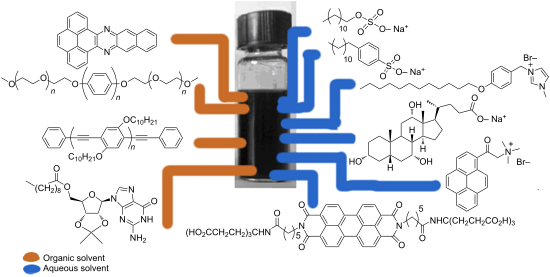
- favorably exploited for CNTs precipitation/dispersion cycles. Ortiz-Acevedo et al. obtained a diameter-selective solubilization of SWCNTs by using cyclic peptides containing thiol groups [101]. The oxidation induces polymerization of the peptides which wrap around the nanotube achieving a size-selective



Different endocytotic uptake mechanisms for nanoparticles in epithelial cells and macrophages
Beilstein J. Nanotechnol. 2014, 5, 1625–1636, doi:10.3762/bjnano.5.174
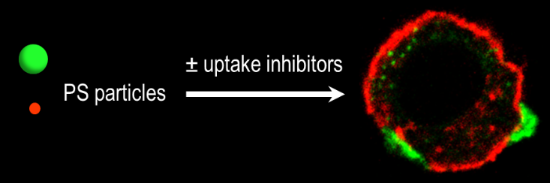
- caveolin-1. A549 cells expressed clathrin heavy chain and caveolin-1, but no flotillin-1 uptake-related proteins. Our data revealed an impeded uptake of 40 nm polystyrene nanoparticles by J774A.1 macrophages when actin polymerization and clathrin-coated pit formation was blocked. From this result, it is
- inhibited clathrin- as well as caveolin-mediated endocytosis as shown by the lack of intracellular fluorescently labelled transferrin and ctx-b in A549 cells. The actin polymerization inhibitor cytochalasin D prevented particle uptake (d = 1 µm) by J774A.1 cells at a concentration of 4 µM. Uptake of
- high as expected for A549 cells. This could be due to cytochalasin D blocking actin polymerization and hence preventing Trypan blue from entering the cells, although the cells are severely affected by this inhibitor. It was shown that the optimal and desired function of the endocytotic inhibitors was



Liquid fuel cells
Beilstein J. Nanotechnol. 2014, 5, 1399–1418, doi:10.3762/bjnano.5.153
- PTFE matrix was prepared through in situ polymerization. It had a conductivity of 0.049 S/cm at room temperature, which resulted in a peak power density of 110 mW/cm2 [163]. The main drawback of direct hydrazine fuel cells is the high toxicity of N2H4 and its derivatives [164]. Less toxic hydrazine

Influence of the PDMS substrate stiffness on the adhesion of Acanthamoeba castellanii
Beilstein J. Nanotechnol. 2014, 5, 1393–1398, doi:10.3762/bjnano.5.152
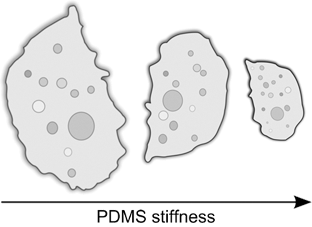
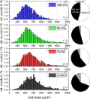
- , and 40:1 by following the curing procedure given in Trappmann et al. [11]. Afterwards, the mixtures were poured in sterile 6-well plates (Sarstedt, Nümbrecht, Germany) up to a thickness of approx. 2 mm and degased for 3.5 h. Thermal polymerization was carried out for 21 h at 70 °C followed by a slow



Review of nanostructured devices for thermoelectric applications
Beilstein J. Nanotechnol. 2014, 5, 1268–1284, doi:10.3762/bjnano.5.141
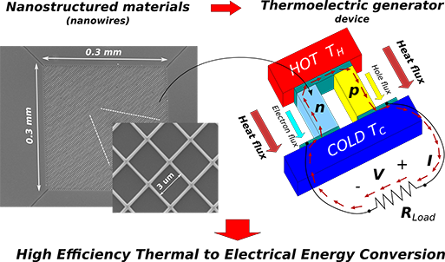
- etches, which is limited not only by the etching selectivity but also by the reduced mechanical stability of very long and narrow nanowires. Deep reactive ion etching (DRIE) is a plasma etching technique that alternates vertical etching steps (for example by SF6) and polymerization steps (by CF4) [105
- ][106][107][108]. Each polymerization step provides a conformal polymer deposition, meanwhile each etching step that follows is anisotropic. Therefore, the etching step removes the polymer on the bottom of the feature while a passivating polymer layer is preserved (or only partially removed) on the


Dry friction of microstructured polymer surfaces inspired by snake skin
Beilstein J. Nanotechnol. 2014, 5, 1091–1103, doi:10.3762/bjnano.5.122
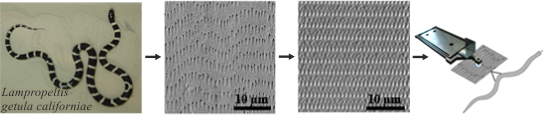
- Spurr’s low-viscosity resin [68]. The polymerization of the resin took place overnight at 70° C. The resin (Polysciences Inc., Eppelheim, Germany) consists of nonenyl succinic anhydride (NSA) (61.3%), 3,4-epoxycyclohexylmethyl-3,4-epoxycyclohexylcarboxylate (ERL 4221) (23.6%), diglycidyl ether of


Characterization and photocatalytic study of tantalum oxide nanoparticles prepared by the hydrolysis of tantalum oxo-ethoxide Ta8(μ3-O)2(μ-O)8(μ-OEt)6(OEt)14
Beilstein J. Nanotechnol. 2014, 5, 1082–1090, doi:10.3762/bjnano.5.121
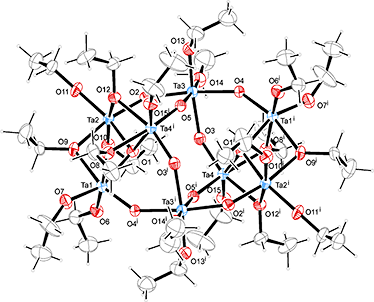
- (μ-OEt)6(OEt)14 (1) was obtained by the controlled hydrolysis of tantalum ethoxide Ta(OEt)5 in the presence of ammonia. Compound 1 is considered as the intermediate building block in the sol–gel polymerization of Ta(OEt)5. Further hydrolysis of compound 1 yielded nanoparticles of Ta2O5, which were


Biomolecule-assisted synthesis of carbon nitride and sulfur-doped carbon nitride heterojunction nanosheets: An efficient heterojunction photocatalyst for photoelectrochemical applications
Beilstein J. Nanotechnol. 2014, 5, 770–777, doi:10.3762/bjnano.5.89
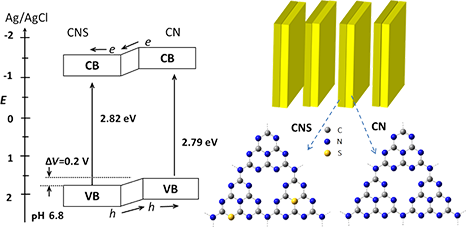
- temperature. X-ray photoelectron spectroscopy (XPS) measurements were performed to study the chemical states of CN and CNS. As shown in the survey spectra in Figure 1e, CN has the typical C1s and N1s signals, which evidence the successful formation of CN through thermal decomposition and polymerization of the


Carbon dioxide hydrogenation to aromatic hydrocarbons by using an iron/iron oxide nanocatalyst
Beilstein J. Nanotechnol. 2014, 5, 760–769, doi:10.3762/bjnano.5.88
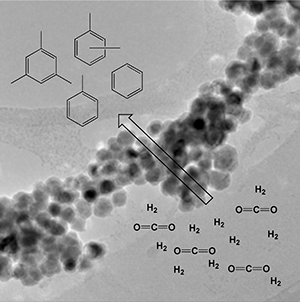
- mass spectrum (Supporting Information File 1) with the reference spectrum available from the Wiley collection [59]. C3O2 is metastable and undergoes rapid polymerization at temperatures above 400 °C [60]. It is noteworthy that the formation of polymers at the surface of the catalyst was not observed in


Cyclodextrin-poly(ε-caprolactone) based nanoparticles able to complex phenolphthalein and adamantyl carboxylate
Beilstein J. Nanotechnol. 2014, 5, 651–657, doi:10.3762/bjnano.5.76
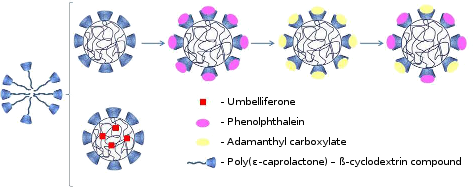
- studied and used is poly(ε-caprolactone), a linear aliphatic polyester, obtained by ring-opening polymerization of ε-caprolactone. Poly(ε-caprolactone) was used in several combinations, including click reaction products. Functionalized polyester was obtained, which was further used for grafting β-CD on it
- polymerization (ROP) of ε-caprolactone by using the propargylic alcohol as an initiator. A 10 mL round bottom flask was heated and purged with argon. 5 g (43.806 mmol, 10 Eg) of ε-caprolactone and 608.86 mg of propargylic alcohol was added to the round-bottom flask and heated at 120 °C. When the temperature is





