Search results
Search for "precipitation" in Full Text gives 297 result(s) in Beilstein Journal of Nanotechnology. Showing first 200.
Fully scalable one-pot method for the production of phosphonic graphene derivatives
Beilstein J. Nanotechnol. 2017, 8, 1094–1103, doi:10.3762/bjnano.8.111
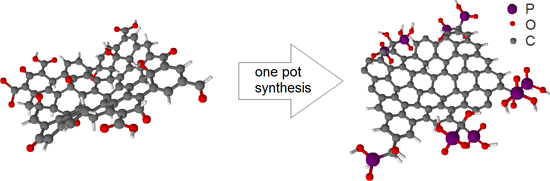
- phosphorylating GO and the usage of the latter as proton exchange membranes component was presented in [5]. Phosphorylated GO was synthesized via distillation–precipitation polymerization using dimethyl vinylphosphonate as monomer together with cross-linker and initiator. This approach required the introduction


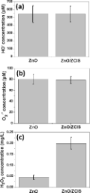
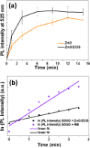
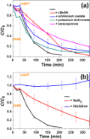
ZnO nanoparticles sensitized by CuInZnxS2+x quantum dots as highly efficient solar light driven photocatalysts
Beilstein J. Nanotechnol. 2017, 8, 1080–1093, doi:10.3762/bjnano.8.110
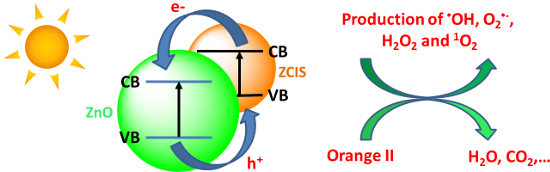
- redispersed in toluene, and reprecipitated by adding ethanol. The centrifugation and precipitation procedure was repeated eight times for the purification of the ZCIS QDs. Preparation of the ZnO/ZCIS photocatalyst For the synthesis of the ZnO/ZCIS catalyst used in this work, 2.5 mg of dried ZCIS QDs were




The integration of graphene into microelectronic devices
Beilstein J. Nanotechnol. 2017, 8, 1056–1064, doi:10.3762/bjnano.8.107
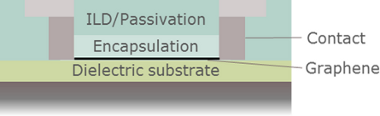
- the type of metal removal. The first approach is based on the removal of the metal layer during the CVD process by evaporation [26] or agglomeration [27]. However, the evaporation process lowers the graphene quality. The other approach is the implementation of a dissolution–precipitation mechanism of


Investigation of growth dynamics of carbon nanotubes
Beilstein J. Nanotechnol. 2017, 8, 826–856, doi:10.3762/bjnano.8.85
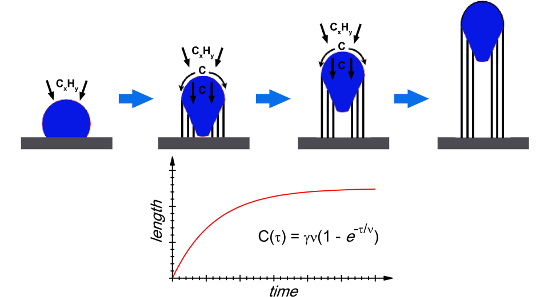
- SiCl4. As soon as the liquid alloy particle was supersaturated, the growth of the whisker started. It occurred by the precipitation of Si atoms from the droplet at the interface between solid Si and liquid alloy. As a result, the alloy droplet was displaced from the Si substrate crystal to the tip of
- be maintained by the exothermic catalytic decomposition of the precursor molecules and the endothermic precipitation of carbon at opposing face of the catalyst particle. However, these requirements are not met in the case of endothermic decomposition of for instance alkanes [33][35][36][37] and the
- steps, including the dissociation of gaseous carbon precursor on the surface of the catalytic particle, the surface diffusion of carbon atoms on the solid particle and the precipitation of carbon in the form of nanotubes. The similarity of the terms “VLS” and “VSS” and different types of the carbon


Recombinant DNA technology and click chemistry: a powerful combination for generating a hybrid elastin-like-statherin hydrogel to control calcium phosphate mineralization
Beilstein J. Nanotechnol. 2017, 8, 772–783, doi:10.3762/bjnano.8.80
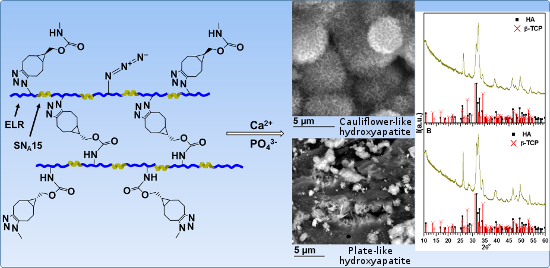
- biology experiments for gene construction were performed using standard methods. ELR production was carried out using cellular systems for genetically engineered protein biosynthesis in E. coli and purification was performed with several cycles of temperature-dependent reversible precipitation. After
- the HA formation (JCPDS 01-072-1243). Therefore, the mineralization is kinetically driven where a transient phase β-TCP is formed and eventually transformed into HA. It is worthwhile mentioning that CP precipitation in collagen matrices is also kinetically driven, with transient precursors such as ACP



First examples of organosilica-based ionogels: synthesis and electrochemical behavior
Beilstein J. Nanotechnol. 2017, 8, 736–751, doi:10.3762/bjnano.8.77
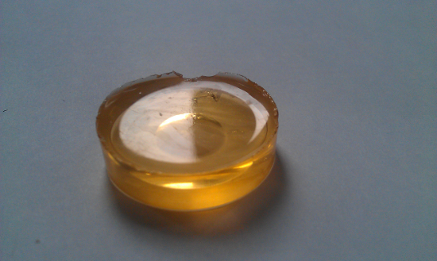
- ) and 1,4-butanesultone (40 mmol, 5.45 g) were mixed in a 50 mL round bottom flask. The mixture was heated to 60 °C for 1 h with stirring under nitrogen. Precipitation of the white zwitterionic salt 1-methyl-3-butylimidazoliumsulfonate (BmimSO3) starts after ca. 30 min. As the viscosity of the reaction








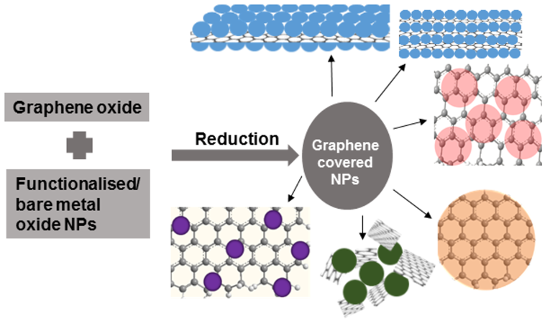
Synthesis of graphene–transition metal oxide hybrid nanoparticles and their application in various fields
Beilstein J. Nanotechnol. 2017, 8, 688–714, doi:10.3762/bjnano.8.74






Dispersion of single-wall carbon nanotubes with supramolecular Congo red – properties of the complexes and mechanism of the interaction
Beilstein J. Nanotechnol. 2017, 8, 636–648, doi:10.3762/bjnano.8.68
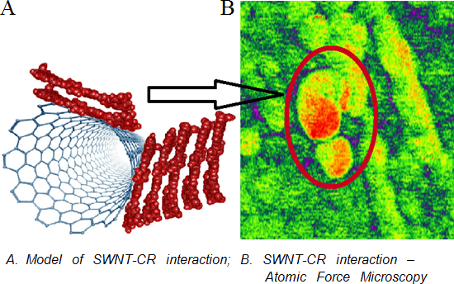
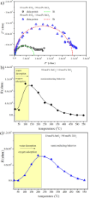
- ) are stable at temperatures up to 55 °C. Above that temperature the precipitation of nanotubes is observed (Figure 7B.3), but CR is not released into the solution). Figure 7A shows the decrease in absorbance of the supernatant for both free CR (at 480 nm) and for the SWNT–CR complex (at 668 nm) after
- 20 minutes incubation at a given temperature. The temperature at which the precipitation effect is observed correlates with the melting temperature for the CR supramolecular form [32]. The reason of aggregation of nanotubes is unclear, but most probably the release of CR molecules from SWNT–CR
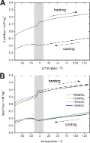
- -sedimenting (arrow) (C), but easily dispersed complex was observed. Calorimetric profiles obtained for free CR and CR bound to SWNTs: (A) 2 mg/mL CR; (B) 5 mg/mL CR. The first heating was always preceded by rapid cooling; second heating was preceded by controlled, slow cooling (1 °C/min). Precipitation of the


α-((4-Cyanobenzoyl)oxy)-ω-methyl poly(ethylene glycol): a new stabilizer for silver nanoparticles
Beilstein J. Nanotechnol. 2017, 8, 627–635, doi:10.3762/bjnano.8.67
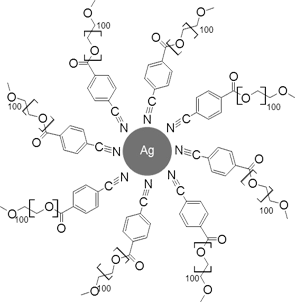
- modification with the polymer. There is, however, no indication of precipitation. This suggests that the polymer is a viable stabilizer for the SNPs. Finally, CBAmPEG is stable up to pH 9 before some degradation via cleavage of the ester bond is observed. Consistent with the data on the pure CBAmPEG polymer
- nanoparticle dispersions remain stable and no flocculation or precipitation is observed. As a result, the study shows that (i) cyanobenzoic acid-based polymeric stabilizers are applicable over a wide pH range and (ii) some stabilizer degradation may take place without causing a subsequent destabilization of


Diffusion and surface alloying of gradient nanostructured metals
Beilstein J. Nanotechnol. 2017, 8, 547–560, doi:10.3762/bjnano.8.59
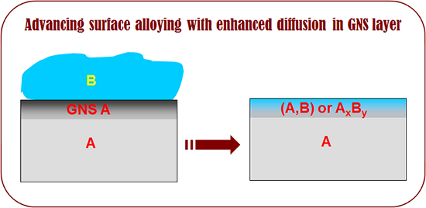
- interfaces in the nanostructured layer make it possible to study interfacial diffusion and relative characteristics, such as interfacial structure, precipitation, phase transformation, plastic deformation, and chemical reaction, at lower temperatures. In comparison, it is difficult to obtain enough




The longstanding challenge of the nanocrystallization of 1,3,5-trinitroperhydro-1,3,5-triazine (RDX)
Beilstein J. Nanotechnol. 2017, 8, 452–466, doi:10.3762/bjnano.8.49
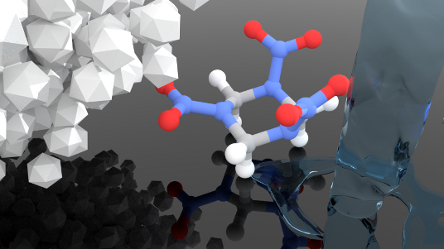
- or spherical shape. Again, like the sub-micrometer powder obtained from the electrospray technique, the 500 nm RDX was desensitized to friction but not to impact (Table 5). Supercritical/gas antisolvent precipitation Supercritical antisolvent (SAS) precipitation uses the same principle as liquid
- crystallization, substituting the liquid antisolvent by a supercritical fluid. The very high diffusivity of supercritical fluids leads to a rapid supersaturation and thus to a sudden precipitation. Various approaches are used in SAS. One is the supercritical antisolvent (GAS) precipitation, where the liquid
- ]. Aerosol solvent extraction system (ASES) process The aerosol solvent extraction system (ASES) process involves precipitation through spraying the solution through an atomization nozzle into supercritical CO2. Lee et al. [51] used GAS and ASES systems to crystallize β-HMX. However, undesirables shapes


Self-assembly of silicon nanowires studied by advanced transmission electron microscopy
Beilstein J. Nanotechnol. 2017, 8, 440–445, doi:10.3762/bjnano.8.47
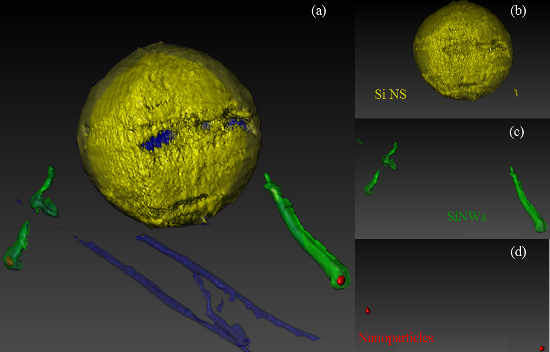
- catalytic nanoparticle and precipitation of Si, which then crystallizes in the form of nanowire, as predicted by the VLS model [14]. Nevertheless, it should be noticed that some HAADF images revealed the presence of some nanoparticles on the SiNS surface (see point C in the inset of Figure 4b), from which


Role of oxygen in wetting of copper nanoparticles on silicon surfaces at elevated temperature
Beilstein J. Nanotechnol. 2017, 8, 425–433, doi:10.3762/bjnano.8.45
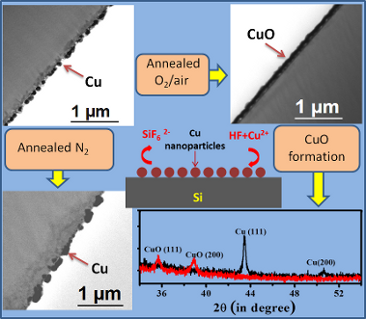
- synthesized following different processes such as hydrothermal, chemical precipitation, electrochemical as well as other methods [4][5][6][7][13]. In this context the combination of the galvanic displacement reaction and the rapid thermal annealing process provides a simple and quick route for the synthesis


Nanoscale isoindigo-carriers: self-assembly and tunable properties
Beilstein J. Nanotechnol. 2017, 8, 313–324, doi:10.3762/bjnano.8.34
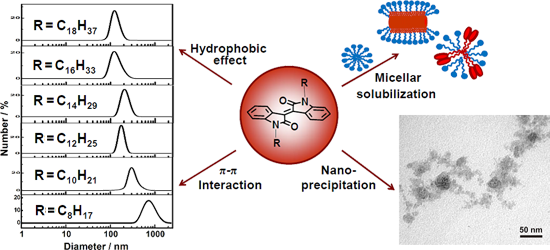
- nanoparticles For the preparation of solid isoindigo nanoparticles (SIPs), the method of nanoprecipitation was used. Precipitation is a commonly used technique in pharmaceutical technology [42][55][56]. This method is documented for protein encapsulation [57], hydrophobic drugs [58], and also for targeting
- . The samples based on compounds 2a–f were not used in this experiment due to their low stability in the presence of Sudan I. In these cases, gradual agglomeration and precipitation were observed in the systems. As seen in Figure 4a an increase in absorbance occurs at concentrations above 0.2 mМ (for 2g




Nanocrystalline ZrO2 and Pt-doped ZrO2 catalysts for low-temperature CO oxidation
Beilstein J. Nanotechnol. 2017, 8, 264–271, doi:10.3762/bjnano.8.29
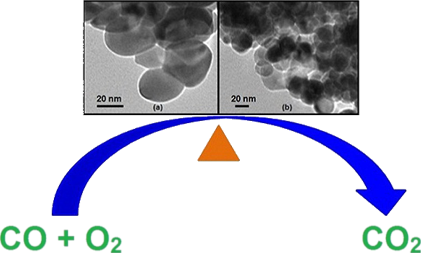
- nanoparticles such as sol–gel [21], precipitation [22], combustion [23], hydrothermal synthesis [24], solvothermal synthesis [25], reverse micelles [26], chemical vapor synthesis [27], aerosol pyrolysis [28], and sonochemical synthesis [29]. Dongare et al. [30] described the synthesis of ZrO2 by a sol–gel


Photo-ignition process of multiwall carbon nanotubes and ferrocene by continuous wave Xe lamp illumination
Beilstein J. Nanotechnol. 2017, 8, 134–144, doi:10.3762/bjnano.8.14
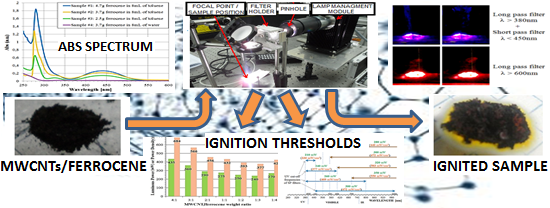
- . The result was a visible change in the solution from that shown in Figure 4c to Figure 4d. The solution presented high opacity, large agglomerates and very fast precipitation of solids. These problems were not resolved by subjecting the sample to an additional ten minutes of sonication (Figure 4e




Nanocrystalline TiO2/SnO2 heterostructures for gas sensing
Beilstein J. Nanotechnol. 2017, 8, 108–122, doi:10.3762/bjnano.8.12
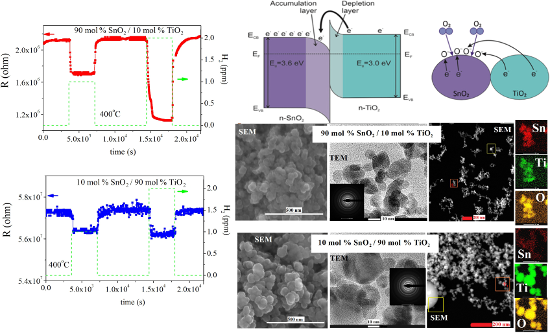
- phase begins to predominate (71.1 wt %) with lattice constants slightly higher than those of 100% TiO2 indicating partially decomposed solid solution (case C). Furthermore, the evidence of precipitation of 18.4 wt % SnO2 cassiterite with very small crystallites of about 3 nm favors the hypothesis of a




The cleaner, the greener? Product sustainability assessment of the biomimetic façade paint Lotusan® in comparison to the conventional façade paint Jumbosil®
Beilstein J. Nanotechnol. 2016, 7, 2100–2115, doi:10.3762/bjnano.7.200

- climatization of the building. However, in this case moisture may penetrate quicker and deeper into the construction, eventually resulting in serious damage to the building structure, especially in regions with higher amounts of precipitation. Secondly, those paints focusing on hydrophobicity or water


Intercalation and structural aspects of macroRAFT agents into MgAl layered double hydroxides
Beilstein J. Nanotechnol. 2016, 7, 2000–2012, doi:10.3762/bjnano.7.191
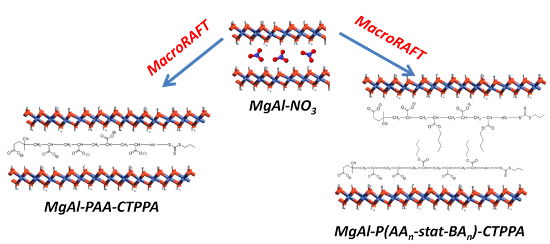
- PAA49-CTPPA, P(AA8.5-stat-BA8.5)-CTPPA, P(AA14.5-stat-BA14.5)-CTPPA and P(AA19.5-stat-BA19.5)-CTPPA, respectively. The hybrid LDH materials were prepared through anion exchange at room temperature from MgAl-NO3 LDH precursor obtained by fast precipitation followed by moderate hydrothermal treatment
- for 5 h and the obtained polymers were purified by precipitation in diethyl ether. Samples were taken during polymerization to determine conversion by 1H NMR spectroscopy as a function of time, and molar mass evolution with conversion by size exclusion chromatography (SEC). SEC measurements were


A new approach to grain boundary engineering for nanocrystalline materials
Beilstein J. Nanotechnol. 2016, 7, 1829–1849, doi:10.3762/bjnano.7.176
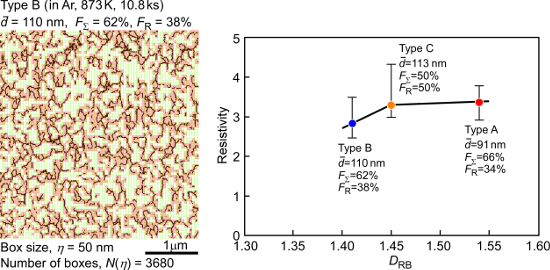
- as-electrodeposited pure Ni specimen. The grain boundary segregation of P atoms may result in the observed excess hardening of nanocrystalline Ni due to the enhancement of grain boundary hardening [68]. Moreover, the precipitation of the Ni3P phase affects the hardening of the Ni–P alloy. The








Functionalized platinum nanoparticles with surface charge trigged by pH: synthesis, characterization and stability studies
Beilstein J. Nanotechnol. 2016, 7, 1822–1828, doi:10.3762/bjnano.7.175
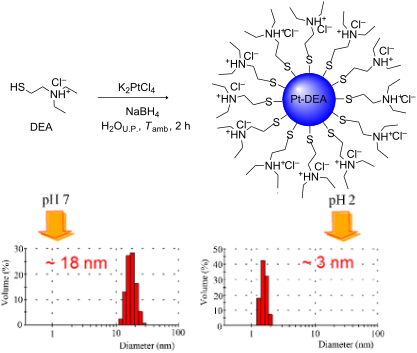
- , such as an organic thiol, is present in solution, it gives rise to a passivation layer that hinders the coalescence and precipitation, allowing the colloidal suspension to remain stable [22]. Among reducing agents, hydrazine and sodium borohydride are the most commonly used but also natural-origin


3D printing of mineral–polymer bone substitutes based on sodium alginate and calcium phosphate
Beilstein J. Nanotechnol. 2016, 7, 1794–1799, doi:10.3762/bjnano.7.172
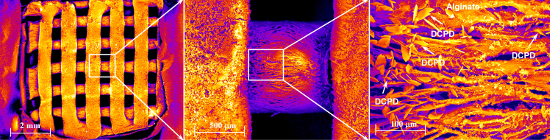
- biomimetic approach in which 3D printing of composite structures involves a chemical interaction of the polymer slurry with a liquid “ink”, leading to in situ formation of a CP phase in the final product. It is well known that alginate allows precipitation of inorganic phases within its macromolecular
- glutamic acids in the reaction medium maintained at pH 4.5 ± 0.5 yields the formation of dicalcium phosphate dihydrate (DCPD) in the printed samples (Figure 2). When precipitation is performed at a higher pH, as reported in [7][14], the difference of electrical charges in alginate is greater. As a


Influence of hydrothermal synthesis parameters on the properties of hydroxyapatite nanoparticles
Beilstein J. Nanotechnol. 2016, 7, 1586–1601, doi:10.3762/bjnano.7.153
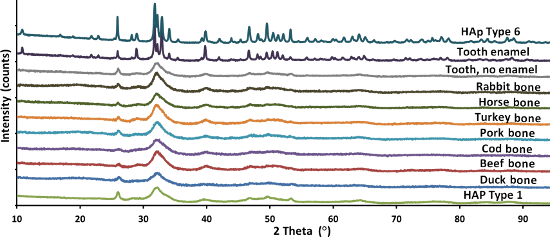
- Hydroxyapatite (HAp) nanoparticles of tunable diameter were obtained by the precipitation method at room temperature and by microwave hydrothermal synthesis (MHS). The following parameters of the obtained nanostructured HAp were determined: pycnometric density, specific surface area, phase purity, lattice
- chemistry techniques, such as direct precipitation from aqueous solutions, electrochemical deposition [23], sol–gel processes [24] and hydrothermal synthesis [25][26][27] (Table 1). In the majority of cases, the synthesized powder is a stoichiometric hydroxyapatite, and oftentimes contains additional phases
- precise control of the average particle size and particle size distribution can be maintained and these parameters can still be precisely tuned. Experimental Materials The HAp nanopowder was synthesized via a simple precipitation method (exactly in the acid/base neutralization process). The precursors for


An ellipsometric approach towards the description of inhomogeneous polymer-based Langmuir layers
Beilstein J. Nanotechnol. 2016, 7, 1156–1165, doi:10.3762/bjnano.7.107
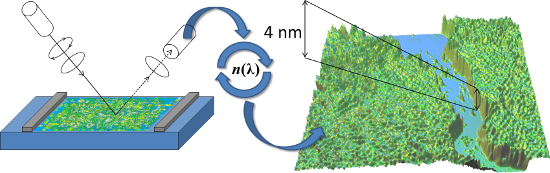
- observed by BAM and IE (Figure 2a). The short time elapsed between the spreading procedure and the observation of morphologies leads to the assumption that they are generated by precipitation-like processes. During compression, the free areas in between the morphologies are reduced, causing just a small
- . Regarding Figure 5b, the height gap between the slab and monolayer is around 4 nm in the dewetted state. This clearly supports the results provided by the complementary use of spectroscopic ellipsometry and nulling-based thickness mapping. Hence the low lateral movement and precipitation-caused structures


Multiwalled carbon nanotube hybrids as MRI contrast agents
Beilstein J. Nanotechnol. 2016, 7, 1086–1103, doi:10.3762/bjnano.7.102
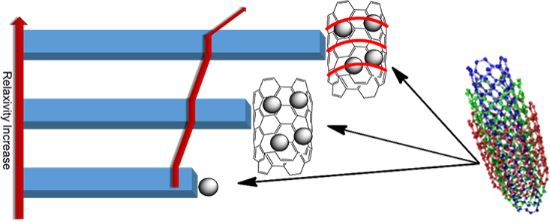
- with europium, gadolinium and lanthanum fluoride co-precipitation (EuGdLa/SiO2/PAH/MWCNT#Chen) [25]. The authors claimed that fluoride nanocrystals (5–10 nm) coated the MWCNT effectively due to high electrostatic attraction from the polyelectrolyte. The silica layer was introduced to prevent
- (SPIO/oMWCNT#Wu) [38], while Wang used the thermal annealing method of iron(II) acetate (SPIO/oMWCNT#Wang) [43]. Solvothermal co-precipitation of CoCl2 and FeCl3, also by Wu, led to the non-covalent deposition of magnetic cobalt ferrite (CoFe2O4/oMWCNT#Wu) [39]. It was found that a low temperature (180
- from the in situ precipitation of SiO2 on PAH non-covalently coated oMWCNT followed by co-precipitation of lanthanide fluorides [25]. In Liu’s work, the sonication product of oMWCNT with poly(diallyldimethylammonium chloride) (PDDA) was used to anchor SPIO@Lac-Gly yielding SPIO@Lac-Gly/PDDA/oMWCNT#Liu