


Search results
Search for "selectivity" in Full Text gives 318 result(s) in Beilstein Journal of Nanotechnology. Showing first 200.
Colorimetric detection of Cu2+ based on the formation of peptide–copper complexes on silver nanoparticle surfaces
Beilstein J. Nanotechnol. 2018, 9, 1414–1422, doi:10.3762/bjnano.9.134
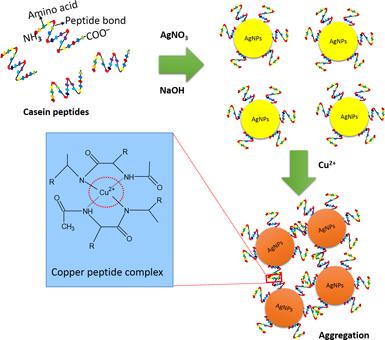
- . Although colorimetric probes based on the aggregation of nanoparticles (NPs) induced by target-metal ions are advantageous, these probes may have difficulties in detecting Cu2+ in complex matrices [7]. Quantum-dot-based fluorescent probes showed improved sensitivity and selectivity for Cu2+ compared to
- traditional organic probes [8][9][10], but the preparation of such functionalized quantum dots is a time-consuming process. Similarly, colorimetric methods based on Cu2+-dependent click chemistry are well-known for high selectivity and tolerance to interference caused by other metal ions. Nonetheless, these
- and at 1458 cm−1, respectively, in agreement with [23]. Selectivity At first, the selectivity of the functionalized AgNPs was examined with various ions, including Cu2+, Mn2+, Mo3+, Na+, Cr3+, Hg2+, Ni2+, Ca2+, K+, Cs+, Li+, As+, PO43−, NH4, and NO3−, at 100 ppb. The color change of the AgNPs


Nanoporous silicon nitride-based membranes of controlled pore size, shape and areal density: Fabrication as well as electrophoretic and molecular filtering characterization
Beilstein J. Nanotechnol. 2018, 9, 1390–1398, doi:10.3762/bjnano.9.131
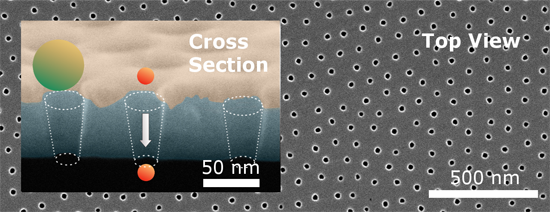
- schematically in Figure 1d. The Cr film thickness is determined by the etch selectivity of mask and membrane materials. All the Cr caps on top of the pillars must be clearly separated from the Cr layer on the SiN bottom for the chosen aspect ratio of the pillars. The second part of the mask inversion process
- ]. Selectivity and molecular cut-off depend strongly on pore size and the narrowness of its distribution. Studies of the molecular filtering properties were conducted by real-time fluorescence microscopy. Thus, the diffusion of fluorescent molecules or fluorescent-labeled macromolecules could be observed time


Heterostuctures of 4-(chloromethyl)phenyltrichlorosilane and 5,10,15,20-tetra(4-pyridyl)-21H,23H-porphine prepared on Si(111) using particle lithography: Nanoscale characterization of the main steps of nanopatterning
Beilstein J. Nanotechnol. 2018, 9, 1211–1219, doi:10.3762/bjnano.9.112
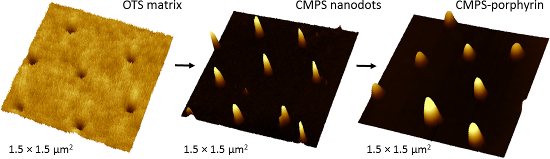
- was chosen to passivate the silicon surface and to serve as a resist layer to accomplish spatial selectivity for surface reactions. The uncovered sites of Si(111) within the nanoholes expose hydroxyl groups for binding organosilanes such as CMPS. Preparation of CMPS nanodots The samples with nanoholes
- exposed nanoholes of Si(111). Spatial confinement facilitated the growth of CMPS layers in the vertical direction, which was produced by cross-linking to form intramolecular siloxane bonds. Spatial selectivity for the preparation of heterostructures of CMPS and H2TPyP Heterostructures of CMPS-porphyrin
- reaction, nanodots of CMPS were produced. (d) Reaction with porphyrin produced taller heterostructures with spatial selectivity for the sites of CMPS nanodots. Nanoholes within a thin film of OTS. (a) Topography frame, 3 × 3 µm2; and simultaneously acquired (b) phase image. (c) Zoom-in topograph of


Understanding the performance and mechanism of Mg-containing oxides as support catalysts in the thermal dry reforming of methane
Beilstein J. Nanotechnol. 2018, 9, 1162–1183, doi:10.3762/bjnano.9.108
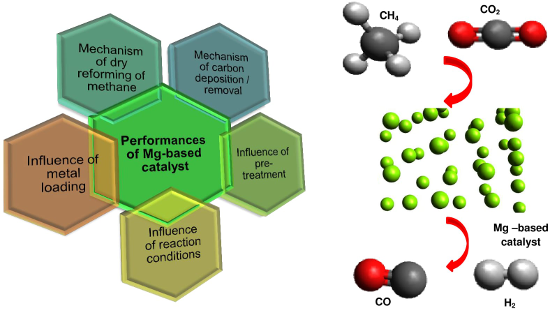
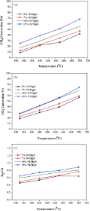
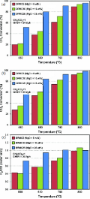
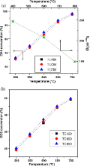
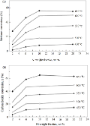
- support and active metal particles [16][17][18]. The loss of catalytic activity or selectivity over time of production affects the cost of catalyst replacement, process shutdown, and product quality and quantity. Numerous researchers have reported that noble metal-based catalysts, such as Pt, Rh, Pd, Ru
- conducted by numerous researchers to assist in the reaction for decreasing carbon formation and to improve catalyst activity, selectivity, and stability. To date, an incorporated mechanism for carbon deposition and removal has yet to be proposed and is still being debated among researchers. The present
- determining the activity and the selectivity of the catalysts are the dispersion and the physico-chemical characteristics of active metals on the support catalyst. Three general approaches are applied for the catalyst preparation, including (i) deposition of active metals onto a support; (ii) precipitation of






Enzymatically promoted release of organic molecules linked to magnetic nanoparticles
Beilstein J. Nanotechnol. 2018, 9, 986–999, doi:10.3762/bjnano.9.92
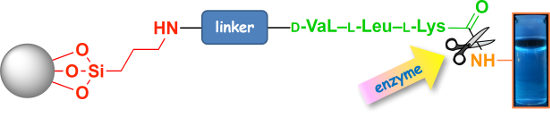
- delivery; enzyme catalysis; magnetic nanoparticles; magnetic properties; peptides; Introduction A major challenge of current cancer therapies is to improve the selectivity of chemotherapeutic agents against tumour cells. This goal may be achieved by exploiting smart drug delivery approaches. Magnetic
- cancer cells. To achieve selectivity, there are two main strategies. In the first one, the enzyme is exogenous and is artificially introduced into the body and selectively targeted to the tumour tissue using genes, viruses or antibodies (GDEPT, VDEPT, and ADEPT, respectively). Alternatively, the enzyme
- delivering an exogenous enzyme to the desired site. Both the use of magnetic nanoparticles and the DEPT approach have the limitation that complete selectivity is not possible in the release of the active chemotherapeutic agent. For example, an unspecific release of the drug from the nanoparticles may take




Comparative study of antibacterial properties of polystyrene films with TiOx and Cu nanoparticles fabricated using cluster beam technique
Beilstein J. Nanotechnol. 2018, 9, 861–869, doi:10.3762/bjnano.9.80
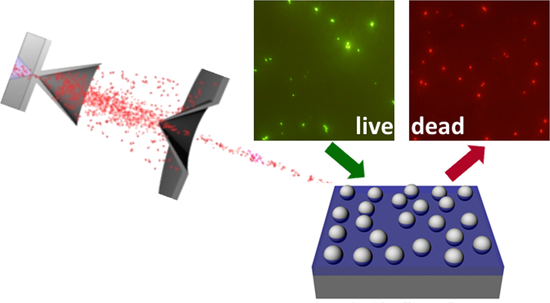
- through mechanisms based on (i) metal ion selectivity (replacement of original metals leading to cellular dysfunction); (ii) metal reduction potential (generating or catalysing the formation of reactive oxygen species (ROS) damaging cellular proteins, lipids and DNA) and (iii) direct nanoparticle (NP




Noble metal-modified titania with visible-light activity for the decomposition of microorganisms
Beilstein J. Nanotechnol. 2018, 9, 829–841, doi:10.3762/bjnano.9.77
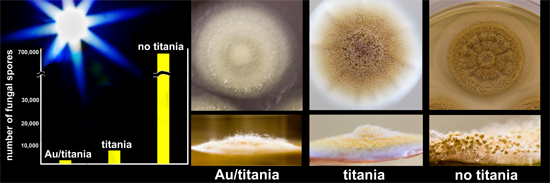
- have already been used for various antimicrobial applications, such as (i) ionization techniques, (ii) membrane technologies to reduce biofouling of sanitation devices, (iii) development of sensors with high sensitivity and selectivity for pathogen detection, (iv) everyday products (cosmetics, shoes


Surface-plasmon-enhanced ultraviolet emission of Au-decorated ZnO structures for gas sensing and photocatalytic devices
Beilstein J. Nanotechnol. 2018, 9, 771–779, doi:10.3762/bjnano.9.70
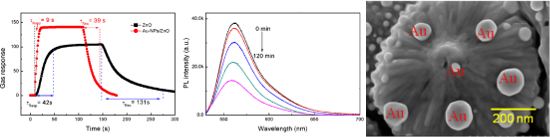
- and reasonably fast response/recovery time were reported for a gas sensor based on Au-decorated ZnO structures. The highest selectivity towards NO2 was compared to other combustion gases such as CO, and C3H8. In addition, the photocatalytic decomposition of organic dyes under sunlight using PL
- dynamic response transients of both sensors to varying concentrations (15–60 ppm) of n-propane at an operating temperature about of 120 °C were also investigated (Figure S1b,c, Supporting Information File 1). These improvements of the sensitivity and the selectivity allow for the detection of a specific




Heavy-metal detectors based on modified ferrite nanoparticles
Beilstein J. Nanotechnol. 2018, 9, 762–770, doi:10.3762/bjnano.9.69
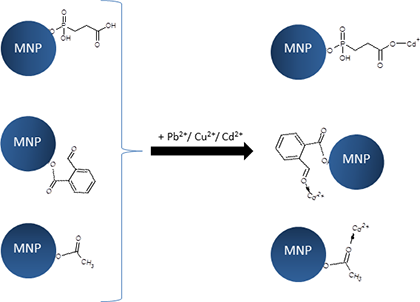
- and phthalic anhydride for the detection of Pb in water and food products was described in the literature [15]. The role of the selected inorganic core, however, was not discussed. The modified nanoparticles used in this study had a selectivity for Pb ions twice of that for other metals. In this paper


A review of carbon-based and non-carbon-based catalyst supports for the selective catalytic reduction of nitric oxide
Beilstein J. Nanotechnol. 2018, 9, 740–761, doi:10.3762/bjnano.9.68
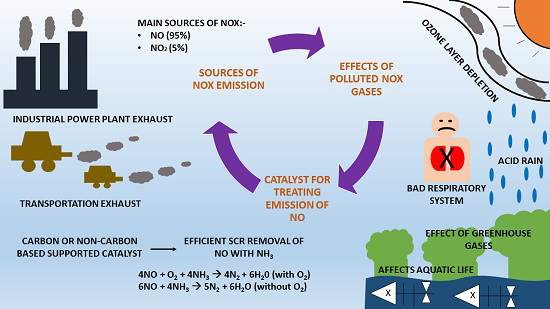
- discharge, electrochemical cell, radiation, and the wet system are examples of the dry technique while the scrubber is an example of the wet technique [3]. Of these technologies, due to its effectiveness, low cost, and high selectivity, the SCR of NO has emerged as the most promising method and has been
- oxidation of SO2 to SO3, so that high activity and selectivity, high thermal stability, and a temperature lower than 300 °C can be achieved, thus increasing the lifetime of the catalyst. Lower-temperature SCR is foremost in importance to ensure the complete removal of NO. This is because of the wide
- -exchange zeolite catalysts [15]. The Mn-based catalyst is one of the most active metal oxide catalysts for high N2 selectivity at low temperature and is recognised by many researchers as a potential alternative for the common catalyst. Jin et al. [16] successfully used a Mn-based catalyst with the addition
Cyclodextrin-assisted synthesis of tailored mesoporous silica nanoparticles
Beilstein J. Nanotechnol. 2018, 9, 693–703, doi:10.3762/bjnano.9.64
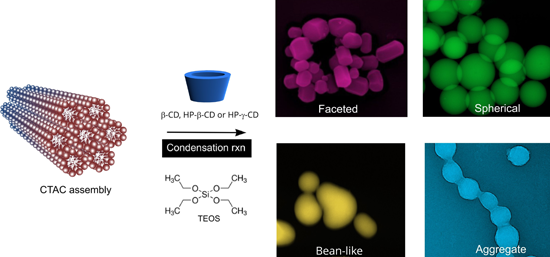
- molecules prior to silica condensation led to pores in the silica particles without the requirement of any surfactant [20]. CD assemblies lead to microporosity in the particles so that only very small molecules can pass through the pores. This inevitably induces selectivity for the molecules to be


Mechanistic insights into plasmonic photocatalysts in utilizing visible light
Beilstein J. Nanotechnol. 2018, 9, 628–648, doi:10.3762/bjnano.9.59
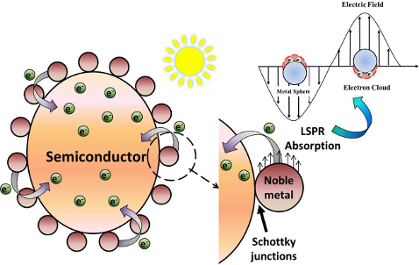
- adsorbed molecules to promote significant enhancement in the rate of chemical transformation. Furthermore, there are certain cases that have showed primary evidence for direct plasmon-driven photocatalysis capable of controlling catalytic selectivity through different reaction mechanisms. Gold NPs on CeO2
- were found to be efficient at reducing a wide range of epoxides, azo compounds, and ketones at ambient temperature under visible light. Their reduction potential highly depends on the incident wavelength [174]. The team revealed the selectivity tuning by plasmon-mediated photo-switching and





Facile phase transfer of gold nanorods and nanospheres stabilized with block copolymers
Beilstein J. Nanotechnol. 2018, 9, 616–627, doi:10.3762/bjnano.9.58
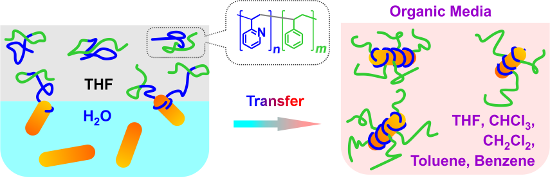
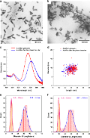
- 3.5 to 3.1). A small decrease in the nanorod mean size can be explained by the weak selectivity of the phase transfer method, if we admit that longer Au nanorods are transferred slightly worse than shorter ones. Nevertheless, the proposed method of phase transfer is effective even for large particles


Sensing behavior of flower-shaped MoS2 nanoflakes: case study with methanol and xylene
Beilstein J. Nanotechnol. 2018, 9, 608–615, doi:10.3762/bjnano.9.57

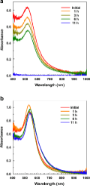
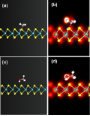
- properties of the produced MoS2 toward xylene and methanol are presented. In addition, the selectivity of our device toward various available gas molecules and the mechanism of adsorption as well as the simulation results are discussed. Experimental and Simulation Data Synthesis of MoS2 few-layer nanoflakes
- the fabricated sensor in detecting different concentrations of xylene. As indicated in Figure 6a, it is clear that the sensor responds to both methanol and xylene gases, while the former is more linear with higher sensitivity. In order to study the selectivity of our sensor toward available gases in


Ultralight super-hydrophobic carbon aerogels based on cellulose nanofibers/poly(vinyl alcohol)/graphene oxide (CNFs/PVA/GO) for highly effective oil–water separation
Beilstein J. Nanotechnol. 2018, 9, 508–519, doi:10.3762/bjnano.9.49
- low adsorption capacity, secondary pollution and poor selectivity [3][4]. Therefore, there is a demand for the synthesis of renewable, effective and environmentally friendly sorbent materials to address the oil spill accidents. Cellulose is considered to be the most abundant renewable natural polymer
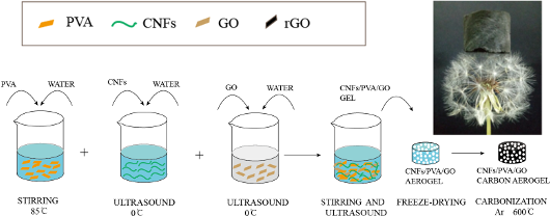
- aerogel exhibited a porous structure and super-hydrophobicity and showed high selectivity and outstanding oil absorption capacities for various types of organic solvents and oils. Considering its inexpensive raw materials, green synthetic method, and high performance, the CNF/PVA /GO carbon aerogel shows
- -hydrophobic CNF/PVA/GO carbon aerogels exhibited a high absorption capacity of up to 97 times their own weight for oils and organic solvents. Furthermore, the carbon aerogel also exhibited high absorption selectivity, good recyclability and flame retardance. Our findings are a proof-of-concept for the use of


Nanoparticle delivery to metastatic breast cancer cells by nanoengineered mesenchymal stem cells
Beilstein J. Nanotechnol. 2018, 9, 321–332, doi:10.3762/bjnano.9.32
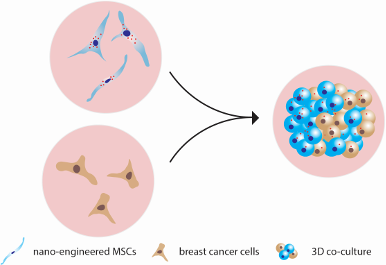
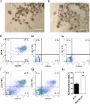
- ]. However, after 48 h, 72 h and 96 h propagation on polyHEMA coatings, CD90 expression was reduced to 92%, 81% and 88%, respectively (Figure 2C). Therefore, we chose 24 h as the optimal incubation time for 3D cell co-culture experiments to ensure the selectivity of the CD90 marker towards MSCs. Quantum dot



Wafer-scale bioactive substrate patterning by chemical lift-off lithography
Beilstein J. Nanotechnol. 2018, 9, 311–320, doi:10.3762/bjnano.9.31
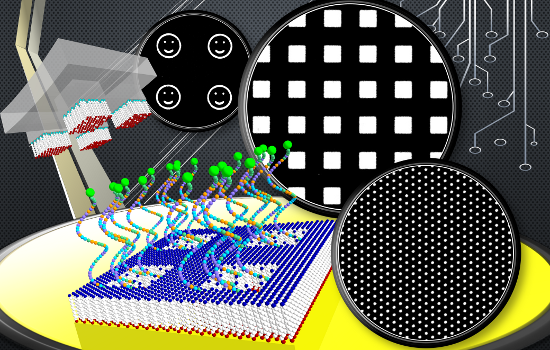
- , II, and III are Hg2+, adenosine, and cocaine-specific probe anchored positions, respectively. To demonstrate the anchored probe’s selectivity toward its corresponding target, this multiplexed substrate was tested with a 1 mM adenosine solution. The obvious disappearance in the fluorescence signal in
- column II (Figure S2, Supporting Information File 1) points to the high platform selectivity toward its corresponding targets. The results indicate that CLL-fabricated substrates not only render high versatility for biological probes, but also entail great potential toward analytical technique


Patterning of supported gold monolayers via chemical lift-off lithography
Beilstein J. Nanotechnol. 2017, 8, 2648–2661, doi:10.3762/bjnano.8.265
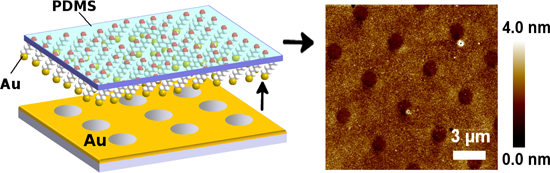
- under ambient conditions. Having established characterization modalities to evaluate Au–alkanethiolate monolayers on PDMS, we developed an additional strategy for patterning PDMS with Au–alkanethiolate monolayers that takes advantage of the chemical selectivity associated with CLL. We previously
- used to advantage in fabricating tethered DNA for high-efficiency hybridization [10] and for investigating spin selectivity in electron transport through DNA [12]. Comparing the XPS peak areas suggested that the amount of Au in the lift-off regions is approximately double the surface concentration of


The role of ligands in coinage-metal nanoparticles for electronics
Beilstein J. Nanotechnol. 2017, 8, 2625–2639, doi:10.3762/bjnano.8.263
- hexadecylamine (Figure 2) as ligand and glucose as reducing agent. The amine showed good selectivity towards the {100} facets and prevented multiply twinned seeds from being etched, leading to copper nanowires by the reduction of CuCl2 in an aqueous dispersion. At lower amine concentrations, twinned seeds were


Amplified cross-linking efficiency of self-assembled monolayers through targeted dissociative electron attachment for the production of carbon nanomembranes
Beilstein J. Nanotechnol. 2017, 8, 2562–2571, doi:10.3762/bjnano.8.256
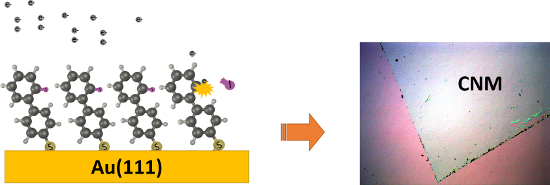
- selectivity in DEA and the fact that the cross sections for this process may be significant at 0 eV electron incident energy opens up the attractive possibility to use this process to purposely enhance the cross-linking efficiency and explore the potential of site selectivity in the cross-linking step as a
- , the site selectivity of the DEA process also offers the potential to direct the cross-linking to specific molecular sites for production of functional CNMs. Experimental The 2-halobiphenylthiols were synthesized by a palladium-catalyzed Kumada reaction of the respective 1,2-dihalobenzenes (1-bromo-2


Laser-assisted fabrication of gold nanoparticle-composed structures embedded in borosilicate glass
Beilstein J. Nanotechnol. 2017, 8, 2454–2463, doi:10.3762/bjnano.8.244
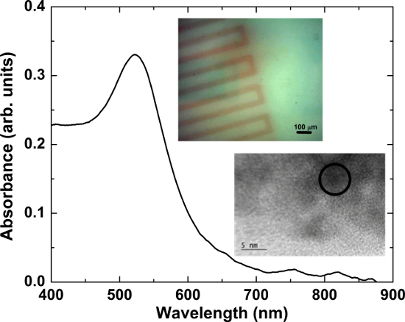
- ] based on the interaction of laser radiation with noble-metal-doped simple oxides, glasses and polymers, that is capable of forming and manipulating nanoparticles with a high spatial selectivity. Thereby, ion-doped (gold, silver, copper) materials that are transparent in the visible wavelength range (e.g


Functional materials for environmental sensors and energy systems
Beilstein J. Nanotechnol. 2017, 8, 2015–2016, doi:10.3762/bjnano.8.201

- nanomaterials (e.g., nanowires, nanotubes, graphene, metal oxides, carbon nanostructures, large band gap semiconductors, and metals) with new sensing properties (e.g., ppb-level detection, high sensitivity, selectivity) that are self-heating and provide durable operation for low-power devices (tens of μW to
Spin-chemistry concepts for spintronics scientists
Beilstein J. Nanotechnol. 2017, 8, 1427–1445, doi:10.3762/bjnano.8.143
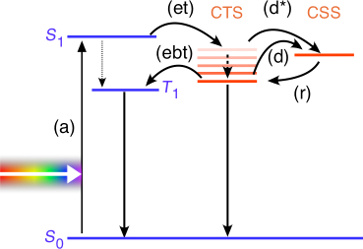
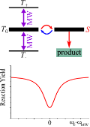
- doublet−quartet interconversion comes into play. In the latter case, the total spin of the reactants can be equal to zero (singlet), one (triplet) or two (quintet) with only the singlet reaction channel being reactive. This spin selectivity in combination with the magnetic field-dependent interconversion
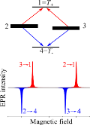
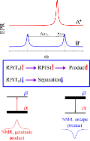
- -Boltzmann spin polarization which is highly desired by spectroscopists since it enhances the sensitivity of the method. Polarization of electron spins (CIDEP) and nuclear spins (CIDNP) results from spin selectivity of chemical reactions and can be used for sensitive detection of transient radical species



Micro- and nano-surface structures based on vapor-deposited polymers
Beilstein J. Nanotechnol. 2017, 8, 1366–1374, doi:10.3762/bjnano.8.138
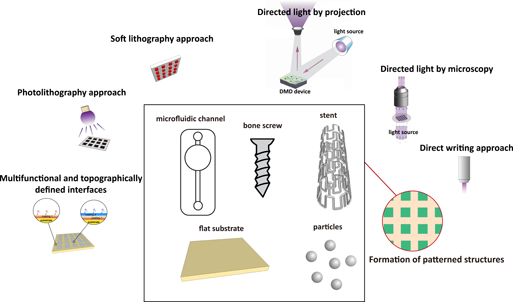
- deposition/polymerization process on substrates, i.e., the polymer coatings are either deposited or not on substrates because of the chemistry below the substrate surface. The mechanism of the polymer deposition selectivity is not conclusive. The inhibition of polymer deposition is believed to occur because
- deposition of parylene™ N and parylene™ C on these high-energy metal surfaces. The degree of selectivity (there exists an upper limit, where deposition will commence and the relative selectivity is lost) is different for different metal surfaces and correlates with the deposition rate [77]. Based on the
- deposition of a wide range of functionalized poly(p-xylylenes) on high-energy metal surfaces. The study found that the deposition selectivity might have been compromised, and a possible explanation may be that neutralization occurred between the oxygen or nitrogen from the side groups of the functionalized p


Metal oxide nanostructures: preparation, characterization and functional applications as chemical sensors
Beilstein J. Nanotechnol. 2017, 8, 1205–1217, doi:10.3762/bjnano.8.122
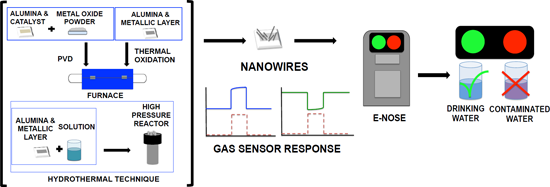
- sensitivity, selectivity, response kinetics and reliability [4]. The design of active materials is essential and it must be the starting point for the control of the functional parameters of the final device. Nonetheless, great attention must be paid to the integration of the active material onto the
- metal oxides exhibit cross-sensitivity to other chemical species too. This lack of selectivity toward specific chemical species is one of the major drawbacks of the conductometric use of metal oxides. However, an array of devices based on different materials, each with its own sensing properties (a so





