Search results
Search for "separation" in Full Text gives 802 result(s) in Beilstein Journal of Nanotechnology. Showing first 200.
Impact of device design on the electronic and optoelectronic properties of integrated Ru-terpyridine complexes
Beilstein J. Nanotechnol. 2022, 13, 219–229, doi:10.3762/bjnano.13.16
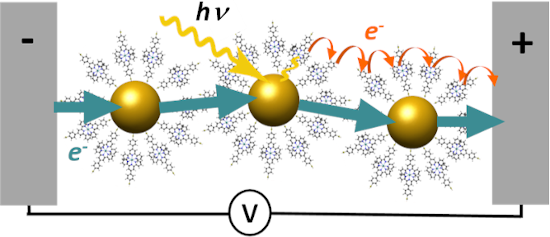
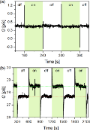
- -complex wire devices have been fabricated using nanoelectrodes with a separation of 8 to 20 nm and the above described growth process. The electrical behavior of the thus formed solid-state junctions was measured by cyclic current vs voltage (I/U) sweeps in the voltage range −1.3 V < U < +1.3 V. The
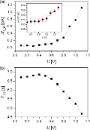
- Fermi–Dirac distribution, and indicates a tunneling mechanism [33][34][35]. A tunneling mechanism has been observed for single-Ru(MPTP)2–AuNP devices as well [15]. TEM images of Ru(MPTP)2–AuNP assemblies point to a nanoparticle separation of about 4 nm corresponding to slightly intercalating ligand
- value is based on sequential tunneling from AuNP to AuNP, a separation of 4 nm between the AuNP, a decay constant of β = 3.1 nm−1 for the Ru(MPTP)2-complex (for details see Supporting Information File 1, section 8) and fits exemplarily the experimentally obtained conductance values. Hence, the decreased


Engineered titania nanomaterials in advanced clinical applications
Beilstein J. Nanotechnol. 2022, 13, 201–218, doi:10.3762/bjnano.13.15
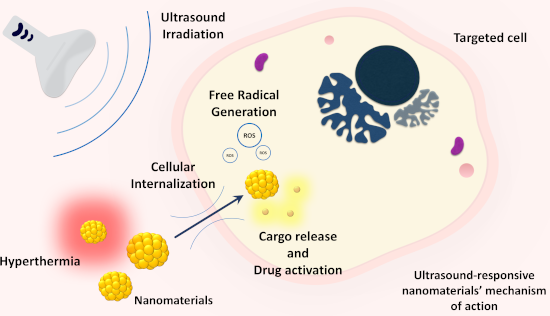
- conversion agent. Following ultrasound (US) irradiation, the oxygen-deficient TiO2−x layer with numerous defects facilitates and accelerates the separation of electrons and holes, resulting in a high quantum yield of ROS for tumor eradication. Both in vitro cell-level and systematic in vivo studies of tumor


A comprehensive review on electrospun nanohybrid membranes for wastewater treatment
Beilstein J. Nanotechnol. 2022, 13, 137–159, doi:10.3762/bjnano.13.10
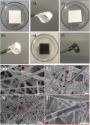
- using lowly volatile CHCl3 while smooth, nonporous fibers were obtained when using highly volatile THF. The pore formation during electrospinning happens with phase separation, which can occur in two ways, namely thermally induced or vapor-induced, depending on temperature and humidity [38]. Hence, the
- [19]. Track etching also produces membranes of weak mechanical strength, and the technique is applicable onlyl for a limited number polymers. The track-etched membranes have low porosity and the technique is more expensive than electrospinning [1]. Phase separation is also a versatile membrane
- fabrication technique. Yet, it has been reported that the interconnected open pore structures and tailorable membrane thickness of electrospun membranes result in superior porosity and permeability compared to nonsolvent-induced phase separation (NIP) and thermally induced phase separation (TIP) membranes [49




Tin dioxide nanomaterial-based photocatalysts for nitrogen oxide oxidation: a review
Beilstein J. Nanotechnol. 2022, 13, 96–113, doi:10.3762/bjnano.13.7
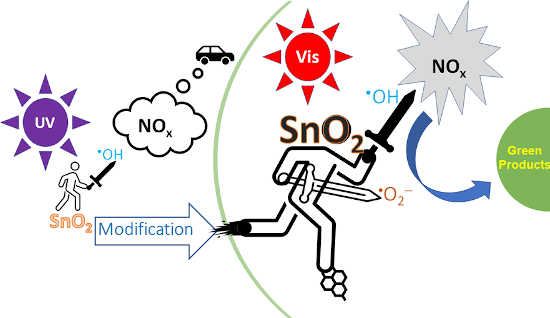
- extending the light harvesting range and promoting the separation of photogenerated electrons. A considerable amount of reactive oxygen radicals was produced during the photocatalytic reaction, resulting from the large amount of free surface OH groups. PL, photocurrent response, electrochemical impedance
- band structure, which remains critical for studying charge separation [29]. In another study, a SnO2–Zn2SnO4 Z-scheme photocatalyst system was prepared with a graphene modification to create surface vacancy sites in the composite, which contributed to an enhanced photoactivity in the oxidation of NO
- of SnO2. Moreover, enhanced visible light response and enhanced charge separation in the sample with GQDs have been observed (Figure 13c). The EIS measurements (Figure 13d) indicated that the diameter of the arc radius of SnO2/GQDs (1%) is much smaller than that of SnO2, confirming that the GQDs


Influence of magnetic domain walls on all-optical magnetic toggle switching in a ferrimagnetic GdFe film
Beilstein J. Nanotechnol. 2022, 13, 74–81, doi:10.3762/bjnano.13.5
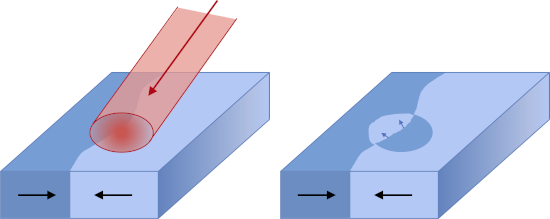
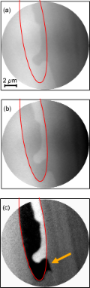
- bottom row of Figure 3D shows enlarged images of the same domain as in Figure 3A and Figure 3B. Between each image, two laser pulses were applied with a temporal separation of the order of 1 s except for pulses 3 and 4, which had a separation of about 1 min. The number of laser pulses applied since the


Effect of lubricants on the rotational transmission between solid-state gears
Beilstein J. Nanotechnol. 2022, 13, 54–62, doi:10.3762/bjnano.13.3
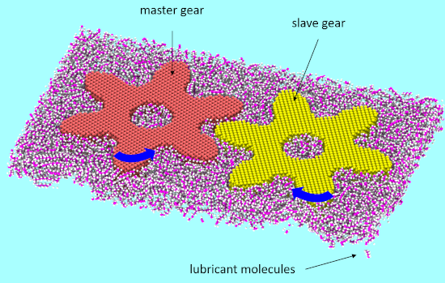
- that full atom simulations in combination with further advances in the fabrication and chemical synthesis techniques will improve the design of solid-state gears at the microscopic scale. A schematic illustration of two interlocked diamond involute solid-state gears (red and yellow) with separation


Sputtering onto liquids: a critical review
Beilstein J. Nanotechnol. 2022, 13, 10–53, doi:10.3762/bjnano.13.2
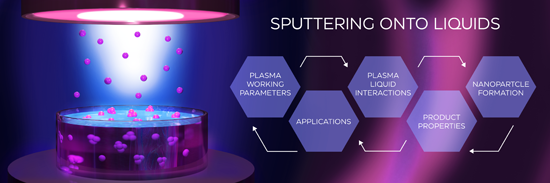
- limited by the diffusion of the monomers to the nuclei surface. The assumption that burst nucleation significantly reduces the concentration of monomers allows for achieving the key separation of the nucleation and growth steps, which is a mandatory condition for the formation of monodisperse particles
- , while a slow nucleation process yields a reduced amount of seeds, which finally leads to bigger particles. Separation of the nucleation and surface growth processes is the main condition for the production of monodisperse primary NPs [77]. The Finke–Watzky autocatalytic model was first proposed for






Biocompatibility and cytotoxicity in vitro of surface-functionalized drug-loaded spinel ferrite nanoparticles
Beilstein J. Nanotechnol. 2021, 12, 1339–1364, doi:10.3762/bjnano.12.99
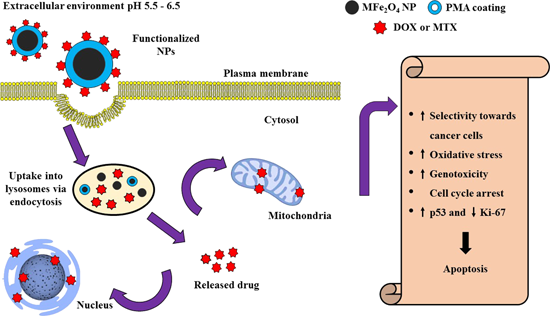
- -assisted control of the behavior of MNPs makes them suitable candidates for targeted drug delivery, hyperthermia, biosensors, magnetic resonance imaging (MRI), and magnetic separation [9][10]. Magnetite (Fe3O4) nanoparticles (NPs), belonging to the spinel ferrite class, are the most extensively studied







Polarity in cuticular ridge development and insect attachment on leaf surfaces of Schismatoglottis calyptrata (Araceae)
Beilstein J. Nanotechnol. 2021, 12, 1326–1338, doi:10.3762/bjnano.12.98
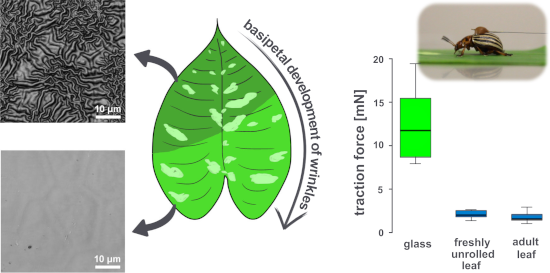
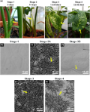
- factor enabling the efficient separation of plant material from the epoxy negative molds during polymer replication. The third level is characterized by aged and uniformly aligned low aspect ratio ridges in a labyrinth-type arrangement (at stages 4 and 5) in H. brasiliensis (Supporting Information File 1




Plasmon-enhanced photoluminescence from TiO2 and TeO2 thin films doped by Eu3+ for optoelectronic applications
Beilstein J. Nanotechnol. 2021, 12, 1271–1278, doi:10.3762/bjnano.12.94
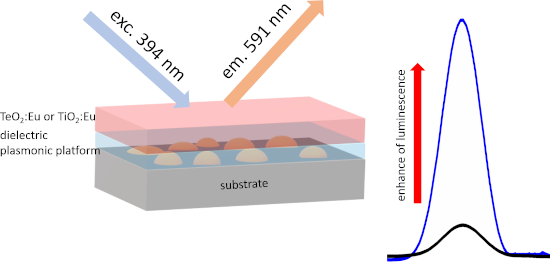
- + and Eu2+ ions [31][32]. The Eu 4d doublet separation was considered as 5.7 eV for Eu3+ and 5.6 eV for Eu2+. The doublet that is assigned to Eu3+ ions dominates over the Eu2+ doublet. This led to the conclusion that the quantity of Eu3+ ions far exceeds that of Eu2+ ions. The calculated ratio Eu3+/Eu2
- film, which changes the conditions of electromagnetic interaction between plasmons and luminescent material. TeO2:Eu-based structures The results of the XPS analysis of TeO2:Eu luminescent layer are presented in Figure 7. Two peaks at 587.3 and 576.07 eV, with an energy separation of 10.37 eV
- the presence of europium in two valence states. Lines recorded at 142.36 and 136.76 eV correspond to Eu3+, while those observed at 136.40 and 130.90 eV were assigned to Eu2+. The energy separation in both doublets equals to 5.60 and 5.50 eV for Eu3+ and Eu2+, respectively, in accordance with


A review on slip boundary conditions at the nanoscale: recent development and applications
Beilstein J. Nanotechnol. 2021, 12, 1237–1251, doi:10.3762/bjnano.12.91
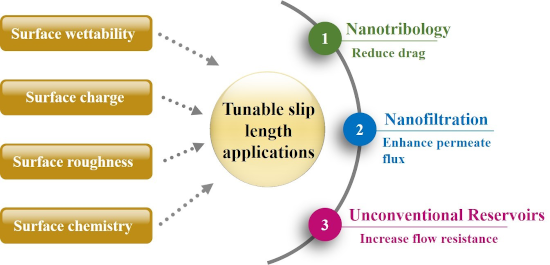
- related to nanotechnology, such as ion separation and drug discovery, should be investigated and developed. Schematic representation of the definition of slip lengths: (a) no-slip, (b) true slip length, (c) apparent slip length, and (d) effective slip length. Figures 1a–c were redrawn from [49] and Figure


Two dynamic modes to streamline challenging atomic force microscopy measurements
Beilstein J. Nanotechnol. 2021, 12, 1226–1236, doi:10.3762/bjnano.12.90
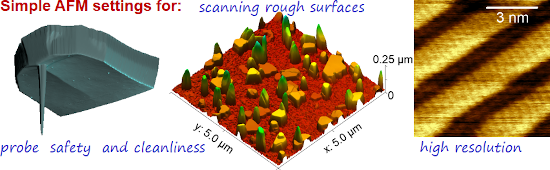
- the next measurement point. The VM does not imply separation with the surface, the probe is within the range of van der Waals forces almost all the time. Due to this, the scanning speed in flat areas increases significantly. We can consider the VM as a kind of feedback that during lateral movement


Open-loop amplitude-modulation Kelvin probe force microscopy operated in single-pass PeakForce tapping mode
Beilstein J. Nanotechnol. 2021, 12, 1115–1126, doi:10.3762/bjnano.12.83
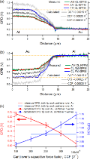
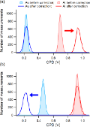
- ]. The above discussion suggests that the measurement accuracy of AM-KPFM could be greatly improved once the contribution of the cantilever is accounted for and removed from the measured CPD. A separation of the various contributions to the measured CPD however would require a data analysis after the
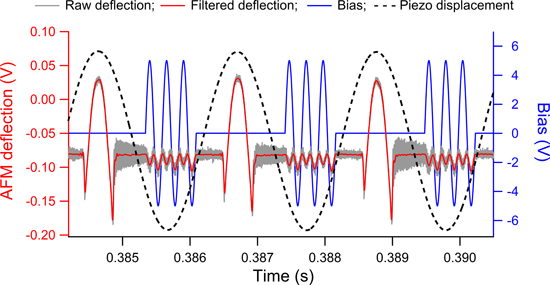
- motion in terms of time duration and positioning of the bias signal within the out-of-contact intervals of the PFT cycle. Additionally, the tip–sample separation at which the bias is applied and the CPD is measured is controlled by the amplitude of the PFT oscillation. The applied bias modulation of the
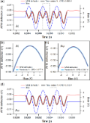
- Au and Al to their reference values of 0.21 V and 0.93 V, respectively. Separation of the average contributions of the tip and cantilever to the measured OL AM-KPFM signal: (a, b) time series fits of the bias-modulated AFM deflections shown in Figure 3a and Figure 3d, respectively; (c, d) parabolic





Assessment of the optical and electrical properties of light-emitting diodes containing carbon-based nanostructures and plasmonic nanoparticles: a review
Beilstein J. Nanotechnol. 2021, 12, 1078–1092, doi:10.3762/bjnano.12.80
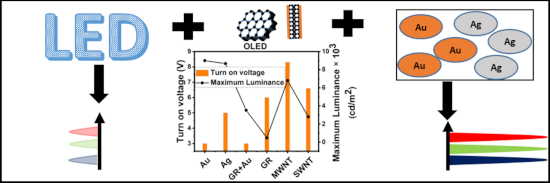
- performance has been associated with the spontaneous emission rate induced by SPR coupling when an optimal distance of separation exists between the plasmonic and active layers. New possibilities for cathode materials The performance parameters of OLED, for example, turn-on voltage, operating voltage, current


An overview of microneedle applications, materials, and fabrication methods
Beilstein J. Nanotechnol. 2021, 12, 1034–1046, doi:10.3762/bjnano.12.77
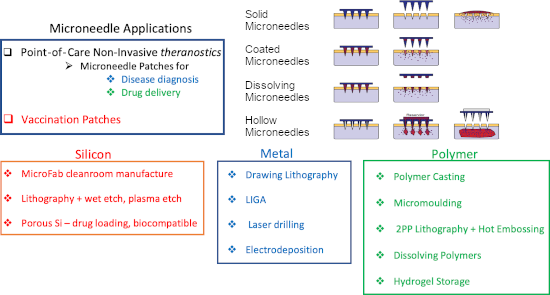
- layer of polymer introduced between the mould and the metal structure to facilitate chemical lift-off separation of the final array. For hollow metal microneedles, a plasma etching step was performed prior to metal deposition [106]. Unlike the ubiquitous stainless steel hypodermic needle, safety


Molecular assemblies on surfaces: towards physical and electronic decoupling of organic molecules
Beilstein J. Nanotechnol. 2021, 12, 950–956, doi:10.3762/bjnano.12.71

- efficiently electronically decouple further organic layers from a metal surface. The decoupling strategy with organic layers relies on both an increased separation between the organic layer of interest and the metal as well as the different electronic gaps of the organic interface layer and following ones [29
Self-assembly of Eucalyptus gunnii wax tubules and pure ß-diketone on HOPG and glass
Beilstein J. Nanotechnol. 2021, 12, 939–949, doi:10.3762/bjnano.12.70
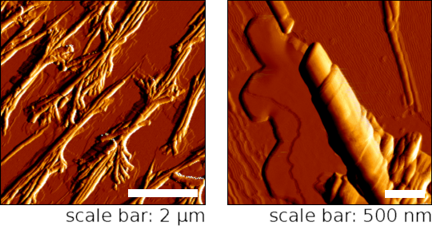
- separation of the ß-diketones from the bulk material after solvent evaporation. Such a process could not be observed here for the eucalyptus wax, but was found in earlier studies with native wax mixtures of nonacosanol waxes [42]. Conclusion Tubules were recrystallized from E. gunnii wax and from a ß




Effects of temperature and repeat layer spacing on mechanical properties of graphene/polycrystalline copper nanolaminated composites under shear loading
Beilstein J. Nanotechnol. 2021, 12, 863–877, doi:10.3762/bjnano.12.65
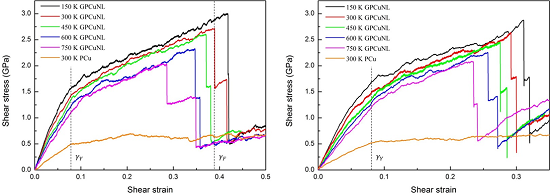
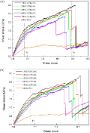
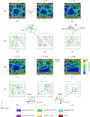
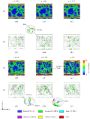
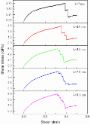
- material slip [36]. Shockley partial dislocations are formed by the separation of perfect dislocations [37]. The magnified image (M) in Figure 5d2 elucidates the formation of Shockley partial dislocations is according to the equation In addition, the relationship between the stair-rod dislocation and the










Comprehensive review on ultrasound-responsive theranostic nanomaterials: mechanisms, structures and medical applications
Beilstein J. Nanotechnol. 2021, 12, 808–862, doi:10.3762/bjnano.12.64
- applicable under specific conditions, they may have less relevance in other possible conditions. In other words, the previously mentioned studies do not provide a general theory that would be valid for all particle pairs of any conceivable nature, for any separation distance, or for an arbitrary number of


9.1% efficient zinc oxide/silicon solar cells on a 50 μm thick Si absorber
Beilstein J. Nanotechnol. 2021, 12, 766–774, doi:10.3762/bjnano.12.60
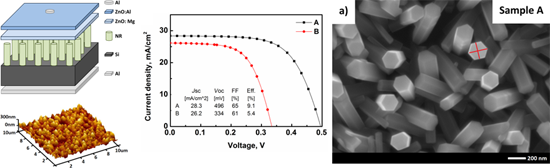
- without separation. This is why the external quantum efficiency drops significantly in the wavelength region of 850–1200 nm. One of the methods of improving the operation of ZnO/Si cells in the infrared range is the “passivated emitter and rear cell” (PERC) technology [21][22]. Thin films of Al2O3 or


Recent progress in actuation technologies of micro/nanorobots
Beilstein J. Nanotechnol. 2021, 12, 756–765, doi:10.3762/bjnano.12.59
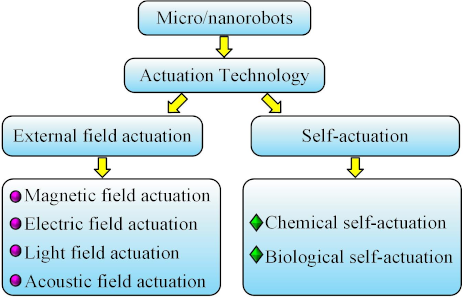
- average velocity for five different ISMEs with hexagram shapes ± s.e.m. (f) Images of MNP-loaded ISMEs performing capture, transportation, and release of cell aggregates, separation following release, and eventually dissolution in response to a change of the pH value. Scale bar: 250 µm. Reproduced from


Physical constraints lead to parallel evolution of micro- and nanostructures of animal adhesive pads: a review
Beilstein J. Nanotechnol. 2021, 12, 725–743, doi:10.3762/bjnano.12.57
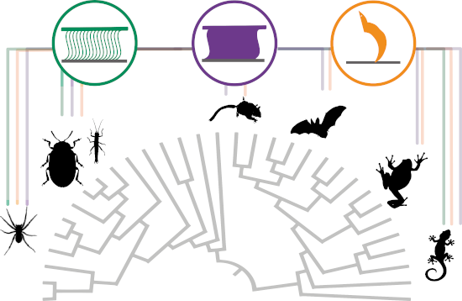
- relatively high separation, the contribution of viscous forces to the adhesion and friction are enhanced due to the presence of a thin fluid layer in the contact area [247]. Significance for biomimetic applications Several different approaches to mimic natural adhesive systems have already been published


Prediction of Co and Ru nanocluster morphology on 2D MoS2 from interaction energies
Beilstein J. Nanotechnol. 2021, 12, 704–724, doi:10.3762/bjnano.12.56
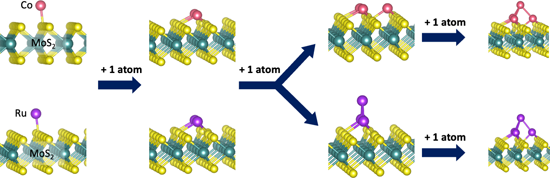
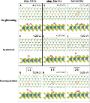
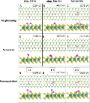
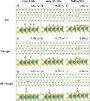
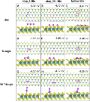
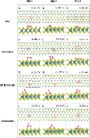
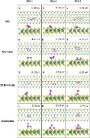
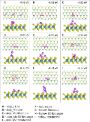
- neighbouring site hollow has a positive metal–metal interaction energy, while the non-equivalent site atop_Mo - hollow has an interaction energy close to zero. The latter should mean that metal atoms do not agglomerate or separate, while a positive metal–metal interaction should be indicative of a separation
- also clear evidence that Ru atoms prefer to be associated, as the lower binding energy for the triangle at site atop_S arises from the separation of the atoms. In contrast, when n = 4, Ru structures are more stable when there are minimal distortions to the geometry or the ML, or when Ru atoms



Nanogenerator-based self-powered sensors for data collection
Beilstein J. Nanotechnol. 2021, 12, 680–693, doi:10.3762/bjnano.12.54
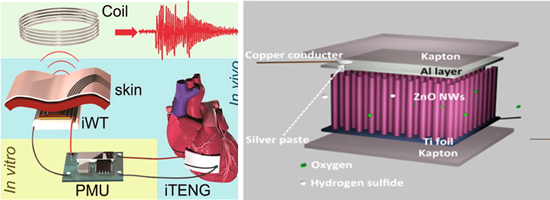
- to the safety of vehicle driving and the experience of the driver [5][6][7][8][9][10][11]. The principle of operation of TENGs is the triboelectrification/contact electrification (CE) process [62][63][64]. TENGs have four working modes: the common vertical contact-separation mode, the single




Nanoporous and nonporous conjugated donor–acceptor polymer semiconductors for photocatalytic hydrogen production
Beilstein J. Nanotechnol. 2021, 12, 607–623, doi:10.3762/bjnano.12.50
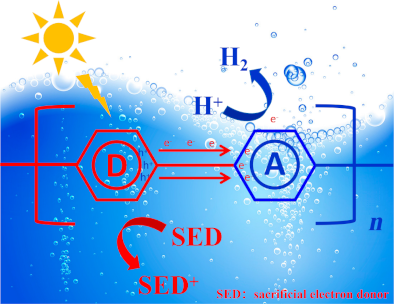
- tuning the bandgap, enlarging the surface area, enabling more efficient separation of electron–hole pairs, and enhancing the charge carrier mobility. In particular, donor–acceptor (D–A) polymers were demonstrated as a promising platform to develop high-performance photocatalysts due to their easily
- (SED) in water, which eventually produces H2 [36][37]. Accordingly, three important factors, that is, light-harvesting ability, mobility of the photogenerated charge carriers, and electron–hole separation efficiency, need to be considered simultaneously to design efficient photocatalysts. Organic
- photocatalysts with narrow bandgap and high charge carrier mobility could, therefore, facilitate light harvesting and the reduction of protons [38]. In terms of structural design, D–A polymers are a good platform to narrow the bandgap, enhance the charge carrier mobility and promote electron–hole separation