Search results
Search for "skin" in Full Text gives 191 result(s) in Beilstein Journal of Nanotechnology.
Mimicking exposures to acute and lifetime concentrations of inhaled silver nanoparticles by two different in vitro approaches
Beilstein J. Nanotechnol. 2014, 5, 1357–1370, doi:10.3762/bjnano.5.149
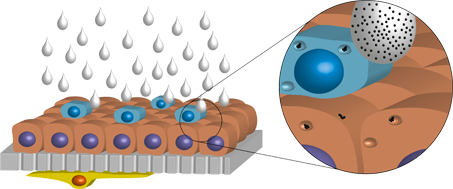
- interaction with Ag NPs can occur through the lung, skin, gastrointestinal tract, and bloodstream. However, the inhalation of Ag NP aerosols is a primary concern. To study the possible effects of inhaled Ag NPs, an in vitro triple cell co-culture model of the human alveolar/airway barrier (A549 epithelial
- been demonstrated [11]. Therefore, the effects of Ag NPs on human health and the environment are currently increasingly explored [12]. Human interaction with Ag NPs can occur through the lung, skin, gastrointestinal tract, and bloodstream. However, inhalation of Ag NPs is a primary concern for humans
- in an occupational environment [13]. Inhalation, or ingestion, of Ag in large quantities and over a long period of time can cause a disease called “argyria”, which leads to a blue or grey discoloration of the skin and other organs [14]. However, many questions remain open concerning the specific



Surface topography and contact mechanics of dry and wet human skin
Beilstein J. Nanotechnol. 2014, 5, 1341–1348, doi:10.3762/bjnano.5.147
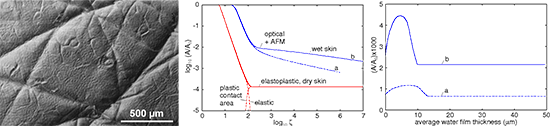
- topography of the human wrist skin is studied by using optical and atomic force microscopy (AFM) methods. By using these techniques the surface roughness power spectrum is obtained. The Persson contact mechanics theory is used to calculate the contact area for different magnifications, for the dry and wet
- skin. The measured friction coefficient between a glass ball and dry and wet skin can be explained assuming that a frictional shear stress σf ≈ 13 MPa and σf ≈ 5 MPa, respectively, act in the area of real contact during sliding. These frictional shear stresses are typical for sliding on surfaces of
- elastic bodies. The big increase in friction, which has been observed for glass sliding on wet skin as the skin dries up, can be explained as result of the increase in the contact area arising from the attraction of capillary bridges. Finally, we demonstrated that the real contact area can be properly


Trade-offs in sensitivity and sampling depth in bimodal atomic force microscopy and comparison to the trimodal case
Beilstein J. Nanotechnol. 2014, 5, 1144–1151, doi:10.3762/bjnano.5.125
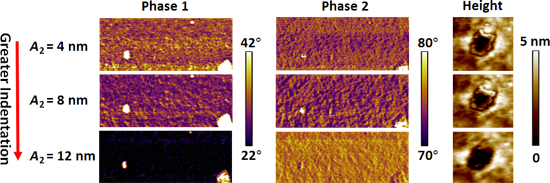
- volume of material between the surface skin and the lowest point reached by the tip during maximum indentation). Thus, images with drastically different parameters are not necessarily comparable to one another. Figure 6 illustrates the corresponding changes in the acquired topography for the feature


Dry friction of microstructured polymer surfaces inspired by snake skin
Beilstein J. Nanotechnol. 2014, 5, 1091–1103, doi:10.3762/bjnano.5.122
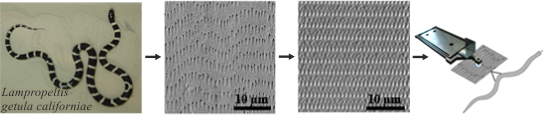
- suggesting a trade-off between these two effects. Keywords: biomimetics; dry friction; microstructure; polymer; snake skin; Introduction Owing to the lack of extremities, the ventral body side of snakes is in almost continuous contact with the substrate. In spite of this, snakes are one of the most
- successful animal groups in occupying niches on all continents, except for Antarctica [1][2][3]. From a tribology point of view, their ventral skin surface has to fulfil two opposite functions: (1) to support body propulsion during locomotion by generating high friction in contact with the substrate and (2
- ) to reduce skin material abrasion by generating low friction in forward sliding along the substrate [4]. Anisotropic frictional properties of the snake skin were previously shown by several tribological studies using various techniques at the macro scale [5][6][7][8][9], meso scale [10], and nano


Fibrillar adhesion with no clusterisation: Functional significance of material gradient along adhesive setae of insects
Beilstein J. Nanotechnol. 2014, 5, 837–845, doi:10.3762/bjnano.5.95
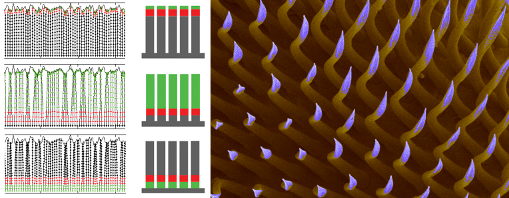
- . This has been previously shown for insect cuticle [24][25], snake skin [26], human teeth [27][28], and other biological composites. The gradients have been also recently reported for smooth attachment devices of insects [29]. Interestingly, the gradients in smooth pads of locusts and bushcrickets are


The surface microstructure of cusps and leaflets in rabbit and mouse heart valves
Beilstein J. Nanotechnol. 2014, 5, 622–629, doi:10.3762/bjnano.5.73
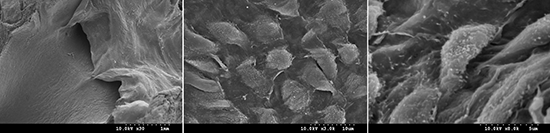
- microstructures of the water skipper’s leg, the moth’s eye, shark skin, the darkling beetle, and the cicada’s wing [6][7][8][9][10][11][12][13][14][15]. At the same time, the relationship between superhydrophobicity and surface microstructures attracted strong interest. A large number of surfaces with all kinds



Single-asperity contact mechanics with positive and negative work of adhesion: Influence of finite-range interactions and a continuum description for the squeeze-out of wetting fluids
Beilstein J. Nanotechnol. 2014, 5, 419–437, doi:10.3762/bjnano.5.50
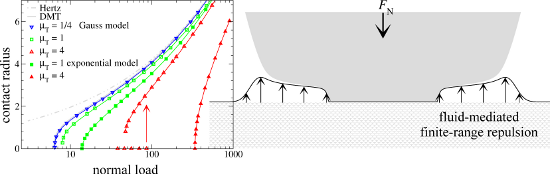
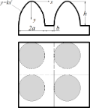
- , an additional length enters, namely that associated with the adhesive zone. The additional adhesive radius or skin aa then needs to be taken into consideration. When the Tabor coefficient is very small, aa becomes large, and one needs aa to lie within the simulation cell. A new series of inequalities


The role of oxygen and water on molybdenum nanoclusters for electro catalytic ammonia production
Beilstein J. Nanotechnol. 2014, 5, 111–120, doi:10.3762/bjnano.5.11
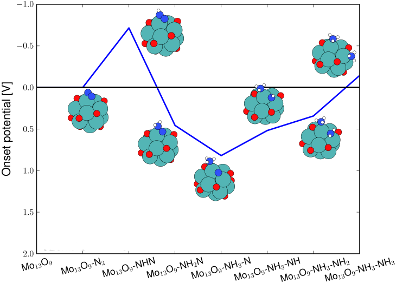
- therefore constitute a strong blocking of the active sites and subsequently limit the ammonia production rate through the associative mechanism on partially oxidized nitrogen covered molybdenum nanoclusters. Direct reduction of the residual nitrogen skin will, however, still be possible and the potential
- will not be influenced by the presence of oxygen and the nitrogen skin will be reduced electrochemically at −0.6 V as shown in [2]. An oxygen skin The electrochemical production of ammonia will not only occur on nitrogen covered molybdenum clusters, but could also take place at very low or no nitrogen
- oxygen and nitrogen is obtained on the surface. This oxygen skin is approximate 1–2 eV more energetically favoured than a nitrogen skin at low coverage. At higher coverage, the oxygen skin becomes even more energetically favoured. However, an applied potential of U = −0.6 V, destabilizes oxygen (dashed


Friction behavior of a microstructured polymer surface inspired by snake skin
Beilstein J. Nanotechnol. 2014, 5, 83–97, doi:10.3762/bjnano.5.8
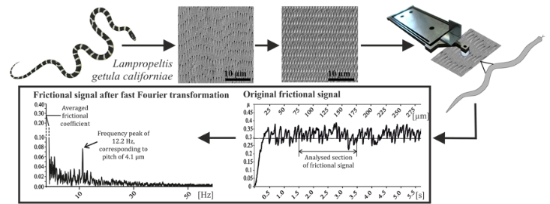
- ; friction; polymer; snake inspired; stick-slip; Introduction The absence of extremities in snakes has strong tribological consequences for the material of their skin. The ventral body side of the snake is in continuous contact with the substrate. Therefore ventral scales must have optimized frictional
- the skin scales, so called microornamentation [1][4][5][6][7][8][9][10][11][12][13], and specific adaptations of the material architecture of the skin, like highly ordered embedded fibers [14], which can potentially influence material properties [15][16], might contribute to the frictional anisotropy
- . The role of microornamentation in frictional properties of the snake skin was extensively examined [2][3][9][11][12]. We previously showed a strong influence of the stiffness of the underlying layers of the epidermis on the anisotropic frictional properties of the skin [17]. This finding demonstrates




Cytotoxic and proinflammatory effects of PVP-coated silver nanoparticles after intratracheal instillation in rats
Beilstein J. Nanotechnol. 2013, 4, 933–940, doi:10.3762/bjnano.4.105
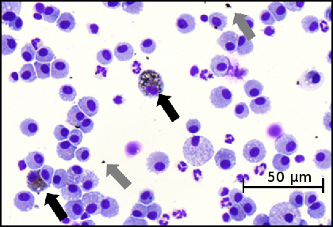
- profound chemical transformations in biological environments that can affect bioavailability and toxicity. In case of argyria, silver deposits in the skin are not translocated engineered AgNP, but rather secondary particles formed of silver metabolites resulting from partial AgNP dissolution and subsequent




Modulation of defect-mediated energy transfer from ZnO nanoparticles for the photocatalytic degradation of bilirubin
Beilstein J. Nanotechnol. 2013, 4, 714–725, doi:10.3762/bjnano.4.81
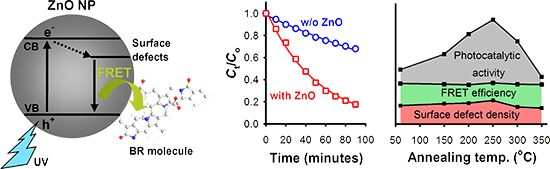
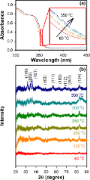
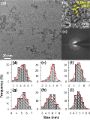
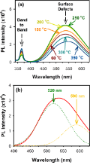
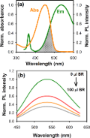
- small portion is excreted in the urine [2]. Excess bilirubin in blood can lead to deposits on tissues, which gives rise to neurotoxicity and hyperbilirubinemia and/or a yellowish pigmentation of the skin, a disease commonly known as jaundice. According to the World Health Organization, almost 30,000


Friction and durability of virgin and damaged skin with and without skin cream treatment using atomic force microscopy
Beilstein J. Nanotechnol. 2012, 3, 731–746, doi:10.3762/bjnano.3.83
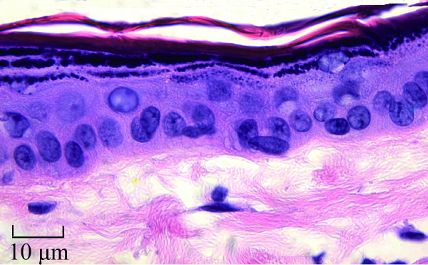
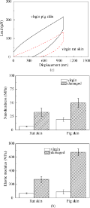
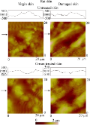
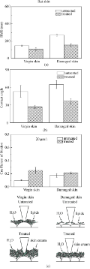
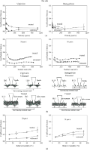
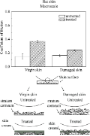
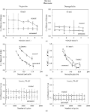
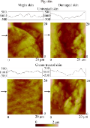
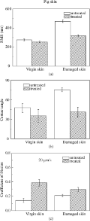
- /bjnano.3.83 Abstract Skin can be damaged by the environment easily. Skin cream is an effective and rapid way to moisten the skin by changing the skin surface properties. Rat skin and pig skin are common animal models for studies and were used as skin samples in this study. The nano- and macroscale
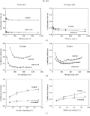
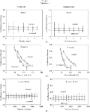
- friction and durability of damaged skin were measured and compared with those of virgin (intact/undamaged) skin. The effect of skin cream on friction and durability of damaged and virgin skin samples is discussed. The effects of velocity, normal load, relative humidity and number of cycles were studied
- . The nanoscale studies were performed by using atomic force microscope (AFM), and macroscale studies were performed by using a pin-on-disk (POD) reciprocating tribometer. It was found that damaged skin has different mechanical properties, surface roughness, contact angle, friction and durability





Focused electron beam induced deposition: A perspective
Beilstein J. Nanotechnol. 2012, 3, 597–619, doi:10.3762/bjnano.3.70


Determination of object position, vortex shedding frequency and flow velocity using artificial lateral line canals
Beilstein J. Nanotechnol. 2011, 2, 276–283, doi:10.3762/bjnano.2.32
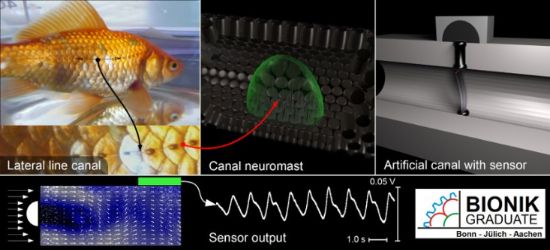
- skin and are found in crustaceans [1], as well as in spiders and insects [2]. These sensors enable insects and spiders to perceive air displacements down to flow amplitudes of 30 μm/s [3]. Flow sensors are also found in fish and aquatic amphibians and are called lateral line neuromasts. With neuromasts
- some fish can detect water surface waves with a displacement amplitude of only 0.01 μm [4]. Most lateral line neuromasts are located on the skin (superficial neuromasts or SN), but some are located in subepidermal canals (canal neuromasts or CN). A lateral line neuromast consists of up to several



Moisture harvesting and water transport through specialized micro-structures on the integument of lizards
Beilstein J. Nanotechnol. 2011, 2, 204–214, doi:10.3762/bjnano.2.24
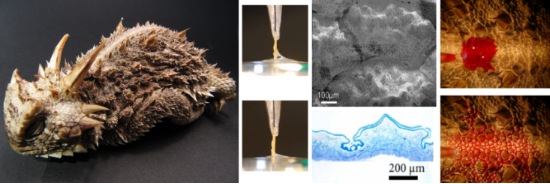
- - or moisture-harvesting. The water can originate from air humidity, fog, dew, rain or even from humid soil. The integument (i.e., the skin plus skin derivatives such as scales) has developed features so that the water spreads and is soaked into a capillary system in between the reptiles' scales
- . The integument consists of the skin and its derivatives such as scales, feathers, hairs and nails and has a variety of functions: Next to mechanical protection and prevention of water loss from lower tissue layers, it serves also for temperature regulation and as a transmitter for tactile stimuli. The
- liquids is required. To gain a deeper insight of and understanding for moisture harvesting, we investigated the micro morphology of the skin of three lizard species known to perform moisture harvesting, viz. the iguanid Phrynosoma cornutum, and the two agamids Moloch horridus and Phrynocephalus arabicus


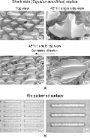
Biomimetics inspired surfaces for drag reduction and oleophobicity/philicity
Beilstein J. Nanotechnol. 2011, 2, 66–84, doi:10.3762/bjnano.2.9
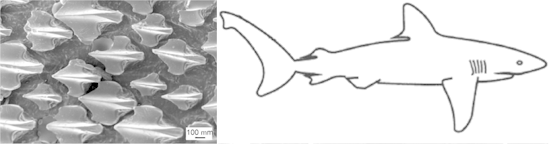
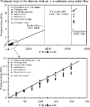
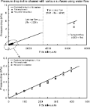
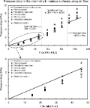
- a high contact angle and low contact angle hysteresis also exhibit low adhesion and drag reduction for fluid flow. An aquatic animal, such as a shark, is another model from nature for the reduction of drag in fluid flow. The artificial surfaces inspired from the shark skin and lotus leaf have been
- behavior of oil droplets on various superoleophobic surfaces created in the lab. Keywords: aquatic animals; biomimetics; drag; lotus plants; shark skin; superhydrophobicity; superoleophobicity; Introduction Biologically inspired design, adaptation, or derivation from nature is referred to as ‘biomimetics
- sector-like scales with diameters of 4–5 mm covered by papillae 100–300 μm in length and 30–40 µm in width [18]. Shark skin, which is a model from nature for a low drag surface, is covered by very small individual tooth-like scales called dermal denticles (little skin teeth), ribbed with longitudinal