


Search results
Search for "surface energy" in Full Text gives 236 result(s) in Beilstein Journal of Nanotechnology. Showing first 200.
Oxygen-plasma-modified biomimetic nanofibrous scaffolds for enhanced compatibility of cardiovascular implants
Beilstein J. Nanotechnol. 2015, 6, 254–262, doi:10.3762/bjnano.6.24
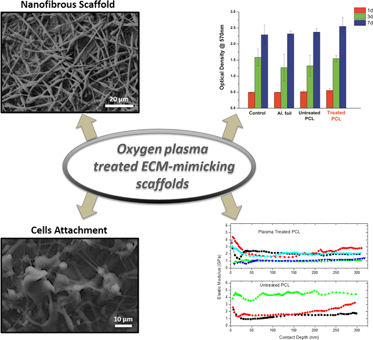
- functional groups are created. This leads to an increase in the polarity and the surface energy, resulting in a roughened topography. Higher plasma power (P = 40 W) significantly decreased Ra resulting into smoother nanofibrous surfaces compared to the untreated samples, due to the partial polymer melting
- highly porous structures. Thus, in our case, contact angle measurements are not a reliable technique to gain results concerning the wettability and the surface energy of each system independently [28]. In order to determine the chemical composition of the O2-plasma-treated samples as well as the chemical
- approach, to introduce oxygen-containing groups onto the surface of a polymer. This leads to an increase in the surface energy of the treated material and therefore enhances its hydrophilic behavior. During this process, the chemical alterations that are induced as a result of the radical reactions between


Morphology, structural properties and reducibility of size-selected CeO2−x nanoparticle films
Beilstein J. Nanotechnol. 2015, 6, 60–67, doi:10.3762/bjnano.6.7
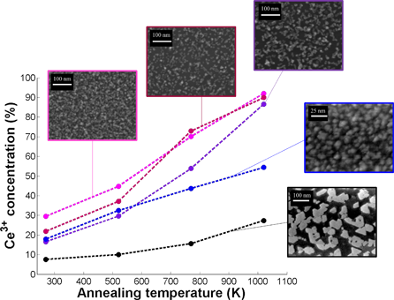
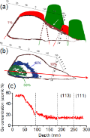
- the sample exhibit single crystalline structure (cubic CeO2, space group 225, Fm−3m), exposing frequently {111}, {220} and {100} facets, as evidenced in Figure 3a and Figure 3b. The (111) surface is indeed the most stable for cerium dioxide [1] and the (220) has the next lowest surface energy; at


The capillary adhesion technique: a versatile method for determining the liquid adhesion force and sample stiffness
Beilstein J. Nanotechnol. 2015, 6, 11–18, doi:10.3762/bjnano.6.2
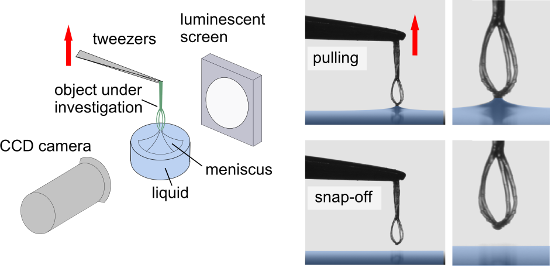
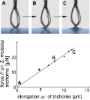
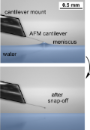
- ]. Furthermore, the normal force of capillary bridges between solid objects was investigated [19]. Here, we create a meniscus from a flat, water surface until rupture occurs in order to determine the adhesion force using a simple energetic approach: the first derivative of the added surface energy of the
- is required, which consists of the surface energy of the meniscus plus the interface energy of the tip–water contact area minus the surface energy of the original flat air–water interface before formation of the capillary contact. Here, σ = 0.07275 N/m [25] is the surface tension of the liquid (here


Aquatic versus terrestrial attachment: Water makes a difference
Beilstein J. Nanotechnol. 2014, 5, 2424–2439, doi:10.3762/bjnano.5.252
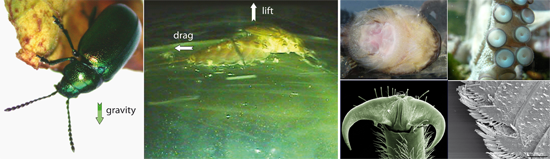
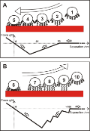
- surface texture, from smooth to very rough and smooth to hairy or covered with waxes [18][19]. Also the surface energy and with it the wettability of surfaces as well as the elasticity of the substrates are important properties, which can influence attachment [17]. Another important point needs to be
- Table 4 and Table 5. Very large attachment forces are generated by glue adhesion and suction. However, as the given values have been determined under very different conditions (substrates of different material, surface energy, roughness and elasticity; different measurement methods) the values are hard
- friction will depend on properties of the secretion, such as surface energy and viscosity. Some monolayer films separating two surfaces can also decrease friction dramatically when the surfaces are immersed under water [60]. Under certain conditions such as an insect stepping into a water drop or a water


Si/Ge intermixing during Ge Stranski–Krastanov growth
Beilstein J. Nanotechnol. 2014, 5, 2374–2382, doi:10.3762/bjnano.5.246
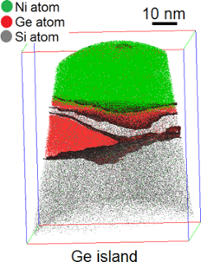
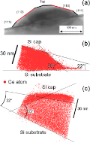
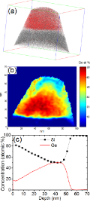
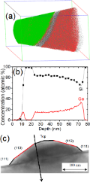
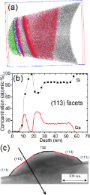
- minimization of the surface energy, the strain energy, the alloy mixing energy and the configurational entropy [22]. In the case of a pure Ge dome island (no intermixing with Si), the stress was shown to be compressive in the interior of the island, and tensile at the edges of the island [34]. Thus, in the
- case of island formation close to equilibrium, the Si-rich core is attributed to the compressive conditions prevailing in the island core, and the Ge-rich outer shell is attributed to the lower surface energy of Ge and the tensile conditions prevailing at the island edges. From a kinetic point of view




Liquid-phase exfoliated graphene: functionalization, characterization, and applications
Beilstein J. Nanotechnol. 2014, 5, 2328–2338, doi:10.3762/bjnano.5.242
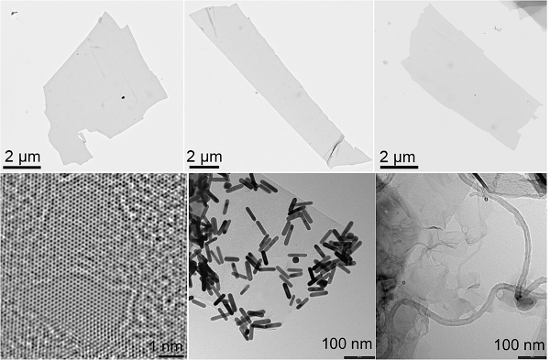
- at exfoliating graphite only if the net energetic cost of the process is very small. The enthalpy of mixing depends on the affinity between graphene layers and solvent molecules. Then, in order to obtain high yields of exfoliated graphite, the surface energy of the solvent must compete with the
- surface energy of graphite (≈70–80 mJ∙m−2). This relatively high surface energy results in solvents with high boiling points and high surface tensions, for example, N,N-dimethylformamide (DMF) and N-methyl-1,2-pyrrolidone (NMP), which are well-known as good dispersing solvents for carbon nanostructures




Hybrid spin-crossover nanostructures
Beilstein J. Nanotechnol. 2014, 5, 2230–2239, doi:10.3762/bjnano.5.232
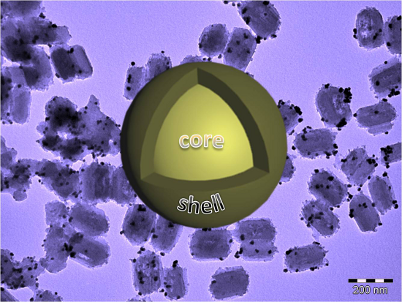
- ratio. The modulation of the spin-crossover behavior in nanoparticles can be realized by modification of the surface energy terms in the HS and LS states. This energy depends on two different parameters: the energy per surface, γ, and the area of the particle, A. The energy per surface term depends on


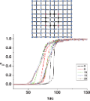

Nanometer-resolved mechanical properties around GaN crystal surface steps
Beilstein J. Nanotechnol. 2014, 5, 2164–2170, doi:10.3762/bjnano.5.225
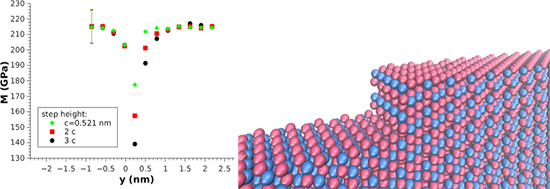
- edge. This fact can be expressed by considering the surface stress, which is the variation of the total surface energy as a function of the strain, ε: where A0 is the surface area before deformation and γ the surface energy. Therefore, the local stresses σij(yp) which are acting on the boundaries of dV


![[Graphic 3]](/bjnano/content/inline/2190-4286-5-225-i13.png?max-width=637&scale=1.18182) along the y-axis of the upper Ga atom...
along the y-axis of the upper Ga atom...


Dissipation signals due to lateral tip oscillations in FM-AFM
Beilstein J. Nanotechnol. 2014, 5, 2048–2057, doi:10.3762/bjnano.5.213
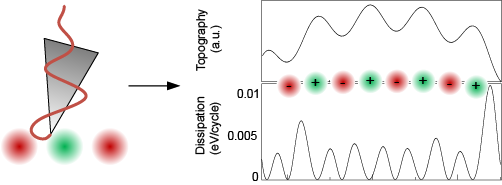
- microscopy. The coupling is induced by the interaction between tip and surface. Energy is transferred from the normal to the lateral excitation, which can be detected as damping of the cantilever oscillation. However, energy can be transferred back into the normal oscillation, if not dissipated by the


Synthesis of Pt nanoparticles and their burrowing into Si due to synergistic effects of ion beam energy losses
Beilstein J. Nanotechnol. 2014, 5, 1864–1872, doi:10.3762/bjnano.5.197
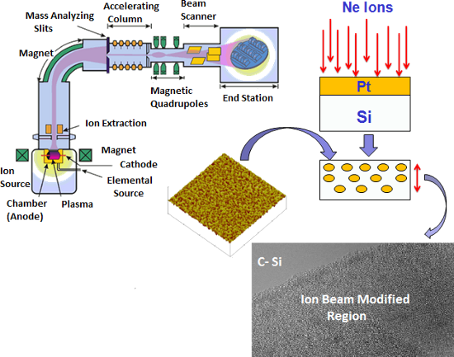
- been employed [20]. The ion irradiation of thin metallic films deposited on a suitable substrate (with lower surface energy) leads to the synthesis of metal NPs embedded into the substrate. The energy losses of the ions (not the ion itself) are mainly responsible for the resulting nano-structuring. The
- -organized cobalt clusters in a gold substrate upon thermal activation was reported by Padovani et al. [27]. When the surface energy of the metallic film is larger than that of the substrate, then surface nano-structuring is due to ion-induced sputtering of the film followed by the dewetting of metallic
- melting of islands (melting point of Pt is ≈1768 K). The molten Pt islands take a spherical shape to minimize their surface energy (dewetting). The surface energies of Pt and silicon are 2.49 and 1.51 J/m2, respectively. There could be electronic sputtering of these molten Pt islands giving rise to a

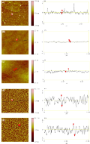


Silicon and germanium nanocrystals: properties and characterization
Beilstein J. Nanotechnol. 2014, 5, 1787–1794, doi:10.3762/bjnano.5.189
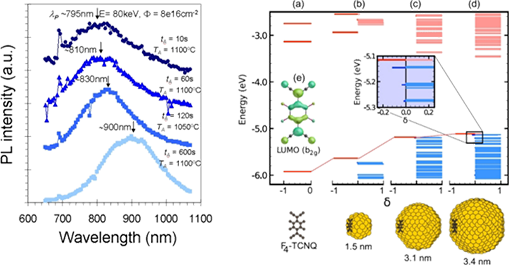
- properties: The NC surface is one of the most important variables in the engineering of its shape, intrinsic properties and stability in air and interaction with solvents and other substances. For nanoparticles with a clean surface or with a hydrogen-covered surface, the orientation dependence of the surface
- energy, as well as edge- and corner-energies (for less than 104 atoms) determine the shape of the NCs grown under near-equilibrium quasi-static conditions. It has been found that diamond NCs are most stable in a truncated octahedral structure, but Si and Ge NCs are stable in a nearly-spherical geometry


Equilibrium states and stability of pre-tensioned adhesive tapes
Beilstein J. Nanotechnol. 2014, 5, 1725–1731, doi:10.3762/bjnano.5.182
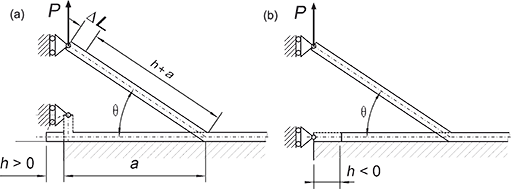
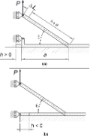
- the elastic modulus of the tape and on the surface energy of adhesion. Vice versa, in the unstable region, depending on the initial conditions of the system, the tape can evolve towards a state of complete detachment or fail before reaching a state of equilibrium with complete adhesion. We find that
- the presence of pre-tension in the tape does not modify the stability behavior of the system, but significantly affects the pull-off force which can be sustained by the tape before complete detachment. Moreover, above a critical value of the pre-tension, which depends on the surface energy of adhesion

![[Graphic 5]](/bjnano/content/inline/2190-4286-5-182-i14.png?max-width=637&scale=1.18182) as a function of the peeling angle θeq at equilibrium (a); the tot...
as a function of the peeling angle θeq at equilibrium (a); the tot...


![[Graphic 11]](/bjnano/content/inline/2190-4286-5-182-i20.png?max-width=637&scale=1.18182) as a function of the peeling angle θeq at equilibrium, for differen...
as a function of the peeling angle θeq at equilibrium, for differen...
Non-covalent and reversible functionalization of carbon nanotubes
Beilstein J. Nanotechnol. 2014, 5, 1675–1690, doi:10.3762/bjnano.5.178
- features of the interface between CNTs and the bulk medium providing additional repulsive forces, either electrostatic or steric, and decreasing the surface energy. In 1997 Bonard et al. [59] purified CNTs from graphitic nanoparticles by sonicating CNTs for a few minutes in a 1% aqueous solution of an



Hydrophobic interaction governs unspecific adhesion of staphylococci: a single cell force spectroscopy study
Beilstein J. Nanotechnol. 2014, 5, 1501–1512, doi:10.3762/bjnano.5.163
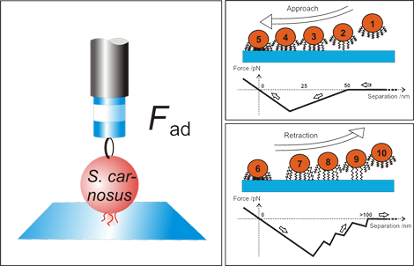
- , attractive forces can already be recorded, an indication of the involvement of long-ranged forces. Yet, comparing the surfaces of different surface energy, our results corroborate the model that large, bacterial cell wall proteins are responsible for adhesion, and that their interplay with the short-ranged
- , and to clarify the range of the attractive interaction of the cells to surfaces. We use abiotic surfaces in order to rule out effects due to specific interactions and to concentrate on the unspecific interactions of S. carnosus to surfaces of variable surface energy. As a unique feature of our study
- between, the surface energy of the adhesion partner (the hydrophilic surface) was reduced by a factor of three (c.f. Table 1). Hence, as the shape of the force/distance curves is that robust (surviving 150 contact events and surviving even a change of the type of substrate), these results already


A sonochemical approach to the direct surface functionalization of superparamagnetic iron oxide nanoparticles with (3-aminopropyl)triethoxysilane
Beilstein J. Nanotechnol. 2014, 5, 1472–1476, doi:10.3762/bjnano.5.160
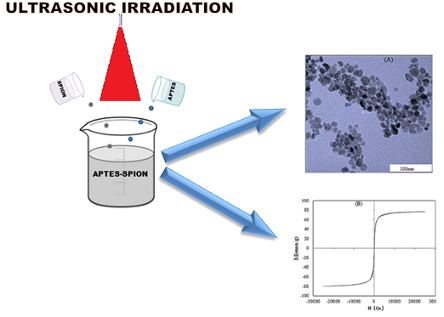
- ; superparamagnetic iron oxide nanoparticles (SPION); Findings Superparamagnetic iron oxide nanoparticles (SPION) have a wide range of applications in biomedical research and development. The main drawbacks of SPION are a high surface energy, van der Waals forces of attraction and dipole to dipole interactions that


Microstructural and plasmonic modifications in Ag–TiO2 and Au–TiO2 nanocomposites through ion beam irradiation
Beilstein J. Nanotechnol. 2014, 5, 1419–1431, doi:10.3762/bjnano.5.154
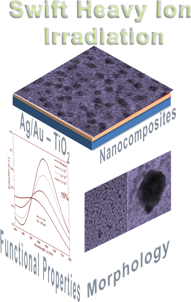
- utilized to fabricate different multifunctional nanocomposites for different applications [7][8][9]. Generally, the main motivation behind the use of an insulating matrix is to maintain the necessary separation between metal nanoparticles (resulting from differences in surface energy of the individual


Self-organization of mesoscopic silver wires by electrochemical deposition
Beilstein J. Nanotechnol. 2014, 5, 1285–1290, doi:10.3762/bjnano.5.142
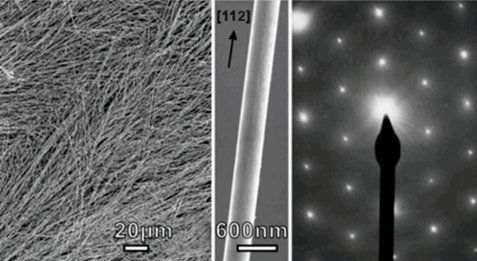
- atomic scale. It is known, that the (112) surface energy is relatively high and that the growth speed of [112] is faster than that of other facets [35]. Hence elongated silver wires are generated due to the anisotropy in growth rate. However, anisotropy in growth rate cannot guarantee for the formation




Physical principles of fluid-mediated insect attachment - Shouldn’t insects slip?
Beilstein J. Nanotechnol. 2014, 5, 1160–1166, doi:10.3762/bjnano.5.127
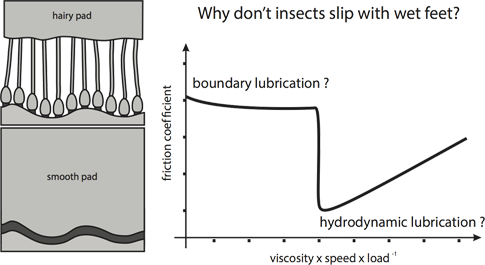
- between the adhesive pad and the substrate [61]. The classic hydrodynamic model only describes the friction observed with relatively “thick” layers of lubricant (≥0.5 μm, [62]), where neither the specific surface properties (roughness, surface energy) nor Amonton’s law are involved [63]. Friction forces


Template-directed synthesis and characterization of microstructured ceramic Ce/ZrO2@SiO2 composite tubes
Beilstein J. Nanotechnol. 2014, 5, 1152–1159, doi:10.3762/bjnano.5.126
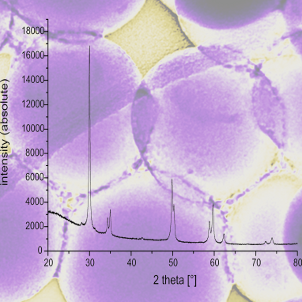
- = El + γSm, where EI is the lattice energy, γ is the surface energy, and Sm is the molar surface. The two values of EI are nearly identical for the monoclinic and tetragonal phase (11016 vs 11011 kJmol−1) [16], so the favorite formation of one over the other is mainly determined by their individual
- surface energies γ (11.3 × 10⁻⁵ Jcm2 vs 7.5–7.7 × 10⁻⁵ Jcm2) [17][18]. Consequently, the tetragonal phase is the more stable one for the solid solution Ce0.13/Zr0.87O2 due to its lower surface energy. Moreover, the incorporation of Ce4+ into its crystal lattice increases that effect. In addition to the




Dry friction of microstructured polymer surfaces inspired by snake skin
Beilstein J. Nanotechnol. 2014, 5, 1091–1103, doi:10.3762/bjnano.5.122
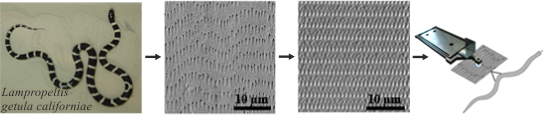
- scale [11]. These properties must be kept up over a longer period of time until new skin is moulted. Frictional properties of snake skin in contact with a solid partner depend on (i) the surface energy, (ii) material properties, and (iii) surface topography of the tribo-pair [12][13]. The surface energy


DFT study of binding and electron transfer from colorless aromatic pollutants to a TiO2 nanocluster: Application to photocatalytic degradation under visible light irradiation
Beilstein J. Nanotechnol. 2014, 5, 1016–1030, doi:10.3762/bjnano.5.115
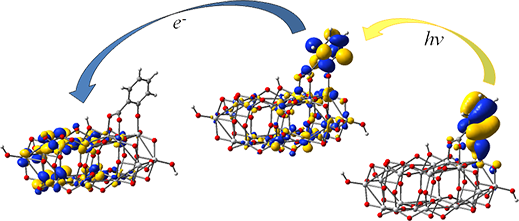
- geometry, which lowered the surface energy. To prevent the occurrence of dangling bonds for some peripheric oxygen atoms and to avoid the problem of the surface states in the gap [45] we introduced four hydrogen atoms [29][46]. The resulting Ti24O50H4 cluster has a length of 12.76 Å and a width of 7.39 Å



One-step synthesis of high quality kesterite Cu2ZnSnS4 nanocrystals – a hydrothermal approach
Beilstein J. Nanotechnol. 2014, 5, 438–446, doi:10.3762/bjnano.5.51
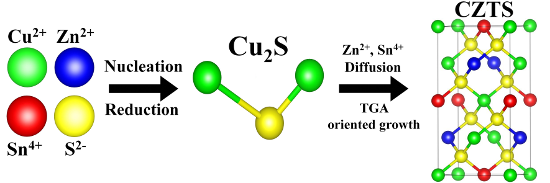
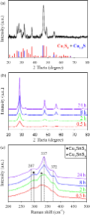
- ]. Hence, it is rational to conjecture that TGA might play two key roles in this work. One is to prevent aggregation of CZTS nanocrystals by capping on the generated nanocrystals to reduce the surface energy (steric hindrance) during the hydrothermal process; the other role is selective adsorption on




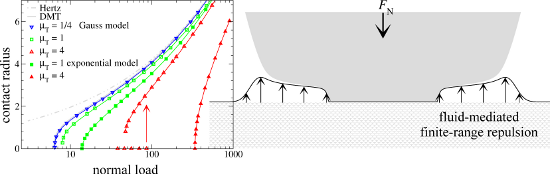
Single-asperity contact mechanics with positive and negative work of adhesion: Influence of finite-range interactions and a continuum description for the squeeze-out of wetting fluids
Beilstein J. Nanotechnol. 2014, 5, 419–437, doi:10.3762/bjnano.5.50


Oriented attachment explains cobalt ferrite nanoparticle growth in bioinspired syntheses
Beilstein J. Nanotechnol. 2014, 5, 210–218, doi:10.3762/bjnano.5.23
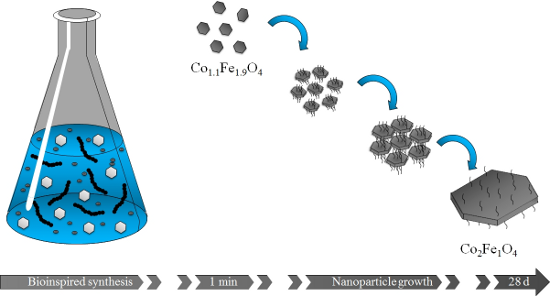
- , intermediate phase possesses a large amount of energetically unfavourable inner surfaces. To reduce the surface energy, adjacent primary building blocks can align along a common crystallographic axis and coalesce [12][13]. Phase transformations are often observed prior to aggregation [12]. The secondary
- ferrite nanoparticles was studied in this work. A detailed description of the crystallite formation is therefore not discussed here. Polypeptide-nanoparticle interaction and growth of primary building blocks The driving force of crystal growth is the reduction of surface energy. The final crystal faces
- are therefore those with the lowest surface energy. Faces with higher energies have increased growth rates and vanish in the final morphology. The final top/bottom crystal faces of the cobalt ferrite particles, synthesized without c25-mms6, was determined to be (112) recently [20]. This crystal face


3D-nanoarchitectured Pd/Ni catalysts prepared by atomic layer deposition for the electrooxidation of formic acid
Beilstein J. Nanotechnol. 2014, 5, 162–172, doi:10.3762/bjnano.5.16
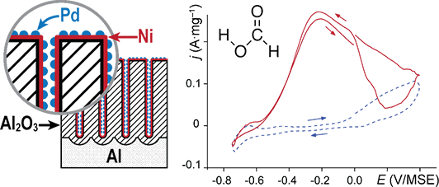
- film uniformly. This could be due to a lower surface energy between the Pd and the annealed substrate. It is even possible to form a Pd/Ni alloy if the NiO top layer appears only when the sample is exposed to air. The two different growth mechanisms demonstrate the strong influence of the substrate on





