Search results
Search for "surface properties" in Full Text gives 226 result(s) in Beilstein Journal of Nanotechnology. Showing first 200.
Conformal SiO2 coating of sub-100 nm diameter channels of polycarbonate etched ion-track channels by atomic layer deposition
Beilstein J. Nanotechnol. 2015, 6, 472–479, doi:10.3762/bjnano.6.48
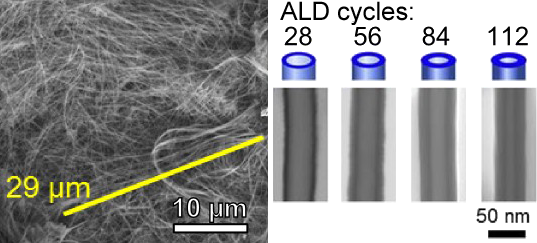
- adjust specific surface properties such as hydrophilicity or catalytic activity. Conform ALD coatings have been reported for various porous materials including powders [18] and porous membranes such as anodic aluminum oxide (AAO) [19][20][21][22][23][24] and track-etched membranes [25][26][27][28]. For


Strain distribution due to surface domains: a self-consistent approach with respect to surface elasticity
Beilstein J. Nanotechnol. 2015, 6, 321–326, doi:10.3762/bjnano.6.30
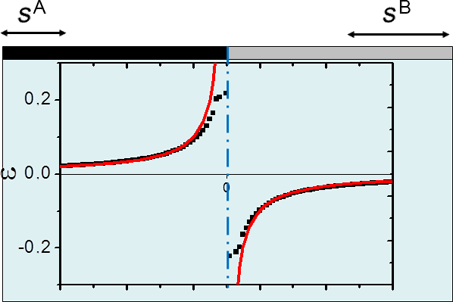
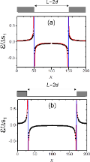
- surface properties are properly considered, the strain field induced by the surface domains may be expressed as the solution of a self-consistent integro-differential equation. Results and Discussion Let us consider (see Figure 1a) a semi-infinite body whose surface contains two domains (two infinite


Oxygen-plasma-modified biomimetic nanofibrous scaffolds for enhanced compatibility of cardiovascular implants
Beilstein J. Nanotechnol. 2015, 6, 254–262, doi:10.3762/bjnano.6.24
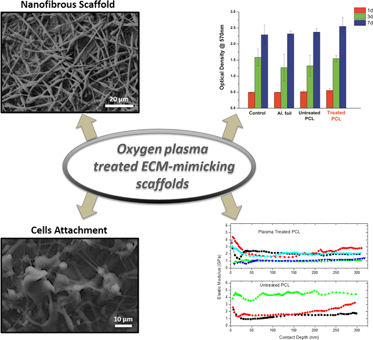
- may lead to improved surface properties without affecting the morphology or the mechanical behaviour of the system. In depth nanoindentation measurements were conducted for the scaffolds under optimal conditions to assess the mechanical performance. MTT assay along with imaging techniques were used to
- the O2-plasma did not degrade the mechanical properties of the PCL, in contrary the nanomechanical behavior of the PCL appears to be more homogeneous after the treatment, possibly due to the alternation/homogenization of the PCL surface properties. Cellular performance of the plasma-treated scaffolds
- cytocompatible, oxygen-plasma treatment was used to modify the surface chemistry along with its nanotopography without causing any deterioration of the structure or the integrity of the scaffold and without affecting its mechanical and physical bulk properties. This approach, of controlling the surface


Tailoring the ligand shell for the control of cellular uptake and optical properties of nanocrystals
Beilstein J. Nanotechnol. 2015, 6, 232–242, doi:10.3762/bjnano.6.22
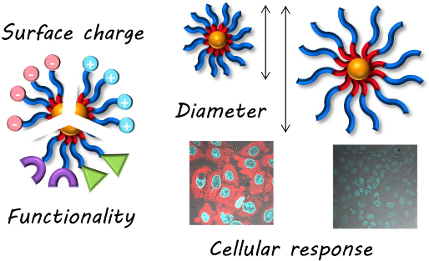
- based on specific chemical groups like amines, carboxyl and hydroxyl functions [31]. Functional groups are not only useful for typical coupling strategies of biomolecules, but also for the determination of the surface properties of the final nanocontainers. Differently charged particles show different






Synthesis of boron nitride nanotubes and their applications
Beilstein J. Nanotechnol. 2015, 6, 84–102, doi:10.3762/bjnano.6.9
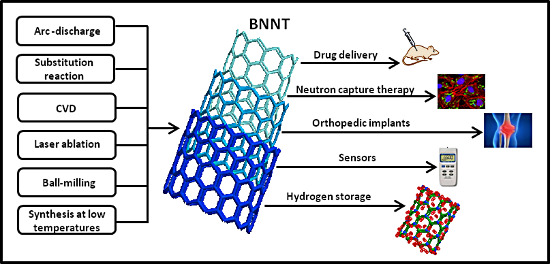
- a variety of fields including medicine and biomedical applications. Two approaches to alter the surface properties of BNNTs are commonly employed: one is through covalent attachment of a molecule or molecular structure, and the other involves the physical adsorption of a molecular structure or a
- assess the toxicity of the BNNTs. Similar to CNTs, one of the major problems in toxicity assessment of BNNTs is their low dispersibility in aqueous media, due to their high hydrophobicity. In order to increase the dispersion, either a surfactant or hydrophilic polymer is used to alter the surface
- properties. However, this process adds further uncertainties to the assessment since another material is introduced into the system. For example, polyethylenimine (PEI) is a cytocompatible polymer and principally used for DNA transfection and cell permeabilization. The BNNTs were coated with PEI for




Size-dependent density of zirconia nanoparticles
Beilstein J. Nanotechnol. 2015, 6, 27–35, doi:10.3762/bjnano.6.4
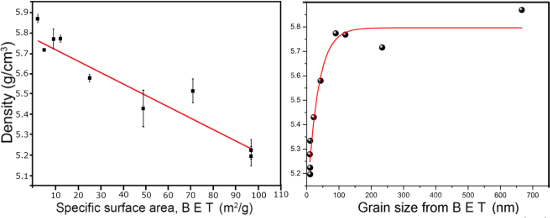
- as a luminescent material, the luminescence intensity increases with crystallite size [17]. The size and surface properties of NPs are also important for toxicology and health applications. The size of the NPs can influence their distribution in the human body and the mechanism of their penetration


Aquatic versus terrestrial attachment: Water makes a difference
Beilstein J. Nanotechnol. 2014, 5, 2424–2439, doi:10.3762/bjnano.5.252
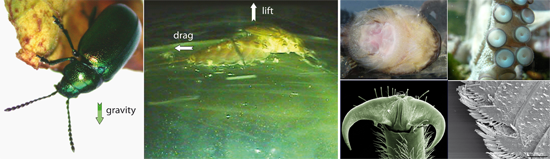
- invertebrates [20][21][22][23][24][25], but they also change the surface properties of the primary substrate considerably and by this can affect the attachment forces significantly [26][27]. While biofilms can vary greatly in composition and thickness, they are usually softer than the primary substrate, and


Synthesis and characterization of fluorescence-labelled silica core-shell and noble metal-decorated ceria nanoparticles
Beilstein J. Nanotechnol. 2014, 5, 2413–2423, doi:10.3762/bjnano.5.251
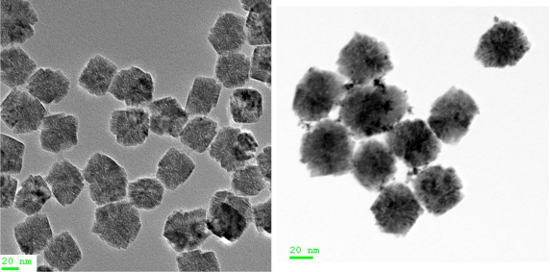
- original non-annealed NP were used for biomedical [46] and uptake studies [47], both articles in this issue. What cannot be avoided must be controlled. Since agglomeration is a question of surface properties, it should be possible to control it by surface-active reagents. Consequently, we tried to


Functionalized polystyrene nanoparticles as a platform for studying bio–nano interactions
Beilstein J. Nanotechnol. 2014, 5, 2403–2412, doi:10.3762/bjnano.5.250
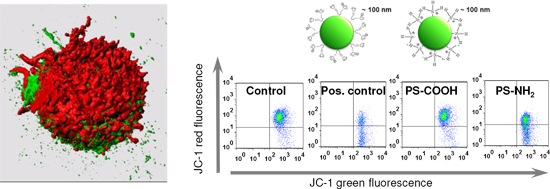
- to size or surface properties of nanoparticles. By using polystyrene particles, it is possible to explore the effect of the size, the surface charge, and the hydrophobicity of the particles on cells. These studies show that, although, polystyrene has been claimed to be nontoxic, functionalized
- nonspecific cellular interactions, or by replacement of reactive amine groups with amphiphilic head groups [51]. Nanoparticles manufactured from inert biocompatible polystyrene can be used to explore the effects of different surface properties on various biomedical parameters and enable the rational design of


Inorganic Janus particles for biomedical applications
Beilstein J. Nanotechnol. 2014, 5, 2346–2362, doi:10.3762/bjnano.5.244
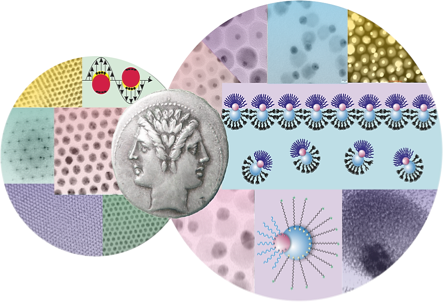
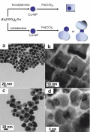
- , synthesis, and properties of multifunctional nanoparticles owing to their special structure–property relationship [1]. Due to their distinct surface properties, these nanomaterials can be modified by various ligands to introduce the desired surface characteristics ranging from solubility in selected






Advanced atomic force microscopy techniques II
Beilstein J. Nanotechnol. 2014, 5, 2326–2327, doi:10.3762/bjnano.5.241

- and clearly shows a route for development for the next years. All of the new applications and experiments are strongly dependent on theoretical and technical developments. Virtual AFMs used to simulate AFM measurements [18][19][20] and to deconvolute complex correlations between various surface
- properties [21] are based on the implementation of proportional-integral controllers to give realistic feedback behaviours. Stirling proposed a theoretical model for studying the SPM feedback in the context of control theory providing the possibility to understand and model the performance from SPM systems
Nanoencapsulation of ultra-small superparamagnetic particles of iron oxide into human serum albumin nanoparticles
Beilstein J. Nanotechnol. 2014, 5, 2259–2266, doi:10.3762/bjnano.5.235
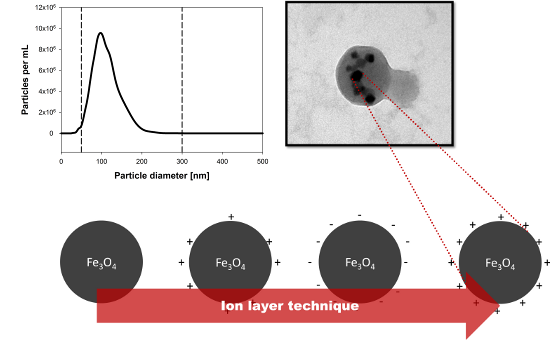
- charged core particles were embedded into the HSA matrix by ethanolic desolvation of the protein [9]. By adjusting the reaction conditions of the desolvation procedure, particles of optimal size distribution and surface properties for drug targeting applications have been achieved. The USPIO load


Influence of stabilising agents and pH on the size of SnO2 nanoparticles
Beilstein J. Nanotechnol. 2014, 5, 2192–2201, doi:10.3762/bjnano.5.228
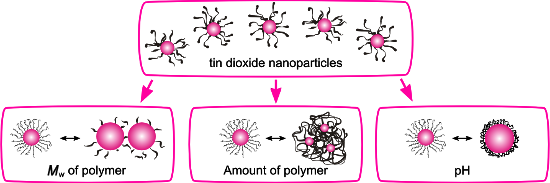
- stabilising agents significantly affect the size, shape and surface properties of nanomaterials synthesised in their presence [18]. In 1718, Helcher applied a natural polymer (starch) to stabilise gold nanoparticles [19]. Today, synthetic polymers are commonly used to stabilise different types of


Rapid degradation of zinc oxide nanoparticles by phosphate ions
Beilstein J. Nanotechnol. 2014, 5, 2007–2015, doi:10.3762/bjnano.5.209
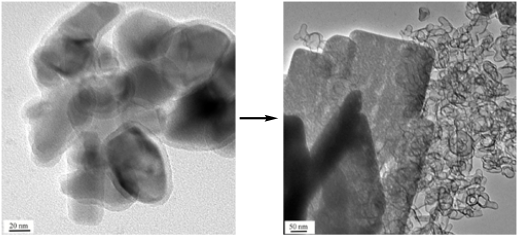
- solubility. The morphology of the zinc oxide particles has only a minor influence on the kinetics of this reaction. Surface properties related to different production methods and the presence and absence of labelling with a perylene fluorescent dye are more important. Particles prepared under acidic


Silicon and germanium nanocrystals: properties and characterization
Beilstein J. Nanotechnol. 2014, 5, 1787–1794, doi:10.3762/bjnano.5.189
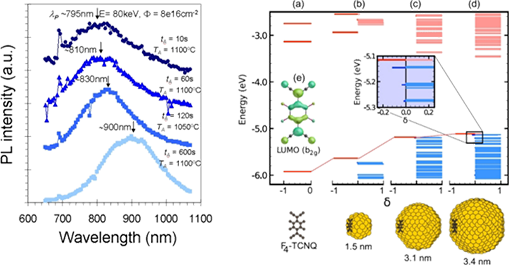
- not a shallow acceptor, but rather a deep acceptor with levels that can edge the conduction band minimum of the Si NC film. In fact, this dopant was used to increase the conductivity of the films by more than two orders of magnitude, although the majority carriers were electrons. III.2.3 Surface
- properties: The NC surface is one of the most important variables in the engineering of its shape, intrinsic properties and stability in air and interaction with solvents and other substances. For nanoparticles with a clean surface or with a hydrogen-covered surface, the orientation dependence of the surface


The surface properties of nanoparticles determine the agglomeration state and the size of the particles under physiological conditions
Beilstein J. Nanotechnol. 2014, 5, 1774–1786, doi:10.3762/bjnano.5.188
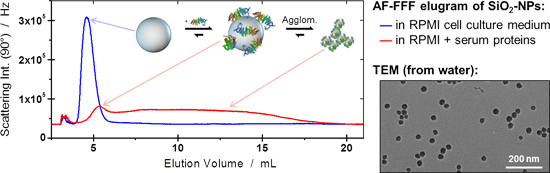
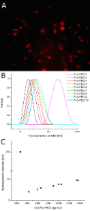
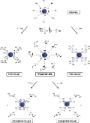
- applied. The investigated particle systems were (i) negatively charged silica particles and (ii) poly(organosiloxane) particles offering variable surface modification opportunities (positively charged, polymer coated). It is shown that the surface properties primarily determine the agglomeration state of
- the particles and therefore their effective size, especially under physiological conditions. Thus, the biological identity of a nanomaterial is clearly influenced by differentiating surface properties. Keywords: nanomaterial characterization; physiological conditions; surface properties; silica
- hydrodynamic radius was observed. The distinctly higher μ2 values of 0.29 and 0.27 for the quaternized samples are presumably caused by a minor fraction of agglomerates. Agglomeration might be induced here by the change of the surface properties during the quaternization procedure. Thus, the higher μ2 values


Controlling the dispersion of supported polyoxometalate heterogeneous catalysts: impact of hybridization and the role of hydrophilicity–hydrophobicity balance and supramolecularity
Beilstein J. Nanotechnol. 2014, 5, 1749–1759, doi:10.3762/bjnano.5.185
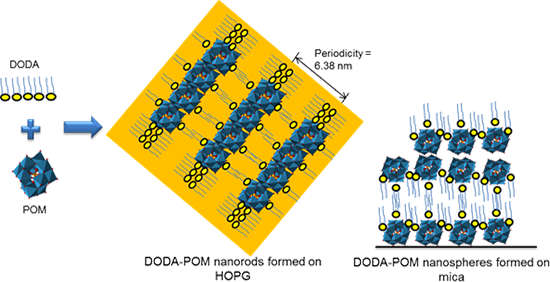
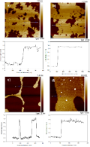
- surface, the alkyl chains of DODA are known to orient with a tilt angle of θ ≈ 30° with respect to the normal of the surface [30]. As expected, no epitaxial arrangement of DODA was observed. The conformation of the DODA surfactant, as shown here, can thus be tuned as a function of the surface properties


In vitro and in vivo interactions of selected nanoparticles with rodent serum proteins and their consequences in biokinetics
Beilstein J. Nanotechnol. 2014, 5, 1699–1711, doi:10.3762/bjnano.5.180
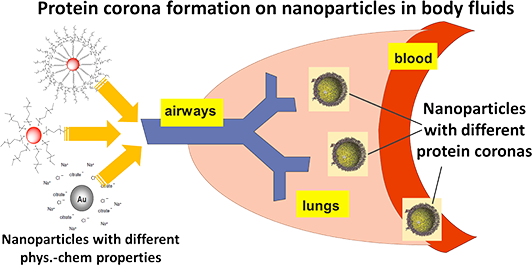
- discrepancy suggests that the Ag dissociation during aging of the AgNP suspension is more complex than just forming Ag+ ions. Conclusion Upon contact with body fluids such as blood serum NP bind soluble proteins according to their physicochemical surface properties and the protein affinity and/or the


Probing viscoelastic surfaces with bimodal tapping-mode atomic force microscopy: Underlying physics and observables for a standard linear solid model
Beilstein J. Nanotechnol. 2014, 5, 1649–1663, doi:10.3762/bjnano.5.176
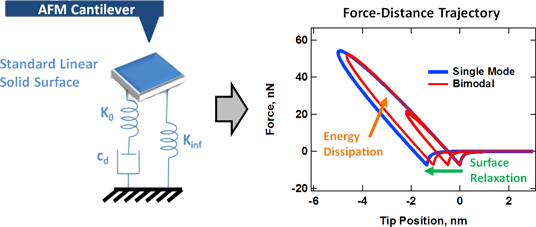
- observables and calculated quantities from the AFM measurement (frequency, phase, amplitude, quality factor, etc.) to the surface properties. In contact resonance typically the Kelvin–Voigt model [40] is used, which consists of a linear spring in parallel with a damper (dashpot). It is incorporated into the


Multi-frequency tapping-mode atomic force microscopy beyond three eigenmodes in ambient air
Beilstein J. Nanotechnol. 2014, 5, 1637–1648, doi:10.3762/bjnano.5.175
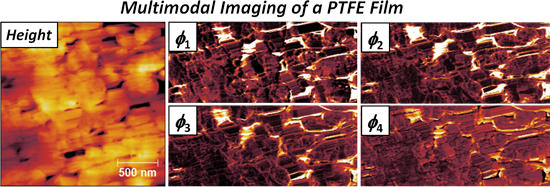
- accurately for multimodal imaging, it may not be possible to carry out fully quantitative measurements of the surface properties. As already discussed, the tip trajectories for a tetramodal or pentamodal operation are even more complex than the already complex bimodal [19] and trimodal [20] trajectories
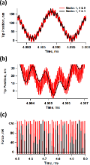
- for different free amplitudes and sample parameters; (f) second eigenmode spectra for different free amplitudes. The surface properties were accounted for through a standard linear solid model (see methods section) with K0 = 7.5 N/m, Kinf = 7.5 N/m and Cd = 1 × 10⁻⁵ N·s/m for the “soft” sample and K0



In vitro interaction of colloidal nanoparticles with mammalian cells: What have we learned thus far?
Beilstein J. Nanotechnol. 2014, 5, 1477–1490, doi:10.3762/bjnano.5.161
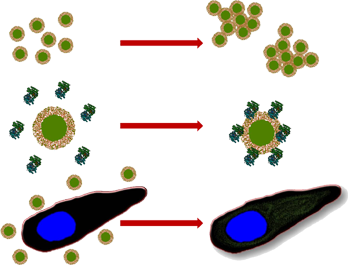
- cores are always surrounded by an organic coating [14]. Adsorbed proteins can significantly alter the surface properties of NPs and are of key importance in defining the biological identity of NPs [132][133]. The corona formed around NPs is what the cell will “see” primarily, though certainly also the


Physical principles of fluid-mediated insect attachment - Shouldn’t insects slip?
Beilstein J. Nanotechnol. 2014, 5, 1160–1166, doi:10.3762/bjnano.5.127
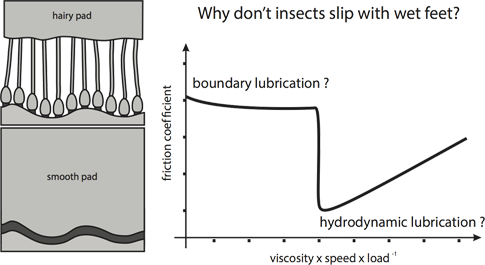
- between the adhesive pad and the substrate [61]. The classic hydrodynamic model only describes the friction observed with relatively “thick” layers of lubricant (≥0.5 μm, [62]), where neither the specific surface properties (roughness, surface energy) nor Amonton’s law are involved [63]. Friction forces


Trade-offs in sensitivity and sampling depth in bimodal atomic force microscopy and comparison to the trimodal case
Beilstein J. Nanotechnol. 2014, 5, 1144–1151, doi:10.3762/bjnano.5.125
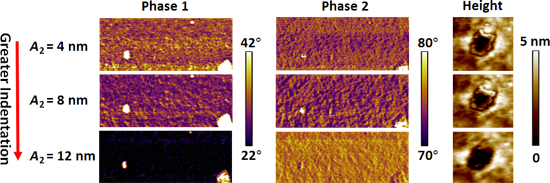
- cases. Finally, we also offer a comparison to the trimodal method [9]. Note that in this paper we use the word sensitivity to qualitatively describe the ability of an eigenmode observable (e.g., phase shift) to detect small changes in the tip–sample forces, which in turn are governed by the surface
- properties. Since much of the discussion is based on the cantilever dynamics, the term can also be understood as the ability of a given cantilever eigenmode to be perturbed by small changes in the external forces when it is oscillating under the specified parameters. Our discussion and conclusions are based


The study of surface wetting, nanobubbles and boundary slip with an applied voltage: A review
Beilstein J. Nanotechnol. 2014, 5, 1042–1065, doi:10.3762/bjnano.5.117
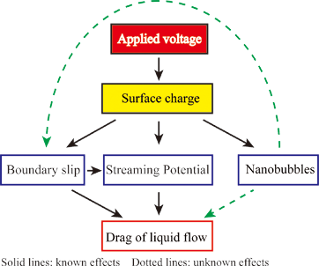
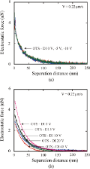
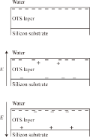
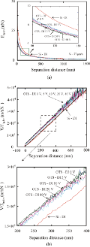
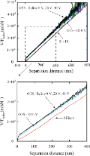
- ]. It is also believed that the surface charge density has a relationship with nanobubbles and boundary slip [59][63]. Generally speaking, with an applied voltage, the surface properties and the interaction of the surface and liquid will be affected. In particular, the wettability, surface charge










A nanometric cushion for enhancing scratch and wear resistance of hard films
Beilstein J. Nanotechnol. 2014, 5, 1005–1015, doi:10.3762/bjnano.5.114
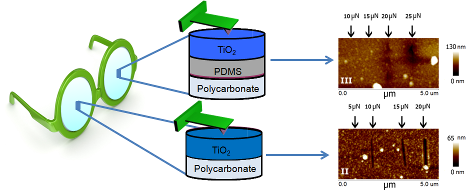
- of intense technological interest. The capability to modulate these surface properties while preserving both the bulk properties of the materials and a well-defined, constant chemical composition of the surface is particularly attractive. We report herein the use of a soft, flexible underlayer to