


Search results
Search for "time dependent" in Full Text gives 233 result(s) in Beilstein Journal of Nanotechnology. Showing first 200.
Manganese oxide phases and morphologies: A study on calcination temperature and atmospheric dependence
Beilstein J. Nanotechnol. 2015, 6, 47–59, doi:10.3762/bjnano.6.6
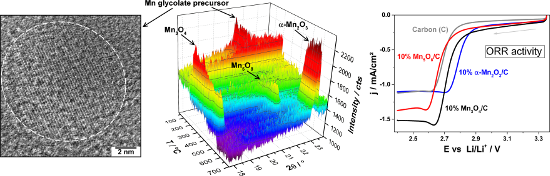
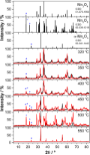
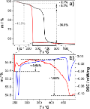
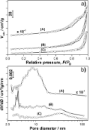
- different nanostructured MnOx species via one calcination process. This is advantageous for the investigation of the properties of the manganese oxides, as it rules out any synthesis-caused effects. The temperature- as well as the time-dependent phase transformation processes occurring during the oxidation
- at ν = 50 mV/s. Supporting Information The supporting information features the powder XRD pattern of Mn(II) glycolate particles after 1 h of synthesis at 170 °C in addition to in situ XRD patterns of the time-dependent oxidation of Mn3O4 to Mn5O8 at 400 °C in O2. Supporting Information File 14





Mammalian cell growth on gold nanoparticle-decorated substrates is influenced by the nanoparticle coating
Beilstein J. Nanotechnol. 2014, 5, 2479–2488, doi:10.3762/bjnano.5.257
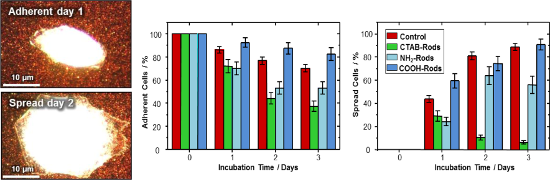
- regime from 10−0.5 to 10−1.5 Hz, as described by Giaever et al. [29], which corresponds to slopes ranging from −2.1 to −3 s−1 for fully motile epithelial cells exhibiting 100% micromotion and 0 to −1 for bare electrodes as well as fixed cells immersed in buffer. The time-dependent slopes were recorded


Inorganic Janus particles for biomedical applications
Beilstein J. Nanotechnol. 2014, 5, 2346–2362, doi:10.3762/bjnano.5.244
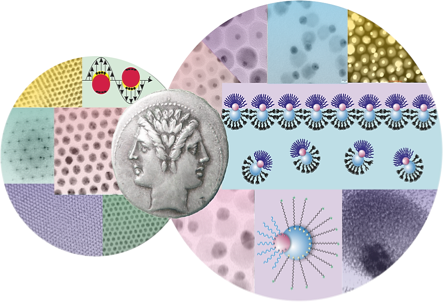
- selective excitation of the focal volume [93][94]. Nevertheless, it remains challenging to extend the technique to time-dependent measurements for clinically relevant volumes, reaching beyond small animals used as testing systems at the moment [95][96][97][98]. Surface modification of Janus particles The






Modeling viscoelasticity through spring–dashpot models in intermittent-contact atomic force microscopy
Beilstein J. Nanotechnol. 2014, 5, 2149–2163, doi:10.3762/bjnano.5.224
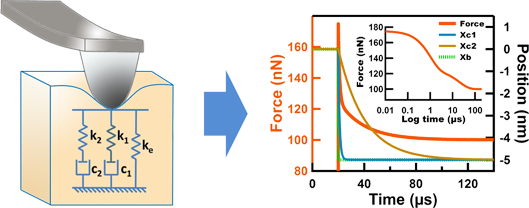
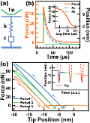
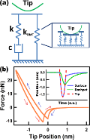
- characterization with AFM. Results and Discussion Model descriptions Linear Maxwell model The Linear Maxwell model is one of the simplest spring–dashpot sets. It consists of a spring arranged in series with a dashpot (Figure 1a). This model is known for successfully describing stress relaxation (time-dependent
- drop in stress under a constant strain) and for failing to describe creep (time-dependent strain relaxation under a constant stress). The latter precludes the existence of a mechanism for surface recovery upon deformation. As a consequence, the sample continuously yields to lower positions when
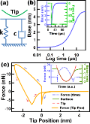
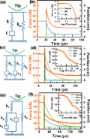
- capture both stress relaxation and creep compliance, which are basic time-dependent properties exhibited by viscoelastic surfaces. It is comprised by a Linear Maxwell arm arranged in parallel with a spring (Figure 3a) and has been recently used in the context of multifrequency and spectral inversion AFM


Dissipation signals due to lateral tip oscillations in FM-AFM
Beilstein J. Nanotechnol. 2014, 5, 2048–2057, doi:10.3762/bjnano.5.213
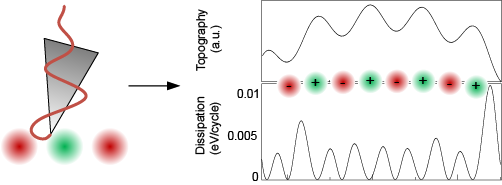
- solvable. As a first step, the x-dependence of the z-component of the force is neglected by approximating Fz(x, z) ≈ Fz(x0, z). Then the solution z(t) of Equation 1 is independent of Equation 2. This leads to an effectively time-dependent lateral force Fx(x, z(t)) for Equation 2. As the interaction between


Imaging the intracellular degradation of biodegradable polymer nanoparticles
Beilstein J. Nanotechnol. 2014, 5, 1905–1917, doi:10.3762/bjnano.5.201
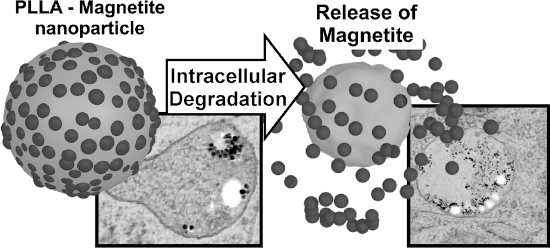
- distribution of PLLA nanoparticle diameters as determined from 164 individual particles after HPF processing and TEM examination. Time-dependent UV–vis adsorption measurement monitoring the formation of the FeCl(H2O)52+ complex upon addition of HCl to pristine magnetite particles and magnetite-decorated PLLA


Electronic and electrochemical doping of graphene by surface adsorbates
Beilstein J. Nanotechnol. 2014, 5, 1842–1848, doi:10.3762/bjnano.5.195
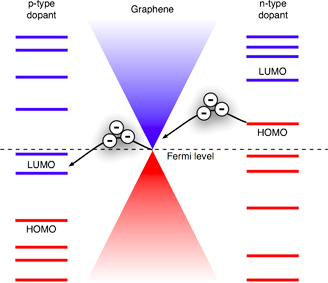
- until equilibrium is reached, Eredox = EF, making graphene n- (p-)type doped. In contrast to electronic doping, which occurs instantaneously, electrochemical doping is a time-dependent process, which is affected by the rate of the reaction and diffusion rates of participating species. Therefore, in the


Biocompatibility of cerium dioxide and silicon dioxide nanoparticles with endothelial cells
Beilstein J. Nanotechnol. 2014, 5, 1795–1807, doi:10.3762/bjnano.5.190
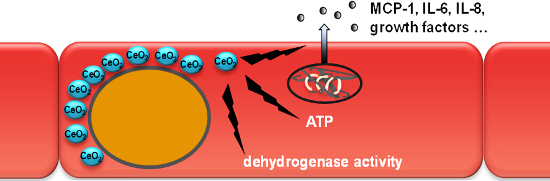
- -inflammatory effects, a slight pro-thrombotic impact, and an increase of reactive oxygen species after nanoparticle exposure were observed with increasing incubation time. For SiO2 nanoparticles, concentration- and time-dependent effects on the metabolic activity as well as pro-inflammatory reactions were
- (dimethylethyl)phenyl)-N’-(3-(triethoxysilyl)propyl)perylene-3,4,9,10-tetracarboxylic acid diimide label); magnification: 20×. CeO2 nanoparticles revealed concentration- and time-dependent effects on the cellular adenosine triphosphate (ATP) level. Immortalized human microvascular endothelial cells (HMEC-1) and


Probing viscoelastic surfaces with bimodal tapping-mode atomic force microscopy: Underlying physics and observables for a standard linear solid model
Beilstein J. Nanotechnol. 2014, 5, 1649–1663, doi:10.3762/bjnano.5.176
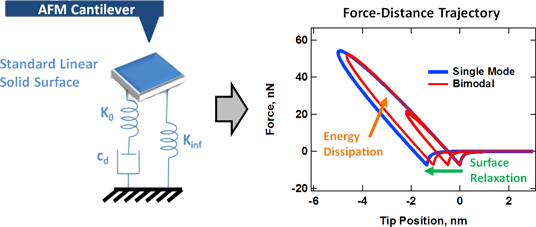
- behavior of the probe–sample forces, although significant progress has already been achieved by using multi-frequency methods [9]. The contact models used so far are not true viscoelastic models, since they do not exhibit time-dependent stress and strain relaxation, but they have been shown to be
- solution of the cantilever equations of motion in the form of boundary conditions at the tip [4][5]. This model can reproduce time-dependent creep compliance (time-dependent strain relaxation under a constant stress) with high accuracy, but not stress relaxation (time dependent drop in stress under a
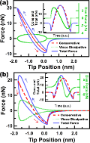
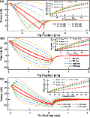
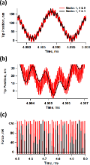
- dissipated during successive tip–sample impacts (this dissipation was calculated by integrating numerically the area of the dissipation loops), and panel (c) shows a few examples of successive tip–sample impacts, illustrated as time-dependent forces. Interestingly, even in the case in which the peak


Multi-frequency tapping-mode atomic force microscopy beyond three eigenmodes in ambient air
Beilstein J. Nanotechnol. 2014, 5, 1637–1648, doi:10.3762/bjnano.5.175
- time-dependent trajectory of the tip and individual eigenmodes through simulation of ideal cantilevers. Figure 2a illustrates typical tip trajectories simulated for pentamodal operation when imaging a polymer sample. Here the first eigenmode free amplitude is 80 nm and the higher mode free amplitudes
- carried out and the apparent robustness of our results, the non-uniformity of successive tip–sample impacts, the nonlinear coupling of the various eigenmodes, as well as time-dependent tip–sample behaviors such as viscoelasticity suggest that unless single-cycle techniques [16][18][30] can be implemented



Precise quantification of silica and ceria nanoparticle uptake revealed by 3D fluorescence microscopy
Beilstein J. Nanotechnol. 2014, 5, 1616–1624, doi:10.3762/bjnano.5.173
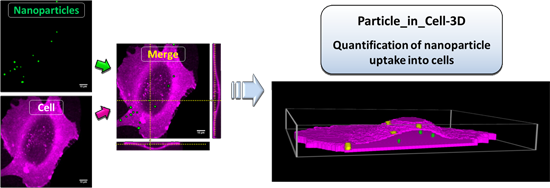
- . The number of intracellular particles varied considerably from cell to cell. About 30 cells were evaluated per time point, thus resulting in more than 360 cells in total. The statistics for the number of taken up particles per HUVEC or HeLa cells are plotted in Figure 3. A time-dependent increase of
- plays an important role in our findings. Cell division is probably among the dominant causes for the observed dilution of nanoparticles. Yet, other time-dependent parameters may also influence the uptake dynamics. For example, degradation of intracellular particles, exocytosis, cell uptake behavior (e.g


Hydrophobic interaction governs unspecific adhesion of staphylococci: a single cell force spectroscopy study
Beilstein J. Nanotechnol. 2014, 5, 1501–1512, doi:10.3762/bjnano.5.163
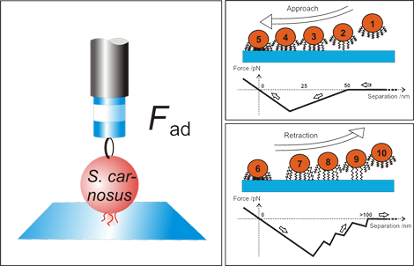
- the order of a fraction of a second) does not influence the adhesion force. The snap-in separation, however, decreases with increasing tip velocity (Figure 5B), as does the snap-in force (Figure 5C), which is a first indication to a time-dependent contact-process, which will be detailed in the


The cell-type specific uptake of polymer-coated or micelle-embedded QDs and SPIOs does not provoke an acute pro-inflammatory response in the liver
Beilstein J. Nanotechnol. 2014, 5, 1432–1440, doi:10.3762/bjnano.5.155
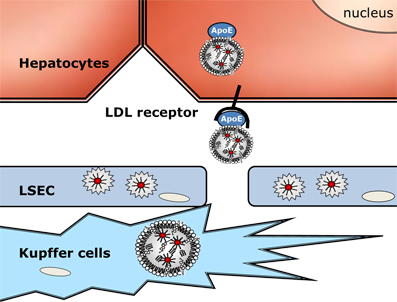
- organs to the kidneys was observed. These findings are supported by a study in rats describing a time-dependent increase in the cadmium concentration over 30 days after injection of QDs in the kidneys indicating that these nanocrystals are slowly degraded in vivo [11]. In summary, despite the breakdown
- metals such as cadmium released from QDs or iron released from SPIOs did not acutely influence the inflammatory status of the liver. However, specific target cells can be of transient relevance and heavy metals released after QDs or SPIOs uptake may traverse through different target cell types in a time
- -dependent manner. Given the limitation of the study that gene expression of pro-inflammatory markers was analysed 48 h (Figure 3) or 4 h (Figure 6) after the injection of nanoparticles, we cannot exclude that different target cells in different organs such as the kidney, spleen, adipose tissues or the bone


The protein corona protects against size- and dose-dependent toxicity of amorphous silica nanoparticles
Beilstein J. Nanotechnol. 2014, 5, 1380–1392, doi:10.3762/bjnano.5.151
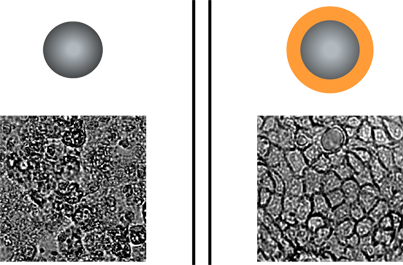
- . Comprehensive experimental approaches, such as quantifying cellular metabolic activity, microscopic observation of cell morphology, and high-throughput cell analysis revealed a dose- and time-dependent toxicity primarily upon exposure with ASP30 (Ø = 30 nm). Albeit smaller (ASP20, Ø = 20 nm) or larger particles
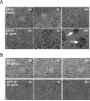
- the Caco-2 cells following exposure to the different ASP (Figure 2). Exposure to ASP30 or ASP30L under serum free conditions induced dose- and time-dependent significant morphological changes, such as loss of a structured cell shape, disruption of the monolayer, and loss of adhesion, which is
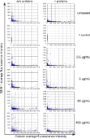
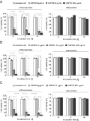
- cellular enzymes that reduce the tetrazolium dye MTT to its insoluble formazan in living cells. Compared to untreated control cells, exposure to ASP30 was found to significantly reduce the cell vitality in a dose- and time-dependent manner (Figure 3A), whereas no effects were observed upon treatment with




Mimicking exposures to acute and lifetime concentrations of inhaled silver nanoparticles by two different in vitro approaches
Beilstein J. Nanotechnol. 2014, 5, 1357–1370, doi:10.3762/bjnano.5.149
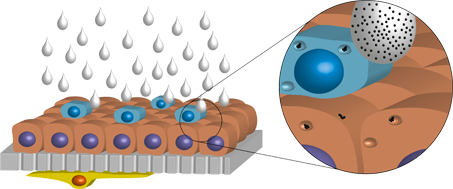
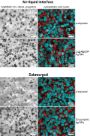
- . As a release of cytokines could not be detected with ELISA we assume that this is a transient and acute effect, which decreases to normal levels within a short time. Dependent on how NPs are applied, i.e., either by submerged or ALI conditions, different toxicological results can be obtained [60



Electron-beam induced deposition and autocatalytic decomposition of Co(CO)3NO
Beilstein J. Nanotechnol. 2014, 5, 1175–1185, doi:10.3762/bjnano.5.129
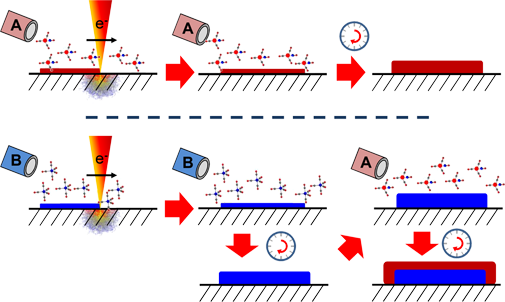
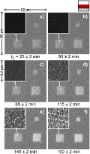
- , which points to a deposition that is influenced by proximity effects [2]. In addition to the dose dependence, the growth time-dependent appearance of the structures was investigated. Figure 3 compares SEM images of square deposits fabricated by EBID and autocatalytic growth, using Co(CO)3NO as precursor




Physical principles of fluid-mediated insect attachment - Shouldn’t insects slip?
Beilstein J. Nanotechnol. 2014, 5, 1160–1166, doi:10.3762/bjnano.5.127
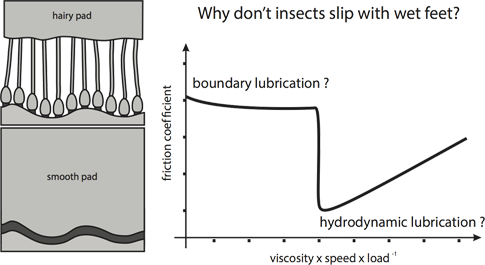
- account the viscosity of the mediating fluid layer. Two parallel smooth surfaces with a distance of h sliding at a velocity v relative to each other generate the friction force where ηeff is the effective viscosity of the mediating fluid layer and A the size of the contact area. Again, similar to the time
- -dependent viscous adhesion (Equation 2), the v/h-term in Equation 5 shows that a simple fluid mediated system at rest should not be able to generate any static friction. Based on viscosity estimations from dewetting processes (40 to 150 mPa), Federle et al. showed that the hydrodynamic friction forces


DFT study of binding and electron transfer from colorless aromatic pollutants to a TiO2 nanocluster: Application to photocatalytic degradation under visible light irradiation
Beilstein J. Nanotechnol. 2014, 5, 1016–1030, doi:10.3762/bjnano.5.115
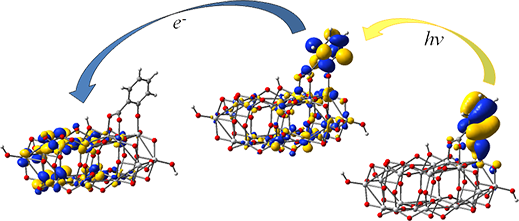
- ]. Building upon the experience gained while modeling materials for photoelectrochemical cells, we report here results of DFT and time dependent DFT (TD-DFT) calculations performed on several colorless aromatic pollutants, as well as complex systems consisting of benzene derivatives adsorbed on a TiO2
- of vibrational analyses. Time-dependent DFT [37] calculations of the molecular orbitals and the electronic transitions were performed in water by means of the polarizable continuum model (PCM) [38][39]. We used the same B3LYP functional and TZVP basis sets [36]. In the case of the pollutants adsorbed



Double layer effects in a model of proton discharge on charged electrodes
Beilstein J. Nanotechnol. 2014, 5, 973–982, doi:10.3762/bjnano.5.111
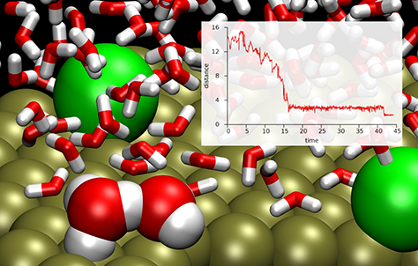
- charge on the metal slab. Far from the electrode only the two charged states can contribute to the EVB ground state so that the state of a proton is a time-dependent superposition state of two different H3O+ states. The proton complex thus dynamically moves between more hydronium and more Zundel like
- developed by Warshel to study proton transfer mechanisms in biological systems [19][20][21]. This methodology was later extended by various groups to study proton dynamics in water [22][23] in a chemically intuitive picture, in which the proton state is described as (to a first approximation) a time
- -dependent superposition of Eigen, H9O4+, and Zundel, H5O2+, cations. Multistate generalizations of this simple picture were later applied to a variety of physical, chemical and biological problems [24][25][26][27][28]. In order to utilize the methodology for highly acidic environments such as a fuel cell


Designing magnetic superlattices that are composed of single domain nanomagnets
Beilstein J. Nanotechnol. 2014, 5, 956–963, doi:10.3762/bjnano.5.109
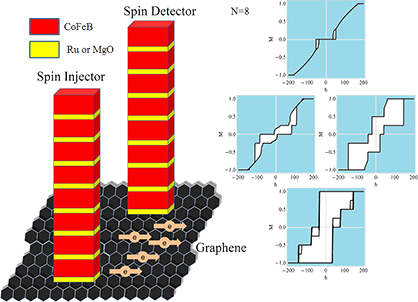
- the x and y components, is applied with frequency fapplied = fγMs and amplitude Ha = Msha. The angle of deviation between the applied field and the x-axis of the superlattice is β, and λ is a small time-dependent perturbation in hy with amplitude 0.02 (the perturbation has its origin in a thermally


Controlling mechanical properties of bio-inspired hydrogels by modulating nano-scale, inter-polymeric junctions
Beilstein J. Nanotechnol. 2014, 5, 887–894, doi:10.3762/bjnano.5.101
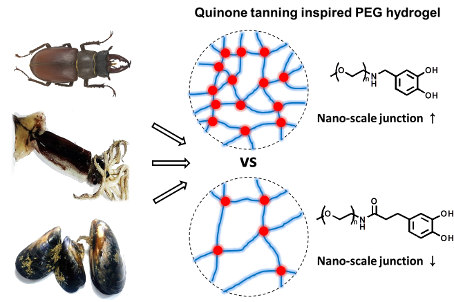
- and height of 1 mm. The time dependent rheology test showed that the sol–gel transition was finished within 1 min (data not shown). In order to test the mechanical properties of the hydrogels in a stable condition, we carried out the frequency and strain sweep test 10 min after the gel formed



Classical molecular dynamics investigations of biphenyl-based carbon nanomembranes
Beilstein J. Nanotechnol. 2014, 5, 865–871, doi:10.3762/bjnano.5.98
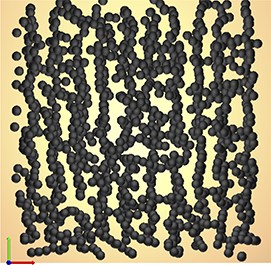
- first step towards a deeper understanding of the structure and formation of carbon nanomembranes. Future investigations will focus on the dynamical aspects of the membrane formation. For such simulations thermostatted classical molecular dynamics [29][30][31][32][33], with possibly time-dependent


Fibrillar adhesion with no clusterisation: Functional significance of material gradient along adhesive setae of insects
Beilstein J. Nanotechnol. 2014, 5, 837–845, doi:10.3762/bjnano.5.95
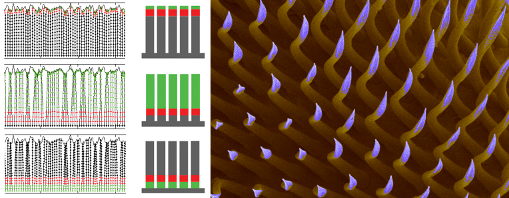
- . Stiff, medium and soft segments are marked by black, red and green circles respectively. The subplots in the bottom (from left to right) show time dependent vertical force, evolution of the array of distances dxj = xj+1 − xj between contact ends of nearest neighbors and instant histogram P(dx) of the
- , because flexible filaments are too long in the case (b). Last case (c) with long hard filaments rotating around their flexible roots, cannot perfectly adapt to the surface. As a result, maximum of the attachment force here remains much lower than in two previous cases (a) and (b). To accumulate time
- -dependent information about deformations of the fibers we calculate array {dxj}, j = 1,2,…Nx of the distances between contact ends of the nearest neighbors dxj = xj+1 − xj. Let us note that we are using dxj for small but finite distances (not differential). We use this notation to conserve coincidence with


Scale effects of nanomechanical properties and deformation behavior of Au nanoparticle and thin film using depth sensing nanoindentation
Beilstein J. Nanotechnol. 2014, 5, 822–836, doi:10.3762/bjnano.5.94
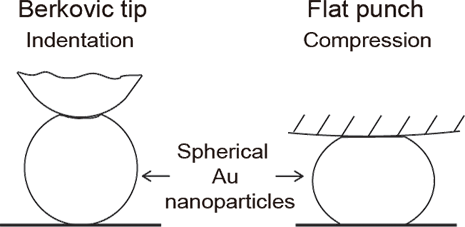
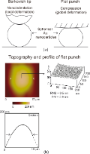
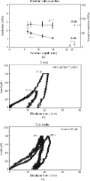
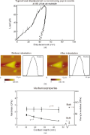
- understanding of materials behavior during contact. Mechanical properties of interest comprise hardness, Young’s modulus of elasticity, bulk modulus, elastic–plastic deformation, scratch resistance, residual stresses, time-dependent creep and relaxation properties, fracture toughness, fatigue and yield strength






Antimicrobial properties of CuO nanorods and multi-armed nanoparticles against B. anthracis vegetative cells and endospores
Beilstein J. Nanotechnol. 2014, 5, 789–800, doi:10.3762/bjnano.5.91
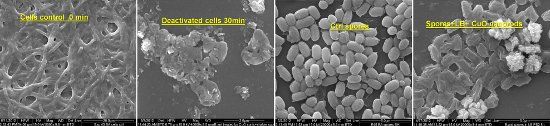
- (qualigens) consists of spheroidal micrometer-scaled particles up to 100 µm size having rough surfaces [16]. Antibacterial test against B. anthracis vegetative cells The time dependent antibacterial efficacy of CuO nanorods (PS2) against B. anthracis bacterial cells and E. coli cells at a dose of 1 mg/mL is
- very limited penetration and accumulation inside the cell [22]. The dose- and time-dependent bactericidal activity of multi-armed CuO nanoparticles (P5) against 7.0 × 10⁵ CFU/mL B. anthracis vegetative cells at dose range of 0.5 to 6 mg/mL is shown in Figure 4. The graph also compares bactericidal
- -synthesized precursor of PS2. d) EDX spectrum of PS2. Time dependent bactericidal activity of CuO nanorods (PS2) at a dose of 1 mg/mL against B. anthracis vegetative cells and E. coli cells in saline media. Time dependent bactericidal activity of CuO multi-armed NPs (P5) at doses of 0.5 and 2 mg/mL against B





