


Search results
Search for "ultrasonic" in Full Text gives 265 result(s) in Beilstein Journal of Nanotechnology. Showing first 200.
Influence of hydrofluoric acid treatment on electroless deposition of Au clusters
Beilstein J. Nanotechnol. 2017, 8, 183–189, doi:10.3762/bjnano.8.19
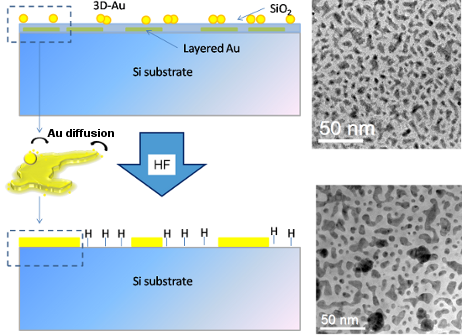
- substrate was a Si(100) n-type substrate with ρ = 3–5 Ω cm. Prior to plating, each sample was cut into squares of 1.5 × 1.5 cm and degreased in acetone at 60 °C and then placed in an ultrasonic bath for 6 min. This was followed by immersion in DHF (6% HF) for 10 s or 240 s. The substrates were then


Studying friction while playing the violin: exploring the stick–slip phenomenon
Beilstein J. Nanotechnol. 2017, 8, 159–166, doi:10.3762/bjnano.8.16
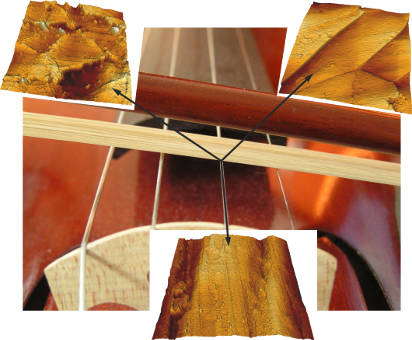
- AFM was employed, which was coupled to a Ti-U Nikon inverted optical microscope. Pieces of samples 1 and 2 were measured before and after being cleaned by 5 min of ultrasonic bath immersed in acetone. Fastened along an optical microscope glass slide using scotch tape on both sides, the samples proved


Photo-ignition process of multiwall carbon nanotubes and ferrocene by continuous wave Xe lamp illumination
Beilstein J. Nanotechnol. 2017, 8, 134–144, doi:10.3762/bjnano.8.14
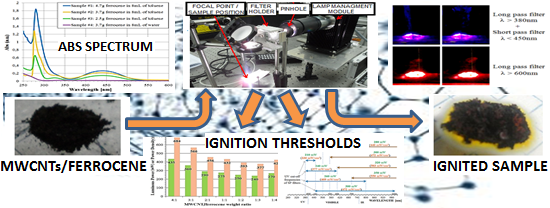
- adding ferrocene followed by sonication. In the glass on the left containing the ferrocene/toluene solution, the sample appears more homogeneous than in the glass on the right containing the ferrocene/water solution. The sonication operation, carried out employing the ultrasonic sonicator Bandelin
- adopted. Initially a material with weight of 9.5 mg (mixture of MWCNTs with 75% ferrocene by weight) in 25 mL of toluene (equal to a volume ratio of 0.029%) was used. To obtain a homogeneous solution, an ultrasonic probe (Figure 4a) and a magnetic stirrer (Figure 4b), were employed, each for ten minutes
- ). Employing sodium dodecyl sulfate (SDS), the dispersion of the mixture in the solvent was facilitated [28]. Using 250 mg of SDS in 25 mL of water, equal to a volume ratio of 1%, the ultrasonic probe and the magnetic stirrer were applied for ten minutes. The solution then appeared more homogeneous (Figure 5




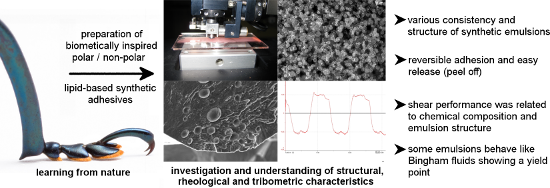
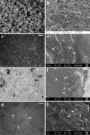
Structural and tribometric characterization of biomimetically inspired synthetic "insect adhesives"
Beilstein J. Nanotechnol. 2017, 8, 45–63, doi:10.3762/bjnano.8.6


Graphene–polymer coating for the realization of strain sensors
Beilstein J. Nanotechnol. 2017, 8, 21–27, doi:10.3762/bjnano.8.3
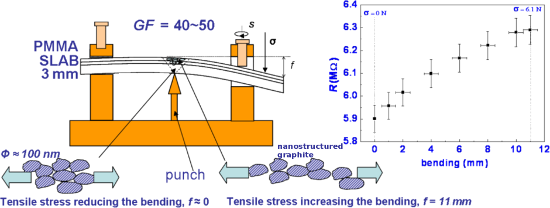
- min in a muffle furnace to produce expanded graphite. The expanded graphite filaments were converted to nanostructured graphite by ultrasonic treatment in acetone, using a horn sonicator (Bandelin Sonopuls, model UW2200, 20 kHz, 200 W, Berlin, Germany). The suspension (800 mL) was sonicated for 30 min


From iron coordination compounds to metal oxide nanoparticles
Beilstein J. Nanotechnol. 2016, 7, 2074–2087, doi:10.3762/bjnano.7.198
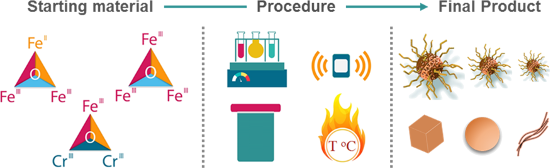
- employing either a classical thermal pathway (i.e., thermal decomposition in solution, solvothermal method, dry thermal decomposition/calcination) or using a nonconventional energy source (i.e., microwave or ultrasonic treatment) to convert precursors into iron oxides. The resulting materials were
- subjected to irradiation with ultrasound (Supporting Information File 1, Figure S22). The procedures for samples NPU1–NPU2 differ only in the ultrasonic irradiation time (5 min for NPU1 and 30 min for NPU2). In addition, sample NPU2 was also subsequently subjected to thermal treatment at 400 °C to track
- %; trichloroacetic acid (TCA), purchased from Sigma-Aldrich, ACS reagent grade, purity >99%. Equipment The ultrasonication was performed with an ultrasonic processor, model VC 505, 500 W, 20 kHz. The microwave synthesis was carried out in a sealed vessel and was PC operated (Synergy Software, Discover LabMate, CEM


Organoclay hybrid materials as precursors of porous ZnO/silica-clay heterostructures for photocatalytic applications
Beilstein J. Nanotechnol. 2016, 7, 1971–1982, doi:10.3762/bjnano.7.188
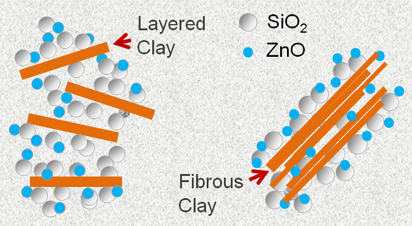
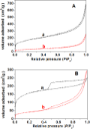
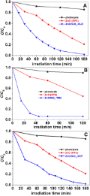
- using a JEOL 2100F STEM microscopy, operating at 200 kV equipped with an EDX (INCA x-sight of Oxford Instruments) detector for semiquantitative analysis. The specimens for TEM were prepared by putting the as-grown products in ethanol and immersing them in an ultrasonic bath for 15 min, then dropping a





Layered composites of PEDOT/PSS/nanoparticles and PEDOT/PSS/phthalocyanines as electron mediators for sensors and biosensors
Beilstein J. Nanotechnol. 2016, 7, 1948–1959, doi:10.3762/bjnano.7.186
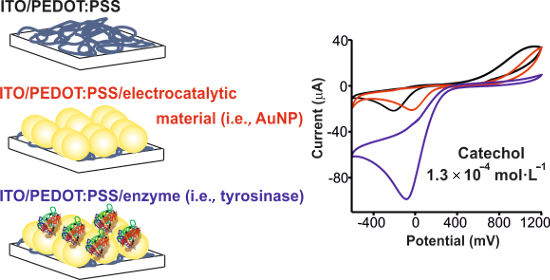
- substrates (1 cm2 surface area) were used as the substrate. Prior to the film deposition, the substrates were washed in an ultrasonic bath with acetone and rinsed twice with deionized water (MilliQ). PEDOT/PSS was diluted 1:10 in deionized water and stirred in an ultrasonic bath for 10 min. Then, 100 μL of


Nanostructured TiO2-based gas sensors with enhanced sensitivity to reducing gases
Beilstein J. Nanotechnol. 2016, 7, 1718–1726, doi:10.3762/bjnano.7.164
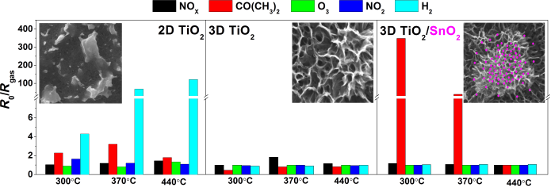
- × 20 mm squares and degreased in the ultrasonic cleaner with the use of acetone and isopropanol. The following samples were prepared: (A) T30 – prior to thermal treatment, the Ti foils were etched in concentrated hydrochloric acid HCl (35–38%, Avantor Performance Materials, Poland) at 55 °C for 30 min


Role of RGO support and irradiation source on the photocatalytic activity of CdS–ZnO semiconductor nanostructures
Beilstein J. Nanotechnol. 2016, 7, 1684–1697, doi:10.3762/bjnano.7.161
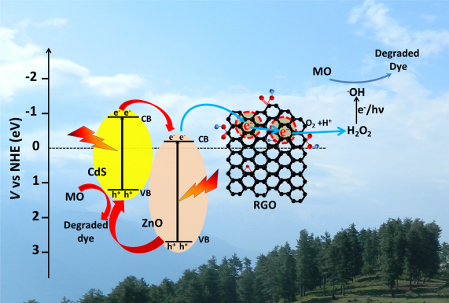
- dropwise under vigorous stirring. This was followed by ultrasonic treatment of the solution for 30 min for homogenization. Then, this homogenous solution was transferred to a 100 mL teflon-lined stainless steel autoclave, sealed tightly and maintained at 180 °C for 12 h. White precipitates of ZnO NR were
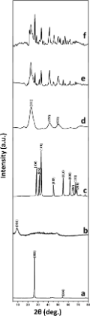


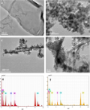


Sb2S3 grown by ultrasonic spray pyrolysis and its application in a hybrid solar cell
Beilstein J. Nanotechnol. 2016, 7, 1662–1673, doi:10.3762/bjnano.7.158
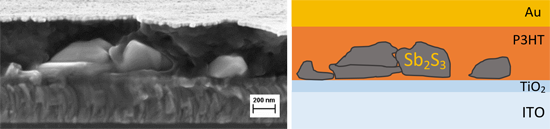
- chemicals occurs. The aerosol is produced using an ultrasonic oscillator in a bath of precursor solution and guided by compressed air. The use of the ultrasonic CSP resulted in the growth of homogeneous and well-adhered layers that consist of submicron crystals of single-phase Sb2S3 with a bandgap of 1.6 eV
- /cm2, a fill factor of 42% and a conversion efficiency of 1.3%. Conversion efficiencies up to 1.9% were obtained from solar cells with smaller areas. Keywords: absorber; chemical spray pyrolysis (CSP); hybrid solar cell; stibnite (Sb2S3); ultrasonic atomization; Introduction A solution-based
- ]. In this work, we report the first results on growing Sb2S3 by ultrasonic chemical spray pyrolysis (ultrasonic CSP), and on the application of ultrasonic CSP grown Sb2S3 as an absorber in a hybrid solar cell. The aim of this work is to obtain a single-phase Sb2S3 absorber by ultrasonic CSP, and to




Influence of hydrothermal synthesis parameters on the properties of hydroxyapatite nanoparticles
Beilstein J. Nanotechnol. 2016, 7, 1586–1601, doi:10.3762/bjnano.7.153
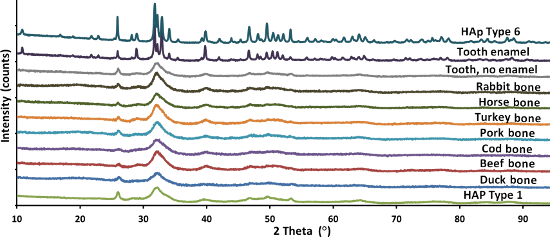
- electron microscopy (TEM) (JEM2000EX; JEOL, Tokyo, Japan). The TEM, high-resolution TEM, and selected area electron diffraction tests were conducted at 200 kV. The samples for the TEM observations were prepared by dropping the methanol particle dispersion, created by an ultrasonic technique, on a carbon


A composite structure based on reduced graphene oxide and metal oxide nanomaterials for chemical sensors
Beilstein J. Nanotechnol. 2016, 7, 1421–1427, doi:10.3762/bjnano.7.133
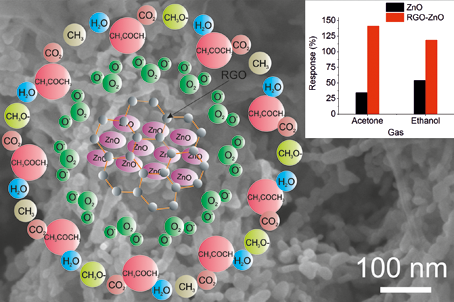
- oxidation and ultrasonic exfoliation, the GO exhibits a broad and intense D band in its Raman spectrum [28]. The intensity ratio between D and G peaks (ID/IG = 0.94) also indicates the high defect concentration in GO platelets. High intensity peaks at about 520 cm−1 and 950 cm−1 in the Raman spectrum can be


Fabrication and characterization of branched carbon nanostructures
Beilstein J. Nanotechnol. 2016, 7, 1260–1266, doi:10.3762/bjnano.7.116
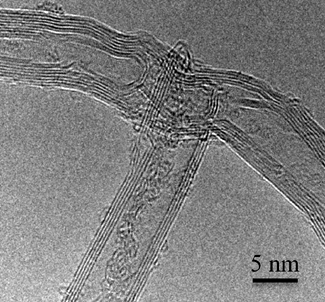
- in ethanol (30 mL) for 8 h (ultrasonic denerator, model GSCVP 150 at ca. 80% power). The dispersion was centrifuged at 3500g for 90 min to give the “stage II”-modified MWCNTs, which are the b-MWCNTs. The supernatant was spotted onto lacey carbon Cu TEM grids and onto polished Si chips for subsequent


Reasons and remedies for the agglomeration of multilayered graphene and carbon nanotubes in polymers
Beilstein J. Nanotechnol. 2016, 7, 1174–1196, doi:10.3762/bjnano.7.109
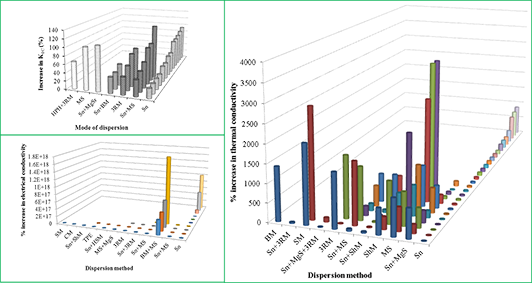
- suitable solvent. There are two types of sonication devices: (1) ultrasonic bath (bath sonication), and (2) ultrasonic probe/horn (tip sonication). A combination of sonication and manual stirring can be used to disperse fillers in the polymer matrix as shown in Figure 5. Sonication may result in a


Large-scale fabrication of achiral plasmonic metamaterials with giant chiroptical response
Beilstein J. Nanotechnol. 2016, 7, 914–925, doi:10.3762/bjnano.7.83
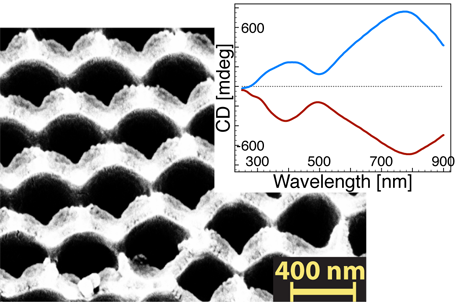
- -etching system. Al foils (99.98%, Advent Research Materials Ltd. AL103310) were used as substrates after cleaning in an ultrasonic bath with a sequence of acetone, deionized water and methanol for 1 min each. In total three types of molds were prepared with different interpore distances: 300, 430 and 600



![[Graphic 2]](/bjnano/content/inline/2190-4286-7-83-i2.png?max-width=637&scale=1.18182) , of incident light with respect to the ECM structures.
, of incident light with respect to the ECM structures.


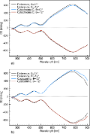

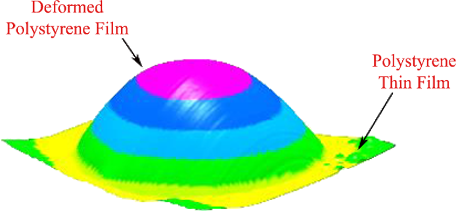
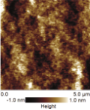
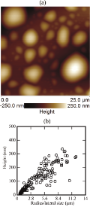
Characterization of spherical domains at the polystyrene thin film–water interface
Beilstein J. Nanotechnol. 2016, 7, 581–590, doi:10.3762/bjnano.7.51
- preparation Polystyrene thin films were spin-coated onto silicon dioxide wafers. Prior to spin coated, the silicon dioxide wafers were cleaned using piranha solution of 3:1 (v/v) sulfuric acid/hydrogen peroxide for 30 min [8]. The wafers were further cleaned with acetone, ethanol and DI water in an ultrasonic


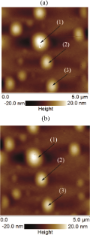


Comparison of the interactions of daunorubicin in a free form and attached to single-walled carbon nanotubes with model lipid membranes
Beilstein J. Nanotechnol. 2016, 7, 524–532, doi:10.3762/bjnano.7.46
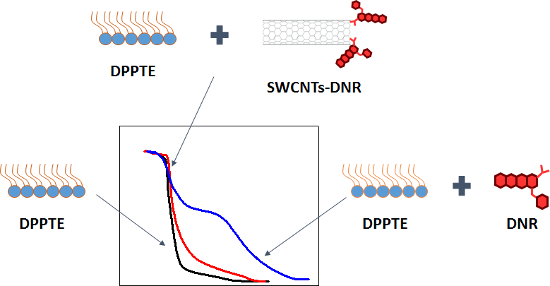
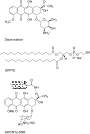
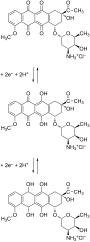
- appropriate volume of DPPTE stock solution in order to obtain the desired weight ratio of carbon nanotubes to thiolipid. Prior to the deposition at the air–water interface, the mixed solutions were sonicated in the ultrasonic bath (Emag, Germany) for approximately 30 min to ensure carbon nanotubes dispersion




High-bandwidth multimode self-sensing in bimodal atomic force microscopy
Beilstein J. Nanotechnol. 2016, 7, 284–295, doi:10.3762/bjnano.7.26
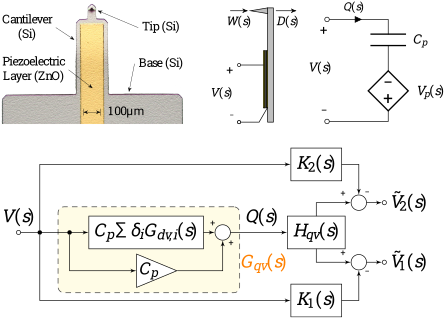
- . To circumvent this problem, integrated actuation such as magnetic [4], photothermal [5], resistive thermal [6], ultrasonic [7] or through a piezoelectric layer [8] have been employed. Among the sensing techniques to detect the cantilever oscillations, the optical beam deflection (OBD) method [9


Characterisation of thin films of graphene–surfactant composites produced through a novel semi-automated method
Beilstein J. Nanotechnol. 2016, 7, 209–219, doi:10.3762/bjnano.7.19
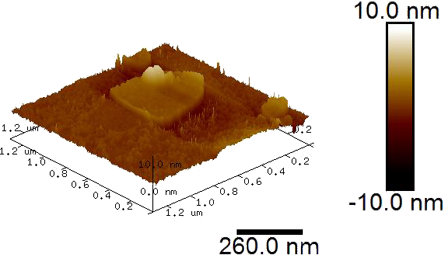
- graphite is placed into the reactor (E). The graphite is kept in suspension throughout the procedure using a magnetic stirrer (G). The ultrasonic probe (D), operating at a power of 50 W, penetrates approximately 1 cm into the graphite suspension. The surfactant solution (A) is pumped into the reactor via a
- synthesis, as the tip of the ultrasonic probe can reach temperatures of up to 100 °C during continuous operation. The heat sink is stirred continuously, also using the magnetic stirrer (G), to maximise cooling efficiency. A sampling loop (H) continuously cycles the liquid contents of the reactor through a
- apparatus used to synthesis graphene. (A) surfactant solution, (B) peristaltic pump, (C) heat, (D) ultrasonic probe, (E) reactor, (F) water, (G) magnetic stirring unit, (H) sampling loop, and (I) photometric flow cell. Effect of the initial graphite suspension concentration in water on the final graphene




Simultaneous cancer control and diagnosis with magnetic nanohybrid materials
Beilstein J. Nanotechnol. 2016, 7, 121–125, doi:10.3762/bjnano.7.14
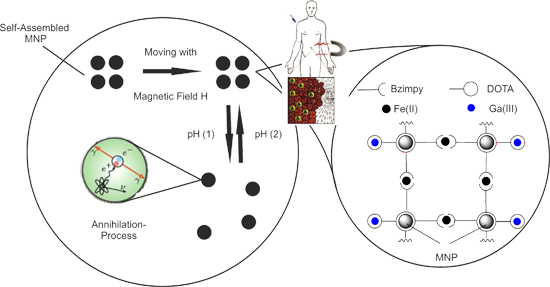
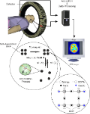
- direction. The accruing free space inside the cave structure could be used to intercalate desirable pharmaceuticals (Figure 2). To reach a mutual conjunction we used silanized and amino-functionalized MNP (1), which were dispersed for 4 h in an ultrasonic bath at 80 °C in acetonitrile with Cl-bzimpy. The
- and 4-DMAP in dimethylformamide for 24 h at 80 °C in an ultrasonic bath. DLS measurements showed that the complex was successfully linked to the MNP while the MNP were not linked to each other. An enlargement of the hydrodynamic diameter of ca. 67 nm compared to the unsubstituted MNP was observed


Charge injection and transport properties of an organic light-emitting diode
Beilstein J. Nanotechnol. 2016, 7, 47–52, doi:10.3762/bjnano.7.5
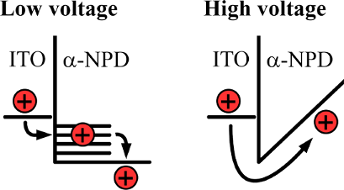
- transport properties of OLED devices has been done on the organic double-layer sandwiched between two electrodes ITO/α-NPD/Alq3/Al. The devices were grown on glass slides precoated with ITO with sheet resistance lower than 10 Ω/sq. The substrates were cleaned sequentially in ultrasonic bath by isopropanol


Controlled graphene oxide assembly on silver nanocube monolayers for SERS detection: dependence on nanocube packing procedure
Beilstein J. Nanotechnol. 2016, 7, 9–21, doi:10.3762/bjnano.7.2
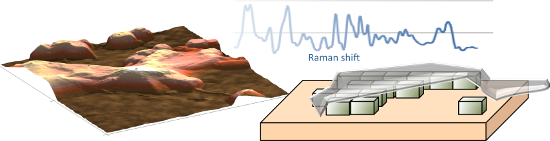
- chloroform by using an ultrasonic bath. The washing procedure was repeated at least three times in order to ensure the complete removal of the reagents. The suspensions of AgNCs thus obtained were stored in centrifuge tubes at −20 °C. Transmission electron microscopy measurements. TEM micrographs of the


Sonochemical co-deposition of antibacterial nanoparticles and dyes on textiles
Beilstein J. Nanotechnol. 2016, 7, 1–8, doi:10.3762/bjnano.7.1
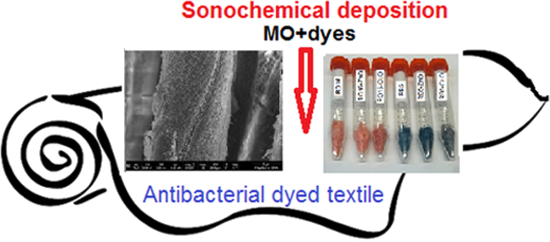
- . In the latter case commercial NPs are introduced in the solvent and the ultrasonic waves are employed to “throw” them as “stones” and immobilize them onto the substrate [10]. For both methods very homogeneous coating on the substrate surface is achieved irrespective of the nature of the substrate. On
- the dye, ii) a stable sonochemical coloration of cotton fabric was achieved in spite of the rich literature on the use of ultrasonic waves for bleaching color from textiles [21][22][23][24]. Experimental Water-based synthesis of metal oxide (MO) NPs and their simultaneous coating with a dye on cotton




Impact of ultrasonic dispersion on the photocatalytic activity of titania aggregates
Beilstein J. Nanotechnol. 2015, 6, 2423–2430, doi:10.3762/bjnano.6.250
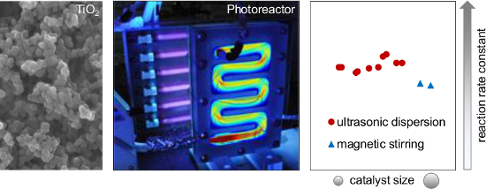
- path of the molecules to be treated. This paper investigates the effect of aggregate size on the photocatalytic activity of pyrogenic titania (Aeroxide® P25, Evonik), which is widely used in fundamental photocatalysis research. Well-defined and reproducible aggregate sizes were achieved by ultrasonic
- significant obscuration. Keywords: AOPs; reaction rate constant; turbidity; ultrasonic energy; wastewater treatment; Introduction Advanced oxidation processes (AOPs) form a group of modern chemical technologies that rely on the generation of radical species and are considered to have high prospects for the
- experimental setup, which defines the process parameters. In addition, ultrasonic dispersion was used to disintegrate the P25 nano-photocatalyst as well as vary the size. The photocatalytic activity was examined by the discoloration of MB under UV irradiation. Experimental Materials All experiments were





