Search results
Search for "3D imaging" in Full Text gives 12 result(s) in Beilstein Journal of Nanotechnology.
Comparative study on 3D morphologies of delignified, single tracheids and fibers of five wood species
Beilstein J. Nanotechnol. 2026, 17, 239–250, doi:10.3762/bjnano.17.16
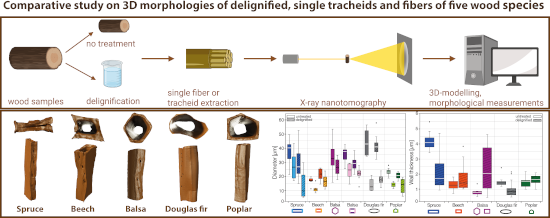
- combination with delignified samples can improve our understanding of tracheid/fiber and pit distribution of single cells, which was not possible to differentiate and separate in previous tomographical imaging studies [41]. This study represents a high-resolution 3D imaging approach to delignified single


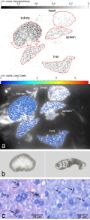
Time of flight secondary ion mass spectrometry imaging of contaminant species in chemical vapour deposited graphene on copper
Beilstein J. Nanotechnol. 2026, 17, 200–213, doi:10.3762/bjnano.17.13
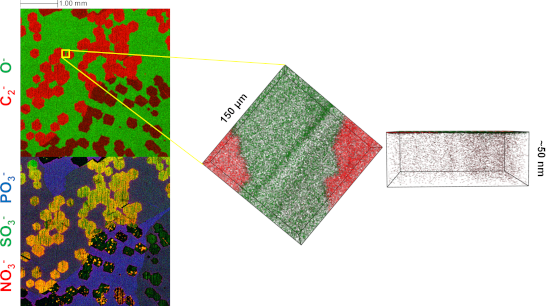
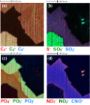
- . For 3D imaging, each depth profile was acquired by cyclically analysing a 150 µm × 150 µm area (with a pixel density of 128 × 128) from the centre of a 400 µm × 400 µm sputtered region during depth profiling, to mitigate crater edge effects on the generated spectra. 10 keV Cs+ ions with an ion current





Internal 3D temperature mapping in biological systems using ratiometric light-sheet imaging and lipid-coated upconversion nanothermometers
Beilstein J. Nanotechnol. 2025, 16, 2306–2316, doi:10.3762/bjnano.16.159
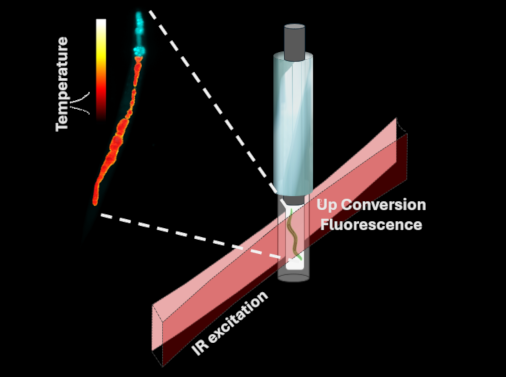
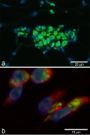
- for accurate 3D analysis of temperature-driven biological processes. It holds significant potential for applications in living organisms, offering a non-invasive tool to monitor intracellular and organ-specific temperature dynamics. Keywords: C. elegans; 3D imaging; fluorescent intensity ratio; light


Towards a quantitative theory for transmission X-ray microscopy
Beilstein J. Nanotechnol. 2025, 16, 1113–1128, doi:10.3762/bjnano.16.82
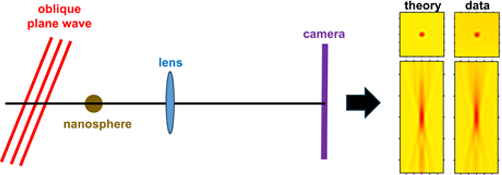
- determined by Beer’s law, whereas the microscope underestimates this absorption by 10–20%. This surprising observation highlights the need for future work to identify the microscope feature(s) that lead to this quantitative discrepancy. Keywords: 3D imaging; mathematical model; Mie theory; nanoparticle
- 3D imaging on the microscope (Table 1). We showed that, for the case of the gold nanosphere examined here, the simplest form of our pc-Mie model was essentially identical to the pc-PWE model [21]. This is because we showed that Mie theory and the parabolic wave equation yield virtually identical
- result demonstrates that phase must be included in any soft TXM model for an accurate description of 3D imaging. This is significant because both spectromicroscopy and the most commonly used tomographic reconstruction procedures for TXMs ignore the phase term in the refractive index and presume instead



Time-resolved probing of laser-induced nanostructuring processes in liquids
Beilstein J. Nanotechnol. 2025, 16, 968–1002, doi:10.3762/bjnano.16.74
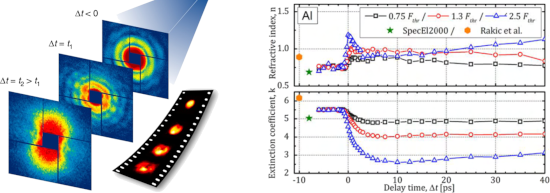
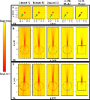
- learning initially in massive data analysis and also in extracting concealed signals to complete high-resolution 3D imaging [83]. Additionally, adapting single-pulse XFEL time-resolved imaging to ultrafast electron sources may provide even higher spatial and temporal resolution, further enhancing our


The steep road to nonviral nanomedicines: Frequent challenges and culprits in designing nanoparticles for gene therapy
Beilstein J. Nanotechnol. 2023, 14, 351–361, doi:10.3762/bjnano.14.30
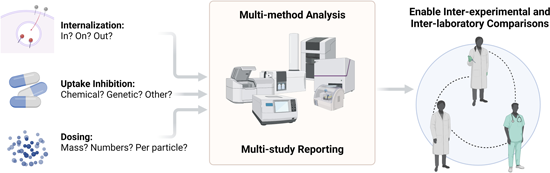
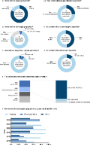
- (only 6% used 3D imaging, Figure 1a3) [19]. Furthermore, the subjective interpretation of results obtained by imaging techniques cannot be neglected [17]. Based on 50 studies regarding NP-mediated delivery of plasmid DNA to cells/tissues, only a small fraction reported systematic image quantification
- 50 nanoparticle (NP)-mediated plasmid DNA (pDNA) delivery experiments published in 2017–2022. (a) 5-year prevalence of reporting imaging, imaging quantification, and 3D imaging capture for investigating NP cellular uptake and (or) transfection. (b) 5-year prevalence of reporting flow cytometry for

A new method for obtaining the magnetic shape anisotropy directly from electron tomography images
Beilstein J. Nanotechnol. 2022, 13, 590–598, doi:10.3762/bjnano.13.51
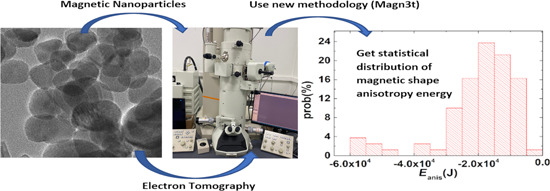
- better than the other is difficult to reason in the absence of certain a priori knowledge of the system. Direct imaging techniques provide the most accurate information regarding the morphology of a system, while direct and complete morphological information can be obtained only through 3D imaging [11
- ]. Projection imaging is still the standard in morphological characterization but provides incomplete information. Although 3D imaging emphasizes the full morphology, most software provide generally volumes and surfaces of the investigated entities. The quantitative description of their morphology is considered


Helium ion microscope – secondary ion mass spectrometry for geological materials
Beilstein J. Nanotechnol. 2020, 11, 1504–1515, doi:10.3762/bjnano.11.133
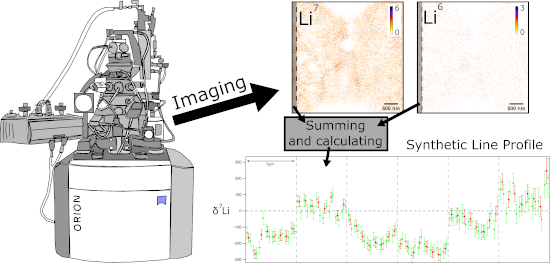
- for 3D imaging of extremely thin materials. However, for most geological samples the thickness of any layer of interest is much greater than the approx. 10 nm of removed material per map. In this way multiple maps may be summed, on the assumption that the region of interest is thicker than the total



Nitrogen-vacancy centers in diamond for nanoscale magnetic resonance imaging applications
Beilstein J. Nanotechnol. 2019, 10, 2128–2151, doi:10.3762/bjnano.10.207
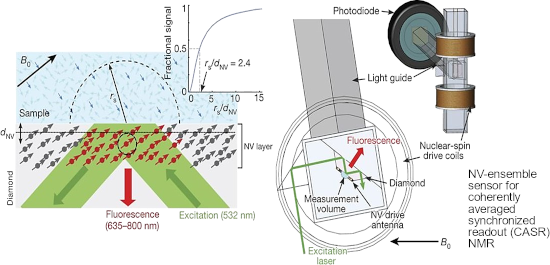
- 3D imaging by exploiting several spectral lines. Fourier/Hadamard transform techniques allow frequency–space multiplexing for faster measurement, where spatial information is recovered through Hadamard encoding and quadrature detection. Hyperpolarization is a novel functional medical imaging


Quantitative comparison of wideband low-latency phase-locked loop circuit designs for high-speed frequency modulation atomic force microscopy
Beilstein J. Nanotechnol. 2018, 9, 1844–1855, doi:10.3762/bjnano.9.176
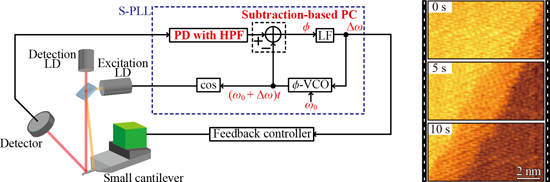
- subnanometer-scale imaging of biomolecules [15][16][17]. Moreover, three-dimensional (3D) imaging techniques have been developed based on FM-AFM and used to visualize 3D distributions of hydration structures as well as flexible surface structures at solid–liquid interfaces [18][19][20][21][22]. Although FM-AFM



Numerical investigation of depth profiling capabilities of helium and neon ions in ion microscopy
Beilstein J. Nanotechnol. 2016, 7, 1749–1760, doi:10.3762/bjnano.7.168
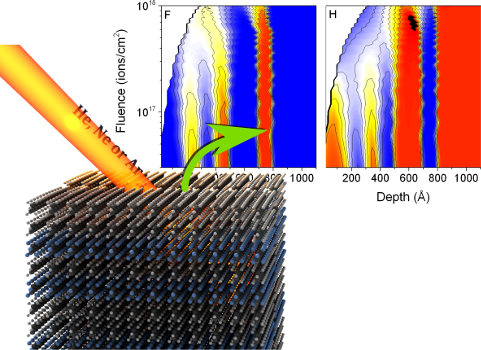
- lateral resolution for 2D and 3D imaging. By contrast the development of a mass spectrometer as an add-on tool for the helium ion microscope (HIM), which uses finely focussed He+ or Ne+ beams, allows for the analysis of secondary ions and small secondary cluster ions with unprecedented lateral resolution
- commonly used as primary ion species in SIMS. For the two heavier species, layers separated by 10 nm can be distinguished for impact energies of a few keV. These results are encouraging for 3D imaging applications where lateral and depth information are of importance. Keywords: atomic mixing; depth


Overview about the localization of nanoparticles in tissue and cellular context by different imaging techniques
Beilstein J. Nanotechnol. 2015, 6, 263–280, doi:10.3762/bjnano.6.25
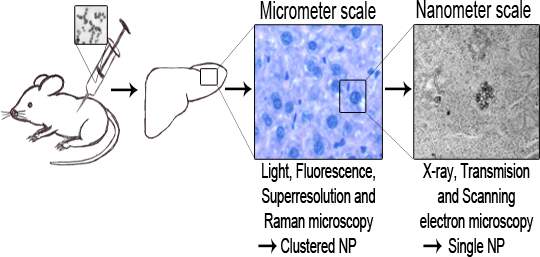
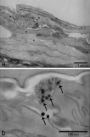
- using full-field high-resolution transmission X-ray microscopy combined with a potassium permanganate staining of FFPE-tissue sections of the cerebellum and the liver [145]. Soft X-ray microscopy has been successfully applied for 3D imaging of vitrified cells without any further staining [146]. That