


Search results
Search for "Mie theory" in Full Text gives 22 result(s) in Beilstein Journal of Nanotechnology.
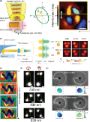
Chiral plasmonic nanostructures fabricated with circularly polarized light
Beilstein J. Nanotechnol. 2025, 16, 2245–2264, doi:10.3762/bjnano.16.154
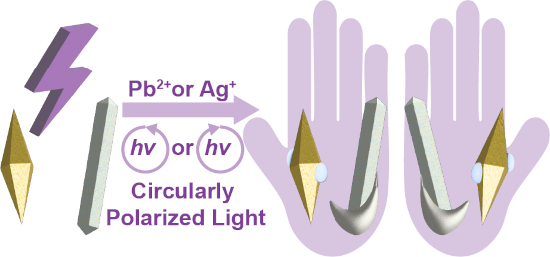
- optical properties [112][113]. The absorption and scattering of a spherical particle are described using Mie theory [114], which solves Maxwell’s equations to predict how light interacts with the particle with a multipole expansion of the EM fields. For ellipsoids that are much smaller than the wavelength





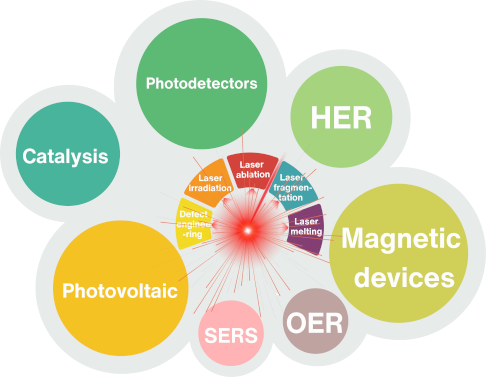
Laser processing in liquids: insights into nanocolloid generation and thin film integration for energy, photonic, and sensing applications
Beilstein J. Nanotechnol. 2025, 16, 1428–1498, doi:10.3762/bjnano.16.104


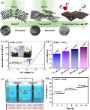




Towards a quantitative theory for transmission X-ray microscopy
Beilstein J. Nanotechnol. 2025, 16, 1113–1128, doi:10.3762/bjnano.16.82
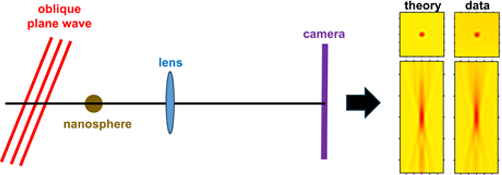
- we develop an experimental and theoretical framework for evaluation of TXMs that uses Mie theory to compute the electric field emerging from a nanosphere. We approximate the microscope’s condenser illumination by plane waves at the mean illumination angle and the zone plate by a thin lens. We find
- determined by Beer’s law, whereas the microscope underestimates this absorption by 10–20%. This surprising observation highlights the need for future work to identify the microscope feature(s) that lead to this quantitative discrepancy. Keywords: 3D imaging; mathematical model; Mie theory; nanoparticle
- . In the current study, we continue this effort toward further development of 3D models for TXMs. First, we introduce Mie theory as an alternate approach for light propagation through the sample. Mie theory provides an exact solution to Maxwell’s equations but limited to spheres of known refractive



Time-resolved probing of laser-induced nanostructuring processes in liquids
Beilstein J. Nanotechnol. 2025, 16, 968–1002, doi:10.3762/bjnano.16.74
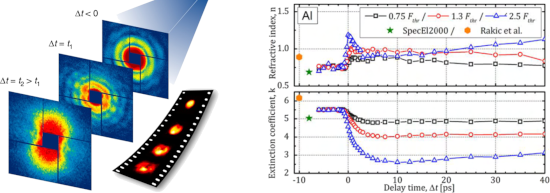
- given by the dielectric functions of metal and medium and are described by Mie theory [113]. Mie theory allows one to derive absolute absorption and scattering cross sections of primarily spherical or core–shell objects, but also different shapes by extensions of the Mie–Gans [114] theory or numerical


Efficiency of single-pulse laser fragmentation of organic nutraceutical dispersions in a circular jet flow-through reactor
Beilstein J. Nanotechnol. 2025, 16, 711–727, doi:10.3762/bjnano.16.55
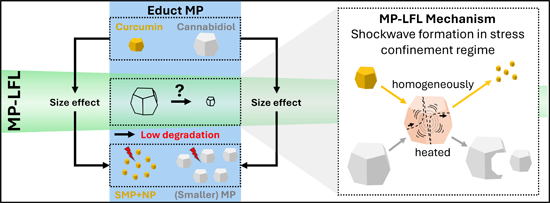
- , Supporting Information File 1. For curcumin, the influence of particle size on extinction, absorption, and scattering was calculated based on the Mie theory (using the program MiePlot [72]) for spherical particles in a range of 0.1 to 1000 µm at wavelengths of 532 and 1064 nm (Figure 7). For monodisperse


Nanoarchitectonics of photothermal materials to enhance the sensitivity of lateral flow assays
Beilstein J. Nanotechnol. 2023, 14, 988–1003, doi:10.3762/bjnano.14.82
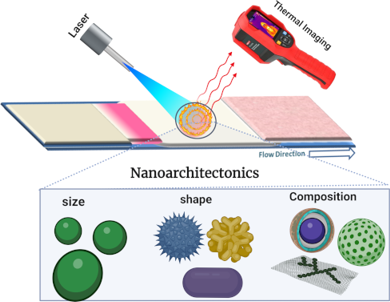
- cancer cells under 650 and 808 nm laser irradiation [54] (Figure 5B). The nanoparticles with a size of 2 nm showed a 5–6% higher photothermal conversion efficiency than the 80 nm particles. The higher photothermal effect of smaller nanoparticles can be explained by the Mie theory, which states that as


Plasmonic nanotechnology for photothermal applications – an evaluation
Beilstein J. Nanotechnol. 2023, 14, 380–419, doi:10.3762/bjnano.14.33
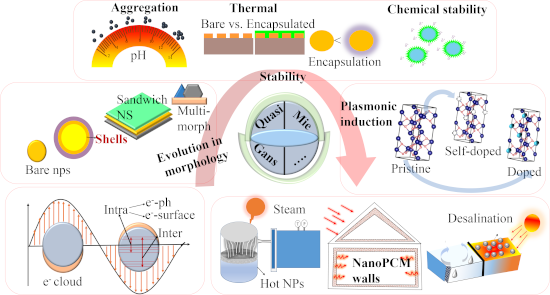
- different extinction spectra arising also from the excitation of multipole resonances, which is not captured by the quasi-static approximation as shown in Figure 5. The Mie theory solution of the extinction cross section is used to account for this through the inclusion of a size parameter (x = 2πa/λ) as
- elements, nanospheres of gold, silver, platinum, cobalt, zinc, nickel, titanium, copper, aluminium, molybdenum, vanadium, and palladium have been analysed [98]. Although there were assumptions of homogeneity, sphericity, and no interaction between particles, the Mie theory-based scattering cross sections
- , a higher efficiency of photon absorption, facile tuning, as well as flexibility in the synthesis of plasmonic nanomaterials. This review of plasmonic PT (PPT) research begins with a theoretical discussion on the plasmonic properties of nanoparticles by means of the quasi-static approximation, Mie




Evolution of Ag nanostructures created from thin films: UV–vis absorption and its theoretical predictions
Beilstein J. Nanotechnol. 2020, 11, 494–507, doi:10.3762/bjnano.11.40
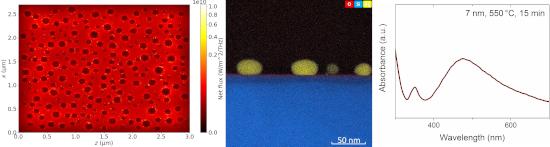
- appears around 350 nm, which probably corresponds to the quadrupole resonance. For calculations leading to a better illustration of absorption, scattering and overall absorption of light in Ag nanoparticles, the Mie theory is employed. Absorbance and the distribution of the electromagnetic field around
- pulse duration was set to 2.5 fs, thus it contained all frequencies within the visible light range. This allowed for the use of discrete Fourier transformation for switching from the time domain to the frequency domain and calculating the spectral response of the sample. Also, the Mie theory [18] was
- section, or in hexagonally or pentagonally shaped nanoparticles. If you were to look at the theoretical spectra, calculated directly on the basis of Mie theory (Figure 10a–d), an additional peak (between the peak resulting from interband transitions and the peak from dipole plasmon resonance) appears




Nonlinear absorption and scattering of a single plasmonic nanostructure characterized by x-scan technique
Beilstein J. Nanotechnol. 2019, 10, 2182–2191, doi:10.3762/bjnano.10.211
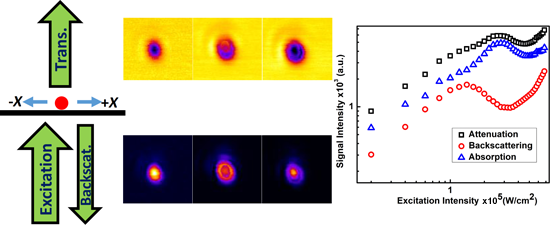
- resonance peak with the prediction by Mie theory. The scattering spectrum also helps to monitor changes of the particle size/shape while heating, as we have demonstrated in Figure 2a of [12]. Both the backscattering and the attenuation profiles show a nice Gaussian shape, suggesting that the optical
- absorption (14%, green dots). This ratio is consistent with Mie theory, confirming the correctness of our signal calibration. According to Mie theory, the forward scattering ratio should be equal to the backward scattering ratio for this nanostructure. In our measurement, the transmission TNP is 79% in the
- , absorption and transmission agree well with Mie theory. In the nonlinear regime, i.e., at excitation intensities above 2 × 10⁵ W·cm−2, both attenuation and backscattering efficiencies decrease, but interestingly at different rates. Apparently, the particles become more transparent at high excitation


Porous silver-coated pNIPAM-co-AAc hydrogel nanocapsules
Beilstein J. Nanotechnol. 2019, 10, 1973–1982, doi:10.3762/bjnano.10.194
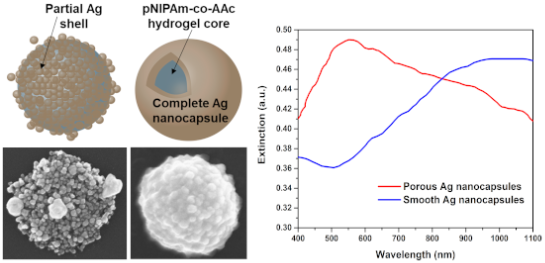
- nanocapsules. The behavior (i.e., positions, intensities, and broadening) of the absorption bands can be modeled using Mie theory [89]. The porous silver nanocapsules produced a maximum extinction band at ≈550 nm. The shape of the band for the porous shell is significantly different from that of the continuous


Preservation of rutin nanosuspensions without the use of preservatives
Beilstein J. Nanotechnol. 2019, 10, 1902–1913, doi:10.3762/bjnano.10.185

- particles and agglomerates within the suspensions. By LD analysis the volumetric median diameters d(v)0.1, d(v)0.5, d(v)0.9, d(v)0.95 and d(v)0.99 were analysed with a Mastersizer 3000 (Malvern Panalytical GmbH, Germany). Particle diameters were calculated with Mie-theory by using 1.57 as real refractive


Correlation of surface-enhanced Raman scattering (SERS) with the surface density of gold nanoparticles: evaluation of the critical number of SERS tags for a detectable signal
Beilstein J. Nanotechnol. 2019, 10, 1016–1023, doi:10.3762/bjnano.10.102
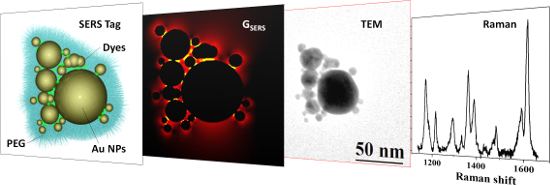
- serves to prevent particle agglomeration after drying the drop [42]. Characterization UV–visible spectroscopy was performed with a Varian Cary 5 spectrometer in 2 mm optical path length quartz cells. The AuNP concentration was estimated from UV–visible spectra and the application of Mie theory, as
- , Mie theory fit results, MG-AuNT reproducibility, and MG-AuNT photostability. Acknowledgements This research was performed with the support of the University of Padova STARS grant “4NANOMED” and the European Cooperation in Science and Technology COST Action MP1302 “Nanospectroscopy”.


Laser-assisted fabrication of gold nanoparticle-composed structures embedded in borosilicate glass
Beilstein J. Nanotechnol. 2017, 8, 2454–2463, doi:10.3762/bjnano.8.244
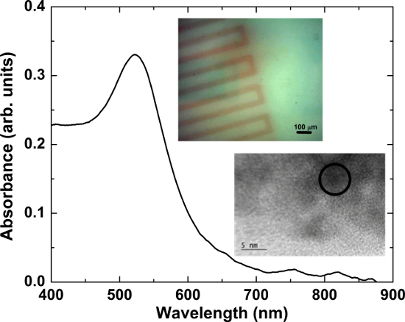
- nanoparticle formation was observed in the samples irradiated by nanosecond pulses at 355, 532 and 1064 nm. The optical properties of the irradiated areas were found to depend on the laser processing parameters; these properties were studied based on Mie theory, which was also used to correlate the


Optical response of heterogeneous polymer layers containing silver nanostructures
Beilstein J. Nanotechnol. 2017, 8, 1065–1072, doi:10.3762/bjnano.8.108
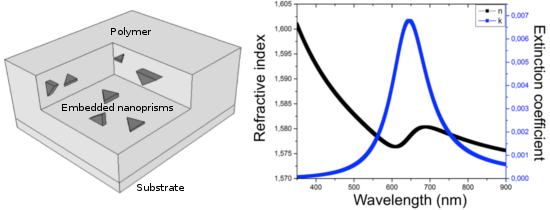
- electric field enhancement. The incoming light is either absorbed or scattered by the NPs [8]. The absorption and scattering are commonly referred to as optical extinction. Single NPs are widely studied under different characterization techniques and computer modeling, such as Mie theory for spherical NPs
- be understood by considering the variation of the absorption cross-section, σabs, of a spherical NP according to the Mie theory: where k is the wave vector, ε is the complex dielectric function of the NP and εm the complex dielectric function of the surrounding medium. Furthermore, collective
- the nanoprisms. This is simply done by changing the quantity of seeds added during the second step of the nanoprism synthesis. The spherical seeds absorbed light between 350–430 nm. The nature of the resonances was verified by computer calculations using the Mie theory for the spherical seeds and FDTD


Computing the T-matrix of a scattering object with multiple plane wave illuminations
Beilstein J. Nanotechnol. 2017, 8, 614–626, doi:10.3762/bjnano.8.66
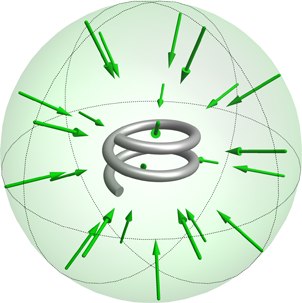
- similar tools. This yields valuable information about the single structure. On the other hand, there are efficient methods to calculate the scattering of large clusters of spherical particles, for example the extended Mie theory [19][20]. This consideration of many particles is the prerequisite to study


Effect of Anderson localization on light emission from gold nanoparticle aggregates
Beilstein J. Nanotechnol. 2016, 7, 2013–2022, doi:10.3762/bjnano.7.192
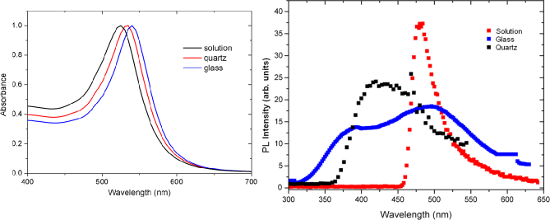
- 4d, where the positions of the absorbance peaks are found to be ≈525 nm in solution, ≈535 nm on quartz, and ≈540 nm on glass, for spherical AuNPs of 14 nm diameter. The theoretical curve is calculated using Mie theory based on the analytical solution of Maxwell’s equations for light scattered by


The role of morphology and coupling of gold nanoparticles in optical breakdown during picosecond pulse exposures
Beilstein J. Nanotechnol. 2016, 7, 869–880, doi:10.3762/bjnano.7.79
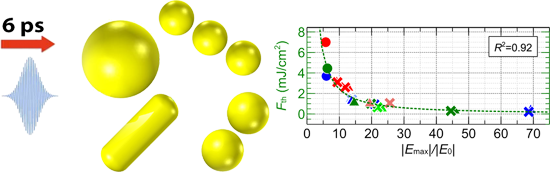
- ] provided a theoretical analysis of short pulse interactions with spherical noble-metal nanoparticles, while Boulais et al. [31] developed a model of plasma-mediated nanocavitation for gold nanospheres and nanorods [31][37]. The model by Bisker and Yelin [42] is based on Mie theory and rate equations for
- free-electron density generation [26][34]. This model does not have a full two-way coupling between the Mie simulations and free-electron plasma rate equations and omits the photo-thermal emission of hot electrons off the nanoparticle surface [30]. In addition the Mie theory is not applicable to




Tunable light filtering by a Bragg mirror/heavily doped semiconducting nanocrystal composite
Beilstein J. Nanotechnol. 2015, 6, 193–200, doi:10.3762/bjnano.6.18
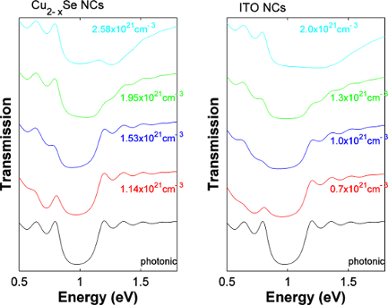
- utilized the Mie theory to describe the carrier-dependent plasmonic properties of the Cu2−x Se NC dispersion and the effective medium theory to describe the optical characteristics of the ITO film. The transmission properties of the Bragg mirror have been modelled with the transfer matrix method. We
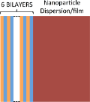
- method to describe the optical properties of the Bragg mirror. The Mie theory describes the tunable plasmonic properties of the Cu2−xSe NCs, and the effective medium theory is employed to describe the tunable optical characteristics of the ITO film. Since the plasmon peak of the NCs can be dynamically
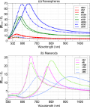
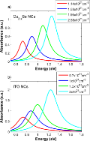
- = 1.14, 1.53, 1.95 and 2.58 × 1021 cm−3 (Cu2−xSe NCs) and NC = 0.7, 1, 1.3 and 2 × 1021 cm−3 (ITO NCs). The given absorption spectra are calculated according to a) Mie theory and b) the MG-EMA assuming a Drude-like behaviour of the free carriers in the system. Absorption properties of a Bragg mirror


Properties of plasmonic arrays produced by pulsed-laser nanostructuring of thin Au films
Beilstein J. Nanotechnol. 2014, 5, 2102–2112, doi:10.3762/bjnano.5.219
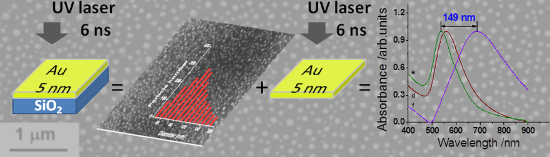
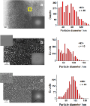
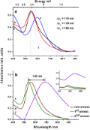
- the case of weak wetting, that is, with a decrease in the metal–substrate interface. While a variety of NP shapes can be easily considered by means of numerical methods (see, e.g., the results discussed in [35][36]), analytical approaches based on Mie theory with a Drude model of the metallic sphere
- resonance position (solid line) and linewidth (dashed line) calculated from Mie theory with an assumed value of the refractive index of nm = 1.5. Influence of the gold NP size on the dephasing time of the plasmonic resonance; data from this work were obtained from absorbance spectra of Au NP arrays produced


The influence of molecular mobility on the properties of networks of gold nanoparticles and organic ligands
Beilstein J. Nanotechnol. 2014, 5, 1664–1674, doi:10.3762/bjnano.5.177
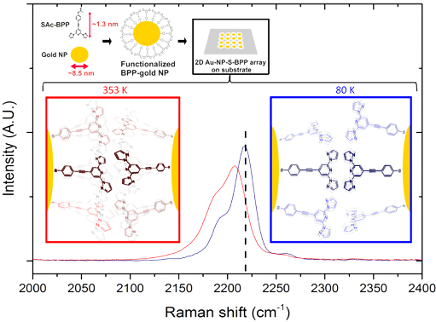
- ]. According to the Mie theory in the dipolar quasi-static approximation (in which the diameter d of the nanoparticle is assumed to be much smaller than the wavelength, i.e., d << λ), the position of the SPR is directly related to the permittivity of the medium surrounding the nanoparticle [29][30]. In
- between the nanoparticles) the condition is ε1(ω) = −2εm, as in standard Mie theory. Figure 2 shows the absorption curves for four types of 2D molecule–gold nanoparticle arrays, with alkanethiol-protected gold nanoparticles of various lengths (C8, C10, C12) compared to the 2D Au-NP–S-BPP array. From C8 to
- nanoparticles in solution is red-shifted by 17 nm compared to the C8-gold nanoparticle dispersion. By using Mie theory (f = 0), we estimate the relative dielectric constants for C8–gold nanoparticle dispersion and S-BPP–gold dispersion to be 2.2 ± 0.1 and 2.8 ± 0.1, respectively. The results obtained so far can




Plasmonic oligomers in cylindrical vector light beams
Beilstein J. Nanotechnol. 2013, 4, 57–65, doi:10.3762/bjnano.4.6
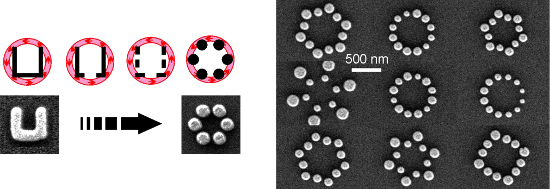
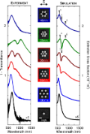
- been found, the field distributions as well as the far-field scattering spectra can be calculated from the analytical solutions of Mie theory. Another description has been developed by using the surface integral equation (SIE) method. This approach uses Green's functions to describe the propagation of




Assessing the plasmonics of gold nano-triangles with higher order laser modes
Beilstein J. Nanotechnol. 2012, 3, 674–683, doi:10.3762/bjnano.3.77
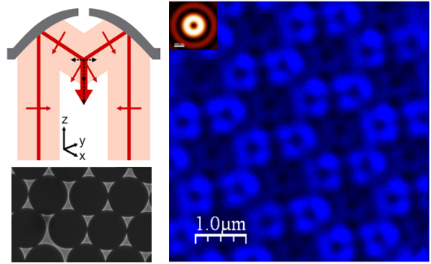
- Figure 5b). However, the photoluminescence intensity from Fischer patterns on glass is nearly 15 times stronger. Turning to the Mie theory, we note that the dielectric constant of the medium surrounding the metal nano-particles plays a crucial role in describing its plasmonic resonances. In our case, the





