


Search results
Search for "Nd:YAG" in Full Text gives 57 result(s) in Beilstein Journal of Nanotechnology.
Restorative potential of laser-synthesized silver nanoparticles with Salvia officinalis for periodontal disease treatment: an in vitro study
Beilstein J. Nanotechnol. 2026, 17, 781–795, doi:10.3762/bjnano.17.55
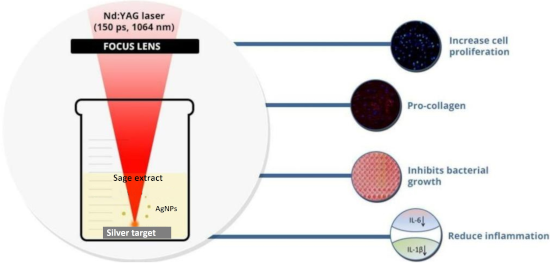
- (Agilent Technologies). Laser synthesis of AgNPs AgNP synthesis was performed by PLAL of a silver metal target (silver foil, 1 mm thickness, 99.99% purity, Alfa Aesar, USA) using a picosecond Nd:YAG EKSPLA SL 212/SH/FH laser system (EKSPLA, Lithuania) operating at the fundamental wavelength of 1064 nm with



Two-step laser synthesis of Ag@TiO2 nanomaterials for the photocatalytic degradation of rhodamine B
Beilstein J. Nanotechnol. 2026, 17, 622–634, doi:10.3762/bjnano.17.43
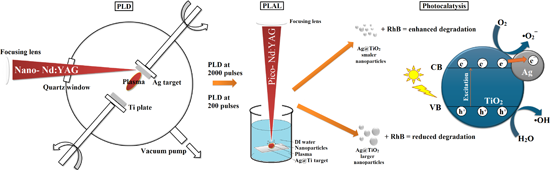
- were deposited onto titanium substrates (purity > 99.9%, ThermoScientific) using nanosecond pulsed laser deposition in a vacuum. A 1 mm thick Ag plate (purity > 99.99%, GoodFellow) served as the laser target, with both the Ti substrate and Ag target rotating to ensure uniform film formation. An Nd:YAG
- in Milli-Q water using a Nd:YAG laser (1064 nm, 20 mJ, 10 Hz, 150 ps) to generate Ag-modified TiO2 colloidal nanoparticles. The ablation was performed at a laser fluence of approximately 2 J·cm−2 for both samples, Ag@TiO2 200p and Ag@TiO2 2000p [21][22]. The experimental setup is shown in Figure 9


Laser ablation in liquids for shape-tailored synthesis of nanomaterials: status and challenges
Beilstein J. Nanotechnol. 2025, 16, 1963–1997, doi:10.3762/bjnano.16.137
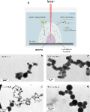
- composition on the shape of the resulting NPs is demonstrated in Figure 5, where the TEM images of the NPs produced by Nd:YAG (1064 nm) nanosecond laser ablation of W and Ti targets in different solvents are presented. For both metals, the ablation in water produces spherical NPs, while in octane, the W




Electrical, photocatalytic, and sensory properties of graphene oxide and polyimide implanted with low- and medium-energy silver ions
Beilstein J. Nanotechnol. 2025, 16, 1794–1811, doi:10.3762/bjnano.16.123
- evaluated using CasaXPS software. The structural analysis of irradiated GO and PI was investigated through Raman and attenuated total reflectance Fourier-transform infrared (ATR-FTIR) spectroscopies. Raman spectroscopy was conducted using a Renishaw inVia Raman microscope (England) equipped with a Nd:YAG


Influence of laser beam profile on morphology and optical properties of silicon nanoparticles formed by laser ablation in liquid
Beilstein J. Nanotechnol. 2025, 16, 1533–1544, doi:10.3762/bjnano.16.108
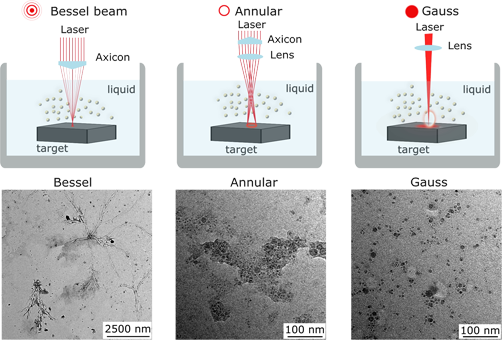
- that the obtained results are important for the preparation of silicon-based nanocomposites as electrode materials with enhanced performance. Materials and Methods The laser ablation experiments were performed using a nanosecond Nd:YAG laser (LS2131D, LOTIS TII, Belarus) as an excitation source
- the SEM analysis (Supporting Information File 1, Figure S5d). The resulting fluence on the target was estimated to be 118.4 J·cm−2. A Bessel beam pattern was generated using a glass axicon with a base angle α = 7°, which was irradiated with a collimated Gaussian beam of a Nd:YAG laser. A Bessel zone


Laser processing in liquids: insights into nanocolloid generation and thin film integration for energy, photonic, and sensing applications
Beilstein J. Nanotechnol. 2025, 16, 1428–1498, doi:10.3762/bjnano.16.104
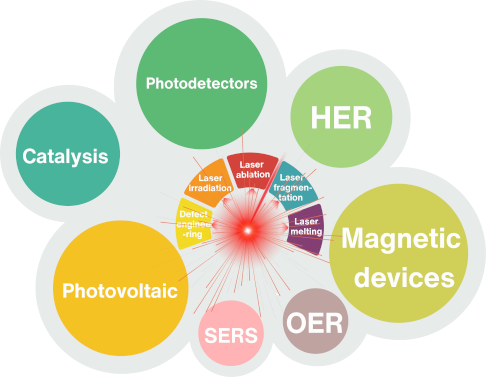
- pulsed laser fragmentation of PbTe micrometer-sized powders in distilled water using a Nd:YAG laser [31]. The study examined the impact of various experimental parameters, including laser wavelength (Figure 3a), treatment duration, and output energy, on the fragmentation yield, nanoparticle size, and
- to a broader range of particle sizes compared to lower laser energy. Fujiwara et al. [32] also observed similar kind of features on thionicotinamide (TNA)-capped gold NPs irradiated at 532 nm (Q-switched Nd:YAG laser, 18 ps). TNA-capped gold NPs underwent fusion as well as fragmentation upon laser
- significance of photon-assisted transitions in fragmentation processes, particularly when interacting with the second and third harmonics of a picosecond Nd:YAG laser. Although the temperature of the Au NPs exceeded the evaporation threshold, the results suggest that heating alone was not the primary cause of






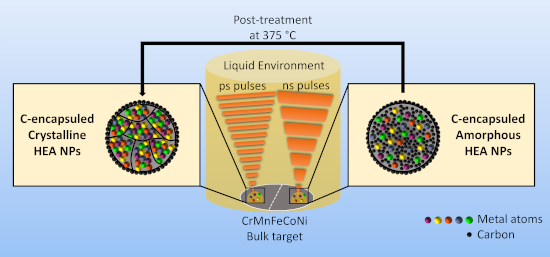
Crystalline and amorphous structure selectivity of ignoble high-entropy alloy nanoparticles during laser ablation in organic liquids is set by pulse duration
Beilstein J. Nanotechnol. 2025, 16, 1141–1159, doi:10.3762/bjnano.16.84


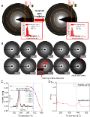


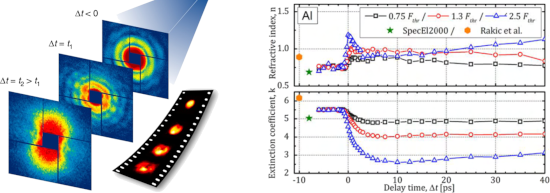
Time-resolved probing of laser-induced nanostructuring processes in liquids
Beilstein J. Nanotechnol. 2025, 16, 968–1002, doi:10.3762/bjnano.16.74


Synthesis and magnetic transitions of rare-earth-free Fe–Mn–Ni–Si-based compositionally complex alloys at bulk and nanoscale
Beilstein J. Nanotechnol. 2025, 16, 823–836, doi:10.3762/bjnano.16.62
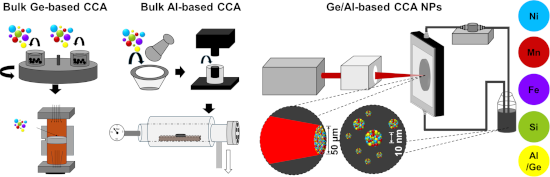
- were synthesized by PLAL using the bulk Ge-based and Al-based CCA targets submerged in ethanol (Figure 1c). A near-infrared picosecond-pulsed Nd:YAG laser source (Coherent, HyperRapid NX, Kaiserslautern, Germany, 10 ps, 1064 nm) was employed to irradiate the targets within ethanol at a laser fluence of


Morphology and properties of pyrite nanoparticles obtained by pulsed laser ablation in liquid and thin films for photodetection
Beilstein J. Nanotechnol. 2025, 16, 785–805, doi:10.3762/bjnano.16.60
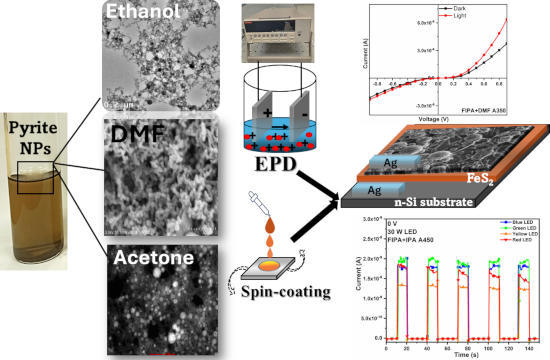
- synthesize pyrite nanoparticles in various solvents, including isopropyl alcohol (IPA), dimethyl formamide (DMF), ethanol, methanol, and acetone, using a 532 nm wavelength output from a Nd:YAG laser. Pulsed laser ablation in liquid has been demonstrated as a reliable alternative to conventional chemical
- impurities on the target surface. The second harmonic output wavelength (532 nm) was employed to irradiate the FeS2 target positioned in the beaker in a vertical configuration of the experiment. For the ablation, a pulsed Nd:YAG laser (Model LQ 629, Solar Laser System) with pulse width of 10 ns, pulse






High-temperature epitaxial growth of tantalum nitride thin films on MgO: structural evolution and potential for SQUID applications
Beilstein J. Nanotechnol. 2025, 16, 690–699, doi:10.3762/bjnano.16.53
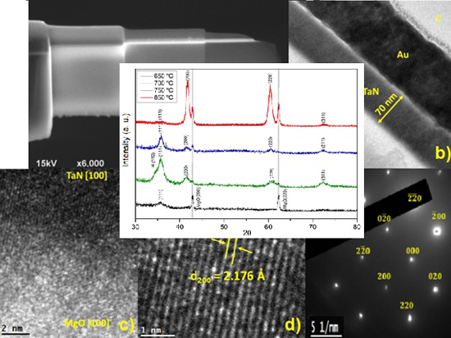
- and independently pumped by ion and Ti sublimation pumps. Every chamber has a base pressure of about 10−9 Torr. A Nd:YAG laser with a fourth-harmonic generator (266 nm), was focused onto a 99.999% Ta target (purchased from Kurt J. Lesker Company) with 4 ns and hv = 1.5 eV. The laser was operated at a


Pulsed laser in liquid grafting of gold nanoparticle–carbon support composites
Beilstein J. Nanotechnol. 2025, 16, 349–361, doi:10.3762/bjnano.16.26
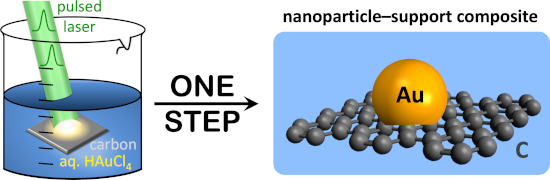
- the reported specific surface area of the carbon fiber paper used here [24]. Pulsed laser grafting produced integrated gold nanoparticle–carbon fiber paper composites (Figure 2B), using aqueous 1.0 M HAuCl4 solution, hydrophilic carbon fiber paper, and unfocused Nd:YAG laser irradiation with 10 Hz, 8
- . The solution was stirred at 750 rpm. Dissolved reactant concentrations in the range from micromoles to a few moles have been used in pulsed laser in liquids synthesis [1]. An unfocused 532 nm, 8 ns pulsed laser beam from a 10 Hz Nd:YAG laser (Spectra-Physics Quanta-Ray LAB-190) with a pulse energy of


Graphene oxide–chloroquine conjugate induces DNA damage in A549 lung cancer cells through autophagy modulation
Beilstein J. Nanotechnol. 2025, 16, 316–332, doi:10.3762/bjnano.16.24
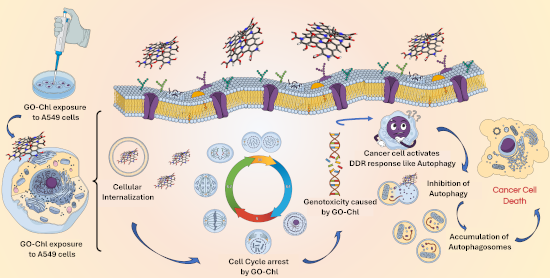
- -via reflex spectrometer, Tokyo, Japan) with a 514 nm Nd:Yag laser as the excitation source. The optical properties were measured employing a UV–vis spectrophotometer (Cary 5000 UV-VIS-NIR, Agilent, CA, USA) in the 200–800 nm range. The morphology of GO nanosheets was analyzed employing a high



Preferential enrichment and extraction of laser-synthesized nanoparticles in organic phases
Beilstein J. Nanotechnol. 2025, 16, 254–263, doi:10.3762/bjnano.16.20
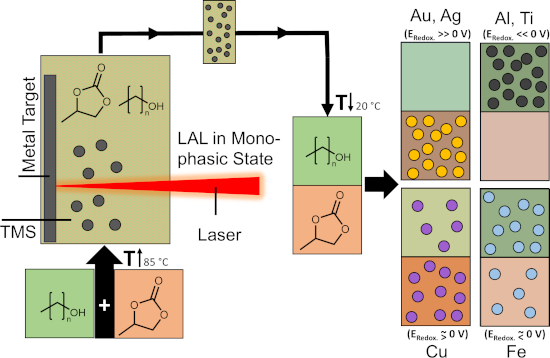
- Nanoparticles are generated by ablating the target material (10 × 10 × 1 mm) immersed in the organic solvent using a Nd:YAG-laser (RSM 100D, ROFIN-SINAR Laser GmbH) working with a pulse duration of 35 ns, a wavelength of 1064 nm, a repetition rate of 5 kHz and pulse energy of 5.4 mJ. LAL was performed in a 30




Fabrication of hafnium-based nanoparticles and nanostructures using picosecond laser ablation
Beilstein J. Nanotechnol. 2024, 15, 1639–1653, doi:10.3762/bjnano.15.129
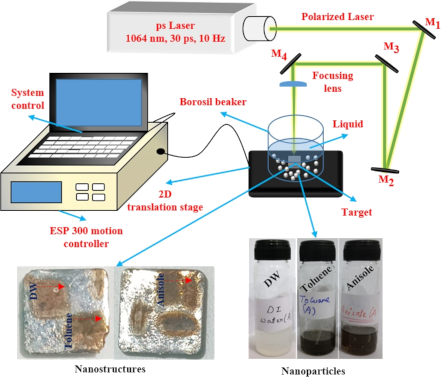
- picosecond laser [Nd:YAG, M/s EKSPLA] with a pulse duration of ≈30 ps, a repetition rate of ≈10 Hz, a wavelength of ≈1064 nm, and a pulse energy of ≈16.3 mJ (determined from previous experiments [33] and optimised using multiple ablation trials followed by detailed characterization studies) was used for the




A biomimetic approach towards a universal slippery liquid infused surface coating
Beilstein J. Nanotechnol. 2024, 15, 1376–1389, doi:10.3762/bjnano.15.111
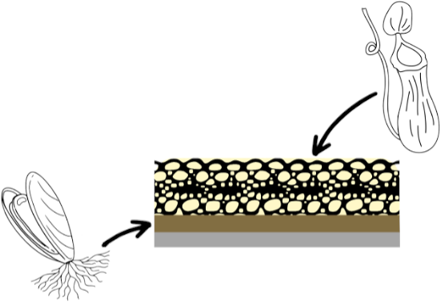
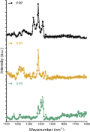
- processing and analysis of the collected scans included a lowpass filter and took place in the “NanoScope analysis” software. Sum frequency generation vibrational spectroscopy The SFG setup used an EKSLPA Nd:YAG laser operated at 50 Hz to generate a fixed visible (532 nm−1) and tunable infrared beam (1000




Electrical and optical enhancement of ITO/Mo bilayer thin films via laser annealing
Beilstein J. Nanotechnol. 2022, 13, 1589–1595, doi:10.3762/bjnano.13.133
- Microelectronic and Nanotechnology Shamsuddin Research Centre (MiNT-SRC), Universiti Tun Hussein Onn Malaysia, 86400 Parit Raja, Batu Pahat, Johor, Malaysia 10.3762/bjnano.13.133 Abstract ITO/Mo bilayer thin films were sputtered on n-type silicon and glass substrates and annealed with a Nd:YAG pulsed laser. The
- 17.6 × 10⁻³ Ω−1 of the the annealed structure. The results indicate that the laser annealing could improve the efficiency of the transparent conductive layer, which can be potentially applied in optoelectronic devices. Keywords: indium tin oxide (ITO); laser annealing; molybdenum (Mo); Nd:YAG
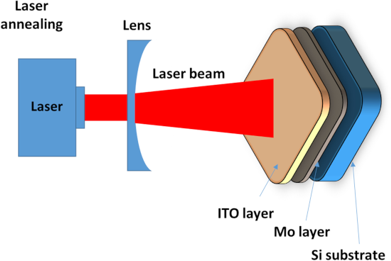
- plasma cleaner. In the IM structure, the thickness of ITO was 125 nm while the thickness of Mo was 10 nm. The thickness was controlled by two quartz crystal balances integrated within the chamber. After deposition, the bilayer thin film was treated using a Nd:YAG pulsed laser with a wavelength of 1064 nm


Properties of graphene deposited on GaN nanowires: influence of nanowire roughness, self-induced nanogating and defects
Beilstein J. Nanotechnol. 2021, 12, 566–577, doi:10.3762/bjnano.12.47
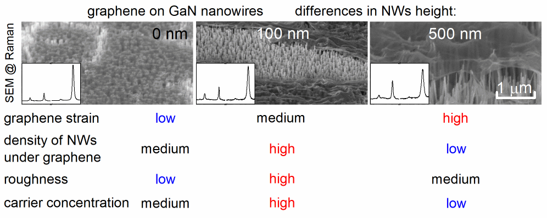
- spectra were collected by using a T64000 Horiba Jobin-Yvon spectrometer with a Nd:YAG laser operating at 532 nm wavelength as the excitation source, and with an objective with a magnification of 100× that allowed to obtain a spatial resolution of approx. 300 nm. The laser power was reduced to 3 mW in




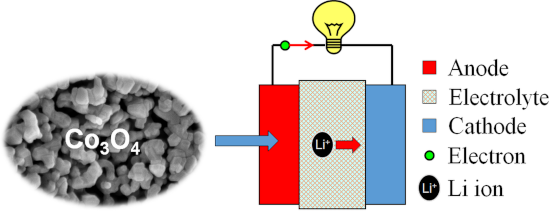
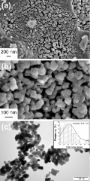
Solution combustion synthesis of a nanometer-scale Co3O4 anode material for Li-ion batteries
Beilstein J. Nanotechnol. 2021, 12, 424–431, doi:10.3762/bjnano.12.34
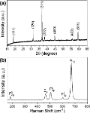
- were carried out using a confocal Raman spectrometer (Renishaw inVia) equipped with a charge-coupled device (CCD) camera and a continuous-wave diode-pumped Nd:YAG laser working at λRS = 532 nm. The Raman spectrum was collected at room temperature in air with acquisition time of 90 s, power of 0.5 mW


High-responsivity hybrid α-Ag2S/Si photodetector prepared by pulsed laser ablation in liquid
Beilstein J. Nanotechnol. 2020, 11, 1596–1607, doi:10.3762/bjnano.11.142
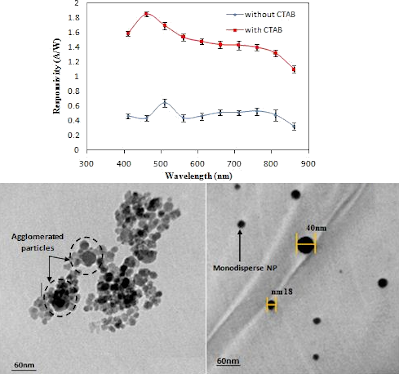
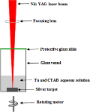
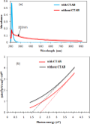
- -distilled water (DDW) and then mixed with 0.18 g of CTAB dissolved in 10 mL of DDW. The laser used here was a Q-switched Nd:YAG laser operating at λ = 1064 nm, 7 ns pulse width, and 2 Hz pulse repetition frequency. A high-purity silver (99.9%) pellet with a thickness of 10 mm and a diameter of 20 mm was




Highly sensitive detection of estradiol by a SERS sensor based on TiO2 covered with gold nanoparticles
Beilstein J. Nanotechnol. 2020, 11, 1026–1035, doi:10.3762/bjnano.11.87
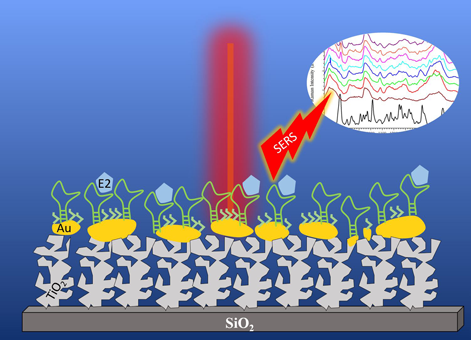
- formation of NPs. A TiO2 (99.9%) target was ablated using a Nd:YAG laser (λ = 532 nm) with a pulse duration of 5–7 ns and 10 Hz repetition rate. The laser fluence on the target is 3.5 J·cm−2 and the pulse energy is 200 mJ. Film synthesis was carried out at room temperature in oxygen atmosphere, using both



The effect of heat treatment on the morphology and mobility of Au nanoparticles
Beilstein J. Nanotechnol. 2020, 11, 61–67, doi:10.3762/bjnano.11.6
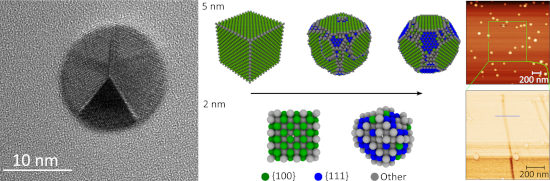
- transmission electron microscopy (TEM). Characterization The morphology of the NPs annealed at different temperatures was studied by TEM (ARM200, JEOL). A null ellipsometer (Multiskop, Optrel, Germany) equipped with a 532 nm Nd:YAG laser was used for measuring the thickness of the SiO2 layers. AFM setup The


The role of Ag+, Ca2+, Pb2+ and Al3+ adions in the SERS turn-on effect of anionic analytes
Beilstein J. Nanotechnol. 2019, 10, 2338–2345, doi:10.3762/bjnano.10.224
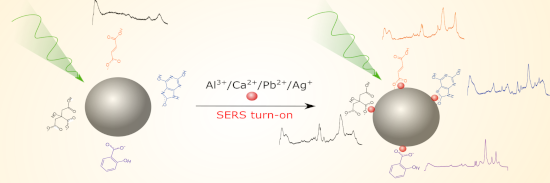
- (NO3)2, Pb(NO3)2 and Al2(SO4)3. However, similar results were obtained by activating the colloids before or after addition of the analyte. SERS spectra of the organic acids at a concentration of 50 µM were acquired with a Renishaw InVia Raman spectrometer equipped with a Nd:YAG frequency-doubled laser


Tailoring the stability/aggregation of one-dimensional TiO2(B)/titanate nanowires using surfactants
Beilstein J. Nanotechnol. 2019, 10, 1024–1037, doi:10.3762/bjnano.10.103
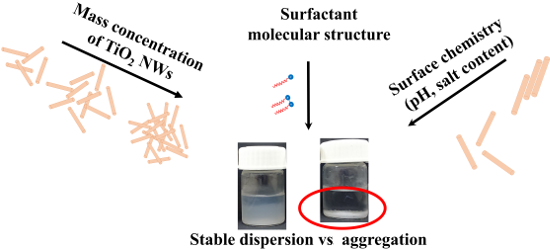
- Elmer FT-IR C89391 instrument at room temperature in the wavenumber range 4000–400 cm−1. The resolution of the FTIR spectrophotometer was 2 cm−1. Raman spectra were recorded on an EQUINOX 55 device equipped with an Nd:YAG laser (λ = 1064 nm) at room temperature applying a laser power of 100 mW. The


Correlation of surface-enhanced Raman scattering (SERS) with the surface density of gold nanoparticles: evaluation of the critical number of SERS tags for a detectable signal
Beilstein J. Nanotechnol. 2019, 10, 1016–1023, doi:10.3762/bjnano.10.102
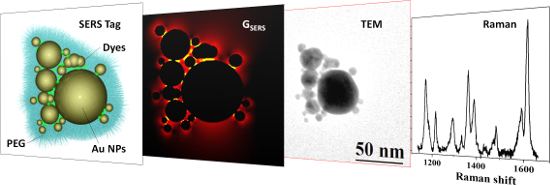
- sensitivity. Experimental Synthesis of Au nanotags AuNPs with an average diameter of 10 ± 5 nm and log-normal size distribution (see Figure S1 in Supporting Information File 1) were obtained by LASiS using an Nd:YAG laser (1064 nm, 9 ns, 50 Hz) focused to 8 J/cm2 with a 10 cm focus lens on a 99.9% pure gold





