


Search results
Search for "aptamers" in Full Text gives 26 result(s) in Beilstein Journal of Nanotechnology.
Biomimetic nanoparticles in cancer photodynamic therapy: a review of targeted delivery systems and therapeutic outcomes
Beilstein J. Nanotechnol. 2026, 17, 396–422, doi:10.3762/bjnano.17.27
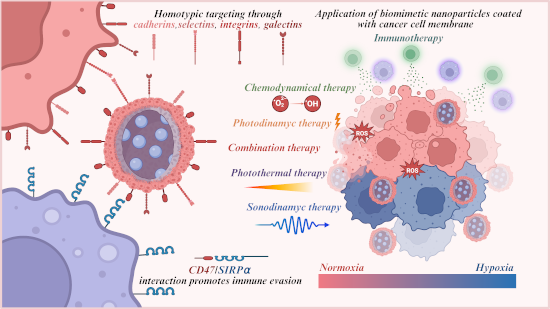
- [51]. The second generation of nanocarriers harnessed surface functionalization with antibodies, peptides, and aptamers to increase the targeting of pathogenic tissues and cells by interacting with the receptors expressed on the surface of the target cells [52]. In contrast, BNPs are designed to
- with imaging agents or therapeutic enzymes to facilitate tumor visualization and penetration, further expanding their utility in cancer therapy. Targeting strategies can be further refined by integrating ligands such as arginylglycylaspartic acid (RGD) peptides, antibodies, or aptamers onto the BNP


Optical bio/chemical sensors for vitamin B12 analysis in food and pharmaceuticals: state of the art, challenges, and future outlooks
Beilstein J. Nanotechnol. 2025, 16, 2207–2244, doi:10.3762/bjnano.16.153
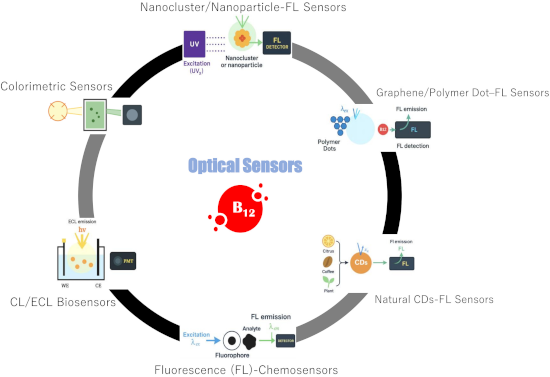
- reaction monitoring. They found that MeCbl was the main constituent of the extracted VB12 and analyzed by chemiluminescence, AuNPs-based RNA aptamers, and microbiological techniques. The corresponding amounts of MeCbl were 26.84, 28.02, and 29.87 μg/100 g dry weight, respectively. Accordingly, there was no


Advances of aptamers in esophageal cancer diagnosis, treatment and drug delivery
Beilstein J. Nanotechnol. 2025, 16, 1734–1750, doi:10.3762/bjnano.16.121
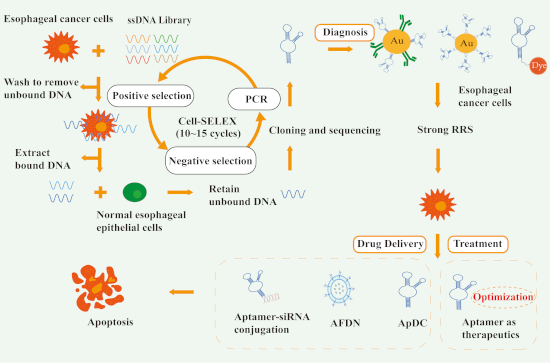
- lifestyle-related risk factors. However, the discovery of aptamers and the development of nanocarriers bring great benefits to the diagnosis, treatment, and targeted drug delivery of EC. Aptamers or peptide aptamers as biosensors or therapeutic agents for the diagnosis or treatment of EC, aptamer–drug
- , leveraging the high target specificity of well-selected aptamers may bring new breakthroughs in the diagnosis, treatment and drug delivery of EC. Keywords: aptamers; detection; drug delivery; esophageal cancer; esophageal squamous cell carcinoma; therapy; Review 1 Introduction Esophageal cancer (EC) is
- obstacles to their safe application. Hence, ongoing research explores strategies to optimize the solubility and targeting ability of anti-EC drugs, and aptamers [25] represent a distinct class of molecular tools. Aptamers are small nucleotide or peptide sequences screened by “systematic evolution of ligands


Ferroptosis induction by engineered liposomes for enhanced tumor therapy
Beilstein J. Nanotechnol. 2025, 16, 1325–1349, doi:10.3762/bjnano.16.97
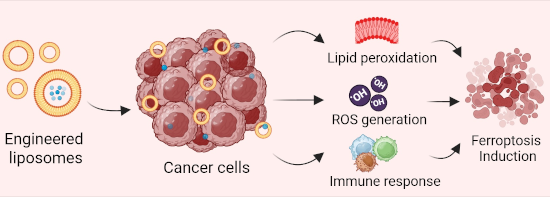
- therapeutic efficacy [118][128]. Additionally, liposomes can be surface-modified with various ligands such as antibodies, peptides, carbohydrates, and aptamers to achieve targeted drug delivery to specific cells or tissues [118][129]. These ligand-targeted liposomes can bind to receptors on target cells and


Synthetic-polymer-assisted antisense oligonucleotide delivery: targeted approaches for precision disease treatment
Beilstein J. Nanotechnol. 2025, 16, 435–463, doi:10.3762/bjnano.16.34

- in ASO-based therapies. Some promising strategies to overcome these limitations involve the conjugation of ASOs with peptides [53], polymers [54], aptamers [55], and antibodies [56], as well as the development of novel drug delivery systems [57][58]. This review discusses the challenges associated


Recent advances in photothermal nanomaterials for ophthalmic applications
Beilstein J. Nanotechnol. 2025, 16, 195–215, doi:10.3762/bjnano.16.16
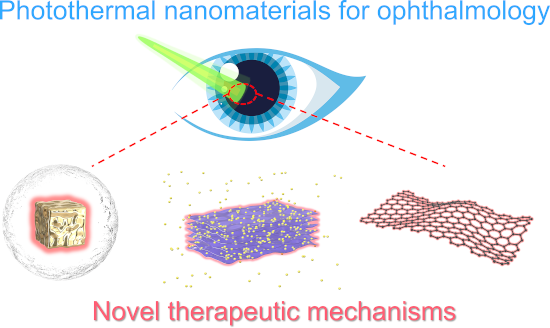
- cellular functions. Future developments may see the integration of photothermal nanomaterial therapies with viruses, receptors, antibodies, aptamers, peptides, multifunctional genes, self-assembled DNA structures, and proteins. Given the diversity and adaptability of nanomaterials, it is conceivable to


Biomimetic nanocarriers: integrating natural functions for advanced therapeutic applications
Beilstein J. Nanotechnol. 2024, 15, 1619–1626, doi:10.3762/bjnano.15.127

- these carriers are improved [19][21][22][23][24][25]. Various cellular components such as extracellular vesicles, leukocyte and red blood cell membranes are beneficial for developing bioinspired devices. Specific targets, including peptides, aptamers, proteins, and viral capsids, may also be utilized in


Polymer lipid hybrid nanoparticles for phytochemical delivery: challenges, progress, and future prospects
Beilstein J. Nanotechnol. 2024, 15, 1473–1497, doi:10.3762/bjnano.15.118
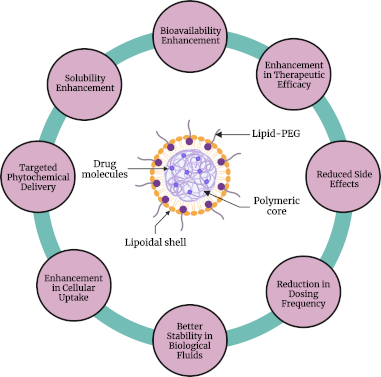
- hydrophilic drugs are entrapped in the lipid shell. PLHNPs demonstrate relatively greater loading capacity for lipophilic compounds than other nanoparticle systems [12][19]. Moreover, the surface modification of PLHNPs with targeting ligands, such as antibodies, peptides, or aptamers, has been explored to
- antibodies, peptides, aptamers, or small molecules that specifically bind to receptors overexpressed on the surface of target cells or tissues. The conjugation of targeting ligands to the surface of PLHNPs enables specific delivery of drug/phytochemicals to desired sites within the body, such as tumor cells


Dual-functionalized architecture enables stable and tumor cell-specific SiO2NPs in complex biological fluids
Beilstein J. Nanotechnol. 2024, 15, 1238–1252, doi:10.3762/bjnano.15.100
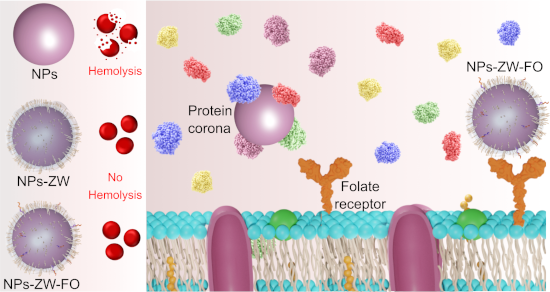
- strategies to produce colloidally stable NP dispersions with retained targeting capacity have been widely investigated [17][18][19][20][21]. While a panel of molecules (e.g., polyethylene glycol, zwitterionics, glycans, aptamers) can improve the stability of NPs in biological media by preventing the


Realizing active targeting in cancer nanomedicine with ultrasmall nanoparticles
Beilstein J. Nanotechnol. 2024, 15, 1208–1226, doi:10.3762/bjnano.15.98
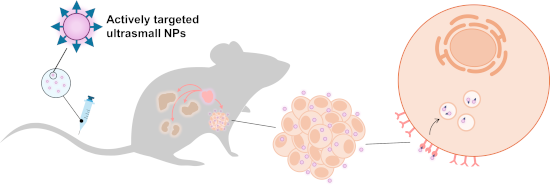
- difference was attributed to easier tumor clearance (tumor intravasation back to blood vessels) of off-targeted 3 nm NPs compared to 30 nm ones. Common functional ligands employed in actively targeted usNPs encompass small molecules such as folate, aptamers, peptides, full antibodies, and antibody fragments


New application of bimetallic Ag/Pt nanoplates in a colorimetric biosensor for specific detection of E. coli in water
Beilstein J. Nanotechnol. 2024, 15, 95–103, doi:10.3762/bjnano.15.9
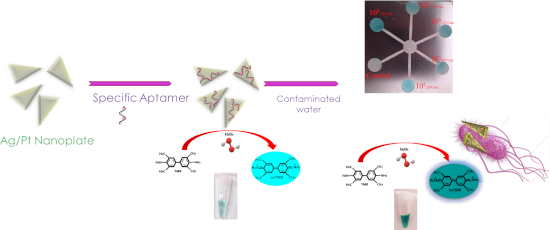
- ]. Nanomaterials have improved the ability to detect pathogens in water and food by enhancing signals and sensitivity. These materials, which encompass nanoparticles, nanorods, nanowires, and nanoclusters, can be combined with aptamers, antibodies, enzymes, and other ligands to display unique physical, chemical
- , and optical traits. The colorimetric method typically depends on the enzymatic properties, aggregation, and dispersion of these nanomaterials, which can be influenced by the presence of aptamers, antibodies, and other agents [4]. Among the various colorimetric test techniques, the enzymatic conversion
- ], photocatalytic degradation and bactericidal action [21], sensors and biosensors [22][23][24][25], and as electrocatalysts [26]. Aptamers are single-stranded DNA or RNA oligonucleotides that attach to their targets with great affinity and specificity. Aptamers have high stability in a variety of environments and


Nanoarchitectonics of photothermal materials to enhance the sensitivity of lateral flow assays
Beilstein J. Nanotechnol. 2023, 14, 988–1003, doi:10.3762/bjnano.14.82
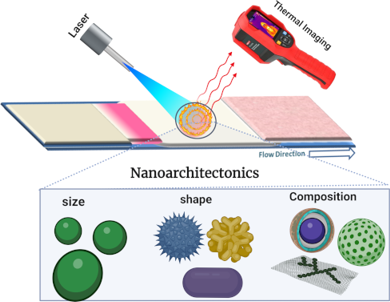
- and for efficient light-to-heat conversion. The surface chemistry of the selected photothermal material should facilitate the successful immobilization of biomolecules, such as antibodies, aptamers, peptides, or affinity molecules. Finally, an efficient thermal energy readout system is needed for the
- to functionalize with targeting agents such as antibodies and aptamers for LFAs. Therefore, photothermal LFAs are believed to play a significant role in the development of highly sensitive LFAs and other POCT devices. Schematic representation of photothermal LFA (Figure 1 was reprinted from [27


Antibody-conjugated nanoparticles for target-specific drug delivery of chemotherapeutics
Beilstein J. Nanotechnol. 2023, 14, 912–926, doi:10.3762/bjnano.14.75
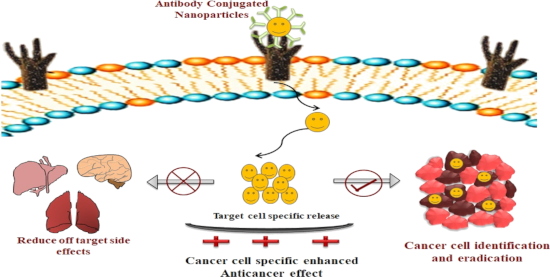
- of nanoscale chemotherapeutics is accomplished by two different approaches, namely the exploitation of leaky tumor vasculature (EPR effect) and the surface modification of nanoparticles (NPs) with various tumor-homing peptides, aptamers, oligonucleotides, and monoclonal antibodies (mAbs). Because of
- bind precisely with the Fc region of antibodies [68]. Wartlick et al. used biotin/avidin aptamers to efficiently bind and internalize anti-HER2-modified NPs in HER2-overexpressing cells. They demonstrated that ACNPs yield specific tumor targeting as well as enhanced drug delivery. Also, the
- the blood stream, they instantly absorb proteins to form a protein corona, which may prominently impede the binding of antibodies to their receptors [77]. There is increasing evidence that NPs conjugated with antibodies, peptides, and aptamers lose the ability to recognize or bind with specific



Metal-organic framework-based nanomaterials as opto-electrochemical sensors for the detection of antibiotics and hormones: A review
Beilstein J. Nanotechnol. 2023, 14, 631–673, doi:10.3762/bjnano.14.52
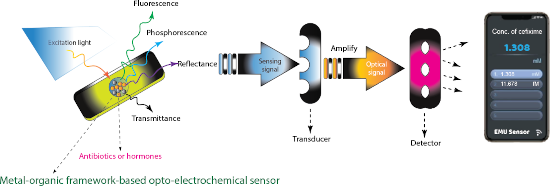
- , proteins, aptamers, and immunoglobulins) to realise an analyte-specific reaction. Because of their modification with biomolecules, some electrochemical biosensors have shown higher specificity and selectivity than unmodified electrochemical sensors; nevertheless, they have shorter lifetimes and poorer


Cyclodextrins as eminent constituents in nanoarchitectonics for drug delivery systems
Beilstein J. Nanotechnol. 2023, 14, 218–232, doi:10.3762/bjnano.14.21
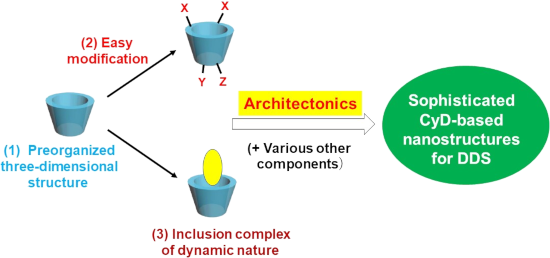
- nucleic acids are RNAs, DNAs, and derivatives thereof that regulate the expression of target genes [57][58][59]. Typical examples are antisense DNA, small interfering RNA (siRNA), aptamers, and ribozymes/DNAzymes. Owing to the accurate targeting at pathogenic genes, they are promising for various




DNA aptamer selection and construction of an aptasensor based on graphene FETs for Zika virus NS1 protein detection
Beilstein J. Nanotechnol. 2022, 13, 873–881, doi:10.3762/bjnano.13.78
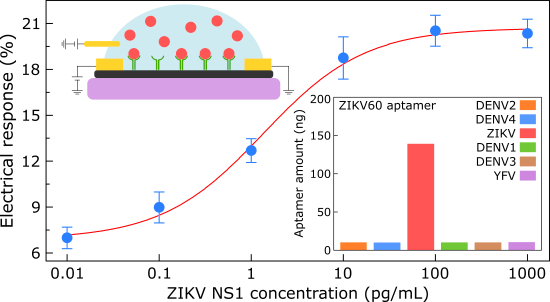
- mandatory. Acid nucleic aptamers are oligonucleotides that bind to a specific target molecule with high affinity and specificity. Because of their unique characteristics, aptamers are promising tools for biosensor development. Aptamers are usually obtained through a procedure called “systematic evolution of
- , and specific virus identification. However, these techniques require professional expertise and expensive laboratory equipment and reagents. These conditions are frequently unavailable in endemic regions [8][9][10]. Nucleic acid aptamers are single-strand oligonucleotides (ssDNA or ssRNA) that can
- bind to other molecules with high affinity and specificity. Aptamers are comparable to antibodies in their applications, yet, they offer several advantages, including higher temperature stability, fast chemical synthesis, easy labeling, versatile chemical modification, flexible structure, and



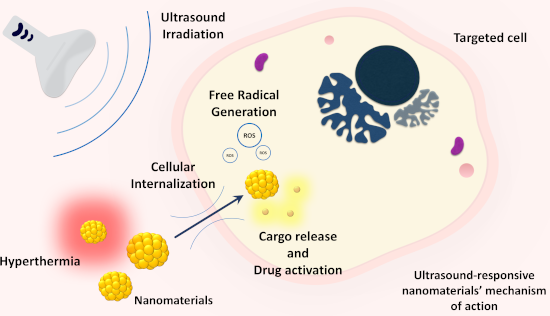
Comprehensive review on ultrasound-responsive theranostic nanomaterials: mechanisms, structures and medical applications
Beilstein J. Nanotechnol. 2021, 12, 808–862, doi:10.3762/bjnano.12.64


The impact of molecular tumor profiling on the design strategies for targeting myeloid leukemia and EGFR/CD44-positive solid tumors
Beilstein J. Nanotechnol. 2021, 12, 375–401, doi:10.3762/bjnano.12.31
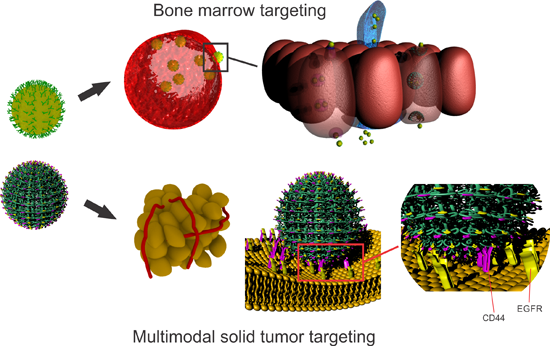
- differentiation. Therefore, it could be employed as a specific cell surface-expressed moiety for active targeting [54]. Jang and co-workers developed a polyrotaxane-based nanoconstruct with pliable structure, bearing surface-oriented sliding PTK7 aptamers for the targeting of doxorubicin to a PTK7+ cell line
- targeting potential of the developed formulation was confirmed both with in vitro experiments on the PTK7+ T lymphoblast cell line CCRF–CEM and on in vivo immunodeficient BALB/c mice harboring the PTK7+ T lymphoblast cell line. The results demonstrated that the sliding targeting aptamers had, respectively


Highly sensitive detection of estradiol by a SERS sensor based on TiO2 covered with gold nanoparticles
Beilstein J. Nanotechnol. 2020, 11, 1026–1035, doi:10.3762/bjnano.11.87
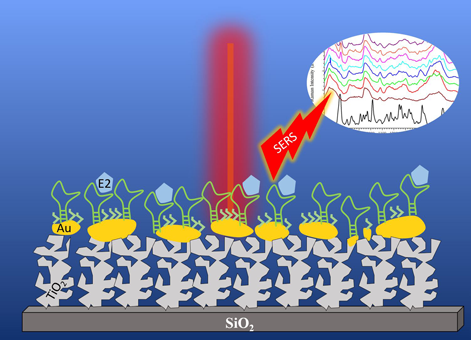
- functionalized with aptamers (a biorecognition element), specific to the natural estrogen 17β-estradiol (E2) [17] for SERS detection. The all-solid configuration of the TiO2/Au surface makes it a good candidate for in situ detection. Surface functionalization with aptamers is gathering interest because they
- possess many of the important qualities required for the functionalization of SERS sensors [18][19][20][21]. Aptamers are single-stranded DNA molecules that are specifically selected to bind to a target molecule. They are relatively cheap and their chemistry is easy to tune so that they can attach to a
- aptamers is that their Raman fingerprint is easily recognizable, as DNA is an extensively studied molecule. In this study, we focus on the detection of E2 with an aptamer-functionalized sensor. E2 is the main female hormone responsible for growth, reproduction, breast development, maturation, bone



Bombesin receptor-targeted liposomes for enhanced delivery to lung cancer cells
Beilstein J. Nanotechnol. 2019, 10, 2553–2562, doi:10.3762/bjnano.10.246
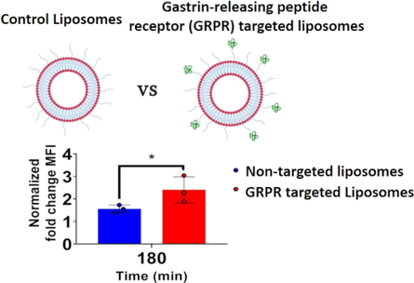
- , leading to accumulation of nanocarriers in the tumour. A diversity of targeting ligands has been explored, including antibodies, proteins, peptides and aptamers. Targeted nanoparticles such as HER2-targeted MM-302 [14], transferrin receptor-targeted CALAA-01 [15], and prostate-specific membrane antigen

Direct growth of few-layer graphene on AlN-based resonators for high-sensitivity gravimetric biosensors
Beilstein J. Nanotechnol. 2019, 10, 975–984, doi:10.3762/bjnano.10.98
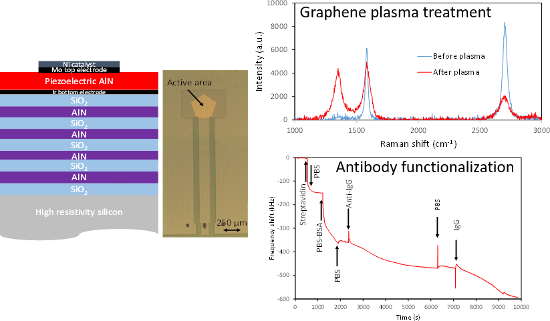
- sensor with the desired selectivity and sensitivity to the targeted species. Selectivity mainly depends on the specificity of the receptor (e.g., for proteins, aptamers or antibodies) to the targeted species and the non-specific binding degree of other species that can be achieved; effective


Features and advantages of flexible silicon nanowires for SERS applications
Beilstein J. Nanotechnol. 2019, 10, 725–734, doi:10.3762/bjnano.10.72

- economical for synthesis, but suffer from the lack of reproducibility due to unpredictable aggregation. Thus, researchers have implemented various ways to control the aggregation, such as bifunctional linker molecules, stimuli-responsive polymers, short single-stranded DNA chains or aptamers. Optimized solid


Targeting strategies for improving the efficacy of nanomedicine in oncology
Beilstein J. Nanotechnol. 2019, 10, 168–181, doi:10.3762/bjnano.10.16
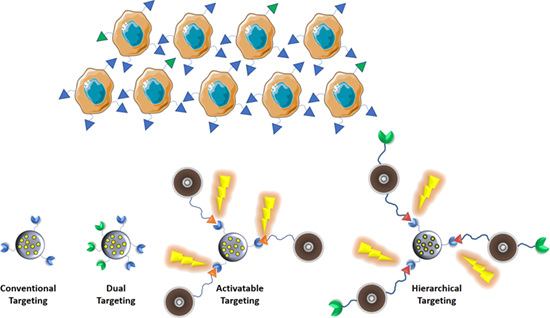
- purposes are aptamers. Aptamers are oligonucleotide chains that exhibit a characteristic three-dimensional structure capable to bind to specific membrane cell receptors overproduced by the tumoral cells. The aptamer that specifically binds to a certain protein is usually selected by the technique named
- systematic evolution of ligands by exponential enrichment (SELEX) [37]. Through this technique it is possible to obtain oligonucleotide sequences selective for many different membrane proteins. These macromolecules have been widely employed both alone and conjugated with drugs or nanoparticles [38]. Aptamers
- specifically designed for binding to the epidermal growth factor receptors (EGFR) have been anchored on the surface of hollow gold nanospheres [39]. The thiolated version of these aptamers was anchored on the gold surface through the thiol groups producing an average anchorage yield of 250 aptamers per


Methionine-mediated synthesis of magnetic nanoparticles and functionalization with gold quantum dots for theranostic applications
Beilstein J. Nanotechnol. 2017, 8, 1734–1741, doi:10.3762/bjnano.8.174
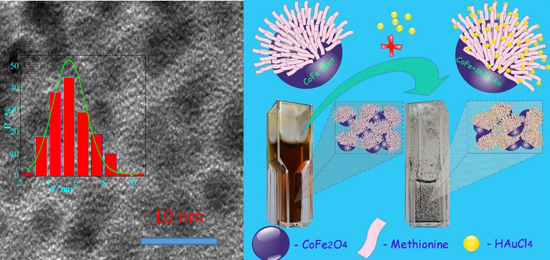
- Biocompatible superparamagnetic iron oxide nanoparticles (NPs) through smart chemical functionalization of their surface with fluorescent species, therapeutic proteins, antibiotics, and aptamers offer remarkable potential for diagnosis and therapy of disease sites at their initial stage of growth. Such NPs can
- specific targeting ligands, such as aptamers and antibodies. This synthesis way may also be explored in future to design superparamagnetic, methionine-stabilized plasmonic magnetite NPs decorated with Au0/Au+1 QDs. Experimental Chemicals: All chemicals, including Co(II) and Fe(III) chlorides, and HAuCl4


A biofunctionalizable ink platform composed of catechol-modified chitosan and reduced graphene oxide/platinum nanocomposite
Beilstein J. Nanotechnol. 2017, 8, 1508–1514, doi:10.3762/bjnano.8.151
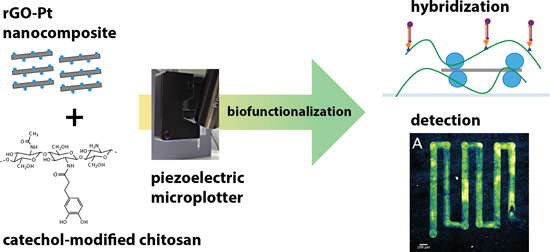
- feature that enables the selective detection of the target biomolecules. Our ink platform is designed to be modular; various possible biorecognition elements can be conjugated to the remaining amine groups of the catechol-modified chitosan, such as enzymes, antibodies, DNA probes, or aptamers. As a proof





