Search results
Search for "biodistribution" in Full Text gives 83 result(s) in Beilstein Journal of Nanotechnology.
Nanocarrier strategies to overcome P-glycoprotein-mediated drug resistance in cancer therapy
Beilstein J. Nanotechnol. 2026, 17, 882–921, doi:10.3762/bjnano.17.64
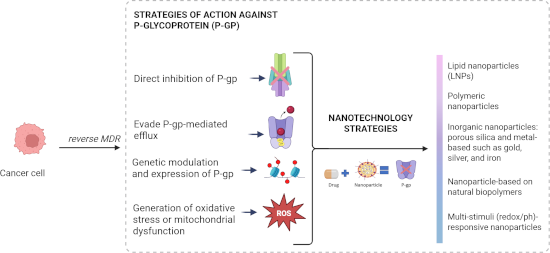
- liposomes, first discovered in the 1960s, which were commonly used to deliver anticancer agents, antibiotics, and vaccines. The size, surface charge, and composition of liposomes influence their biological behavior, biodistribution, and shelf life [45]. Another important class are nanostructured lipid


Nanoparticle delivery systems for HIV pre-exposure prophylaxis (PrEP): advances and challenges
Beilstein J. Nanotechnol. 2026, 17, 839–853, doi:10.3762/bjnano.17.60
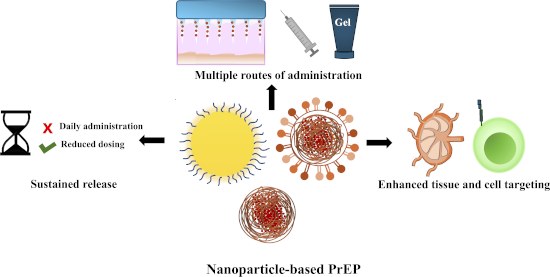
- macrophages (MDMs) in vitro, LBNP-RPV-CCR5 showed enhanced cellular uptake compared to LBNPs without the ligand, resulting in higher intracellular RPV retention that enabled prolonged suppression of HIV replication. Biodistribution studies demonstrated enhanced accumulation of LBNP-RPV-CCR5 in spleen after
- . AuNP-TFV also achieved improved biodistribution in vivo and accumulated in tissues that provide potential HIV reservoirs. These findings corroborate that AuNPs have some potential both as delivery vehicles and potentially also as active therapeutic agents in the context of HIV treatment. However
- intracellular viral reservoirs, and the long-term in vivo biodistribution and clearance of silicon nanoparticles, as well as the underlying mechanisms, still need to be investigated further. Another promising direction in inorganic nanoparticles research is their application in vaccine immunogen delivery


Towards targeted drugs and next generation of nanomedicines
Beilstein J. Nanotechnol. 2026, 17, 598–601, doi:10.3762/bjnano.17.41

- clinically approved nanomedicines such as Doxil or Abraxane used "natural nanoparticles" (i.e. lipid vesicles and proteins) for changing the biodistribution of pharmaceutical drugs, there is hope that fully synthetic engineered nanoparticles may be used in the future. There is, thus, a large potential for
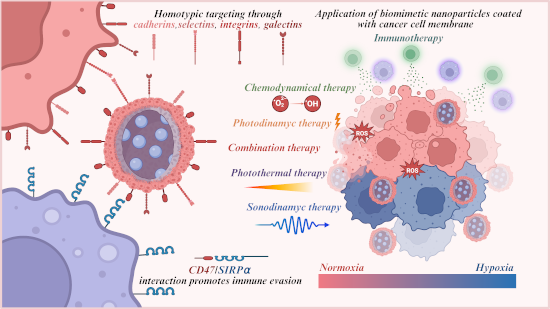
Biomimetic nanoparticles in cancer photodynamic therapy: a review of targeted delivery systems and therapeutic outcomes
Beilstein J. Nanotechnol. 2026, 17, 396–422, doi:10.3762/bjnano.17.27


Safe and sustainable by design with ML/AI: A transformative approach to advancing nanotechnology
Beilstein J. Nanotechnol. 2026, 17, 176–185, doi:10.3762/bjnano.17.11
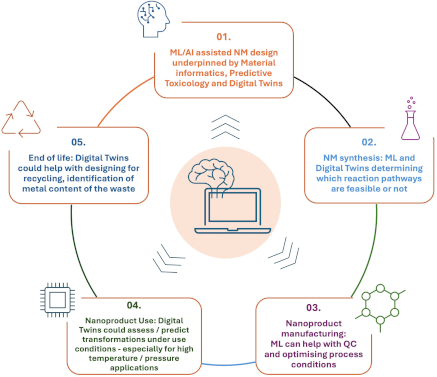
- interpolation from limited experimental datasets [57]. Given that protein corona formation [58] can drastically alter the biodistribution and immunological profile of a nanoparticle, digital twins help pinpoint safer design parameters – such as surface coatings or particle size modifications – which improve


From shield to spear: Charge-reversible nanocarriers in overcoming cancer therapy barriers
Beilstein J. Nanotechnol. 2026, 17, 159–175, doi:10.3762/bjnano.17.10
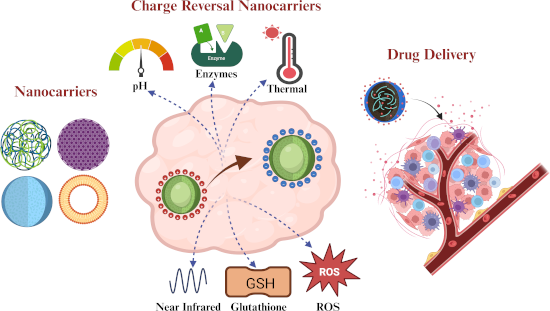
- biodistribution while protecting fragile biomolecules such as proteins and nucleic acids [11]. Through targeted and sustained release, these systems enhance therapeutic efficacy, prolong circulation, and reduce systemic toxicity compared to conventional formulations [12][13]. As illustrated in Figure 1
- physicochemical parameters, the surface charge is essential for determining nanocarrier interactions with biological membranes, cellular uptake, and biodistribution [17]. With a positive charge, the nanocarrier tends to be absorbed by high plasma proteins and cleared faster from the bloodstream. In contrast
- pharmacokinetics, biodistribution, and therapeutic efficacy [100]. These factors collectively influence the biological behaviour and therapeutic efficacy of CRNs, complicating their predictability and consistency in patients. In addition, the intricate composition of these systems often extends regulatory approval


Influence of surface characteristics on the in vitro stability and cell uptake of nanoliposomes for brain delivery
Beilstein J. Nanotechnol. 2026, 17, 139–158, doi:10.3762/bjnano.17.9
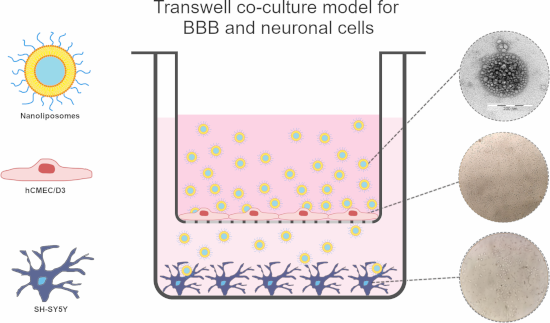
- NLs interact with biomolecules, thus forming a protein corona (PC), altering functional proteins, and engaging in redox reactions with reactive species [6]. These interactions can affect the functionality, biodistribution, targeting, and cell internalization of NLs. Serum components can disrupt the


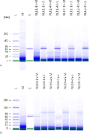
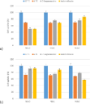


Development and in vitro evaluation of liposomes and immunoliposomes containing 5-fluorouracil and R-phycoerythrin as a potential phototheranostic system for colorectal cancer
Beilstein J. Nanotechnol. 2026, 17, 97–121, doi:10.3762/bjnano.17.7
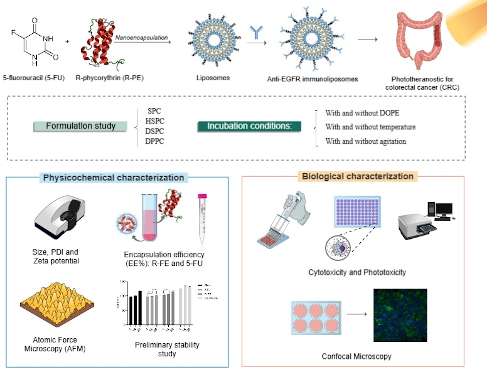
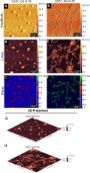
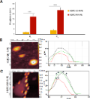
- analyses provide strong evidence of liposome functionalization. The transition from a smooth surface in HSPC-50-R-PE to a rougher HSPC-IM-R-PE topography is likely to impact biological interactions such as cellular uptake mechanisms, biodistribution, clearance by the reticuloendothelial system, and even



Toward clinical translation of carbon nanomaterials in anticancer drug delivery: the need for standardisation
Beilstein J. Nanotechnol. 2025, 16, 2092–2104, doi:10.3762/bjnano.16.144
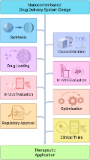
- therapeutics are loaded onto the CNMs via approaches like physical adsorption, covalent attachment, or encapsulation. The resulting formulations undergo in vitro evaluation, and the promising candidates then proceed to in vivo testing in animal models to evaluate therapeutic efficacy, biodistribution, and
- , aspect ratio, surface area, and surface chemistry result in unique biodistribution patterns, metabolic fates, and pharmacokinetic profiles. For instance, the high aspect ratio of carbon nanotubes (CNTs) contributes to their prolonged pulmonary retention, often linked to chronic inflammation and fibrotic
- given CNM, leading to distinct biological behaviours. For instance, diethylentriaminepentaacetic dianhydride-functionalised multiwalled CNTs exhibited markedly different biodistribution profiles following intravenous administration in mice, depending on their degree of functionalisation. CNTs with a low



PEGylated lipids in lipid nanoparticle delivery dynamics and therapeutic innovation
Beilstein J. Nanotechnol. 2025, 16, 1914–1930, doi:10.3762/bjnano.16.133
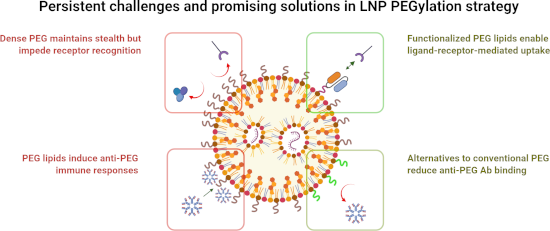
- lipids themselves may influence LNP biodistribution [51]. By partially substituting a total of 2.5 mol % DSPE-PEG content with functionalized PEG containing maleimide, carboxylic acid, or PDP, the study systematically examined how the functionalized groups alone can modulate LNP targeting. Maleimide-LNPs
- effect on uptake or transfection efficiency, suggesting limited interaction enhancement through that functional group. This study highlights that even without ligands, functionalized PEG lipids may be able to modulate LNP surface interactions and biodistribution, though the effect strongly depends on
- leading to diminished therapeutic efficacy and altered biodistribution. Evidence from further animal studies suggests that the ABC effect follows a biphasic timeline, with initial immune priming occurring shortly after the first dose and peak clearance effects observed during subsequent administrations


On the road to sustainability – application of metallic nanoparticles obtained by green synthesis in dentistry: a scoping review
Beilstein J. Nanotechnol. 2025, 16, 1851–1862, doi:10.3762/bjnano.16.128
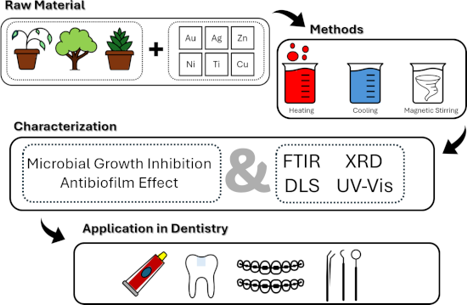
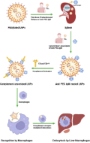
- conducted exclusively in vitro experiments, with no progression to in vivo experimentation in 53.7% (n = 53) of cases. Moreover, 47.8% (n = 45) lacked cytotoxicity assessments or evaluations in human cells. This gap raises important concerns regarding the long-term biocompatibility, biodistribution, and


Exploring the potential of polymers: advancements in oral nanocarrier technology
Beilstein J. Nanotechnol. 2025, 16, 1751–1793, doi:10.3762/bjnano.16.122
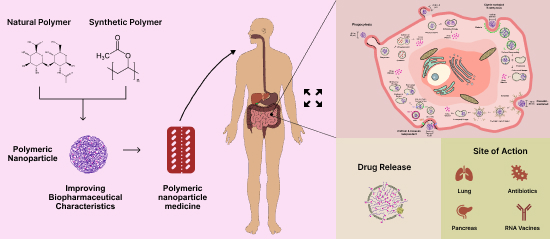
- permeability, critical factors for effective oral drug delivery, are discussed in detail. Furthermore, nanoparticle synthesis methods that enable controlled release profiles, optimized biodistribution, and improved therapeutic efficacy are also explored. Thus, polymers represent a dynamic platform for
- biodistribution while preventing undesirable interactions and degradation before reaching target tissues and cells [10]. Moreover, by overcoming the biological and chemical barriers of the body, nanotechnology increases the efficiency and effectiveness of therapeutic and diagnostic regimens, offering less


Prospects of nanotechnology and natural products for cancer and immunotherapy
Beilstein J. Nanotechnol. 2025, 16, 1644–1667, doi:10.3762/bjnano.16.116
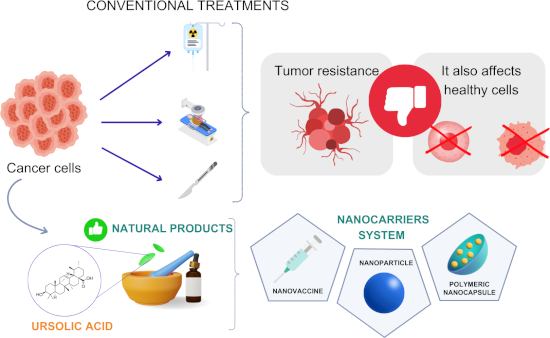
- presentation, facilitates immune cell trafficking, and reduces toxic side effects on non-target cells [101][102]. However, nanoparticles have disadvantages, such as lack of routes of administration, concerns about crossing biological barriers, and tempering biodistribution. In addition, they can cause


Enhancing the therapeutical potential of metalloantibiotics using nano-based delivery systems
Beilstein J. Nanotechnol. 2025, 16, 1350–1366, doi:10.3762/bjnano.16.98
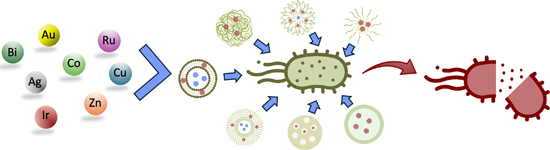
- selectivity, poor biodistribution and pharmacokinetics, poor water solubility, dose-limiting toxicity, and fast degradation in vivo. We will discuss next the major discoveries in the field of the application of nano-based systems for the targeted delivery of metal complex-based antibiotic compounds, focusing
- water solubility, low stability in aqueous solutions under physiological conditions, and unfavorable metabolic or biodistribution profiles. To address these limitations and enhance the delivery of Ru metalloantibiotics to the infection site, several nano-based strategies were developed [126]. For


Ferroptosis induction by engineered liposomes for enhanced tumor therapy
Beilstein J. Nanotechnol. 2025, 16, 1325–1349, doi:10.3762/bjnano.16.97
- a crucial parameter that influences their biodistribution, cellular uptake, and drug release. DLS is a widely used technique to determine the size distribution of liposomes in solution [110][125]. DLS measures the fluctuations in light intensity generated by the Brownian motion of liposome particles


Better together: biomimetic nanomedicines for high performance tumor therapy
Beilstein J. Nanotechnol. 2025, 16, 1246–1276, doi:10.3762/bjnano.16.92
- –protein binding in vivo, nanoparticles can adsorb plasma proteins at their surface in blood circulation and form a corona, which can alter their biodistribution, cell uptake, and intracellular degradation [90]. Thus, as the protein corona increases, albumin proteins affect nanoparticle fate in vivo. As






Hydrogels and nanogels: effectiveness in dermal applications
Beilstein J. Nanotechnol. 2025, 16, 1216–1233, doi:10.3762/bjnano.16.90
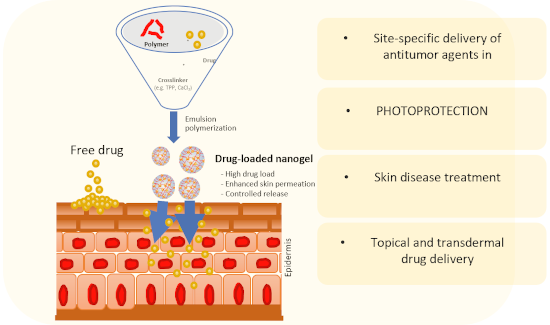
- stability, absorption, and biodistribution impairments. Among the DDSs, we can highlight hydrogels and nanogels, which are easy to obtain, show good biocompatibility, and have several applications in the design of drug carriers for dermal and ocular administration. In this review, we introduce a brief
- nanocarriers, pharmacokinetic and pharmacodynamic parameters – such as size, release kinetics, and biodistribution of the encapsulated drug – must be carefully defined to maximize the efficacy of the system [65]. Such considerations are essential to obtain stable formulations with a controlled release profile
- ± 1.9%. In dermal toxicity studies, the nanogel-MTX formulation showed no signs of irritation or toxicity, while in the biodistribution study, the nanogel-MTX displayed sustained systemic release up to 48 hours with low accumulation in organs such as liver, kidney, and intestine. A therapeutic efficacy


Chitosan nanocomposite containing rotenoids: an alternative bioinsecticidal approach for the management of Aedes aegypti
Beilstein J. Nanotechnol. 2025, 16, 1197–1208, doi:10.3762/bjnano.16.88
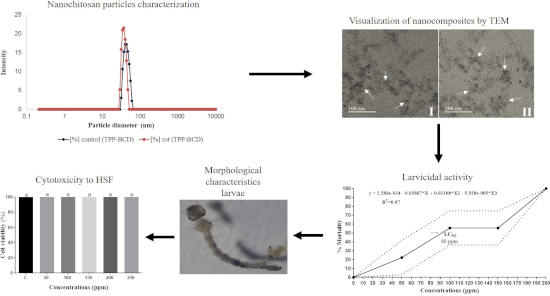
- important parameter for assessing nanoparticle stability and biodistribution. Typically, particles acquire an electric charge at the shear plane when dispersed in a liquid, which is reflected by their zeta potential, that is key to understanding dispersion and aggregation processes in nanoformulations. Zeta



Serum heat inactivation diminishes ApoE-mediated uptake of D-Lin-MC3-DMA lipid nanoparticles
Beilstein J. Nanotechnol. 2025, 16, 740–748, doi:10.3762/bjnano.16.57
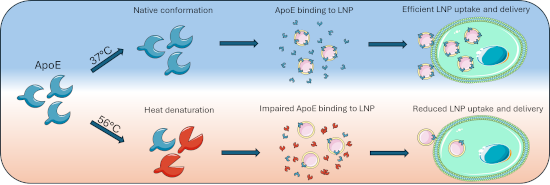
- vitro cellular models aiming to eventually understand biodistribution and cargo delivery efficiency of the LNPs in vivo. For in vitro cell culture, fetal calf serum (FCS) is supplemented to culture media to provide nutrients and promote cell viability and growth. Heat inactivation of FCS is often
- inherent limitations of different classes of therapeutics, ranging from small molecule drugs, to biologicals such as proteins and nucleic acids. Nanoparticles can enhance the solubility and stability of their payload, prolong its circulation time, and improve its biodistribution to increase their safety
- nanoparticle, reviewed by [6][7][8], as well as the protein source of the corona [9][10][11]. Ultimately, the protein corona can change the uptake [12][13][14], biodistribution [15][16][17][18], immunological responses [19][20] and toxicity [6][21][22] of nanoparticles and its characterization should thus play


Nanomaterials in targeting amyloid-β oligomers: current advances and future directions for Alzheimer's disease diagnosis and therapy
Beilstein J. Nanotechnol. 2025, 16, 561–580, doi:10.3762/bjnano.16.44
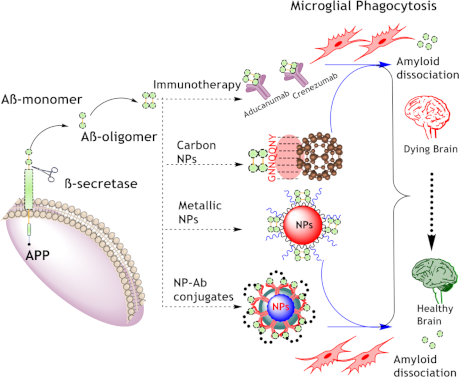
- valuable candidates for various biomedical applications such as diagnosis, therapeutics, and drug delivery. The efficacy of these NPs is closely linked to their pharmacokinetic properties. The biodistribution, safety profile, and clearance mechanism of NPs plays a critical role in the clinical application
- through kidneys and liver and excretion in urine and fecal matter, respectively. In the brain, the biodistribution of NP mainly occurs through the CSF. Direct infusion into the CSF results in rapid and widespread NP distribution, particularly in brainstem, cerebellum, and amygdala. The clearance of NPs
- from the brain is predominantly mediated by the paravascular glymphatic pathway, with studies suggesting that up to 80% of NPs are cleared through this route. Biodistribution and clearance of NPs have been shown to depend on their size and surface properties. Smaller graphene oxide (GO) sheets (20–70


Synthetic-polymer-assisted antisense oligonucleotide delivery: targeted approaches for precision disease treatment
Beilstein J. Nanotechnol. 2025, 16, 435–463, doi:10.3762/bjnano.16.34

- target diseases and genetic variations. However, the lack of disease-specific biomarkers, which facilitate the identification of disease phenotypes, the poor chemical stability of nucleotide-based molecules and their inefficient biodistribution and targeted delivery result in insufficient biological
- oligonucleotide drugs, their poor biodistribution and intracellular delivery have limited their use as therapeutic agents. In fact, efficient delivery to most tissues other than liver, kidneys, lungs, retina, brain, and spinal cord poses major challenges because of the broad systemic distribution, the extensive
- negatively charged nucleic acids and enhances cellular uptake, leading to increased accumulation of therapeutic agents at the target site [104]. Extensive literature regarding the biodistribution and cell internalisation of polyamine-based carriers has shown that factors such as the molecular weight [105


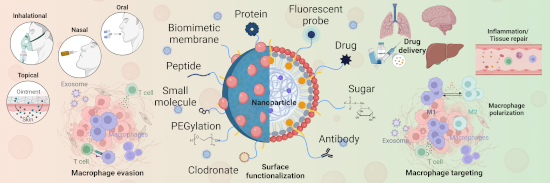
Nanocarriers and macrophage interaction: from a potential hurdle to an alternative therapeutic strategy
Beilstein J. Nanotechnol. 2025, 16, 97–118, doi:10.3762/bjnano.16.10


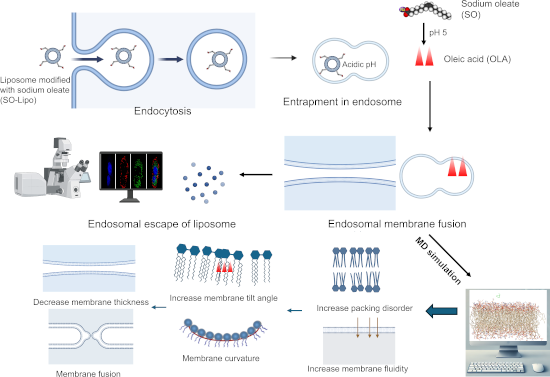
Mechanistic insights into endosomal escape by sodium oleate-modified liposomes
Beilstein J. Nanotechnol. 2024, 15, 1667–1685, doi:10.3762/bjnano.15.131
- leads to toxicity and diminishes their therapeutic value [4][6]. Additionally, the necessity for chemical conjugation between CPPs and therapeutic agents introduces complexities that can affect the pharmacokinetic profile and biodistribution of the drug. Alternative approaches, such as the use of




Biomimetic nanocarriers: integrating natural functions for advanced therapeutic applications
Beilstein J. Nanotechnol. 2024, 15, 1619–1626, doi:10.3762/bjnano.15.127

- such as: loss of stability, low efficiency in crossing biological barriers, inadequate efficacy in reaching target active molecules, and poor biodistribution [13][14]. Nanocarriers are employed to transport raw materials, which can be vesicles or solid nanoparticles [15]. Despite the significant


Liver-targeting iron oxide nanoparticles and their complexes with plant extracts for biocompatibility
Beilstein J. Nanotechnol. 2024, 15, 1593–1602, doi:10.3762/bjnano.15.125
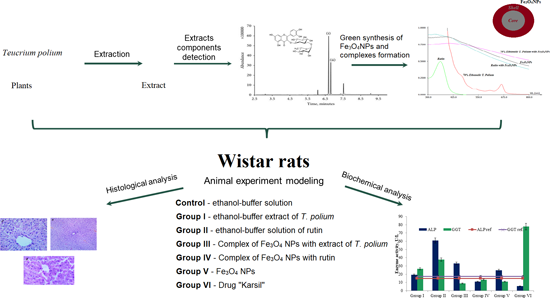
- adverse reactions. The toxicity of MNPs depends on various factors such as size, shape, structure, surface modification, concentration, dosage, biodistribution, bioavailability, solubility, immunogenicity, and pharmacokinetics [23][24]. Their use in some clinical applications is limited by low solubility
- and toxicity effects; as of May 2024, the website clinicaltrials.gov listed data on the development of 51 clinical protocols involving iron oxides NPs [25][26][27]. Surface chemistry and delivery route of MNPs affect their biodistribution patterns and circulation time in the body [28]. It is known
- that MNPs larger than 200 nm are captured by the spleen through mechanical filtration, while MNPs smaller than 10 nm can be eliminated via renal clearance. Therefore, the 10–100 nm range is considered optimal for administration in specific applications [29]. The biodistribution patterns of these