Search results
Search for "birefringence" in Full Text gives 21 result(s) in Beilstein Journal of Nanotechnology.
Structure-dependent thermochromism of PAZO thin films: theory and experiment
Beilstein J. Nanotechnol. 2026, 17, 186–199, doi:10.3762/bjnano.17.12
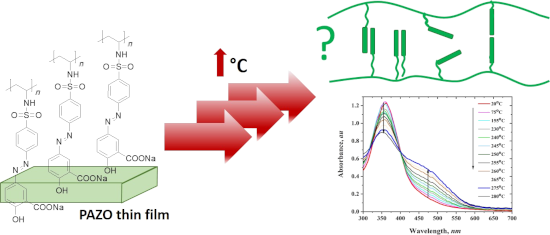
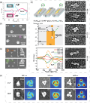
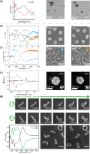
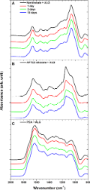
- in azopolymer thin films and offer valuable guidelines for the design of thermally responsive photonic materials. Keywords: aggregate; azopolymer; birefringence; PAZO; thermochromism; Introduction Functionalization of polymers with different photo- and bioactive groups to achieve novel
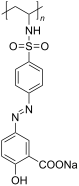
- commercially available poly[1-[4-(3-carboxy-4-hydroxyphenylazo)benzenesulfonamido]-1,2-ethanediyl, sodium salt], usually denoted as PAZO (Figure 1). PAZO possesses a number of unique physical properties, most notably photoinduced birefringence – which are critical for its diverse applications in photonics
- , optoelectronics, memory devices, and sensors [12]. The birefringence phenomenon results from multiple cycles of trans–cis–trans (E–Z–E) photoisomerization stimulated by the polarized light impact [13][14][15][16]. The E–Z–E transitions lead to an alignment of the photoreactive azo chromophores perpendicularly


Chiral plasmonic nanostructures fabricated with circularly polarized light
Beilstein J. Nanotechnol. 2025, 16, 2245–2264, doi:10.3762/bjnano.16.154
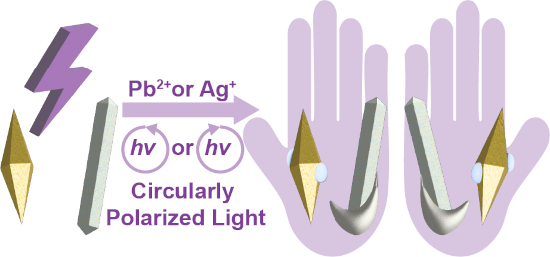
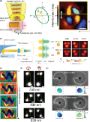
- crystals can affect the polarization of light [10][11]. Subsequently, Biot showed that organic compounds, such as turpentine oil, sugar solutions, camphor, and tartaric acid, can also rotate the polarization of linearly polarized light [12], later attributed by Fresnel to birefringence in the chiral medium
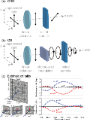
- to the handedness of CPL. Materials are optically active when they exhibit CD or optical rotation dispersion (ORD). The schematics of ORD and CD measurement principles are demonstrated in Figure 7a,b. Optical rotation, also known as circular birefringence (CB), refers to the rotation of the





Lithium niobate on insulator: an emerging nanophotonic crystal for optimized light control
Beilstein J. Nanotechnol. 2024, 15, 1415–1426, doi:10.3762/bjnano.15.114
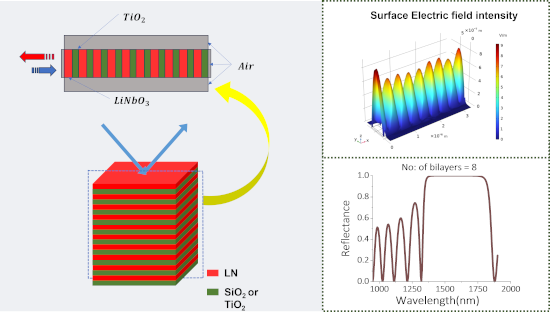
- high dielectric constant enables the fabrication of photonic crystals characterized by high-quality factors and minimal losses [17][18][19][20][21][22][23]. The combination of LiNbO3 and TiO2 in multi-stacked 1D PhC holds promise for optical applications [5]. The birefringence and electro-optic
- to its high refractive index, second/third-order nonlinearities, electro-optic effect, and mature platform), its optical losses and birefringence pose limitations [25]. Combining LiNbO3 with TiO2 in a multi-stack can offer advantages such as tighter confinement, tailored dispersion, and complementary


Liquid crystal tunable claddings for polymer integrated optical waveguides
Beilstein J. Nanotechnol. 2019, 10, 2163–2170, doi:10.3762/bjnano.10.209
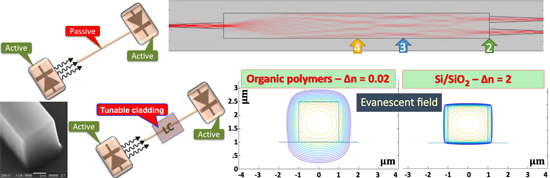
- 1.5–1.7, i.e., close to refractive indices of common LCs. This index matching would not be possible using the usual materials employed in inorganic waveguides, such as silicon or indium phosphide. Silicon nitride, with a refractive index of approximately 2, could be at reach of some high-birefringence
- inorganic core of Si3N4, the refractive index of which is about 2.1. A hypothetical LC cladding working with this core would have to be highly birefringent, perhaps ∆n > 0.5. Although neither common nor commercially available, some experimental LC mixtures having such birefringence can be found in the
- structure with this alignment, one mode of light propagating through the waveguide would experience a cladding with a tunable refractive index in a range close to the LC birefringence ∆n = ne − no, where ne and no are the extraordinary and the ordinary index of the LC, respectively. In a second experimental


Precise local control of liquid crystal pretilt on polymer layers by focused ion beam nanopatterning
Beilstein J. Nanotechnol. 2019, 10, 1691–1697, doi:10.3762/bjnano.10.164
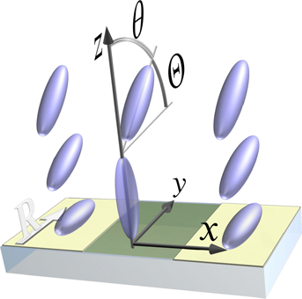
- polarisers. The background colour arises due to the dispersion of phase retardation of the light propagating through the birefringent LC layer. We use the phase retardation value Γ0 measured at a wavelength of λ = 546 nm as a reference. In general, it is determined by the LC material birefringence Δn, the LC
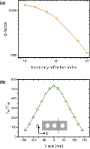
- periodicity in the LC cells of very different thickness are presented in Figure 3a. One can see a universal monotonic dependence of the relative birefringence on the reverse duty factor (1 − r) covering the whole range from 0 to 1, i.e., from the purely vertical LC alignment at r = 1 to the hybrid alignment
- through the LC layer. Due to the LC birefringence, they acquire different optical paths: for the x-polarized state, and for the y-polarized state. For a relatively weak birefringence Δn = ne − no, we can write the measured phase retardation approximately as which is formally x-dependent. Substituting


Magnetic segregation effect in liquid crystals doped with carbon nanotubes
Beilstein J. Nanotechnol. 2019, 10, 1464–1474, doi:10.3762/bjnano.10.145
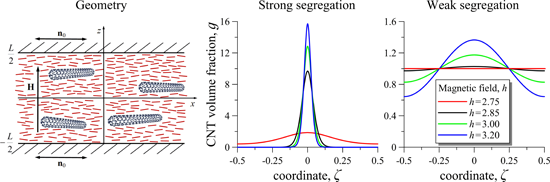
- ferromagnetic particles based on NLCs [12]), analogous transitions were studied in [43][44][49]. Magneto-optical response of the NLC–CNT mixture One of the ways to study orientational transitions in an LC experimentally is to measure birefringence in a cell. In an optically positive LC, with the appearance of


Fe3O4 nanoparticles as a saturable absorber for giant chirped pulse generation
Beilstein J. Nanotechnol. 2019, 10, 1065–1072, doi:10.3762/bjnano.10.107
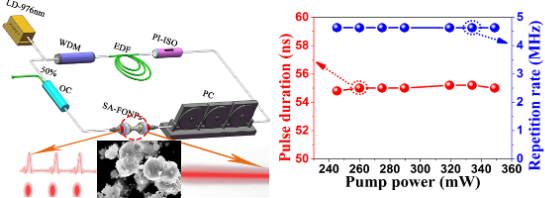
- ) is utilized to adjust the linear cavity birefringence. The solution is connected to a 50/50 optical coupler (OC) with 50% of its output port connected to the combiner. To simultaneously measure two different parameters, a 95.4/4.6 optical coupler is connected to the laser output port. The 4.6% part
- pulses are generated in the experiments, we implemented a laser cavity without the SA materials. It was found that only the wavelength can be tuned in the spectra and some fluctuations were observed on the oscilloscope by adjusting the polarization controllers, which is due to the birefringence and


Nanoscale optical and structural characterisation of silk
Beilstein J. Nanotechnol. 2019, 10, 922–929, doi:10.3762/bjnano.10.93
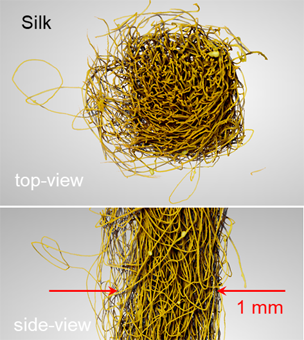
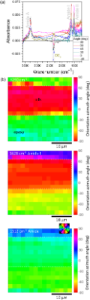
- orientation dependency of the birefringence Δn and dichroism Δκ, define the optical response of a material. The reflectance R is proportional to the real part, while the absorbance A corresponds to the imaginary part of . Recently, we demonstrated that the IR measurements of silk performed using three
- (LC) retarder, which was inserted with its slow-axis perpendicular to the orientation of the silk fiber (see inset in Figure 3b). Using such a geometry, it is possible to compensate for the birefringence of the silk fibers, Δn ≡ ne − no > 0, with a phase delay imparted by the LC retarder. When the
- phase delay through the LC retarder is equal to the absolute value, but has an opposite sign through the silk fiber, the darkest (black) region is formed in the image at ca. 2.9 V (Figure 3a). For the thickness of fiber d = 48 μm and measured retardance, the birefringence Δn ≈ 4 × 10⁻³. This is an


Threshold voltage decrease in a thermotropic nematic liquid crystal doped with graphene oxide flakes
Beilstein J. Nanotechnol. 2019, 10, 71–78, doi:10.3762/bjnano.10.7
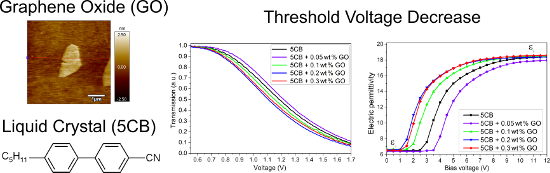
- experimental set-up. In the electro-optic (EO) experiment, the switching was driven by the ac square electric signal at a frequency of 1 kHz generated by a waveform generator, Agilent 33220A. Moreover, to determine the switching times in the electrically controlled birefringence (ECB) mode of operation, an
- slight decrease in birefringence of GO composites compared with the pure 5CB nematic liquid crystal (Figure 3a). For concentrations higher than 0.3 wt %, we can expect the creation of a lyotropic nematic phase in the isotropic phase of the 5CB-GO suspension, as was previously reported [39][40]. We used



Temperature-tunable lasing from dye-doped chiral microdroplets encapsulated in a thin polymeric film
Beilstein J. Nanotechnol. 2018, 9, 379–383, doi:10.3762/bjnano.9.37
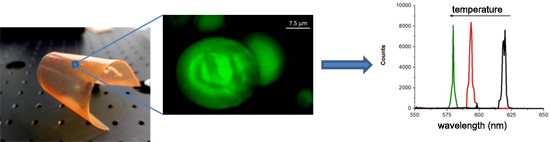
- − no is the birefringence of the liquid crystal. The PBG spectral position is sensitive to external or internal factors as electric and electromagnetic fields, temperature and local order variations [1][2][3][4]. Due to the presence of a PBG, CLCs behave as Bragg resonators that can be used to build up
- . Results and Discussion The materials used for the emulsion preparation are described in the following. The nematic material ZLI-1939, with a birefringence of 0.18, and the chiral dopant ZLI-811, both from Merck, are used. The cholesteric liquid crystal mixture is prepared with the following percentages


Liquid-crystalline nanoarchitectures for tissue engineering
Beilstein J. Nanotechnol. 2018, 9, 205–215, doi:10.3762/bjnano.9.22
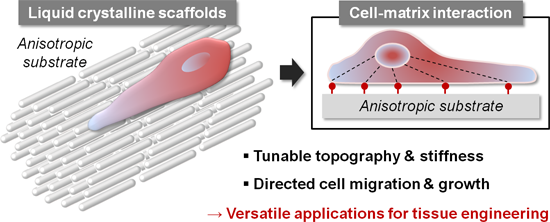
- helices, at collagen concentrations above 100 mg/mL in 0.5 mM acetic acid, exhibit strong birefringence with a fingerprint texture in polarizing microscopy. In the coexistence regime of isotropic and nematic phases of collagen, spindle-shaped cholesteric tactoids appear in the isotropic medium. The


Design of photonic microcavities in hexagonal boron nitride
Beilstein J. Nanotechnol. 2018, 9, 102–108, doi:10.3762/bjnano.9.12
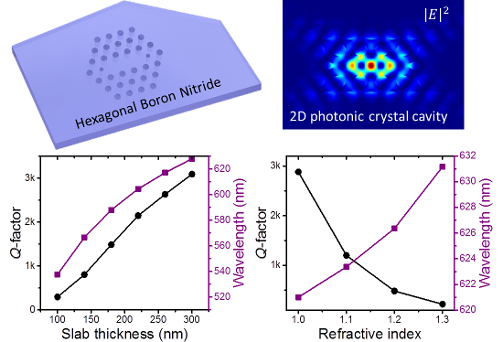
- commercial finite-difference time-domain (FDTD) software package (Lumerical Inc.). The 3D FDTD simulation domain for 2D (1D) photonic crystal was 7 μm × 7 μm × 1.2 μm (11 μm × 2 μm × 2 μm) which is discretised using uniform spatial and temporal grids of 15 nm and 0.03 fs. Birefringence of hBN is accounted


Study of the vertically aligned in-plane switching liquid crystal mode in microscale periodic electric fields
Beilstein J. Nanotechnol. 2018, 9, 11–19, doi:10.3762/bjnano.9.2
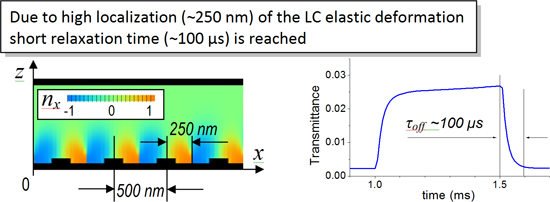
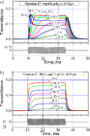
- 1957/5 and exhibits almost double birefringence (∆n). The larger birefringence of E7 allows for making smaller cells with an equivalent optical retardation. Also, the larger low-frequency dielectric anisotropy of E7 yields a stronger electric field torque, which is favorable for shortening the
- index of the E7 LC material, which results in stronger reflections at LC–alignment layer–glass boundaries. The second reason is associated with a higher spectral dispersion of the optical phase delay, which is due to the higher birefringence of the E7 LC. The higher dispersion provides a narrower
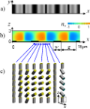
- . Because of the geometry of our experimental setup we measure the light intensity in a narrow angular sector (<2°) with respect to the LC layer normal. Thus, all measured results are associated with the zero-order diffraction beam. Due to the larger birefringence of the E7 LC the depth of the refractive






Optical techniques for cervical neoplasia detection
Beilstein J. Nanotechnol. 2017, 8, 1844–1862, doi:10.3762/bjnano.8.186

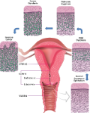
- squamous epithelium exhibited strong birefringence (optical index anisotropy), which vanished in precancerous regions even for LSIL. The orientation of the optical axis of retarder became completely random in CIN zones. This effect was attributed to the degeneration of stromal collagen beneath the



Dispersion of single-wall carbon nanotubes with supramolecular Congo red – properties of the complexes and mechanism of the interaction
Beilstein J. Nanotechnol. 2017, 8, 636–648, doi:10.3762/bjnano.8.68
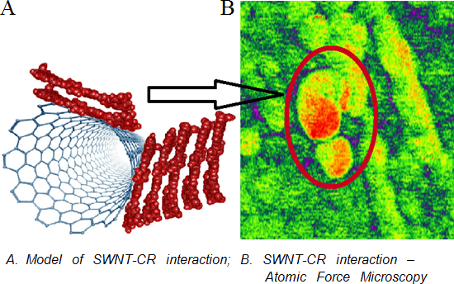
- , sonication-based method of obtaining CR-functionalized SWNTs. Congo red is best known as an amyloid specific dye, used for years in histochemical analyses for the detection of amyloid fibrils, which – when stained with CR – present characteristic apple-green birefringence under the polarized light microscope
- . Birefringence implies anisotropy and ordered arrangement of dye molecules bound to regular, beta-structured amyloid fibrils [29][30]. Congo red molecules self-assemble in water solutions producing supramolecular entities stabilized by π–π interactions between aromatic rings [31][32][33]. Supramolecular Congo
- analysis – Figure 6 A). The ordering of CR is also responsible for the birefringence of the SWNT–CR complexes observed using polarized light microscopy (data not shown). CR molecules bound indirectly (and thus more loosely) to the nanotube as distant elements of the CR ribbon, which are more abundant at


Morphology of SiO2 films as a key factor in alignment of liquid crystals with negative dielectric anisotropy
Beilstein J. Nanotechnol. 2016, 7, 1743–1748, doi:10.3762/bjnano.7.167
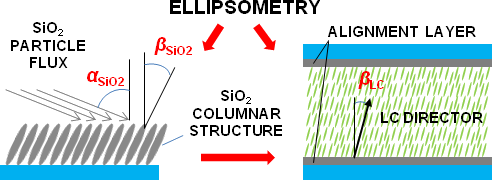
- account birefringence while Gospodyn et al. [18] studied anisotropic refractive index as well. However, information on the index ellipsoid orientation of obliquely evaporated SiO2 films is still missing. The connection between SiO2 column tilt and pretilt of LCs is not clarified yet. Most papers focused
- of the anisotropic layer. Transmission GE parameters are measured at λ = 1200 nm varying θ from −15° to 60°. The off-diagonal elements of the Ψ and Δ matrices are strongly affected by the orientation of index ellipsoid (angles β and φ) but also by birefringence and film thickness. The optical model
- α, as the film density decreases, showing always the same relation nz > nx > ny. Birefringence increases with α and reaches values nz − ny = 0.042 and nz − nx = 0.014 at α = 86°. The fitting error is ±0.003 and ±0.01 at high and low α, respectively. The refractive index, n, obtained in the isotropic


Functional diversity of resilin in Arthropoda
Beilstein J. Nanotechnol. 2016, 7, 1241–1259, doi:10.3762/bjnano.7.115
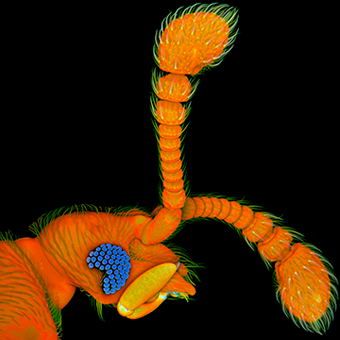
- hydrated state, resilin is swollen and features its typical rubbery nature, long-range deformability and complete elastic recovery. Furthermore, if hydrated resilin is tensioned, it will become birefringent, and the birefringence will be positive in the direction of the extension. When resilin is


Reorientation of single-wall carbon nanotubes in negative anisotropy liquid crystals by an electric field
Beilstein J. Nanotechnol. 2016, 7, 825–833, doi:10.3762/bjnano.7.74
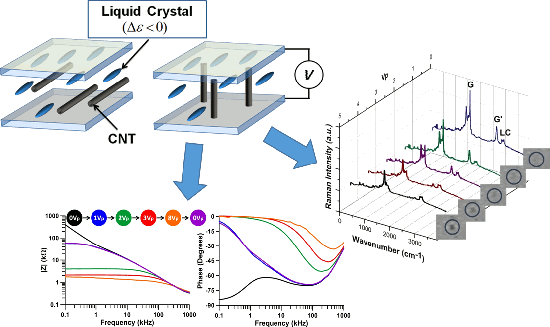
- director lies in the plane of the cell surfaces, while in homeotropic alignment the director orients perpendicular to the plane of the cell surfaces. LCs feature, amongst others, electrical, magnetic, and optical (birefringence) anisotropy properties. In the absence of an external field, the LC orientation
- across the layers that form the LC cell. The LC used for this study is the negative dielectric nematic mixture MLC-6608-000 (Merck). This LC has an optical birefringence of ∆n = 0.083 at 589.3 nm and is commonly used in VAN devices. The LC is doped with SWCNTs (Unidym) with an outer diameter of 1 nm and


Self-assembled anchor layers/polysaccharide coatings on titanium surfaces: a study of functionalization and stability
Beilstein J. Nanotechnol. 2015, 6, 617–631, doi:10.3762/bjnano.6.63
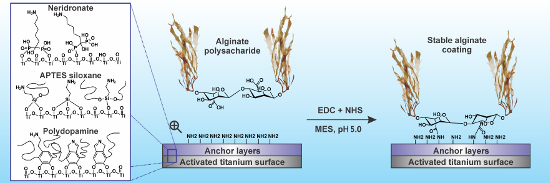
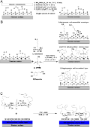
- birefringence and dichroism causing errors in the ellipsometric angles Δ and Ψ smaller than 0.3° and 0.1°, respectively. These errors were corrected following the method of Azzam and Bashara [61]. To increase the measurement precision and exclude errors from the variations of layer thickness throughout the


Electrical response of liquid crystal cells doped with multi-walled carbon nanotubes
Beilstein J. Nanotechnol. 2015, 6, 396–403, doi:10.3762/bjnano.6.39
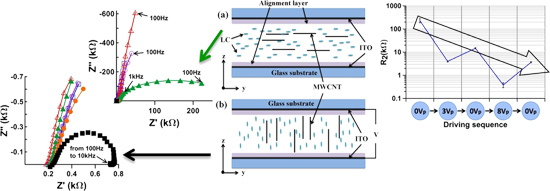
- probing wavelength was 543 nm, close enough to the 588 nm wavelength employed in the LC data sheet for birefringence measurement. Figure 3 is an example of the results. From the saturating side V ≥ 8 Vp (where p indicates the “peak voltage”, see Experimental section) down to the maximum at about 1.8 Vp
- is a well-known positive dielectric nematic mixture that has been used in low-end LC displays. Its main features are a kinematic viscosity of 20 mm2·s−1 at 20 °C and an optical birefringence (Δn) of 0.120 at 588 nm. The material shows a wide nematic phase range above and below room temperature. The


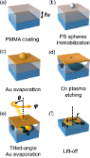
Hole-mask colloidal nanolithography combined with tilted-angle-rotation evaporation: A versatile method for fabrication of low-cost and large-area complex plasmonic nanostructures and metamaterials
Beilstein J. Nanotechnol. 2014, 5, 577–586, doi:10.3762/bjnano.5.68
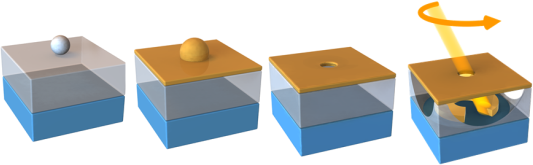
- as possible elliptical birefringence, which is associated with polarization conversion of our structures [1]. Afterwards, we show another fabricated chiral structure with a 3D oligomer shape, which consists of three gold disks in the first layer that are arranged in an L-shaped pattern, followed by a
- calculate the transmittance difference (ΔT) between RCP- and LCP-light to determine the chiral properties of our sample (Figure 4i), and plot them in Figure 5i. Due to the same orientation of all structures, which exhibits no C3 or C4 symmetry of the arrangement, the elliptic birefringence arises from the