


Search results
Search for "camphor" in Full Text gives 8 result(s) in Beilstein Journal of Nanotechnology.
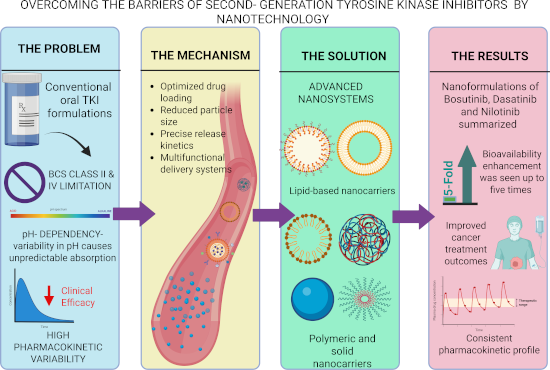
Breaking barriers: nanosystems to overcome solubility and permeability challenges of second-generation tyrosine kinase inhibitors
Beilstein J. Nanotechnol. 2026, 17, 1063–1086, doi:10.3762/bjnano.17.73


Restorative potential of laser-synthesized silver nanoparticles with Salvia officinalis for periodontal disease treatment: an in vitro study
Beilstein J. Nanotechnol. 2026, 17, 781–795, doi:10.3762/bjnano.17.55
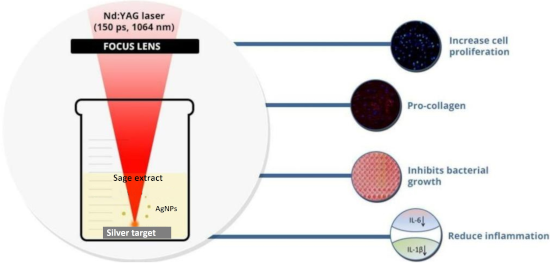
- our study could increase stability and bioactivity of silver nanoparticles. Additionally, our previous study revealed a relatively high content of camphor (approximately 15%), suggesting that, besides phenolics, terpenoids may also contribute to nanoparticle synthesis [13]. To the best of our
- knowledge, there are no studies that directly investigated the role of camphor in the synthesis of AgNPs. However, literature findings indicate that plant extracts rich in camphor may contribute to nanoparticle formation by acting as both reducing and stabilizing agent, suggesting its role in AgNP synthesis



Chiral plasmonic nanostructures fabricated with circularly polarized light
Beilstein J. Nanotechnol. 2025, 16, 2245–2264, doi:10.3762/bjnano.16.154
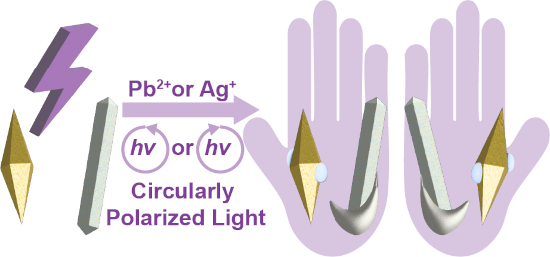
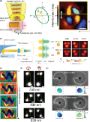
- crystals can affect the polarization of light [10][11]. Subsequently, Biot showed that organic compounds, such as turpentine oil, sugar solutions, camphor, and tartaric acid, can also rotate the polarization of linearly polarized light [12], later attributed by Fresnel to birefringence in the chiral medium





Targeting the vector of arboviruses Aedes aegypti with nanoemulsions based on essential oils: a review with focus on larvicidal and repellent properties
Beilstein J. Nanotechnol. 2025, 16, 1894–1913, doi:10.3762/bjnano.16.132
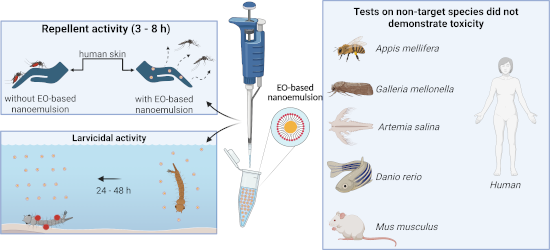
- these oils sustainable and effective alternatives for controlling disease-carrying insects, including Ae. aegypti [71][72]. Chemical components such as limonene, menthol, linalool, thymol, eugenol, citral, and camphor are widely used in commercial insecticide and repellent formulations around the world


Interface properties of nanostructured carbon-coated biological implants: an overview
Beilstein J. Nanotechnol. 2024, 15, 1041–1053, doi:10.3762/bjnano.15.85
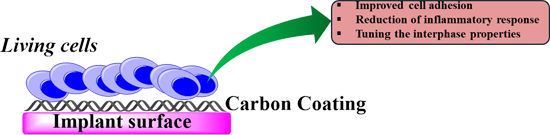
- ., camphor and cyclohexanol) on various substrates, ranging from uncoated silicon to simple glass, to yield carpets of vertically aligned CNTs. Nevertheless, a purification stage for removing the catalyst is mandatory for avoiding side effects in biological environments [82][83]. The choice of the catalyst



Molecular assemblies on surfaces: towards physical and electronic decoupling of organic molecules
Beilstein J. Nanotechnol. 2021, 12, 950–956, doi:10.3762/bjnano.12.71

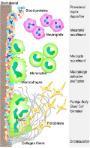
- example of (1S)-camphor on Cu(111) [72]. Such computational tools become relevant for molecules with bulky spacer groups since they are very valuable for predicting and interpreting the structural and conformational properties as well as the decoupling of such molecules on surfaces. With an appropriate
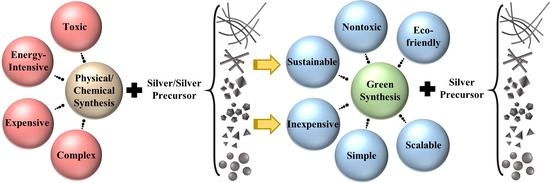
A review on the green and sustainable synthesis of silver nanoparticles and one-dimensional silver nanostructures
Beilstein J. Nanotechnol. 2021, 12, 102–136, doi:10.3762/bjnano.12.9


Detecting stable adsorbates of (1S)-camphor on Cu(111) with Bayesian optimization
Beilstein J. Nanotechnol. 2020, 11, 1577–1589, doi:10.3762/bjnano.11.140
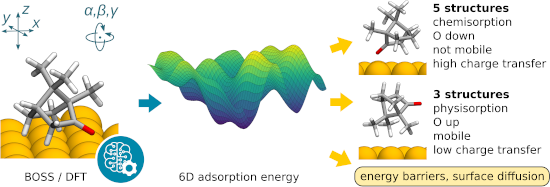
- Bayesian Optimization Structure Search (BOSS) method as an efficient solution for identifying the structure of non-planar adsorbates. We apply BOSS with density-functional theory simulations to detect the stable adsorbate structures of (1S)-camphor on the Cu(111) surface. We identify the optimal structure
- among eight unique types of stable adsorbates, in which camphor chemisorbs via oxygen (global minimum) or physisorbs via hydrocarbons to the Cu(111) surface. This study demonstrates that new cross-disciplinary tools, such as BOSS, facilitate the description of complex surface structures and their
- properties, and ultimately allow us to tune the functionality of advanced materials. Keywords: Bayesian optimization; camphor; Cu(111); density-functional theory; electronic structure; organic surface adsorbates; physical chemistry; structure search; surface science; Introduction Current frontier


Other Beilstein-Institut Open Science Activities



