Search results
Search for "cell lines" in Full Text gives 141 result(s) in Beilstein Journal of Nanotechnology.
Ultrasonic irradiation in the synthesis of nanohydroxyapatite: a chemically friendly technique for improving hemocompatibility and antibiofilm applications
Beilstein J. Nanotechnol. 2026, 17, 991–1015, doi:10.3762/bjnano.17.68
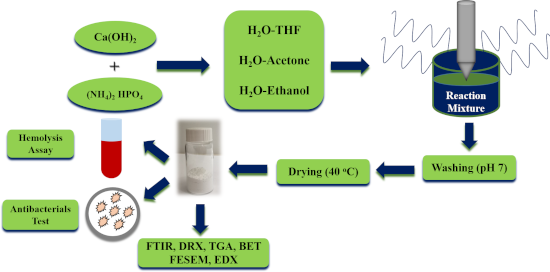
- position these nanosystems as ideal candidates for tissue regeneration applications and site-specific delivery systems. Despite these promising results, the need for exhaustive biological validation through in vitro cytotoxicity assays with osteoblastic cell lines is recognized as a limitation of this work




Nanocarrier strategies to overcome P-glycoprotein-mediated drug resistance in cancer therapy
Beilstein J. Nanotechnol. 2026, 17, 882–921, doi:10.3762/bjnano.17.64
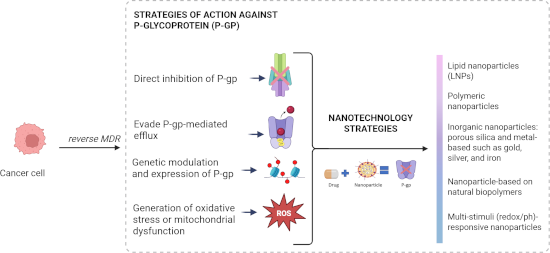
- synthesis. 2.5 Data extraction and analysis Relevant information was extracted from selected studies, including nanoparticle type, mechanism of action against P-glycoprotein, experimental models (cell lines or animal models), type of drug delivered, and therapeutic outcomes. Special attention was given to


Nanoinformatics: spanning scales, systems and solutions
Beilstein J. Nanotechnol. 2026, 17, 423–427, doi:10.3762/bjnano.17.28

- , and characterisation of nanomaterials; (ii) assays used to assess the transformations of nanomaterials in complex media; and (iii) assays used for the assessment of the toxicity of the nanomaterials, for example using standardised Daphnia magna assays or human immunotoxicity assessment using cell
- lines and primary cellular models. Another example demonstrated the use of the instance map approach for the coordination of materials and data flows in complex multi-partner collaborative projects, providing information on both materials and data flows in a user-friendly approach to metadata capture

Influence of surface characteristics on the in vitro stability and cell uptake of nanoliposomes for brain delivery
Beilstein J. Nanotechnol. 2026, 17, 139–158, doi:10.3762/bjnano.17.9
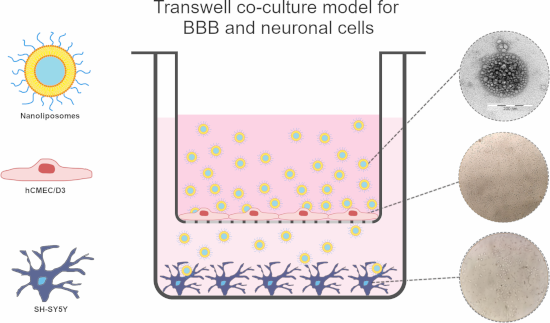
- -SY5Y cell lines to predict how formulation properties and the extracellular microenvironment affect the in vivo performance of NLs, and access transport mechanisms as well as internalization in brain tissues. Additionally, transport experiments on a co-culture system (hCMEC/D3/SH-SY5Y) were performed
- performed in the presence of inhibitors for specific transport pathways. Cells were seeded and cultured as described above. The quantitative amount of the internalized NLs was investigated on both cell lines. One set of cells was treated with 15 μM of chlorpromazine and another set with 25 μM of
- uptake experiments on co-cultured hCMEC/D3 and SH-SY5Y cell lines The hCMEC/D3 cells were seeded onto Transwell inserts (5 × 10⁴ cells/insert), previously coated with 0.05 mg/mL type I collagen in DPBS (1 h, 37 °C) and incubated with EBM-2 (0.5 mL of cell medium in the apical part of the insert and 1 mL




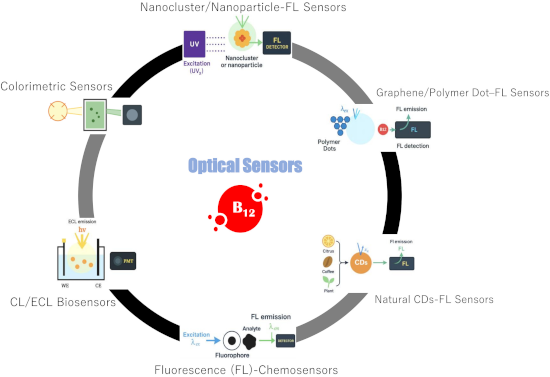
Optical bio/chemical sensors for vitamin B12 analysis in food and pharmaceuticals: state of the art, challenges, and future outlooks
Beilstein J. Nanotechnol. 2025, 16, 2207–2244, doi:10.3762/bjnano.16.153


Quality by design optimization of microemulsions for topical delivery of Passiflora setacea seed oil
Beilstein J. Nanotechnol. 2025, 16, 2116–2131, doi:10.3762/bjnano.16.146
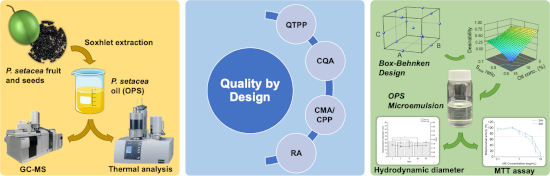
- , thereby improving patient compliance. In vitro cytocompatibility To assess the safety of the ME formulation for potential topical use, a proof-of-concept cytocompatibility evaluation was conducted using the MTT assay, which measures mitochondrial metabolic activity. The assay was performed on two cell
- lines relevant to wound healing and topical application: murine macrophages (RAW 264.7) and human umbilical vein endothelial cells (HUVECs) (Figure 11). According to ISO 10993-13 guidelines, the base ME was considered cytocompatible up to concentrations of 2 mg/mL for RAW cells and 0.5 mg/mL for HUVECs


Rapid synthesis of highly monodisperse AgSbS2 nanocrystals: unveiling multifaceted activities in cancer therapy, antibacterial strategies, and antioxidant defense
Beilstein J. Nanotechnol. 2025, 16, 2105–2115, doi:10.3762/bjnano.16.145
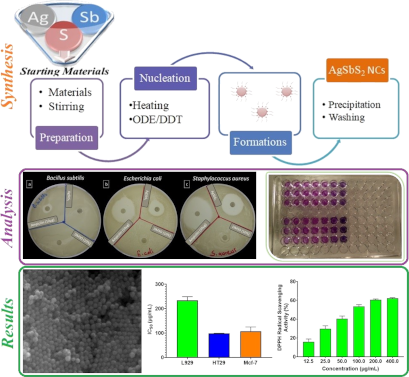
- study is the first to investigate the cytotoxic effects of these NCs on human breast adenocarcinoma (MCF-7), colon cancer cell lines (HT-29), and fibroblast cell lines (L929). Additionally, the antibacterial properties of the NCs against gram-positive (Staphylococcus aureus and Bacillus subtilis) and
- , particularly on cancer cell lines (MCF-7 and HT-29), in a dose-dependent manner over a 24 h period. These findings highlight the potential of the NCs as anticancer agents. Furthermore, the synthesized NCs demonstrated potent antibacterial properties against the tested microorganisms and notable antioxidant
- fibroblast cell lines were chosen as the experimental models in our in vitro study. Cell lines were cultured in DMEM (Dulbecco’s modified Eagle’s medium) supplemented with 10% FBS (fetal bovine serum), 1% penicillin/streptomycin solution (100 IU/mL/100 µg/mL) and 0.01% gentamicin. The cell lines to be tested


PEGylated lipids in lipid nanoparticle delivery dynamics and therapeutic innovation
Beilstein J. Nanotechnol. 2025, 16, 1914–1930, doi:10.3762/bjnano.16.133
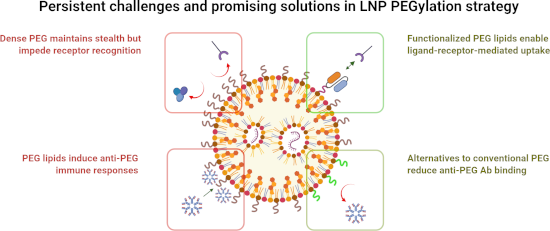
- maleimide groups quenched by adding ʟ-cysteine [42][44]. The dual-targeted LNPs exhibited enhanced performance in vitro across breast cancer cell lines including MCF7, MDA-mb453, and SKBR3. In HER2-overexpressing SKBR3 cells, the dual-targeted LNPs achieved 75% transfection efficiency and significantly


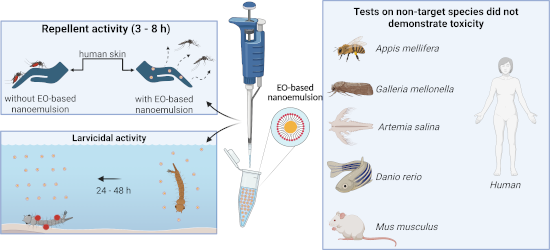
Targeting the vector of arboviruses Aedes aegypti with nanoemulsions based on essential oils: a review with focus on larvicidal and repellent properties
Beilstein J. Nanotechnol. 2025, 16, 1894–1913, doi:10.3762/bjnano.16.132


On the road to sustainability – application of metallic nanoparticles obtained by green synthesis in dentistry: a scoping review
Beilstein J. Nanotechnol. 2025, 16, 1851–1862, doi:10.3762/bjnano.16.128
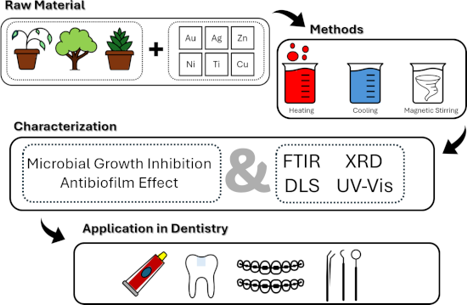
- cell lines [24][28]. In dentistry, green-synthesized nanoparticles have been explored in various clinical applications. They are effective in preventing biofilm formation and growth of key oral pathogens, such as Streptococcus mutans and Candida albicans, particularly when incorporated into dental


Advances of aptamers in esophageal cancer diagnosis, treatment and drug delivery
Beilstein J. Nanotechnol. 2025, 16, 1734–1750, doi:10.3762/bjnano.16.121
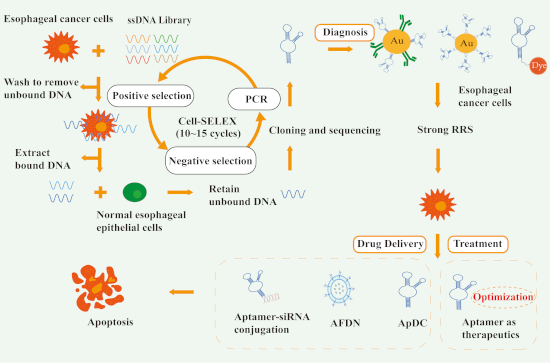
- survival oncogene of ESCC [72], can maintain the squamous characteristics of tumor cells and is essential for the proliferation and survival of esophageal cancer cell lines. Moreover, SOX2 and DMRTA1 (DMRT-like family A1) can promote the expression of each other, which may drive the occurrence of ESCC
- interactions [79], begin to emerge. Chen et al. [80] showed that CDP and SOX2 expression levels were highly correlated with late ESCC, verified that CDP and SOX2 interacted in ESCC cell lines (KYSE450 and KYSE30 cells), and confirmed the interaction interface between these two proteins. Peptide aptamer p58
- experiments showed that about 50% of EPI was released after 25 h. Cytotoxicity studies were carried out in KYSE-70 and EC109 cell lines. PEI–aptamer–EPI had significantly higher tumoricidal effects compared with EPI and Aptamer-EPI groups. Unfortunately, this study was only in vitro; biocompatibility, in vivo


Prospects of nanotechnology and natural products for cancer and immunotherapy
Beilstein J. Nanotechnol. 2025, 16, 1644–1667, doi:10.3762/bjnano.16.116
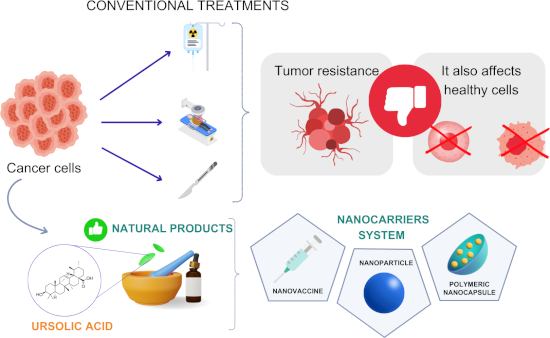
- ]. Patents WO2016178224 and US240447339 show robust results, with solid data both in vitro and in vivo, suggesting high efficacy compared to the free drug and lower toxicity. Patents CN222367609 and CN225561345, although their results are limited to specific cell lines, also show good results in terms of


Venom-loaded cationic-functionalized poly(lactic acid) nanoparticles for serum production against Tityus serrulatus scorpion
Beilstein J. Nanotechnol. 2025, 16, 1633–1643, doi:10.3762/bjnano.16.115
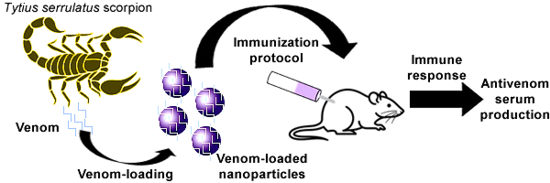
- carriers, further investigation is required to assess their safety profile. In vitro cytotoxicity assays on relevant cell lines, particularly immune or epithelial cells and long-term biocompatibility studies, including histopathological analysis following repeated administration, will be essential to


Better together: biomimetic nanomedicines for high performance tumor therapy
Beilstein J. Nanotechnol. 2025, 16, 1246–1276, doi:10.3762/bjnano.16.92
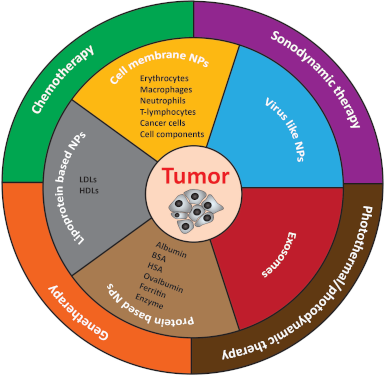
- chemotherapeutics in lung cancer MDR cell lines. They isolated different cell membranes (RBCs, 4T1, LO2, and A549-T) and constructed cell membrane-camouflaged biogenic nanoparticles to deliver antitumor paclitaxel and MDR-modulator disulfiram. Consequently, the MDR cancer cell membrane-coated nanoparticles (A549/T CM


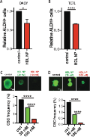




Serum heat inactivation diminishes ApoE-mediated uptake of D-Lin-MC3-DMA lipid nanoparticles
Beilstein J. Nanotechnol. 2025, 16, 740–748, doi:10.3762/bjnano.16.57
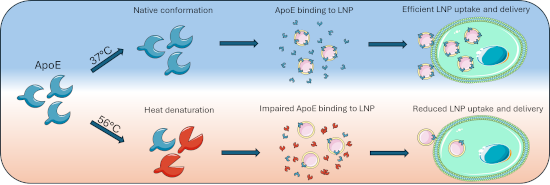
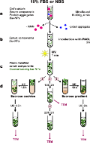
- supplemented with fetal calf serum (FCS). FCS is commonly heat treated to inactivate mycoplasma and viruses, as well as denature heat labile complement factors without affecting the nutrients needed for cell growth [27]. As some cell lines are sensitive to complement factors, the heat treatment can prevent the
- (Peprotech), and 50 nM hydrocortisone (Sigma), in flasks coated with 0.1% gelatin (Merck). All cells were cultured at 37 °C with 5% CO2. Cell lines were transformed to express the dual luciferase system as described by Evers et al. [28]. Briefly, cell lines were transfected with a pHAGE2-PGK-FFluc-SV40-Rluc
- supplemented with HI or NHI FCS. Uptake by cells cultured in medium with HI FCS supplemented with 1 µg/mL recombinant ApoE3 was included as positive control. An overview of the physicochemical characteristics of the LNP formulations can be found in Supporting Information File 1 (Figure S1). Three cell lines


Efficiency of single-pulse laser fragmentation of organic nutraceutical dispersions in a circular jet flow-through reactor
Beilstein J. Nanotechnol. 2025, 16, 711–727, doi:10.3762/bjnano.16.55
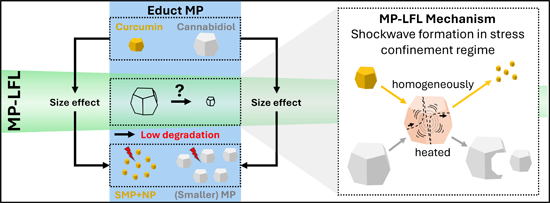
- effects when laser-fragmented curcumin particles are exposed to cancer cell lines, which is well in line with other curcumin formulations but highlights that LFL is a promising comminution strategy to generate bioactive curcumin in the absence of additional stabilizing ligands and additives. Experimental


Nanomaterials in targeting amyloid-β oligomers: current advances and future directions for Alzheimer's disease diagnosis and therapy
Beilstein J. Nanotechnol. 2025, 16, 561–580, doi:10.3762/bjnano.16.44
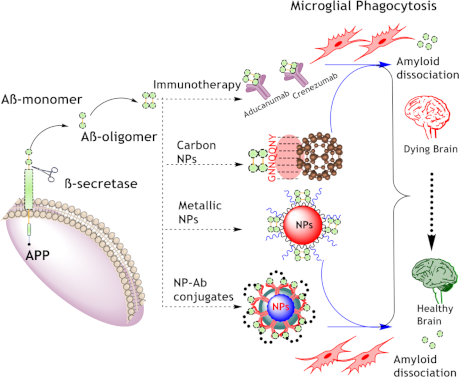
- , exhibiting the greatest reduction in Aβ1–42 peptide-induced cytotoxicity in Neuro-2a cell lines. Structural studies indicate that these palladium complexes interact with both the fibrillar (PDB: 2BEG) and monomeric (PDB: 1IYT) forms of the Aβ1–42 peptide. This interaction occurs through a variety of binding


Synthetic-polymer-assisted antisense oligonucleotide delivery: targeted approaches for precision disease treatment
Beilstein J. Nanotechnol. 2025, 16, 435–463, doi:10.3762/bjnano.16.34

- levels. In addition to chemical functionality, studies have demonstrated the importance of the architectural structure of the PLL employed [73][74]. In a study on the delivery of the ASO 5′-TGGCGTCTTCCATTT-3′ (PS-ODN) to two cell lines, D407 (clone 6-2) and CV-1 (clone CV-11), both expressing luciferase
- PMO conjugate containing linolenic acid with three double bonds (LenA) exhibited enhanced cellular internalisation while maintaining high cell viability on various cell lines, leading to the highest splice switching activity (Figure 8). Poly(propylene imine). Since pioneering research by Vögtle and
- apoptosis rates in human cancer cell lines [134]. Klajnert and coworkers further explored the ability of Mal and Mal-III-modified PPI G4 dendrimers to protect anti-HIV ASOs from nucleolytic degradation under physiological conditions (Figure 9) [135]. Similarly, Maly et al. investigated the self-assembly


Development of a mucoadhesive drug delivery system and its interaction with gastric cells
Beilstein J. Nanotechnol. 2025, 16, 371–384, doi:10.3762/bjnano.16.28

- h [68][69]. In other studies performed with other cell lines with various nanoparticles, the progression in internalization was generally followed for 3 or 4 h or directly checked 4 h after treatment [70][71][72]. Therefore, for this study, the progressive internalization of EudAlg NPs was studied


Radiosensitizing properties of dual-functionalized carbon nanostructures loaded with temozolomide
Beilstein J. Nanotechnol. 2025, 16, 229–251, doi:10.3762/bjnano.16.18
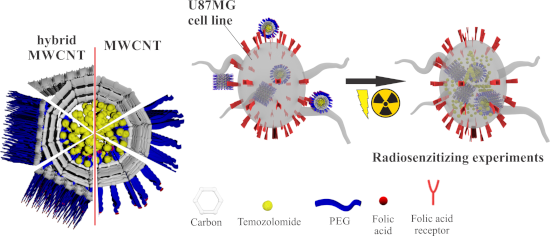
- exposure to the lowest concentration of 0.5 µg/mL) to around 70% and 51%, respectively, (after exposure to the highest tested concentration of 100 µg/mL). These data are in accordance with the findings in several studies in which cell uptake and cytotoxicity of different CNs in different cell lines were




Characterization of ZnO nanoparticles synthesized using probiotic Lactiplantibacillus plantarum GP258
Beilstein J. Nanotechnol. 2025, 16, 78–89, doi:10.3762/bjnano.16.8
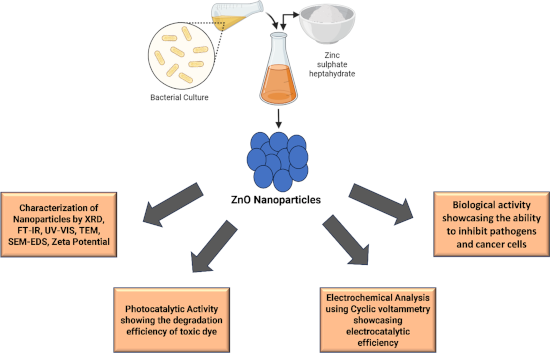
- the given bacteria. Regarding antiproliferative effects, our study exhibited an average IC50 value of 98.53 µg/mL against HT-29 cell lines. In contrast, Mohd Yusof et al. [9][23] evaluated cell viability using the MTT assay on Vero cells, revealing viability at concentrations from 100 µg/mL at 24 h
- , TPG96 were procured from Himedia, India and were of analytical grade. The National Centre for Cell Sciences in Pune supplied the human colorectal cancer cell lines (HT-29 ATCC). The Microbial Type Culture Collection and Gene Bank (MTCC, India) provided the test organisms. Phenotypic diagnosis Curd



Instance maps as an organising concept for complex experimental workflows as demonstrated for (nano)material safety research
Beilstein J. Nanotechnol. 2025, 16, 57–77, doi:10.3762/bjnano.16.7

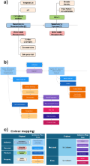
- immunotoxicity assessment using cell lines and primary cellular models, to (v) the use of the instance map approach for the coordination of materials and data flows in complex multipartner collaborative projects and for the demonstration of case studies. Finally, areas for future development of the instance map
- allow for benchmarking and interoperability of data from different labs, similar to the CHADA and MODA concepts. Example 4: Showcasing complex workflows in human immunotoxicity assessment using cell lines and primary cellular models In the context of studying bio-nano interactions of silica-based


A nanocarrier containing carboxylic and histamine groups with dual action: acetylcholine hydrolysis and antidote atropine delivery
Beilstein J. Nanotechnol. 2025, 16, 11–24, doi:10.3762/bjnano.16.2

- CA-RA were 0.57 mM and 0.48 mM for WI38 and Chang liver, respectively. For these cell lines, p(Hist-CA) had an IC50 higher than 1.4 mg/mL (Table 2). The agglutination activity results are shown in Figure 3. Control plate wells with erythrocytes in saline exhibited a dense layer at the bottom


Mechanistic insights into endosomal escape by sodium oleate-modified liposomes
Beilstein J. Nanotechnol. 2024, 15, 1667–1685, doi:10.3762/bjnano.15.131
- at lower concentrations compared to Unmodified-Lipo and SO-Lipo. This aligns with previous studies that revealed the cytotoxic effect of AUR peptide on cancer cell lines [14][15]. Our results underscore the superior safety profile of SO-Lipo in comparison to AUR-Lipo, particularly at lower




Attempts to preserve and visualize protein corona on the surface of biological nanoparticles in blood serum using photomodification
Beilstein J. Nanotechnol. 2024, 15, 1654–1666, doi:10.3762/bjnano.15.130

- (tears, urine, ascitic fluid, and nutrient media collected after culturing various cell lines) [17][18][19][20][21]. We consider the term “biological nanoparticles” (bio-NPs) proposed by Jens B. Simonsen and Rasmus Münter [22] to be adequate in defining the totality of all types of EVs and LPs present in