


Search results
Search for "cellulose triacetate" in Full Text gives 3 result(s) in Beilstein Journal of Nanotechnology.
Synthesis and antibacterial properties of nanosilver-modified cellulose triacetate membranes for seawater desalination
Beilstein J. Nanotechnol. 2025, 16, 1380–1391, doi:10.3762/bjnano.16.100
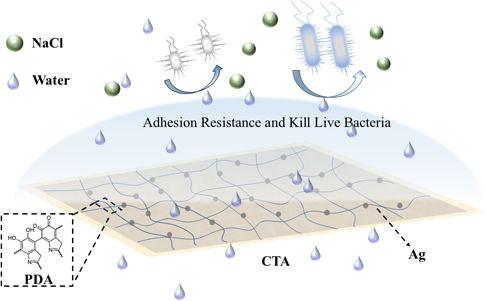
- pollution in cellulose triacetate (CTA) membranes during seawater desalination, silver (Ag) nanoparticles were incorporated onto the CTA surface using polydopamine (PDA). PDA, which contains phenolic and amino groups, exhibits excellent adhesiveness and provides active sites for the attachment and reduction
- rates of the Ag@PCTA membrane were comparable to those of the parent CTA membrane. Keywords: antibacterial properties; cellulose triacetate; nanosilver; seawater desalination; Introduction As the global population continues to grow at a rapid pace, the demand for freshwater resources is escalating


The preparation temperature influences the physicochemical nature and activity of nanoceria
Beilstein J. Nanotechnol. 2021, 12, 525–540, doi:10.3762/bjnano.12.43
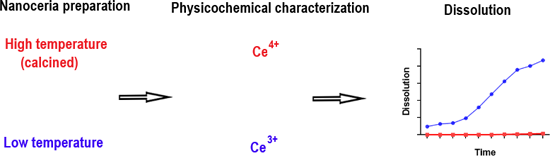
- autosampler. In the PSF reservoir, ultrahigh molecular weight polyethylene (UHMWPE) filters prevent clogging of the ultrafiltration membrane in the flow cell. For the standard conditions, 1 mg of ENM was placed on a 5,000 MWCO, 47 mm cellulose triacetate membrane (Stedim Biotech GmbH, Göttingen, Germany




Fabrication and spectroscopic studies on highly luminescent CdSe/CdS nanorod polymer composites
Beilstein J. Nanotechnol. 2010, 1, 94–100, doi:10.3762/bjnano.1.11
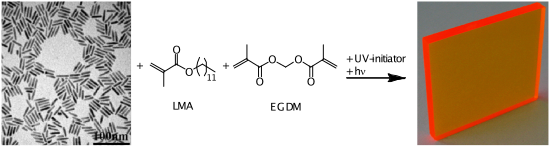
- resulting nanocomposites show high transparency of up to 93%. A photoluminescence quantum efficiency of 70% was obtained, with an optimum combination of nanorod (0.05 wt %) and at a UV-initiator concentration of 0.1 wt % for poly(lauryl methacrylate). Nanorods tend to agglomerate in cellulose triacetate
- amount of cross-linker either flexible (<20 wt % EGDM) or rigid nanocomposites could be fabricated. In our second method we fabricated thin polymer films using a radical free drop-casting process. Cellulose triacetate (CTA) was chosen as polymer because of its high transparency, hydrophobicity and


Other Beilstein-Institut Open Science Activities



