


Search results
Search for "commercialization" in Full Text gives 61 result(s) in Beilstein Journal of Nanotechnology.
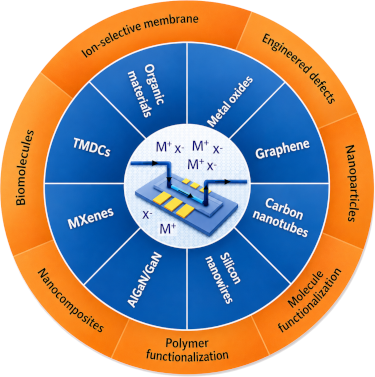
Materials challenges in solid-state sensors for continuous monitoring of ions in water
Beilstein J. Nanotechnol. 2026, 17, 935–973, doi:10.3762/bjnano.17.66


Enhanced erosion resistance and radiation stability of WC–WO3 nanocomposite films under 100 keV Kr+ ion irradiation
Beilstein J. Nanotechnol. 2026, 17, 922–934, doi:10.3762/bjnano.17.65
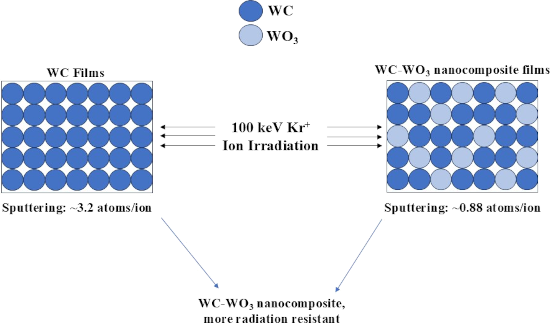
- conventionally made coarse-grained cemented carbides are mutual restraints, significantly restricting its uses and applications [17][18]. Additionally, there are other challenges of these materials in large-scale manufacturing, commercialization, and industrial applications [17][18][19][20]. Composites have



Safe and sustainable by design with ML/AI: A transformative approach to advancing nanotechnology
Beilstein J. Nanotechnol. 2026, 17, 176–185, doi:10.3762/bjnano.17.11
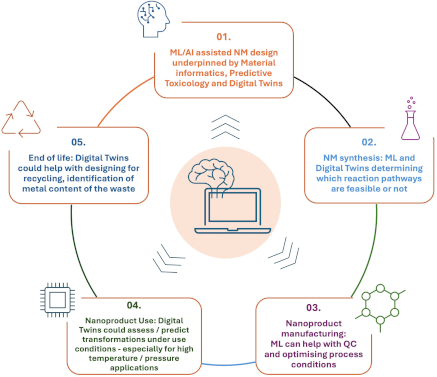
- – such as surface functionalization, doping strategies, or substituting alternative compounds – are implemented prior to commercialization. Overall, the synergy between predictive toxicology and SSbD underscores a forward-looking commitment to responsible, sustainable nanotechnology, as these
- retrospective LCAs, these forward-looking approaches allow researchers and policymakers to anticipate environmental and health impacts before full-scale production or commercialization, enabling more informed design and investment decisions. They are especially relevant in the context of SSbD, where early-stage
- expertise. Despite these obstacles, the future holds considerable opportunities. As the volume of high-quality, standardized data grows, ML algorithms will become more capable of identifying complex structure–property–toxicity relationships, potentially accelerating the safe commercialization of next


Missing links in nanomaterials research impacting productivity and perceptions
Beilstein J. Nanotechnol. 2025, 16, 2168–2176, doi:10.3762/bjnano.16.149
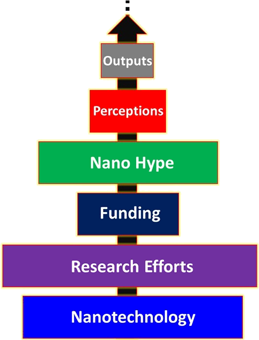
- remain unrealized, despite over decades of excellent discoveries. This perspective calls for carefully considerations linked to productivity perception, true funding utility, and foundational reform to unlock nanotechnology’s full promise across sectors. Keywords: commercialization; nanomaterials
- innovative applications (Table 1). Nevertheless, in the face of such massive research efforts and innovation, widespread application and commercialization of these advanced materials remain limited [16]. The use of nanomaterials is largely confined to selected new technologies and niche innovations, with
- commercialization of these advancements. As a result, only a few companies are currently utilizing the potential of nanomaterials by training their workforce accordingly (Table 1). To overcome this gap, we need globally structured and domain-specific educational programs in nanoengineering, starting from secondary
Targeting the vector of arboviruses Aedes aegypti with nanoemulsions based on essential oils: a review with focus on larvicidal and repellent properties
Beilstein J. Nanotechnol. 2025, 16, 1894–1913, doi:10.3762/bjnano.16.132


Prospects of nanotechnology and natural products for cancer and immunotherapy
Beilstein J. Nanotechnol. 2025, 16, 1644–1667, doi:10.3762/bjnano.16.116


Parylene-coated platinum nanowire electrodes for biomolecular sensing applications
Beilstein J. Nanotechnol. 2025, 16, 1392–1400, doi:10.3762/bjnano.16.101
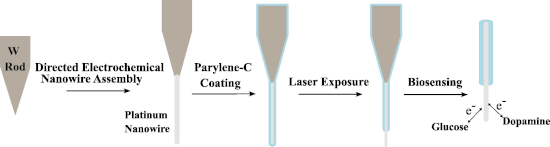
- recent years due to their unique characteristics and size. Manufacturing steps, cost, and other shortcomings limit the widespread use and commercialization of nanoscale electrodes. In this work, a nano-size electrode fabricated by directed electrochemical nanowire assembly and parylene-C insulation is


Hydrogels and nanogels: effectiveness in dermal applications
Beilstein J. Nanotechnol. 2025, 16, 1216–1233, doi:10.3762/bjnano.16.90
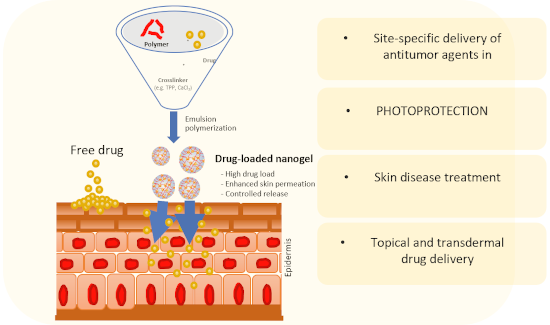
- nanocarriers, facilitating industrial manufacturing. Hydrogels, used in dermatological treatment such as wound healing films, advance the commercialization of hydrogel-based medicines. Nanogels, aiding targeted delivery, enhance the efficacy of skin cancer therapy. Their biocompatibility and ability to mimic


Synthesis of a multicomponent cellulose-based adsorbent for tetracycline removal from aquaculture water
Beilstein J. Nanotechnol. 2025, 16, 728–739, doi:10.3762/bjnano.16.56
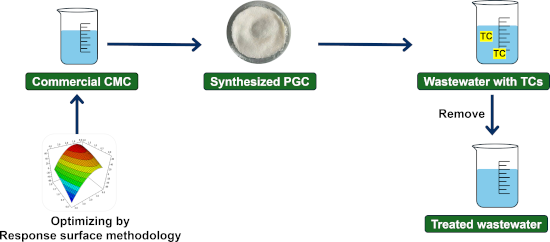
- provides an abundant and low-cost source of raw materials and mitigates environmental issues linked to the burning or improper handling of agricultural by-products. Notably, PGC also shows strong potential for commercialization as an efficient water treatment solution. Nonetheless, the presence of humic


Polyurethane/silk fibroin-based electrospun membranes for wound healing and skin substitute applications
Beilstein J. Nanotechnol. 2025, 16, 591–612, doi:10.3762/bjnano.16.46
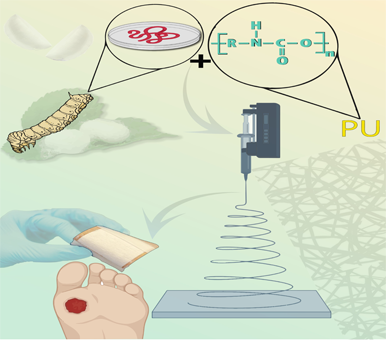
- hemostasis and infection control in wound healing [111]. Silk as a cost-effective natural material in its raw form simplifies the commercialization of Bombyx mori SF products. The FDA has granted 510k clearance for the use of SERI® (surgical scaffold) and regenerated silk-based scaffolds [112]. Aside from



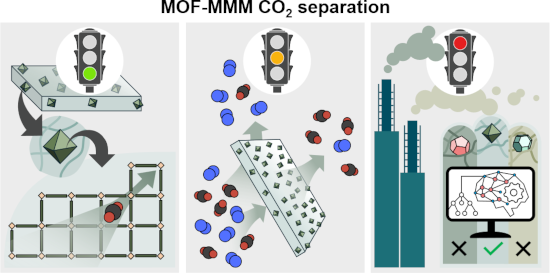
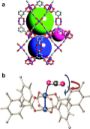
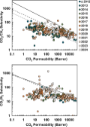
A review of metal-organic frameworks and polymers in mixed matrix membranes for CO2 capture
Beilstein J. Nanotechnol. 2025, 16, 155–186, doi:10.3762/bjnano.16.14




Comparison of organic and inorganic hole transport layers in double perovskite material-based solar cell
Beilstein J. Nanotechnol. 2025, 16, 119–127, doi:10.3762/bjnano.16.11
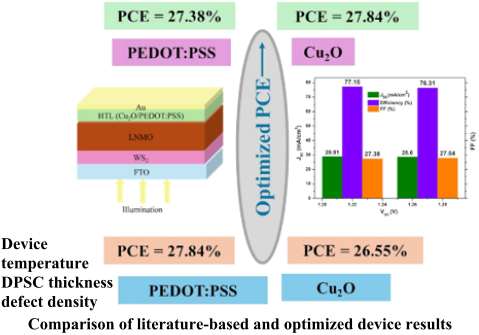
- corner-sharing BO6 and B′O6 units featuring a rock salt-like arrangement [10][11]. The commercialization of PSCs is impeded because of toxicity and long-term instability. DPSCs turned out to be better than PSCs because of better tunability, higher environmental stability, and higher efficiency. In DPSCs


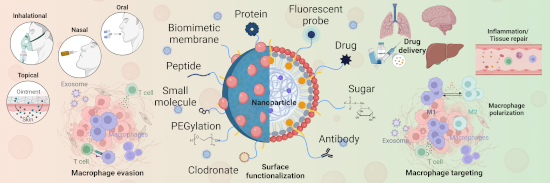
Nanocarriers and macrophage interaction: from a potential hurdle to an alternative therapeutic strategy
Beilstein J. Nanotechnol. 2025, 16, 97–118, doi:10.3762/bjnano.16.10


Nanotechnological approaches for efficient N2B delivery: from small-molecule drugs to biopharmaceuticals
Beilstein J. Nanotechnol. 2024, 15, 1400–1414, doi:10.3762/bjnano.15.113
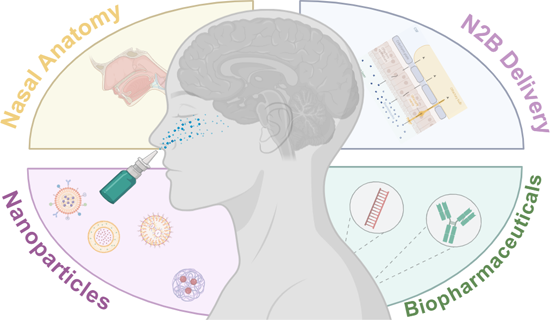
- leakage [92]. However, liposomes are still considered one of the most prominent DDS classes and have seen significant commercialization with twenty-one approved products [93]. While liposomal formulations have been on the market for some time, no liposomal product for CNS diseases exists. Even though they
- ongoing clinical trials [165]. However, more research is still needed regarding clinical studies and the commercialization of these strategies. Therefore, commercialization and scale-up should be the next steps in the future of N2B delivery research. Structure of the blood–brain barrier. The endothelial


Interaction of graphene oxide with tannic acid: computational modeling and toxicity mitigation in C. elegans
Beilstein J. Nanotechnol. 2024, 15, 1297–1311, doi:10.3762/bjnano.15.105
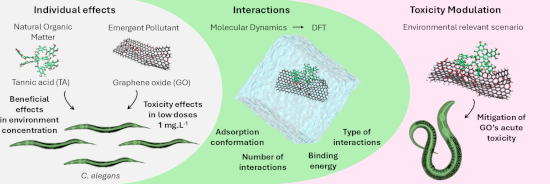
- pollution [32]. Among the advantages of using this organism are growth and rapid reproductive cycle, translucent body, well-known genome, and availability of commercialization of different genetically modified strains [33]. Recent studies of our research group showed that GO presents lethal toxic effects to


Development and characterization of potential larvicidal nanoemulsions against Aedes aegypti
Beilstein J. Nanotechnol. 2024, 15, 104–114, doi:10.3762/bjnano.15.10
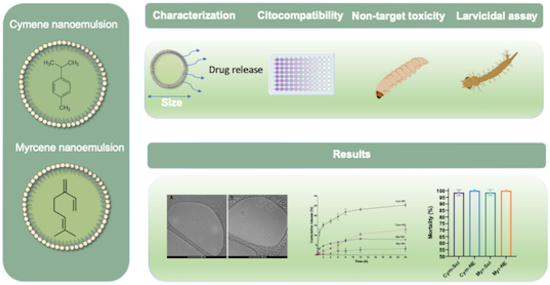
- evaluation of the biocompatibility in human cells is an important step in the development and commercialization of any drug [46]. Here, the toxicity of the terpene-based formulations was evaluated in the HaCAT cell line (Table 6). The results show that the IC50 values of the free terpenes were lower those of


Nanotechnological approaches in the treatment of schistosomiasis: an overview
Beilstein J. Nanotechnol. 2024, 15, 13–25, doi:10.3762/bjnano.15.2
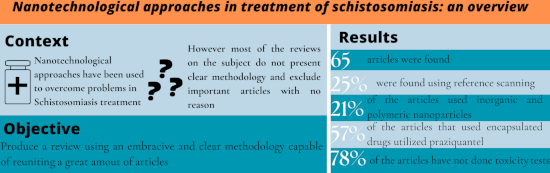
- (intraperitoneal and subcutaneous). Therefore, drug dosage forms with these characteristics may present compliance issues and problems with commercialization. Thus, an interesting pathway could be testing the same nanoformulations but using the oral route. After antimonials such as tartar emetic, oxamniquine was
- invasive [93]. Consequently, releasing a new alternative to PZQ via a different route may not be the most advisable option, as it may not be well-received by patients, leading to potential commercialization challenges associated with a less familiar or less convenient delivery method. Effectiveness tests


Industrial perspectives for personalized microneedles
Beilstein J. Nanotechnol. 2023, 14, 857–864, doi:10.3762/bjnano.14.70
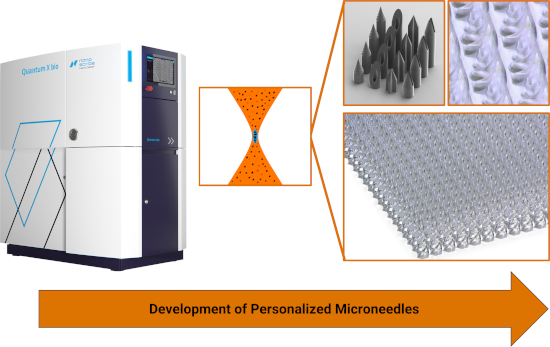
- similar aspect ratios. A typical microneedle is either conical or pyramidal with a base of 100–300 μm, heights ranging from 600 to 1000 μm, and a base-to-base spacing between 100 and 500 μm (Figure 1). These simple geometries are advantageous for commercialization because the molds can be micromachined or


Metal-organic framework-based nanomaterials as opto-electrochemical sensors for the detection of antibiotics and hormones: A review
Beilstein J. Nanotechnol. 2023, 14, 631–673, doi:10.3762/bjnano.14.52


Carbon nanotube-cellulose ink for rapid solvent identification
Beilstein J. Nanotechnol. 2023, 14, 535–543, doi:10.3762/bjnano.14.44
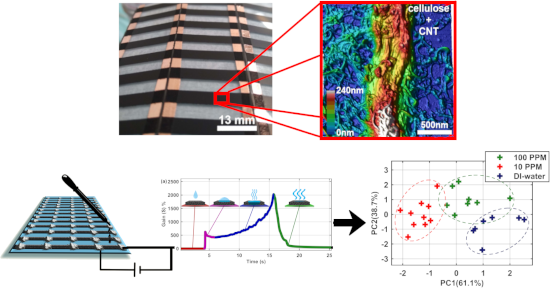
- production of liquid sensors, besides the constant need for sensor recalibration, has hindered broader commercialization of such devices [13][20]. A wide variety of materials have been explored for liquid sensing. For instance, electrically conductive polymer composites (CPCs), which are generally composed
- ) was performed in different devices and on flexible and rigid substrates, providing a step forward towards scale-up and commercialization of the technology. Experimental Materials and apparatus Microfibrillated cellulose (MFC) with a nominal fiber width of 50 nm and several hundred micrometers of


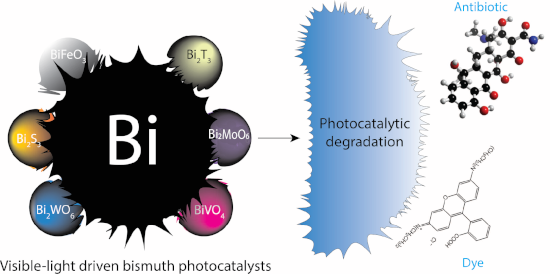
Bismuth-based nanostructured photocatalysts for the remediation of antibiotics and organic dyes
Beilstein J. Nanotechnol. 2023, 14, 291–321, doi:10.3762/bjnano.14.26


Frequency-dependent nanomechanical profiling for medical diagnosis
Beilstein J. Nanotechnol. 2022, 13, 1483–1489, doi:10.3762/bjnano.13.122
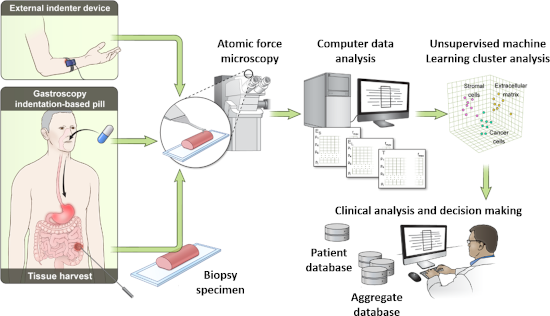
- environments and for its commercialization (Figure 1). We realize that an integrated strategy such as the above would be very costly to implement and would also require time to execute. Furthermore, it would still need to be followed by a broad dissemination and commercialization effort and would require


Structural studies and selected physical investigations of LiCoO2 obtained by combustion synthesis
Beilstein J. Nanotechnol. 2022, 13, 1473–1482, doi:10.3762/bjnano.13.121
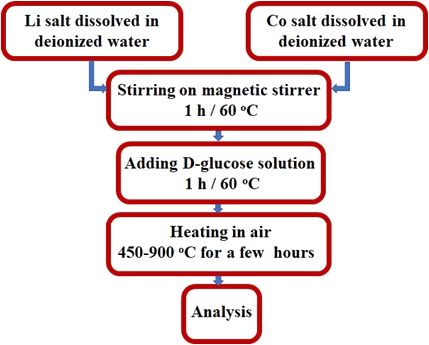
- capable of reversibly intercalating lithium ions [2]. The commercialization of lithium-ion cells was achieved in the early 1990s by Sony Corporation and in 1992 by a joint venture company (Asahi Kasai and Toshiba) [2][3][4]. Almost 90% of commercial Li-ion batteries consist of a lithium cobalt oxide




Rapid and sensitive detection of box turtles using an electrochemical DNA biosensor based on a gold/graphene nanocomposite
Beilstein J. Nanotechnol. 2022, 13, 1458–1472, doi:10.3762/bjnano.13.120
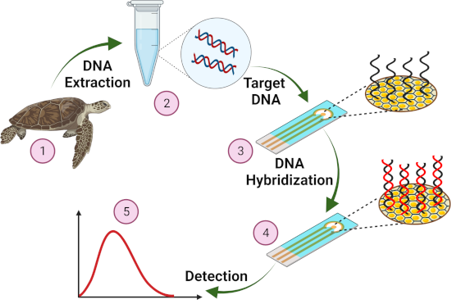
- reproducibility in real samples is always challenging compared to those of laboratory results in PB. Hence, it is still one of the potential barriers to the commercialization of electrochemical biosensors. From that standpoint, there is still room for advancement to reduce the drawbacks associated with



Electrostatic pull-in application in flexible devices: A review
Beilstein J. Nanotechnol. 2022, 13, 390–403, doi:10.3762/bjnano.13.32
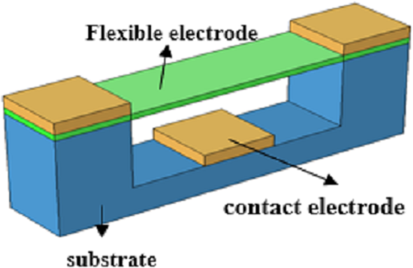
- obstacle to commercialization is the repeatability. Commercial switches require at least 1015 working cycles, but the current level is still 104–108. And the life cycles based on two-dimensional flexible materials such as graphene are only about a decade, far from meeting the needs of commercialization





