


Search results
Search for "core–shell" in Full Text gives 259 result(s) in Beilstein Journal of Nanotechnology. Showing first 200.
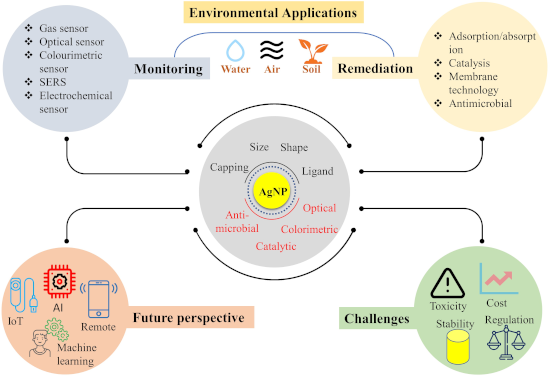
Environmental applications of silver nanoparticles: state-of-the-art review and emerging trends
Beilstein J. Nanotechnol. 2026, 17, 697–736, doi:10.3762/bjnano.17.49


Laser–material interactions in liquids for the synthesis of nanomaterials: current status and perspectives
Beilstein J. Nanotechnol. 2026, 17, 571–575, doi:10.3762/bjnano.17.38

- ]. Alternatively, employing organic solvents instead of water provides opportunities to produce carbon-encapsulated core−shell nanostructures [49] and enables control over oxidation [50], surface chemistry [51], and transferability between solvents [52]. The versatility of LSPC in terms of materials, solvents, and
Advances in nanotechnology applied to natural products
Beilstein J. Nanotechnol. 2026, 17, 555–558, doi:10.3762/bjnano.17.36
- , underscoring the importance of physicochemical approaches in the development of nanostructured formulations [23][24]. More recently, hybrid nanosystems have emerged as promising strategies for natural product delivery and application. Structures that combine polymer–lipid interfaces, such as core–shell
Probing internal continua and atomic ultrafast charge transfer within size-controlled nanoparticles by post-collision interaction in core-hole clock spectroscopy
Beilstein J. Nanotechnol. 2026, 17, 505–514, doi:10.3762/bjnano.17.33
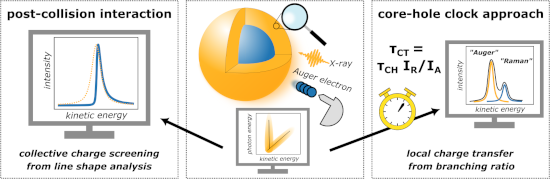
- -Liebknecht-Straße 24/25, 14476 Potsdam-Golm, Germany 10.3762/bjnano.17.33 Abstract This study investigates size-controlled, quantum-confined CdSe/ZnS core–shell quantum dots using core-hole clock spectroscopy in combination with post-collision interaction (PCI) line shape analysis, providing insights into
- photoluminescence quantum yield or RedOx chemistry, depend on a complex interplay of local and collective electronic structure aspects [10]. For example, quantum efficiency is strongly influenced by surface structure [11], the fabrication of core–shell and core–multishell architectures [12][13], and the choice of
- nanoparticles via a line-shape analysis revealing post-collision interaction (PCI) effects within the conduction band continuum. We investigate CdSe/ZnS core–shell nanoparticles with a constant CdSe core size of 3.5 nm and varying shell thicknesses of ZnS that allow for atomic layer control with narrow size




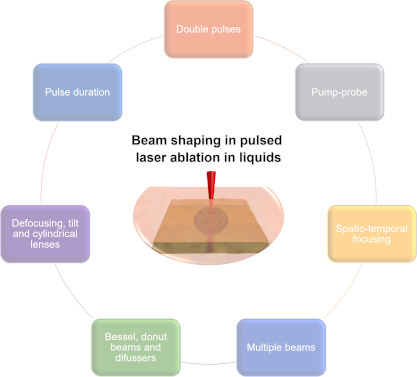
Beam shaping techniques for pulsed laser ablation in liquids: Unlocking tunable control of nanoparticle synthesis in liquids
Beilstein J. Nanotechnol. 2026, 17, 309–342, doi:10.3762/bjnano.17.22
- ], core–shell structures [29][30], heterostructures [31], nanoalloys [32][33], hybrid materials [34][35], and complex multielement nanomaterials such as high-entropy alloys [36][37][38]. This method enables the synthesis of nanomaterials with exceptional purity from virtually any solid target [39









From shield to spear: Charge-reversible nanocarriers in overcoming cancer therapy barriers
Beilstein J. Nanotechnol. 2026, 17, 159–175, doi:10.3762/bjnano.17.10
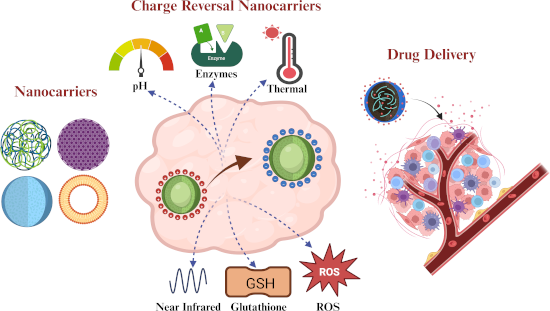
- microenvironment, thereby improving treatment efficacy. A notable study by Liu Y et al. described polymeric micellar nanoparticles incorporating hydrazone bonds within their core–shell structure; these hydrazone linkages are selectively cleaved under acidic conditions, such as those found in endosomes and
- ., DOX, geldanamycin) under alternating magnetic fields while preserving systemic safety [65]. Core–shell magnetic nanoparticles (Fe3O4@P(MEO2MA60-OEGMA40)) combine magnetic hyperthermia with controlled doxorubicin release, achieving localized heating (≈42 °C) under an alternating magnetic field to


Internal 3D temperature mapping in biological systems using ratiometric light-sheet imaging and lipid-coated upconversion nanothermometers
Beilstein J. Nanotechnol. 2025, 16, 2306–2316, doi:10.3762/bjnano.16.159
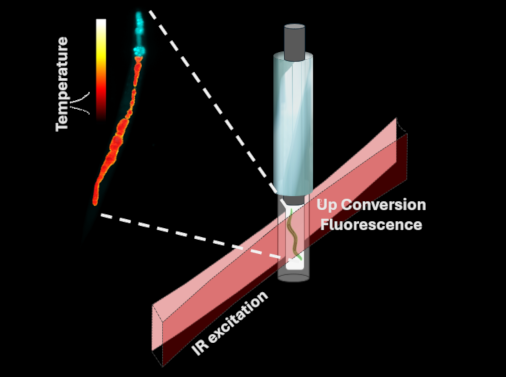
- adenocarcinoma cells. Di et al. [45] used functionalized UCNPs to monitor mitochondrial thermal dynamics in HeLa cells, and Wang et al. [37] used core–shell UCNPs to monitor temperature and imaging inside and outside onion cells simultaneously. These studies underscore the versatility and potential of UCNP-based


Improving magnetic properties of Mn- and Zn-doped core–shell iron oxide nanoparticles by tuning their size
Beilstein J. Nanotechnol. 2025, 16, 2285–2295, doi:10.3762/bjnano.16.157
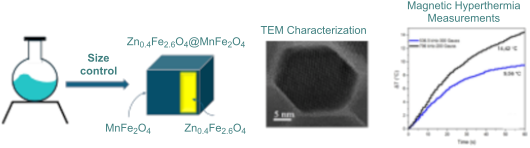
- , we report on the synthesis of polyhedral core–shell SPIONs. Their size was tuned to improve their magnetic properties. Furthermore, by hybridizing into a core–shell inorganic/inorganic structure, the nanoparticles can achieve significantly improved magnetic-to-thermal energy conversion efficiency (at
- Mössbauer analysis, and the magnetic properties were studied to select the ideal size for magnetic hyperthermia application. Keywords: core–shell nanoparticles; magnetic hyperthermia; magnetic properties; Introduction Magnetic nanoparticles have emerged as a versatile class of materials due to their
- properties of the nanoparticles [6]. A significant amount of research has focused on CoFe2O4 as a shell material to enhance the magnetic properties of core–shell nanoparticles due to its high coercivity and magnetic anisotropy [7]. The formation of CoFe2O4 shells on Fe3−δO4 cores has been shown to increase



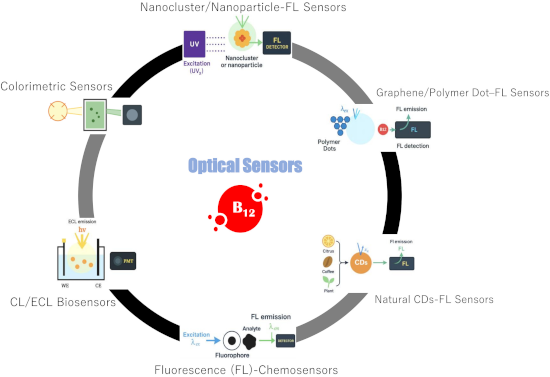
Optical bio/chemical sensors for vitamin B12 analysis in food and pharmaceuticals: state of the art, challenges, and future outlooks
Beilstein J. Nanotechnol. 2025, 16, 2207–2244, doi:10.3762/bjnano.16.153


Beyond the shell: exploring polymer–lipid interfaces in core–shell nanofibers to carry hyaluronic acid and β-caryophyllene
Beilstein J. Nanotechnol. 2025, 16, 2015–2033, doi:10.3762/bjnano.16.139
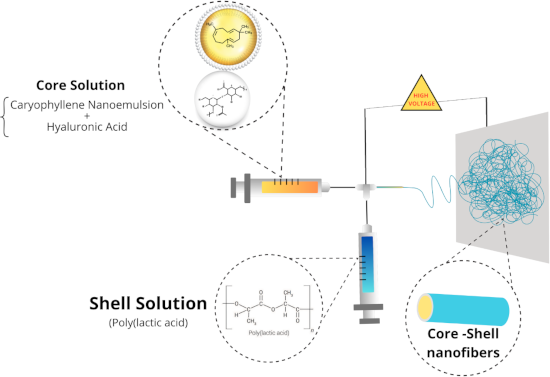
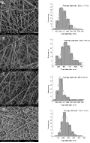
- innovative strategies to ensure their compatibility and sustained activity. This study addresses this critical challenge through the rational design and fabrication of hybrid core–shell nanofibers manufactured via coaxial electrospinning. Poly(lactic acid) (PLA) was used as an outer shell providing
- -sectional imaging, and attenuated total reflectance with Fourier transform infrared (ATR-FTIR) spectroscopy provided compelling evidence for the successful formation of the intended core–shell structure. The resulting nanofibers exhibited surface hydrophobicity, suggesting potential for anti-adhesive
- properties of nanofibers and create advanced structures with enhanced functionality, coaxial electrospinning can be used to generate nanofibers allowing for the building of a core–shell structure with desirable properties, taking advantage of the positive characteristics of each component (core and shell




Laser ablation in liquids for shape-tailored synthesis of nanomaterials: status and challenges
Beilstein J. Nanotechnol. 2025, 16, 1963–1997, doi:10.3762/bjnano.16.137
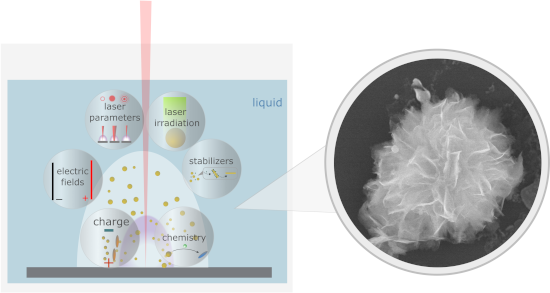
- experimental parameters: laser pulse duration in the range 4–5 ms was required. The authors also demonstrated the role of Cu comprising the target. Despite the absence in the formed ZnS nanowire structure, the ablation of a single-element Zn target produced only spherical ZnS@Zn core–shell nanostructures






PEGylated lipids in lipid nanoparticle delivery dynamics and therapeutic innovation
Beilstein J. Nanotechnol. 2025, 16, 1914–1930, doi:10.3762/bjnano.16.133
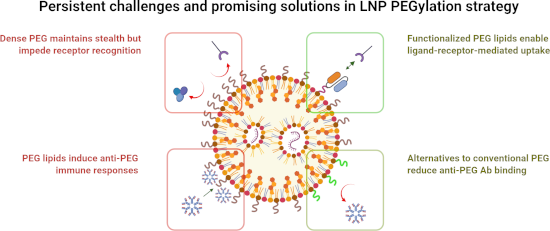
- molar ratio of 50:10:38.5:1.5, SANS analysis revealed a core–shell architecture with an average particle diameter of approximately 75 nm and a LNP shell thickness of 5 to 7 nm. Quantitative modeling of shell composition further demonstrated that the DMPE-PEG2k lipid accounted for 3.0 ± 0.5% of the shell



Prospects of nanotechnology and natural products for cancer and immunotherapy
Beilstein J. Nanotechnol. 2025, 16, 1644–1667, doi:10.3762/bjnano.16.116

- ][130][131][132][133]. Polymeric nanoparticles Polymeric nanoparticles are solid colloidal systems of synthetic or natural polymers, which can be organized in hollow, occluded, multilobed, and core–shell structures, depending on their thermodynamic and kinetic characteristics [130]. Polymeric


Laser processing in liquids: insights into nanocolloid generation and thin film integration for energy, photonic, and sensing applications
Beilstein J. Nanotechnol. 2025, 16, 1428–1498, doi:10.3762/bjnano.16.104
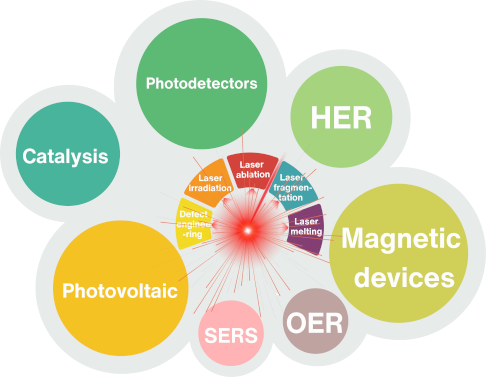
- fragmentation. Additionally, the synthesis of heterostructured NPs composed of Au and Co using femtosecond laser techniques demonstrates the creation of metastable structures that can evolve into stable core–shell configurations [38]. These findings emphasize the role of non-equilibrium processes, rapid
- colloidal solutions drop-cast onto Si wafers, indicating the optical quality and defect-related emission of the resulting films. ZnO NPs had irregular shapes in the 10–50 nm range. Also, ZnO and Au NPs with particle sizes of 31 and 20 nm, respectively, and Au:ZnO core–shell nanoparticles (CSNPs) with an







Better together: biomimetic nanomedicines for high performance tumor therapy
Beilstein J. Nanotechnol. 2025, 16, 1246–1276, doi:10.3762/bjnano.16.92
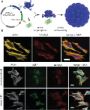
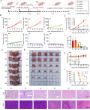
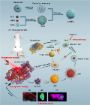
- new ways in the treatment of incurable diseases by effective gene regulation strategies, such as a three-layer core–shell biomimetic nanostructure fabricated to overcome limitations in siRNA delivery to glioblastoma (Figure 13). The three-layer shell consisted of polyethyleneimine (PEI)-siRNA complex







Time-resolved probing of laser-induced nanostructuring processes in liquids
Beilstein J. Nanotechnol. 2025, 16, 968–1002, doi:10.3762/bjnano.16.74
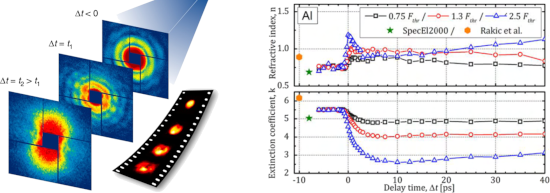
- given by the dielectric functions of metal and medium and are described by Mie theory [113]. Mie theory allows one to derive absolute absorption and scattering cross sections of primarily spherical or core–shell objects, but also different shapes by extensions of the Mie–Gans [114] theory or numerical


Synthesis and magnetic transitions of rare-earth-free Fe–Mn–Ni–Si-based compositionally complex alloys at bulk and nanoscale
Beilstein J. Nanotechnol. 2025, 16, 823–836, doi:10.3762/bjnano.16.62
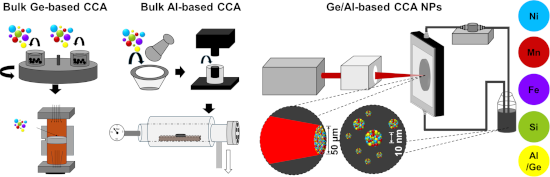
- . However, unlike the Ge-based CCA NPs, no visible core–shell structure was detected around the Al-based NPs, and oxygen intensity was significantly lower in line scan analyses (Figure S4, Supporting Information File 1). This suggests that surface oxidation effects were less pronounced, potentially because


Morphology and properties of pyrite nanoparticles obtained by pulsed laser ablation in liquid and thin films for photodetection
Beilstein J. Nanotechnol. 2025, 16, 785–805, doi:10.3762/bjnano.16.60
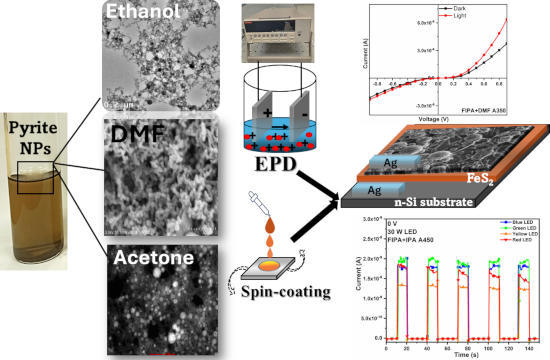
- arises when there is a difference in diffusion rates of the species in the core and shell, leading to the formation of voids within the particle. In our case, there is no presence of core–shell structure but the high viscosity of IPA likely plays a key role in the formation of these hollow structures
- ), and (2018) plane of FeS (d-spacing: 1.61 Å) are identified. For NPs in methanol, (125) plane at 0.97 Å and (211) at 2.2 Å are found. In addition to the planes identified from SAED, (200) plane of pyrite at 2.7 Å is also seen from HRTEM of NPs in acetone. Interestingly, while core–shell NPs with







Changes of structural, magnetic and spectroscopic properties of microencapsulated iron sucrose nanoparticles in saline
Beilstein J. Nanotechnol. 2025, 16, 762–784, doi:10.3762/bjnano.16.59
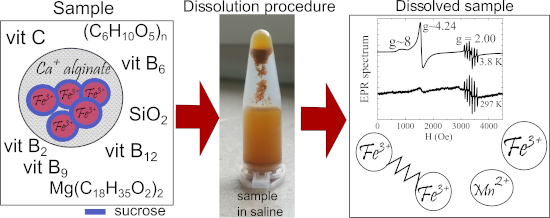
- changes upon dissolution in saline were tested. For the undissolved sample, calcium alginate microcapsules with irregular shapes were registered via scanning electron microscopy, inside which core–shell nanoparticles were identified by transmission electron microscopy micrographs. Magnetic studies (DC and
- belong to the hematinic category, are a broad class of medical products in which varied iron agents are used, very often in the form of core–shell nanoparticles, where iron ions (in the structure of iron oxide mineral) are concentrated in the core, and the shell is generally composed of carbohydrates
- core–shell nanoparticle form, where the shell consists of sucrose, while the core is iron(III) oxide mineral. The average diameter of iron sucrose nanoparticles included in Venofer® was estimated as ≈7 nm, whose core diameter is 3 nm [2][7][8][13]. The elemental analysis for a single iron sucrose






Synthetic-polymer-assisted antisense oligonucleotide delivery: targeted approaches for precision disease treatment
Beilstein J. Nanotechnol. 2025, 16, 435–463, doi:10.3762/bjnano.16.34


Size control of nanoparticles synthesized by pulsed laser ablation in liquids using donut-shaped beams
Beilstein J. Nanotechnol. 2025, 16, 407–417, doi:10.3762/bjnano.16.31
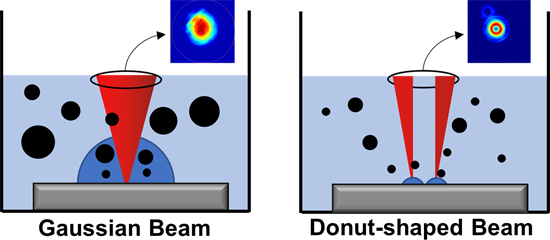
- precise compositional control such as metastable binary core–shell NPs [16] and quinary Cantor high-entropy alloy NPs [17][18]. Such high-entropy nanomaterials are recently being discussed as game changers, providing disruptive design opportunities in multifunctional catalysts or magnetic materials [19


Enhancing mechanical properties of chitosan/PVA electrospun nanofibers: a comprehensive review
Beilstein J. Nanotechnol. 2025, 16, 286–307, doi:10.3762/bjnano.16.22

- fabricate multicomponent fibers, where a single nozzle is partitioned into separate chambers, with the most popular technique being the coaxial electrospinning. Coaxial electrospinning involves the use of a compound coannular nozzle to fabricate core–shell fibers [90][91][92]. For a two-solution system, the
- solution with better electrospinning capability, will assist in the entrainment of the core fluid to form core–shell fiber jets. Three-material core–sheath fibers are reported to have been successfully electrospun using triaxial nozzles [94]. Other design variants include having multiple nozzles enclosed
- coaxial electrospinning in which spinneret is conceptualized as two half-cylindrical nozzles joined together. The fibers formed from the process are attached side-by-side instead of a core–shell structure. Figure 8 illustrates the different types of fibers formed using multichamber nozzles. Emulsion


Fabrication of hafnium-based nanoparticles and nanostructures using picosecond laser ablation
Beilstein J. Nanotechnol. 2024, 15, 1639–1653, doi:10.3762/bjnano.15.129
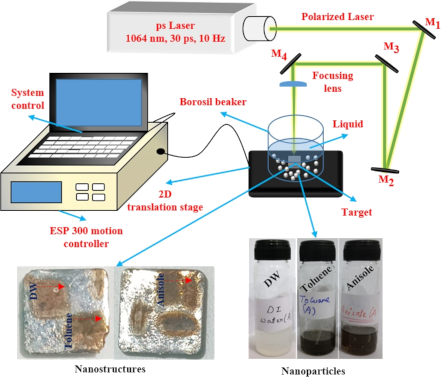
- different liquid media, namely, deionised water (DW), toluene, and anisole, to fabricate HfO2 and HfC NPs along with Hf NSs. Spherical HfO2 NPs and nanofibres were formed when Hf was ablated in DW. Hf ablated in toluene and anisole demonstrated the formation of core–shell NPs of HfC with a graphitic shell
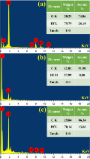
- and HfC in toluene and anisole can be attributed to chemical interactions between the ablated Hf atoms and the liquid medium. Careful observation of high-resolution TEM images revealed the formation of core–shell structures for the particles obtained in anisole and toluene (Figure 4b,c). In contrast
- [11][31] did not discuss the formation of graphite shells around HfC NPs. The formation of polycrystalline HfC core–shell NPs with graphite shells similar to [36] in toluene and anisole can be explained by the possible reaction of carbon from decomposed surrounding liquid with Hf4+ ions in the plasma




Polymer lipid hybrid nanoparticles for phytochemical delivery: challenges, progress, and future prospects
Beilstein J. Nanotechnol. 2024, 15, 1473–1497, doi:10.3762/bjnano.15.118
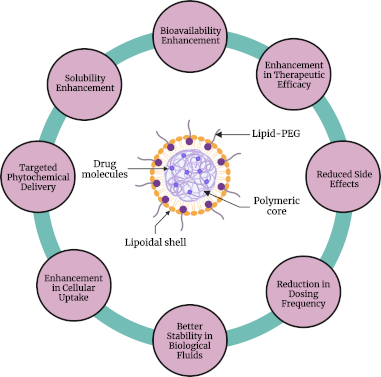
- the nanocarrier and can reduce systemic toxicity [49]. Core–shell type hollow PLHNPs The core–shell type hollow PLHNPs comprise an inner hollow positively charged lipidic core, a polymeric layer in the middle, and an outer PEG lipoidal layer [50]. The inner hollow core of the system is filled with
- circulation and is rapidly eliminated from the body. Therefore, RVT exhibits a very short plasma half-life and very low oral bioavailability These factors significantly reduce its therapeutic efficacy [106][107]. In a study, Kumar et al. fabricated RVT-encapsulated core–shell-type PLHNPs (RVT-PLHNPs) for



Nanotechnological approaches for efficient N2B delivery: from small-molecule drugs to biopharmaceuticals
Beilstein J. Nanotechnol. 2024, 15, 1400–1414, doi:10.3762/bjnano.15.113

- . Lipid–polymer hybrid NPs are core–shell structures with a polymeric core and lipidic coat [122]. While drug loading and permeability are regulated by the lipidic coat, the polymeric core determines the release properties of the NPs [123]. Lecithin (lipid)–chitosan (polymer) NPs have been studied for N2B
- irradiation increased the mRNA expression in the cytoplasm [160]. In addition to polyplexes, lipoplexes, another widely used vector, have also been studied for siRNA delivery. For instance, Hu et al. described the encapsulation of siRNA (specifically of c-Myc-targeting siRNA) in a core–shell lipoplex for
- modification with PEG and RVG29 improved the intranasal delivery of the NPs [163]. Li et al. also worked on RVG29 and developed core–shell lesion-recognizing NPs consisting of RVG29 peptide-modified mesenchymal stem cell-derived exosomes as the shell and a reactive oxygen species-responsive polymer loaded with





