Search results
Search for "immobilization" in Full Text gives 127 result(s) in Beilstein Journal of Nanotechnology.
Materials challenges in solid-state sensors for continuous monitoring of ions in water
Beilstein J. Nanotechnol. 2026, 17, 935–973, doi:10.3762/bjnano.17.66



Decontamination from water pollutants and pathogens by electrospun nanofibers doped with heavy-atom-free borafluorene-BODIPY photosensitizers
Beilstein J. Nanotechnol. 2026, 17, 668–682, doi:10.3762/bjnano.17.46
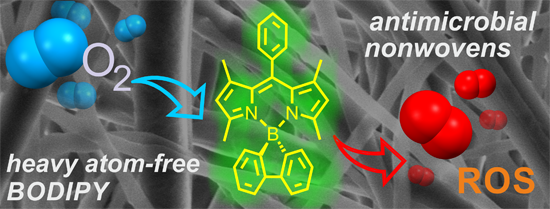
- findings highlight the potential of the electrospun PCL nanofibers as optimal matrix for the immobilization with singlet oxygen photosensitizers and subsequent application in the decontamination of water from pollutants and pathogens. Keywords: antimicrobial photodynamic therapy; BODIPY; electrospun
- nanofibers; heavy-atom free photosensitizers; immobilization; polycaprolactone; singlet oxygen; water purification; Introduction Due to the enormous population, economic, and industrial growth, the rapid rise in demand for water resources has become one of the major contemporary issues that needs to be
- selected as optimal matrix for the immobilization of 1 due to its higher hydrophilicity and wettability with respect to poly(methyl methacrylate) and polystyrene. Remarkably, the 1@PCL materials enabled complete degradation of cimetidine, selected as a model pollutant from pharmaceutical industry



Cellulose as a photocatalyst support material: extraction, structural features, and environmental applications
Beilstein J. Nanotechnol. 2026, 17, 635–652, doi:10.3762/bjnano.17.44
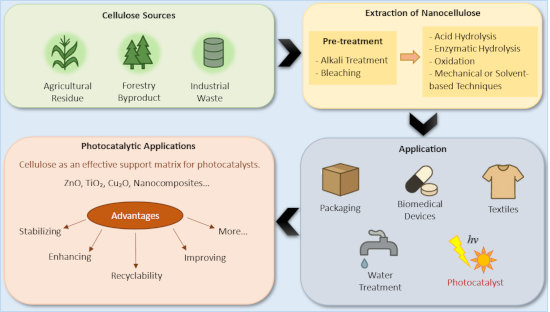
- photoactive nanomaterials, including metal oxides and nonmetallic semiconductors, to remediate and purify water, and the use of these hybrid systems is growing steadily in water treatment applications [15]. Photocatalyst immobilization on membranes addresses key challenges by preventing photocatalyst loss
- transition metal nanoparticles such as iron, silver, palladium, platinum, titanium, and copper have been widely employed for breaking down pollutants; however, their tendency to aggregate limits performance, which is why they are frequently immobilized on solid substrates. This immobilization not only
- performance across multiple degradation cycles, highlighting its potential as a durable and efficient photocatalyst [99]. Another key challenge in using TiO2 for industrial wastewater treatment is the difficulty of catalyst recovery, and a practical solution to this problem is the immobilization of the


Impacts of annealing on structural and photophysical properties of zinc phthalocyanine adsorbed on graphene
Beilstein J. Nanotechnol. 2026, 17, 576–585, doi:10.3762/bjnano.17.39
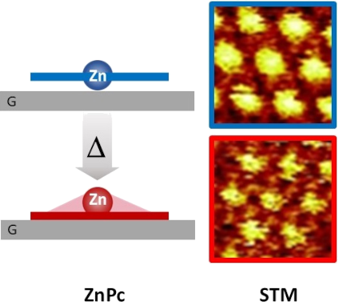
- reference [50]). In order to support our interpretation, we thus compared the immobilization of BPDI4Py onto a self-assembled ZnPc:TSB35-C12 monolayer on CVD graphene without and with annealing (3 h at 80 °C). The presence of BPDI4Py after rinsing was checked by optical absorption micro-spectroscopy as


Biomimetic nanoparticles in cancer photodynamic therapy: a review of targeted delivery systems and therapeutic outcomes
Beilstein J. Nanotechnol. 2026, 17, 396–422, doi:10.3762/bjnano.17.27


Advancing nanolithography: a comprehensive review of materials for local anodic oxidation with AFM
Beilstein J. Nanotechnol. 2026, 17, 275–291, doi:10.3762/bjnano.17.19
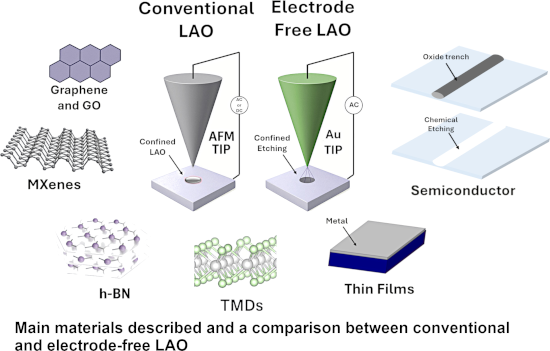
- tissue growth, or enable selective biomolecule immobilization. As an example, Martínez et al. [115] combined top-down oxidative nanolithography techniques and bottom-up electrostatic interactions to pattern single molecules of ferritin on silicon surfaces. Furthermore, biocompatible materials such as


Gold nanoparticle-decorated reduced graphene oxide as a highly effective catalyst for the selective α,β-dehydrogenation of N-alkyl-4-piperidones
Beilstein J. Nanotechnol. 2026, 17, 218–238, doi:10.3762/bjnano.17.15
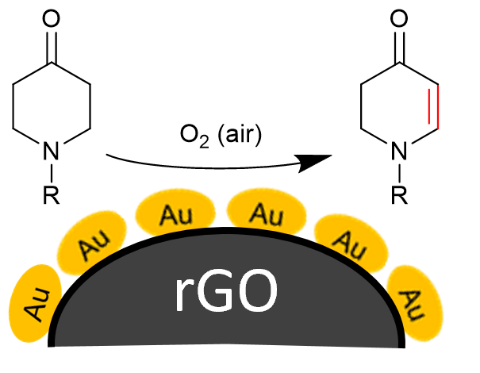
- corresponding distribution histograms. This growth was probably due to continuous agitation during colloid immobilization. Noteworthy, the AuNPs are evenly distributed on rGO but occupy only certain areas on AC and especially on CB, thereby leaving large sections of the CB surface without AuNPs. This is in


Ultrathin water layers on mannosylated gold nanoparticles
Beilstein J. Nanotechnol. 2025, 16, 2183–2198, doi:10.3762/bjnano.16.151
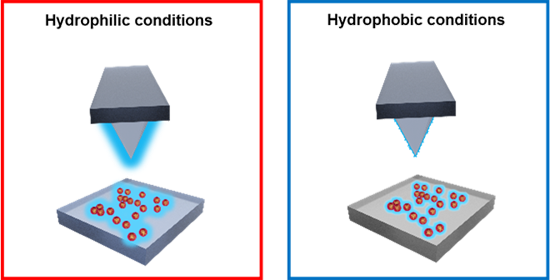
- favors NP–surface interactions with subsequent immobilization. This can be based on multiple hydrogen bonds between the NH3+ groups in APDMES and the OH groups in the dimannoside, which immobilize the NPs long before solvent evaporation. Consequently, in this case, we observed no “coffee ring” effect



Synthesis and antibacterial properties of nanosilver-modified cellulose triacetate membranes for seawater desalination
Beilstein J. Nanotechnol. 2025, 16, 1380–1391, doi:10.3762/bjnano.16.100
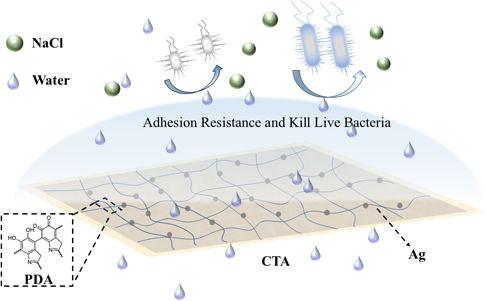
- provide compelling evidence for the successful surface modification of CTA with PDA and the subsequent immobilization of Ag on the PCTA surface via coordination bonds. In order to clarify the valence state of Ag, XPS was employed to provide detailed information about the elemental composition and chemical
- further functionalization (Figure 4c). This PDA layer imparts functional groups, such as catechol and amino groups, which facilitate the subsequent reduction and immobilization of Ag nanoparticles. Upon Ag deposition, the PCTA membrane’s surface exhibits evenly distributed Ag nanoparticles nestled within


Soft materials nanoarchitectonics: liquid crystals, polymers, gels, biomaterials, and others
Beilstein J. Nanotechnol. 2025, 16, 1025–1067, doi:10.3762/bjnano.16.77






Functionalized gold nanoflowers on carbon screen-printed electrodes: an electrochemical platform for biosensing hemagglutinin protein of influenza A H1N1 virus
Beilstein J. Nanotechnol. 2025, 16, 540–550, doi:10.3762/bjnano.16.42
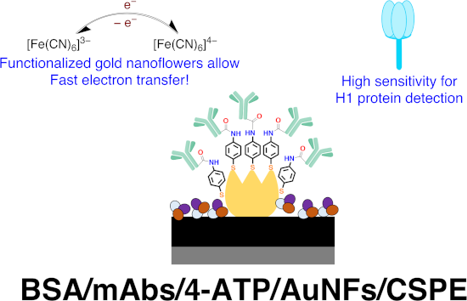
- electrochemical biosensing of proteins. Covalent oriented immobilization of monoclonal antibodies (mAbs) was achieved through amide bond formation between terminal carboxylate moieties of mAbs and surface amine groups of the 4-ATP/AuNFs/CSPE. Using this strategy, the fragment crystallizable region of the mAbs is
- the section bound to the surface. This leads to proper antibody orientation such that the entire antigen binding site is available for adequate biorecognition [44]. No significant peak-to-peak separation change was observed in the CV analysis after immobilization of mAbs and blocking with bovine serum
- transfer enhancement at the surface of the 4-ATP/AuNFs/CSPE. In this system, Rct was decreased by 100 times, a desired feature to improve the sensitivity of a biosensor. Immobilization of mAbs and blocking with BSA increased the Rct to 825 Ω (Supporting Information File 1, Figure S5) and 1278 Ω (Supporting


Development of a mucoadhesive drug delivery system and its interaction with gastric cells
Beilstein J. Nanotechnol. 2025, 16, 371–384, doi:10.3762/bjnano.16.28

- nanoparticles, leading to immobilization of the carriers [64]. It should also be noted that the mucus layer through which the nanoparticles must diffuse to reach to the underlying gelatin layer (where the fluorescence measurements were taken from) is approximately 7 mm thick. The mean mucus thickness in stomach


Pulsed laser in liquid grafting of gold nanoparticle–carbon support composites
Beilstein J. Nanotechnol. 2025, 16, 349–361, doi:10.3762/bjnano.16.26
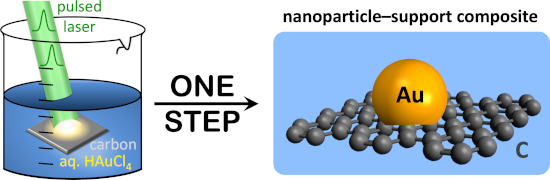
- surfactant-free gold nanoparticles directly on carbon fiber paper supports by integrating nanoparticle synthesis and attachment, obviating typical laborious nanoparticle synthesis, separation, and immobilization procedures. Pulsed laser-grafted composites exhibited zero measurable charge transfer resistance


Synthesis and the impact of hydroxyapatite nanoparticles on the viability and activity of rhizobacteria
Beilstein J. Nanotechnol. 2025, 16, 216–228, doi:10.3762/bjnano.16.17
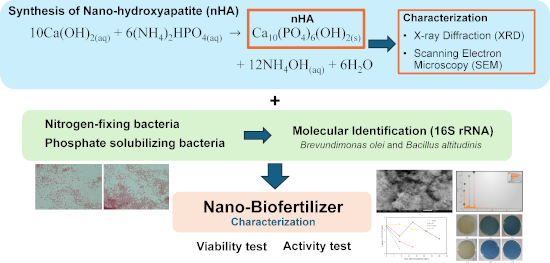
- method. Following their immobilization on nHA, the phosphate-solubilizing capacity of rhizobacteria was evaluated using Pikovskaya’s medium. A nitrogen-free bromothymol medium was utilized to qualitatively assess the nitrogen-fixing ability of rhizobacteria. Furthermore, rhizobacteria were identified


TiO2 immobilized on 2D mordenite: effect of hydrolysis conditions on structural, textural, and optical characteristics of the nanocomposites
Beilstein J. Nanotechnol. 2025, 16, 128–140, doi:10.3762/bjnano.16.12
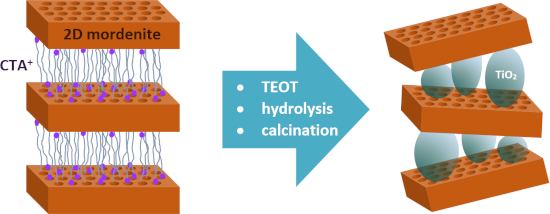
- mesoporosity after calcination due to anatase nanoparticles of about 4 nm preventing the collapse of the interlamellar space. Immobilization of TiO2 on the zeolite surface is evidenced by the formation of Si–O–Ti bonds. The bandgap width of the synthetized nanocomposites was found to be sensitive to the
- immobilization of TiO2 nanoparticles is of great importance. Many materials are considered as a possible support for immobilization, including porous ceramics [15], glass [16][17], porous carbon materials [18][19], mesoporous silica [20][21][22][23], and zeolites [24][25][26][27]. Recent studies have confirmed
- that direct synthesis of TiO2 in mesoporous silica or zeolites provides strong immobilization of TiO2 nanoparticles through Ti–O–Si bonding [21][22][23]. Previously, we reported the results of the trial synthesis of a new TiO2/2D mordenite nanocomposite [28]. The material was obtained from a composite



Unveiling the potential of alginate-based nanomaterials in sensing technology and smart delivery applications
Beilstein J. Nanotechnol. 2024, 15, 1077–1104, doi:10.3762/bjnano.15.88
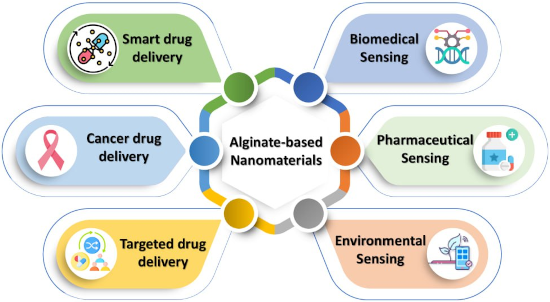
- become known as a promising tool for sensing applications in recent years [95]. With their large surface area, alginate nanoparticles provide space for the immobilization of sensing elements, allowing for enhanced sensitivity and selectivity [96]. Additionally, alginate nanoparticles possess excellent
- , physically adsorbed enzymes are quickly disseminated throughout the catalytic reaction system. Enzyme leakage may be greatly decreased by incorporating enzymes into alginate-based microfibers, resulting in stable immobilization, higher recyclability, and improved thermostability. Furthermore, using the
- -effective and has a longer lifespan than enzymatic sensing [146]. Because of the difficult enzyme immobilization processes, poor chemical and thermal


Recent progress on field-effect transistor-based biosensors: device perspective
Beilstein J. Nanotechnol. 2024, 15, 977–994, doi:10.3762/bjnano.15.80
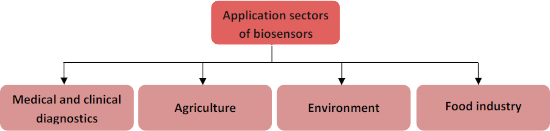
- the biomolecules. The biomolecule species are introduced inside the nanocavity for immobilization [76]. The ability of the proposed FinFET-biosensor to detect various biomolecule species has been examined in terms of sensitivity. However, the maximum reported biosensor sensitivity is equal to 1.55 for
- biosensor and after the immobilization of biomolecules in the cavity. 2.2.5 Charge plasma four-gated MOSFET-based biosensors. Chanda et al. [97] designed a charge plasma four-gated (CP FG) MOSFET-based biosensor structure to enhance the detection of various types of biomolecules. The concept of charge




A review on the structural characterization of nanomaterials for nano-QSAR models
Beilstein J. Nanotechnol. 2024, 15, 854–866, doi:10.3762/bjnano.15.71
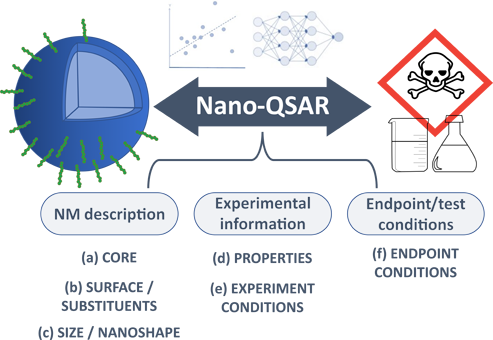
- specific variables can be found for particular tests, such as the number of daphnia individuals in an immobilization test [17]. Also, descriptors that quantify the exposure to the nanoform, such as exposure time [17][31][37][60][66] and dose [31][37][63][66] are very common in nano-QSAR models. A different


Ion beam processing of DNA origami nanostructures
Beilstein J. Nanotechnol. 2024, 15, 207–214, doi:10.3762/bjnano.15.20
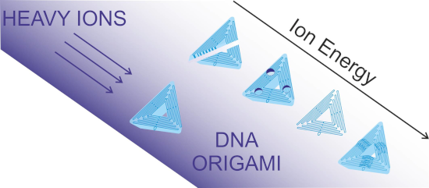
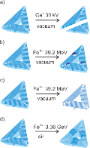
- ]. However, the situation can be different in DNA origami nanostructures stabilized by highly cross-linked and compact structures. When deposited on the surface, the strong immobilization by cations in between the DNA origami nanostructures and a hydrophilic substrate offer additional stability [16]. Indeed


Nanoarchitectonics of photothermal materials to enhance the sensitivity of lateral flow assays
Beilstein J. Nanotechnol. 2023, 14, 988–1003, doi:10.3762/bjnano.14.82
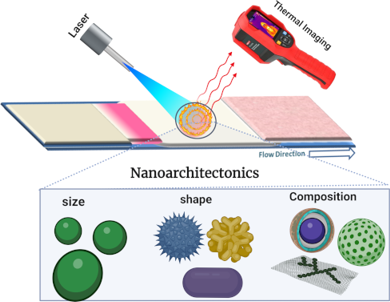
- and for efficient light-to-heat conversion. The surface chemistry of the selected photothermal material should facilitate the successful immobilization of biomolecules, such as antibodies, aptamers, peptides, or affinity molecules. Finally, an efficient thermal energy readout system is needed for the


Upscaling the urea method synthesis of CoAl layered double hydroxides
Beilstein J. Nanotechnol. 2023, 14, 927–938, doi:10.3762/bjnano.14.76
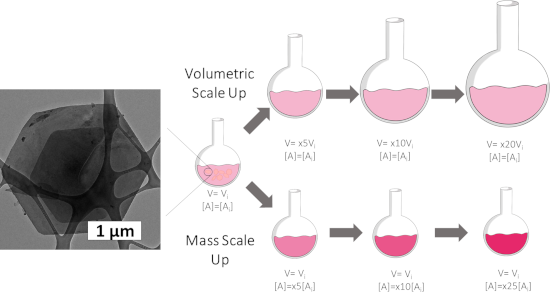
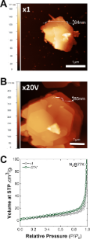
- better immobilization of these small anisotropic crystals, precluding any artefacts in the magnetic measurements. The porous texture of all prepared materials was characterized by N2 adsorption at 77 K and CO2 at 273 K in an AUTOSORB-6 apparatus. Prior to the measurements, the samples were degassed for 4


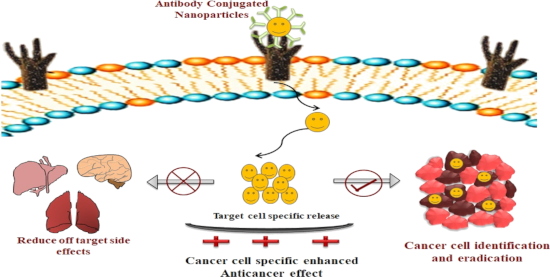
Antibody-conjugated nanoparticles for target-specific drug delivery of chemotherapeutics
Beilstein J. Nanotechnol. 2023, 14, 912–926, doi:10.3762/bjnano.14.75
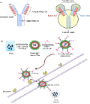
- involvement of Fab regions is generally avoided during conjugation, so that antibodies do not lose their antigen recognition sites [35]. The antibody immobilization on NP surfaces can be either random or oriented, depending on the functionalization method. Antibodies conjugated onto NPs are able to adopt
- . The antibody-conjugated NPs were able to recognize the extracellular ligand-binding domain of EGFR and provided an effective targeted delivery of rapamycin. The ACNPs significantly increased the therapeutic effect of the chemotherapeutics [49]. The covalent binding can lead to a random immobilization
- of antibodies on the NP surfaces, because at physiological pH (pH 7), the most reactive amine groups are situated in the Fab region, which further leads to the loss of biological activity [50][51]. To avoid this, other techniques with oriented immobilization are mostly preferred for conjugation



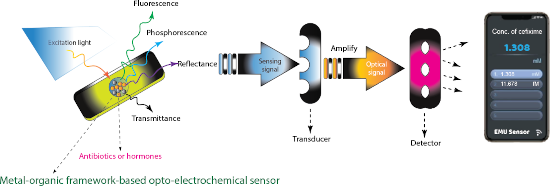
Metal-organic framework-based nanomaterials as opto-electrochemical sensors for the detection of antibiotics and hormones: A review
Beilstein J. Nanotechnol. 2023, 14, 631–673, doi:10.3762/bjnano.14.52


Nanoarchitectonics to entrap living cells in silica-based systems: encapsulations with yolk–shell and sepiolite nanomaterials
Beilstein J. Nanotechnol. 2023, 14, 522–534, doi:10.3762/bjnano.14.43
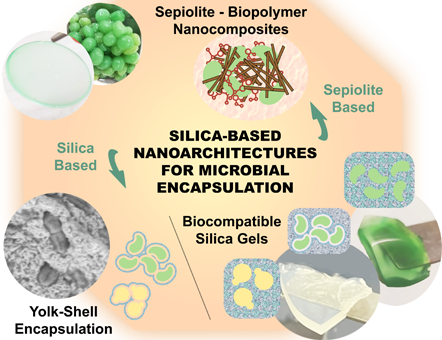
- have been explored for the immobilization of cyanobacteria. It has been observed that this type of biohybrid substrates leads to serious problems regarding the long-time survival of the encapsulated microorganisms. Alternative procedures using silica-based matrices with low sodium content, generated by
- present protocols. Keywords: biohybrids; cell immobilization; encapsulation; microorganism entrapment; silicates; Introduction Bio-inorganic hybrid nanomaterials with highly specific functionalities can be prepared following Nature’s design approaches [1]. A wide range of materials resulting from the
- in silica-based inorganic matrices, being viable after one month of encapsulation [12][14][15][16][17]. This type of immobilization was also carried out using silica gels and other inorganic systems for the encapsulation of unicellular algae (microalgae) to develop active biohybrid materials that


Molecular nanoarchitectonics: unification of nanotechnology and molecular/materials science
Beilstein J. Nanotechnol. 2023, 14, 434–453, doi:10.3762/bjnano.14.35
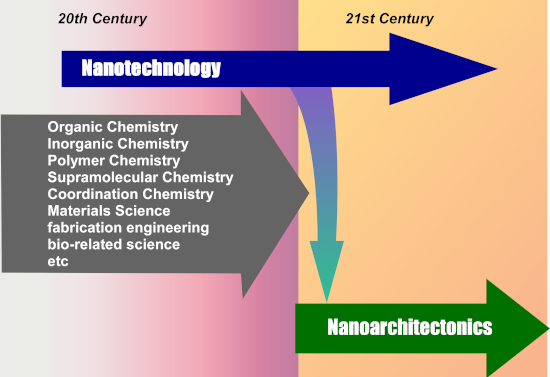
- conventional analytical methods. It is also possible to reveal how functional sites such as catalysts are incorporated into the immobilization process. For example, an atomistic understanding of the structure of heterogeneous catalysts consisting of MoO2 complexes on carbon nanohorns has been reported [43
- yield unusual physical properties. A recent review by Tsuji reports the realization of cryogenic properties at room temperature by chemical immobilization of molecular structures [94]. Functions such as optoelectronic properties and bioactivity of materials strongly depend on molecular structures