


Search results
Search for "in silico approaches" in Full Text gives 5 result(s) in Beilstein Journal of Nanotechnology.
Nanoinformatics: spanning scales, systems and solutions
Beilstein J. Nanotechnol. 2026, 17, 423–427, doi:10.3762/bjnano.17.28

- : artificial intelligence; in silico approaches; machine learning; nanoinformatics; nanomaterials functionality; nanotoxicity; sustainability; Nanoinformatics (as an offshoot of chemoinformatics) refers to the combination of physical chemistry and materials theory with in silico approaches to address key

Safe and sustainable by design with ML/AI: A transformative approach to advancing nanotechnology
Beilstein J. Nanotechnol. 2026, 17, 176–185, doi:10.3762/bjnano.17.11
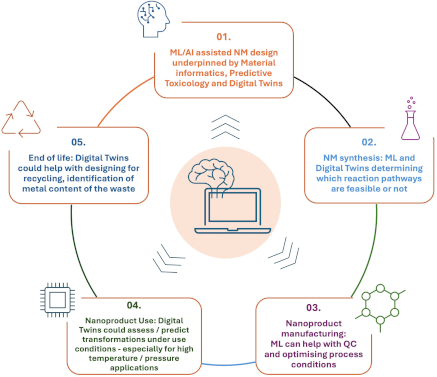
- . Nanomaterial life cycle underpinned by AI. A schematic representing how adding new endpoints or using alternative (non-animal) test methods, including in silico approaches, can help reveal the underlying mode of action. These additional methods make it possible to “open the black box” of traditional apical


AI-assisted models to predict chemotherapy drugs modified with C60 fullerene derivatives
Beilstein J. Nanotechnol. 2024, 15, 1170–1188, doi:10.3762/bjnano.15.95
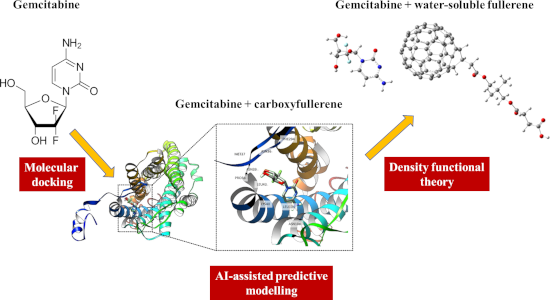
- –property relationships (QSAR/QSPR) are a paradigm that can be useful in choosing promising molecules, considering the information on inactive and active compounds, through in silico approaches. According to the QSAR/QSPR paradigm, a given activity/property, f, can be modeled using a set of quantitative


Design and selection of peptides to block the SARS-CoV-2 receptor binding domain by molecular docking
Beilstein J. Nanotechnol. 2022, 13, 699–711, doi:10.3762/bjnano.13.62
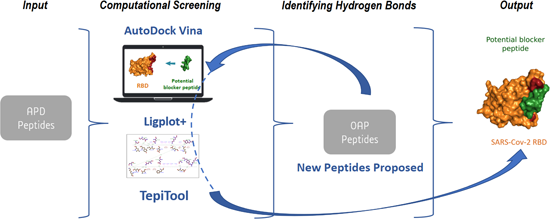
- designed and selected by phage display or using in silico approaches [8][14]. Several peptides based on the ACE2 receptor have been designed by in silico approaches [5][15]. In silico approaches are commonly used to determine the capacity of small ligands (peptides and drugs) to bind to a particular target



Predicting cytotoxicity of PAMAM dendrimers using molecular descriptors
Beilstein J. Nanotechnol. 2015, 6, 1886–1896, doi:10.3762/bjnano.6.192
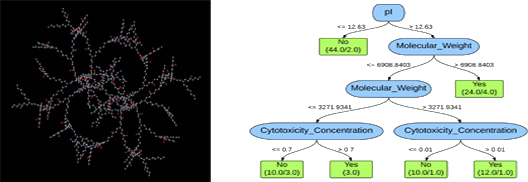
- journal articles. The results indicate that data mining and machine learning can be effectively used to predict the cytotoxicity of PAMAM dendrimers on Caco-2 cells. Keywords: data mining; machine learning; molecular descriptors; poly(amido amine) dendrimers (PAMAM); Introduction In silico approaches
- eliminating a material for potential human applications. Reliable prediction of cytotoxicity using in silico approaches possesses the potential for high payoff in nanomaterial development, allowing the concentration of scarce development resources to be directed towards the synthesis and testing of promising


Other Beilstein-Institut Open Science Activities



