Search results
Search for "microemulsions" in Full Text gives 18 result(s) in Beilstein Journal of Nanotechnology.
Advances in nanotechnology applied to natural products
Beilstein J. Nanotechnol. 2026, 17, 555–558, doi:10.3762/bjnano.17.36

- , hybrid, and inorganic platforms, reflecting the interdisciplinarity of the field, from nanosystem synthesis and physicochemical characterization to biomedical, pharmaceutical, cosmetic, and environmental applications. Among the nanostructures, lipid-based carriers, including nanoemulsions, microemulsions
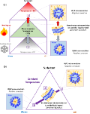
- reducing oil volatility and improving stability, enabling their use in repellent formulations [11]. Similar to nanoemulsions, microemulsions have also been widely applied in formulations containing natural products, for both topical and systemic purposes. Microemulsions (10–100 nm) are thermodynamically
- stable, isotropic systems composed of oil, water, surfactants, often with a co-surfactant, and typically requiring higher surfactant–co-surfactant concentrations than nanoemulsions [12]. As carriers for essential oils, fixed oils, and other lipophilic natural metabolites, microemulsions can improve
Quality by design optimization of microemulsions for topical delivery of Passiflora setacea seed oil
Beilstein J. Nanotechnol. 2025, 16, 2116–2131, doi:10.3762/bjnano.16.146
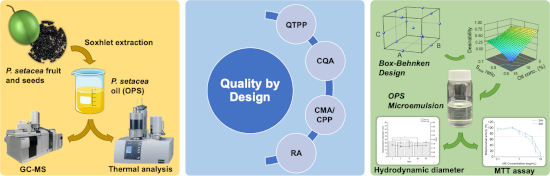
- principles to ensure formulation performance, stability, and skin cell compatibility. Keywords: design of experiments (DoE); microemulsions; nanotechnology; natural products; passion fruit; quality by design; skin delivery; Introduction Species of the Passiflora genus are known for their rich composition
- address these challenges, nanotechnology-based delivery systems, particularly microemulsions (MEs), offer a promising solution. Microemulsions are thermodynamically stable, isotropic mixtures typically composed of oil, water, surfactants, and co-surfactants [6]. Their spontaneous formation, high
- solubilization capacity, ability to enhance dermal permeation, and cost-effectiveness make microemulsions attractive carriers compared with other delivery systems [6][7]. Nevertheless, conventional microemulsions typically require high concentrations of surfactants, which may raise safety concerns such as


Targeting the vector of arboviruses Aedes aegypti with nanoemulsions based on essential oils: a review with focus on larvicidal and repellent properties
Beilstein J. Nanotechnol. 2025, 16, 1894–1913, doi:10.3762/bjnano.16.132
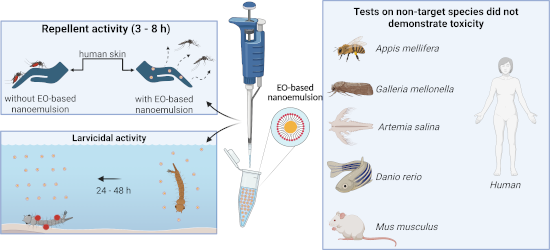
- ) increased cutaneous permeability of various molecules; (d) reduced emulsifier concentrations compared to that of macro- and microemulsions; (e) protection of molecules from adverse environmental conditions such as pH-induced hydrolysis and oxidation; and (f) versatile applications allowing administration in


A formulation containing Cymbopogon flexuosus essential oil: improvement of biochemical parameters and oxidative stress in diabetic rats
Beilstein J. Nanotechnol. 2025, 16, 617–636, doi:10.3762/bjnano.16.48
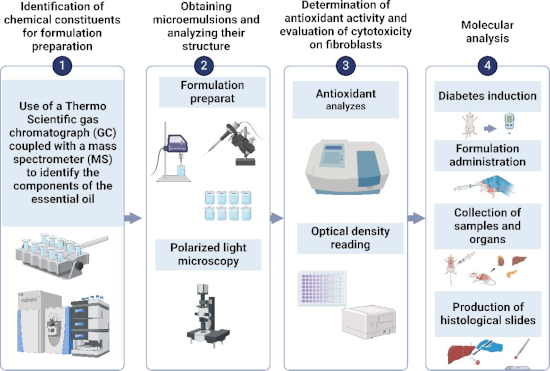
- after in vivo administration [8]. Among these systems, microemulsions (MEs) stand out for their ability to increase the solubility, absorption, and bioavailability of lipophilic compounds such as EOs. MEs are transparent, thermodynamically stable, low-viscosity systems containing oil and water
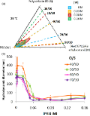
- %), corroborating the findings of the present study. However, other minor components were not identified in this study, showing that the composition of the essential oil can change significantly when obtained from different geographical origins. Development of microemulsions considering the pseudoternary phase
- Information File 1, Figure S1) through the visualization of a dark field. In general, microemulsions do not deflect the plane of polarized light since their optical properties are constant in all directions [18]. Rheology is the science that studies the flow characteristics and deformation of matter when




Fabrication and evaluation of BerNPs regarding the growth and development of Streptococcus mutans
Beilstein J. Nanotechnol. 2025, 16, 308–315, doi:10.3762/bjnano.16.23
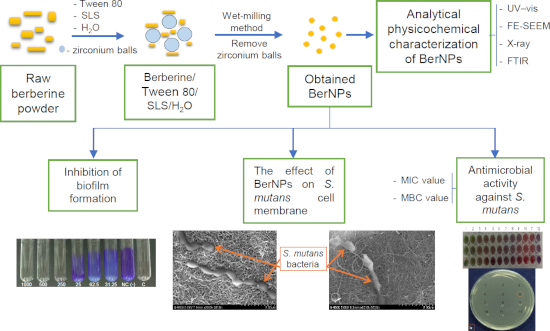
- , several methods of berberine encapsulation, berberine carrier materials, and berberine microemulsions have also been studied to improve the bioavailability and clinical applicability of berberine [9][13][14][15][16][17]. Although many studies have evaluated the antibacterial activity of berberine, there




Curcumin-loaded nanostructured systems for treatment of leishmaniasis: a review
Beilstein J. Nanotechnol. 2024, 15, 37–50, doi:10.3762/bjnano.15.4
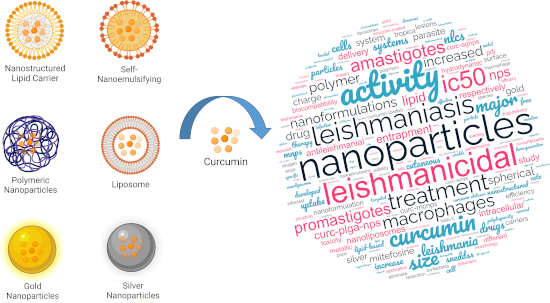
- solubility, (ii) poor gastrointestinal absorption, (iii) high rates of metabolism, (iv) inactivity of metabolic products, and (v) rapid elimination and clearance [15][16]. To get around these several limitations, nanotechnological systems such as nanoemulsions [17], microemulsions [18], self-nanoemulsifying
- , lipid nanoparticles, nano- and microemulsions, liposomes, or metallic nanoparticles [68]. Costa-Lima and colleagues incorporated bisnaphthalimidopropyldiaaminooctane (BNIPDaoct) into PLGA polymeric nanoparticles and obtained particles with sizes around 150 nm, with encapsulation efficiency around 90
- disappearance of the flagellum in the promastigote parasites treated with doses of NE above the IC50. Peixoto and collaborators developed epoxy-α-lapachone-loaded microemulsions (ME). They assessed the ME in vivo performance against L. amazonensis in infected BALB/c mice. The ME droplet size was smaller than


Nanotechnological approaches in the treatment of schistosomiasis: an overview
Beilstein J. Nanotechnol. 2024, 15, 13–25, doi:10.3762/bjnano.15.2
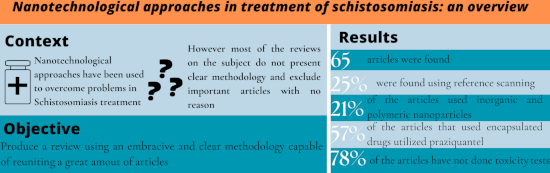
- homogenization); (2) low-energy methods, which requires the precipitation of nanoparticles from homogeneous systems (such as microemulsions); and (3) methods based on organic solvents (emulsification–diffusion method) [35]. Liposomes are vesicles composed of a phospholipid and cholesterol with an aqueous core


Polymer nanoparticles from low-energy nanoemulsions for biomedical applications
Beilstein J. Nanotechnol. 2023, 14, 339–350, doi:10.3762/bjnano.14.29
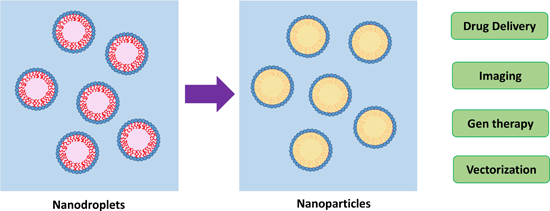
- component addition or on the thermal history. Nanoemulsions are not to be confused with microemulsions, which are equilibrium systems with thermodynamic stability [4]. Because of their very small drop size, the main mechanism for nanoemulsion destabilization is commonly attributed to Ostwald ripening
- , the system passes through structures with zero curvature, such as bicontinuous microemulsions or flexible lamellar liquid crystals [15]. The PIC method is amenable for scaling up since it mainly involves a simple dilution process and is suitable for components that cannot withstand high temperatures




A review on the green and sustainable synthesis of silver nanoparticles and one-dimensional silver nanostructures
Beilstein J. Nanotechnol. 2021, 12, 102–136, doi:10.3762/bjnano.12.9
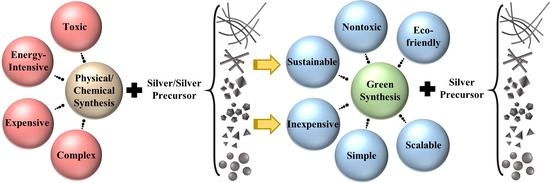
- fatty acids in a hydrophobic solvent such as alkanes [235]. There is a water phase inside the microemulsions which is also referred to as the water pool where the reactants are present [235]. The water pool is where the silver ions are reduced into silver atoms which then form AgNPs [152]. The reverse
- concentration inside the reverse micelles [235]. AOT-microemulsions have been the most common microemulsions for the preparation of micelles [152]. However, this method may result in the synthesis of AgNPs with weak surface plasmon characteristics due to a broad surface plasmon band [152]. 2.2.3 Chemical vapor


Coating of upconversion nanoparticles with silica nanoshells of 5–250 nm thickness
Beilstein J. Nanotechnol. 2019, 10, 2410–2421, doi:10.3762/bjnano.10.231
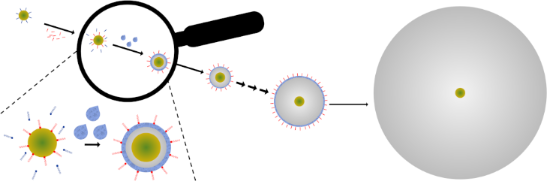
- silica in reverse microemulsions was reported before [53][54][55][56] and attributed to the presence of the Igepal CO-520 on the NP surface. However, extensive purification of the particles after the growth of the first silica shell by repeated centrifugation and redispersion in ethanol did not


BergaCare SmartLipids: commercial lipophilic active concentrates for improved performance of dermal products
Beilstein J. Nanotechnol. 2019, 10, 2152–2162, doi:10.3762/bjnano.10.208
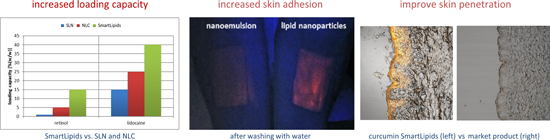
- the following years attempts were made to come up with better delivery systems of the next generation. Looking back, these efforts were of limited or no success. For example, many expectations were raised with dermal microemulsions. However, the need of relatively high surfactant concentrations (skin


Enhanced antineoplastic/therapeutic efficacy using 5-fluorouracil-loaded calcium phosphate nanoparticles
Beilstein J. Nanotechnol. 2018, 9, 2499–2515, doi:10.3762/bjnano.9.233
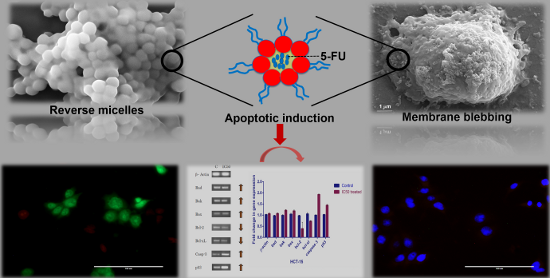
- system was mixed into the second set at an ultra-low speed of 0.1–1 mL/h and followed by stirring for up to 12 h under cold conditions (4 °C). The mixed reverse micellar microemulsions were optically translucent, confirming the formation of nanoparticles. This was followed by the addition of absolute


Cryochemical synthesis of ultrasmall, highly crystalline, nanostructured metal oxides and salts
Beilstein J. Nanotechnol. 2018, 9, 1755–1763, doi:10.3762/bjnano.9.166
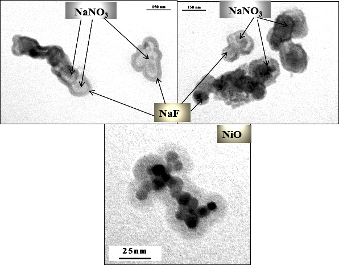
- solutions and suspensions using a swirler [15]. In this paper, we investigated the possibility of obtaining metal oxide and salt nanopowders from microemulsions and solutions using a cryochemical approach. It was shown that treatment of the stock solutions and sols with a liquid nitrogen stream (−196 °C
- -dispersed NiO, Fe2O3, CeO2 and NaNO3 nanopowders were obtained. Figure 1 provides a description of the synthesis process of nanopowders using cryotreatment of solutions or colloids. The salt solutions, sols and microemulsions were used as liquids for further cryogenic processing. In the synthesis of metal


Evaluating the toxicity of TiO2-based nanoparticles to Chinese hamster ovary cells and Escherichia coli: a complementary experimental and computational approach
Beilstein J. Nanotechnol. 2017, 8, 2171–2180, doi:10.3762/bjnano.8.216
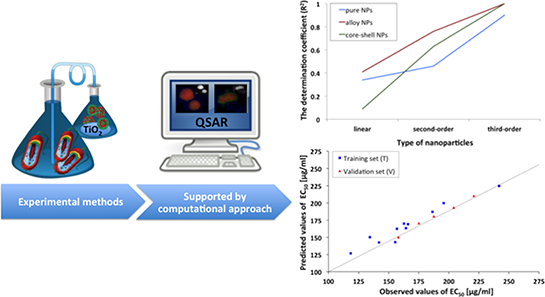
- microemulsion containing the reducing agent (hydrazine). Titanium isopropoxide was added into the microemulsion system containing Au and Pd nanoparticles. The microemulsions were mixed and purged with nitrogen for 24 h and the obtained precipitate was washed, dried and calcined for 3 h at different temperatures


Hybrid spin-crossover nanostructures
Beilstein J. Nanotechnol. 2014, 5, 2230–2239, doi:10.3762/bjnano.5.232
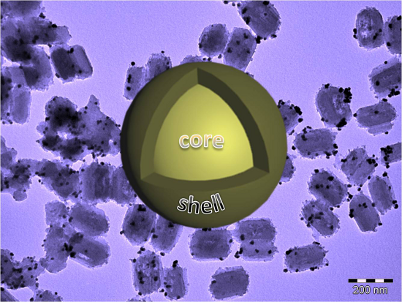
- by means of an intermediate decorated silica shell [23]. Briefly, SCO@SiO2 particles were synthetized using the reverse micelle technique by mixing two microemulsions: one containing the triazole ligand and the other the iron(II) salt, using Triton and TEOS (tetraethoxysilane) as tensioactive and



The impact of the confinement of reactants on the metal distribution in bimetallic nanoparticles synthesized in reverse micelles
Beilstein J. Nanotechnol. 2014, 5, 1966–1979, doi:10.3762/bjnano.5.206
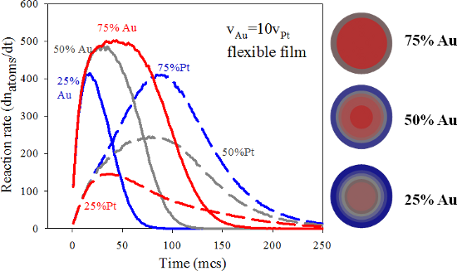
- bimetallic nanoparticles in microemulsions was carried out by computer simulation. A comprehensive analysis of the resulting nanostructures was performed regarding the influence of intermicellar exchange on reactivity. The objects of this study were metals having a difference in standard reduction potential
- of about 0.2–0.3 V. Relatively flexible microemulsions were employed and the concentration of the reactants was kept constant, while the reaction rate of each metal was monitored as a function of time using different reactant proportions. It was demonstrated that the reaction rates depend not only on
- different synthetic technologies to achieve control over the composition, structure and shape of nanoparticles. Nowadays there are many methods available to synthesize nanoparticles. From the pioneering research of Boutonett et al. [1], synthesis using microemulsions became a frequently used technique [2][3


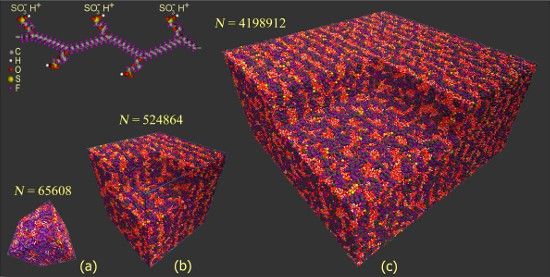
Large-scale atomistic and quantum-mechanical simulations of a Nafion membrane: Morphology, proton solvation and charge transport
Beilstein J. Nanotechnol. 2013, 4, 567–587, doi:10.3762/bjnano.4.65


The oriented and patterned growth of fluorescent metal–organic frameworks onto functionalized surfaces
Beilstein J. Nanotechnol. 2012, 3, 570–578, doi:10.3762/bjnano.3.66
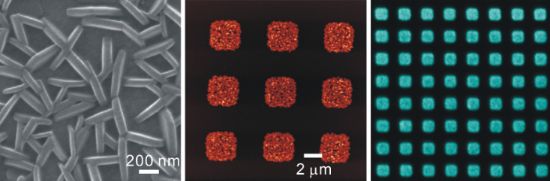
- [10][11], ultrasonic synthesis [12][13], microemulsions [14][15], or solvent-triggered precipitation [16][17]. Nanoscale MOFs with various morphologies, (e.g., nanospheres [16][18][19][20], nanocubes [21], nanorods [14][22], nanowheels [23], and hierarchical spheres [22]) have been synthesized [24