


Search results
Search for "microplastic" in Full Text gives 4 result(s) in Beilstein Journal of Nanotechnology.
Microplastic pollution in Himalayan lakes: assessment, risks, and sustainable remediation strategies
Beilstein J. Nanotechnol. 2025, 16, 2144–2167, doi:10.3762/bjnano.16.148
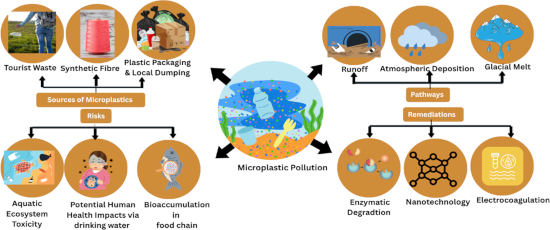
- Sameeksha Rawat S. M. Tauseef Madhuben Sharma Sustainability Cluster, School of Advanced Engineering, UPES, Dehradun, Uttarakhand, India Research & Development, UPES, Dehradun, Uttarakhand, India 10.3762/bjnano.16.148 Abstract Microplastic contamination is a newly emerging environmental problem
- in the ecologically sensitive Himalayan lakes, posing a threat to biodiversity, water quality, and human habitation. These high-altitude freshwater ecosystems are being increasingly polluted through human use, tourism, glacier melt, and atmospheric deposition. Microplastic quantification in such
- application of nanomaterials for microplastic removal is elaborated in detail, and case studies validated their effectiveness, especially in cold environments with strong UV irradiation. In the face of increasing worldwide research into microplastic contamination, there remains a huge knowledge gap concerning


Current status of using adsorbent nanomaterials for removing microplastics from water supply systems: a mini review
Beilstein J. Nanotechnol. 2025, 16, 1837–1850, doi:10.3762/bjnano.16.127
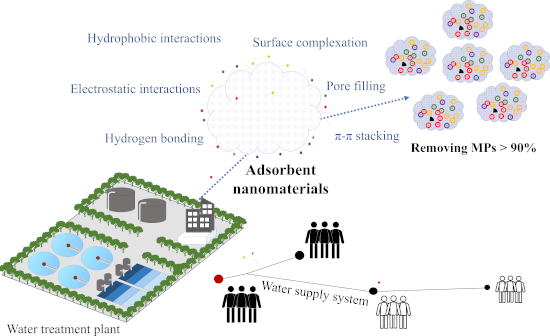
- process. According to Goel et al., the physical methods primarily rely on magnetic separation, while chemical approaches focus on nanoparticle functionalization to improve their effectiveness in microplastic removal [74]. Accordingly, numerous magnetic nanomaterials have been investigated and modified to


Nanotechnology-based approaches for the removal of microplastics from wastewater: a comprehensive review
Beilstein J. Nanotechnol. 2025, 16, 1607–1632, doi:10.3762/bjnano.16.114
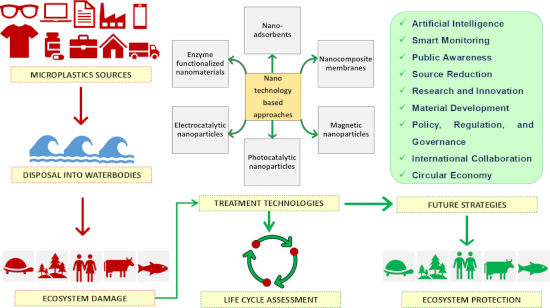
- synthesis, hybrid system integration, and machine learning optimization. Together, these approaches aim to establish a comprehensive, scalable, and environmentally safe solution for the remediation of MPs in wastewater systems. Keywords: artificial intelligence; membrane technology; microplastic
- predominant source of microplastic. In a study performed by Liu et al. [22], it was observed that the petrochemical industry plays a major role in microplastic pollution. Crude oil undergoes extraction, refining, and cracking to yield low-molecular-weight monomers like ethylene and propylene. These monomers
- are later polymerised to produce various plastic materials. This results in the release of microplastic particles, which enter into wastewater treatment facilities through industrial effluents. Wastewater treatment plants (WWTPs) are the major contributors to microplastic pollution in the environment


The role of biochar in combating microplastic pollution: a bibliometric analysis in environmental contexts
Beilstein J. Nanotechnol. 2025, 16, 1401–1416, doi:10.3762/bjnano.16.102
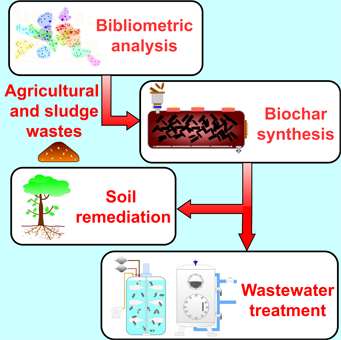
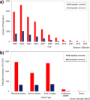
- at 02:59. Relevant keywords such as “microplastic” and “biochar”, along with their abbreviations, were used to capture a broad spectrum of literature. The dataset comprised 99 peer-reviewed journal articles, excluding conference papers, reviews, book chapters, editorials, errata, and comments to
- microbial communities in soil. Three clusters dominate the analysis, characterized by the highest frequency and centrality metrics, namely, “remediation,” “plastic mulch,” and “microplastic”. Remediation: High-frequency keywords such as “soil”, “wastewater”, and “removal” dominated research from 2020 to
- , that is, 0.32 g/kg for 3% biochar addition and 0.36 g/kg for 3% biochar combined with urea [49]. Biochar amendments consistently enhanced nitrogen content in both topsoil (0–20 cm) and subsoil (20–40 cm) compared to urea [50]. These favorable properties highlight biochar’s potential for microplastic



Other Beilstein-Institut Open Science Activities



