


Search results
Search for "nanoelectrode" in Full Text gives 6 result(s) in Beilstein Journal of Nanotechnology.
Parylene-coated platinum nanowire electrodes for biomolecular sensing applications
Beilstein J. Nanotechnol. 2025, 16, 1392–1400, doi:10.3762/bjnano.16.101
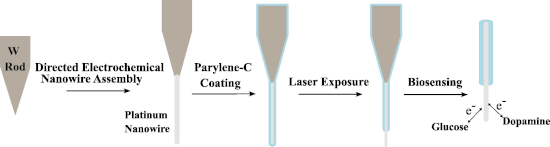
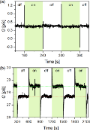
- due to their compact size, biocompatibility, and rapid fabrication. Keywords: biosensor; directed electrochemical nanowire assembly (DENA); dopamine; glucose; nanoelectrode; platinum; Introduction Electrodes, a tool used in all walks of life today, were first demonstrated by Max Cremer in 1906 [1


Impact of device design on the electronic and optoelectronic properties of integrated Ru-terpyridine complexes
Beilstein J. Nanotechnol. 2022, 13, 219–229, doi:10.3762/bjnano.13.16
- nanoelectrodes separated by gaps of 8 to 20 nm. They are fabricated by electron beam lithography (EBL) in a lift-off process while using a self-aligned Al2O3 hard mask to define the nanogap size [20][21]. The resulting nanoelectrode pairs are used for the on-chip preparation of Ru(TP)2-complex wires according to
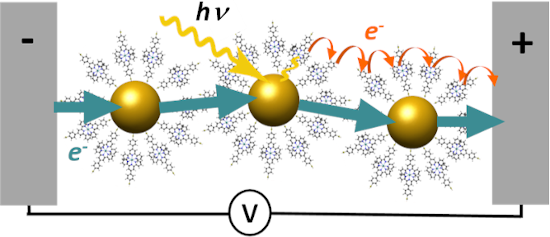
- constituting building blocks. For this purpose, the transport properties of the redox-active Ru(TP)2-complexes are studied under electrical or optical triggering in Ru(TP)2-complex wire devices and in Ru(MPTP)2–AuNP devices. Both devices are based on the same nanoelectrode design and are composed of analogous
- rinsed three times in either ethanol or chloroform. Nanodevice fabrication The fabrication of nanoelectrode samples, each equipped with twelve nanoelectrode pairs (consisting of an AuPd and a Pt electrode with a nanometer-sized gap in between), was performed according to a recently described process


Uniform arrays of gold nanoelectrodes with tuneable recess depth
Beilstein J. Nanotechnol. 2021, 12, 957–964, doi:10.3762/bjnano.12.72
- Microelectronics RAS, Leninsky av., Moscow 115487, Russia Moscow Institute of Physics and Technology, Institutskiy per., Dolgoprudny 141701, Russia 10.3762/bjnano.12.72 Abstract Nanoelectrode arrays are much in demand in electroanalytical chemistry, electrocatalysis, and bioelectrochemistry. One of the promising
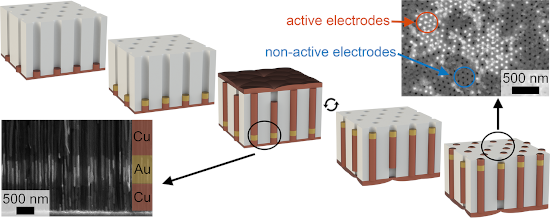
- approaches for the preparation of such systems is templated electrodeposition. In the present study, porous anodic alumina templates are used to prepare Au nanoelectrode arrays. Multistage electrodeposition is proposed for the formation of recessed electrodes with the ability to tune the distance between the
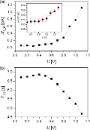
- surface of the porous template and the top surface of the nanoelectrodes. A set of complementary techniques, including chronoamperometry, coulometry, and scanning electron microscopy, are used to characterize the nanoelectrode arrays. The number of active nanoelectrodes is experimentally measured. The


High-stress study of bioinspired multifunctional PEDOT:PSS/nanoclay nanocomposites using AFM, SEM and numerical simulation
Beilstein J. Nanotechnol. 2017, 8, 2069–2082, doi:10.3762/bjnano.8.207
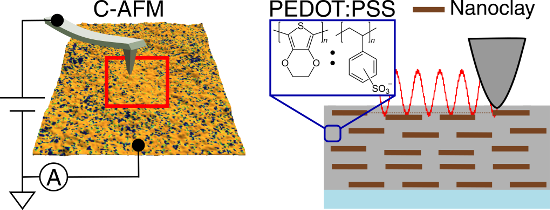
- while the scanning conductive tip served as a movable nanoelectrode in continuous contact with the sample (Figure 6a). Bimodal AFM was used in the so-called amplitude modulated-open loop (AM-OL) scheme (shown in Figure 6b). In this scheme, the cantilever is excited at two eigenfrequencies simultaneously


Functional fusion of living systems with synthetic electrode interfaces
Beilstein J. Nanotechnol. 2016, 7, 296–301, doi:10.3762/bjnano.7.27
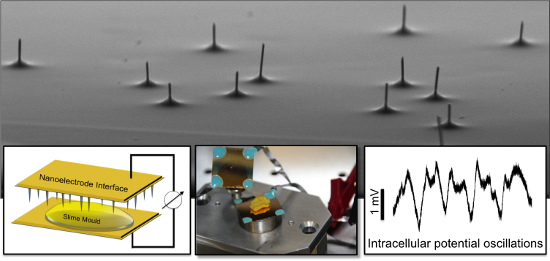
- these approaches is capable of recording electrical responses from oxidative events occurring in intercellular regions of neuronal cultures (Zhang, D.; Rand, E.; Marsh, M.; Andrews, R.; Lee, K.; Meyyappan, M.; Koehne, J. Mol. Neurobiol. 2013, 48, 380–385). Employing monocrystalline gold, nanoelectrode
- : biointerface; biosensor; energy harvesting; nanoelectrodes; Physarum polycephalum; Findings The formation process of nanoelectrode interfaces (NEIs) was based on track-etch template synthesis as schematically shown in Figure 1a. First, monocrystalline gold (Au) nanowires in parallel arrangement featuring
- the NEI on top of the assembly. For additional pressure, a 5 g weight was placed on the setup (Figure 2b, FG) to enforce membrane penetration and overcome the low proportion and stochastic nature of nanoelectrode penetration observed for mammalian CHO cells using hollow alumina nanostraws [7]. The


Functionalization of vertically aligned carbon nanotubes
Beilstein J. Nanotechnol. 2013, 4, 129–152, doi:10.3762/bjnano.4.14








Other Beilstein-Institut Open Science Activities



