Search results
Search for "nanosystems" in Full Text gives 95 result(s) in Beilstein Journal of Nanotechnology.
Breaking barriers: nanosystems to overcome solubility and permeability challenges of second-generation tyrosine kinase inhibitors
Beilstein J. Nanotechnol. 2026, 17, 1063–1086, doi:10.3762/bjnano.17.73
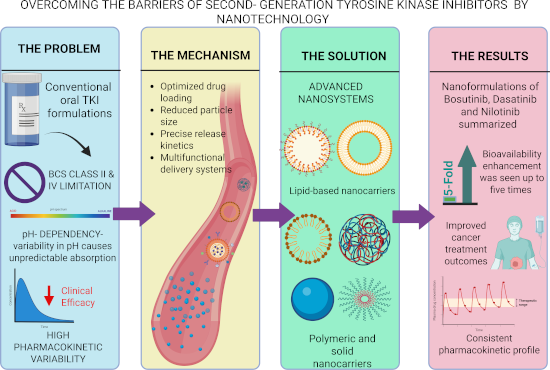
- nanosystems, such as solid lipid nanoparticles, nanostructured lipid carriers, polymeric micelles, polymeric nanoparticles, nanocrystals, self-nanoemulsifying drug delivery systems, and nanosuspensions, have been developed to enhance solubility, permeability, and bioavailability. The nanoformulations achieved
- stability, scalability, and feasibility for clinical transition. Keywords: BCS class-IV; bioavailability enhancement; biopharmaceutical limitation; bosutinib; dasatinib; drug delivery system; nanosystems; nilotinib; quality by design; second-generation TKI; Introduction Tyrosine kinases have emerged as
- maintenance (if precipitation inhibitors are not added). All these limitations have to be carefully addressed for successful clinical translation [58]. Solid dispersions Although amorphous solid dispersions are not true nanosystems, unlike the other formulations discussed, they are included here as they can


Ultrasonic irradiation in the synthesis of nanohydroxyapatite: a chemically friendly technique for improving hemocompatibility and antibiofilm applications
Beilstein J. Nanotechnol. 2026, 17, 991–1015, doi:10.3762/bjnano.17.68
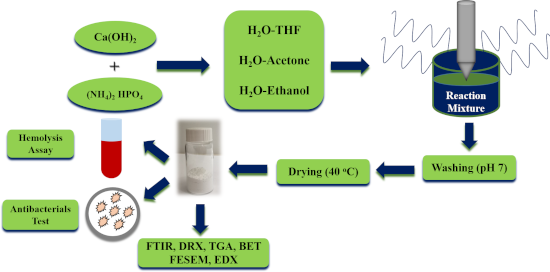
- position these nanosystems as ideal candidates for tissue regeneration applications and site-specific delivery systems. Despite these promising results, the need for exhaustive biological validation through in vitro cytotoxicity assays with osteoblastic cell lines is recognized as a limitation of this work




Development of Protium heptaphyllum essential oil-loaded nanocapsules: experimental design and biological activity
Beilstein J. Nanotechnol. 2026, 17, 974–990, doi:10.3762/bjnano.17.67
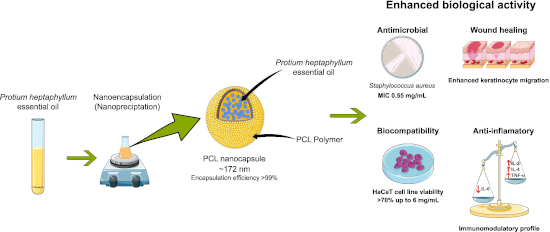
- Abstract Poly(ε-caprolactone) nanocapsules containing breu branco (Protium heptaphyllum) essential oil were successfully prepared by nanoprecipitation and optimized using a Box–Behnken design. Spherical nanosystems were obtained, with a mean particle size of 172.10 ± 0.90 nm, a polydispersity index of 0.14
- potential. The optimized nanosystems were subsequently evaluated in terms of stability, encapsulation efficiency, cell viability, antimicrobial activity against Staphylococcus aureus (S. aureus), wound healing potential (scratch assay), and cytokine modulation. The results of this study contribute to a
- ) in nanocapsule-treated fibroblasts, suggesting an anti-inflammatory profile that supports tissue regeneration while minimizing nonspecific inflammation. Together, these findings establish nanoprecipitation as an effective and scalable strategy to engineer polymeric nanosystems that stabilize




Nanocarrier strategies to overcome P-glycoprotein-mediated drug resistance in cancer therapy
Beilstein J. Nanotechnol. 2026, 17, 882–921, doi:10.3762/bjnano.17.64
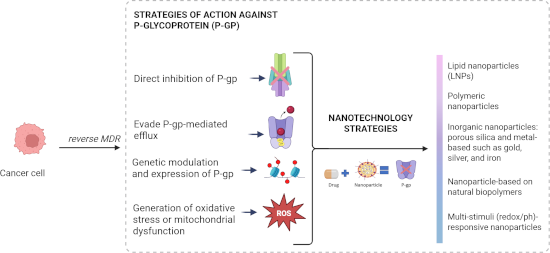
- from cancer cells, resulting in diminished intracellular drug concentrations and impaired treatment effectiveness [26]. Nanotechnology-based drug delivery systems have emerged as a promising strategy to overcome this barrier. These nanosystems can encapsulate anticancer agents, protect them from
- stable nanoscale assemblies co-loaded with siRNA to silence the expression of the ABCB1 (MDR1) gene, which encodes P-gp, is a promising option for overcoming MDR. Whang et al. designed nanosystems coated with hyaluronic acid (HA) and co-administered paclitaxel (PTX)/siRNA, aiming to inhibit P-gp levels


Environmental applications of silver nanoparticles: state-of-the-art review and emerging trends
Beilstein J. Nanotechnol. 2026, 17, 697–736, doi:10.3762/bjnano.17.49
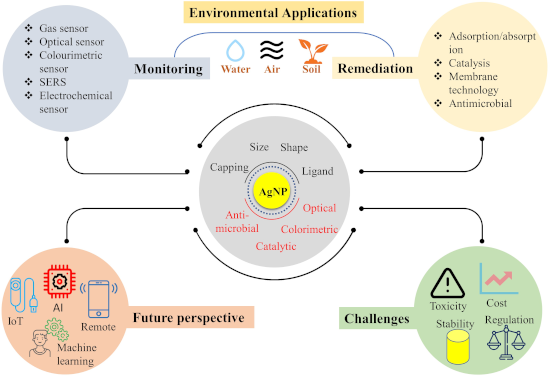
- ultrafiltration membrane technologies used for management of water pollutants. In addition, AgNPs-assisted nanosystems in fibrous filter membranes and photocatalytic composite coatings for the removal of volatile organic compounds, particulate matter, and gaseous pollutants are reviewed. Furthermore, AgNP
- enhancement or quenching mechanisms. A study reported that carbon dot/AgNP-based nanosystems selectively detected Hg2+ ions with a detection limit of 2.22 × 10⁻⁸ M via a turn-on mechanism [57]. In addition, the environmental application of AgNPs can be affected by various factors, such as surface composition


Advances in nanotechnology applied to natural products
Beilstein J. Nanotechnol. 2026, 17, 555–558, doi:10.3762/bjnano.17.36

- formulations based on natural products [14][15]. Among lipid-based vesicular nanosystems, liposomes are widely investigated for the delivery of natural products. Liposomes consist primarily of phospholipids (often with cholesterol or others sterols) arranged in one or more bilayers, while additional surface
- therapeutic agents has enabled the development of multifunctional platforms, which can improve cellular uptake, enhance tumor penetration, reduce systemic side effects, and integrate therapeutic and diagnostic functions [19]. Beyond lipid-based systems, polymeric nanosystems have emerged as versatile
- , underscoring the importance of physicochemical approaches in the development of nanostructured formulations [23][24]. More recently, hybrid nanosystems have emerged as promising strategies for natural product delivery and application. Structures that combine polymer–lipid interfaces, such as core–shell
Nanocarrier-integrated multilayer films produced by 3D printing for improved skin adhesion and curcumin photostability
Beilstein J. Nanotechnol. 2026, 17, 440–453, doi:10.3762/bjnano.17.30
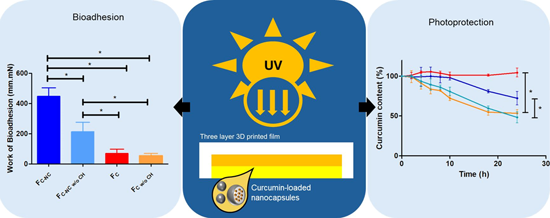
- nanosystems to enhance the bioactivity of curcumin was reported by Krausz et al., who demonstrated that a curcumin-loaded nanosystem inhibited the growth of methicillin-resistant Staphylococcus aureus (MRSA) and Pseudomonas aeruginosa in vitro in a dose-dependent manner, while also improving wound healing and


From shield to spear: Charge-reversible nanocarriers in overcoming cancer therapy barriers
Beilstein J. Nanotechnol. 2026, 17, 159–175, doi:10.3762/bjnano.17.10
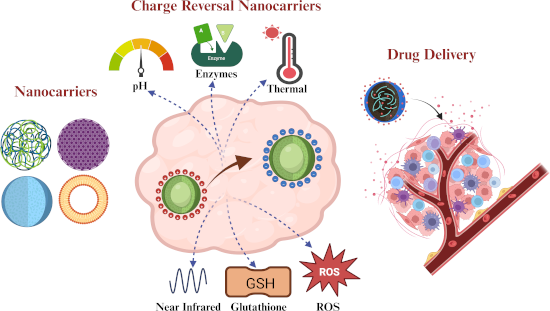
- in cancer therapy [76]. 3.2 Controlled drug release Biodegradable nanoparticles and micelles offer significant potential as nanosystems for delivering powerful anticancer drugs directly to target sites. Using specific polymers as nanocarriers allows for targeted drug delivery and controlled release


Influence of surface characteristics on the in vitro stability and cell uptake of nanoliposomes for brain delivery
Beilstein J. Nanotechnol. 2026, 17, 139–158, doi:10.3762/bjnano.17.9
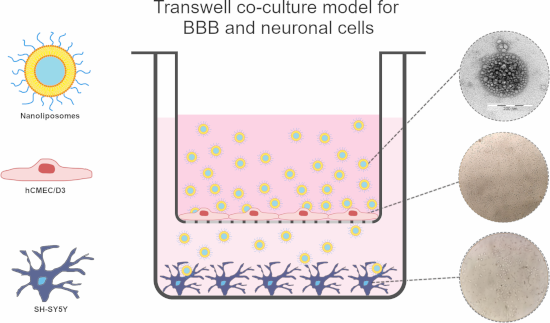
- exposed to biological fluids, nanodelivery systems, including NLs, rapidly interact with various biomolecules which have a significant impact on the functionality and fate of the nanosystems but also influence cellular biological functions. Hence, the primary objective of this study was to elucidate the
- interactions in complex organs like the brain, in vitro cell culture models, such as hCMEC/D3 and SH-SY5Y, are often used [9]. Therefore, the hCMEC/D3 model is useful for examining nanosystems, drug uptake, and transport across the BBB, with advantages like easy growth and mimicking basic BBB properties
- generally tends to evolve over time and involves many different driving forces controlled by the properties of nanosystems, proteins, and the medium itself [30]. The obtained results are in accordance to the results of the study of Miclăuş et al. [31], where it was demonstrated that the soft corona (formed




Development and in vitro evaluation of liposomes and immunoliposomes containing 5-fluorouracil and R-phycoerythrin as a potential phototheranostic system for colorectal cancer
Beilstein J. Nanotechnol. 2026, 17, 97–121, doi:10.3762/bjnano.17.7
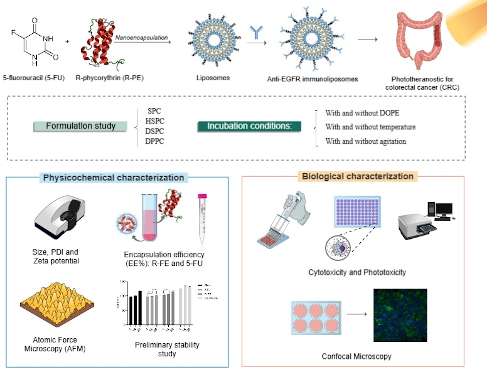
- stability hampers its clinical use. Thus, the present work aimed to develop co-encapsulated liposomes system for co-delivery of 5-FU and R-PE as theranostic nanosystems for CRC, as well as immunoliposomes targeted with the anti-EGFR monoclonal antibody, cetuximab, as a strategy for targeted delivery to EGFR
- evaluated, and the systems were thoroughly characterized. Finally, in vitro experiments in a CRC cell line were conducted for the evaluation of cytotoxicity, photo toxicity, and uptake. Some studies have sought to demonstrate that dual-drug nanosystems can result in synergistic antitumor effects or reduce



Missing links in nanomaterials research impacting productivity and perceptions
Beilstein J. Nanotechnol. 2025, 16, 2168–2176, doi:10.3762/bjnano.16.149
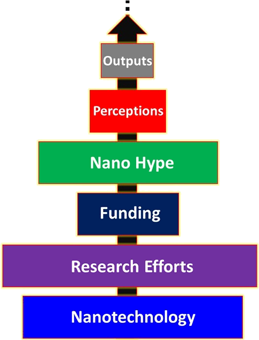
- , and FeCl2), 2D nitrides (e.g., BCN), 2D transition metal nitrides(e.g., MoN, Ti4N3, and GaN) [10], 2D carbides (e.g., α-C2N and B2C), 2D perovskites (e.g., (BA)2PbI4), and 2D metal-organic frameworks have also shown extraordinary promise. These nanosystems exhibit exceptional physical and chemical
- reinforced extensive collaborative and multidisciplinary research efforts around the world. Thus, at present, chemists, physicists, biologists, engineers, and computer scientists are working more closely together than ever before to design, synthesize, and apply nanosystems. Authors consider this to be one
- equipment, especially characterization tools used for nanosystems, are unavoidable challenges. Another critical challenge is the precision required to produce nanomaterials. The unique properties of nanomaterials arise from controlled particle size, but achieving the desired size and uniformity is extremely
Beyond the shell: exploring polymer–lipid interfaces in core–shell nanofibers to carry hyaluronic acid and β-caryophyllene
Beilstein J. Nanotechnol. 2025, 16, 2015–2033, doi:10.3762/bjnano.16.139
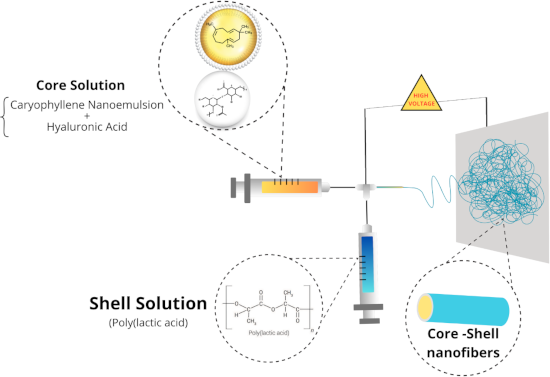
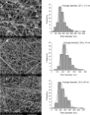
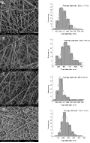
- for effective pharmaceutical use, βCp is often formulated within lipid liquid dispersions, such as nanoemulsions, to enhance its stability and improve therapeutic properties [35][36][37][38]. While lipid nanosystems offer undeniable advances for the delivery of active compounds, their inherent liquid
- administration via dressings made of biocompatible polymers containing lipid nanosystems [41][42][43]. Numerous researchers have successfully encapsulated nanoemulsions into nanofibers for diverse applications, including studies by Kaur et al. (2024) showing superior wound healing with bakuchiol nanoemulsion
- -loaded electrospun scaffolds compared to that of the gel formulation [44], and Coelho et al. (2021) reporting PVA nanofibers containing chalcone NE as a potential treatment for cutaneous leishmaniasis [45]. Despite these advances in nanofiber composite structures incorporating various nanosystems, a




Targeting the vector of arboviruses Aedes aegypti with nanoemulsions based on essential oils: a review with focus on larvicidal and repellent properties
Beilstein J. Nanotechnol. 2025, 16, 1894–1913, doi:10.3762/bjnano.16.132
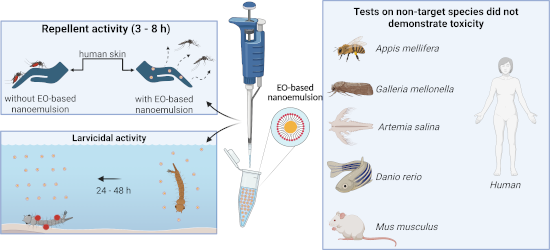
- ]. Beyond liposomes, other lipid-based nanosystems have gained prominence, such as nanoemulsions (NEs) [87]. NEs are kinetically stable dispersed systems composed of two immiscible phases, typically an oil and aqueous phases, with droplets (20–500 nm) stabilized by surfactants. NEs can be classified as oil
- terpenes but with enhanced safety for Galleria mellonella larvae and human keratinocyte cells (HaCaT). Additionally, NEs facilitated dispersion in aqueous environments. In conclusion, nanoemulsions are safe, eco-friendly, and effective nanosystems capable of enhancing the larvicidal and insecticidal


Multifunctional anionic nanoemulsion with linseed oil and lecithin: a preliminary approach for dry eye disease
Beilstein J. Nanotechnol. 2025, 16, 1711–1733, doi:10.3762/bjnano.16.120
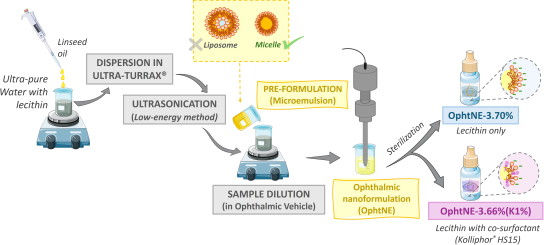
- disease cases [13]. Advances in nanomedicine have provided effective solutions, particularly for treating DED [1]. To address challenges in topical ocular drug delivery and to develop products that mimic tear film composition, ocular nanosystems (ONSs) with diameters ranging from 50 to 300 nm are being
- profile is compatible with nanosystems often used in drug delivery, no pharmacological agent was incorporated in this study. All pre-formulations displayed a pH below 5, indicating their acidic nature. This acidity can be attributed mainly to LO, which has a pH of 4.1 and is the major component of pre



Venom-loaded cationic-functionalized poly(lactic acid) nanoparticles for serum production against Tityus serrulatus scorpion
Beilstein J. Nanotechnol. 2025, 16, 1633–1643, doi:10.3762/bjnano.16.115
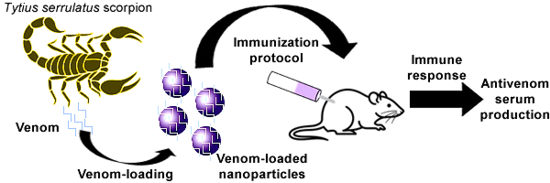
- the nanosystems at 0.5% demonstrated to be equipotent to AH 0.5%. The NP formulation produced antibodies that were detected until the 1:3,200 dilution, whereas the AH formulation produced antibodies that were detected until the 1:1,600 dilution. The Figure 5 shows the antibody production results from
- evaluate the potential of these nanosystems. These aspects are part of our ongoing research and will be addressed in future studies, aiming to support the translational advancement and industrial applicability of this nanoplatform. Conclusion In conclusion, the enhanced immunoadjuvant effect by
- release effect showed a slow release of venom-loaded nanoparticles. Moreover, the biological efficacy of the nanosystems showed that cationic nanoparticles can stimulate the immune system to increase the immune response against T. serrulatus venom when compared to the most used immunoadjuvant, aluminum


Enhancing the therapeutical potential of metalloantibiotics using nano-based delivery systems
Beilstein J. Nanotechnol. 2025, 16, 1350–1366, doi:10.3762/bjnano.16.98
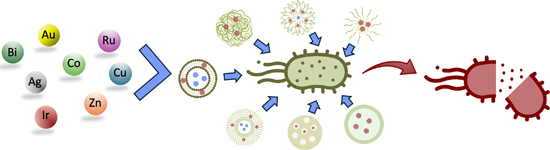
- infection sites, contributing to the emergence of multidrug-resistant (MDR) bacteria [29]. In contrast, new nanosystems aim to control the rate, time, and location of antibiotic release, modulating the pharmacokinetics effect at the desired site of action [30][31]. Nanotechnology offers innovative solutions
- targeted therapeutic effect, and the desired release rate. The most common encapsulation nanosystems are represented in Figure 2. Organic nanoparticles Lipid-based nanoparticles. Liposomes: Liposomes are versatile lipid-based nanoparticles that have gained prominence in drug delivery systems due to their
- 6 (Figure 3) resulted in nanosystems that not only exhibit suitable particle sizes and ζ-potentials for drug delivery but also have improved antibacterial efficacy compared to the free Ag metallodrug. In this regard, the minimum inhibitory concentration (MIC) and the minimum bactericidal


Ferroptosis induction by engineered liposomes for enhanced tumor therapy
Beilstein J. Nanotechnol. 2025, 16, 1325–1349, doi:10.3762/bjnano.16.97
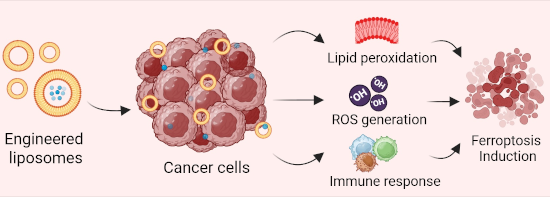
- hydrophobic phospholipid bilayer and a hydrophilic core. Depending on the physicochemical properties of the drug, this type of structure allows the entrapment of both hydrophilic and hydrophobic drugs [1]. Liposomes, like other nanosystems, have many benefits, such as prolonged systemic blood circulation


Soft materials nanoarchitectonics: liquid crystals, polymers, gels, biomaterials, and others
Beilstein J. Nanotechnol. 2025, 16, 1025–1067, doi:10.3762/bjnano.16.77
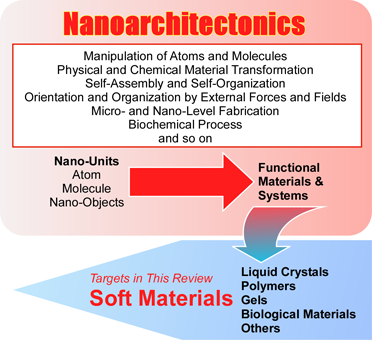
- organic nanosystems, including nanotubes, nanowires, and nanoribbons. Mishra, Nayak, and colleagues conducted a comprehensive analysis of the effects of surface pressure on the molecular organization of a monolayer of heterocoronene-based discotic liquid crystals (Figure 3) [227]. The molecules were






Serum heat inactivation diminishes ApoE-mediated uptake of D-Lin-MC3-DMA lipid nanoparticles
Beilstein J. Nanotechnol. 2025, 16, 740–748, doi:10.3762/bjnano.16.57
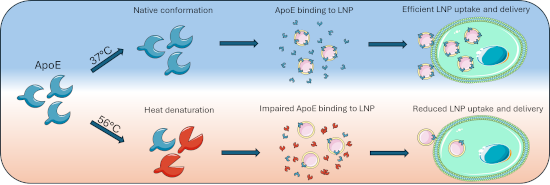
- part was placed in a water bath at 56 °C for 30 min, while the other part was left untreated. After heat inactivation, FCS was stored at −20 °C until use. LNP production LNPs were prepared via microfluidics mixing, using a Nanoassemblr Benchtop device (Precision Nanosystems). In short, D-Lin-MC3-DMA


Polymer lipid hybrid nanoparticles for phytochemical delivery: challenges, progress, and future prospects
Beilstein J. Nanotechnol. 2024, 15, 1473–1497, doi:10.3762/bjnano.15.118
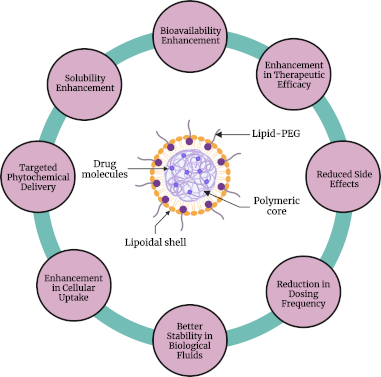
- simplest among PLHNPs; they are simply mixed nanosystems of polymer/copolymer and lipids with the help of surfactants. In this system, the lipids are scattered in a polymeric/copolymeric matrix [48]. Monolithic PLHNP systems are very similar to colloidal polymeric nanocarriers. In these nanocarriers


Effect of radiation-induced vacancy saturation on the first-order phase transformation in nanoparticles: insights from a model
Beilstein J. Nanotechnol. 2024, 15, 1453–1472, doi:10.3762/bjnano.15.117

- confirmed by calculations for iron particles under irradiation. Substances characterized by high vacancy migration energy, small diffusion coefficients of defects, and low temperatures of first-order phase transitions can serve as suitable candidates for radiation-induced phase transitions in nanosystems
- presented thermodynamic approach is general, we can consider various possible phase transformations under irradiation. For example, polymorphic transformation involving a change in lattice type and amorphization are two common types of transformations observed in metal nanosystems and ceramic substances


When nanomedicines meet tropical diseases
Beilstein J. Nanotechnol. 2024, 15, 830–832, doi:10.3762/bjnano.15.69
- comprehensive review on the field. Herein, the authors have accessed different databases, finding inorganic and polymeric nanoparticles as the most investigated nanosystems towards schistosomiasis, an acute and chronic parasitic NTD caused by blood-feeding nematodes of the genus Schistosoma [6]. Another
Development and characterization of potential larvicidal nanoemulsions against Aedes aegypti
Beilstein J. Nanotechnol. 2024, 15, 104–114, doi:10.3762/bjnano.15.10
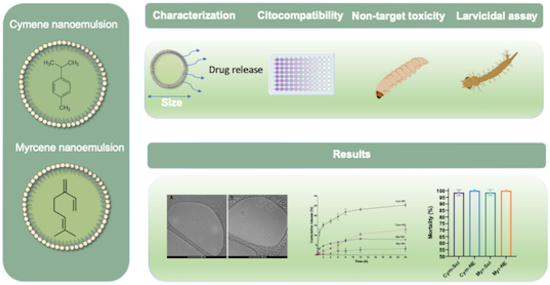
- myrcene, which could also enhance its release rate (Table 3). Previous research supports the fact that monoterpenes exhibit slower release than other drugs from delivery nanosystems [41]. This phenomenon can be explained by the higher surfactant/oil solubility, which leads to a stronger affinity to the


Curcumin-loaded nanostructured systems for treatment of leishmaniasis: a review
Beilstein J. Nanotechnol. 2024, 15, 37–50, doi:10.3762/bjnano.15.4
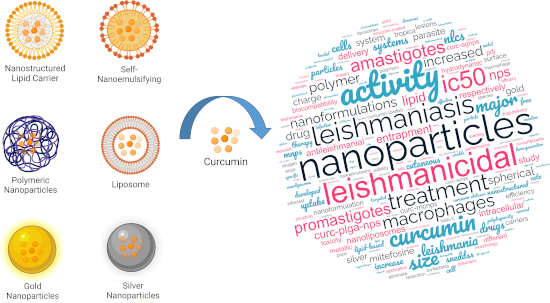
- physicochemical properties of the systems, and by the release and targeting features of the loaded nanosystems, rather than by the drug properties themselves [58][59][60][61][62]. The intracellular amastigote form of Leishmania spp. allocates in macrophage phagolysosomes from infected individuals [63]. However
- these carriers with the macrophage membrane. As a result, the macrophages uptake the drug-loaded nanocarrier by phagocytosis, where they will directly act on the parasites [65][66][67]. Several types of nanosystems have been studied for carrying antileishmanial drugs, such as polymeric nanoparticles
- ursolic acid (UA) functionalized with N-octyl chitosan. The NLC were approximately 143 nm of the hydrodynamic diameter. The authors also found encapsulation and drug-load efficiencies of 88.63 ± 2.70% and 12.05 ± 0.54%, respectively [70]. They evaluated the antileishmanial potential of the nanosystems


Nanotechnological approaches in the treatment of schistosomiasis: an overview
Beilstein J. Nanotechnol. 2024, 15, 13–25, doi:10.3762/bjnano.15.2
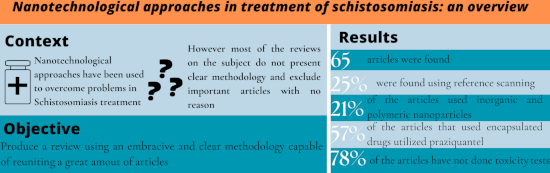
- established criteria were identified. Inorganic and polymeric nanoparticles were the most prevalent nanosystems used. Gold was the primary material used to produce inorganic nanoparticles, while poly(lactic-co-glycolic acid) and chitosan were commonly used to produce polymeric nanoparticles. None of these
- narrative reviews limited to a specific drug or nanoparticle categories. For instance, some reviews only focus on PZQ [14], while others solely showcase nanosystems for drug delivery [15]. Nonetheless, recent literature reveals several works that employ various drugs and utilize nanoparticles not only as
- S1 (Supporting Information File 1) summarizes all the articles found regarding the use of nanosystems and encapsulated drugs. In Figure 1, it is possible to observe that only 59% of the publications show effectiveness data solely in vivo. Also, most articles use nanoparticles as drug delivery systems